

.45 ACP is one of the most forgiving cartridges to reload, right alongside 9mm, but it has one trap that catches everyone: it uses large pistol primers, not the small pistol primers 9mm takes. It runs at low pressure on a fat straight-wall case, takes a .451 bullet usually around 230 grains, sizes on a carbide die with no lube, and rarely needs trimming. This guide covers the components, the prep, the pitfalls, and where to get verified load data. No charge weights here.
Some of the links below are affiliate links, meaning at no additional cost to you, we may earn a commission if you click through and make a purchase.
Table of Contents
How we tested: Every pick here is ranked against our testing methodology. Minimum round counts, accuracy and reliability protocols, the failures that disqualify a gun.
Why .45 ACP is a great caliber to reload
.45 ACP is low-pressure, big, and easy to work with, which makes it forgiving of a beginner’s pace much like 9mm. The fat case is easy to handle, the low velocities are friendly to cast and coated bullets, and factory .45 is expensive enough that reloading saves real money. If you are new to the whole process, read the complete guide to reloading first, then come back for the .45 specifics.
The components you need to reload .45 ACP
This is a straight-wall pistol case, so the prep is simple, but the primer size is the thing to get right.
Brass
Once-fired .45 ACP brass is plentiful and lasts a long time at this cartridge’s low pressure. Sort by headstamp for loads you care about, and watch for one specific thing: most .45 ACP brass uses a large pistol primer pocket, but some, notably certain Federal cases, uses a small pistol pocket. Mixing the two will jam your priming tool, so sort by primer size as well as headstamp.
Primers
Standard .45 ACP uses large pistol primers. This is the number one mix-up for new reloaders coming from 9mm, which uses small pistol. Buy large pistol primers for your standard brass, and keep any small-primer .45 brass separated so you do not crush a primer or jam the tool.
Bullets
.451 diameter bullets are standard, and 230 grain round nose is the classic .45 load that feeds reliably in almost any 1911. 185 and 200 grain bullets are lighter target options. Because .45 ACP runs slow, cast and coated lead bullets work beautifully and save money, while full metal jacket and jacketed hollow points cover range and defensive use.
Powder
.45 ACP runs on fast pistol powders. The common names are Hodgdon Titegroup, Winchester 231 and HP-38, Alliant Bullseye and Unique, and Alliant Power Pistol. Pick one your published data covers for your exact bullet, and take the charge from that data, never from this page.
.45 ACP brass prep and crimp
Straight-wall .45 sizes on a carbide die with no case lube, and like 9mm it barely stretches, so most .45 brass never needs trimming. The two things that matter are crimp and overall length.
.45 ACP headspaces on the case mouth, so you taper crimp only, never roll crimp. All you are doing is removing the flare you added to seat the bullet. For overall length, seat to your data and confirm the finished round drops freely into your barrel with a plunk test, because 1911s in particular can be picky about bullet profile and length.
Pitfalls unique to .45 ACP
- Large vs small pistol primers. Standard .45 takes large pistol primers, but some brass uses small. Sort by primer size or you will jam your priming tool and crush primers.
- 1911 feeding. 230 grain round nose feeds best. Flat-point, semi-wadcutter, and some hollow-point profiles can hang up in a 1911, so plunk-test and check feeding before loading a big batch.
- Roll crimp. .45 headspaces on the case mouth, so a roll crimp ruins headspacing and reliability. Taper crimp only, just enough to remove the flare.
- Light-charge squibs. The forgiving low-pressure loads mean an undercharge can leave a bullet stuck in the barrel. Visually check every charged case before seating bullets.
The gear you need to load .45 ACP
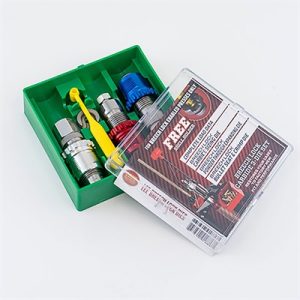
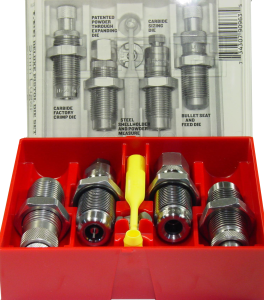
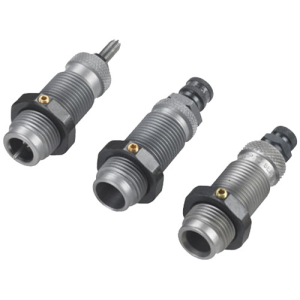
.45 ACP is a straight-walled pistol case like 9mm, which means it is genuinely easy to load. You need a press, a .45 ACP die set, a scale, calipers, and a way to clean brass. A carbide die set sizes the case with no lube, so you skip the messy step rifle calibers demand. The big case and low operating pressure make .45 one of the most forgiving cartridges on the bench, which is why a lot of reloaders enjoy loading it even though factory ammo is not cheap.
Because you will shoot .45 in volume, a turret or progressive press pays off quickly, though a single-stage loads it fine. The best reloading presses guide covers the options, the best reloading dies roundup has the carbide pistol die picks, and the best reloading kits guide bundles a full setup. A vibratory tumbler handles .45 brass easily, and the best brass tumblers guide covers the cleaning side.
Cleaning and maintaining your .45 ACP brass
.45 ACP brass is a pleasure to maintain. A dry vibratory tumbler with corncob media cleans a batch while you do something else, and that is all a range load needs. The big straight case does not stretch in normal use, so trimming is essentially never required, and the low pressure means the brass survives a great many loadings. Decap, tumble, size, and you are most of the way there.
Inspect cases for mouth splits and base bulges and cull the bad ones, but with .45 you will retire very few. Mixed once-fired range brass is fine for practice ammo, and large pistol primers are the standard, though some newer brass uses small pistol primers, so check before you prime a batch. If you are setting up the cleaning bench, the best brass tumblers guide covers dry, wet, and ultrasonic options for pistol brass.
Lead, plated, and jacketed bullets in .45
.45 ACP is a big, slow, low-pressure round, which makes it an ideal home for cast lead bullets. Lead is cheap, shoots clean enough at .45 velocities, and many loaders run cast 230 grain round nose for the most economical practice ammo there is. Plated bullets split the difference, giving you a cleaner-handling projectile at a moderate price, and they tolerate the modest .45 velocities well.
Jacketed bullets cost more and are usually reserved for defensive or match loads. The one thing to watch with any bullet in .45 is feeding in your specific pistol, because the classic 1911 was designed around a 230 grain round-nose profile and some flat or hollow-point shapes need a throated barrel or a tuned feed ramp to run. Pick a profile your gun likes, set your overall length so it chambers with the plunk test, and .45 will run all day. The low pressure also means cheap powder goes a long way per pound.
How to work up a .45 ACP load safely
Start at the listed starting charge for your exact bullet and powder, load a few test rounds, and confirm they feed, fire, and lock the slide back. Because .45 runs at low pressure, dramatic pressure signs are less common than on a hot rifle round, but you should still watch for flattened primers, sticky extraction, or any bulged case heads, and step the charge up in small increments. A chronograph helps you confirm you are getting the velocity your data predicts.
The two things that bite .45 loaders are taper crimp and overall length, not pressure. .45 ACP headspaces on the case mouth, so taper crimp only to remove the seating flare, and never roll crimp. Run the plunk test in your own barrel at your chosen length to be sure rounds chamber fully, and verify a chambered round does not let the bullet set back. Pull your actual charge weights from the verified sources in the next section.
Loading your first batch of .45 ACP, step by step
.45 ACP loads almost exactly like 9mm, just bigger and even more relaxed thanks to the low pressure. Here is the full sequence so you know the rhythm before you start.
Clean the brass. Collect your once-fired brass, glance it over for splits and bulges, and tumble it clean in a vibratory tumbler. The big straight case is easy to inspect, and you will cull very few. While it tumbles, set up the rest of the bench.
Deprime and size. Run each case through the carbide sizing die, which resizes and deprimes in one stroke with no lube needed. Check whether your brass uses large or small pistol primers before you go further, because .45 brass comes both ways and mixing them up will stop your priming step cold.
Prime and flare. Seat a fresh pistol primer of the correct size flush or just below the case head, and add a small flare to the mouth so the bullet starts straight. Run your thumb across each head to confirm the primer is seated properly.
Charge and check. Set your measure to the charge your verified data lists for your exact bullet and powder, throw a charge into each case in a loading block, and look into every case under good light. Even though .45 is low pressure, the visual charge check is a habit worth keeping for every pistol round you ever load.
Seat and crimp. Seat the bullet to your data’s overall length, then taper crimp just enough to remove the flare, never a roll crimp. Drop each finished round into your barrel for the plunk test to confirm it chambers fully, and check that the profile feeds in your pistol. Box them, label the load, and pull your charge weight from the verified sources in the next section.
Where to get verified .45 ACP load data
As with every caliber here, we do not print charge weights, because a safe charge depends on your exact bullet, powder, primer, and brass, and the powder makers’ data is proprietary and meant to be read at the source. Pull your .45 ACP data from Hodgdon’s Reloading Data Center, from the bullet maker like Hornady or Sierra, or from a current Lyman or Hornady manual.
Safety note: start at the listed starting charge, work up slowly while watching for pressure signs, and cross-reference two sources where you can. Reloading is done at your own risk.
Common .45 ACP reloading mistakes to avoid
- Roll crimping. .45 ACP headspaces on the case mouth, so taper crimp only to remove the seating flare. A roll crimp wrecks headspacing and function.
- Assuming all brass uses large primers. Most .45 uses large pistol primers, but some newer brass uses small pistol. Check before priming a batch or you will jam a press.
- Loading a bullet profile your gun will not feed. Many 1911s were built around 230 grain round nose. Confirm flat points and hollow points feed in your pistol.
- Skipping the plunk test. Seat to a length that chambers fully in your barrel, and verify rounds do not let the bullet set back.
- Running lead too fast. Keep cast lead at moderate velocities to avoid heavy leading. .45 is naturally slow, so this is easy to respect.
Getting reliable feeding in a 1911
The classic 1911 was designed around a specific cartridge shape, a 230 grain round nose at a particular overall length, and that heritage still drives feeding today. If your .45 hangs up, the cause is almost always overall length or bullet profile rather than the charge. Round-nose bullets feed in nearly anything, while semi-wadcutters, flat points, and hollow points have a shoulder that can catch on the feed ramp unless your barrel is throated for them.
Start by matching your overall length to proven data for your bullet, then run the plunk test in your own barrel to confirm the round seats fully. If a particular profile still hangs up, either switch to a more feed-friendly shape or have the barrel throated and the feed ramp polished. Many older 1911s simply prefer round nose, and there is no shame in loading what your gun runs reliably. A .45 that feeds every time is worth more than an exotic bullet that chokes.
Running an efficient .45 ACP loading session
Because .45 ACP is cheap and easy to load in volume, the bench habits that suit 9mm apply here too. Batch your work: tumble a big lot of brass, then size and prime, then charge and seat. The straight case and carbide dies make the process quick and clean, and a turret or progressive press turns it into real output for not much effort. Label your components clearly so a primer-size surprise never bites you.
Keep a known check weight by your scale and verify it at the start of each session, and keep your loading manual open even on a caliber this forgiving. The low pressure of .45 ACP makes it relaxing to load, but relaxed is not the same as careless. The same visual charge check that protects 9mm loaders protects you here, so glance into every charged case before a bullet goes on. Good habits make .45 the pleasant, productive caliber it should be.
Is reloading .45 ACP worth it?
Yes. Factory .45 ACP costs noticeably more than 9mm, so the per-round savings are bigger, and cheap cast or coated bullets make practice ammo very affordable. We ran the numbers in our cost-per-round breakdown, and if you still need a press, our best reloading presses guide covers the picks.
Where to go from here with .45 ACP
.45 ACP is one of the most pleasant and forgiving calibers to load, and once you are making reliable practice ammo, the savings over expensive factory .45 add up quickly. The straight-wall, low-pressure case makes it a relaxing caliber to load in volume, and the habits you build here apply to every pistol cartridge you will ever touch.
If you have not set up the bench yet, our best reloading presses guide covers the turret and progressive presses that make sense for a caliber you will shoot in volume, while the best reloading dies roundup has the carbide pistol die sets that load .45 with no lube. The best reloading kits guide bundles a full starter setup, and the best brass tumblers guide covers cleaning the big, easy-to-handle .45 brass.
For the full workflow, our complete guide to reloading ties every step together, and the cost-per-round breakdown shows why .45 ACP is one of the better-paying calibers to load, since factory ammo is dear while cast lead components are cheap. Load economical practice ammo, find the bullet profile your pistol feeds best, and keep the same careful charge-checking habits you would use on any round. Done right, .45 ACP is a caliber you will genuinely enjoy spending an evening loading.
One last thought before you start: .45 ACP is so easy and low-pressure to load that the only real risk is complacency. The big case and gentle pressures make it forgiving, but the same care that protects a 9mm loader protects you here, so keep up the visual charge check, confirm your primer size before every batch, and run the plunk test in your own barrel. Respect the process even on a relaxed caliber, and .45 ACP becomes one of the most genuinely enjoyable rounds on the bench, cheap to shoot and a pleasure to load by the hundred.
Last updated June 3rd 2026
Does .45 ACP use large or small pistol primers?
Standard .45 ACP uses large pistol primers, which is the most common mix-up for reloaders coming from 9mm, which uses small pistol primers. Some brass, notably certain Federal cases, uses a small pistol pocket, so sort your brass by primer size before priming.
What bullet weight is best for reloading .45 ACP?
230 grain round nose is the classic .45 ACP load and feeds reliably in almost any 1911. 185 and 200 grain bullets are lighter target options. Because .45 runs at low velocity, cast and coated lead bullets work very well and keep practice ammo cheap.
Do you need to trim .45 ACP brass?
Rarely. Like other straight-wall pistol cases, .45 ACP barely stretches, so most brass never needs trimming. It is worth measuring a sample occasionally, but trimming is not a routine step for this cartridge.
What powder is best for reloading .45 ACP?
.45 ACP runs on fast pistol powders such as Hodgdon Titegroup, Winchester 231 and HP-38, Alliant Bullseye and Unique, and Alliant Power Pistol. Choose one your published data covers for your exact bullet, and always take the charge weight from that official data.
Why does my .45 ammo hang up in my 1911?
1911s feed 230 grain round nose best, and other profiles like flat-point, semi-wadcutter, or some hollow points can catch on the feed ramp. Confirm the finished round passes a plunk test in your barrel and feeds by hand before loading a big batch.
Why doesn't this guide list .45 ACP charge weights?
Because a safe charge depends on your exact bullet, powder, primer, and brass, and a generic number would be both dangerous and a misuse of the powder makers' proprietary data. Pull your charges from Hodgdon's Reloading Data Center, your bullet or powder maker, or a current manual, and work up from the starting charge.
Is reloading .45 ACP worth the money?
Yes, more so than 9mm, because factory .45 ACP is noticeably more expensive while components are not. Loading cast lead 230 grain practice ammo cuts the cost per round substantially, and the cartridge is easy and forgiving to load. If you shoot .45 regularly, the savings add up fast.
Can you reload .45 ACP with lead bullets?
Absolutely, and .45 ACP is one of the best calibers for it. The low velocity and low pressure suit cast lead perfectly, which is why cast 230 grain round nose is the classic economical .45 practice load. Use lead-specific load data, keep velocities moderate, and your barrel will stay manageable to clean.
4,015+ Gun & Ammo Deals
Updated daily from 200+ top retailers. Filter by category, caliber, action type, and price.
Related Guides