

.308 Winchester is the classic full-power rifle cartridge to reload, and it rewards careful handloading with real accuracy gains over factory ammo. It runs on large rifle primers, a .308 bullet from 150 to 175 grains, a medium-burn rifle powder, and robust brass that lasts many loadings. The work is a step up from a straight-wall pistol round, and gas guns like the M1A and AR-10 add their own rules. This guide covers the components, the case prep, the pitfalls, and where to pull verified load data. No charge weights here.
Some of the links below are affiliate links, meaning at no additional cost to you, we may earn a commission if you click through and make a purchase.
Table of Contents
How we tested: Every pick here is ranked against our testing methodology. Minimum round counts, accuracy and reliability protocols, the failures that disqualify a gun.
Why .308 is worth reloading
.308 is where handloading starts paying off in accuracy, not just cost. Quality factory match ammo runs well over a dollar a round, and a load tuned to your barrel will usually shoot tighter than anything off the shelf. The brass is tough and reloads many times, and component options are deep. If you are brand new to the process, read the complete guide to reloading first, then come back for the .308 specifics.
The components you need to reload .308
This is a large bottleneck rifle case, so it asks for more than a pistol round like 9mm and a bit more than .223.
Brass
.308 brass is robust and lasts many firings with sane loads. Commercial .308 Winchester brass is the simple starting point. Military 7.62×51 NATO brass works too, but it usually has thicker walls and slightly less internal capacity, which raises pressure for a given charge. If you switch to military brass, treat it like a new load and work up from a reduced charge. Sort commercial and military separately.
Primers
.308 uses large rifle primers, not the small rifle primers .223 takes or the small pistol primers 9mm uses. Standard large rifle covers normal loads. Seat them flush or just below the case head, and if a gas gun is in your future, avoid the softest match primers, which can be a slamfire risk with a free-floating firing pin.
Bullets
.308 diameter bullets run from about 150 to 178 grains for most uses. 150 grain bullets are the lighter, flatter hunting and practice option. 168 grain hollow-point boat-tail match is the legendary .308 accuracy load and a great default. 175 grain bullets carry better at distance and are the long-range pick. Most .308 barrels run a 1:10 or 1:12 twist, which stabilizes this whole range well.
Powder
.308 runs on medium-burn rifle powders, and the case is famously easy to load accurately. The names you will see most are Hodgdon Varget, IMR 4064, H4895, IMR 4895, Alliant Reloder 15, and Accurate 2520. Pick one your published data covers for your exact bullet weight, and take the charge from that data, never from this page.
.308 case prep, sizing, and headspace
Like all bottleneck cases, .308 must be lubricated before sizing or it will stick in the die. You also need to measure and trim to length, since the case stretches, then chamfer and deburr the mouth. For brass you reload many times, annealing the necks extends case life and keeps neck tension consistent.
The big decision is full-length versus neck sizing. Neck sizing only works the case neck and can squeeze better accuracy out of a bolt gun shooting its own brass. Full-length sizing resets the whole case and is what you want for reliability, especially in a gas gun. Whichever you choose, set your die so the shoulder bump matches your chamber. For semi-autos, bump the shoulder back a couple of thousandths so rounds chamber freely.
Pitfalls unique to .308 and gas guns
- Gas guns demand full-length sizing. M1A, AR-10, and FAL rifles need the case fully resized with the shoulder bumped back, or rounds will not chamber reliably and you risk an out-of-battery problem. Neck-sizing-only is a bolt-gun trick, not a gas-gun one.
- 7.62 NATO brass has less capacity. Thicker military brass raises pressure for the same charge, so do not just drop your commercial-brass load into it. Work up from a reduced charge.
- Case head separation. Over-bumping the shoulder on repeated full-length sizing thins the brass ahead of the head. Watch for a bright ring there and retire those cases.
- Slamfires in semi-autos. A high primer or an overly soft primer can fire as the bolt closes. Seat primers fully below flush and use standard primers in gas guns.
- Skipping case lube. A dry bottleneck case sticks in the die and can tear the rim off. Lube every case, then wipe it down.
The gear you need to load .308
.308 is a bottleneck rifle case, so the gear list runs a little longer than a pistol caliber. You need a press, a .308 die set, a scale, calipers, a case trimmer, case lube, and ideally a way to measure case headspace with a comparator. Every case must be lubed before sizing, because a bottleneck case will seize in the die otherwise. The good news is that .308 is famously forgiving and accurate, which is a big part of why it is the classic precision-rifle caliber to learn handloading on.
A sturdy single-stage like the RCBS Rock Chucker is the traditional .308 press, and a Forster Co-Ax is the upgrade for the lowest runout. The best reloading presses guide covers both, the best reloading dies roundup explains standard versus bushing neck-sizing dies, and the best reloading kits guide bundles the essentials. Clean brass matters for consistent sizing, so set up a tumbler using the best brass tumblers guide.
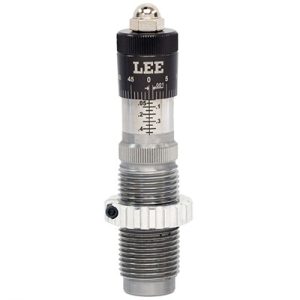
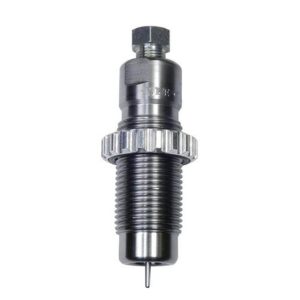
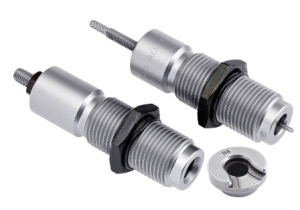
Cleaning and prepping .308 brass
.308 rewards careful brass prep, and that work is most of what separates good handloads from great ones. Tumble first so grit never reaches your die, then lube and size. Because the case stretches under full-power loads, measure and trim to a uniform length, and chamfer and deburr the case mouth so bullets seat cleanly. For brass you will reload many times, full-length sizing with attention to shoulder bump keeps headspace consistent.
Many .308 handloaders run their cases until the primer pockets loosen or the necks split, and annealing the necks every few firings extends case life and keeps neck tension consistent. A wet stainless tumble gets the pockets and interiors spotless for precision work, while a dry vibratory handles general loads. The best brass tumblers guide walks through which method fits how seriously you are loading.
Precision .308 versus gas-gun .308
Like .223, .308 lives in two very different rifles, and the platform should drive your process. In a bolt gun chasing accuracy, you can size for minimal shoulder bump, tune neck tension with a bushing die, seat bullets close to the lands, and skip crimping for better concentricity. This is the path to the tiny groups the cartridge is famous for.
In a gas gun like an AR-10 or an M1A, reliability comes first. Full-length size to factory dimensions every time, keep an eye on case head separation from repeated sizing, and a light crimp helps prevent setback in a semi-auto feed cycle. The M1A in particular is sensitive to powder choice for op-rod timing, so stick closely to data proven in that platform. One cartridge, two jobs, and matching your loading to the gun is what makes the difference.
How to work up a .308 load safely
Begin at the listed starting charge for your specific bullet and powder, then work up in small increments while reading the brass and the target. Pressure signs on .308 include flattened or cratered primers, stiff bolt lift, ejector marks on the case head, and primer pockets that loosen after firing. Stop and back off at the first sign. A chronograph is worth its price here, since velocity flat-lining or jumping erratically tells you when you have pushed past a node or too close to max.
Many precision .308 shooters work up in a ladder, watching for the charge where velocity and group size stabilize, then settle just below any pressure. Confirm finished rounds chamber freely in your rifle, and check shoulder bump with a comparator if you are reloading the same brass repeatedly so headspace stays safe. Pull your charge data from the verified manufacturer sources in the next section, start low, and work up.
Loading your first batch of .308, step by step
A first .308 session follows the classic bottleneck rifle sequence. It is the same flow that serves the precision-rifle world, and walking it once makes the gear list above make sense.
Inspect and clean. Look each case over for the shiny ring of incipient head separation above the base, cull any that show it, and tumble the rest clean. Sorting by headstamp pays off for accuracy loads because case capacity varies between makers.
Lube and size. Lube every case and full-length size, setting the die for minimal shoulder bump if you are measuring with a comparator. The lube prevents the case from sticking in the die, and controlled bump is what keeps headspace safe over repeated firings. Wipe the lube off afterward.
Trim and prep. Measure and trim cases that have grown past maximum length, then chamfer and deburr the mouth. If your brass has been fired several times, this is when many loaders anneal the necks to keep neck tension consistent and extend case life. Clean the primer pockets while you are at it.
Prime. Seat a fresh large rifle primer into each pocket, flush or slightly below the head. Consistent primer seating contributes to consistent ignition, which matters more on a precision cartridge than people expect, so take your time and feel each one home.
Charge and seat. Throw the charge your verified data specifies for your exact bullet and powder, weighing each charge on a good scale if you are after accuracy. Seat the bullet to your chosen overall length, skip the crimp for bolt-gun precision or add a light one for a gas gun, and confirm finished rounds chamber freely. Check shoulder bump with a comparator if you are reusing brass, label the box, and pull your data from the verified sources in the next section.
Where to get verified .308 load data
As with every caliber here, we do not print charge weights, because a safe charge depends on your exact bullet, powder, primer, and brass, and the powder makers’ data is proprietary and meant to be read at the source. Pull your .308 data from Hodgdon’s Reloading Data Center, from the bullet maker like Hornady, Sierra, or Berger, or from a current Lyman or Hornady manual.
Safety note: reduce and work up when you switch to thicker military brass. Start at the listed starting charge, work up slowly while watching for pressure signs, and cross-reference two sources where you can. Reloading is done at your own risk.
Common .308 reloading mistakes to avoid
- Sizing without lube. Like any bottleneck case, .308 must be lubed before sizing or it will stick in the die. Skipping it is the classic beginner disaster.
- Over-bumping the shoulder. Pushing the shoulder back too far each time works the brass excessively and causes case head separation. Bump only as much as your rifle needs.
- Not trimming to length. .308 stretches under full-power loads and grows past maximum, which raises pressure. Measure and trim.
- Treating gas-gun and bolt-gun loads the same. An M1A or AR-10 needs full-length sizing and careful powder choice for op-rod timing, not a tuned bolt-gun recipe.
- Running brass to failure unknowingly. Inspect for the shiny ring of incipient head separation above the base and retire cases before they let go.
Understanding shoulder bump and headspace
Shoulder bump is the single most important concept for reloading .308 brass safely and accurately over many firings. When you full-length size, you push the case shoulder back slightly so the round chambers easily. Push it back too far and you create excess headspace, which lets the case stretch on firing and eventually separates the head from the body, a dangerous failure. Push it back too little and the round chambers stiffly. The goal is to bump the shoulder back just a couple of thousandths from your fired case dimension.
Measuring this takes a comparator that attaches to your calipers, letting you compare a fired case to a sized one and set your die for minimal bump. It sounds fussy, but it is the difference between brass that lasts a dozen firings and brass that cracks at the base after three. For a gas gun, lean toward slightly more bump for reliable feeding; for a bolt gun, minimal bump extends case life and aids consistency. Either way, knowing your numbers keeps you safe.
Choosing components for accuracy versus economy
.308 lets you load at two very different price and performance points. For economical practice and general shooting, plain full metal jacket bullets, standard large rifle primers, and a common medium-burn-rate rifle powder produce solid, affordable ammo that shoots better than bulk factory. This is the load most people make most of the time, and it is where the cost savings on .308 really show up against pricey factory ammo.
For accuracy or hunting, you step up to match or bonded bullets, possibly match primers, and a powder chosen for consistency in your barrel, then spend more time on case prep and load development. The cartridge rewards that effort with genuine precision. The nice thing about .308 is that the same rifle and dies serve both jobs, so you can load cheap blasting ammo and tack-driving match rounds from the same bench, just with different components and different care.
Is reloading .308 worth it?
Yes, more than almost any common caliber. Premium .308 match and hunting ammo is expensive, so the per-round savings are real, and the accuracy gains from a tuned load are the bigger prize for most .308 shooters. We ran the numbers in our cost-per-round breakdown, and our best reloading presses guide covers the gear you will want for full-power rifle loading.
Where to go from here with .308
.308 is the cartridge that teaches you precision rifle handloading, from shoulder bump and headspace to the component choices that separate blasting ammo from match rounds. The skills you build loading .308 transfer directly to almost any bottleneck rifle cartridge, which is a big part of why it is such a rewarding place to get serious.
If you are still choosing gear, our best reloading presses guide covers the rigid single-stage and Co-Ax presses that suit accurate .308 loading, while the best reloading dies roundup explains standard versus bushing neck-sizing dies for tuning neck tension. The best reloading kits guide bundles the essentials, and the best brass tumblers guide covers the wet and dry cleaning options precision loaders rely on.
For the whole process end to end, our complete guide to reloading connects every step, and the cost-per-round breakdown shows how the savings stack up, which are real on .308 because quality factory ammo is expensive. The cartridge lets you load cheap practice rounds and tack-driving match ammo from the same dies, so it pays back both your money and your effort. Master shoulder bump, keep your brass healthy, and .308 will serve you across plinking, hunting, and precision shooting alike.
One last thought before you start: .308 is a full-power rifle cartridge, so treat your load development with the respect that pressure deserves. Work up slowly from the starting charge, read your brass and your bolt at every step, and never chase the last few feet per second past the first pressure sign. The cartridge is accurate and forgiving across a wide range of moderate loads, which means there is rarely a good reason to load it near maximum. Load conservatively, keep your brass healthy with consistent shoulder bump, and .308 will give you a lifetime of accurate, reliable shooting from a single set of dies.
Last updated June 3rd 2026
What primer does .308 Winchester use?
Large rifle primers. This is different from .223, which uses small rifle primers, and 9mm, which uses small pistol primers. Standard large rifle primers cover normal .308 loads, and you should seat them flush or just below the case head.
Should I neck size or full-length size .308 brass?
Neck sizing can improve accuracy in a bolt gun shooting its own brass, but full-length sizing is what you want for reliability, and it is mandatory for gas guns like the M1A and AR-10. If you run a semi-auto, full-length size and bump the shoulder back a couple of thousandths so rounds chamber freely.
Can you reload 7.62 NATO brass as .308?
Yes, but treat it as a separate load. Military 7.62x51 brass typically has thicker walls and less internal capacity than commercial .308, which raises pressure for the same charge. Work up from a reduced charge rather than reusing your commercial-brass load.
What is the best bullet weight for reloading .308?
168 grain hollow-point boat-tail match is the classic .308 accuracy load and a great default. 150 grain bullets are lighter for hunting and practice, and 175 grain bullets carry better at long range. Most .308 barrels stabilize this whole range.
Do you need to anneal .308 brass?
It is not required, but annealing the case necks on brass you reload many times extends case life and keeps neck tension consistent, which helps accuracy. For brass you only load a few times, you can skip it.
Why doesn't this guide list .308 charge weights?
Because a safe charge depends on your exact bullet, powder, primer, and brass, and a generic number would be both dangerous and a misuse of the powder makers' proprietary data. Pull your charges from Hodgdon's Reloading Data Center, your bullet or powder maker, or a current manual, and work up from the starting charge.
Is reloading .308 worth it?
For .308 the answer is usually yes, especially if you shoot match or hunting loads. Quality factory .308 is expensive, so the per-round savings are real, and handloading lets you tune a load to your rifle for accuracy no generic factory round will match. For bulk plinking the case is weaker, but few people shoot .308 purely for plinking.
What press is best for reloading .308?
A rigid single-stage handles .308 beautifully, with the RCBS Rock Chucker as the workhorse pick and the Forster Co-Ax as the precision upgrade for the lowest runout. The leverage of a stout O-frame press matters when full-length sizing .308 brass. See our best reloading presses guide for the full breakdown.
4,021+ Gun & Ammo Deals
Updated daily from 200+ top retailers. Filter by category, caliber, action type, and price.
Related Guides