
The RCBS Rock Chucker Supreme Master Kit is the best reloading kit for most people, a forever-quality single-stage setup built around the press that tops our presses guide. On a tight budget, the Lee Breech Lock Challenger Kit gets you loading for the price of a few boxes of ammo, and high-volume shooters should look at the Dillon RL 550C. Here are the six reloading kits worth buying in 2026, who each one suits, and exactly what you still need to add.
Some of the links below are affiliate links, meaning at no additional cost to you, we may earn a commission if you click through and make a purchase.
Table of Contents
How we tested: Every pick here is ranked against our testing methodology. Minimum round counts, accuracy and reliability protocols, the failures that disqualify a gun.
Best reloading kits at a glance
| Kit | Best for | Press type | Level |
|---|---|---|---|
| RCBS Rock Chucker Master | Overall | Single-stage | Buy-once quality |
| Lee Breech Lock Challenger | Budget | Single-stage | Entry |
| Hornady Lock-N-Load Classic | Mid-range | Single-stage | Step-up |
| Lee Classic Turret | Value speed | Turret, auto-index | Beginner to intermediate |
| Dillon RL 550C | High volume | Progressive | Committed |
| Lee 50th Anniversary | Complete beginner bundle | Single-stage | Entry |
How to choose a reloading kit
A reloading kit bundles a press with the supporting tools you need to start, which saves money versus buying everything separately and takes the guesswork out of what a beginner actually needs. The main decision is the press type at the kit’s core: single-stage for learning and precision, turret for a speed-and-simplicity balance, or progressive for high volume. Match that to how much you shoot. If you are brand new, read our complete guide to reloading first so the parts make sense.
1. RCBS Rock Chucker Supreme Master Reloading Kit: Best Overall
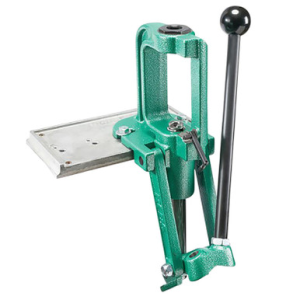
If you want one box that sets you up to reload for life, the RCBS Rock Chucker Supreme Master Kit is the one I point people to. It is built around the Rock Chucker Supreme press, the cast-iron single-stage that tops our best reloading presses list, and it surrounds that press with the supporting gear you actually need: a powder scale, a powder measure, a hand priming tool, case-prep accessories, and a loading manual to get you started.
The reason this kit wins is the press at its heart. Everything else in a starter kit is consumable or upgradeable, but the press is the tool you keep for thirty years, and the Rock Chucker is as good as single-stage presses get. The accessories RCBS bundles are genuinely usable, not throwaway filler, so you are not immediately re-buying the scale or the measure the way you are with some cheaper kits.
What this kit does not include, like every kit on this list, is dies and a shell holder for your specific caliber, plus calipers and components. Budget for those on top. But as the foundation of a bench you will not outgrow, the Rock Chucker Master Kit is the safe, smart money, and it is what I would buy if I were starting over today.
Pros
- Built around the superb Rock Chucker Supreme press
- Bundled accessories are quality, not filler
- Everything threads and works together out of the box
- RCBS lifetime support behind the whole kit
Cons
- Pricier than budget all-in-one kits
- Still need dies, shell holder, and calipers
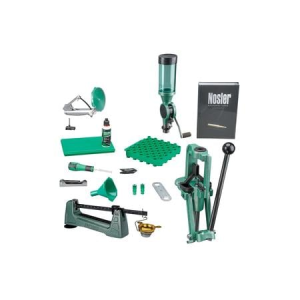
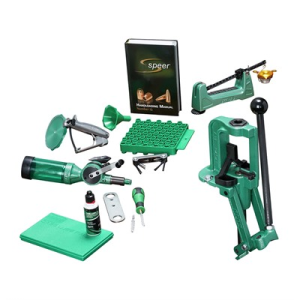
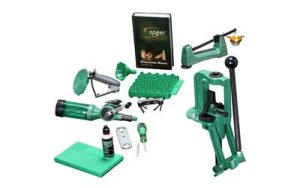
Best for: Anyone who wants a forever-quality single-stage setup in one purchase.
2. Lee Breech Lock Challenger Kit: Best Budget
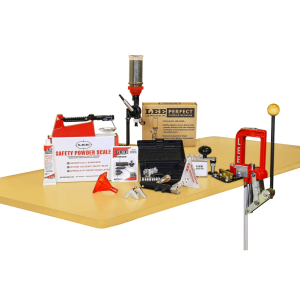
For the lowest credible entry into reloading, the Lee Breech Lock Challenger Kit is tough to beat. It is built around the Breech Lock Challenger single-stage press, whose bushing system lets you change dies in a quarter turn, and it bundles a powder measure, a scale, a priming tool, and case-prep basics at a price that often undercuts buying the press and accessories separately.
This is the kit I recommend to someone who is not sure how deep they will go. It costs about what a few boxes of premium ammo run, it loads safe and accurate ammunition, and if you fall in love with the hobby you can upgrade pieces over time. The breech-lock bushings are genuinely handy, letting you keep dies set up in their own bushings between sessions.
The trade-offs are what you would expect at the price. The scale and measure are entry-level, and some reloaders eventually swap them for nicer pieces. But nothing here stops you from making excellent ammo, and as a first kit or a low-cost second bench, it punches far above its cost. You will still add dies, a shell holder, and calipers.
Pros
- Lowest credible entry price of any complete kit
- Breech-lock bushings make die swaps fast
- Loads safe, accurate ammo from day one
- Easy to upgrade individual pieces later
Cons
- Entry-level scale and powder measure
- Less rigid than a cast-iron press for big magnums
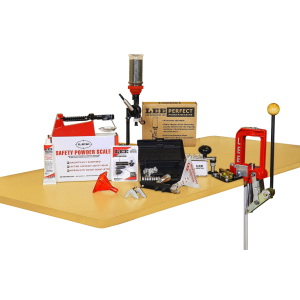
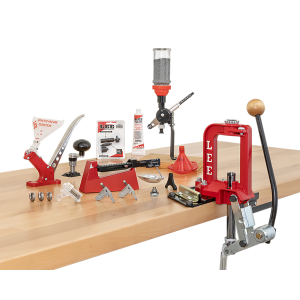
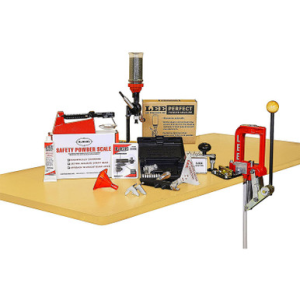
Best for: First-timers testing the hobby without spending much.
3. Hornady Lock-N-Load Classic Kit: Best Mid-Range
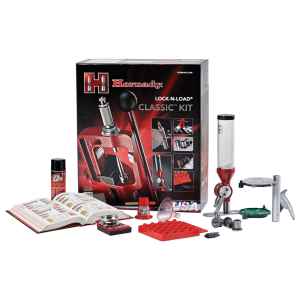
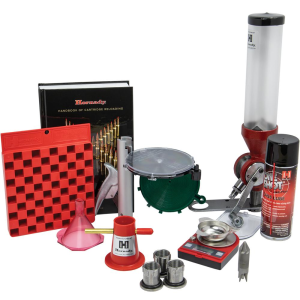
The Hornady Lock-N-Load Classic Kit sits in the sweet spot between budget and premium, and its headline feature is the Lock-N-Load bushing system on the press. Dies live in bushings and twist in and out of the press without losing their setting, which is the same convenience that makes Hornady’s dies so easy to swap. If you load several calibers, that adds up fast.
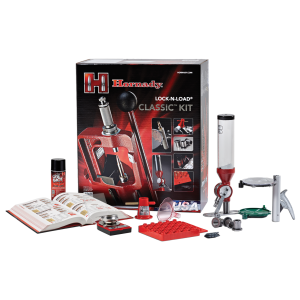
The kit is well-rounded. You get the Classic single-stage press, an electronic or beam scale depending on the package, a powder measure, a hand priming tool, and a loading manual, plus the case-prep odds and ends. The build quality is a clear step up from entry kits, and the bushing system makes this a bench you can grow into rather than out of.
It costs more than the Lee kit and a little less than going full RCBS Master, which is exactly the point. For a reloader who knows they are committed but does not need a progressive, the Lock-N-Load Classic is a smart middle path. As always, dies, a shell holder, and calipers are extra.
Pros
- Lock-N-Load bushings for fast die changes
- Well-balanced, quality components
- Strong middle option between budget and premium
- Includes a loading manual to learn from
Cons
- Bushing advantage is biggest if you buy Hornady dies too
- Pricier than entry-level kits
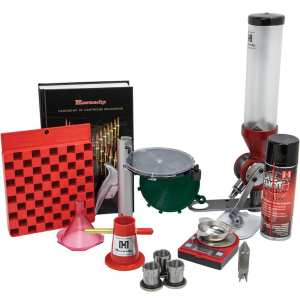
Best for: Committed single-stage reloaders who want quick die changes without going premium.
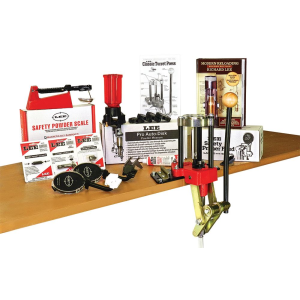
4. Lee Classic Turret Kit: Best Value Speed
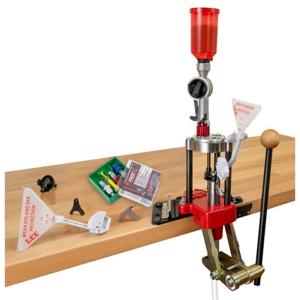
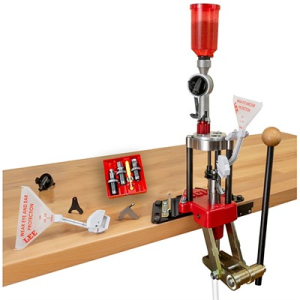
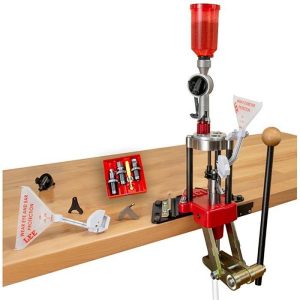
If you want more speed than a single-stage but are not ready for a progressive, the Lee Classic Turret Kit is the value champion. It is built around the auto-indexing Classic Turret press, which advances through your die stations on each pull, so you get most of the throughput of a progressive with most of the simplicity of a single-stage. For a few hundred rounds at a sitting, it is the sweet spot.
The kit bundles the turret press with the supporting gear to get loading, and caliber changes are quick and cheap because you swap a turret plate rather than re-setting dies. That makes it a favorite for the reloader who shoots a couple of pistol calibers plus a rifle round and wants to move between them without fuss.
It is not a precision-bench tool and the included accessories are mid-tier, but for sheer rounds-per-dollar-per-hour, nothing else here competes. I hand this kit to a lot of newer reloaders who already know they will shoot enough to want the speed. Dies, a shell holder, and calipers are still on you.
Pros
- Auto-indexing turret is genuinely fast for the price
- Cheap, quick caliber changes via turret plates
- Great rounds-per-hour for the money
- Forgiving and easy to learn
Cons
- Mid-tier bundled accessories
- Not a precision-rifle setup
Best for: New reloaders who want real speed on a budget across a few calibers.
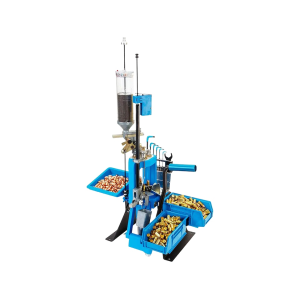
5. Dillon RL 550C Kit: Best Progressive Kit
When your volume is high enough that loading time is the real cost, a progressive kit makes sense, and the Dillon RL 550C is the most versatile way in. The 550C is a manual-indexing progressive that loads the widest range of calibers of any Dillon, and the kit gets you the machine set up for one caliber, ready to crank out 400-plus rounds an hour once you learn it.
Manual indexing sounds like a downside until you realize it makes the press simpler to run and easier to learn than a fully automatic progressive, while still being fast. Caliber conversions are quick and reasonably priced, and the whole thing carries Dillon’s famous no-BS lifetime warranty. For a high-round-count pistol or AR shooter, it pays for itself in a season.
This is the priciest kit here, and a progressive has a steeper learning curve than a single-stage, so it is overkill for someone loading a couple hundred rounds a year. But for the volume shooter, the 550C kit is the one that turns reloading from a chore into a quick, satisfying habit. You will still need dies and calipers.
Pros
- Most versatile Dillon, loads the widest caliber range
- 400-plus rounds per hour once dialed in
- Dillon no-questions lifetime warranty
- Manual index is simpler to learn than a full auto
Cons
- Most expensive kit on this list
- Steeper learning curve than a single-stage

Best for: High-volume pistol and rifle reloaders who want progressive speed.
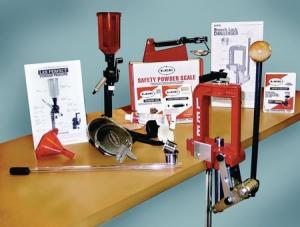
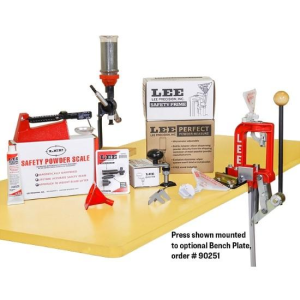
6. Lee 50th Anniversary Breech Lock Kit: Best Complete Beginner Bundle
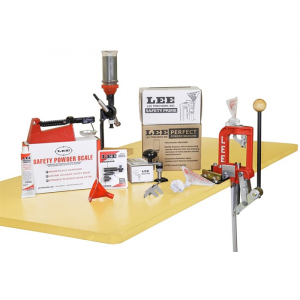
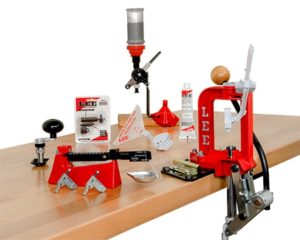
The Lee 50th Anniversary Kit is the most complete out-of-the-box beginner bundle on this list, and it is built to get a total newcomer loading with the fewest extra purchases. It centers on a Breech Lock single-stage press and adds the widest spread of included tools of any kit here, from the powder measure and scale down to the small case-prep pieces that other kits make you buy separately.
For someone who wants to open one box and have nearly everything, this is the pick. Lee leans into value, so the individual pieces are entry-level rather than premium, but they all work, and the kit keeps the total startup cost remarkably low. It is a genuine all-in-one starting point.
As with every kit, you still need dies and a shell holder for your caliber, plus a set of calipers, which Lee does not bundle. But the gap between this kit and actually loading your first round is smaller than almost anything else, which is exactly what a nervous beginner wants. Spend the savings on good calipers and a current manual.
Pros
- Most complete bundle of included tools for the price
- Lowest total startup cost to first round
- Breech-lock press with fast die swaps
- Great hand-holding for a true beginner
Cons
- All components are entry-level
- Still needs dies, shell holder, and calipers
Best for: Total beginners who want the most in one affordable box.
Reloading kit buyer’s guide
What a reloading kit actually includes
A typical kit gives you the press, a powder scale, a powder measure, a priming tool, a loading block, and some case-prep basics like a deburring tool and a case lube pad. Most also throw in a reloading manual, which is genuinely valuable because that is where your load data and the step-by-step process live. The exact mix varies by kit, so read the included-items list before you buy.
What kits leave out, and what you still need to buy
No kit includes dies, because dies are caliber-specific. You buy a die set for each cartridge you load, plus the matching shell holder if it is not bundled. You will also want a good set of calipers, which surprisingly few kits include, and the components themselves: brass, primers, powder, and bullets. Budget for these on top of the kit price, because they are the difference between a box of tools and actually loading a round. Our die guide covers picking the right set.
Single-stage vs turret vs progressive kits
Single-stage kits are the best place to learn and the right tool for precision rifle, but they are slow. Turret kits, like the Lee Classic Turret, speed things up while staying simple. Progressive kits, like the Dillon, are for volume and complexity. Be honest about how much you actually shoot, because a progressive you never fill is wasted money and a single-stage for ten thousand pistol rounds a year is a wasted weekend.
Kit vs buying à la carte
For most beginners, a kit is the better deal because the bundle costs less than the sum of its parts and removes the paralysis of figuring out what to buy. The case for à la carte is when you already own a quality scale or want a specific premium measure, or when you are a precision shooter who wants to choose each component. If you are starting from nothing, the kit almost always wins.
Should the manual be included?
A current loading manual from Lyman, Hornady, or Speer is one of the most useful things in a kit, because it teaches the process and lists starting load data. If a kit includes one, that is real value. If it does not, buy one separately before you load, because the manual is not optional, it is where your charges come from.
How I evaluated these kits
I judged these kits on the press at the center, the genuine usefulness of the bundled accessories, the total cost to get from the box to a finished round, and how well the kit grows with you rather than getting outgrown. A kit lives or dies on its press, so a great press with mediocre accessories beats a mediocre press with nice extras every time. I also weighed how much you still have to buy after the kit, because the sticker price is never the real startup cost. Years of loading across single-stage, turret, and progressive setups shaped these calls.
Mistakes to avoid when buying a reloading kit
- Thinking the kit is everything. No kit includes dies, a shell holder, or calipers, and none includes components. Budget for those or you cannot load a single round.
- Buying a progressive kit to start. A progressive is harder to learn and overkill for low volume. Most people should start single-stage or turret and step up if their round count justifies it.
- Chasing the cheapest kit without checking the press. The press is the keeper. A bargain kit built on a flimsy press is a false economy if you stick with the hobby.
- Skipping the manual. If your kit does not include one, buy a current loading manual before you start. It is where your load data and the safe process come from.
- Forgetting the recurring component cost. The kit is a one-time buy; brass, primers, powder, and bullets are ongoing. Our cost breakdown shows the real per-round math.
Bottom Line
For most reloaders the RCBS Rock Chucker Supreme Master Kit is the buy: a forever press surrounded by accessories worth keeping. On a budget, the Lee Breech Lock Challenger Kit gets you loading cheaply, and the Lee 50th Anniversary Kit is the most complete beginner bundle. Want speed without a progressive? The Lee Classic Turret Kit. Loading by the thousand? The Dillon RL 550C. Whichever you pick, remember the kit is the start, not the finish, so budget for dies, calipers, and components on top. When you are ready, our guides for 9mm, .223/5.56, and .308 cover loading specific calibers, the best dies guide covers the die sets you will add, and the cost breakdown shows when it all pays off.
Last updated August 2nd 2026
What is the best reloading kit for a beginner?
The Lee Breech Lock Challenger Kit is the best low-cost beginner kit, and the Lee 50th Anniversary Kit is the most complete beginner bundle. If you want forever-quality from the start and can spend more, the RCBS Rock Chucker Supreme Master Kit is the best overall.
What comes in a reloading kit?
A typical kit includes the press, a powder scale, a powder measure, a priming tool, a loading block, basic case-prep tools, and usually a reloading manual. The exact mix varies by kit, so always read the included-items list before buying.
What do you still need to buy after a reloading kit?
Every kit leaves out dies and a shell holder, which are caliber-specific, and most leave out calipers. You also need the components: brass, primers, powder, and bullets. Budget for all of these on top of the kit price, since they are what actually let you load a round.
How much does a reloading kit cost?
Budget kits start around the price of a few boxes of premium ammo, mid-range single-stage kits run higher, and progressive kits cost the most, often into four figures once you add caliber conversions. Remember the kit is a one-time cost while components are ongoing.
Should a beginner buy a single-stage or progressive kit?
Almost always single-stage, or a turret kit. A single-stage teaches the fundamentals and is forgiving, while a progressive is harder to learn and overkill unless you already shoot high volume. Step up to a progressive later if your round count justifies it.
Is a reloading kit cheaper than buying everything separately?
Usually yes. A kit bundles the press and accessories for less than the sum of the parts and removes the guesswork of what a beginner needs. À la carte makes sense mainly if you already own quality pieces or are a precision shooter choosing each component.
Does a reloading kit include a manual?
Many do, and an included current manual from Lyman, Hornady, or Speer is real value because it teaches the process and lists load data. If your kit does not include one, buy a manual before you load, since it is where your charges and the safe process come from.
Do reloading kits include dies?
No. Dies are caliber-specific, so no kit includes them. You buy a die set for each cartridge you load, plus the matching shell holder if it is not bundled. Plan for this as a separate purchase on top of the kit.
4,070+ Gun & Ammo Deals
Updated daily from 200+ top retailers. Filter by category, caliber, action type, and price.
Related Guides