

Last updated and checked October 31, 2026 · By Nick Hall. Prices are the lowest new listings in our feed of 200+ retailers on October 31, 2026.
The little red dot that appears on a target the instant you grip your pistol is largely a Crimson Trace idea. The Oregon company built its name on Lasergrips, replacement grips with a built-in laser that switches on when you take a normal firing hold. From there came the Laserguard, the rail-mounted Rail Master, compact Lightguard lights and CT RAD red dots. Here is who they are, what they make, and what is worth buying.
Crimson Trace Deals: 26% Off or Better
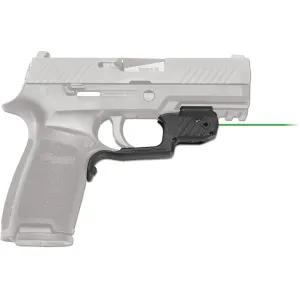
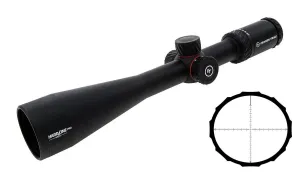
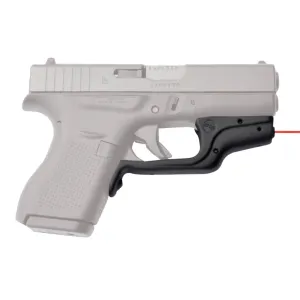
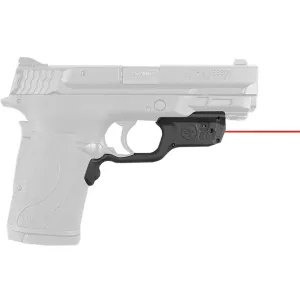
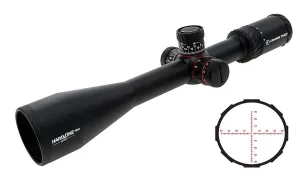
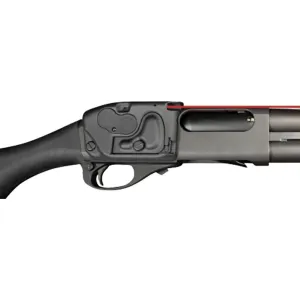
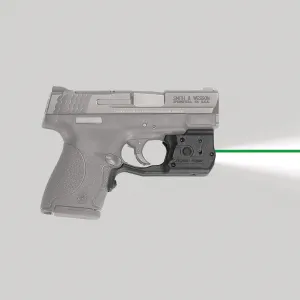

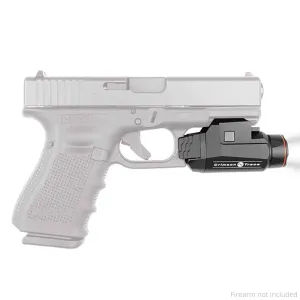
Table of Contents
Who Crimson Trace is
Crimson Trace is a laser sight and weapon light brand co-founded in Oregon in 1994 by engineer Lew Danielson and based in Wilsonville. It’s known for instinctive-activation Lasergrips, and it now belongs to American Outdoor Brands.
The origin story has real charm. Danielson co-founded the company in the back room of an Oregon machine shop, with a business plan handwritten on yellow notepad paper. The first laser sights were designed for Glocks, and customers mailed their pistols to Oregon to have the sights machined and installed. Picture sending your carry gun across the country for that today.
The big idea was instinctive activation. A pressure switch sits where your hand already goes, so the laser comes on when you grip the gun, with no button to find under stress. Danielson’s name went on many of the patents, and he won the NRA’s Golden Bullseye Pioneer Award before he announced his retirement in 2016.
Ownership has moved around. Smith & Wesson bought Crimson Trace for $95 million in August 2016. When S&W spun off its outdoor business as American Outdoor Brands in 2020, Crimson Trace went with it, and the brand’s own website footer now carries the AOB logo. So if you read that S&W owns it, that’s out of date. S&W does still sell guns with Crimson Trace lasers fitted, which keeps the confusion going.
What Crimson Trace makes
Lasergrips
These are the signature: replacement grips with an integrated laser. Because they replace a part the gun already has, they add a laser without changing the pistol’s size much, which is a big deal on snub revolvers. An S&W 642 CT lists at $829 against $569 for the plain gun, so factory fitment isn’t cheap. Check that a Lasergrip exists for your exact model, since fit is gun-specific.
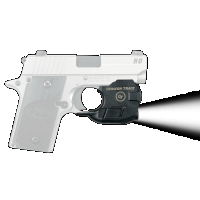
Laserguard and Lightguard
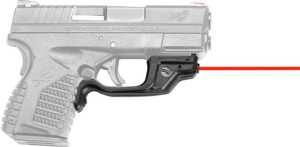
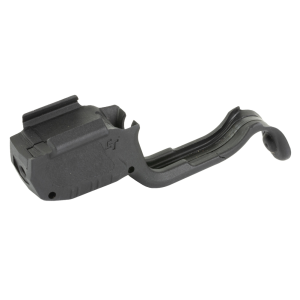
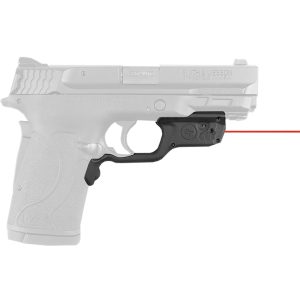
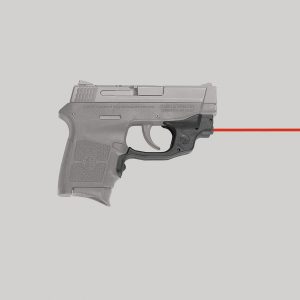
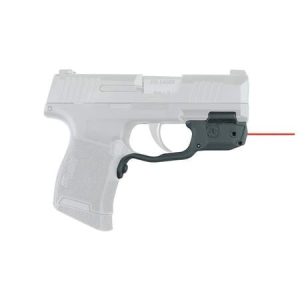
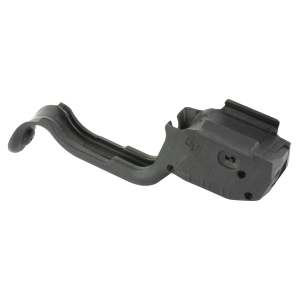
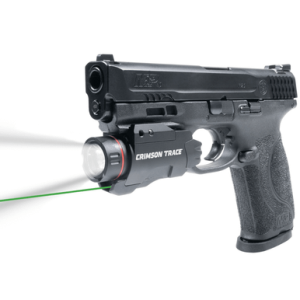
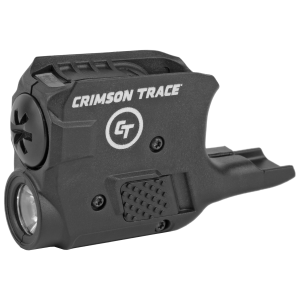
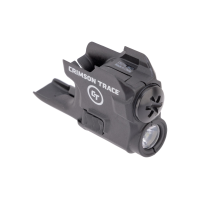
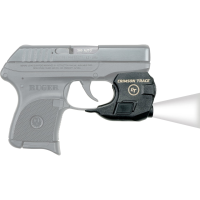
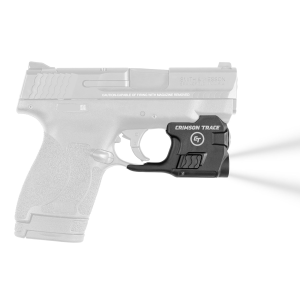
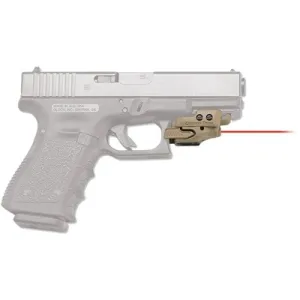
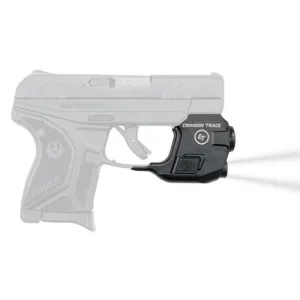
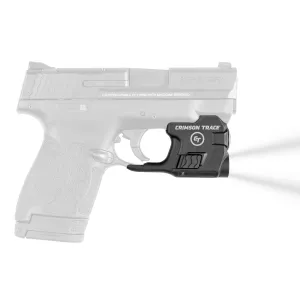
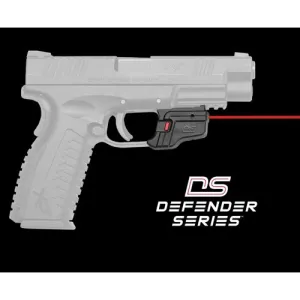
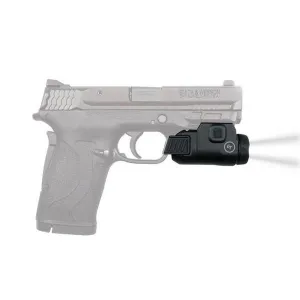
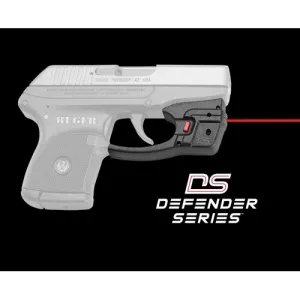
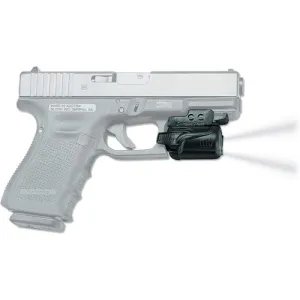
The Laserguard mounts on the front of the trigger guard, sized for compact carry pistols. Our feed had them from $121.52 for a Springfield XD-S and $129.38 for a Hellcat, up to $152.99 for a Ruger LC9. The Lightguard is the light-only version at $49.99 for the Glock 42/43 and SIG P365, one of the cheapest ways to add a light to a carry gun. Those numbers make it an easy try, though it won’t match a full-size duty light.
Rail Master
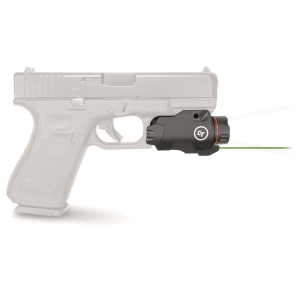
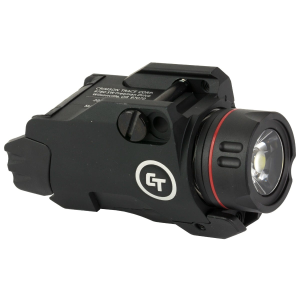
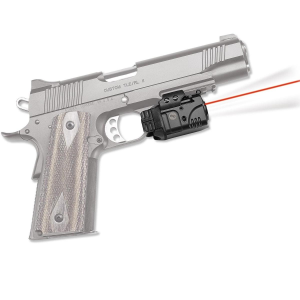
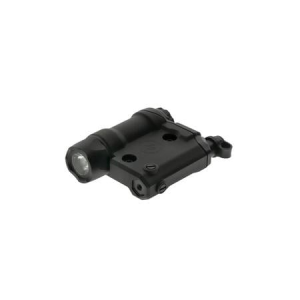
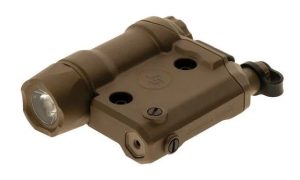
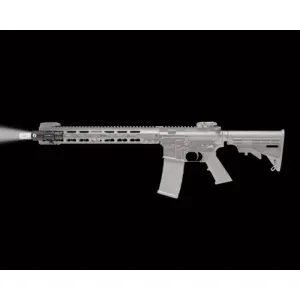
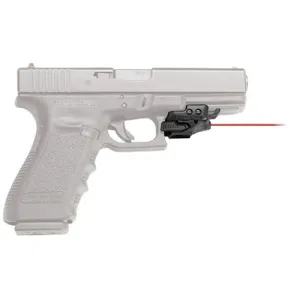
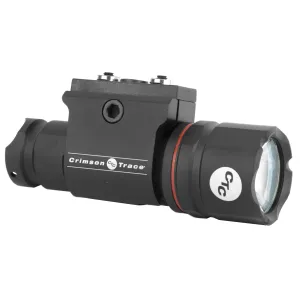
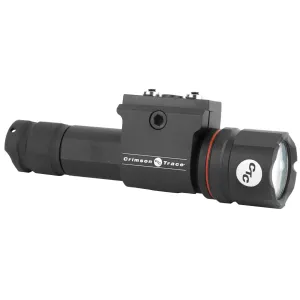
The Rail Master Pro CMR-207 combines a laser and light and runs $159.95 at Sportsman’s Guide in red and $170.99 at GunMag Warehouse in green. The plain CMR-208 and CMR-209 are light-only, from about $65. Crimson Trace also lists the CMR-301 Rail Master Pro green for AR-type rifles and the Lasersaddle for Mossberg shotguns.
Red dots, scopes and rangefinders
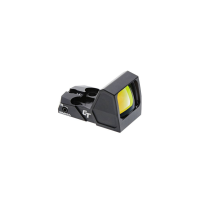
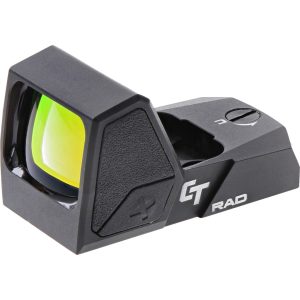
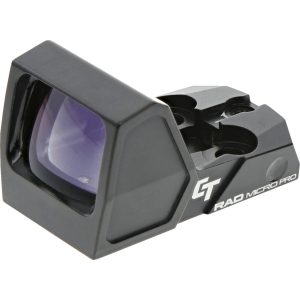
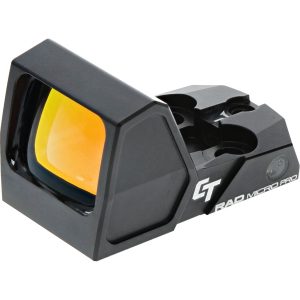
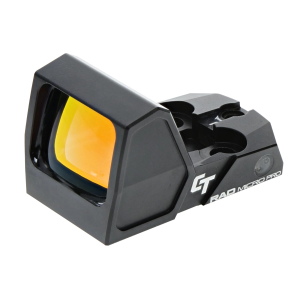
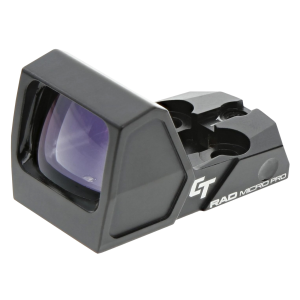
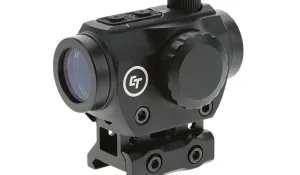
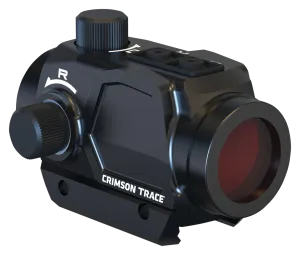
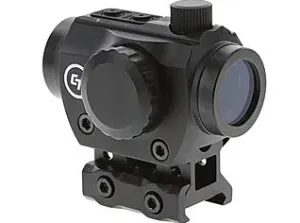
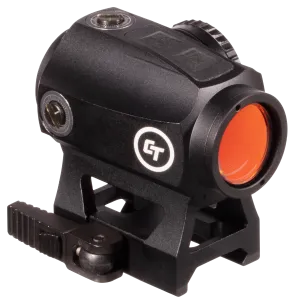
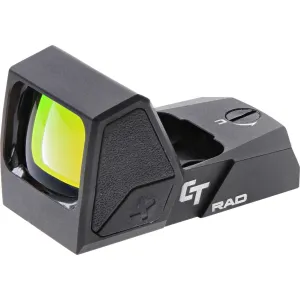
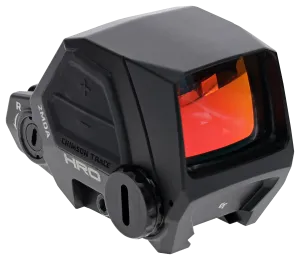
The line now reaches past lasers. The CT RAD and CT RAD Micro are the pistol red dots, and the compact CTS-25 was $87.99 at Bass Pro. It also sells riflescopes and rangefinders. I’d still treat these as extras, since lasers are what the brand is known for.
Pros
- Laser comes on with your grip
- Good fit on carry guns
- Lightguard is cheap to try
Cons
- Red dots have passed lasers
- Fit is gun-specific
- Batteries need regular checking
Laser or red dot?
This is the honest question for this brand today. Slide-mounted red dots have taken over much of what lasers used to do, and for most shooters with an optics-ready pistol, a dot is the first upgrade. A red dot works in daylight at distance, where a small laser can wash out, and it doesn’t give your position away. So why buy a laser at all?
Lasers still earn a place on guns that can’t easily take a dot, such as snub revolvers and pocket pistols. They help older shooters whose eyes struggle with iron sights, they let you aim from an awkward position when you can’t get the gun up to your eye, and they’re a fine dry-fire training tool, because the dot shows you every wobble. Just don’t let one replace learning your sights. A laser battery can die, and a laser can’t fix a bad trigger press.
Red or green is the next call. Red lasers cost less and last longer on a battery. Green is easier to see in bright light but costs more. At $160 versus $171 on the Rail Master Pro, the gap is small enough that I’d go green for anything used in daylight.
Build quality and where it’s based
Crimson Trace is based in Wilsonville, Oregon, and its corporate parent is in Columbia, Missouri. What you’re paying for is gun-specific fit from an established company, not a generic clip-on laser. Before buying, check whether the product has been updated for your gun, since popular carry models change quickly. Read the warranty page on Crimson Trace’s site too, and keep your proof of purchase.
How Crimson Trace compares
Viridian is the main laser rival. It counters with its own instant-on holster activation, and the decision often comes down to which one fits your gun. LaserMax and budget brands such as LaserLyte also compete on price. Against Streamlight and SureFire, Crimson Trace isn’t really a duty-light choice. A Rail Master is a fine light for the money, but if light is the priority, those brands are better places to start.
Who should buy what
- Snub revolver or pocket pistol carrier: Lasergrips, if your gun is covered.
- Compact carry pistol shooter: a Laserguard, or a Lightguard for light only.
- Rail-equipped pistol: a Rail Master Pro.
- Pump shotgun owner: a Lasersaddle.
- Optics-ready pistol owner: a red dot first, and a laser only for a clear reason.
The Crimson Trace philosophy
Everything traces back to one idea: an aiming aid should work automatically when your hand closes around the gun. That’s why the brand has stayed around for three decades in a market that keeps changing. Whether you still need one is a separate question. On a carry gun that can’t take a dot, it remains a simple answer.
How to choose your Crimson Trace setup
Start with your gun. If it has replaceable grips, as many revolvers do, look at Lasergrips first. If it’s a compact with a one-piece frame, look at the Laserguard. If it has a rail and you want a light as well, the Rail Master Pro is the universal answer, but check that your holster still works, because many holsters won’t fit a pistol with a rail accessory. Next decide on red or green. Then zero it at the distance you’d actually use it, and practice drawing to it so the activation is second nature.
The laser that aims itself
It’s easy to take instinctive activation for granted now. In 1994, a laser that turned on by itself as you gripped a gun was new, and it took a business plan on yellow paper and a lot of mailed-in Glocks to prove it. It later became a $95 million deal and part of a much larger outdoor company. Whatever the optics market does next, the basic idea has lasted.
Facts and Figures
- Co-founded: 1994, Oregon, by Lew Danielson.
- Based: Wilsonville, Oregon.
- Smith & Wesson purchase: $95 million, August 2016.
- Parent now: American Outdoor Brands, after the 2020 spin-off.
- Prices on October 31: Laserguard from $121.52, Lightguard $49.99, Rail Master Pro $159.95.
Retail prices in the cards and carousels here are live.
Shop Crimson Trace Parts & Prices
Live products and current prices for Crimson Trace, organized by department and updated automatically.
Laser Sights & Lightguards




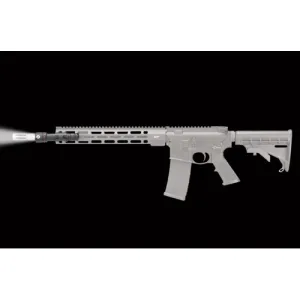
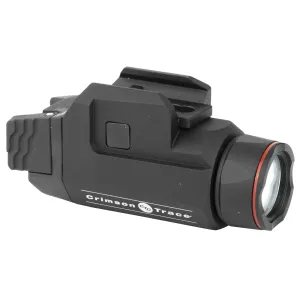
Weapon Lights

Red Dot Sights
Where Crimson Trace Fits in Our Buying Guides
- Gun Lights & Lasers
- The Best Weapon Lights
- The Best Red Dot Sights for Pistols
- Best Concealed Carry Handguns
- Best .357 Magnum Revolvers
Crimson Trace FAQ
Where is Crimson Trace based?
In Wilsonville, Oregon. Its parent company, American Outdoor Brands, is in Columbia, Missouri.
Is Crimson Trace owned by Smith & Wesson?
Not anymore. S&W bought it for $95 million in 2016, and it went with American Outdoor Brands when that business was spun off in 2020.
What is instinctive activation?
A pressure switch where your hand already goes, which turns the laser on when you take a normal firing grip. There is no separate button to find under stress.
What are Lasergrips?
Crimson Trace's original product: replacement grips with a built-in laser. They add a laser without adding much bulk, which suits snub revolvers. Fit is specific to each gun.
Red laser or green laser?
Red costs less and lasts longer on a battery. Green is easier to see in daylight. On the Rail Master Pro the gap was about $11 in our feed, so I would go green for daytime use.
Laser or red dot?
A red dot is the first choice on an optics-ready pistol. Lasers still make sense on snub revolvers and pocket pistols, for shooters with weaker eyes and for awkward shooting positions.
What is a Crimson Trace Lightguard?
A small light that mounts on the trigger guard of a carry pistol. It was $49.99 for the Glock 42/43 and SIG P365 in our feed on October 31, 2026.
What tier is Crimson Trace?
Mainstream to premium for lasers. It costs more than budget brands, and you pay for gun-specific fit from an established name.
Related Optics, Sights & Lasers Brands
USA Gun Shop may earn a commission on purchases made through the links on this page, at no extra cost to you. We list products on merit; prices and availability are pulled live and can change.
4,164+ Gun & Ammo Deals
Updated daily from 200+ top retailers. Filter by category, caliber, action type, and price.