
Affiliate disclosure: This Rock Island Armory VR80 review contains affiliate links. If you buy through our links we may earn a small commission at no extra cost to you.
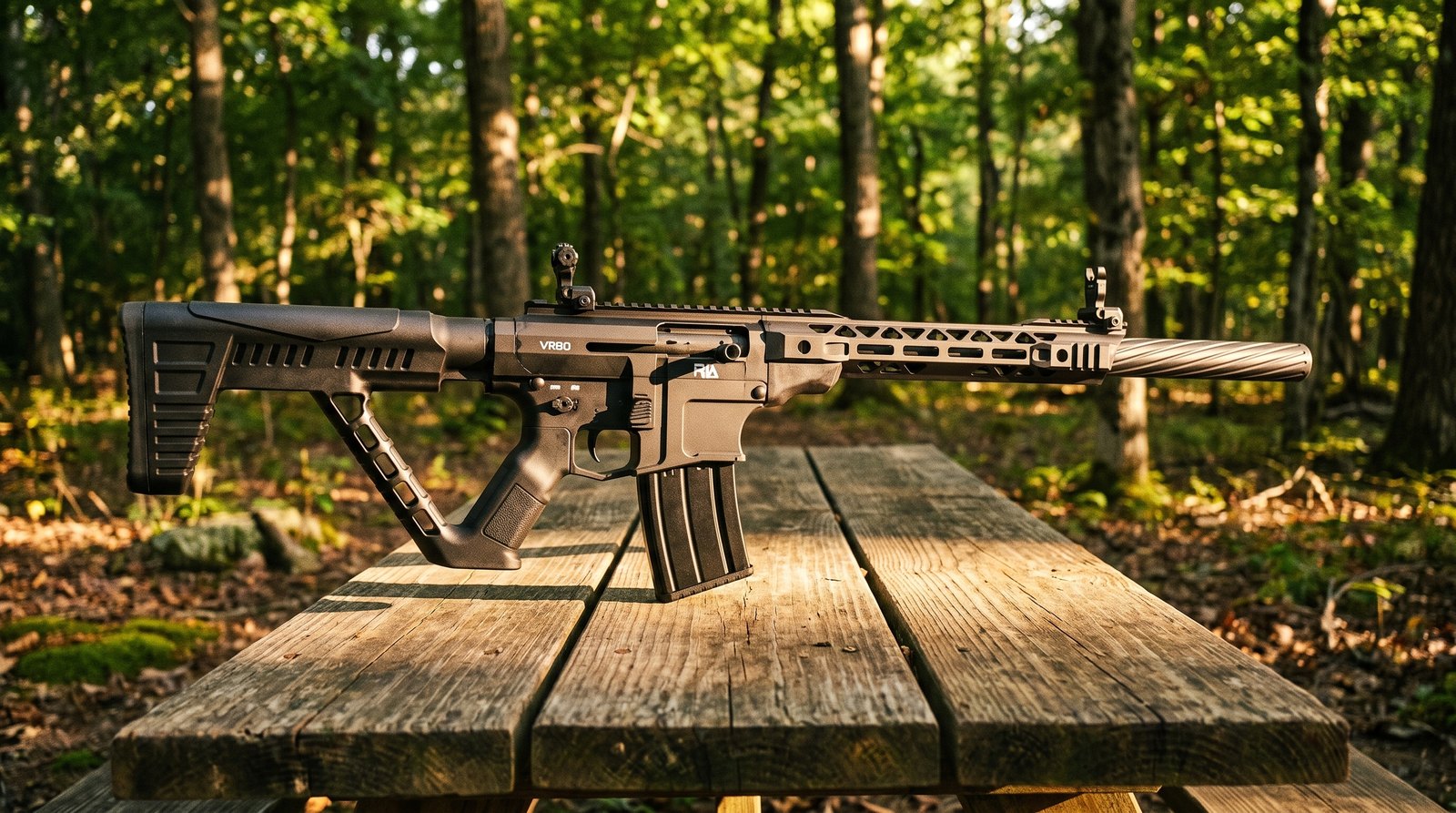
Table of Contents
How we tested: Every pick here is ranked against our testing methodology. Minimum round counts, accuracy and reliability protocols, the failures that disqualify a gun.
Rock Island VR80 Review: The Budget AR-12 That Actually Caught On
Our Rating: 7.8/10
- RRP: $699 MSRP
- Street Price: $619.99 to $650
- Gauge: 12 gauge, 3-inch chamber
- Action: Gas-operated, magazine-fed, semi-automatic
- Barrel: 20 inches, threaded muzzle
- Overall Length: 40 inches
- Weight: about 8.3 lb unloaded
- Capacity: 5+1 standard, with 9- and 19-round mags available
- Magazine type: steel box mags on the shared MKA-1919/AR-12 pattern, interchangeable with the VR60, Citadel Boss 25 and MKA 1919
- Chokes: Beretta/Benelli Mobil pattern, tubes included
- Sights: flip-up AR-style irons on a full-length Picatinny top rail
- Finish: black anodized 7075-T6 aluminum
- Made in: Turkey, imported by Armscor/Rock Island Armory
Pros
- Genuine AR-15 manual of arms, so anyone who runs a carbine feels at home instantly
- Hard to beat the price for a mag-fed semi-auto 12 gauge that runs full-power ammo well
- M-LOK handguard and a long top rail make it a blank slate for optics, lights, and grips
- Soft, flat-shooting for a 12 gauge once you feed it what it likes
Cons
- Fussy with cheap light target loads until it breaks in, and sometimes after
- Magazines are pricey, sometimes hard to find, and they do not drop free
- Weight and length add up fast, and QC out of the box varies unit to unit
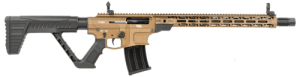
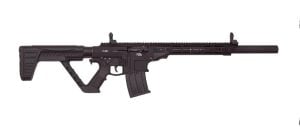
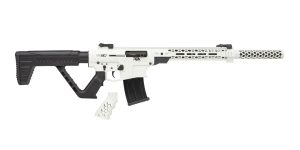

Quick Take
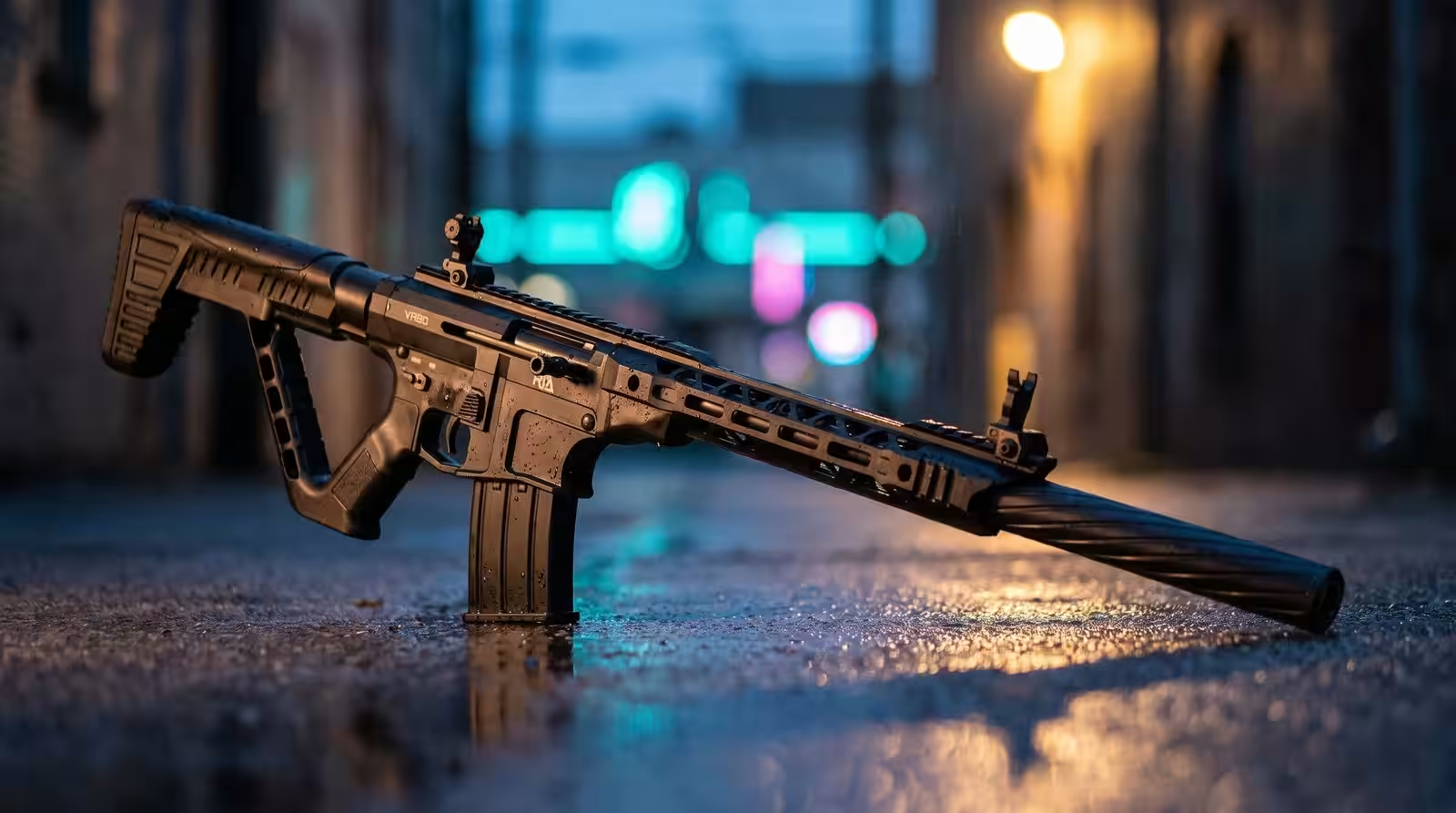
This Rock Island VR80 review comes after a hands-on 300-round test. The VR80 is the AR-12 that broke out of the novelty bin. Rock Island Armory took the box-fed 12 gauge idea, dressed it in real AR-15 ergonomics, put it under $700, and it sold like nothing else in the category. If you already run an AR-15, picking this thing up feels like cheating. The safety, the mag release, the bolt catch, the pistol grip, all of it sits exactly where your hands expect.
It isn’t a flawless gun, and I won’t pretend otherwise. It’s got a personality, and that personality is loud about ammo. Feed it stout stuff and it hums.
Feed it the cheapest 1,145 fps promo birdshot and a fresh one out of the box will stovepipe on you. That’s the honest trade you make for the price.
For a first mag-fed shotgun, a home-defense gun that also does range duty, or an entry ticket into open-class 3-gun, it earns its spot. Just go in knowing what it wants to eat.
Best For: the AR owner who wants a fun, affordable box-fed 12 gauge and is willing to feed it decent ammo. If that is you, start with our roundup of the best AR-12 shotguns to see where it lands against the field.
Why Rock Island Armory Built the VR80 This Way
Rock Island Armory, the American face of Philippine maker Armscor, didn’t invent the AR-12 concept. Turkish factories had been building box-fed, gas-run 12 gauges for years, and a wave of them landed on US shores looking like AR-15s that ate shotgun shells.
Most were rough. The first RIA effort, the polymer-framed VR60, worked but felt cheap. The VR80 was the answer to that.
The big move was going all-aluminum. Upper and lower are 7075-T6, the same alloy your AR receiver’s made from, which cut flex and made the gun feel like a real firearm instead of a toy.
RIA also committed to a true AR manual of arms. The safety throws like an AR safety. The bolt release, the mag catch, the pistol grip, all of it is standard AR geometry, so the muscle memory of millions of carbine shooters transfers over for free.
Then they aimed at a price the competition couldn’t touch. At a $699 MSRP that streets closer to $550, the VR80 undercut nearly every serious mag-fed 12 gauge on the shelf. American Rifleman flagged it as one of the hottest semi-auto shotguns in its class when it hit, and for a while it was outselling guns from names with a lot more history.
Volume like that isn’t an accident. It’s what happens when you give the AR crowd a shotgun that speaks their language at a price they’ll actually pay.
The compromises are baked into that price. Turkish sourcing means QC varies from unit to unit. The gas system’s tuned to run heavy so it works across a wide ammo range, which is why light loads suffer.
And the magazines aren’t cheap and sell out fast, which is where a chunk of the long-term cost hides. None of that’s a dealbreaker. It’s just the shape of the deal.
Competitor Comparison
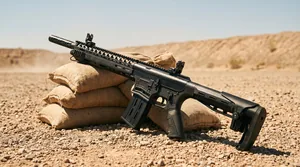
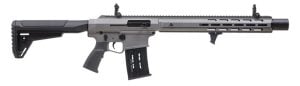
The Panzer AR12 is the VR80’s closest price rival and its most direct lookalike, another Turkish AR-pattern 12 gauge with a 20-inch barrel and a 5-round mag. It usually costs a bit less, and the tradeoff shows in fit and finish and in a mag ecosystem that is even thinner than RIA’s. Reliability reports run hot and cold depending on the batch.
If your only goal is the cheapest way into a mag-fed AR shotgun, the Panzer gets you there. The VR80 is the safer bet if you want the gun to still run in two years and you want mags you can actually source.
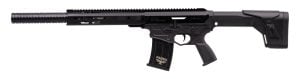
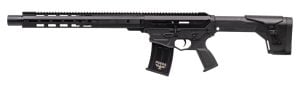
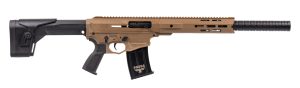
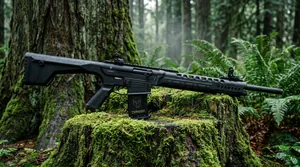
Typhoon’s X12 is the more refined Turkish option. It runs an 1100-style gas system, an 18.5-inch barrel, Benelli-pattern chokes, and a monolithic receiver that many shooters find cleans up the light-load cycling issues that plague cheaper AR-12s. It costs more, and it earns some of that.
If reliability with a wide ammo spread matters more than saving a hundred bucks, the X12 is worth a look. The VR80 answers back with a longer barrel, easier mag availability, and a lower entry price.
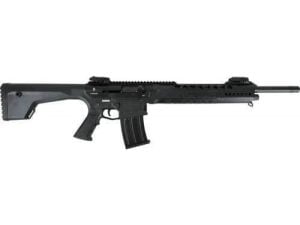
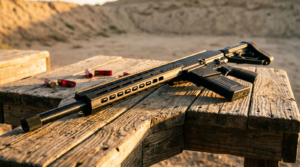
The Genesis Gen-12 plays a different game entirely. It is an American-built, AR-10-based 12 gauge upper and rifle system that takes AR-10 lowers, uses a machined billet build, and aims at the premium end. It costs two to three times what a VR80 does, and the quality gap is real.
If you want a shotgun that shares parts with your AR-10 platform and you have the budget, read our full Genesis Arms Gen-12 review. The VR80 is the value play, the Gen-12 is the premium one.
Features and Quirks
Receiver and Build
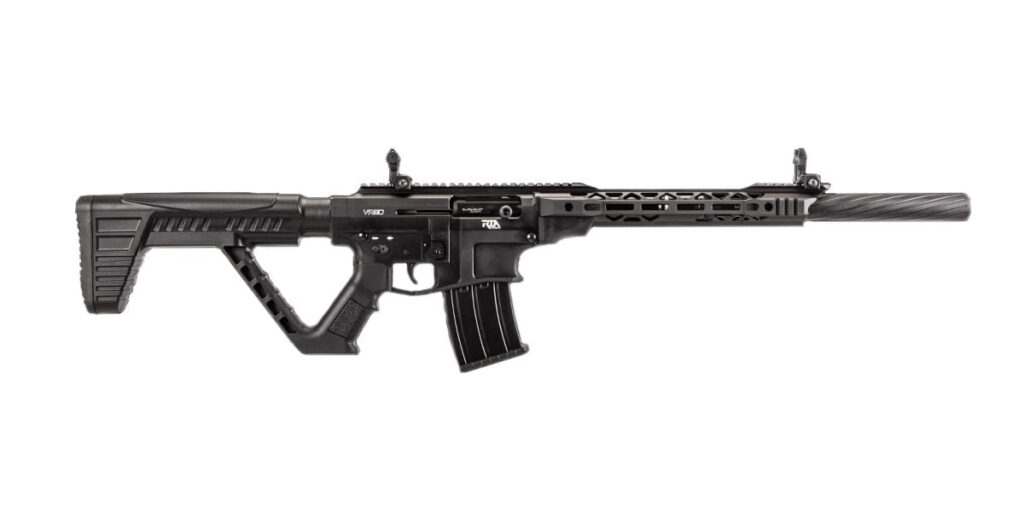
The receiver set is the heart of what makes the VR80 feel legit. Both halves are 7075-T6 aluminum with a black anodized finish, and the whole thing has the reassuring solidity of a well-built AR upper and lower. There’s no polymer flex when you clamp down on the handguard. The M-LOK handguard is thin metal and runs cool, and it gives you plenty of real estate for a light, a grip, or a bipod if you are running slugs.
The one build gripe I hear consistently, and saw on my own sample, is factory grease. These ship packed in preservative oil and grease, way more than they need. A full field strip and a proper wipe-down before the first range trip isn’t optional. Skip it and you’re stacking gunk on top of a gun that is already picky about cycling.
Controls and Ergonomics
This is the VR80’s best trick. Every control is where an AR shooter’s hand goes on instinct. The safety’s an AR safety, the mag release an oversized AR-style button.
The bolt catch works like an AR bolt catch, and the charging handle reverses to either side. If you’ve run a carbine, you already know how to run this gun, full stop.
The rough edges are physical. It’s a heavy gun at around 8.3 pounds bare, and loaded with a 19-round stick up front it gets nose-heavy. The magazines don’t drop free, so reloads are a rock-and-pull affair rather than the slick drop-and-slam you get from an AR mag.
And with hot loads, the trigger guard can nip your trigger finger on recoil. None of these sink the gun, but they’re real, and you feel them by the end of a long session.
Gas System
The gas system is the whole story on reliability. The VR80 runs a short-stroke gas piston that RIA tuned to run heavy, meaning it’s happiest with full-power ammo, generally cited around 1,200 fps and up. That choice makes it reliable across buckshot, slugs, and hot birdshot, but it starves on soft target loads.
There’s also real port-to-port variance from the factory, which is why serious 3-gun shooters sometimes open the gas ports up to get light loads running. Most owners never touch it. If you plan to run 1,145 fps promo shells all day, you might.
Sights and Rail
You get a set of flip-up AR-style iron sights on a full-length Picatinny top rail, and the rail is the point. Fold the irons down and mount a red dot and this gun comes alive. A shotgun that throws a pattern is exactly the kind of gun a dot helps, and the VR80 gives you a mile of rail to put one on. The factory irons are fine as a backup, but almost nobody runs this gun on irons alone.
At the Range: 300-Round Test
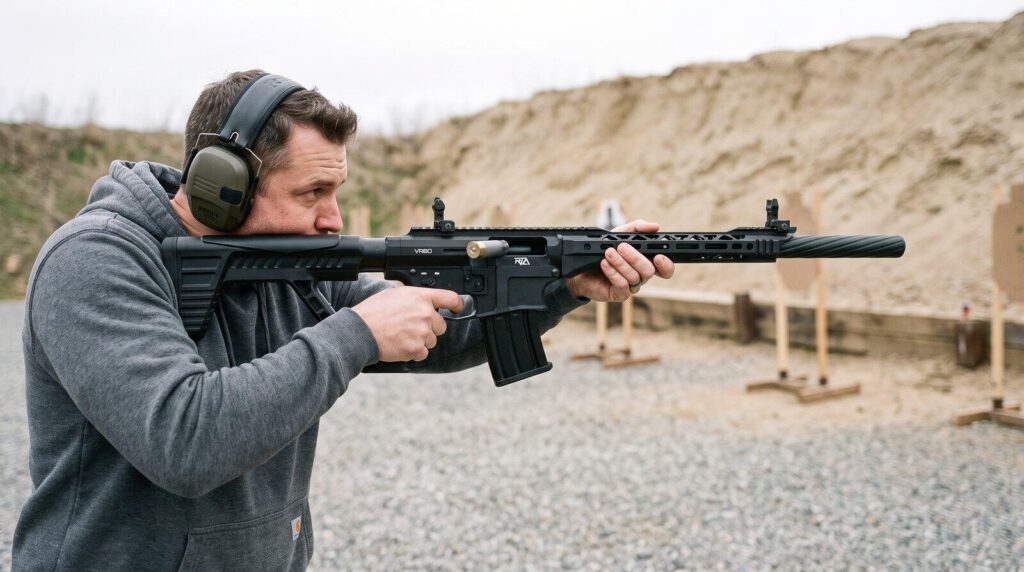
I ran a mix I could source at a normal price, which is exactly how most owners feed this thing. Here is the ammo log across three sessions and roughly 300 rounds.
- Federal Top Gun 2-3/4 in, 1,200 fps target birdshot
- Estate promo birdshot, 1,145 fps, the cheap stuff
- Winchester Super-X high-brass birdshot, 1,300 fps
- Federal 00 buck, full power
- Rio 00 buckshot
- Winchester slugs, 1-oz rifled
- Federal LE Flite Control reduced-recoil buckshot
Break-In
The first 100 rounds were the story owners tell over and over. Fresh out of the box, after that heavy grease scrub, it ran full-power buck and slugs perfectly but choked on the cheap Estate promo loads, throwing a stovepipe maybe one in every fifteen or twenty rounds. It never failed to fire, it just didn’t fully cycle and eject.
By the 150 to 200 round mark the light loads had cleaned up a lot. Owners commonly report the gun settling in somewhere between 200 and 500 rounds, and mine tracked the low end of that range. The takeaway’s simple: don’t judge a VR80 on its first box.
Reliability
Once broken in, the gun was a workhorse on anything with real velocity behind it. The Winchester high-brass birdshot, the full-power buck, the slugs, all of it ran without a hiccup for the back two-thirds of the test. The Estate promo loads still threw the occasional stovepipe when things got dirty late in a session, which lines up with what owners report.
The one load that never got fully happy was the Federal reduced-recoil buckshot, which short-stroked more than once. That matches the sourced reports too. This gun and soft recoil-managed loads aren’t friends, so if you want light buck for home defense, test your exact load before you trust it.
Patterning and Accuracy
With the included modified choke, 00 buck at 15 yards printed even, usable patterns that stayed on a torso-sized target with room to spare. Swapping to the fuller choke tightened things up as you’d expect. Slugs were the pleasant surprise.
Off a rest with the red dot, 1-oz Winchester slugs held a group you could cover with a spread hand at 50 yards, which is plenty for a fighting or 3-gun shotgun. This isn’t a precision instrument, it’s a shotgun, and it patterns and slugs about as well as anything in its class.
Performance Testing Results
Reliability – 7/10
Judged on full-power ammo, this is an 8 or 9. Judged honestly across the light target loads most people actually buy in bulk, it lands at a 7. Break it in, keep it clean, feed it full-power loads around 1,200 fps and up, and it runs. Try to run promo birdshot through a dirty, fresh gun and it will remind you it is a budget Turkish AR-12.
Accuracy and Patterning – 7/10
Even patterns with the right choke and genuinely good slug performance for the category. The Mobil-pattern threads mean cheap, common choke tubes, which is a quiet win. Nothing here holds it back except the physics of a smoothbore.
Ergonomics and Recoil – 8/10
Recoil is soft and flat for a gas 12 gauge, and the AR controls are the whole selling point. Points off for the weight, the nose-heavy feel with big mags, and magazines that will not drop free. Familiar and comfortable, just not featherweight.
Fit, Finish, and QC – 7/10
The aluminum build feels good in hand and the anodizing holds up. The knock is consistency. Some guns arrive perfect, others need the gas ports looked at or ship drowning in grease. Buy from a dealer with a good return policy and inspect it early.
Common Problems and Solutions
- Stovepipes and short-strokes on light loads: First, clean off the factory grease and run at least 200 rounds of full-power ammo to break it in. Then feed it full-power loads around 1,200 fps or hotter. If you must run light loads for competition, this is where opening the gas ports slightly comes in, a common fix among 3-gun shooters.
- Reduced-recoil buckshot will not cycle: The gas system needs pressure this ammo does not always make. Test your specific defensive load thoroughly, and if it will not run, switch to a full-power buck that does.
- Magazines do not drop free: This is normal for the platform. Practice a positive rock-and-pull reload rather than expecting an AR-style drop. A light polish on the mag catch can help slightly.
- Heavy factory grease: Every VR80 needs a full field strip and degrease before its first outing. Do not skip it.
- Trigger guard bite on hot loads: A shooting glove or a slight change in finger placement solves it. Some owners lightly deburr the guard edge.
- Magazine cost and availability: Buy spare 9- and 19-round mags when you see them in stock, because they sell out. Expect roughly $20 to $40 for a 9-rounder and $50 to $70 for a 19-rounder.
Who Should NOT Buy the VR80
- The shooter who only buys the cheapest promo birdshot. This gun does not love 1,145 fps bargain shells. If that is all you will feed it, a gas hunting semi-auto or a pump will frustrate you less.
- Anyone who needs it to run reduced-recoil defensive buck out of the box. Look at a dedicated defensive platform, or plan to test relentlessly. Our best tactical shotgun guide has options that are less ammo-sensitive.
- The weight-conscious shooter. At 8.3 pounds bare it is a lot to carry. If a light, fast-handling gun matters, this is not it.
- The buyer who wants zero fuss and perfect QC. If you will not degrease it, break it in, and inspect it, buy something with tighter factory control and pay for the privilege.
- The serious competitor chasing top-tier reliability. If you are running open-class 3-gun for wins, look at the field in our best 3-gun shotguns roundup, where guns like the Genesis Gen-12 and tuned imports set the bar.
The Verdict
The VR80 earned its popularity honestly. It gave the huge population of AR shooters a box-fed 12 gauge that runs their controls, mounts their optics, and costs less than the competition. That’s a genuinely good idea executed well enough to matter, and years after launch it’s still the AR-12 most people name first for a reason.
It isn’t perfect and it doesn’t try to hide it. The ammo pickiness on light loads is real, the break-in is real, the magazine cost and the QC lottery are real. But every one of those is a known quantity with a known fix, and none of them cost you the thing you came for.
Clean it, break it in, feed it right, and you’ve got a soft-shooting, reliable, seriously fun shotgun for the money. Come in expecting a $550 gun and you’ll be delighted. Come in expecting a $1,500 gun and you’ll find the seams.
Final Score: 7.8/10
Best For: the AR-15 owner who wants an affordable, optics-ready, mag-fed 12 gauge for range fun, home defense, and entry-level 3-gun, and who will feed it the ammo it asks for. You can read the full history and specs at the Armscor VR80 product page or in American Rifleman’s first look at the VR80.
Frequently Asked Questions
Is the Rock Island VR80 reliable?
Once it is broken in and kept clean, yes, on full-power ammo. Owners consistently report it runs buckshot, slugs, and high-brass birdshot well after the first 200 to 500 rounds. Its weak spot is cheap light target loads and reduced-recoil buckshot, which can stovepipe or short-stroke because the gas system is tuned to run heavy. Feed it 1,250 fps or hotter and it earns its keep.
What ammo does the VR80 need to cycle?
The manual recommends a minimum of 1,250 fps, and that is good advice. Full-power buckshot, slugs, and high-brass birdshot in the 1,250 to 1,450 fps range run best. Bargain 1,145 fps promo loads and reduced-recoil buckshot are the ones most likely to give you trouble, especially before the gun is broken in.
Does the VR80 need a break-in period?
In practice, yes. Even though some reviewers report it running everything from day one, most owners find light loads settle down somewhere between 200 and 500 rounds. Always field strip and degrease the gun first, since it ships heavily greased, then run a couple hundred rounds of full-power ammo before you judge it.
Are VR80 magazines expensive or hard to find?
They run on the shared MKA-1919/AR-12 magazine pattern, so they interchange with the VR60, Citadel Boss 25 and MKA 1919, but they still cost more than an AR mag. Expect roughly $20 to $40 for a 9-rounder and $50 to $70 for a 19-rounder, and stock comes and goes, so buy spares when you see them. They also do not drop free, so plan on a rock-and-pull reload.
What chokes does the VR80 use?
The barrel is threaded for the Beretta and Benelli Mobil choke pattern, and choke tubes come in the box. That is a common, widely available thread pattern, so replacement and specialty tubes are easy and cheap to find compared to proprietary systems.
Where is the VR80 made?
It is manufactured in Turkey and imported by Armscor, the Philippine company behind the Rock Island Armory brand. The all-aluminum 7075-T6 receiver set is a step up from the polymer VR60 it replaced, though as with most budget Turkish shotguns, out-of-box quality control can vary from unit to unit.
Does the VR80 have a thumbhole stock, and can you change it?
The standard VR80 ships with a fixed synthetic thumbhole stock, which keeps it 922(r) compliant and legal in more states out of the box. It is not a mil-spec AR buffer tube, so you cannot simply swap in a collapsible AR stock without an adapter, and doing so can change the gun's legal status in restrictive states. Aftermarket adapters and replacement stocks exist, but check your state law before you modify it. If you want a pistol-grip or adjustable setup from the factory, confirm the exact variant before buying, since Armscor has offered more than one stock configuration.
Is the Rock Island VR80 legal in California?
A featureless, California-compliant VR80 configuration has been sold through California dealers, but legality depends entirely on the exact features on the specific gun and on current state law, which changes often. A standard pistol-grip, magazine-fed VR80 is generally not compliant as-is and would need a featureless setup or a fixed-magazine conversion. Because semi-auto shotgun rules and roster requirements shift, always confirm the current configuration with a California FFL before you buy rather than assuming any VR80 will ship compliant.
4,021+ Gun & Ammo Deals
Updated daily from 200+ top retailers. Filter by category, caliber, action type, and price.
Related Guides