

Affiliate disclosure: This Panzer Arms AR12 review contains affiliate links. If you buy through our links we may earn a small commission at no extra cost to you.
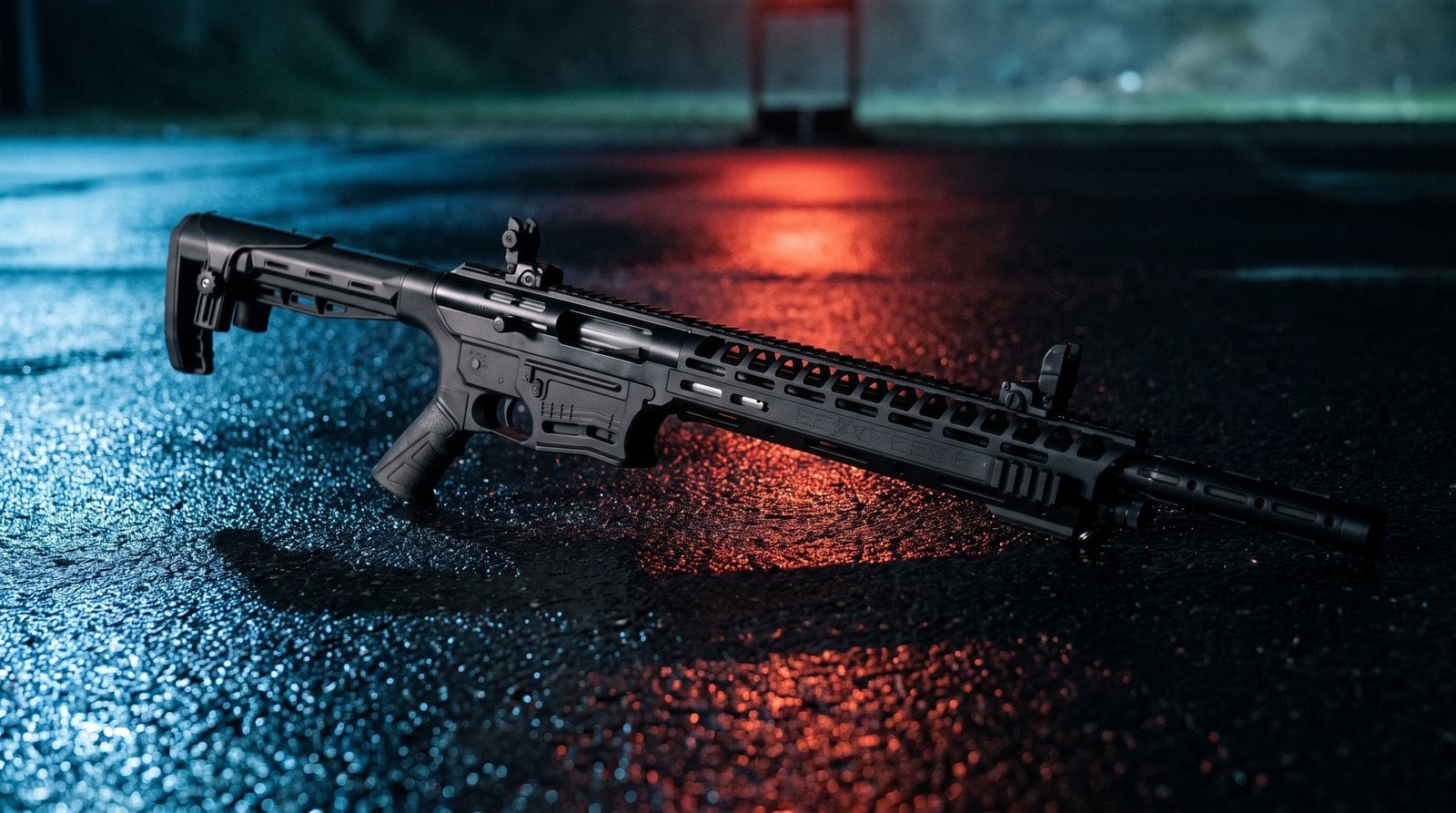
Table of Contents
How we tested: Every pick here is ranked against our testing methodology. Minimum round counts, accuracy and reliability protocols, the failures that disqualify a gun.
Review: Panzer Arms AR12 – The AR-15 Guy’s Cheapest Ticket Into a Mag-Fed 12-Gauge
Our Rating: 7.2/10
- RRP: around $450
- Street Price: roughly $450 to $600 depending on model and stock
- Gauge: 12 gauge, 3-inch chamber (runs 2 3/4 and 3-inch)
- Action: Gas-operated semi-automatic, magazine fed
- Barrel: 20 inches on the standard AR12 (18.5 inches on Pro and short-barrel models)
- Overall Length: about 40.5 inches
- Weight: about 6.5 lbs unloaded (all-steel Pro models run heavier)
- Capacity: 5+1, ships with two 5-round box magazines
- Magazine type: MKA 1919-pattern steel box mag shared with other Turkish AR-12 clones; factory 5 and 10-round, aftermarket drums available
- Chokes: Three flush tubes on threaded models (Full, Modified, Cylinder)
- Sights: Removable flip-up front and rear, full-length Picatinny top rail
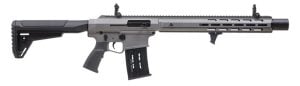
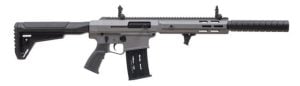
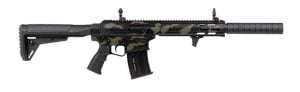
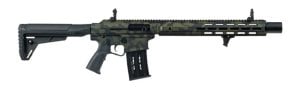
- Finish: Black synthetic furniture (OD green also offered)
- Made in: Turkey, by Panzer Arms, imported by SDS Imports and others
Pros
- Cheapest real way into a mag-fed AR-pattern 12-gauge, often under $500
- Controls, grip, and safety are pure AR-15 muscle memory
- Full-length top rail and included flip-up sights make it optics-ready out of the box
- Runs buckshot and slugs hard once it is broken in
Cons
- Picky with light target loads, especially before break-in
- Turkish budget QC is a lottery, some guns are flawless and some need work
- Magazines are MKA 1919-pattern, cheap and easy to find, but can be stiff to seat until they wear in
Quick Take
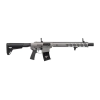
The Panzer Arms AR12 is the gun that lets an AR-15 owner buy a magazine-fed semi-auto 12-gauge without spending Benelli money. It looks like a fat AR, it runs like an AR at the controls, and it feeds from a box mag instead of a tube. For a lot of buyers that’s the whole pitch, and for the price it mostly delivers.
What it isn’t is a refined, drop-in, run-anything shotgun. This is a budget Turkish import, and it behaves like one. Out of the box it wants heavy loads, it needs a real break-in, and the fit and finish varies from gun to gun. Feed it right and treat the break-in as mandatory homework, and it turns into a genuinely fun blaster that punches way above its price.
I went in expecting a rough-around-the-edges bargain and that’s exactly what I got. The good news is the rough edges are known, documented by owners, and mostly fixable. If you want a cheap tactical-style 12-gauge to plink, run drills, and defend the house with, this belongs on your short list.
Best For: the AR-15 owner who wants a cheap mag-fed 12-gauge and is willing to break it in, cross-shopped against the field in our best AR12 shotguns guide.
Why Panzer Built the AR12 This Way
Panzer Arms is a Turkish shotgun maker, and Turkey has quietly become the budget-shotgun capital of the world. Panzer looked at the American market, saw millions of guys who already own an AR-15 and know its manual of arms cold, and built a 12-gauge around that exact muscle memory. Same pistol grip, same safety sweep, same charging handle idea, same magazine-in-the-well feeding. The learning curve is basically zero if you have ever run a carbine.
The other big decision was going mag-fed instead of tube-fed. A tube shotgun makes you top off one shell at a time, which is slow and fiddly under stress. A box magazine drops out and slaps back in like a rifle mag.
That’s the appeal of the whole AR-12 category, and Panzer built the AR12 to hit the lowest price point in it. It scratches the same mag-fed itch as a Saiga-12 but at a fraction of post-ban Saiga pricing. That’s why it lands cheaper than a Rock Island VR80 or a purpose-built rig, and why it competes hard in our best magazine-fed shotgun rundown.
To get there Panzer cut cost somewhere, and that somewhere is fit, finish, and consistency. The gun uses a conventional gas-operated action tuned to run heavier defensive loads reliably, which is a sensible priority for a home-defense and range gun but leaves light target ammo out in the cold at first.
The company has also iterated the design across G2, G4, and Pro variants, each cleaning up the gas system, grip, and handguard. Newer guns are noticeably better sorted than the earliest ones.
There is also a bullpup sibling worth a quick mention. The Panzer BP-12 takes the same magazine-fed 12-gauge guts and stuffs them into a compact bullpup chassis, giving you a 20-inch barrel in an overall package around 30 inches. It shares magazines with the AR12 and scratches a different itch, but the AR12 reviewed here is the conventional AR-pattern semi-auto.
Competitor Comparison
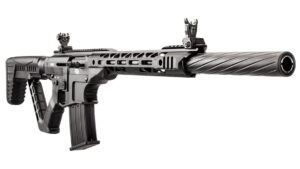
The VR80 is the AR12 category’s most popular gun for a reason. It is generally better finished, runs a bit cleaner out of the box, and has a deeper aftermarket for stocks, mags, and rails. It also costs more, often a hundred to two hundred dollars more than a Panzer.
If your budget can stretch and you want the safer QC bet, the VR80 is the smart buy. If you want the cheapest ticket in and are willing to break it in, the Panzer undercuts it hard.
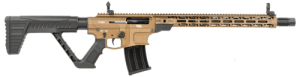
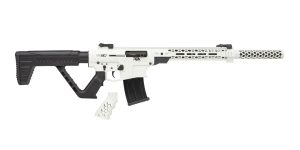
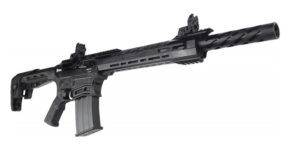
The Citadel Boss 25 is another Turkish-made, mag-fed AR-style 12-gauge that lands in the same bargain bin as the Panzer. Prices overlap almost exactly, and so do the quirks: light-load pickiness, break-in required, QC that varies unit to unit.
Picking between them often comes down to which one is in stock and cheaper on the day you buy. Neither is a clear winner, and both live and die on the specific gun you get. The Tokarev TAR-12, also sold as the MAG-12, is another Turkish mag-fed AR-style 12-gauge that cross-shops directly against both.
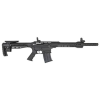
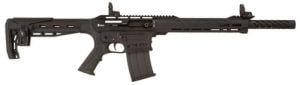
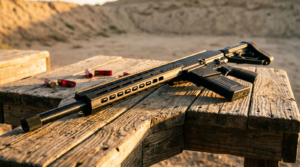
The Genesis Gen-12 plays a completely different game. It is an American-made 12-gauge upper that mounts on your existing AR-15 lower and feeds from magazines built on an AR-10 pattern. It is a premium, better-engineered piece of kit and it is priced like one.
If the Panzer is the budget answer, the Gen-12 is the enthusiast answer. Read our full Genesis Arms Gen-12 review to see whether the jump in price buys enough gun for you.
Features and Quirks
Receiver and Build
The AR12 is built around a two-piece receiver that apes the AR-15 layout. Standard guns use aluminum alloy, while the Pro models step up to reinforced all-steel construction, which is why they weigh noticeably more. The barrel threads or pins into the upper and can be pulled without much fuss, which makes cleaning and future barrel swaps easy.
One thing to note up front is that the chunky look is partly cosmetic. The outer handguard shroud is largely there for the aesthetic, not for structure, and the slots that look like M-LOK are mostly lightening cuts, so mount your accessories on the Picatinny sections.
Finish quality is where the budget shows. My sample had a couple of tool marks and a slightly proud pin, nothing that affected function but enough to remind you this isn’t a $1,200 gun. This is the single most variable part of the Panzer experience, and owner reports back that up.
Controls and Ergonomics
If you can run an AR-15, you can run this thing blindfolded. The safety selector, the pistol grip, and the magazine release all sit where your hands expect them. The charging handle is a side-mounted, reciprocating unit rather than an AR-style rear T-handle, so that’s the one control you have to relearn. It works fine and gives you a good purchase to rack heavy.
The gun is a little nose-heavy, especially the steel Pro versions, and mag changes are not as slick as a rifle at first. The MKA 1919-pattern steel magazines are built tough and shared with other Turkish AR-12 clones, but they can be stiff to seat until they and the mag well wear in together. Give it a firm slap, not a gentle push.
Gas System
Here’s the heart of the matter. The AR12 uses a conventional gas-operated action tuned on the strong side so it reliably cycles buckshot and slugs. Some models include a gas ring or setting that biases the gun toward full-power loads.
The tradeoff is that light, low-brass target shells often don’t generate enough pressure to fully cycle the action, particularly when the gun is new and tight. That’s the number one thing to understand before you buy.
Sights and Rail
Panzer ships the AR12 with removable flip-up front and rear sights and a full-length Picatinny top rail. That means you can run the irons, drop a red dot on, or add a low-power optic without buying anything extra.
Threaded-barrel models come with a set of three flush choke tubes, usually Full, Modified, and Cylinder, so you can tune your pattern for buckshot, birdshot, or slugs. For a gun in this price bracket, getting sights, a rail, chokes, and a spare mag in the box is a genuinely good deal.
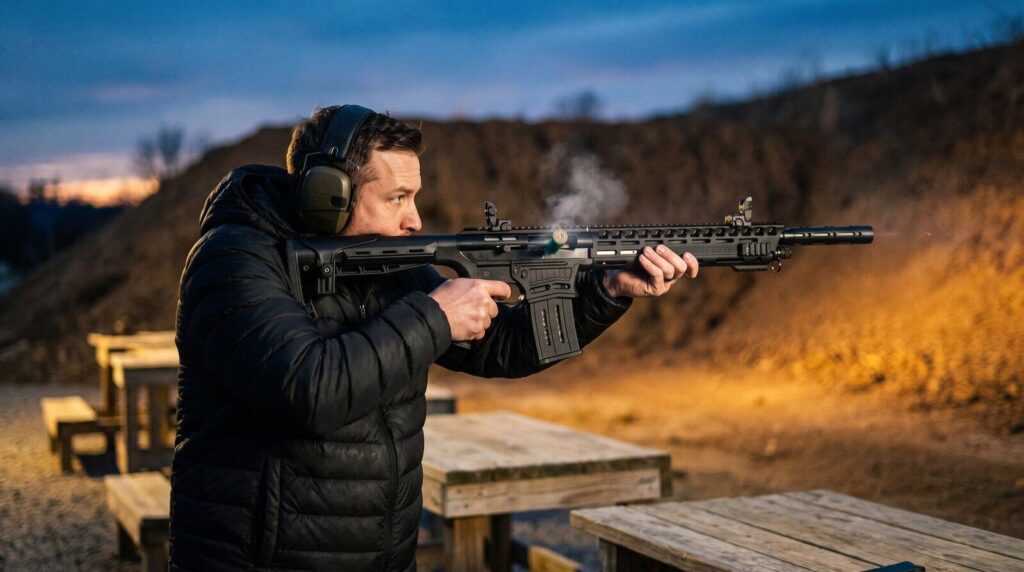
At the Range: 250-Round Test
Break-In
Every owner report I read said the same thing, so I didn’t fight it: run at least 100 rounds of high-brass buckshot or slugs through it before you judge it, then tear it down, clean it, and lube it well. I started with Federal Power-Shok 00 buck and Remington Slugger rifled slugs.
For the first two boxes the gun ran clean on those heavy loads, no failures at all. When I tried a few Winchester AA light target shells early on, the bolt short-stroked and left hulls half-ejected exactly like the forums warned.
After the first 100 rounds I pulled it apart. There was a fair bit of grime and some machining residue in the gas path, which lines up with the break-in advice. I cleaned it, ran a wetter-than-normal lube on the bolt and rails, and reassembled. From there it started loosening up.
Reliability
Here is the honest ammo log from the 250-round session:
- Federal Power-Shok 00 buck, 2 3/4 inch: ran flawless start to finish
- Remington Slugger rifled slugs, 2 3/4 inch: ran flawless
- Winchester Super-X high-brass #4: ran clean after the first box
- Fiocchi 00 buckshot: ran clean
- Federal Top Gun 1 oz #8 target: short-stroked twice early, cycled reliably after round 150
- Winchester AA light target: the toughest load for it, failed to fully eject a handful of times before break-in, mostly ran by the end
The pattern is clear and it matches what owners report. On buckshot and slugs, the gun is reliable from the very first magazine. On light target loads it’s a coin flip until you get past that break-in hump, and even after, the cheapest promo-grade target shells are the ones most likely to give you a failure to eject.
My total for the day was a handful of light-load stoppages and zero stoppages on any defensive load. Longtime owners who push past 1,000 rounds report the gun eventually eats even low-recoil stuff without complaint, which tracks with what I saw trending by the end of the session.
Patterning and Accuracy
With the Modified choke and Federal 00 buck, patterns at 15 yards stayed inside a paper plate, which is exactly what you want from a defensive 12-gauge. Tightening to the Full choke pulled it in a little more at 25 yards. Rifled slugs off the flip-up irons kept a fist-sized group at 25 yards, which is plenty for the gun’s intended job.
It’s not a precision instrument and nobody should expect it to be. It patterns and slugs like a competent fighting shotgun, and the included chokes let you tune it.
Performance Testing Results
Reliability: 6.5/10
On heavy defensive loads this gun is a rock once it has a hundred rounds through it. The score is held down by the light-load pickiness and the QC lottery. If you only judged it on buckshot and slugs it would score a full point higher. Judge it as a run-anything gun and it falls short, so the honest number sits in the middle.
Accuracy and Patterning: 7.0/10
Good, honest shotgun performance. Patterns are even, the chokes work as intended, and slugs hit where you aim inside defensive distances. It does what a fighting 12-gauge needs to do and no more.
Ergonomics and Recoil: 7.5/10
The AR familiarity is the star here. Recoil is standard 12-gauge, softened a touch by the gas action compared to a pump. Points off for the nose-heavy balance and the stiff early magazine fit. Nothing a break-in and a decent sling do not fix.
Fit, Finish, and QC: 6.0/10
This is the weakest category and it’s the price of admission. Tool marks, occasional rough parts, and unit-to-unit variance are all part of the budget Turkish import deal. Function held up, but the finish will never be mistaken for a premium gun.
Common Problems and Solutions
- Light loads will not cycle: This is the big one. Run high-brass buckshot or slugs for the first 100-plus rounds, keep the action wet, and save the cheap promo target ammo for after break-in. If you must shoot light loads early, expect failures to eject.
- Failures to eject during break-in: Almost always a symptom of a tight new gun plus light ammo. A thorough teardown, cleaning, and generous lube after the first 100 rounds clears most of it up.
- Stiff magazines: The MKA 1919-pattern steel mags and the mag well need to wear in together. Seat them with a firm slap, load and unload them a few dozen times, and they loosen up.
- Gas residue buildup: The gas path collects fouling fast on a budget gun. Clean it more often than you would a name-brand semi-auto, especially early on.
- QC variance out of the box: Inspect your specific gun. Check for burrs, verify the barrel locks up tight, and function-test before you trust it. Most run fine, but a small number ship needing attention, so buy from a dealer who will help if you drew a lemon.
Who Should NOT Buy the Panzer Arms AR12
- The high-volume clays shooter: If you plan to run cases of cheap light target loads, this gun will frustrate you. Look at a dedicated soft-shooting semi-auto instead.
- The buyer who wants zero break-in: If you want to unbox a shotgun and trust it that afternoon, spend up for a Beretta or Benelli, or step up to a better-sorted option in our best tactical shotgun guide.
- The QC-averse buyer: If the idea of a possible trip back to the dealer ruins the gun for you, the budget Turkish import category is not your friend. Pay more for consistency.
- The enthusiast who wants a refined build: If you want tight tolerances and an American-engineered upper on your own lower, the Genesis Arms Gen-12 is the gun, at roughly double the money or more.
- The deep-aftermarket tinkerer: If you want a huge catalog of stocks, mags, and parts, the Rock Island VR80 has a broader support ecosystem than the Panzer.
The Verdict
The Panzer Arms AR12 is exactly what it says on the tin: the cheapest honest way for an AR-15 owner to get into a magazine-fed semi-auto 12-gauge. It’s not refined, it’s not fussy-load friendly out of the box, and the finish is budget-grade.
But it runs buckshot and slugs hard from the first magazine, it comes loaded with a rail, sights, chokes, and a spare mag, and once you respect the break-in it turns into a reliable, genuinely fun blaster.
Go in with eyes open. Treat the 100-round heavy-load break-in as part of the purchase, inspect your specific gun, and feed it well. Do that and the AR12 delivers more capability per dollar than almost anything in the category. Skip the light target ammo early, keep it wet, and it’ll reward you.
It earns its score by being wildly good value with real, documented flaws, not in spite of them. For the price, I can forgive a break-in and a coat of unglamorous finish. Just know what you’re buying before you buy it.
Final Score: 7.2/10
Best For: the budget-minded AR-15 owner who wants a mag-fed home-defense and range 12-gauge and will put in the break-in. See how it stacks up in our best AR12 shotguns roundup. Full specs live on the Panzer Arms manufacturer page, and Gun Digest covers the wider category in its best AR shotgun guide.
Frequently Asked Questions
Is the Panzer Arms AR12 reliable?
On heavy loads like buckshot and slugs it is reliable from the first magazine, and after a 100-round break-in it becomes dependable with most ammo. Its weak spot is light, low-brass target loads, which often fail to cycle a new or dirty gun. Quality control also varies unit to unit, so inspect and function-test your specific shotgun before trusting it.
Why won't my Panzer AR12 cycle light target loads?
The gas system is tuned to run heavier defensive loads reliably, so light low-brass shells often do not make enough pressure to fully cycle the action, especially when the gun is new and tight. Run at least 100 rounds of high-brass buckshot or slugs, clean and lube it well, and keep the action wet. Most owners find light loads run much better after break-in.
What magazines does the Panzer Arms AR12 use?
The AR12 feeds from MKA 1919-pattern steel box magazines, the common Turkish shotgun-mag standard, not a Panzer-only proprietary design. The gun ships with two 5-round mags, and 5- and 10-round spares are cheap and easy to find, with aftermarket drums available too. Fit can be stiff until the magazine and the mag well wear in together, so seat them with a firm slap.
How much does a Panzer Arms AR12 cost?
Street prices generally run from about $450 to $600 depending on the model and stock, though deals have dipped below $400 and some higher-end configurations run more. That undercuts most of the AR12 category, including the Rock Island VR80, which is the main reason budget buyers choose it.
Is the Panzer AR12 good for home defense?
Yes, with the caveat that you break it in and feed it right. It runs 00 buckshot and slugs reliably, feeds from a box magazine for fast reloads, and wears AR-15 controls that are easy to learn. Load it with high-brass defensive ammo rather than cheap target shells, keep it maintained, and it makes a capable and affordable defensive 12-gauge.
What is the difference between the Panzer AR12 and the BP-12?
The AR12 is a conventional AR-pattern semi-auto with a 20-inch barrel and around 40 inches overall. The BP-12 packs the same magazine-fed 12-gauge action into a compact bullpup chassis, keeping a 20-inch barrel in an overall length near 30 inches. They share magazines, so the choice comes down to whether you want the familiar AR layout or a shorter bullpup package.
What choke tubes does the Panzer Arms AR12 use?
Threaded-barrel AR12 models ship with three flush-fit choke tubes, usually Full, Modified, and Cylinder, swapped with a standard choke wrench. Match the choke to the job: Cylinder or Modified for defensive buckshot up close, Full for a tighter pattern at distance, and Cylinder for rifled slugs. Confirm your specific barrel is threaded before buying aftermarket tubes, since some short-barrel configurations are not.
Where is the Panzer Arms AR12 made and who imports it?
It is made in Turkey by Panzer Arms and brought into the US by SDS Imports, and you will also see it sold under the Panzer Arms USA banner. Like most guns in this bargain tier it is a Turkish import, which is where both the low price and the QC lottery come from.
4,021+ Gun & Ammo Deals
Updated daily from 200+ top retailers. Filter by category, caliber, action type, and price.
Related Guides