

Last updated August 5th 2026
Some of the links below are affiliate links, meaning at no additional cost to you, we may earn a commission if you click through and make a purchase.
Before you load one of these
- Black powder or an approved substitute only. Smokeless powder will destroy a cap and ball revolver and can seriously injure you. There is no small exception to this.
- Use the charge range printed in your revolver’s own manual. Pietta, Uberti, Cimarron and Traditions all publish figures for their guns. Follow those, not a number off a forum.
- Seal the chamber mouths. Lubed wads or grease over the ball is what stops a chain fire, where one chamber sets off its neighbors.
- Brass frames are softer than steel. Keep charges modest in a brass gun or you will stretch the frame over time.
Read our full firearm safety and legal disclaimer before handling any firearm.
| Revolver | Model Details | Key Specs | Check Price |
|---|---|---|---|
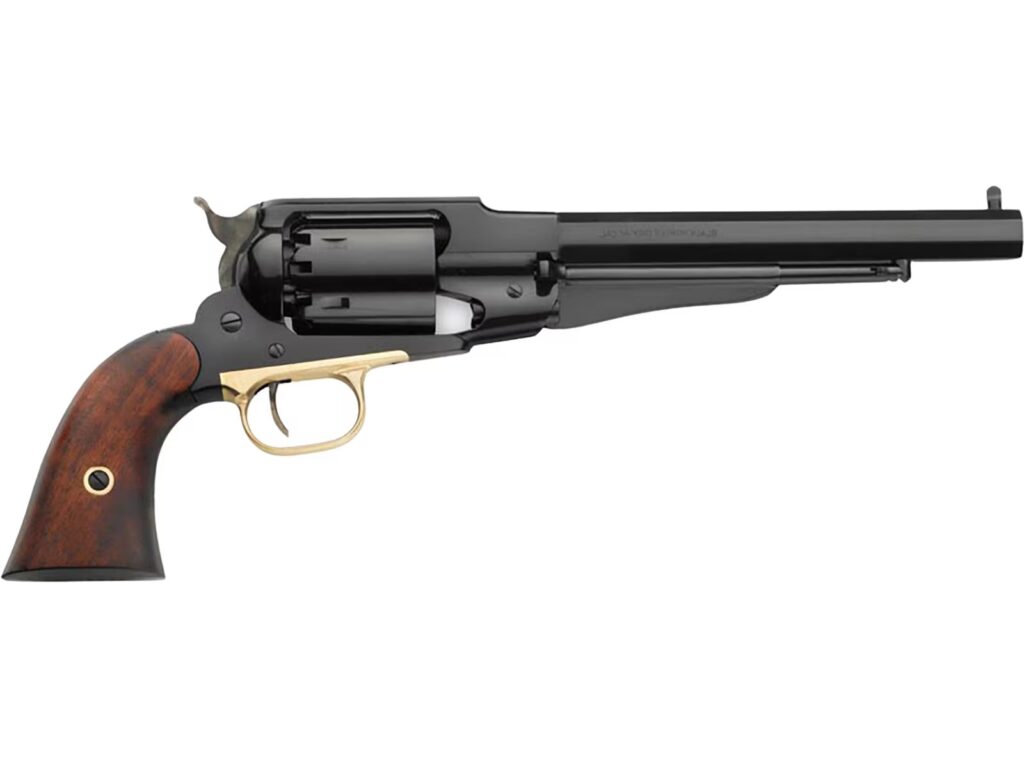 |
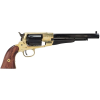
BEST OVERALLPietta 1858 Remington New Model Army Solid top strap, swap-out cylinders, and the strongest frame of the period designs. The one I hand to anyone starting out. |
|
Check Price ↓ |
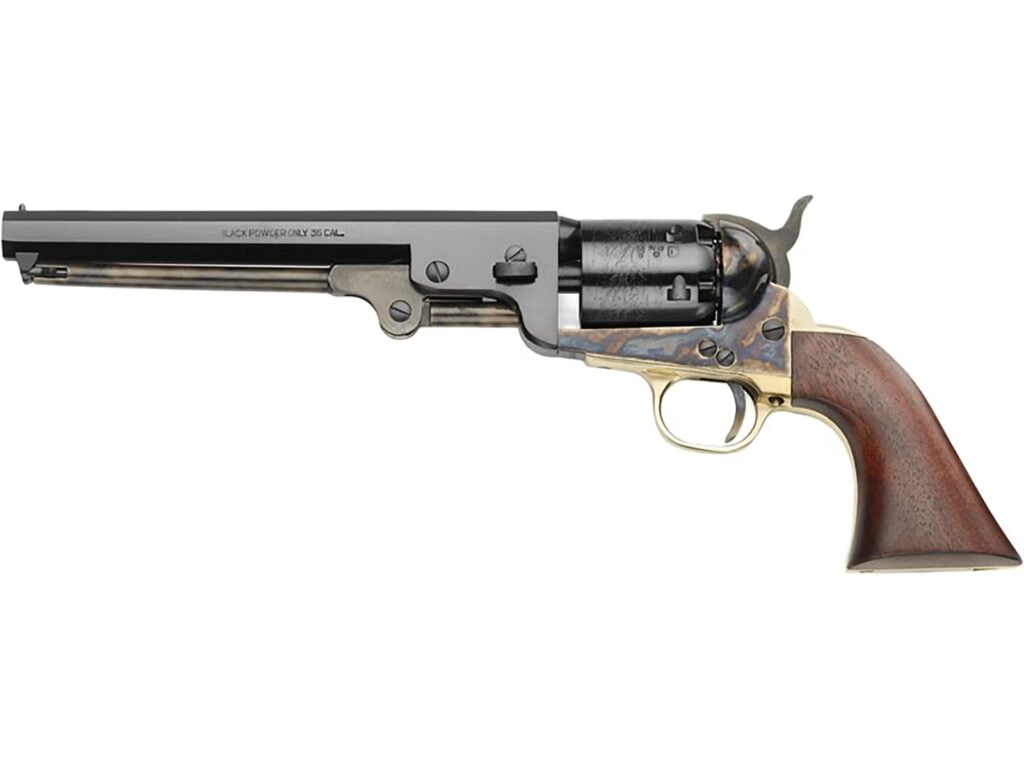 |
BEST VALUEPietta 1851 Navy The cheapest way into cap and ball that still shoots properly. Points like nothing else on this list. |
|
Check Price ↓ |
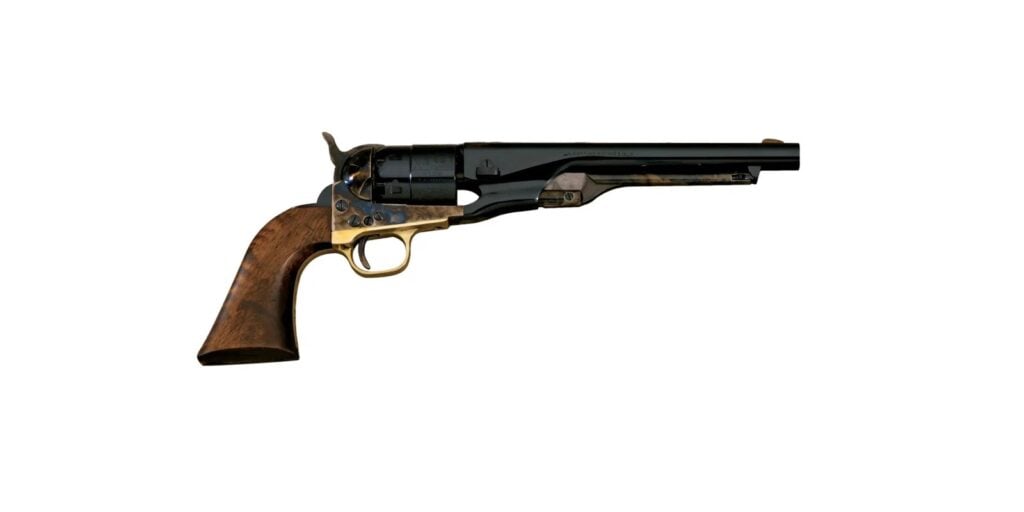 |
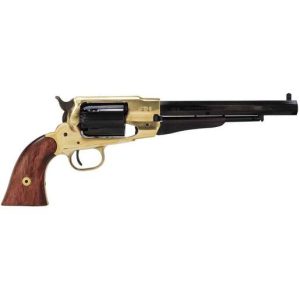
BEST SHOOTERPietta 1860 Army Colt’s last and best percussion design. Creeping loading lever, rebated cylinder, and a grip that soaks up .44 recoil. |
|
Check Price ↓ |
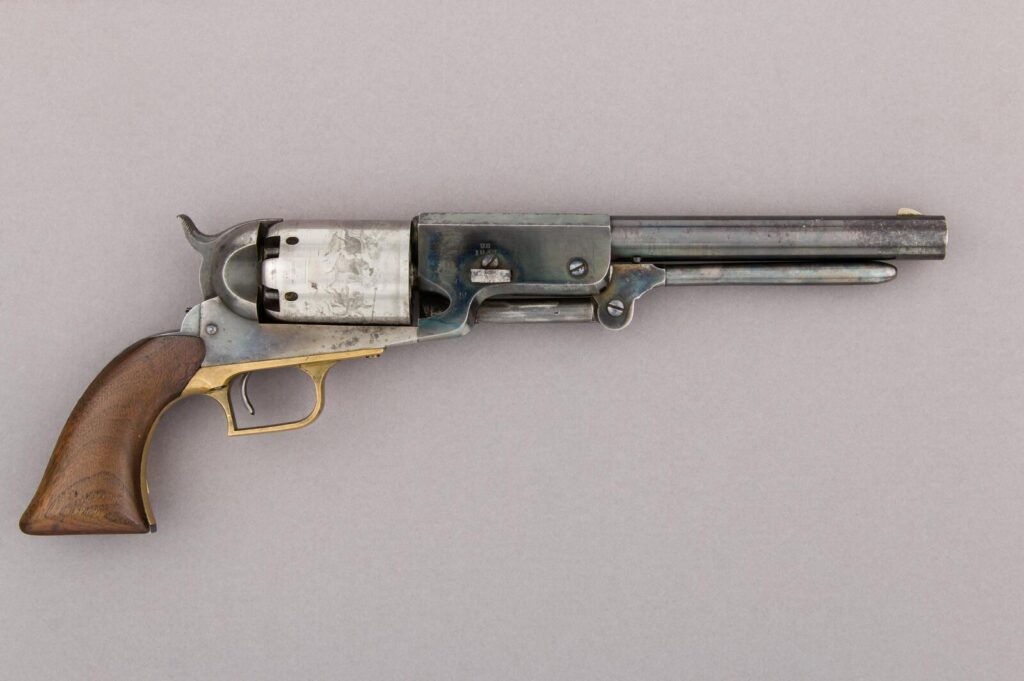 |
BEST BIG BORECimarron 1847 Walker Dragoon Four and a half pounds of revolver with a cylinder that swallows a genuinely serious charge. Nothing else feels like it. |
|
Check Price ↓ |
 |
BEST STARTERTraditions 1858 Army Cheapest steel-strap Remington pattern going, and Traditions actually answers the phone when you need a part. |
|
Check Price ↓ |
Table of Contents
How we tested: Every pick here is ranked against our testing methodology. Minimum round counts, accuracy and reliability protocols, the failures that disqualify a gun. Where we have not shot a specific variant ourselves, we say so in that section.
Why Black Powder Revolvers Are Worth Your Time in 2026
Here is the part nobody tells you until you have already bought one. Under federal law, a cap and ball revolver is not a firearm. No FFL, no 4473, no background check. It ships to your front door like a set of tires. That single fact is why these things keep selling forty years after everyone decided percussion revolvers were a museum curiosity.
Your state may see it differently. New Jersey, New York, Massachusetts, Hawaii and Illinois all treat them more or less like cartridge guns, and a few others have their own quirks. Check your own rules before you click buy. Everywhere else, you are one delivery away from owning a working .44.
The shooting is the real draw though. Loading a cylinder takes a few minutes and rewards you paying attention. There is a cloud of white smoke, a smell like a bonfire, and then a slow walk downrange to see whether you actually did it right. It is the opposite of running a striker-fired pistol through a drill. If you have only ever shot modern guns, look at our best revolvers roundup for the cartridge side of the house, then come back here for the part where you make your own noise.
I have limited this list to five, and every one of them is a gun I would put money on. Two are Colt patterns, two are Remington patterns, and one is the enormous outlier that started the whole thing. If you shoot cowboy action, three of these are match legal in the frontiersman category.
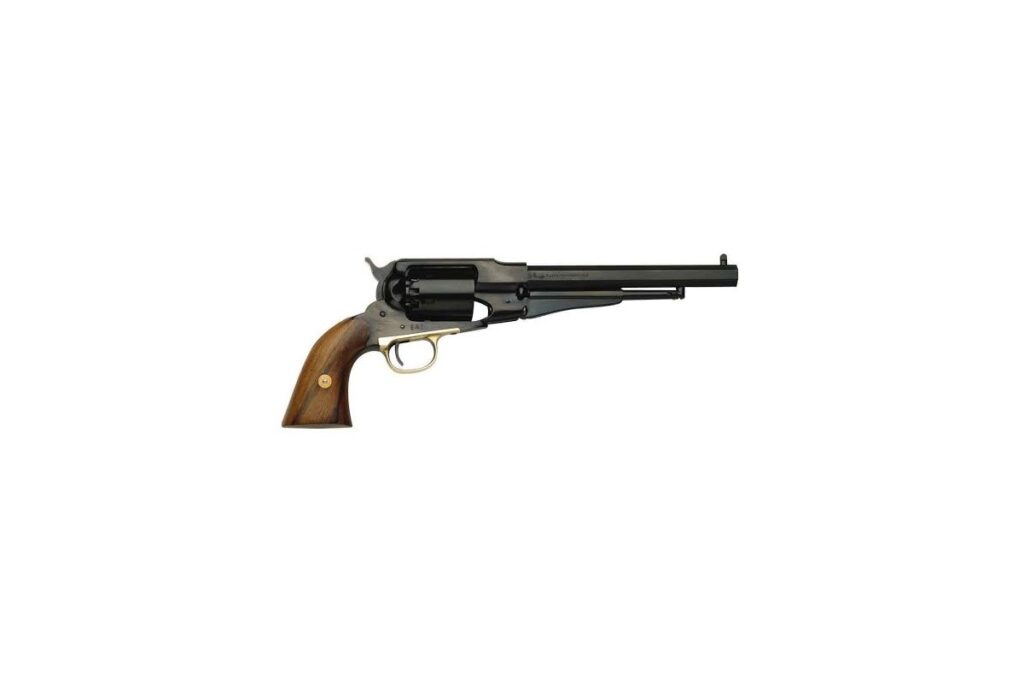
1. Pietta 1858 Remington New Model Army: Best Overall
- Caliber: .44 (.451 round ball)
- Barrel Length: 8″ octagonal (5.5″ Sheriff also offered)
- Capacity: 6
- Frame: Solid steel with top strap
- Ignition: #10 or #11 percussion caps
- Weight: About 2 lb 14 oz
- Street price: From around $420
| Category | Score |
|---|---|
| Price | 4 / 5 |
| Fit & Finish | 4 / 5 |
| Reliability | 5 / 5 |
| Historical Accuracy | 4.5 / 5 |
| Ease of Loading | 5 / 5 |
Pros
- Strongest frame of any period design
- Spare cylinders swap in seconds
- Adjustable-ish rear sight groove
Cons
- Loading lever needs a firm hand
- Cap fragments can jam the action
- Heavier than the Colt patterns
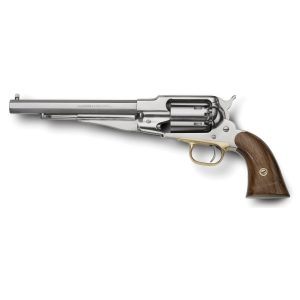
The 1858 Remington is the one that makes sense the moment you pick it up. Colt’s designs of the same era split in half at the barrel wedge. This one is a single piece of steel from the grip frame to the muzzle, with a top strap over the cylinder, and you can feel the difference the first time you work the loading lever hard.
Pietta’s version is the one I keep recommending because the price has stayed sane while the quality has crept up. The chamber mouths on ours were cut cleanly, the arbor was true, and the cylinder locked up without the wobble you sometimes get on cheaper repros. Nothing about it is fancy. It just does not have anything obviously wrong with it, which at this money is the whole point.
The spare cylinder trick is the practical advantage. Drop the loading lever, pull the base pin, and the cylinder comes straight out the back. Load two or three at the bench and you can shoot a whole afternoon without stopping to seat balls between strings. No Colt pattern on this list makes that anywhere near as easy.
Its one genuine annoyance is spent caps. They fragment, fall into the action, and tie up the hammer at the worst moment. The fix is to point the muzzle up as you cock so the bits fall clear, and to fit caps that actually match your nipples rather than whatever the shop had on the shelf. That is a five minute habit, not a design flaw.
Best For: Anyone buying their first cap and ball revolver, or anyone who wants one gun that will still be tight after a thousand rounds of fouling and scrubbing.
2. Pietta 1851 Navy: Best Value
- Caliber: .36 (.44 versions also produced)
- Barrel Length: 7.5″ octagonal (4.78″ Sheriff also offered)
- Capacity: 6
- Frame: Open top, color case hardened
- Ignition: #10 or #11 percussion caps
- Weight: About 2 lb 10 oz
- Street price: From around $288
| Category | Score |
|---|---|
| Price | 5 / 5 |
| Fit & Finish | 3.5 / 5 |
| Reliability | 4 / 5 |
| Historical Accuracy | 5 / 5 |
| Ease of Loading | 4 / 5 |
Pros
- Cheapest real cap and ball going
- Best-pointing grip on this list
- Mild recoil in .36
Cons
- Open top frame is the weak link
- Fixed sights, no adjustment
- Brass frame versions stretch
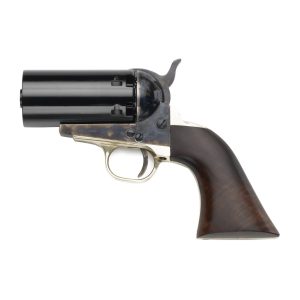
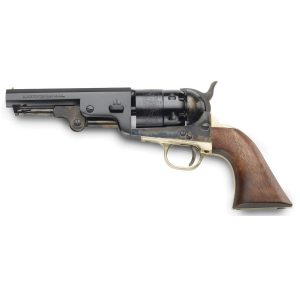
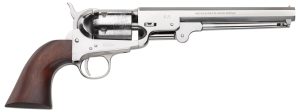
Pick up an 1851 Navy and your hand knows where the muzzle is pointing before your eyes do. Colt got the grip geometry right in 1851 and nobody has meaningfully improved on it since. The Single Action Army borrowed it. So did half the plow-handle grips made in the last century.
Our example is stamped BLACK POWDER ONLY 36 CAL. along the barrel flat, which is the Italian proof-house requirement and a useful reminder every time you load it. The .36 bore is the historically correct one and it is the one I would buy. Recoil is gentle enough that you can shoot fifty rounds without thinking about it, and the smaller ball still punches paper cleanly at 15 yards.
The open top frame is the compromise you accept for the price. The barrel assembly is held on by a wedge through the arbor, and if that wedge works loose the whole thing gets sloppy in a hurry. Check it every dozen shots. It is not fragile, it just wants attention in a way the Remington does not.
Skip the brass frame version unless you only ever plan to shoot light loads. Brass is softer than steel, the recoil shield peens over time, and eventually the cylinder gap opens up. The steel framed guns cost a bit more and last effectively forever.
Best For: Someone who wants to find out whether black powder is for them without spending Remington money, and anyone who values how a gun handles over how strong the frame is.
3. Pietta 1860 Army: Best Shooter
- Caliber: .44
- Barrel Length: 8″ round
- Capacity: 6
- Frame: Open top steel, color case hardened
- Ignition: #10 or #11 percussion caps
- Weight: About 2 lb 11 oz
- Street price: From around $334
| Category | Score |
|---|---|
| Price | 4.5 / 5 |
| Fit & Finish | 4 / 5 |
| Reliability | 4 / 5 |
| Historical Accuracy | 5 / 5 |
| Ease of Loading | 4.5 / 5 |
Pros
- Creeping lever loads smoothly
- .44 punch with Navy handling
- Best looking gun on this list
Cons
- Open top wedge needs watching
- Cylinder scene wears off early
- Fixed sights shoot high
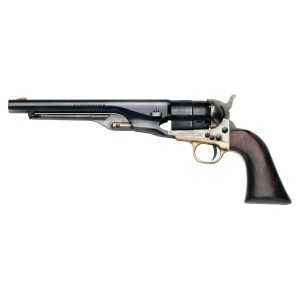
The 1860 Army was Colt’s answer to a problem he created himself. The Navy handled beautifully but the .36 ball was light. The Dragoons hit hard but weighed like a brick. So he rebated the cylinder, stretched the frame slightly, put a round barrel on it, and got a .44 that still carries like the Navy. It was the last percussion revolver he designed and it is the best one.
The creeping loading lever is the detail that sells it at the bench. Instead of the straight lever on the earlier guns, this one has a ratcheting toothed arrangement that gives you far more purchase as the ball goes home. Seating a tight .454 ball in an 1851 takes real effort. In the 1860 it is almost pleasant.
Sights are the usual period arrangement, which means a hammer notch at the back and a brass pin at the front, and it will shoot high at 25 yards. That is not a fault, it is how they were regulated. If it bothers you, a taller front sight is a ten minute job and the community has been doing it for decades. Compare that to the adjustable sights on a modern .44 Magnum revolver and you understand what 165 years of development bought.
The rolled cylinder scene, a naval engagement on the Navy and a stagecoach holdup on the Army, is shallow and it wears. Ours started fading within a couple of hundred rounds of cleaning. Cosmetic only, but worth knowing before you scrub too enthusiastically.
Best For: The shooter who wants .44 performance but cannot get on with the Remington’s blockier feel, and anyone who cares what the gun looks like on the bench.
4. Cimarron 1847 Walker Dragoon: Best Big Bore
- Caliber: .44
- Barrel Length: 9″, part round and part octagon
- Capacity: 6
- Frame: Open top, case hardened with brass guard
- Ignition: #10 or #11 percussion caps
- Weight: About 4 lb 9 oz
- Street price: From around $425
| Category | Score |
|---|---|
| Price | 4 / 5 |
| Fit & Finish | 4.5 / 5 |
| Reliability | 3.5 / 5 |
| Historical Accuracy | 5 / 5 |
| Ease of Loading | 3 / 5 |
Pros
- Biggest charge of any repro
- Recoil soaked up by sheer mass
- Genuinely impressive to shoot
Cons
- Four and a half pounds
- Loading lever drops under recoil
- Too big for any normal holster
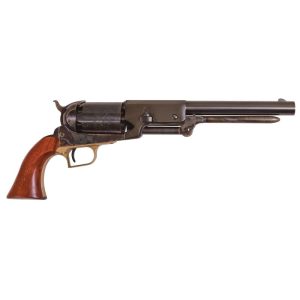
The photograph above is an original 1847 Colt Walker, which is the pattern Cimarron reproduces. Samuel Walker of the Texas Rangers told Colt he wanted something that would kill a man or a horse at a hundred yards, and Colt built exactly that. Roughly a thousand were made. It remained the most powerful production handgun anyone had built until the .357 Magnum showed up in 1935, which is a fairly astonishing run.
Picking one up is the whole experience. Four and a half pounds is not a number that means much until it is hanging off your wrist. The cylinder is enormous, the barrel is nine inches, and the balance is so far forward that holding it out one handed for more than a few seconds becomes a genuine effort. Off a bench it is superb, because all that weight sits dead still.
The famous flaw is the loading lever. Under recoil it drops down and the rammer noses into a chamber mouth, locking the cylinder solid. The originals did it and the reproductions do it too. Rangers used to tie the lever up with a rawhide thong and that remains the standard fix. A latch conversion is available if you would rather engineer it away.
Cimarron’s guns are Uberti made and the finish on ours was the best in this group, with proper charcoal blue on the barrel and clean case colors on the frame. It costs more than the Pietta guns and it is worth it, but understand what you are buying. This is a range gun and a conversation piece, not something you will carry anywhere.
Best For: The shooter who already owns a Navy or a Remington and wants the one that makes everyone at the range turn around.
5. Traditions 1858 Army: Best Starter Package
- Caliber: .44
- Barrel Length: 8″ octagonal (12″ Bison also offered)
- Capacity: 6
- Frame: Brass or steel, solid top strap
- Ignition: #11 percussion caps
- Weight: About 2 lb 12 oz
- Street price: From around $370
| Category | Score |
|---|---|
| Price | 4 / 5 |
| Fit & Finish | 3.5 / 5 |
| Reliability | 4 / 5 |
| Historical Accuracy | 4 / 5 |
| Ease of Loading | 4.5 / 5 |
Pros
- US importer with real support
- Same solid frame as the Pietta
- Steel version is properly cheap
Cons
- Brass frame limits your loads
- Finish is the plainest here
- Fewer accessory options
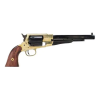
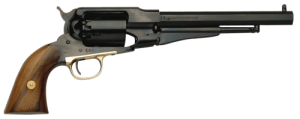
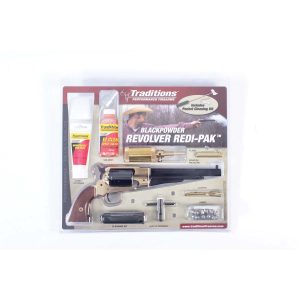
Traditions does not make these. They import them from Italy, same as everyone else, and put their name on the box. What you get for that is a Connecticut phone number that answers, a warranty that means something, and spare nipples and wedges you can actually order without waiting three weeks for a package from Brescia.
Mechanically it is the same Remington pattern as our top pick. Solid frame, top strap, removable cylinder, 8 inch octagon barrel. The steel framed version does everything a Pietta does. Ours grouped about the same and the lockup was just as tight after a few range sessions.
The finish is where the money went missing. Bluing is thinner, the wood is plainer, and the edges are not as crisply broken as the Cimarron. None of that affects how it shoots. If you want a working gun and would rather spend the difference on powder, balls and caps, this is a sensible place to land.
The brass frame version costs less again and it is the one I would steer you away from. Brass looks great and it is genuinely period correct for some Confederate-made guns, but it will not take a steady diet of heavier charges. Buy the steel one and shoot it as hard as the manual allows.
Best For: The buyer who wants a Remington pattern with a US importer behind it, and anyone nervous about warranty support on an Italian import.
What You Actually Need to Shoot One
The revolver is about two thirds of the cost of getting started. Budget for the rest before you order, because a cap and ball gun with no caps is an ornament.
- Powder. Real black powder in FFFg, or an approved substitute like Pyrodex P or Triple Seven FFFg. Never smokeless, in any quantity, for any reason.
- Round balls. .451 or .454 for a .44, .375 or .380 for a .36. You want a ball slightly oversize so it shaves a thin ring of lead as it seats. That ring is how you know the seal is good.
- Percussion caps. #10 or #11 depending on your nipples. Buy a tin of each the first time and find out which fits, because the difference between snug and loose is the difference between working and misfiring.
- Lubed wads or bore butter. Goes between powder and ball, or smeared over the seated ball. This is your chain fire insurance and it keeps fouling soft.
- A powder measure. Adjustable, and set to the figure in your revolver’s manual. Never pour loose powder straight from the flask into a chamber.
- Cleaning kit. Black powder fouling is corrosive and it starts working immediately. Hot soapy water the same day, not next weekend.
Charge weights vary by model, by barrel length and by which powder you picked, so I am not going to print a number here for you to copy. Pietta, Uberti, Cimarron and Traditions all publish a recommended range for each gun. Use theirs, start at the low end, and work up while you watch how the gun behaves.
Brass Frame or Steel Frame
This is the question that comes up most and the answer is simpler than the internet makes it. Buy steel.
Brass frames exist because the Confederacy ran short of steel, not because anybody thought brass was better. They are cheaper, they look handsome, and they are perfectly fine if you shoot light charges occasionally. Push them hard and the recoil shield peens back, the cylinder gap opens, and eventually the arbor hole stretches. It happens over hundreds of rounds rather than dozens, so it is not dangerous so much as terminal.
Steel costs maybe fifty dollars more and removes the entire question. If you are the sort of person who will shoot one of these twice a year, brass is fine. If you think you might get into it, you will be happier with steel within the first season.
Which One Should You Buy
If you are buying one and only one, make it the Pietta 1858 Remington. The solid frame means you never think about the wedge, the spare cylinder trick doubles your range time, and at around $420 it is the least compromised gun here.
If the budget is tight and you mostly want to find out what the fuss is about, the 1851 Navy in .36 will do it for under $300 and handle better than anything else on the list while it does. If you already know you like this and want the pretty one, the 1860 Army. And if you have the other two and want the gun people talk about, the Walker is waiting.
Prices on these move around more than you would expect for guns that have been in production for fifty years, so it pays to check a few sellers before you commit. Our gun price check tool pulls live numbers across retailers, and if you are after something cartridge fed to shoot alongside it, the best .22 revolvers list covers the cheap end properly.
Frequently Asked Questions
Do you need an FFL to buy a black powder revolver?
Not under federal law. A cap and ball revolver is classed as an antique-pattern muzzleloader rather than a firearm, so there is no 4473 and no background check, and it ships straight to your door. Several states disagree, including New Jersey, New York, Massachusetts, Hawaii and Illinois, so check your own rules first.
Can you shoot smokeless powder in a cap and ball revolver?
No, and this is the one rule with no exceptions. Smokeless powder generates pressures these guns were never built for and it will wreck the revolver and likely injure you. Use real black powder or an approved substitute such as Pyrodex or Triple Seven, and nothing else.
What is a chain fire and how do you prevent it?
A chain fire is when the flash from one chamber ignites the neighboring chambers at the same time. You prevent it by sealing the chamber mouths, either with a lubed felt wad under the ball or with grease smeared over the seated ball, and by making sure your caps fit the nipples snugly.
Is a brass frame or a steel frame better?
Steel, in almost every case. Brass frames are cheaper and historically correct for some Confederate guns, but brass is softer and the recoil shield peens back over hundreds of rounds until the cylinder gap opens up. Steel costs around fifty dollars more and removes the problem entirely.
How accurate are black powder revolvers?
Better than most people expect. A well-loaded 1858 Remington or 1860 Army will keep its shots inside a hand span at 25 yards, which is as much as the fixed period sights really allow. The limiting factor is usually the sight picture rather than the gun.
Can you use a black powder revolver for self defense?
You can, and in a handful of states it is one of the few handguns a prohibited person can legally own, but it is a poor choice if you have alternatives. Reloading takes minutes, caps can fall off, and fouling builds up fast. Treat these as range and hunting guns.
How much does it cost to shoot one?
Cheap once you are set up. Round balls run a few cents each, a pound of powder covers a few hundred shots, and caps are the main consumable. Expect roughly the running cost of .22 rimfire, with a lot more cleaning.
5,743+ Gun & Ammo Deals
Updated daily from 200+ top retailers. Filter by category, caliber, action type, and price.