Last updated August 2026 · By Nick Hall, NFA owner who has sat through the Form 4 wait four times since 2019
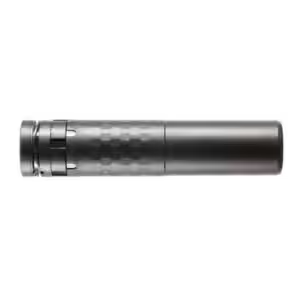
Quick take: A federal judge in Texas blocked the NFA registration rules for suppressors and short-barreled rifles, and on August 13 the first cans in 91 years moved to buyers with no Form 4 and no registration. The Justice Department had seven days to ask a higher court to step in and did not. Nothing about this is settled, but it is real right now.
- What happened: A federal court in the Northern District of Texas enjoined enforcement of the NFA registration provisions for suppressors and short-barreled firearms after the transfer tax dropped to $0.
- Why it matters: Silencer Shop transferred the first unregistered suppressors on August 13, the first such transfers since the National Firearms Act passed in 1934.
- What’s next: DOJ did not ask the Fifth Circuit to step in during the judge’s seven-day stay and has until October 5 to file an appeal, so the injunction stands for now while plaintiffs press ATF for written guidance on who it actually covers.
- Who to watch: ATF, which has issued no public instruction to dealers, and the Second Amendment Foundation, which has written to DOJ asking exactly that question.
Most NFA stories end with a press release and a docket number and nothing changes for anybody. This one ended with people walking out of a shop in Texas holding a suppressor that exists on no federal registry, which has not happened in the lifetime of anyone reading this.
Deals of the Day
Today's best discounts · Updated 3x daily
Gun Deals
See All →
Ammo Deals
See All →




Table of Contents
What the Court Actually Enjoined
The One Big Beautiful Bill cut the NFA transfer and making tax on suppressors and short-barreled firearms to $0. The registration requirement at 26 U.S.C. § 5841 was built on Congress’s taxing power. A federal judge in the Northern District of Texas held that once the tax is zero, the constitutional hook for the registration requirement goes with it.
That is the whole reasoning, and it is narrower than most of the headlines suggest. The order reaches suppressors and short-barreled firearms. It does not reach machine guns, which are banned to civilian transfer by a separate statute at 18 U.S.C. § 922(o) and were never riding on the tax argument in the first place.
So the NFA is not dead. A chunk of it is enjoined, in one district, by one judge, in an order that has not been tested on appeal.
The First Transfers Since 1934
Silencer Shop put ATF on notice on August 12 that it intended to begin transferring at midnight. It did. On August 13 the first suppressors changed hands with no Form 4, no fingerprint card, and no entry in the National Firearms Registration and Transfer Record.
And that is the part that makes this different from every other favorable NFA ruling of the last decade. A court order that nobody acts on is a law review article. A court order that a dealer acts on, in front of witnesses, with the government declining to intervene, is a fact on the ground.
Why DOJ’s Silence Is the Real Story
The Justice Department let the court’s seven-day stay run out without filing anything at the Fifth Circuit. That decision was almost certainly made above the career litigators, and it tells you more about where federal firearms enforcement is heading than the opinion does.
Gun control organizations reacted about how you would expect. The plaintiffs’ side called it a step closer to being free of NFA regulation altogether. Both readings overstate what a single district court injunction can do, and both are downstream of the same underlying fact, which is that the executive branch chose not to defend a 91-year-old registration scheme when it had a live opportunity to.
What Nobody Has Told Dealers Yet
Here is the practical problem. ATF has not published guidance. Dealers are being asked by walk-in customers whether they can buy a can today, and the honest answer varies by who you ask and where you are standing.
Plaintiffs submitted a letter to DOJ and ATF on August 13 asking for clarity on the scope of the injunction. Does it protect only the named plaintiffs? Everyone in the district? Every FFL in the country? A dealer who guesses wrong on that question is not risking a fine, they are risking a felony, and that asymmetry is why most shops have not moved.
For a buyer, the practical takeaway is small and unhappy: the law changed in a courtroom, but your local dealer’s willingness to bet their license on it has not.
What This Does to the Suppressor Market
Set the law aside for a second and look at the commerce. Suppressor sales had already been climbing hard since the tax went to zero, and manufacturers spent the first half of the year adding capacity to meet it. An injunction against the registration requirement lands on top of a market that was already running hot.
If the injunction holds, the bottleneck stops being the paperwork and starts being production. Ninety-one years of a registration requirement has shaped every part of how suppressors are made, distributed and sold in this country, from dealer licensing to how many units a shop is willing to hold in inventory, and none of that infrastructure reorganizes in a quarter.
Prices are the thing to watch. A regulatory constraint disappearing tends to drop prices, but not while demand is spiking and supply is fixed. Expect firmness before you expect bargains.
What to Actually Do This Week
If you want a suppressor, the useful move is to call your dealer and ask a specific question rather than a general one. Not is the NFA dead, which nobody can answer, but are you transferring without a Form 4 today. Most will say no, and the ones who say yes will tell you exactly what basis they are relying on.
If you already have a Form 4 pending, leave it pending. An application in the system under the old rules is not something to withdraw on the strength of an injunction that has not been reviewed on appeal, and there is no advantage to being clever about it.
And if you have been putting off buying because of the wait, the wait is the thing that has genuinely changed even in shops still running paperwork, because the tax is gone and processing volumes are being reorganized around that. Ask what the current turnaround actually is rather than assuming it is the nine months everyone still quotes.
What Happens If This Gets Reversed
The uncomfortable question is what happens to the people who bought during the window if a higher court reverses. There is no clean answer yet. A reversal that retroactively criminalized lawful purchases made under a valid injunction would be an extraordinary result, and courts avoid extraordinary results where they can, which is not the same as a guarantee.
If the injunction holds and spreads, suppressor ownership in America changes permanently and the $200 stamp becomes a historical curiosity. If it is stayed on appeal next month, a few hundred people own cans in a legal gray zone nobody has mapped.
The tax is zero. The registry is enjoined. The government has not appealed. Three sentences that were science fiction in July.
Frequently Asked Questions
Can I buy a suppressor without registering it right now?
Legally the answer depends on whether your dealer believes the injunction covers them, and most do not yet. The injunction blocks enforcement of the NFA registration provisions for suppressors and short-barreled firearms, but ATF has published no guidance telling dealers how far it reaches. Almost every shop in the country is still running Form 4s.
Does this ruling apply to machine guns?
No. The court's reasoning was that the NFA registration scheme rested on Congress's taxing power, and the tax on suppressors and short-barreled firearms is now $0. Machine gun transfers are restricted by 18 U.S.C. section 922(o), a separate statute that does not depend on the tax.
What is a Form 4 and do I still need one?
Form 4 is the ATF application to transfer an NFA item from a dealer to an individual, historically carrying a $200 tax and a wait measured in months. The tax is now $0 and the registration requirement is enjoined, but until ATF issues guidance most dealers are still filing the form.
Did the Justice Department appeal the ruling?
No. DOJ let the court's seven-day stay expire without asking the Fifth Circuit to step in, which leaves the injunction in effect, and no notice of appeal is on the docket. That does not prevent a future administration or an intervening party from litigating the issue, and it does not bind courts in other districts.
Is the National Firearms Act repealed?
No. A single federal district court enjoined enforcement of the registration provisions as applied to suppressors and short-barreled firearms. The statute is still on the books, the rest of it is untouched, and the ruling has not been reviewed on appeal.
Which court issued the injunction?
The United States District Court for the Northern District of Texas. District court rulings bind the parties before them, and their reach beyond that is exactly the question plaintiffs have asked DOJ and ATF to answer in writing.
What happens to my suppressor if the ruling is overturned?
Nobody knows, and anyone telling you otherwise is guessing. Courts are reluctant to retroactively criminalize conduct that was lawful under a valid injunction, but no court has addressed that question here yet.
Has the $200 tax stamp gone away?
The transfer and making tax on suppressors and short-barreled firearms was cut to $0 by statute this year. That change is legislative and separate from the court ruling. The tax is gone regardless of how the litigation ends.
Related Reading
- The best suppressors you can actually buy right now
- How to buy a suppressor, step by step
- What a suppressor really costs in 2026
- How suppressors work
- The ATF NFA rule changes proposed this year
4,335+ Gun & Ammo Deals
Updated daily from 200+ top retailers. Filter by category, caliber, action type, and price.