

Affiliate disclosure: This Taurus 942 review contains affiliate links. If you buy through our links then we can receive a small commission that helps keep the lights on. You don’t pay anything more.
- Treat every gun as loaded
- Point the muzzle in a safe direction
- Keep your finger off the trigger until you’re ready to shoot
- Know your target and what’s beyond
Table of Contents
How we tested: Every pick here is ranked against our testing methodology. Minimum round counts, accuracy and reliability protocols, the failures that disqualify a gun.
Review: Taurus 942 – A .38 Snub That Fires Rimfire
Our Rating: 7.8/10
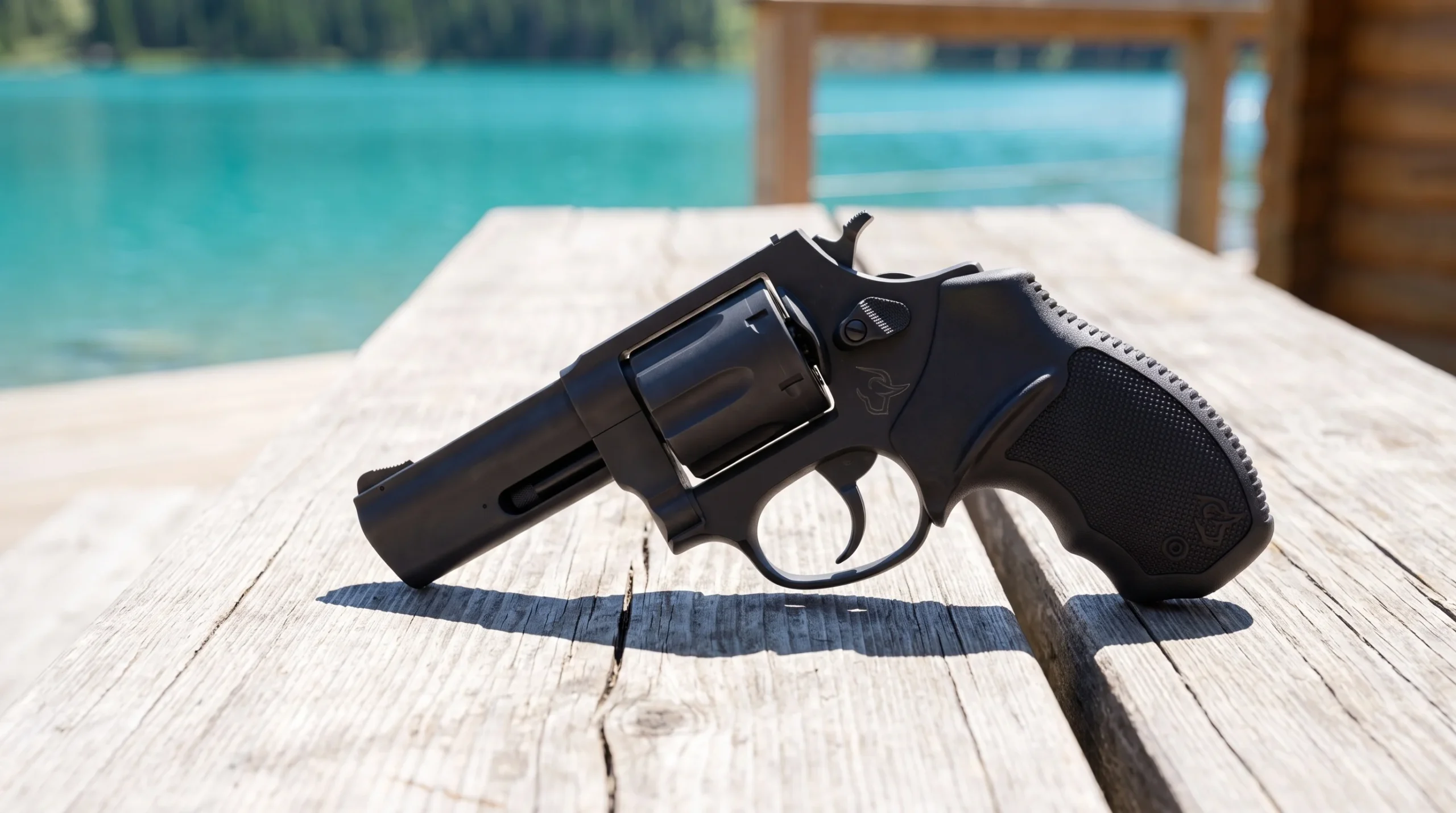
Most .22 revolvers are toys or heirlooms. The 942 is neither. Taurus built it on the same small frame as its .38 Special carry guns, gave it eight rounds instead of six, and left the weight alone. A steel 942 comes in at 23.6 ounces empty, which is what a serious defensive snub weighs, and it costs about a tenth as much per round to shoot. That is a very deliberate piece of product planning, and it makes this the most useful .22 revolver on the market right now.
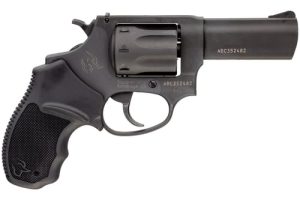
Specifications: 942 .22 WMR, matte stainless 3 inch
- MSRP: $497.99
- Street Price: $275.99 (Use our live pricing for the best up to date deal)
- Item Number: 2-942M039
- Caliber: .22 WMR, with .22 LR versions also offered
- Capacity: 8 rounds
- Action: Double action / single action
- Barrel: 3.00 inches, 6 grooves, 1:16.5 right hand twist
- Overall Length: 7.60 inches
- Height: 4.64 inches
- Width: 1.34 inches
- Weight: 25.00 oz unloaded
- Frame: Small, stainless steel
- Sights: Serrated ramp front, drift adjustable rear
- Safety: Transfer bar
- UPC: 7-25327-61868-3
Pros
- Eight rounds, not the usual six
- Weighs the same as a .38
- Drift adjustable rear sight fitted
Cons
- Rimfire means occasional light strikes
- Double action pull is long
- Ejection needs a firm strike

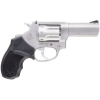
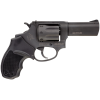
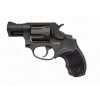
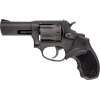
Quick Take
Buy this gun for what it lets you do rather than what it is. A box of fifty .22 costs less than a lunch, so you can shoot three hundred rounds in an afternoon without thinking about it. Because it weighs and handles almost exactly like a small frame .38, everything you learn transfers. That is a genuinely rare thing, and it is worth more than any feature on the spec sheet.
The catch is that it is still a rimfire, and rimfire ignition is not centerfire ignition. We had light strikes. Everybody has light strikes with rimfire revolvers. The fix is buying decent ammunition rather than the cheapest bulk pack, and accepting that a second pull of the trigger will fire it.
Best For: Practice for anybody who carries a small frame revolver, teaching a new shooter, cheap range time, and small game or pest control out of the 3 inch .22 WMR version. Not a defensive gun, whatever the marketing implies.
The Ultra-Lite Costs More Than the Steel Gun
This is the detail that makes the buying decision easy, and almost nobody mentions it. Taurus builds the 2 inch .22 LR 942 in two frames. Here is what its own spec sheets say.
| Model | Frame | Weight | MSRP |
| 2-942021 | Steel alloy | 23.60 oz | $481.99 |
| 2-942021UL | Aluminum alloy | 17.80 oz | $484.99 |
| 2-942M039 | Stainless steel, 3 inch, .22 WMR | 25.00 oz | $497.99 |
The Ultra-Lite is 5.8 ounces lighter and three dollars more expensive. Three dollars. That means the frame choice is not a money decision at all, it is purely about what you want the gun to do. If the 942 is a trainer, buy the steel one, because 23.6 ounces is what a small frame .38 weighs and matching that weight is the entire point. If it is going in a pocket or a purse, buy the Ultra-Lite and enjoy the six ounces.
The other number on that table worth staring at is the gap between list and street. Taurus lists these at $481.99 to $497.99. The cheapest we found at a major retailer was $275.99, and the whole in-stock band across the retailers we track runs about $276 to $470. That is roughly forty percent off list, consistently, which tells you the MSRP is a positioning number rather than a price anybody expects to collect.
Why Eight Rounds and Not Six
A .22 case is skinny, so eight of them fit in a cylinder sized for six .38 Specials. That sounds trivial and it is not. Two extra chambers per cylinder means a quarter fewer reloads across a practice session, and on a revolver the reload is the slowest, most annoying part of shooting one. Over 600 rounds it is the difference between 75 cylinder fulls and 100.
It also means the trigger pull cycles the cylinder a shorter distance per shot than a six shooter does, which is part of why the double action on this gun feels longer and smoother than you might expect for the money.
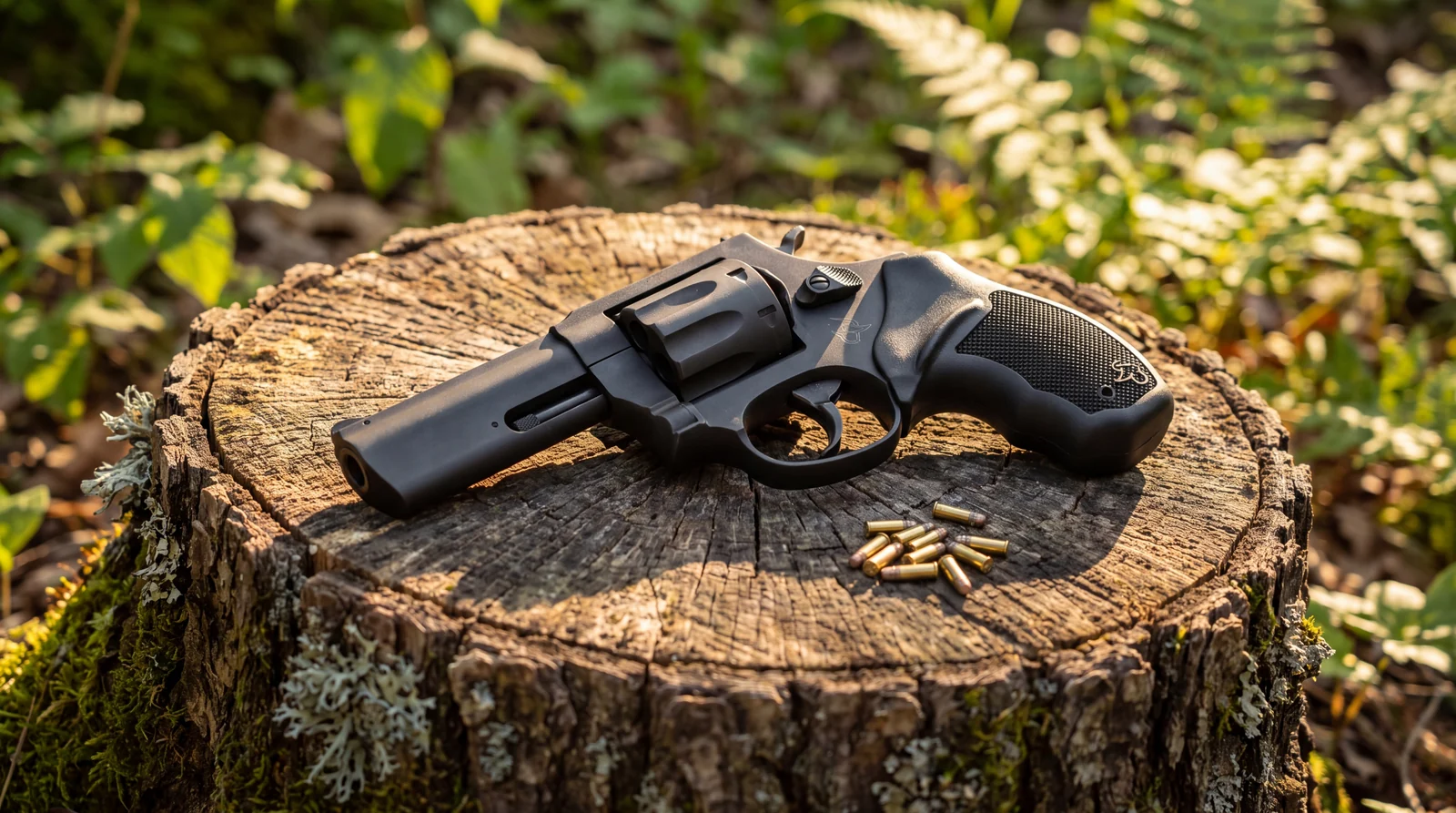
Range Testing: 600 Rounds of .22
Our test gun was a 3 inch .22 LR 942 in matte black, shot across four sessions between April and June at 7, 15 and 25 yards, in temperatures from 52 to 81 degrees. Six hundred rounds, which is easy to reach with a rimfire and is exactly the point of owning one.
Reliability, and the Rimfire Reality
Nine failures to fire in 600 rounds. Every one of them was a light strike, every one fired on a second pull with the cylinder rotated back, and eight of the nine came from the same bulk pack of cheap 36 grain hollow points. Federal Automatch and CCI Standard Velocity gave us one failure between them across 300 rounds.
That is normal, and anybody telling you a rimfire revolver never does this is selling something. A rimfire primer is a smear of compound around a case rim rather than a properly seated cup, and the quality control on the cheapest ammunition is what it is. Buy CCI or Federal and the problem mostly goes away. The gun itself did nothing wrong.
Accuracy
Off a rest at 15 yards, eight shot groups with CCI Standard Velocity averaged 2.0 inches, best at 1.6. Federal Automatch opened up to about 2.7. At 25 yards the CCI held around 3.4 inches, which for a 3 inch barrel and a drift adjustable rear sight is genuinely good shooting. The longer sight radius on the 3 inch gun is worth having, and if you are buying this to practice rather than to carry, take it over the 2 inch.
The Trigger and the Weight
Double action measured 11 pounds 6 ounces on our gauge, which is heavy on paper and feels lighter than that because the pull is long and smooth rather than stacking. Single action broke at 4 pounds 9 ounces. What matters more is that the whole gun weighs the same as a small frame .38, so the sight picture moves the same way under the same pull. Dry firing this and then picking up a .38 snub feels like the same gun with more noise.
Ejection
Rimfire cases are thin and they swell. Ejection needed a deliberate strike on the rod rather than a push, particularly once the chambers were dirty, and a couple of times a case needed a poke with a pencil. Cleaning the chambers properly every couple of hundred rounds fixed it. That is a rimfire revolver characteristic and not a Taurus one.
Ammunition Log
- CCI Standard Velocity 40 gr: 200 rounds
- Federal Automatch 40 gr: 150 rounds
- Bulk pack 36 gr copper plated hollow point: 200 rounds
- CCI Mini-Mag 40 gr: 50 rounds
What This Means for You
- Ammunition: Skip the cheapest bulk pack. CCI and Federal cost a little more and removed almost every light strike.
- Barrel length: Buy the 3 inch if this is a range and practice gun. The extra sight radius is free accuracy.
- Frame: Steel for training, Ultra-Lite for carrying. The price difference is three dollars, so choose on purpose.
- Cleaning: Scrub the chambers every couple of hundred rounds or ejection turns into a chore.
- Sights: The rear is drift adjustable for windage only. Elevation is fixed, so pick the load that hits where you look.
Technical Deep Dive
The Transfer Bar
Taurus lists a transfer bar safety on this gun, which means the firing pin cannot reach a rim unless the trigger is fully to the rear. Drop it on the hammer and nothing happens. That is the modern standard on a double action revolver and it is why you can carry eight rounds in an eight shot cylinder rather than leaving a chamber empty.
The Twist Rate
Taurus publishes 1:16.5 with a right hand twist and six grooves on the .22 WMR version. That is a fairly slow twist and it is correct for the light bullets a rimfire fires. It also explains why our best groups came from standard velocity rather than hyper velocity ammunition: slower bullets spend longer in the barrel and get more of the stabilization the twist can give them.
.22 LR or .22 WMR
The .22 WMR version costs about $16 more at list and considerably more to feed, because magnum rimfire runs several times the price of .22 LR per round. What it buys is real velocity and a genuinely useful small game and pest cartridge out of a 3 inch barrel. If the point of the gun is cheap practice, .22 LR is the only sensible answer. If the point is a light woods gun, the magnum earns its keep.
| Component | Specification | Why it matters |
| Capacity | 8 rounds | A quarter fewer reloads than a six shooter |
| Frame | Small, steel or aluminum alloy | Same size as the .38 it trains you for |
| Weight | 17.8 to 25.0 oz | Choose deliberately, the price is the same |
| Rear sight | Drift adjustable | Windage only, but rare at this price |
| Safety | Transfer bar | All eight chambers can be loaded |
| Twist | 1:16.5 right hand, 6 grooves | Suits standard velocity better than hyper |
How It Compares
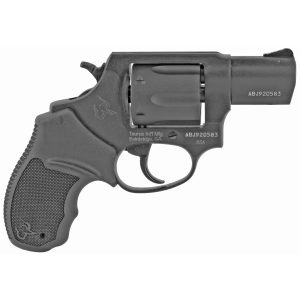
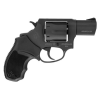
Taurus 856 ($278.06-$336)
The gun the 942 exists to train you for. Same small frame, six rounds of .38 Special instead of eight of .22, and roughly the same street price. Most people should own both, and if you can only own one, the .38 is the one that does defensive work. The argument for buying the 942 alongside it is simple arithmetic: a thousand rounds of .38 costs several times what a thousand rounds of .22 does, and it is the thousand rounds that make you good.
Smith & Wesson 317 Kit Gun ($772.27-$870)
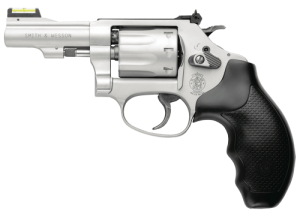
Also an eight shot .22, and about two and a half times the money. The 317 is an AirLite, so it weighs around half what a steel 942 does, and it comes with a HiViz front sight and adjustable rear. It is a beautifully made backpack gun and a poor trainer, because at twelve ounces it handles nothing like a defensive revolver. If you want a featherweight woods .22 and the budget is there, buy the Smith. If you want practice, the Taurus is doing the job for a third of the price.
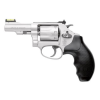
Charter Arms Pathfinder ($309.74-$410)
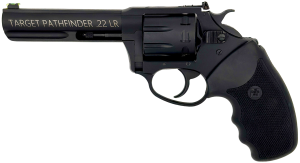
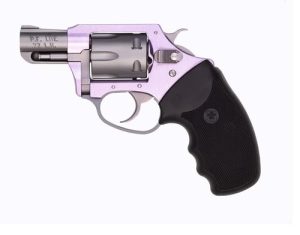
Charter’s eight shot rimfire, in .22 LR or .22 Magnum, at similar money. It is lighter than the steel 942 and the fit and finish is plainer. Where the Taurus wins is the drift adjustable rear sight and, in our experience, a smoother double action out of the box. Where the Charter wins is that it is made in America and the Lite versions genuinely are light. We went through Charter’s whole range in our Charter Arms Undercover review. Our Charter Arms Pathfinder review covers this gun.

Heritage Rough Rider ($150.46-$174)
Half the price, and a completely different animal. The Rough Rider is a single action six shooter with a loading gate, which means you cock it manually for every shot and unload one chamber at a time. As a cheap plinker it is enormous fun and unbeatable value. As practice for a modern double action carry revolver it teaches you nothing at all, because the manual of arms has nothing in common.

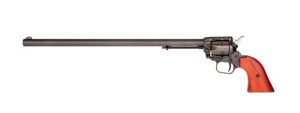
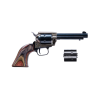
Verdict: the 942 is the only one of these built to weigh and handle like a defensive revolver, and that is what makes it worth the money over a Heritage and worth choosing over a Smith. Our best .22 LR revolvers and best .38 Special revolvers guides cover the wider field.
Upgrades Worth Making
| Upgrade | Recommended | Why it matters | Cost |
| Better ammunition | CCI Standard Velocity or Mini-Mag | Removed almost every light strike we had | $9 – $14 per 100 |
| Chamber brush | .22 caliber chamber brush and solvent | Dirty chambers are why ejection gets stiff | $8 – $15 |
| Front sight paint | Bright orange or white | The serrated ramp disappears in low light | $8 – $15 |
| Speed loader | Any 8 shot rimfire loader | Eight small rims are fiddly by hand | $12 – $25 |
Common Problems and Fixes
- Light strikes and failures to fire: eight of our nine came from one cheap bulk pack. Change ammunition before you change anything on the gun.
- Cases sticking on ejection: rimfire cases swell and the chambers foul quickly. Scrub them properly and hit the ejector rod firmly rather than easing it.
- Gritty cylinder rotation when new: ours smoothed out inside the first hundred rounds. If it has not settled by two hundred, that is a warranty call.
- Shooting high or low: the rear sight adjusts for windage only. Elevation is fixed, so change bullet weight or learn the hold.
- Expecting it to be light: the steel version is 23.6 ounces, heavier than plenty of .38s. If you wanted light you wanted the Ultra-Lite, and it is only three dollars more.
Who Should NOT Buy This Gun
- Anyone wanting a defensive revolver: a rimfire that light strikes once every seventy rounds on cheap ammunition is not a carry gun. Buy a Taurus 856 in .38 Special and use the 942 to practice with.
- The backpacker counting ounces: 23.6 ounces of steel is a lot to carry for a .22. A Smith and Wesson 317 AirLite weighs roughly half and is built for exactly that job.
- The casual plinker on a budget: a Heritage Rough Rider does the fun part for half the money. You only need the 942 if the training transfer matters to you.
- Anybody who wants adjustable elevation: the rear sight drifts for windage only. A Smith and Wesson 317 Kit Gun gives you a fully adjustable rear and a HiViz front.
- The shooter who hates cleaning: rimfire fouls chambers fast and this gun will punish neglect with sticky ejection. A centerfire revolver is far more forgiving.
Final Verdict
The 942 is the most useful .22 revolver being made, and the reason is not accuracy or features. It is that Taurus resisted the urge to make it light and cute. A steel 942 weighs 23.6 ounces and sits on the same frame as the .38 Special everybody actually carries, so every round you fire through it is practice that transfers. Six hundred rounds cost us about a third of what the same session would have cost in .38.
Buy the steel 3 inch version if it is a trainer, the Ultra-Lite if it is going in a pocket, and remember that Taurus prices those two within three dollars of each other so the choice costs you nothing. Feed it CCI or Federal rather than the cheapest bulk pack you can find, scrub the chambers, and ignore the $497.99 on the sticker, because the real number is closer to $276.
Specifications, item numbers, weights and MSRP figures come from Taurus’s own product pages for the 942 .22 WMR 3 inch and the 942 Ultra-Lite .22 LR. Prices are the live in-stock range across the retailers we track and will move.
Final Score: 7.8/10 – The rare .22 that makes you better with the gun you actually carry, at a street price that undercuts its own sticker by forty percent.
FAQ: Taurus 942
Is the Taurus 942 a good revolver?
As a trainer and a plinker, yes. Ours shot 2.0 inch groups at 15 yards with CCI Standard Velocity across 600 rounds. We had nine light strikes, eight of them from one cheap bulk pack, and every one fired on a second pull. It is not a defensive gun, because no rimfire is, but it is the best practice revolver at the price.
How much does a Taurus 942 cost?
Taurus lists it between $481.99 and $497.99 depending on model. The cheapest we found at a major retailer was $275.99, with the whole in-stock band running to about $470. That is roughly forty percent off list, consistently, so treat the MSRP as positioning rather than a price.
How much does a Taurus 942 weigh?
Between 17.80 and 25.00 ounces unloaded depending on which one you buy. The 2 inch .22 LR in steel alloy is 23.60 oz, the aluminum Ultra-Lite version of the same gun is 17.80 oz, and the 3 inch .22 WMR in stainless is 25.00 oz. The steel gun is deliberately heavy, because it is meant to weigh the same as a small frame .38.
Is the Taurus 942 Ultra-Lite worth the extra money?
There is barely any extra money. Taurus lists the steel 2 inch .22 LR at $481.99 and the Ultra-Lite version of the same gun at $484.99, a difference of three dollars for 5.8 ounces saved. Choose on purpose rather than on price: steel if it is a trainer, Ultra-Lite if you will carry it.
How many rounds does a Taurus 942 hold?
Eight, in both .22 LR and .22 WMR. A rimfire case is skinny enough that eight fit in a cylinder sized for six .38 Specials. Over a practice session that is a quarter fewer reloads, which matters more on a revolver than it sounds.
Why does my Taurus 942 have failures to fire?
Almost always the ammunition. Rimfire priming is a smear of compound around the case rim rather than a seated cup, and cheap bulk packs are inconsistent. Eight of our nine light strikes in 600 rounds came from a single bulk pack, while CCI and Federal gave us one failure across 300 rounds. Change ammunition before you change anything on the gun.
Taurus 942 in .22 LR or .22 WMR?
Buy .22 LR if the point is cheap practice, because magnum rimfire costs several times as much per round and you will shoot far less. Buy .22 WMR if the point is a light woods and pest gun, where the extra velocity out of the 3 inch barrel is genuinely useful. The magnum version lists about $16 higher.
Can you carry a Taurus 942 for self defense?
We would not. A revolver that light strikes roughly once every seventy rounds on cheap ammunition is a practice gun, and .22 is not a defensive cartridge by any sensible standard. The right use of a 942 is to make you good with a Taurus 856 or another small frame .38 for a fraction of the ammunition cost.
4,021+ Gun & Ammo Deals
Updated daily from 200+ top retailers. Filter by category, caliber, action type, and price.
Related Guides