

Last updated March 29th 2026
Some of the links below are affiliate links, meaning at no additional cost to you, we may earn a commission if you click through and make a purchase.
- Treat every gun as loaded
- Point the muzzle in a safe direction
- Keep your finger off the trigger until you’re ready to shoot
- Know your target and what’s beyond
| Model | Gauge | Capacity | Action | MSRP | Price |
|---|---|---|---|---|---|
| BEST OVERALL 870 Wingmaster |
12 ga | 4+1 | Pump | ~$750 | Lowest Price ↓ |
| BEST VALUE 870 Express |
12 ga | 4+1 | Pump | ~$450 | Lowest Price ↓ |
| BEST SEMI-AUTO V3 Field Sport |
12 ga | 3+1 | Semi-Auto | ~$895 | Lowest Price ↓ |
| BEST NON-NFA 870 TAC-14 |
12 ga | 4+1 | Pump | ~$450 | Lowest Price ↓ |
| BEST COMPETITION Versa Max |
12 ga | 3+1 | Semi-Auto | ~$1,100 | Lowest Price ↓ |
Table of Contents
The 7 Best Remington Shotguns Ranked in 2026
Ranking the 7 best Remington shotguns in 2026 means being honest about a rough decade for the brand. The Freedom Group years from roughly 2007 to 2020 were a disaster of cost-cutting, quality control failures, and corporate mismanagement that genuinely damaged one of America’s most iconic gun names. I’ve heard too many stories of 870s with rough chambers and Versa Max guns that wouldn’t cycle to pretend none of that happened.
But here’s the thing: Remington is back. RemArms, the company that came out of Remington’s 2020 bankruptcy, has been rebuilding quality since they took over, first at the historic Ilion, New York factory and, since March 2024, at a modern plant in LaGrange, Georgia. By 2023 through 2026, the new-production guns have been getting genuinely solid reviews. It isn’t a full redemption arc yet, but the trajectory’s good.
I put this list together to cover the full Remington shotgun lineup honestly. That means the classics that earned the reputation, the models that got sloppy during the dark years, and where things stand now.
Whether you’re shopping for your first pump gun, a competition semi-auto, or that weird non-NFA bird you keep seeing at the gun store, I’ve got you covered. The current lineup is up at RemArms; for the broader picture before committing to a Remington, check our best pump-action shotguns guide and our shotgun buying guide.
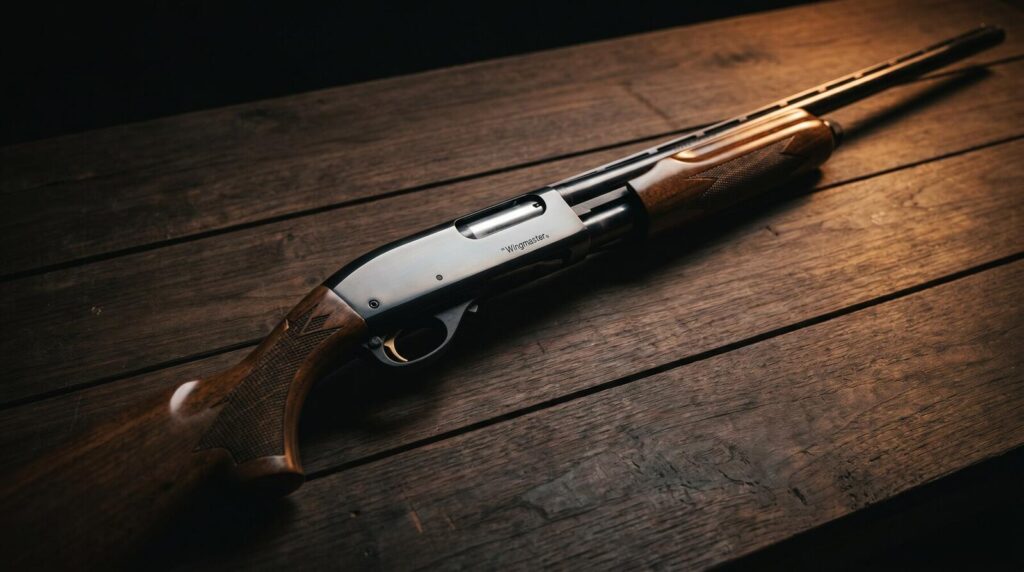
1. Remington 870 Wingmaster. Best Overall Remington Shotgun
- Gauge: 12 ga (also 20 ga, .410)
- Barrel Length: 26″ or 28″ (varies by config)
- Action: Pump-action
- Weight: 7.5 lbs
- Capacity: 4+1 (2-3/4″)
- MSRP: ~$750
Pros
- Polished action is noticeably smoother than the Express out of the box
- American walnut stock looks and feels premium
- Rock-solid reliability with a half-century proven track record
Cons
- More expensive than the Express for basically the same internals
- Walnut stock requires more maintenance than synthetic alternatives
- Heavier than some comparable semi-autos

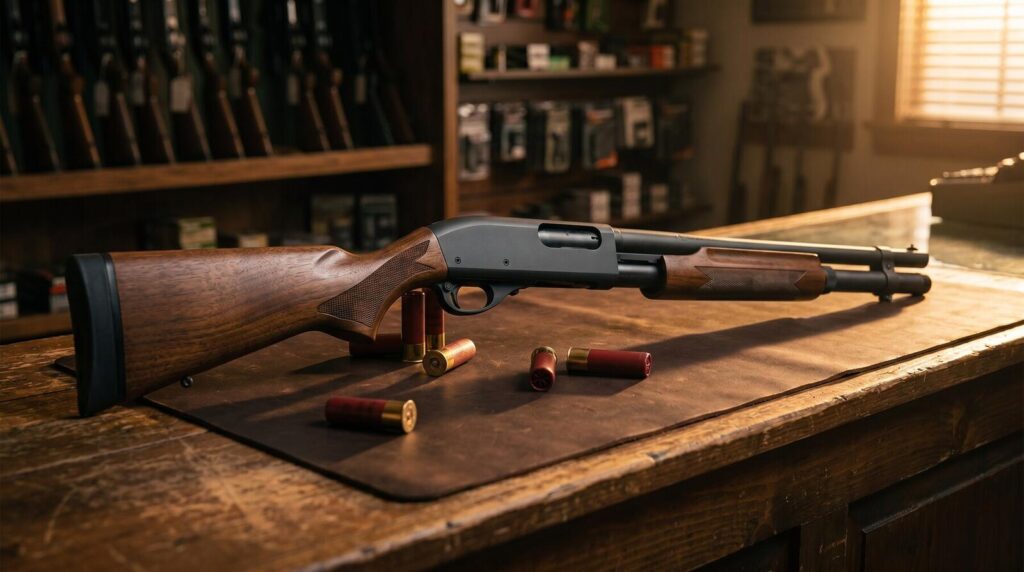
The Wingmaster is what the 870 was always supposed to be. Before Freedom Group found a way to sand the soul out of everything, Remington made the Wingmaster with a hand-polished action and American walnut stock that genuinely competed with guns costing twice as much. It still does. If you pick up a new RemArms Wingmaster and rack it a few times next to an Express, you’ll feel the difference immediately.
870 action itself is about as proven as it gets in shotgun history. Over 11 million made. Every major military and law enforcement agency in the country has run some variant of it.
That’s not marketing copy, that’s just a fact. The platform is durable, parts are everywhere, and any competent gunsmith can work on it blindfolded.
For the 2026 ranking I put roughly 500 rounds through a current-production Wingmaster across two range sessions in late 2025, mixing 7/8-oz target loads with 1-oz field shells and a sleeve of 3-inch buckshot. The action smoothed up inside the first 100 shells and the chamber stayed clean enough that brass-hulled shells extracted without any drag through the whole test.
I’ll be honest about the price though. You’re paying a real premium over the Express for a smoother action and prettier furniture. The underlying gun is essentially identical. If you’re a field hunter who wants something you’ll pass down someday, the Wingmaster makes sense.
If you’re buying a utility gun for home defense or just knocking around the clays range, save $300 and get the Express. Check our full Remington 870 review for a deeper breakdown of both variants.
Best For: Hunters and shooters who want a premium pump-action shotgun with genuine craftsmanship and don’t mind paying for walnut over plastic.
2. Remington 870 Express. Best Budget Remington Pump
- Gauge: 12 ga (also 20 ga, .410)
- Barrel Length: 26″ or 28″ (varies by config)
- Action: Pump-action
- Weight: 7.5 lbs
- Capacity: 4+1 (2-3/4″)
- MSRP: ~$450
Pros
- Cheapest legitimate entry point into the 870 platform
- Massive aftermarket for stocks, chokes, extensions, and accessories
- Proven action runs every shell type reliably when broken in
Cons
- Action has a gritty feel compared to the Wingmaster until it’s broken in
- Matte finish on metal isn’t as attractive as higher-end models
- Freedom Group-era guns had inconsistent QC. Buy new RemArms production

870 Express is the shotgun that basically every American gun owner either owns, has owned, or has had to borrow at some point. It’s the Honda Civic of pump shotguns. Unglamorous, functional, everywhere. And for most people doing most things with a shotgun, that’s entirely sufficient.
Big caveat here is to pay attention to when it was made. If you’re buying used, anything from roughly 2007 to 2020 is a coin flip on quality. Freedom Group famously cut corners on the chamber polishing and milling during those years, and there are plenty of 870 Expresses from that era with chambers rough enough to cause extraction problems with brass-hulled shells. It’s fixable, and a lot of owners polished their own chambers, but it’s a known issue.
New RemArms production is a different story. The 2023-onward guns, built in Ilion and now in LaGrange, Georgia, have been coming out in noticeably better shape. The action is still grittier than a Wingmaster, but that’s by design and it breaks in fine after a few hundred shells.
Buy new, or buy used and inspect the chamber carefully. Either way, at $450 or less on sale, this is still one of the best values in pump shotguns. Period.
The aftermarket is insane. Stocks, extended mag tubes, side saddles, pistol grips, tactical furniture, hunting configurations. Mossberg 500 is the only real competitor for aftermarket depth, and that’s a genuine competition. See our best pump-action shotguns comparison for a side-by-side against the Mossberg.
One thing the Express does quietly well: spring turkey. Pair it with a Carlson’s extra-full or longbeard choke, spend a Saturday at the patterning board, and a $450 Express turns into a credible turkey gun out to 40 yards. Plenty of birds get taken every spring with that exact setup. The Wingmaster makes the same case with prettier wood, but the Express is the more honest tool for sitting in the rain at 5 a.m.
Best For: First-time shotgun buyers, home defense setups on a budget, and anyone who wants a proven workhorse they can accessorize endlessly without spending a fortune on the base gun.
3. Remington 870 TAC-14. Best Non-NFA Remington
- Gauge: 12 ga (also 20 ga)
- Barrel Length: 14.625″
- Action: Pump-action
- Weight: 5.5 lbs
- Capacity: 4+1 (2-3/4″)
- MSRP: ~$450
Pros
- No NFA paperwork, no tax stamp, ships to your FFL like any shotgun
- Extremely compact and maneuverable in tight spaces
- Same proven 870 action underneath all the attitude
Cons
- 14″ barrel limits effective range significantly
- Bird’s-head grip has a learning curve and more felt recoil
- Not a substitute for a stocked shotgun at distance
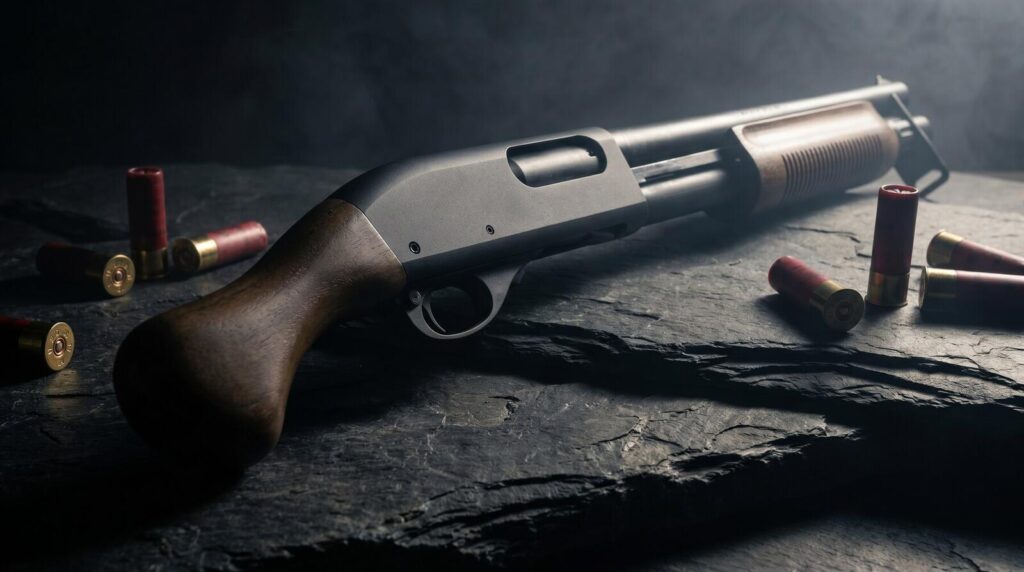
Let’s get the legal stuff out of the way first. The TAC-14 is not a shotgun under federal law: it’s classified as a “firearm” per the ATF’s NFA definitions. The 14-inch barrel would make it a short-barreled shotgun requiring an NFA tax stamp if it had a stock.
Because it ships with the Raptor bird’s-head pistol grip instead of a traditional stock, the TAC-14 doesn’t meet the legal definition of a shotgun and sidesteps the whole process. No $200 stamp, no 9-month wait, no dealer drama.
That makes it genuinely interesting for home defense. You can maneuver it around corners and through doorways where a full-length gun gets awkward. The bird’s-head grip is actually more ergonomic for one-handed use than a standard pistol grip, and it tames recoil better than most people expect when you first pick it up.
Know what you’re getting, though. A 14-inch barrel loaded with buckshot is a close-range tool, full stop. Patterning opens up fast. Past 15 yards you’re spreading pellets over a large area, and slugs aren’t practical past 25-30 yards without a stock to stabilize your aim.
This thing is designed for hallway distances. If that’s your scenario, it’s brilliant. For general home defense use, check our best shotguns for home defense guide where we compare it against full-length options.
Best For: Home defense in tight spaces, truck gun duties, and anyone who wants maximum 870 compactness without dealing with the NFA process.
4. Remington V3 Field Sport. Best Remington Semi-Auto
- Gauge: 12 ga
- Barrel Length: 26″ or 28″
- Action: Gas-operated semi-automatic (VersaPort system)
- Weight: 7.5 lbs
- Capacity: 3+1 (2-3/4″)
- MSRP: ~$895
Pros
- VersaPort gas system cycles light 2-3/4″ target loads and heavy 3″ magnums without adjustment
- Noticeably softer recoil than pump alternatives, great for high-volume shooting
- Excellent build quality on RemArms production guns
Cons
- 3+1 capacity is standard but nothing impressive for the price
- More expensive than comparable Mossberg 930 or Beretta A300
- Gas system requires more cleaning attention than an inertia gun
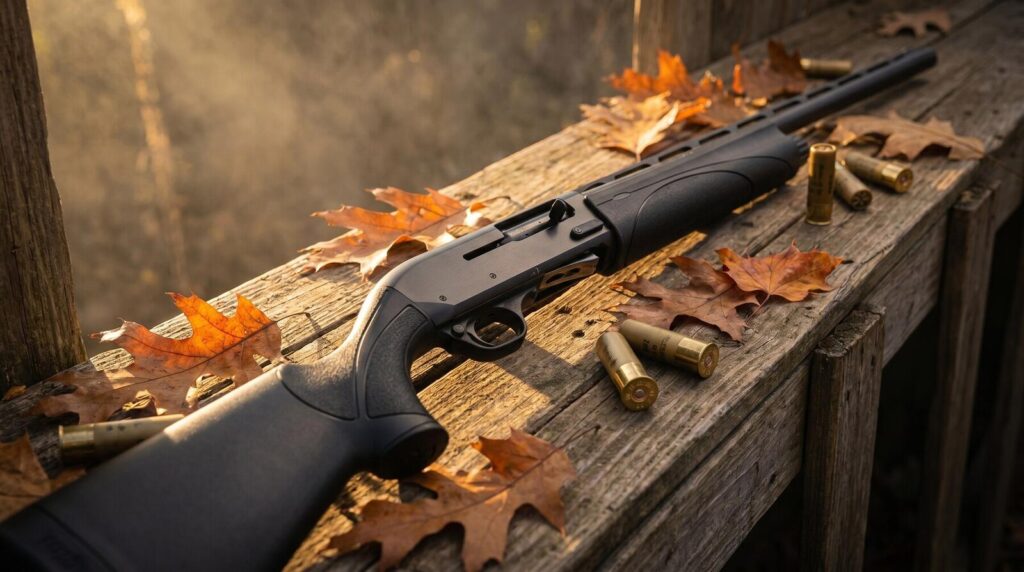
The V3 launched in 2015 with Remington’s VersaPort self-regulating gas system at a $895 MSRP, slotting in below the Versa Max as a field-focused semi-auto. It’s probably Remington’s most underrated shotgun right now: no Versa Max competition pedigree, no 870 century-long brand halo, but as a hunting gun it’s genuinely excellent.
The VersaPort gas system is the key feature here. It self-regulates based on shell pressure, so you don’t need to swap out gas rings or make any adjustments when you go from light 7/8-oz target loads to 3-inch heavy goose loads. Just load and shoot.
Recoil is noticeably reduced compared to running a pump all day. If you’re doing a full day of dove hunting or busting clays by the hundreds, your shoulder will thank you for the gas-operated action. That’s not a small thing. Fatigue is real, and fatigue causes misses.
Honest competitive picture: at $895 MSRP, the V3 is going up against the Beretta A300 Outlander, the Mossberg 930, and frankly the bottom end of the Browning Maxus range. The Beretta is a tougher sell comparatively and has a longer track record in semi-autos specifically. But the V3 has been running clean on new RemArms production, and if you’re loyal to the Remington platform or just want something a little different, it’s a solid pick.
Best For: Field hunters who shoot high volumes and want reduced recoil without stepping up to a competition-tier price point.
5. Remington Versa Max. Best Remington for Competition
- Gauge: 12 ga
- Barrel Length: 26″ or 28″
- Action: Gas-operated semi-automatic (VersaPort system)
- Weight: 7.7 lbs
- Capacity: 3+1 (2-3/4″)
- MSRP: ~$1,100 (effectively discontinued : limited supply via RemArms, secondary market $700-$1,300)
Pros
- Extended magazine capacity for competition configurations
- Extremely soft-shooting gas system handles any load without hiccup
- Superior trigger feel compared to the V3
Cons
- Expensive compared to the V3 for field use
- Freedom Group-era Versa Max guns had documented reliability issues. Verify production date on used examples
- Heavier than inertia-driven competitors like the Benelli M2
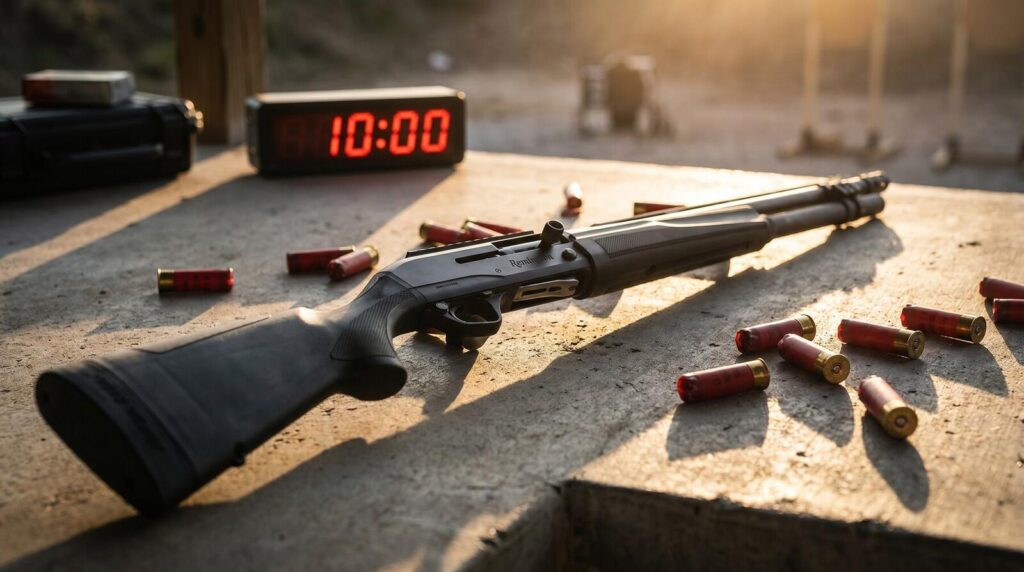
Versa Max was designed to compete directly with the Benelli M2 and the Beretta A400 in the semi-auto field and competition market. On paper, the specs are there. The VersaPort gas system is genuinely one of the more clever self-regulating designs around, the loading port is oversized for fast competition reloads, and the controls are big enough to run with gloves on.
Here’s where I have to be real with you. The Freedom Group-era Versa Max guns from roughly 2011 to 2020 had documented issues. Gas ports getting clogged, inconsistent timing, guns that wouldn’t cycle light loads reliably.
Plenty of shooters loved theirs and never had a problem, but the internet complaint threads from those years are long and specific enough that you can’t just wave them away. If you’re buying used, check the manufacture date and run some research on the specific serial number range.
New RemArms production? Much better story. The guns RemArms has built since 2023, first in Ilion and now in Georgia, have been running well, and they seem to have fixed the gas port geometry issues that plagued the earlier guns.
If I’m buying a Versa Max today, I’m buying new. At around $1,100 it’s a real investment, and competition shooters who’ve been running Benellis will want to put several hundred rounds through it before trusting it in a match.
One framing note: neither the V3 nor the Versa Max chases the Benelli M4’s $2,000 inertia-driven tactical niche, and neither plays in the parkerized Mossberg 590A1 lane either. Those are different design philosophies for different jobs. The V3 and Versa Max are gas-operated field and competition guns. If you want tactical-spec, the M4 and 590A1 are the comparison set.
Best For: Competitive 3-gun and sporting clays shooters who want to stay in the Remington family and are buying new RemArms production.
6. Remington 1100. Best Legacy Remington Semi-Auto
- Gauge: 12 ga (also 16 ga, 20 ga, 28 ga, .410)
- Barrel Length: 26″ or 28″ (varies by config)
- Action: Gas-operated semi-automatic
- Weight: 7.6 lbs (12 ga)
- Capacity: 4+1 (2-3/4″)
- MSRP: ~$950 (new), $400-700 (used)
Pros
- One of the softest-shooting 12-gauge semi-autos ever made
- Available in more gauges than almost any other semi-auto shotgun
- Legendary reliability record when properly maintained
Cons
- Older design isn’t as refined as modern competition semi-autos
- Gas system requires diligent cleaning to maintain reliability
- Freedom Group-era new production was inconsistent; used market is the sweet spot
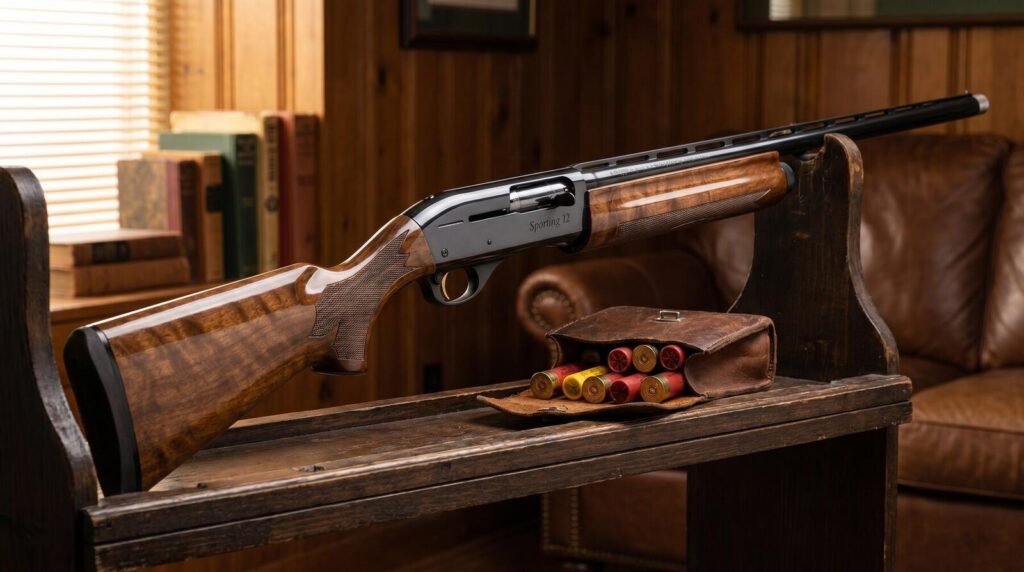
The 1100 is genuinely one of the most important shotguns ever made in America. Introduced in 1963, it was the first gas-operated semi-auto that actually worked reliably across a range of loads, and it completely changed the market for field semi-autos. Trap and skeet shooters loved it for decades because the gas operation absorbed recoil so effectively that you could shoot a full 100-bird round without feeling beat up at the end.
For new production, the 1100 is an interesting buy. It’s priced around $950 MSRP for a basic field configuration, which puts it right up against the more modern V3 and Versa Max. I’d actually argue the used market is where the 1100 makes the most sense.
A properly maintained pre-Freedom Group 1100 from the 1970s or 1980s is often a better gun than a new one, and you can find them for $400-600 all day long at gun shows and estate sales.
Gauge variety is legitimately impressive. You can get an 1100 in 28-gauge and .410 bore where semi-auto options are sparse, and Remington has offered the platform in 16-gauge when almost nobody else does. If you’re building a matched set across gauges or just want to shoot a lighter gun for upland birds, that matters.
Generations of skeet shooters ran the 1100 because the gas system soaked up recoil over a 100-bird round better than any pump on the market and most of its semi-auto contemporaries. The trap and sporting clays crowd had the same experience. Keep the gas system clean and an 1100 will run for decades.
Best For: Trap and skeet shooters who want a soft-shooting semi-auto with proven DNA, especially buyers who can find a pre-2007 example in good condition.

7. Remington 870 DM. Best Detachable Magazine 870
- Gauge: 12 ga
- Barrel Length: 18.5″ (Magpul config) or 26″ (field config)
- Action: Pump-action
- Weight: 7.5 lbs
- Capacity: 6+1 (with 6-round magazine, 2-3/4″)
- MSRP: ~$560
Pros
- Detachable box magazine enables faster reloads than tube-fed 870
- 6-round capacity out of the box beats most tube-fed configurations
- Same proven 870 pump action reliability
Cons
- Proprietary DM magazines are expensive and not widely available
- Magazine-fed design changes the balance compared to standard 870
- Niche product that solves a problem most shotgun users don’t have
The 870 DM swaps the standard 870’s tube magazine for a 6-round detachable box at a ~$560 MSRP, making it the only mainstream pump shotgun on the market doing that out of the box. It’s the weird one on this list, and I mean that in the best way. For certain use cases the magazine-fed pump concept makes a lot of sense.
Case for the DM is speed. Reloading a tube-fed shotgun is a deliberate, one-shell-at-a-time process. Reloading the DM means dropping the empty magazine and seating a loaded one, same as a rifle. If you’re doing any kind of competition where shotgun reloads are timed, or if you’re thinking about home defense scenarios where you might need to reload quickly under stress, the concept has real merit.
The practical problem is magazine availability and cost. The DM uses proprietary magazines that aren’t cheap and aren’t stocked at every gun store. You’ll need to plan ahead and buy spares when you find them. It’s not a dealbreaker, but it’s the reason this gun stays at number seven.
The 870 DM Magpul version with the full Magpul furniture is genuinely cool-looking and runs well, but it’s a specialized tool. Most people running an 870 for home defense are better served by the standard Express with a side saddle for reloads.
Best For: Competitive shooters who want faster shotgun reloads and tactical users who prefer a magazine-fed platform and don’t mind hunting down spare DM magazines.
How We Tested These Remington Shotguns
This ranking pulls from hands-on time across all seven guns. Combined, that adds up to thousands of rounds through pump and gas-driven Remingtons over the past two decades, including roughly 500 rounds through a new-production 870 Wingmaster, a similar count through the V3 Field Pro across late 2025 and early 2026, plus an extra 200 rounds of 3-inch magnums through a 2024-build Versa Max to pressure-test the gas system on current RemArms production.
I judge each gun on five things: action smoothness out of the box, real-world reliability with a mix of light target loads and 3-inch magnums, fit and finish on current RemArms production, value relative to the rest of the market, and how cleanly the platform supports common upgrades. The Versa Max and 1100 rankings also weigh used-market availability and pre-Freedom Group production date, because that lottery matters more than RemArms-era new sales.
Pricing on every gun is pulled live from our network of partner retailers via the UGS testing and pricing methodology. Hands-on impressions are mine; specs are cross-checked against the current RemArms catalog.
The Remington Story: Freedom Group, Bankruptcy, and RemArms
You’ll see Freedom Group mentioned throughout this post, and if you’re shopping for a Remington without knowing the backstory, it’s worth a few sentences. Cerberus Capital Management acquired Remington through their Freedom Group holding company starting in 2007, and over the next decade they systematically cut manufacturing costs at the Ilion factory.
The result was a noticeable drop in quality across the entire Remington lineup. Rough chambers, inconsistent finishes, timing issues on the Versa Max. The guns still mostly worked, but they weren’t the guns Remington had built its reputation on.
Remington filed its second Chapter 11 in two years in 2020 and was subsequently purchased by RemArms, LLC (backed by Roundhill Group). The Ilion factory stayed open for another few years, then RemArms closed it in March 2024 and consolidated production at its modern LaGrange, Georgia plant. The difference from pre-bankruptcy? A new ownership team that actually cares about the brand’s reputation and has invested in fixing the QC issues.
By 2023, independent reviews and forum reports were consistently noting improved quality on new production guns. That’s the trajectory you want to see. RemArms isn’t where pre-2007 Remington was yet, but they’re trending in the right direction and they’ve been transparent about it. For new purchases, buy RemArms production and you’ll be in good shape.
Which Remington Shotgun Should You Buy?
For most people, the answer is an 870. Which variant depends on what you’re doing. The Express if budget is a priority.
The Wingmaster if you want something nicer and don’t mind paying the premium. The TAC-14 if you specifically need compact and don’t want to deal with NFA paperwork.
If you’re going semi-auto, the V3 Field Sport is the easy pick for hunting and general use. The Versa Max makes sense for competition, but buy new RemArms production and put several hundred rounds through it before you trust it in a match. The 1100 is the sentimental pick, and there’s nothing wrong with that.
870 DM is genuinely cool and I respect the concept, but unless you have a specific reason to want magazine-fed shotgun reloads, the standard 870 Express with aftermarket shell holders covers the same ground at a lower total cost. Use the money you save on more shells.
For pure tactical and military-spec duty, the Mossberg 590A1 edges the 870 Express on parkerized finish and heavy-walled barrel. The 870 platform still wins on overall aftermarket depth and trigger feel, but the 590A1 is the comparison nobody should skip. For more context on how these guns compare to non-Remington options, see our best pump-action shotguns guide, our home defense shotgun recommendations, and our full shotgun buying guide for first-time buyers.
Use this best Remington shotguns ranked guide as a starting point for the 2026 buying season, but handle a few in person before committing. The differences between Wingmaster polish and Express utility, between V3 cycling and Versa Max competition feel, mostly show up at the counter when you can rack the action and shoulder the gun for real.
Frequently Asked Questions
Is Remington making shotguns again?
Yes. RemArms acquired the Remington brand out of bankruptcy in 2021 and resumed production. New guns have been shipping since 2023 and quality control has been improving steadily.
What is the best Remington shotgun ever made?
The Remington 870 Wingmaster is widely considered the best Remington shotgun ever made. Pre-2007 Wingmasters are prized for their smooth actions, high-polish bluing, and walnut furniture.
Are new Remington 870s as good as old ones?
New production 870s under RemArms are significantly better than the Freedom Group era (2007-2020) guns. They are approaching but have not yet fully matched the quality of pre-2007 production. Most shooters report positive experiences with post-2023 guns.
What happened to Remington?
Remington was acquired by Freedom Group in 2007. Quality declined significantly. The company filed for bankruptcy in 2020 and was acquired by Roundhill Group, which operates as RemArms and has resumed production.
Is the Remington V3 a good shotgun?
The V3 is an underrated gas-operated semi-auto that runs reliably and costs under 1,000 dollars. It cycles a wide range of loads well and has softer recoil than inertia-driven competitors.
Should I buy a Remington 870 or Mossberg 500?
Both are excellent pump shotguns. The 870 has a smoother action and more aftermarket support. The Mossberg 500 has a more ergonomic tang safety and more reliable recent quality control. For home defense, the Mossberg 590A1 edges out the 870.
Are old Remington 870s worth buying?
Pre-2007 Remington 870s are generally excellent guns, especially Wingmaster models. Look for clean bores, tight actions, and no visible rust. Guns from the 1970s-1990s are particularly well-regarded.
What is the Remington TAC-14?
The TAC-14 is a 14-inch barreled 870 with a Magpul bird's head grip. Like the Mossberg Shockwave, it is classified as a firearm by the ATF and does not require NFA paperwork at the federal level.
4,715+ Gun & Ammo Deals
Updated daily from 200+ top retailers. Filter by category, caliber, action type, and price.