
Last updated November 2026 · By Nick Hall, tracking SHTF shelter manufacturers and underground bunker pricing
Quick answer: Atlas Survival Shelters builds the best ready-made underground shelters for most people in 2026: steel construction, NBC (Nuclear, Biological, Chemical) air filtration included on every shelter, and installation nationwide, with lead times of 3 to 12 months. For a fully custom luxury bunker, Rising S Company leads. For people who do not own remote land, Vivos sells hardened bunkers at its xPoint site in South Dakota from $55,000. And if you want to build your own, American Safe Room supplies the blast doors and air systems to do it right
An underground shelter is the one prep that buys you something nothing else can: time. You can stock food, train, and carry every day, but if a tornado, a grid-down winter, civil unrest, or a fallout event rolls through, the smartest move is to get below ground and wait it out. The trick is doing it properly, because a shelter built wrong is a hole you can drown in, suffocate in, or get trapped in.
I have spent years tracking the real shelter manufacturers, their construction methods, and what they actually charge once freight and install land on the invoice. Below are the eight options I would put my own money toward, from a storm shelter in the low thousands to a seven-figure custom build, plus a buyer’s guide so you know what separates a genuine SHTF bunker from an overpriced storm box. Most of these makers quote rather than list prices, so the figures below are the ones they publish, and we say where they do not
| Shelter | Best for | Construction | Typical price | NBC air |
|---|---|---|---|---|
| Atlas Survival Shelters | Best overall ready-made | Steel plate and corrugated pipe | Nado series from $18,999 (2018 catalog); big builds $265,000+; prices being updated | Yes, standard |
| Rising S Company | Best luxury custom | Plate steel, built in Texas | $50,900 to $1,552,500 (2025 list) | Yes |
| Vivos | Best community shelter | Military concrete and steel bunkers | $55,000 lease or $75,000 to buy (xPoint) | Yes |
| American Safe Room | Best for DIY builders | Doors, air systems and kits | Doors $9,190+; NBC systems $4,495+; kits $28,995+ | Yes (systems) |
| Survive-a-Storm | Best budget storm shelter | 1/4 inch steel | $3,995 to $11,710 | No |
| U.S. Safe Room | Best steel bunker on quote | 1/4 inch steel | Quote only | Not stated |
| Hardened Structures | Best high-end engineering | Custom, blast and EMP rated | Quote only | Yes |
| DIY corrugated pipe or ICF | Best low-cost for landowners | Culvert pipe or concrete | Pipe a few thousand; a finished shelter far more | Add your own |
Table of Contents
1. Atlas Survival Shelters: Best Overall Ready-Made Bunker
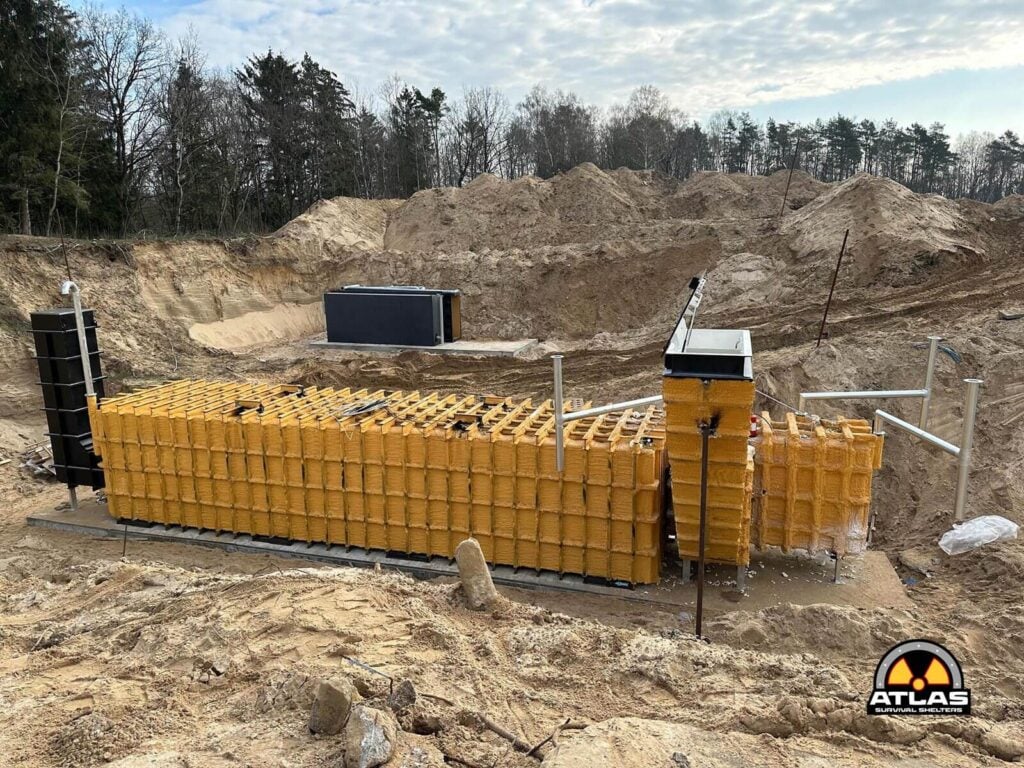
Atlas is the most prolific bunker builder in the country, and for good reason. Its square shelters are built on a quarter-inch American steel plate with structural I-beams over the roof, it also builds in corrugated pipe, and Atlas says its NBC air filtration system is included in the price of every shelter. The larger models come with an escape tunnel as standard; the entry Nado series does not. The Nado started at $18,999 in Atlas’s last published catalog and is built to FEMA P-361 tornado standards, so it doubles as a storm shelter
What I like is that you are buying a finished product from a company that installs constantly, so the engineering questions are already answered. The catch is lead time and total cost: Atlas quotes 3 to 12 months for delivery, and freight plus excavation adds real money on top. Atlas has taken its price list down while it updates it; its last list ran from $265,000 to more than $3 million for the big multi-room plans. For most families who want a serious shelter without becoming amateur excavation engineers, Atlas is the safe default. Order long before you think you need it. See current models at Atlas Survival Shelters
2. Rising S Company: Best Luxury Custom Build
Rising S is the name that shows up whenever a magazine runs a story on billionaire bunkers, and the work backs it up. Everything is built from plate steel at its plant in Murchison, Texas, and its last published price list ran from $50,900 for an 8 by 12 foot Mini Bunker through $145,900 for the Silver Leaf, a 10 by 50 foot, 500 square foot unit, to $1,552,500 for The Fortress. Those prices exclude delivery and installation
If I were dropping six figures and wanted a bespoke layout, this is where I would start. The honest downside is that the price ceiling is effectively unlimited, and the larger builds demand serious site work. Rising S’s own website was down when we checked in November 2026, so confirm current pricing directly before you plan around these figures. For a true long-stay luxury shelter it is still the benchmark
3. Vivos: Best Community Co-Op Shelter
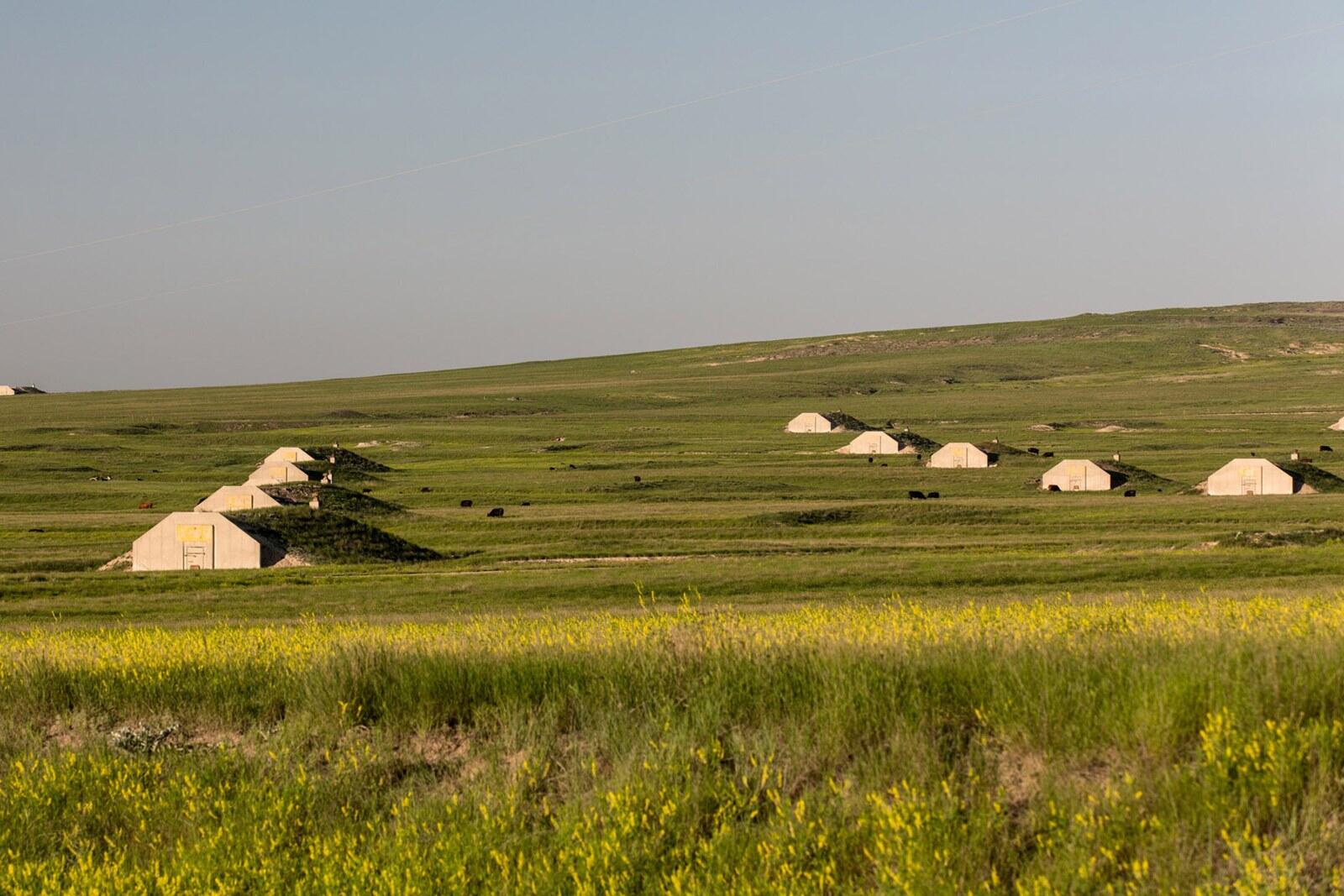
Not everyone owns land to bury a bunker on, and that is exactly the problem Vivos solves. Its xPoint site in South Dakota is a former Army munitions depot with 575 military-built concrete and steel bunkers. Vivos lists them at $55,000 on a 99-year lease, or $75,000 to buy the bunker with about 20,000 square feet of land around it. Europa One in Germany is the luxury end, with shared suites from €35,000 per person and private apartments at €2 million
The appeal is real: professional management, shared power and water infrastructure, security, and a built-in group of people to weather an event with. My reservation is that you have to physically get there when things go bad, and a shelter you can’t reach is no shelter at all. It works best as a second location for people who live within a tank of gas, or who plan to relocate early. Details are at Terra Vivos.
4. American Safe Room: Best for DIY Builders
If you own land, have a contractor, and want to build your own shelter to spec, the question is no longer the box, it is the parts that keep you alive inside it. American Safe Room sells exactly those: blast-rated steel doors, NBC air filtration systems, blast valves and complete shelter kits. Its safe room doors list at $9,190 to $9,590 plus shipping, NBC filtration runs from $4,495 for the basic unit to $8,495 for complete systems, and its bomb shelter kits start at $28,995
This is my pick for the hands-on prepper who would rather control every detail than buy a sealed product. You get to match the shelter to your land, your budget, and your timeline. The flip side is obvious: you’re now the general contractor, and a sealed shelter punishes mistakes in waterproofing and ventilation. Get the engineering right and a DIY build with American Safe Room components is the best value in serious sheltering. Browse parts at American Safe Room.
5. Survive-a-Storm Shelters: Best Budget Steel
Survive-a-Storm earned its name building tornado shelters, and that storm-first focus makes it the best value here if severe weather is your main worry. Its residential shelters use quarter-inch steel and a triple-locking single-lever door latch, with above-ground units from $3,995 and below-ground shelters from $7,315 to $11,710
Be clear about what these are. They are storm shelters, built for a few hours below ground during a tornado, not fallout-rated bunkers for a long stay, and Survive-a-Storm does not currently list an NBC-filtered bunker. If tornadoes are the real threat where you live, that is exactly what you need, and it costs a fraction of a bunker. See the range at Survive-a-Storm
6. U.S. Safe Room: Best Storm-and-Fallout Combo
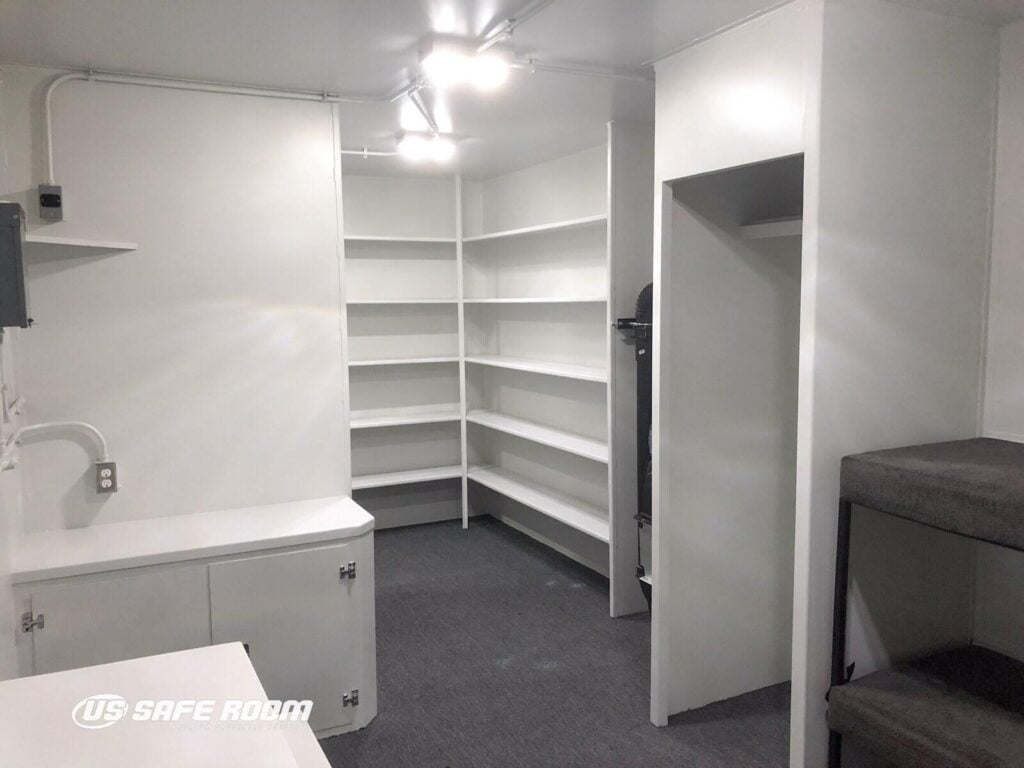
U.S. Safe Room builds underground shelters encased in quarter-inch U.S. steel, with security doors and furnished living quarters, aimed at families who want one buried steel unit for storms and longer stays. It does not publish prices or an NBC air system on its site; everything is on quote
What makes it worth a call is the focus on livability rather than luxury. Ask specifically about air filtration, depth rating and how many people the unit is built to sustain, because those are not on the website. U.S. Safe Room is also one of the makers that warns against burying a shipping container as a substitute. Configure one at U.S. Safe Room
7. Hardened Structures: Best High-End Engineering
Hardened Structures is less a bunker store and more a design-build firm: a construction program management company working with architects and engineers on hardened facilities, from blast-resistant bunkers to EMP shielding built to the military MIL-STD-188-125 standard. There is no public price list; Hardened Structures says cost depends on size, depth, ground conditions and the extent of EMP shielding, and gives buyers a cost model budget
If money is genuinely not the constraint and you want documented blast ratings, EMP shielding, and military-grade life support, this is the top of the market. The honest reality is that it prices out almost everyone, and the process is slow and consultative rather than off-the-shelf. I include it because it sets the ceiling for what a private shelter can be. Learn more at Hardened Structures.
8. DIY Corrugated Pipe or ICF Build: Best Low-Cost for Landowners
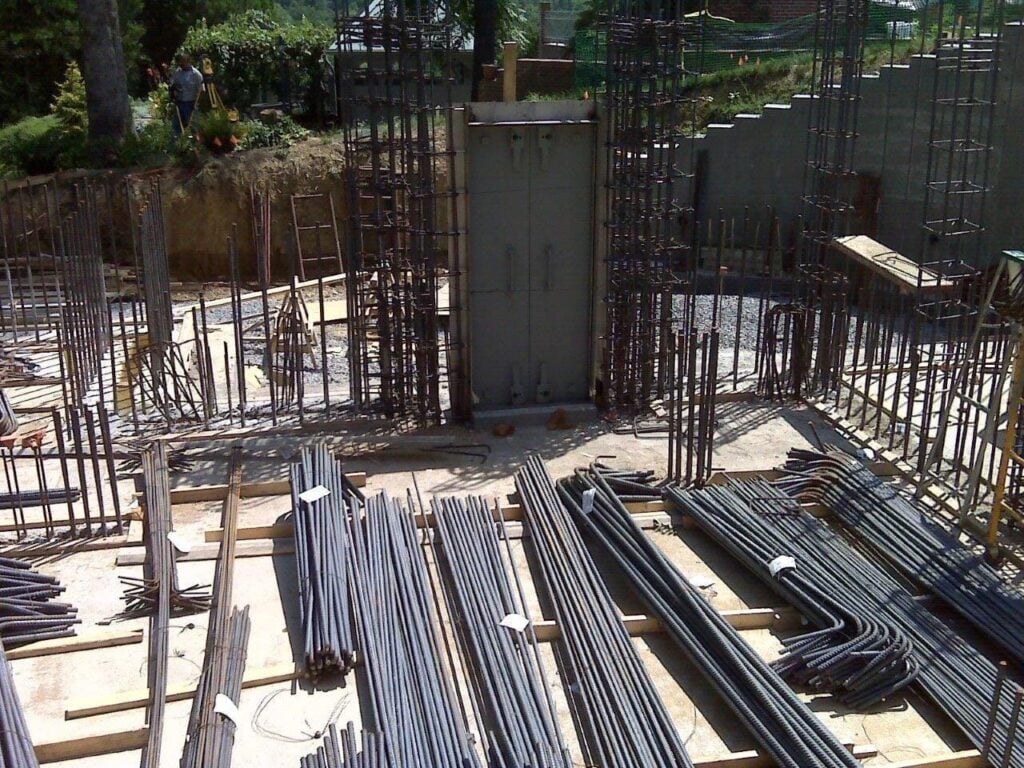
If you have land and skills, the cheapest route to a real shelter is building the shell yourself from large-diameter corrugated steel culvert pipe or poured ICF (Insulated Concrete Form) walls. The pipe itself can cost a few thousand dollars, but a finished shelter costs far more once you add sealed ends, an entry, drainage, ventilation and filtration. Atlas notes that 10-foot galvanized culvert in 12-gauge can be buried 42 feet deep, so the material is sound when it is engineered properly
The warning that matters most: do not bury a standard shipping container as a shelter. Containers are engineered to carry load on their corner posts when stacked, not to resist soil pressure on the walls and roof, and makers such as U.S. Safe Room warn against using them as a substitute. If you want the container look, it has to be heavily reinforced with steel framing and concrete, at which point a purpose-built shell is cheaper and safer. Source your air system and blast door from a specialist like American Safe Room
What to Look For in an Underground Shelter
Whatever your budget, the same handful of factors separate a shelter that protects you from an expensive hole in the ground.
- Earth cover and depth. Earth is the shielding: FEMA’s civil defense guidance treats 7 inches of earth as equal to 4 inches of concrete, and Atlas tells buyers to have at least 36 inches of earth between them and the surface for fallout protection. Most serious units sit four to ten feet down. Depth also helps against blast and temperature swings.
- NBC air filtration. A sealed shelter without filtered, overpressured air is a tomb. Look for a hand-crank backup so you keep breathing when the power dies.
- Waterproofing and drainage. The number one killer of buried shelters is water. The unit must be sealed, sited above the water table, and surrounded by proper drainage.
- Two ways out. A single entrance can be blocked by debris or fire. A genuine SHTF shelter has a concealed primary entry and a separate emergency escape hatch.
- Capacity and duration. Match the size to your group and the length of stay you’re planning for, then stock water, food, and medical supplies to match.
- Install, permits, and concealment. Excavation, permits, and engineering are real costs. A hidden entrance is worth more than another foot of steel.
Remember that the shelter is only half the plan. Keep a ready bug-out bag staged so you can reach it fast, an emergency survival kit for the first 72 hours, a means of personal defense like a pump-action shotgun inside, and protective gear such as body armor if you ever have to move in the open.
Common Mistakes That Get People Killed
- Burying a bare shipping container. The single most dangerous shortcut in this hobby. They crush under soil load. Reinforce heavily or use a purpose-built shell.
- Spending it all on the box. A shelter with no stored water, food, or resupply plan is a trap. Cap the shelter at roughly half your total preparedness budget and put the rest into logistics.
- One entrance, no escape. If your only door is blocked, you’re finished. Always plan a second exit.
- Skipping ventilation. People focus on steel thickness and forget that air is what actually keeps them alive. Filtration is not optional.
The Bottom Line
For most families who want a serious, finished shelter without engineering it themselves, I’d buy from Atlas Survival Shelters and order early to beat the lead time. If you have land and skills, a DIY corrugated-pipe or ICF shell fitted with American Safe Room doors and air systems is the best value in real protection. If you can’t reach a remote build, a Vivos co-op unit gives you hardened space and a community. And if money is no object, Rising S and Hardened Structures will build you a fortress. Whatever you choose, spend as much thought on water, air, and resupply as you do on steel, because that’s what actually decides whether the shelter saves you.
Frequently Asked Questions
How much does an underground shelter cost?
It ranges enormously. Survive-a-Storm's steel storm shelters start at $3,995, Atlas's entry Nado shelter was $18,999 in its last catalog, Vivos xPoint bunkers are $55,000 on lease, and Rising S runs from $50,900 to more than $1.5 million. Freight, excavation and installation come on top.
How deep does an underground bunker need to be?
Deep enough to put real earth between you and the surface. Atlas tells buyers to have at least 36 inches of earth overhead for fallout protection, and FEMA's guidance treats 7 inches of earth as equal to 4 inches of concrete for shielding. Depth also helps against blast and temperature swings.
Do underground shelters need NBC air filtration?
Yes, if you're sheltering from fallout, chemical, or biological threats. A sealed bunker without filtered, slightly overpressured air becomes unbreathable fast. Look for a system with a hand-crank backup so you keep air moving when the power fails. For a pure storm shelter used for a few hours, basic ventilation is enough, but a true SHTF shelter needs NBC filtration.
Can you bury a shipping container as a bunker?
Not safely without heavy reinforcement. Shipping containers are built to carry load on their corner posts when stacked, not to resist soil pressure on the walls and roof, so a buried container can buckle and collapse. If you want that look, it must be reinforced with steel framing and encased in concrete, at which point a purpose-built shell or culvert pipe is cheaper and far safer.
How long can you survive in a bunker?
It depends entirely on your supplies and air system, not the shelter itself. With stored water, food, and working NBC filtration, a well-built shelter can sustain occupants for weeks to a few months. Air and water run out long before steel fails, so duration is a logistics question. Plan a minimum of two weeks of supplies and build from there.
Do you need a permit to build an underground shelter?
In most places, yes. Building an underground shelter on your own land is legal, but most counties require building permits, engineering sign-off and inspections for excavation and structures, and some restrict depth or require setbacks. Check with your local building department before you dig.
What is the best underground shelter for the money?
For a finished fallout shelter, an Atlas Nado-series unit is the low end of turnkey pricing. If tornadoes are your main threat, a Survive-a-Storm shelter from $3,995 does the job for far less. For landowners with skills, a properly engineered culvert or ICF shell fitted with American Safe Room doors and air systems is the best value.
Where should you put an underground shelter?
Choose high, well-drained ground above the water table to avoid flooding, with access close enough to your home that you can reach it in seconds. A concealed entrance matters as much as the steel, since a shelter nobody knows about is a shelter nobody comes looking for. Avoid low spots, clay that holds water, and anywhere excavation would undercut your house foundation.
3,326+ Gun & Ammo Deals
Updated daily from 200+ top retailers. Filter by category, caliber, action type, and price.
Related Guides