

Last updated June 13, 2026 · By Nick Hall. I have carried and run both Gen 6 Glocks, so this head-to-head is built on hands-on time plus Glock’s published specs.
Affiliate disclosure: some links below are affiliate links. If you buy through them you still get the best price and you help us keep tracking deals, at no extra cost to you.
Table of Contents
- Treat every gun as loaded
- Point the muzzle in a safe direction
- Keep your finger off the trigger until you’re ready to shoot
- Know your target and what’s beyond
Also weighing the full-grip Glock 45? See Glock 19 vs Glock 45.
Also see our head-to-head comparison: Glock 19 vs Glock 26.
Also see our head-to-head comparison: Beretta 92FS vs Glock 17.
How we tested: Every pick here is ranked against our testing methodology. Minimum round counts, accuracy and reliability protocols, the failures that disqualify a gun.
Quick Verdict
Short answer: most people should buy the Glock 19 Gen 6, because its compact grip conceals far better while still shooting like a full-size. Buy the Glock 17 Gen 6 instead when it’s a duty, home-defense, or range gun, where the longer sight radius and 17+1 capacity earn their keep.
Here’s the longer version. The Glock 17 Gen 6 and Glock 19 Gen 6 are the same pistol in two sizes. Gen 6 gave both the same flat-faced trigger, the same factory optics cut, the same grippier RTF6 frame texture, and the same single captive recoil spring. So this isn’t a fight over features. It’s a decision about how big a gun you want to carry and shoot.
Buy the Glock 19 Gen 6 if it’s your everyday carry, your one-gun-does-everything, or your first pistol. The compact slide and grip hide better and the gun still shoots like a full-size. Buy the Glock 17 Gen 6 if it lives in a duty holster, on a nightstand, or on the range and in competition, where the longer sight radius, two extra rounds, and softer recoil matter more than concealment. Most shooters who own one eventually buy the other, because they share magazines and the same manual of arms.
Specs Comparison: Glock 17 Gen 6 vs Glock 19 Gen 6
| Spec | Glock 17 Gen 6 | Glock 19 Gen 6 |
|---|---|---|
| Class | Full-size | Compact |
| Caliber | 9mm | 9mm |
| Standard capacity | 17+1 | 15+1 |
| Barrel length | 4.49 in | 4.02 in |
| Overall length | 7.95 in | 7.36 in |
| Height with magazine | about 5.47 in | about 5.04 in |
| Slide width | 1.34 in | 1.34 in |
| Weight loaded | about 24.0 oz | about 23.6 oz |
| Trigger | Flat-faced, about 5.5 lb | Flat-faced, about 5.5 lb |
| Optics | Optic Ready System, standard | Optic Ready System, standard |
| Grip texture | RTF6 | RTF6 |
| MSRP | $745 | $745 |
| Typical street price | $599 to $650 | $599 to $650 |
The table tells the whole story in one glance. Identical guts and ergonomics, but the 17 is roughly half an inch longer in the slide, a touch taller in the grip, and holds two more rounds. Everything below is about what those differences feel like in the holster and on the trigger.
Glock 17 Gen 6 Pros & Cons
Pros
- Longer 4.49-inch barrel and sight radius for easier precision at distance
- 17+1 standard capacity, two more rounds than the 19
- Softer, flatter recoil thanks to the longer slide and more mass
- Best-in-class duty, home-defense, range and competition platform
- Same Gen 6 trigger, optics cut and RTF6 grip as the 19
Cons
- Harder to conceal, since the longer slide and taller grip print and dig
- The grip length is what gives a concealed full-size away
- Overkill for pocket-of-the-day everyday carry
Glock 19 Gen 6 Pros & Cons
Pros
- Compact slide and shorter grip conceal far better, especially appendix
- About the same loaded weight as the 17 in a smaller footprint
- Still a true 15+1 fighting gun, not a pocket subcompact
- Takes Glock 17 magazines, so 17-round and bigger reloads work
- Same Gen 6 trigger, optics cut and RTF6 grip as the 17
Cons
- Slightly shorter sight radius than the 17 for long shots
- Two fewer rounds in the standard magazine
- A hair more muzzle flip than the longer, heavier 17
Size and Concealability
This is the headline difference and the reason both guns exist. The Glock 19 Gen 6 carries a 4.02-inch barrel and a grip that stops just short of a full three-finger hold for larger hands. The Glock 17 Gen 6 adds about half an inch of slide and a noticeably longer grip.
On the belt, the slide length barely matters. It’s the grip that prints against a cover garment when you bend or reach, and that’s why the 19 is the benchmark concealed-carry Glock and the 17 isn’t. If you carry appendix, the 19’s shorter grip sits flatter and is far more comfortable seated or in a car. The 17 can be carried concealed by larger-framed shooters under a jacket or untucked shirt, but most people who try both end up carrying the 19 and keeping the 17 for the house, the range, and the duty rig.
Carry Position and Body Type
Your build and your carry style change this decision as much as the spec sheet does. A taller, larger-framed shooter can tuck a Glock 17 Gen 6 inside the waistband behind the hip and hide it under an untucked shirt without much trouble, because there is more torso to absorb the longer grip. A smaller or shorter-waisted person will feel that same grip dig into the ribs when seated and watch it print every time they reach.
Appendix carry is where the gap is widest. The 19’s shorter grip sits flat against the body and clears the belt line, while the 17’s grip tends to lever outward when you sit or bend. Strong-side hip and outside-the-waistband duty carry erase the difference entirely, which is one more reason the 17 thrives in a uniformed or range role and the 19 wins for daily concealment. Try both against your own body before you assume the numbers decide it for you.
Capacity and Magazine Compatibility
The 17 holds 17+1 in its flush magazine and the 19 holds 15+1. Two rounds is not nothing, but here is the trick that makes it a soft difference: the Glock 19 accepts Glock 17 magazines.
You can run a flush 15-rounder for carry and reload with a 17-round or 33-round magazine, or just feed the 19 nothing but 17-round mags. It does not work the other way around, because a 19 magazine is too short for the 17’s grip and leaves a gap. For anyone building a system around one cartridge and one magazine, the 19 is the more flexible host.
Shooting, Recoil and Accuracy
Both guns wear the same Gen 6 flat-faced trigger and the same single captive recoil spring, so the press feels identical. Where they diverge is in the slide. The 17’s extra length and mass flatten recoil and lengthen the sight radius by about half an inch.
In practice that means the 17 is marginally easier to shoot fast and accurately at distance, and new shooters often find it more forgiving. The 19 is no slouch. It shoots like a full-size compared to true micro-compacts. But back to back on a timer, the 17 tracks a touch flatter.
Trigger, Optics and Grip: the Gen 6 Upgrades, Shared
For the first time in years, a new Glock generation is a real step rather than a refresh. Both the 17 and the 19 Gen 6 ship optics-ready from the factory with Glock’s Optic Ready System, take the new flat-faced trigger that gives a more consistent, even press, and wear the grippier RTF6 texture with a reworked frame, palm swell and extended beavertail.
Because every one of these upgrades lands on both guns equally, none of them should sway your choice between the two. They only make whichever you pick a better gun than its Gen 5 predecessor. For the full rundown, see our Glock 19 Gen 6 review and Glock 17 Gen 6 review.
Holsters and Aftermarket
Both guns sit on the deepest aftermarket in the industry, so holsters, sights, magazines and parts are everywhere and cheap. The 19 has a slight edge in sheer holster variety because it is the most-carried handgun in America, but any maker who cuts for a Glock cuts for both.
Optics mounting is now a non-issue on either gun thanks to the factory ORS cut. If you want to deepen either one, start with our guide to the best Glock 19 upgrades and custom mods, most of which apply to the 17 as well.
Recoil and Follow-Up Shots: A Closer Look
People underrate how much slide length changes the shooting experience. The Glock 17 Gen 6 carries more reciprocating mass farther forward, which slows the slide’s rearward velocity slightly and puts more weight out past your support hand. The felt result is a muzzle that dips back to flat a hair faster between shots.
On a Bill Drill or a fast pair at 7 yards, experienced shooters will see splits a few hundredths of a second tighter with the 17. Running both back to back on my own timer, my pairs came in around 0.02 to 0.03 seconds quicker with the 17, every string. It’s not night and day, but it’s repeatable. The Glock 19 Gen 6 gives most of that back. The compact slide flips a touch more and the shorter sight radius leaves marginally less room for error on a slow, precise shot at 25 yards. For the three-to-seven-yard distances where defensive shooting actually happens, you won’t feel the difference under stress.
On the Range, Duty and in Competition
Strip away concealment and the Glock 17 Gen 6 is simply the better tool. The longer sight radius and softer recoil make it easier to shoot well for a full range session, the higher capacity means fewer reloads between targets, and the full-size grip fills the hand for shooters who find the 19 a finger short. That is why the full-size frame remains a default in uniformed police duty holsters and a staple in production and carry-optics competition.
The Glock 19 Gen 6 is the better all-rounder the moment concealment enters the picture, but it is no range slouch. Plenty of shooters run a 19 in matches and on training days precisely because it is the gun they carry. Training with your carry gun beats training with a gun you only shoot at the range, and that argument alone keeps a lot of serious shooters on the 19 even when a 17 would print a slightly better target.
For New and First-Time Shooters
If this is your first handgun, both are excellent, low-risk choices, and the Gen 6 trigger and grip make either easier to shoot well than their predecessors. The tiebreaker is honest self-assessment.
If the gun’s going to live in a nightstand or a range bag and you want the most forgiving thing to learn on, the Glock 17 Gen 6’s longer sight radius and softer recoil make it the gentler teacher. If you bought it to carry and you’ll actually wear it every day, start with the Glock 19 Gen 6 so you build your fundamentals on the gun you’ll rely on. The worst outcome is buying a full-size you never carry and a separate carry gun you never practice with.
Feeding Both: Ammo and Magazines
Both run the same 9mm, the cheapest and most available centerfire pistol round in America, so cost per trigger pull is identical and low. For why 9mm is the right call for nearly everyone, see our breakdown of the best 9mm concealed carry guns.
The magazine story favors the 19 as a system host. Standardize on 17-round Glock magazines and they run flush in the 17 and slightly protrude in the 19 grip, giving you one magazine inventory across both guns. Carry the 19 with a flush 15-rounder when you want the smallest package, then top off from 17s on your belt.
Common Myths: Glock 17 vs Glock 19
Myth: the 19 is the concealed-carry Glock and the 17 is the duty Glock, end of story. Mostly true, but plenty of people carry a 17 comfortably and plenty of departments issue 19s. Body type and dress matter more than the model name.
Myth: the 17 has way less recoil. It is softer, but the difference is modest, not transformative. Do not buy a 17 expecting a different category of shooting comfort.
Myth: you give up real capacity with the 19. Two rounds in the flush mag, and you can erase even that by carrying 17-round magazines. The 19 is a 15+1 fighting pistol, not a compromise subcompact.
The Case for Owning Both
Because the two guns share controls, trigger feel, manual of arms and magazines, owning both is the rare two-gun setup that does not split your training. Skill you build on the 17 at the range transfers directly to the 19 on your belt, and the reverse holds too.
The sensible endgame is a Glock 17 Gen 6 for the house, the range and matches, and a Glock 19 Gen 6 for daily carry. One cartridge, one magazine family, one set of reflexes. If you are going to own two 9mm pistols anyway, two sizes of the same proven gun is hard to beat.
Who Each Gun Is For
Specs only matter once you map them to a shooter. Here is the honest breakdown of who each Gen 6 Glock is actually built for.
The Glock 19 Gen 6 is for you if…
You carry concealed, every day. The shorter grip is the single biggest factor in whether a gun prints, and the 19 hides under a t-shirt where the 17 needs a cover garment. You want one gun that does everything. The 19 carries easily, shoots like a full-size, runs 17-round magazines, and never feels like a compromise. You have average or smaller hands, prefer appendix carry, or this is your first carry pistol. If you can only own one Glock and you intend to actually wear it, this is the one.
The Glock 17 Gen 6 is for you if…
The gun lives in a duty holster, a nightstand, or a range bag. When concealment is off the table, the 17’s longer sight radius, softer recoil and two extra rounds are pure upside. You shoot a lot, whether that is training days, classes, USPSA or carry-optics matches, where the full-size frame is easier to run fast and accurately for hundreds of rounds. You have larger hands and want a full three-finger grip, or you are a brand-new shooter who wants the most forgiving gun to learn fundamentals on before worrying about carry. If concealment is not your problem, the 17 is the better-shooting gun, full stop.
Accessories and Upgrades for Each
Both pistols sit on the deepest aftermarket in the firearms world, so support is everywhere and cheap. A few choices change with the slide and frame length. Start with our guide to the best Glock 19 upgrades and custom mods, nearly all of which carry straight over to the 17.
Holsters. Every maker who cuts for a Glock cuts for both, but the 19 has the widest selection on Earth because it is the most-carried handgun in America. A holster molded for the 19 will not fully cover the 17’s longer slide, so buy for the specific model. The 19 also rides in many 17 holsters in a pinch.
Weapon lights. The 17’s longer dust cover happily takes a full-size light like a Streamlight TLR-1 HL or SureFire X300. On the 19’s shorter rail, a compact light such as a TLR-7A or X300 Turbo sits flush and balances better. Both guns wear a light without drama.
Optics. This used to be the big upgrade and now it is free. Both ship with Glock’s factory Optic Ready System, so a Holosun 507C, Trijicon RMR or Leupold DeltaPoint Pro direct-mounts without a plate on either gun.
Sights, triggers and magazines. The Gen 6 flat-faced trigger is good enough that the old first-thing-you-replace advice no longer applies, though Apex and Overwatch parts exist if you want to tune it. For night sights, AmeriGlo and Trijicon fit both. Magazines are where the family pays off: standardize on 17-round Glock 17 mags and they run in both guns, flush in the 17 and slightly extended in the 19, plus 33-round happy sticks for range work.
Military and Police Adoption
Few handguns have a service record like these two, and the way the world’s professionals split between them mirrors this whole comparison.
The Glock 17 is the original. It entered service in 1982 as the Austrian military’s P80 and went on to become the dominant police duty pistol on the planet. Today the Glock family is carried by a large majority of U.S. law-enforcement agencies. The British Armed Forces adopted the full-size Glock 17 Gen 4 as their General Service Pistol, the L131A1, replacing the venerable Browning Hi-Power. When a uniformed officer or soldier carries openly in a duty holster, the full-size 17 is the historical default.
The Glock 19 is what the people who can carry anything choose to carry. It became the favored sidearm across U.S. special operations, and the Navy SEALs adopted it as the Mk27. The FBI issues the Glock 19M, an agency-spec variant, to its agents. The reason is exactly the case this article makes: the 19 gives up almost nothing in fightability while being far easier to carry concealed or in a plate-carrier rig. When concealment and versatility matter more than the last ounce of capacity, even elite units pick the compact.
For a buyer, that split is a useful endorsement. The 17 is a proven open-carry, duty and range gun, and the 19 is the choice of professionals who prioritize carrying the gun over maximizing it.
Glock 17 Gen 6 Live Pricing
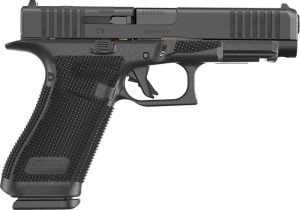
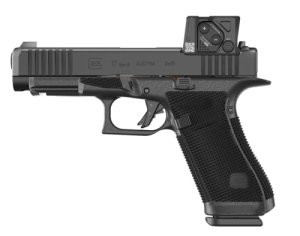
Glock 19 Gen 6 Live Pricing
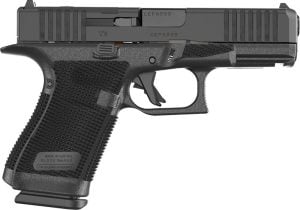
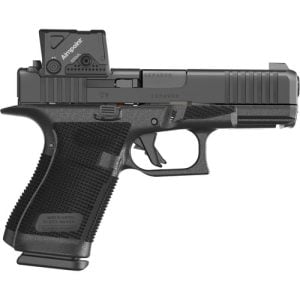
Pricing is a wash. Both carry a $745 MSRP and both street for roughly $599 to $650 depending on the retailer and whether a sight or optic package is included. Buy on price and availability, not on which model is cheaper, because they are not.
Glock 17 or 19: Which Should You Buy?
Buy the Glock 19 Gen 6 if: you carry concealed, you want one gun that does everything, you have average or smaller hands, or this is your first pistol. It is the most versatile 9mm Glock ever made.
Buy the Glock 17 Gen 6 if: the gun is for duty, home defense, the range, or competition; you have larger hands; or you simply want the flattest-shooting, highest-capacity standard Glock and concealment is not a concern.
Buy both, the common ending: a 17 for the house and range and a 19 for the belt is the classic Glock pairing. They share magazines, controls and trigger feel, so training on one builds skill on the other. If you are still deciding between a Glock and the competition, our Glock 19 vs Sig P320 comparison and our best 9mm concealed carry guns roundup are the logical next reads.
How I Compared These Guns
I ran both Gen 6 pistols with the same ammunition, the same holsters where size allowed, and the same drills on a timer, then cross-checked every dimension and weight against Glock’s published specifications. Pricing reflects live tracking across the major retailers as of June 13, 2026. Because the two guns share their entire Gen 6 feature set, I deliberately weighted the comparison toward the things that actually differ between them, which are size, capacity, sight radius and recoil, rather than re-litigating features they hold in common.
Bottom Line
The Glock 17 Gen 6 and Glock 19 Gen 6 are the same excellent pistol scaled to two jobs. Pick the 19 if you carry it and pick the 17 if you do not. Neither is a mistake, both are better than their Gen 5 versions, and the magazine compatibility means owning one makes owning the other easier. Choose by holster, not by spec sheet.
FAQ: Glock 17 Gen 6 vs Glock 19 Gen 6
Related: Torn between the two compact-grip and full-size-grip options? Read our full Glock 19 vs Glock 19X comparison to see which 9mm Glock you should carry.
Is the Glock 17 Gen 6 or Glock 19 Gen 6 better for concealed carry?
The Glock 19 Gen 6 is better for concealed carry. Its shorter grip and slightly shorter slide hide far better under normal clothing, especially for appendix carry. The Glock 17 can be concealed by larger shooters under a jacket, but the longer grip tends to print.
Do Glock 17 magazines fit the Glock 19 Gen 6?
Yes. The Glock 19 accepts Glock 17 magazines, so you can carry a flush 15-round mag and reload with 17-round or 33-round magazines. The reverse does not work well, because a 19 magazine is too short for the 17 grip and leaves a gap.
What is different between the Glock 17 Gen 6 and Glock 19 Gen 6?
Mainly size. The 17 is full-size with a 4.49-inch barrel and 17+1 capacity, while the 19 is compact with a 4.02-inch barrel and 15+1. They share the same Gen 6 flat-faced trigger, factory optics cut, RTF6 grip texture and single captive recoil spring.
Which Gen 6 Glock has less recoil?
The Glock 17 Gen 6 has marginally softer, flatter recoil because of its longer, heavier slide. The difference is real on a timer but small, and the 19 still shoots like a full-size compared to micro-compacts.
Are the Glock 17 Gen 6 and Glock 19 Gen 6 the same price?
Effectively yes. Both have a $745 MSRP and street for roughly $599 to $650. Choose based on size and intended use rather than price.
If I can only buy one Gen 6 Glock, which should it be?
If you carry concealed, buy the Glock 19 Gen 6 as the do-everything choice. If the gun is for duty, home defense, the range or competition and concealment is not a concern, buy the Glock 17 Gen 6.
3,979+ Gun & Ammo Deals
Updated daily from 200+ top retailers. Filter by category, caliber, action type, and price.
Related Guides