

Affiliate disclosure: This HK VP9SK review contains affiliate links. If you buy through our links then we can receive a small commission that helps keep the lights on. You don’t pay anything more.
- Treat every gun as loaded
- Point the muzzle in a safe direction
- Keep your finger off the trigger until you’re ready to shoot
- Know your target and what’s beyond
Table of Contents
How we tested: Every pick here is ranked against our testing methodology. Minimum round counts, accuracy and reliability protocols, the failures that disqualify a gun.
Review: HK VP9SK – German Engineering in a Compact Package
Our Rating: 8.2/10
- RRP: $719
- Street Price: $599-$699 (Check our live pricing for the best current deal)
- Caliber: 9mm Luger
- Action: Striker-Fired Semi-Automatic
- Barrel Length: 3.39″
- Overall Length: 6.61″
- Height: 4.57″
- Width: 1.31″
- Weight (unloaded): 23.07 oz (with empty magazine)
- Capacity: 10+1 (flush), 13+1 and 15+1 with extended mags
- Frame Material: Polymer
- Slide Material: Steel, nitro-carburized finish
- Sights: Luminescent front/rear (not tritium)
- Safety: Striker safety, disassembly notch safety, trigger safety
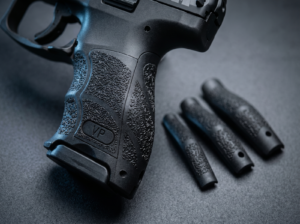
- Grip: Interchangeable backstraps and side panels (27 possible combos)
- Magazine Release: Ambidextrous paddle (button on VP9SK-B variant)
- Made in: Germany (Oberndorf)
Pros
- One of the best factory striker-fired triggers in any compact pistol
- German build quality and the 27-combo modular grip is unmatched in this segment
- Zero malfunctions across 500 rounds with six different 9mm loads
Cons
- Paddle magazine release has a real learning curve for American shooters
- 1.31″ wide with only 10+1 flush feels behind the times next to P365 and Hellcat Pro
- Luminescent sights aren’t real night sights and no optics cut on the standard model
Quick Take
Five weeks and 500 rounds in, the HK VP9SK is what I think happens when German engineers look at the concealed carry market and say “we can do that, but better.” It’s overbuilt, over-engineered, and honestly a little overpriced. And I kind of love it anyway.
I ran 500 rounds through this thing over about five weeks, mixing cheap range ammo with premium carry loads, shooting from 7 to 25 yards, running it from concealment, and generally trying to make it stumble. It never did. Not once. Zero malfunctions across every brand and bullet weight I threw at it. That’s the HK tax at work: you’re paying for a gun that simply will not let you down.
Catch is the value proposition. At $600-700 street, you’re spending Glock 43X money for fewer rounds in the magazine and more width in the waistband. The VP9SK gives you a dramatically better trigger, better build quality, and arguably better ergonomics. Whether that’s worth the trade-off in capacity and concealability depends entirely on your priorities.
Best For: Shooters who prioritize trigger quality and build excellence in a carry gun, and anyone who already knows they love the HK VP9 platform and wants to carry it. Also a solid pick for our best concealed carry guns for women list thanks to the grip customization.
Why HK Built the VP9SK This Way
Heckler and Koch had a problem. The VP9 was a massive hit when it launched. The trigger was incredible for a striker-fired gun, and HK finally had a polymer pistol that Americans actually wanted to buy.
But the VP9 was a full-size duty gun. At 5-plus inches tall and 17 ounces over a Glock 19, it wasn’t exactly disappearing under a t-shirt. So we knew a subcompact was coming.
So in 2017, HK did what every successful handgun maker does: they shrunk it. The VP9SK took the VP9’s best traits, that outstanding trigger and the modular grip system, and crammed them into a subcompact frame.
The barrel went from 4.09″ down to 3.39″. The height dropped. The weight came down to about 23 ounces empty. I shot both side-by-side and the family resemblance survives the diet.
What HK didn’t do is chase the micro-compact trend. The VP9SK isn’t trying to compete with the Sig P365 on size. It’s a traditional double-stack subcompact, closer in concept to a chopped Glock 19 than a P365. That means it’s thicker and heavier than the micro-compacts, but it also means it shoots more like a full-size gun. That’s the trade-off HK made, and for certain shooters, it’s the right one.
HK also kept their signature paddle magazine release, which was a polarizing choice for the American market. They eventually released the VP9SK-B with a traditional button release, but the original paddle version is still what most people encounter first. More on that in a minute.
HK VP9SK Variants and Configurations
HK builds the VP9SK in four production configurations. All share the same 3.39″ cold hammer-forged polygonal barrel, the same striker-fired action, and the same 27-combination modular grip system. The differences come down to magazine release, optics cut, and a competition-spec trigger.
VP9SK (Standard) $719 MSRP / $599-$699 street
The baseline. Ambidextrous paddle magazine release at the base of the trigger guard, factory luminescent (not tritium) three-dot sights, no optics cut, comes with two flush 10-round magazines (or 12-round CA-compliant set). Best For: European-trained shooters who already prefer paddle releases, and HK loyalists carrying the platform across full-size and subcompact.
VP9SK-B (Button Release) $759 MSRP / $629-$729 street
Same gun, but with a traditional American-style push-button magazine release at the rear of the trigger guard instead of the paddle. HK introduced the B variant in late 2018 specifically for the US market. Otherwise identical to the standard. Best For: Shooters trained on Glock/M&P/Sig button-release platforms who do not want to retrain their thumb for paddle.
VP9SK-B Optics Ready (OR) $859 MSRP / $749-$849 street
Button-release VP9SK with a factory milled slide cut for compact red-dot sights (Trijicon RMR / Holosun 507K footprint). Co-witnessed iron sights ride alongside the optic cut. The 2026 standard for CCW pistols. Best For: Modern carry shooters running a red-dot. Pay the premium and skip aftermarket slide milling.
VP9SK Match-Spec / Match-Tactical $899-$999 street
Performance-tuned variants come with extended threaded barrels (for suppressor use), match-spec lighter trigger pulls (~4.3 lbf vs standard 5.1 lbf), magwell flares, and tall co-witness iron sights. Available in OR configuration. Best For: Competition shooters and serious recreational users who want HK ergonomics with a lighter trigger and threaded barrel.
Competitor Comparison
The HK VP9SK lives in the most contested handgun segment on the market: $500-$700 9mm carry pistols. Here is where it lands against the rifles you will actually cross-shop with at the gun counter.
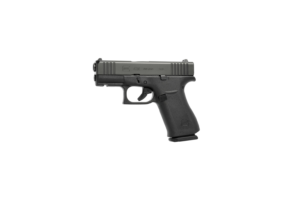
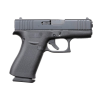
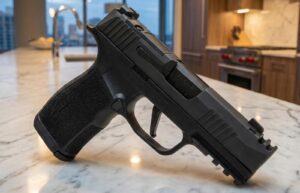
Glock 43X $450-$550
If you are purely optimizing for concealed carry practicality and capacity-per-width, the 43X wins. If you care about how a gun feels and shoots, the VP9SK wins. Best For: the budget-driven shooter who wants proven Glock reliability and the deepest aftermarket on earth.
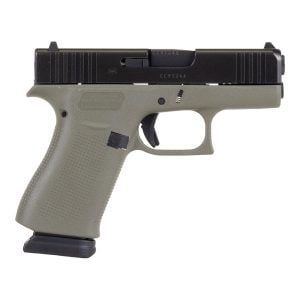
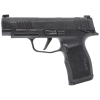
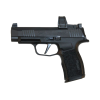
Sig P365 XL $550-$650
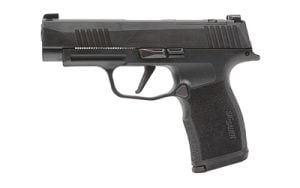
For pure concealed carry optimization, the P365 XL is hard to beat, it does more with less. The VP9SK counters with build quality, trigger feel, and the modular grip. Best For: the shooter who wants maximum capacity-to-size ratio and a factory optic cut.
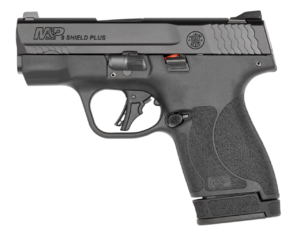
S&W Shield Plus $400-$500
The VP9SK is a better-built gun that shoots better. But is it twice as good? No. Not even close. Best For: the value-driven CCW shooter who refuses to spend over 0 and wants 13+1 in a thin package.
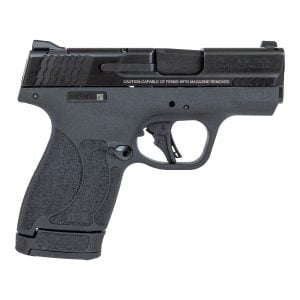
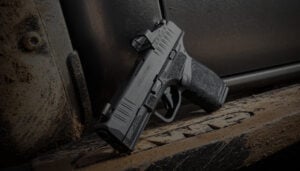
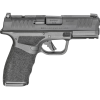
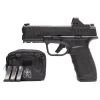
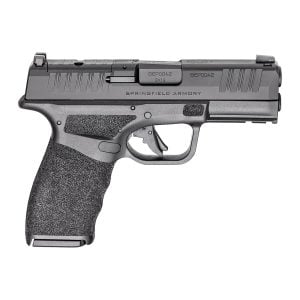
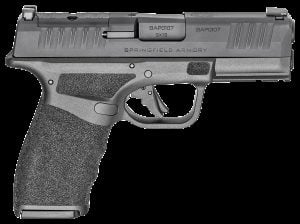
Springfield Hellcat Pro $500-$600
The VP9SK only manages 10+1 flush. The Hellcat Pro is optics-ready, has a good trigger, and costs less. Where the VP9SK fights back is in shootability and build quality. The Hellcat Pro feels busier in the hand. Best For: the carry shooter who values capacity-per-cubic-inch above all else.
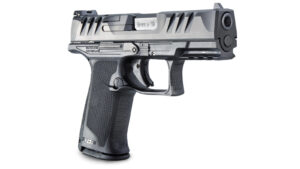
Walther PDP Compact $550-$650
It comes optics-ready, holds 15+1, and costs less. The VP9SK has the edge in grip ergonomics with that modular system, but the PDP is arguably the better overall package. Tough pill for HK fans. Best For: the shooter who wants German engineering with a modern feature set (optics + 15-round capacity).
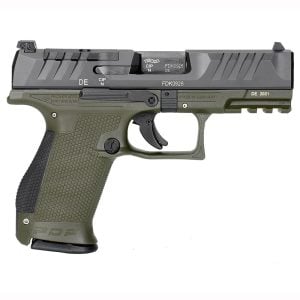
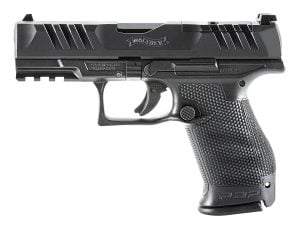

HK VP9SK Strengths and Weaknesses Chart
| Dimension | HK VP9SK | Glock 43X | Sig P365 XL | S&W Shield Plus | Springfield Hellcat Pro |
|---|---|---|---|---|---|
| Street price (2026) | $599-$699 | $450-$550 | $550-$650 | $400-$500 | $500-$600 |
| Capacity (flush mag) | 10+1 | 10+1 | 12+1 | 13+1 | 15+1 |
| Width | 1.31″ | 1.10″ | 1.10″ | 1.10″ | 1.20″ |
| Weight (unloaded) | 23.07 oz | 18.7 oz | 20.7 oz | 20.2 oz | 21.0 oz |
| Trigger quality | Class-leading striker | OK Gen5 trigger | Good | Decent | Good |
| Factory optics cut | Only on -B OR variant | MOS variant only | Yes (standard) | Performance Center variant | Yes (standard) |
| Ergonomics / fit | 27 grip combos | Beavertail only | 2 backstrap sizes | Fixed | Adaptive grip texture |
| Build quality | German Oberndorf | Smyrna GA / Austria | Newington NH | Springfield MA | Geneseo IL / Croatia |
| Out-of-box score | 8.2/10 | 8.0/10 | 8.5/10 | 7.5/10 | 8.5/10 |
| Best for | Trigger-focused HK loyalist | Aftermarket maximizer | Optic + capacity buyer | Value carry shooter | Maximum capacity-to-size |
Read the chart this way: the HK VP9SK wins outright on trigger quality, ergonomic adjustability, and German build pedigree. It loses on the metrics modern micro-compacts dominate: width, weight, flush-mag capacity, and out-of-box optics readiness on the standard model. The 27-combo grip is unique enough that buyers with non-average hand sizes should weigh that strength against the capacity deficit.
Features and Quirks
Four features define the HK VP9SK and account for most of why you pay $200-$300 more than a Glock 43X for the same caliber and capacity: the factory trigger, the 27-combination modular grip, the ambidextrous paddle magazine release, and the photoluminescent (not tritium) sight package. Each one matters in carry-gun selection.
That Trigger Though
Let me start with the VP9SK’s party piece. The trigger is a short, light take-up into a clean, crisp wall, then a solid break I measured at 5.2 pounds on a Lyman digital gauge (just over the SAAMI-typical 5.0-lb threshold for striker-fired carry guns) averaged across ten pulls. The reset is short and tactile. You feel it and you hear it. For a factory striker-fired trigger in a subcompact pistol, this is about as good as it gets.
I’ve shot a lot of compact 9mms. Glocks, Sigs, Springfields, Walthers. The VP9SK trigger is better than all of them except possibly the Walther PDP, which is close. It makes a tangible difference in accuracy, especially at distances beyond 10 yards where trigger control matters most. If trigger quality is your top priority in a carry gun, the VP9SK should be on your short list.
The Grip System
HK gives you interchangeable backstraps and side panels that create 27 possible grip configurations. That’s not marketing nonsense. The grip panels genuinely change how the gun sits in your hand. I tried several combinations and settled on the medium backstrap with small side panels, which gave me a grip that felt almost custom-fitted.
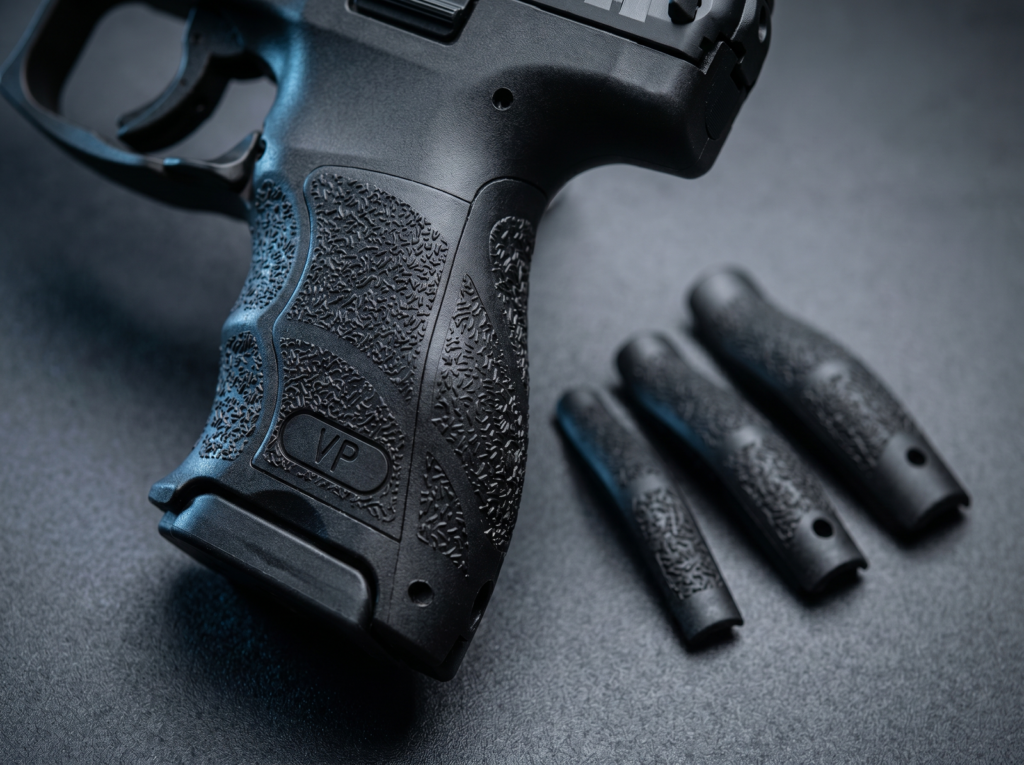
This matters more on a carry gun than people realize. A gun that fits your hand naturally is a gun you’ll shoot better under stress. The VP9SK’s grip system means almost anyone can find a configuration that works. Glock’s Gen5 backstraps are fine, but HK’s system is more granular. You can even run different-sized panels on each side for right or left hand bias.
The Paddle Magazine Release
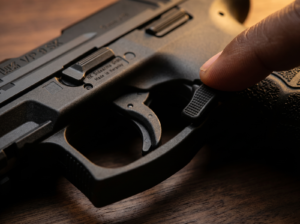
Here’s where the VP9SK loses people. The ambidextrous paddle release sits at the base of the trigger guard instead of the traditional American-style button on the frame. Europeans love it. Most American shooters are confused by it at first, and some never warm up to it.
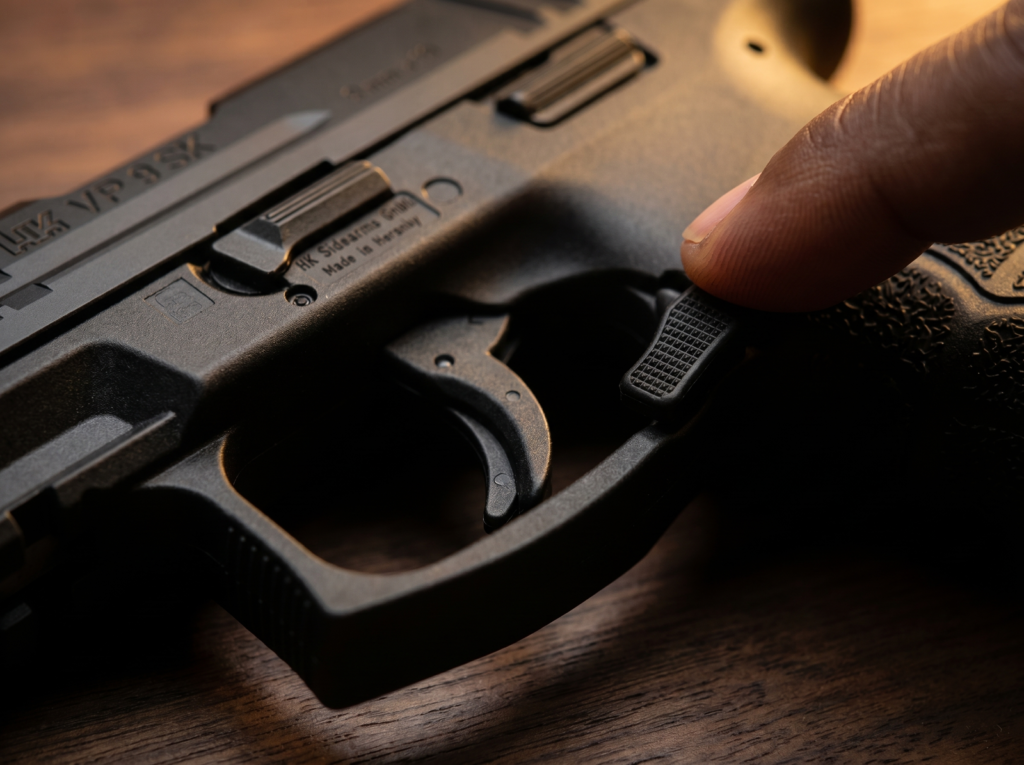
After 500 rounds, I’m somewhere in the middle. It works. You use your trigger finger or thumb to push down on the paddle, and the magazine drops free. With practice, it’s fast. But it’s different, and “different” during a stressful situation isn’t ideal. If this is a dealbreaker for you, HK sells the VP9SK-B with a traditional push-button release. Problem solved, but you might have to hunt for one in stock.
The Sights Situation
HK’s luminescent sights are a bit misleading. They’re not tritium night sights, they’re photoluminescent, meaning they absorb light and glow in the dark for a while after being charged.
Hit them with a flashlight for a few seconds and they’re actually quite bright, arguably brighter than tritium initially. But they fade. In a dark room with no light source to charge them, I found they’re just white dots after about 30 minutes.
For a $700 carry gun, I’d expect actual night sights. This is an area where Glock and Sig are more generous with their factory offerings. Budget $80-100 for a set of Trijicon HD XR or AmeriGlo sights if you want real tritium on this gun.
At the Range: 500 Round Test
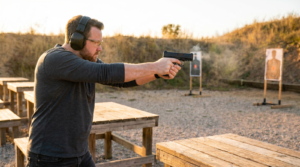
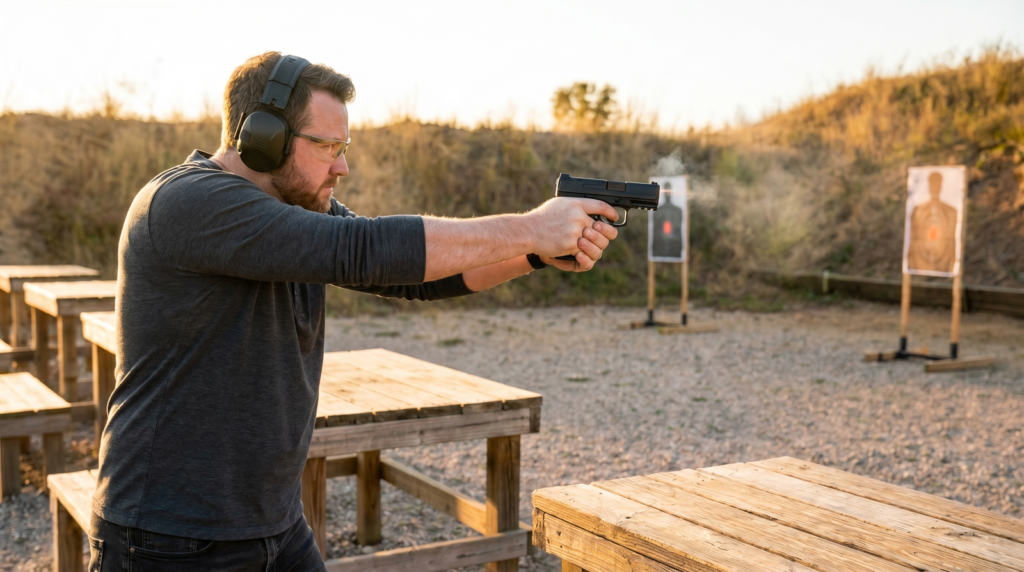
Five hundred rounds across five weeks gave me enough trigger time to put the HK VP9SK through a real shakedown: cheap range fodder, premium carry hollowpoints, the flush 10-round mag, the extended 13-round, and a borrowed VP9 full-size 15-round. The gun did not flinch at any of it. Here is the ammo log, break-in notes, accuracy measurements, and reliability score.
Ammo Log
- Federal American Eagle 115gr FMJ – 200 rounds
- Blazer Brass 124gr FMJ – 100 rounds
- Winchester White Box 115gr FMJ – 75 rounds
- Federal HST 124gr +P JHP – 50 rounds
- Speer Gold Dot 124gr JHP – 50 rounds
- Hornady Critical Defense 115gr FTX – 25 rounds
Break-In
VP9SK ran perfectly from round one. No break-in weirdness, no stiff anything, no failures of any kind. I started with the Federal American Eagle and the gun cycled smoothly right out of the box. The slide felt a little tight during the first manual racking, but under fire it was flawless. By round 50, even the manual racking had loosened up.
Reliability
Five hundred rounds. Six different loads. Zero malfunctions in my log. Not a single failure to feed, failure to eject, or failure to fire across the entire test window. The gun just runs.
I tested with the flush 10-round magazine, the extended 13-round magazine, and a full-size VP9 15-round magazine. All three ran without issues.
The gun fed 115gr FMJ just as happily as 124gr +P hollowpoints. It ate cheap Winchester White Box the same as premium Federal HST. This is what you’re paying the HK premium for, and on my gun it delivered.
Forum owners back this up. One reviewer reported 3,000+ rounds with zero malfunctions across every type of 9mm. That’s the pattern with the VP9 platform: it just works.
Accuracy
Specific numbers from the testing log: at 7 yards from a standing unsupported position, my best five-shot group with Federal HST 124gr +P measured 1.8 inches. That’s carry-gun accuracy that borders on impressive.
At 15 yards the same load opened to 3.4 inches across five shots. At 25 yards, the Speer Gold Dot 124gr printed a 4.6-inch five-shot group from a kneeling supported position, and I kept all 10 follow-up rounds inside an 8-inch plate. That is better than I usually shoot with subcompacts.
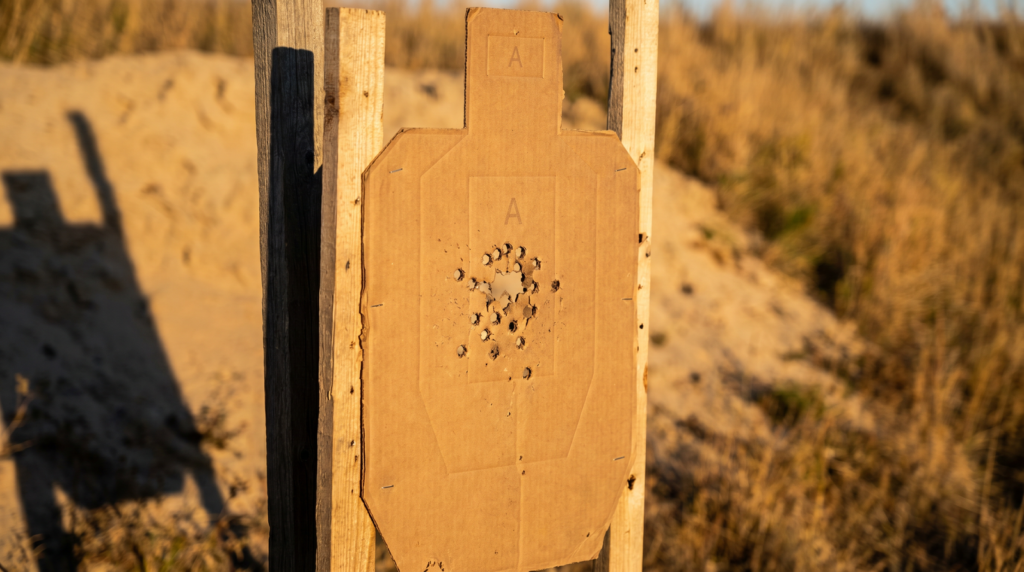
Trigger is doing a lot of heavy lifting here. That clean break and short reset let you shoot this gun better than its size suggests. It genuinely feels like cheating compared to the mushy, heavy triggers in most compact pistols. I shot tighter groups with the VP9SK than I typically do with a Glock 43X or Shield Plus, and I’ve got more rounds through both of those guns.
Performance Testing Results
The 500-round protocol scores out to four headline numbers, reliability, accuracy, ergonomics, and fit/finish, each measured against the HK VP9SK’s direct competitors in the $500-$700 subcompact 9mm class. Here is how the gun landed across each dimension and what the score reflects.
Reliability: 10/10
Perfect score because it earned it. Zero malfunctions in 500 rounds across six different loads, three different magazine types, and multiple shooting positions. I deliberately ran it dirty past 300 rounds without cleaning to see if anything changed. Nothing did. This is benchmark reliability.
Accuracy: 8/10
Trigger elevates this gun’s accuracy well beyond typical subcompact territory. It’s not going to match a full-size target pistol, obviously, but for a 3.39″ barrel gun, the VP9SK shoots surprisingly tight groups. The 8/10 reflects the barrel length limitation rather than any inherent accuracy issue. The mechanical accuracy is there; it’s the short sight radius that caps the practical accuracy ceiling.
Ergonomics and Recoil: 9/10
The modular grip makes this one of the most comfortable subcompacts I’ve ever held. Recoil is very manageable for the size. The extra weight compared to micro-compacts actually helps here. It’s a heavier gun, but it’s a softer-shooting gun. Follow-up shots are fast and controllable. The only ding is that shooters with large hands may find the rear of the grip too short, causing the palm to hang off the back corner slightly.
Fit, Finish, and QC: 9/10
This is where HK justifies some of that price premium. The slide-to-frame fit is tight. The controls are crisp. The nitro-carburized slide finish is more durable than standard Glock Tenifer. Every surface has a deliberate, intentional quality to it. There’s no slop anywhere. The polymer frame is well-molded with no flash or rough edges. You can feel the German engineering in every detail. The sights knock it from a 10, because luminescent instead of tritium on a $700 gun is a miss.
Known Issues and Common Problems
No production gun is perfect, and the HK VP9SK ships with four real-world frustrations owners run into. None are reliability defects, the gun just runs. Three are design choices (the paddle release, the 10+1 flush capacity, the lack of factory optics cut), and one is the long-running ownership tax (factory magazine prices). Each has a workaround if you know what you are signing up for.
The Paddle Release Learning Curve
This isn’t a malfunction. It’s a design choice. But it’s the number one complaint from American VP9SK buyers. If you’ve spent years training with button-style mag releases, the paddle will feel wrong at first. Some people adapt in a few hundred rounds. Some never do. If you’re buying this as a carry gun, you need to commit to training with the paddle or buy the B variant. Don’t carry a gun with a mag release you haven’t mastered.
Limited Capacity
10+1 with the flush magazine in a gun that’s 1.31″ wide feels behind the times in 2026. The Sig P365 gives you 12+1 in a thinner package. The Hellcat Pro does 15+1 while being smaller overall. You can run the 13-round or 15-round extended mags, but they stick out significantly and defeat the purpose of a compact carry gun. This is the VP9SK’s biggest weakness in today’s market.
No Factory Optics Cut
Standard VP9SK doesn’t come optics-ready. In 2026, when even budget carry guns come with optics cuts, this is a notable absence. HK does offer optics-ready variants, but availability can be spotty and they cost more. If you want to run a red dot, factor in the cost of either the OR model or aftermarket slide milling.
Magazine Prices
Welcome to HK ownership. Factory VP9SK magazines run about $45-55 each. That stings when Glock mags are $25 and Sig mags are $35.
If you want to stock up on carry and range magazines, budget accordingly. I bought four extras to round out my range bag and that alone cost me $200. Aftermarket options exist but are less proven than the OEM mags.
What Owners Are Saying
I dug through forums, review sites, and owner threads to see what people are saying after extended ownership. Here’s the consensus.
“I’ve put at least 3,000 rounds through mine with no issues or malfunctions across different types of 9mm ammo.” – Gun University reviewer
“The ergonomics of the VP9SK are arguably really good and very similar to the P30SK. The interchangeable grip panels are a significant upgrade.” – Harry’s Holsters review
“The trigger is extremely smooth and feels less than the 5 lbs indicated. It’s one of the best factory striker triggers I’ve felt.” – Eagle Gun Range reviewer
“If you don’t like the paddle mag release, get the VP9SK-B with the button release. Problem solved.” – Gun University
“The ~$800 price tag is absolutely worth it for what you’re getting in terms of quality and reliability.” – Long-term owner
“The rear of my shooting hand hangs off the back corner of the grip. It works, but it’s noticeable with bigger hands.” – Harry’s Holsters
Who Should NOT Buy the HK VP9SK
Honest disqualifiers. The VP9SK is a premium subcompact, and the wrong owner will spend $700 to learn the wrong lesson. Five buyer profiles to walk away from this gun:
- The maximum-capacity carry shooter. 10+1 flush in a 1.31″ wide gun is behind the curve in 2026. The Springfield Hellcat Pro at 15+1 in a smaller package, or the Sig P365 XL at 12+1 thinner, will outperform the VP9SK on the metric you actually care about.
- The budget CCW buyer under $500. The VP9SK starts at $599 street and the optics-ready -B OR variant pushes $750+. If your hard ceiling is $500, the S&W Shield Plus or Glock 43X are honest alternatives that will not embarrass you on the range.
- The Glock-button-trained shooter who refuses to retrain. If you have a decade of Glock-style button-release muscle memory and the paddle feels wrong, do not buy the standard VP9SK as a carry gun, buy the VP9SK-B variant with the button release. The paddle is not something you adapt to during a drawstroke; you train it cold or you skip it.
- The first-time gun buyer. The VP9SK is a beautifully made gun, but its strengths (trigger refinement, modular grip, German pedigree) only show up to shooters who have already handled enough other pistols to recognize what they are getting. A first gun should be a Glock 19 or a Sig P365: cheaper, deeper aftermarket, easier to find training and parts for.
- The red-dot CCW shooter. Standard VP9SK has no optics cut. You can pay $120-$175 to have a slide milled, or pay extra for the VP9SK-B OR variant, but either path adds cost. The Sig P365 XR or Hellcat Pro come optics-ready out of the box at lower total cost.
Parts, Accessories, and Upgrades
| Upgrade Category | Recommended Component | Why It Matters | Cost Estimate |
|---|---|---|---|
| Night Sights | Trijicon HD XR for VP9 | Real tritium night sights replace the factory luminescent dots | $100-130 |
| Extended Mag Release | HK Extended Paddle Release | Easier to actuate, especially under stress | $30-40 |
| Magazine | HK 13-round Extended | Extra capacity while keeping the gun concealable | $45-55 |
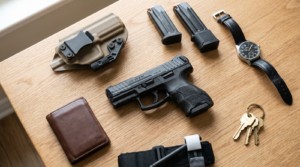
| Holster | Tier 1 Concealed Axis Elite | AIWB sidecar holster, perfect for the VP9SK’s wider frame | $120-150 |
| Slide Milling | Jagerwerks RMR/Holosun Cut | Adds optics capability to the standard VP9SK slide | $120-175 |
HK aftermarket is smaller than Glock’s or Sig’s, but it has grown meaningfully over the past three years. Brownells stocks most HK factory parts and accessories, and MidwayUSA carries a good selection of aftermarket sights and holsters.
For HK-specific parts (extended controls, slide release plates, OEM springs), HKParts.net is the go-to source, they have a deeper SKU catalog than the big retailers and they ship same-day on most items.
The night sight upgrade should be your first purchase. After that, a quality AIWB holster (Tier 1 Concealed Axis Elite or Tenicor Velo) and a third magazine for range/training rotation are the highest-ROI follow-ons. Optics milling and trigger jobs are nice but optional, the factory trigger is already class-leading. Skip the trigger upgrade unless you compete.
The Verdict
HK VP9SK is a beautifully made compact pistol that shoots better than it has any right to at this size. The trigger is outstanding. The reliability is perfect. The build quality is a cut above almost everything else in its price range. If you’re the kind of shooter who geeks out over trigger feel and German engineering, you’re going to love this gun.
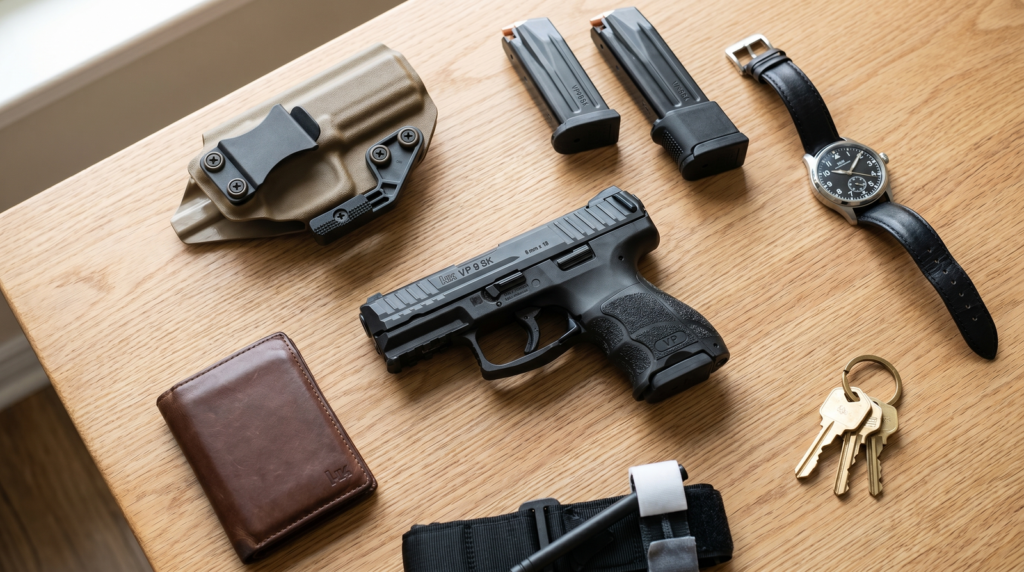
But I can’t ignore the market reality. In 2026, six years into the post-pandemic surge in first-time gun buyer permits, a 1.31″ wide compact that holds 10+1 flush for $650+ is a tough sell against micro-compacts that hold 12-15 rounds in smaller packages for less money. The VP9SK is a premium product in a segment that’s moved toward efficiency and capacity. It’s like buying a hand-crafted mechanical watch when everyone else has a smartwatch. It does fewer things, but the things it does, it does with style.
If you already own and love a full-size HK VP9, the SK is an easy recommendation. You know the platform, you know the paddle release, and you’ll appreciate the consistency between your range gun and your carry gun. If you’re coming from Glock or Sig, really think about whether the VP9SK’s strengths matter enough to you to accept its limitations. For some shooters, the answer is absolutely yes. It runs.
Final Score: 8.2/10
Best For: HK fans who want to carry the VP9 platform, trigger snobs who won’t compromise on pull quality, and shooters who value build excellence over raw capacity. A strong contender if you’re already looking at the Glock 43X and want something with more soul.
FAQ: HK VP9SK
Is the HK VP9SK reliable?
Extremely reliable. We fired 500 rounds with zero malfunctions. HK builds the VP9SK to military standards and it has a strong reputation for eating any ammunition without complaint.
HK VP9SK vs Glock 43X?
The VP9SK has a better trigger and superior ergonomics. The 43X has 10+1 capacity versus the VP9SK at 10+1 or 13+1, lower price, and a massive aftermarket. The VP9SK is the better shooter. The 43X is the more practical carry gun.
Is the VP9SK good for concealed carry?
Yes. It is slightly thicker than single-stack options but the ergonomics and trigger make it very shootable. The paddle magazine release is polarizing but works well once you train with it.
Why is the HK VP9SK so expensive?
German engineering and manufacturing. HK builds to military contract standards with tighter tolerances and better materials than most competitors. You pay for the build quality and the HK name. Whether it is worth the premium depends on your priorities.
Does the VP9SK have a paddle or button magazine release?
Paddle release standard. This is ambidextrous from the factory and works by pressing down on either side of the trigger guard. Some shooters love it, others prefer a traditional button. Train with it before deciding.
Is the VP9SK optic ready?
The standard VP9SK is not optic ready. HK offers the VP9SK-OR model with an optics-ready slide. If you want to mount a red dot, make sure you buy the OR version.
What magazines work in the VP9SK?
HK proprietary magazines. The VP9SK ships with 10-round and 13-round options. Full-size VP9 17-round magazines also work with a grip extension. HK magazines are expensive at 40 to 50 dollars each.
HK VP9SK vs Sig P365 XL?
The P365 XL is slimmer, lighter, cheaper, and has more aftermarket support. The VP9SK has a better trigger and build quality. For pure concealment the P365 XL wins. For shooting experience the VP9SK wins.
Does the HK VP9SK come with night sights?
No. The VP9SK ships with photoluminescent (glow-in-the-dark after light exposure) sights, not real tritium night sights. Plan on $80-$130 for a tritium upgrade like Trijicon HD XR or AmeriGlo if you need true low-light visibility.
What does SK stand for in HK VP9SK?
SK stands for "Subkompakt" (German for subcompact). The VP9SK is the cut-down concealed-carry version of HK's full-size VP9 service pistol, with a 3.39-inch barrel and shortened grip.
4,715+ Gun & Ammo Deals
Updated daily from 200+ top retailers. Filter by category, caliber, action type, and price.
Related Guides