

Before you reload a single round of .300 Blackout, understand this: a .300 BLK cartridge can chamber in a 5.56 or .223 rifle and destroy it. They share the AR-15 magazine and bolt, so a stray .300 round in a 5.56 gun is a catastrophe waiting to happen. With that understood, .300 Blackout is a genuinely fun cartridge to reload. It uses .308 bullets, small rifle primers, and brass you can even form from .223 cases, and it splits into supersonic and subsonic loads. This guide covers the components, the case prep, the pitfalls, and where to get verified load data. No charge weights here.
Some of the links below are affiliate links, meaning at no additional cost to you, we may earn a commission if you click through and make a purchase.
Table of Contents
How we tested: Every pick here is ranked against our testing methodology. Minimum round counts, accuracy and reliability protocols, the failures that disqualify a gun.
The .300 Blackout danger you must understand first
This is the one that can hurt you, so it comes before everything else. .300 Blackout was built around the AR-15, which means it uses the same magazines and the same bolt as 5.56 NATO. A loaded .300 BLK round will drop into and chamber in a 5.56 barrel without resistance. If you fire it, you are sending a fat .308 bullet down a .224 bore, and the result is a destroyed rifle and a real chance of injury.
Treat segregation as a hard rule. Mark your .300 Blackout magazines clearly, never stage .300 ammo near a 5.56 rifle, and keep your loaded .300 rounds physically separated from your 5.56. Our 5.56 vs .223 breakdown covers the AR platform these share, and our .223 reloading guide covers the parent case.
Why people reload .300 Blackout
Two big reasons. First, subsonic .300 BLK for suppressed shooting is expensive as factory ammo, so rolling your own saves a lot. Second, you can form .300 Blackout brass from cheap, plentiful .223 cases, which almost no other cartridge lets you do. Add in tuning loads to your suppressor and twist rate, and .300 is one of the more satisfying cartridges to handload. If you are new, start with the complete guide to reloading.
The components you need to reload .300 Blackout
Brass
You have two paths. Buy dedicated .300 Blackout brass, which is the simplest, or form it from .223/5.56 brass by cutting the case down and trimming it to length. Forming your own from cheap .223 is a big part of the cartridge’s appeal, but it is real work and demands careful trimming. Either way, the case keeps the small rifle primer pocket of its .223 parent.
Primers
.300 Blackout uses small rifle primers, inherited from the .223 case it is based on. Standard small rifle covers normal loads. If you are forming brass from military .223, remember those primer pockets are crimped and need swaging or reaming first.
Bullets
Here is a surprise for newcomers: .300 Blackout uses .308 diameter bullets, the same as .308 Winchester. Supersonic loads run light, around 110 to 125 grains, often with bullets like the Barnes TAC-TX or a 125 grain match bullet. Subsonic loads, the suppressed-shooting favorites, run heavy, from 190 up to 220 grains. A 1:8 twist barrel is what you want to stabilize the heavy subsonic bullets.
Powder
.300 Blackout runs on fast-burning powders, and the small case is sensitive to powder choice, especially for subsonic loads. The common names are Hodgdon H110 and its twin Winchester 296, Hodgdon CFE BLK, Accurate 1680, and Vihtavuori N120. Pick one your published data specifically lists for .300 Blackout and your bullet weight, and take the charge from that data, never from this page.
.300 Blackout case prep and forming
If you are forming brass, the process is to cut .223 cases down, then full-length size and trim them to the .300 Blackout maximum case length, then chamfer and deburr. Precision on the trim length matters, because the cartridge headspaces in a way that punishes inconsistent cases. If you buy dedicated .300 brass, you skip the forming but still lube, size, trim as needed, and deburr.
Mind your overall length so rounds feed from the magazine, and for heavy subsonic bullets, confirm the long bullet seats to a length that both fits the mag and leaves enough case for a safe charge. As always, plunk-test in your barrel.
Pitfalls unique to .300 Blackout
- The 5.56 chambering catastrophe. Worth repeating because it is the one that destroys rifles: a .300 BLK round chambers in a 5.56 gun and detonates if fired. Mark mags, segregate ammo, never mix.
- Subsonic squibs. Heavy subsonic bullets use very light powder charges, and an undercharge can leave a bullet stuck in the bore. Visually check every charged case, and this matters even more with a suppressor, where a bore obstruction is hidden.
- Twist rate for subsonics. Heavy 200 grain-plus subsonic bullets need a fast 1:8 or 1:7 twist to stabilize. A slow-twist barrel will keyhole them.
- Inconsistent case forming. Brass formed from .223 with sloppy trim lengths causes headspace and feeding problems. If you form your own, be meticulous about trim length.
The gear you need to load .300 Blackout
.300 Blackout uses a short bottleneck case based on .223 brass, so the gear list sits between pistol and full-size rifle. You need a press, a .300 Blackout die set, a scale, calipers, a case trimmer, and case lube. If you plan to form your own brass from .223, you also need a way to cut and trim cases, which adds a step but saves real money. Because the case is small, charge weights are modest, and a precise scale matters even more than usual.
A single-stage or turret press handles .300 Blackout well, and high-volume shooters use a progressive. The best reloading presses guide covers the picks, the best reloading dies roundup explains the die set you need, and the best reloading kits guide bundles the basics. A tumbler keeps your brass and formed cases clean, and the best brass tumblers guide covers the options.
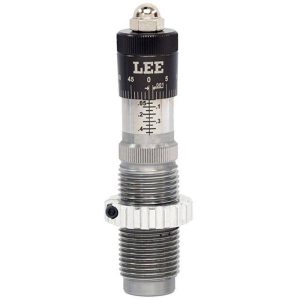
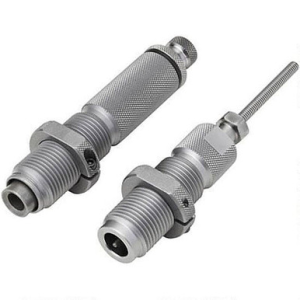
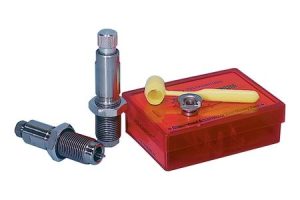
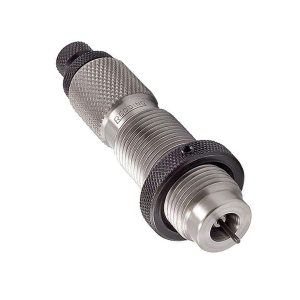
Forming and prepping .300 Blackout brass
The defining prep step for .300 Blackout is that many loaders make their own brass from .223 or 5.56 cases. You cut the .223 case down, then run it through a forming and trimming process to the correct length, which turns cheap and plentiful brass into Blackout cases. It is a real time investment, but it is also a big part of why people reload this cartridge. Factory .300 Blackout brass is available too if you would rather skip the forming.
Whether you buy or form your brass, trimming to a consistent length is critical on this short case, and you must lube before sizing like any bottleneck cartridge. Tumble clean, size, trim, and chamfer the mouth so bullets seat cleanly. Watch that formed cases come out to a uniform length, because inconsistent case length shows up fast in a short cartridge. The best brass tumblers guide covers cleaning your brass before and after forming.
Subsonic versus supersonic .300 Blackout
.300 Blackout was built to do two very different jobs, and you load it differently for each. Supersonic loads use lighter bullets at higher velocity for general shooting and hunting, behaving like a short-range .30 caliber rifle round. Subsonic loads use heavy bullets, often 200 grain and up, kept below the speed of sound so they are quiet through a suppressor, which is the whole reason the cartridge exists for many owners.
The catch with subsonic loads is reliable cycling and, above all, avoiding a squib. Because subsonic charges are very small in a case that can hold much more, a missed or low charge can leave a bullet stuck in the bore, and firing the next round into it is catastrophic. Charge carefully, check every case, and never fire if a round sounded or felt weak. Subsonic .300 Blackout is wonderful when loaded carefully and unforgiving when rushed.
How to work up a .300 Blackout load safely
Start at the published starting charge for your exact bullet and powder, and treat the small case with respect, because a modest-looking error is a larger percentage of the charge than it would be in a big rifle case. Load a few, confirm they chamber and feed, and watch the brass for flattened primers and stiff extraction as you step up. A chronograph is especially valuable on subsonic loads, where staying below the speed of sound is the entire point.
The single most important safety habit with .300 Blackout has nothing to do with charge weight: confirm by feel and by gauge that every loaded round is a Blackout and cannot find its way into a 5.56 chamber, because a .300 Blackout round chambered in a 5.56 barrel and fired destroys the rifle and injures the shooter. Keep Blackout ammo physically separate and clearly marked. Pull all charge data from the verified manufacturer sources in the next section, start low, and work up.
Loading your first batch of .300 Blackout, step by step
A first .300 Blackout session looks like loading a short bottleneck rifle round, with one extra wrinkle if you are forming your own brass from .223. Here is the full flow, including the safety habits that matter most on this cartridge.
Source or form your brass. Either buy factory .300 Blackout brass or form it by cutting .223 or 5.56 cases to length and trimming them uniform. If you are forming, do a batch at once and inspect every case for splits or thin spots. Consistent case length is critical on this short cartridge.
Clean, lube, and size. Tumble the brass clean, lube every case because it is still a bottleneck design, and full-length size. Wipe the lube afterward so it cannot contaminate powder or primers. Confirm sized cases drop freely into your chamber or a case gauge.
Trim and prep. Trim to a uniform length, chamfer and deburr the mouth, and make sure the neck is sized to grip a .308 diameter bullet, not the .224 of the parent case. Uniform length here pays off directly in function and accuracy.
Prime. Seat a fresh small rifle primer flush or just below the head, confirming each is seated properly. With formed brass, check that any crimp from the parent case has been dealt with so primers seat cleanly.
Charge, seat, and separate. Throw the charge your verified data lists for your exact bullet and powder, and weigh carefully, because the small case makes any error a large percentage of the charge, especially on subsonic loads. Seat the .308 bullet to your data’s length, then do the one thing that matters most: mark and store your finished Blackout ammo so it can never reach a 5.56 chamber. Label the box clearly and pull your charge data from the verified sources in the next section.
Where to get verified .300 Blackout load data
As with every caliber here, we do not print charge weights, because a safe charge depends on your exact bullet, powder, primer, and brass, and subsonic .300 loads in particular are unforgiving of guesswork. Pull your data from Hodgdon’s Reloading Data Center, which lists CFE BLK and H110 for .300 Blackout, from the bullet maker, or from a current Lyman or Hornady manual.
Safety note: use data listed specifically for .300 Blackout and your bullet weight, never adapted from another cartridge. Start at the listed starting charge, work up slowly while watching for pressure signs, and never fire .300 ammo in a 5.56 rifle. Reloading is done at your own risk.
Common .300 Blackout reloading mistakes to avoid
- Letting a Blackout round reach a 5.56 chamber. This is the catastrophic one. A .300 Blackout fired in a 5.56 barrel destroys the rifle. Keep ammo separated and clearly marked.
- Squibbing a subsonic load. Tiny subsonic charges in a roomy case make a low or missed charge easy to overlook. Check every case and never fire after a weak-sounding shot.
- Inconsistent case length when forming. Brass formed from .223 must be trimmed to a uniform length, or accuracy and function suffer on this short case.
- Sizing formed brass without lube. It is still a bottleneck case. Lube before sizing.
- Using the wrong bullet diameter. .300 Blackout uses .308 diameter bullets, not the .224 of the parent .223 case.
A deeper look at forming brass from .223
Forming .300 Blackout brass from .223 or 5.56 cases is the cost magic that draws many people to the cartridge, and it is worth understanding before you start. The process cuts the .223 case down to roughly the Blackout length, then runs it through a sizing and trimming sequence so the shoulder and neck end up correct. You can cut with a dedicated trimmer, a chop saw jig, or a forming die setup, and the result is a Blackout case made from brass that costs a fraction of factory Blackout brass.
The work demands consistency above all. Cases must come out to a uniform length, the necks must be clean and properly sized for .308 bullets, and you should inspect for splits or thin spots from the forming. Many loaders form a large batch at once so the tedious part is done, then load from that stock for months. It is genuine labor, but for a high-volume Blackout shooter the savings are among the best in all of reloading, which is exactly why the cartridge has such a devoted handloading following.
Marking and storing your .300 Blackout ammo safely
Because the .300 Blackout and 5.56 mistake is so dangerous, how you mark and store your ammo is a genuine safety system, not just tidiness. Keep loaded Blackout ammo in clearly labeled boxes, separate from your 5.56 and .223, and never let the two share a range bag pocket or an ammo can. Many shooters use distinctly colored cases, labels, or even tip-painted bullets so a Blackout round is unmistakable at a glance.
The risk is real precisely because a .300 Blackout round will drop into a 5.56 magazine and chamber in a 5.56 rifle, where firing it is catastrophic. Treating your labeling and storage with the same seriousness you give your charge weights is the habit that keeps this otherwise excellent cartridge safe. If you run both calibers on the same AR lowers with swapped uppers, build a hard rule for yourself about checking which upper is mounted before you load a magazine.
Is reloading .300 Blackout worth it?
Yes, especially if you shoot subsonic. Factory subsonic .300 is pricey, and forming brass from cheap .223 stretches your dollar further than almost any other cartridge. We ran the numbers in our cost-per-round breakdown, and our best reloading presses guide covers the gear you will want.
Where to go from here with .300 Blackout
.300 Blackout is one of the most rewarding cartridges to handload, both for the dramatic savings when you form your own brass and for the satisfaction of building quiet subsonic loads no factory matches cheaply. Once you have the forming and the safety habits down, you have a cartridge that is genuinely cheaper to shoot because you load it yourself.
If you are still building the bench, our best reloading presses guide covers the presses that suit Blackout loading and brass forming, while the best reloading dies roundup explains the die set you need and the forming options. The best reloading kits guide bundles the basics, and the best brass tumblers guide covers cleaning both your parent .223 cases and your formed Blackout brass.
For the whole process, our complete guide to reloading connects every step from brass to finished round, and the cost-per-round breakdown shows why forming brass from cheap .223 makes Blackout one of the best-value cartridges to load. Above everything else, build the iron habit of keeping your Blackout ammo marked and separated so it can never reach a 5.56 chamber. Respect that one rule, get your case forming consistent, and .300 Blackout will reward your bench with affordable, suppressor-friendly ammo for years.
Last updated June 3rd 2026
Can a .300 Blackout round chamber in a 5.56 or .223 rifle?
Yes, and that is the cartridge's most serious danger. .300 Blackout uses the same AR-15 magazine and bolt as 5.56, so a .300 round will chamber in a 5.56 barrel. Firing it sends a .308 bullet down a .224 bore and destroys the rifle, with real risk of injury. Mark your .300 magazines and never let .300 ammo near a 5.56 gun.
What bullet diameter does .300 Blackout use?
.300 Blackout uses .308 diameter bullets, the same as .308 Winchester. Supersonic loads run roughly 110 to 125 grains, while subsonic loads for suppressed shooting run heavy, from about 190 to 220 grains.
Can you make .300 Blackout brass from .223?
Yes. .300 Blackout was designed so you can form its brass from .223/5.56 cases by cutting them down and trimming to length. It is real work and demands precise trimming, but forming from cheap .223 is one of the cartridge's big advantages. You can also just buy dedicated .300 Blackout brass.
What primer does .300 Blackout use?
Small rifle primers, inherited from the .223 case it is based on. If you form brass from military .223, remember the primer pockets are crimped and must be swaged or reamed before re-priming.
What powder is best for reloading .300 Blackout?
Fast-burning powders such as Hodgdon H110 and Winchester 296, Hodgdon CFE BLK, Accurate 1680, and Vihtavuori N120 are the common choices. The small case is sensitive to powder choice, especially for subsonic loads, so use data listed specifically for .300 Blackout and your bullet, and take the charge from that official data.
Why doesn't this guide list .300 Blackout charge weights?
Because a safe charge depends on your exact bullet, powder, primer, and brass, and subsonic .300 loads in particular are unforgiving of guesswork, so a generic number would be dangerous as well as a misuse of the powder makers' proprietary data. Pull your charges from Hodgdon's Reloading Data Center or a current manual, using data listed for .300 Blackout, and work up from the starting charge.
Is it cheaper to reload .300 Blackout?
It can be much cheaper, which is a major reason people load it. Factory .300 Blackout is expensive, and if you form your own brass from cheap .223 or 5.56 cases the cost per round drops sharply. The brass forming takes time, but the savings on this cartridge are among the best in centerfire reloading.
Do you need a special die to make .300 Blackout brass?
You need a .300 Blackout die set to load the cartridge, and to form brass from .223 you also cut the case down and trim it to length, then size it. Some loaders use a dedicated forming die or trim setup to speed the process. Factory .300 Blackout brass skips the forming step entirely if you prefer to buy it.
4,021+ Gun & Ammo Deals
Updated daily from 200+ top retailers. Filter by category, caliber, action type, and price.
Related Guides