

Last updated May 17th 2026
Some of the links below are affiliate links, meaning at no additional cost to you, we may earn a commission if you click through and make a purchase.
- Treat every gun as loaded
- Point the muzzle in a safe direction
- Keep your finger off the trigger until you’re ready to shoot
- Know your target and what’s beyond
Table of Contents
Two Italian shotguns walk into a room. One is carried by every Marine who kicks down doors for a living. The other won more 3-gun matches last year than anything else on the market. Pick your winner.
The Benelli M4 and Beretta 1301 Tactical are the two guns people actually argue about when the topic of tactical semi-auto shotguns comes up. Not the Mossberg 930, not a gas-operated Remington. These two. They’re both Italian, both reliable, both priced above the average buyer’s comfort zone. And they’re genuinely different guns built around different philosophies.
I’ve spent a lot of time with both. This breakdown covers everything: how the actions work, recoil, cycling speed, ergonomics, aftermarket, real-world use cases, and which one you should actually buy. No fence-sitting at the end.
How we tested: Every pick here is ranked against our testing methodology. Minimum round counts, accuracy and reliability protocols, the failures that disqualify a gun.
The Short Version: What You Need to Know
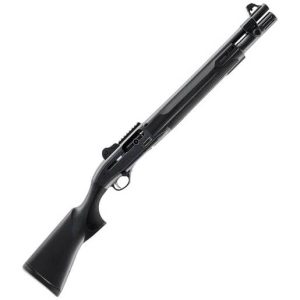
I have run both of these guns side-by-side at the range and the differences are real. The Benelli M4 is a military-grade combat shotgun that has been in service with the U.S. Marine Corps since 1999. It uses a dual-piston ARGO gas system, runs virtually anything you feed it, and has one of the biggest aftermarkets of any shotgun on the planet.
It’s heavier, more expensive, and slower to cycle than the 1301. But it’s also the most proven tactical shotgun in existence.
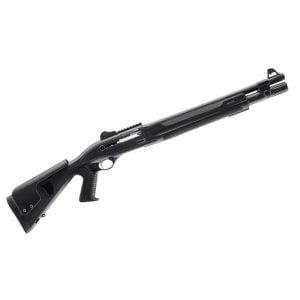
The 1301 Tactical is a competition shooter’s weapon that also happens to be genuinely excellent for home defense. It cycles faster than almost any other semi-auto shotgun, has outstanding ergonomics out of the box, and costs several hundred dollars less. The tradeoff is a less proven military pedigree and a smaller (though growing) aftermarket.
If you’re buying a duty shotgun or want the gold standard in tactical reliability, get the M4. If you want the fastest-cycling defensive or competition gun money can buy at a reasonable price, the 1301 is your answer. That’s the summary. The rest is details.
Specs Side by Side
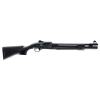
| Spec | Benelli M4 | Beretta 1301 Tactical |
|---|---|---|
| Action | ARGO gas-operated (dual piston) | BLINK gas-operated |
| Gauge | 12 gauge | 12 gauge |
| Barrel Length | 18.5 in | 18.5 in |
| Overall Length | 40 in | 39.75 in |
| Weight (unloaded) | 7.8 lbs | 6.6 lbs |
| Capacity | 5+1 standard / 7+1 extended factory | 5+1 standard |
| Stock | Fixed / pistol grip / collapsible options | Fixed synthetic |
| Choke | Cylinder bore (fixed) | Optima-choke HP (interchangeable) |
| Sights | Ghost ring rear + blade front | Fixed front blade (Pro variant has ghost ring) |
| Receiver | Aluminum alloy, mil-spec anodized | Aluminum alloy |
| Street Price | $1,800-$2,000 | $1,200-$1,400 |
| Military / LE | USMC M1014 standard issue since 1999 | Some LE adoption + dominant in 3-gun |
| Best For | Duty, hard-use, deep aftermarket builds | Competition, home defense, value |
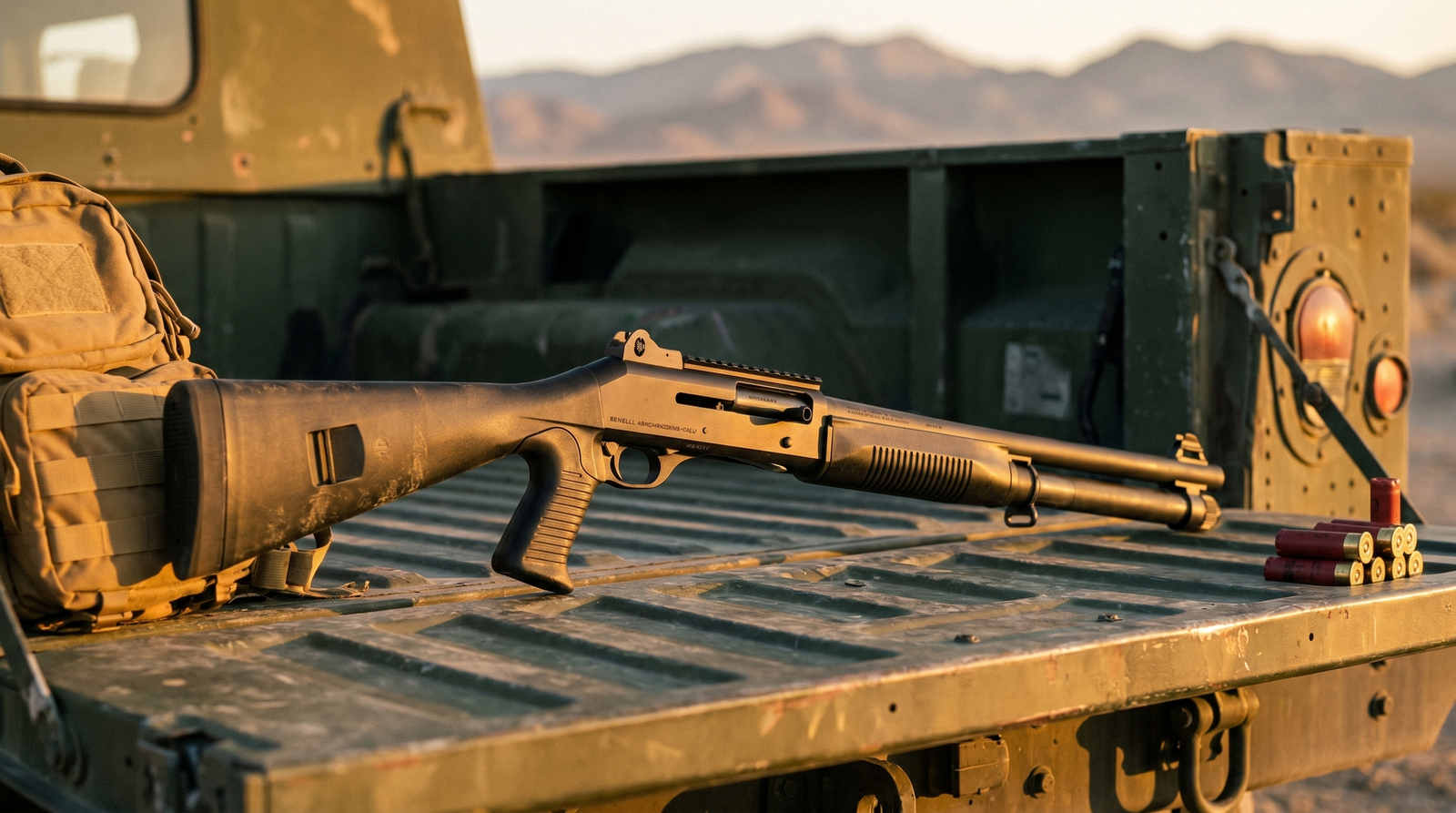
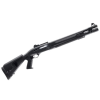
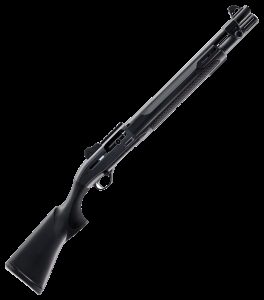
Benelli M4 Tactical: The Marine Standard
Pros
- Most combat-proven semi-auto shotgun on the market, USMC M1014 since 1999, runs through sand, mud, and salt water
- ARGO dual-piston gas system digests everything from reduced-recoil 1oz loads to 3-inch magnums with zero adjustment
- Massive aftermarket ecosystem, Mesa Tactical, Aridus, Scalarworks, GG&G, Nordic Components all build deep M4-specific product lines
Cons
- Heaviest gun in this comparison at 7.8 lbs unloaded, over a full pound heavier than the 1301
- Street price $500-$600 premium over the 1301 for what is effectively similar terminal performance at room distance
- Stock controls are mil-spec functional but less refined for high-speed running than the 1301’s enlarged loading port and oversized bolt release
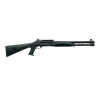
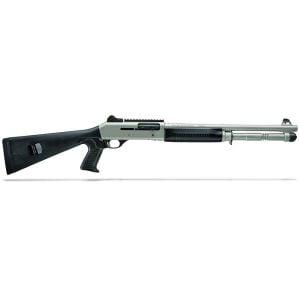


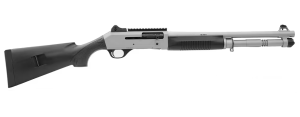
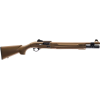
Beretta 1301 Tactical: The Speed Champion
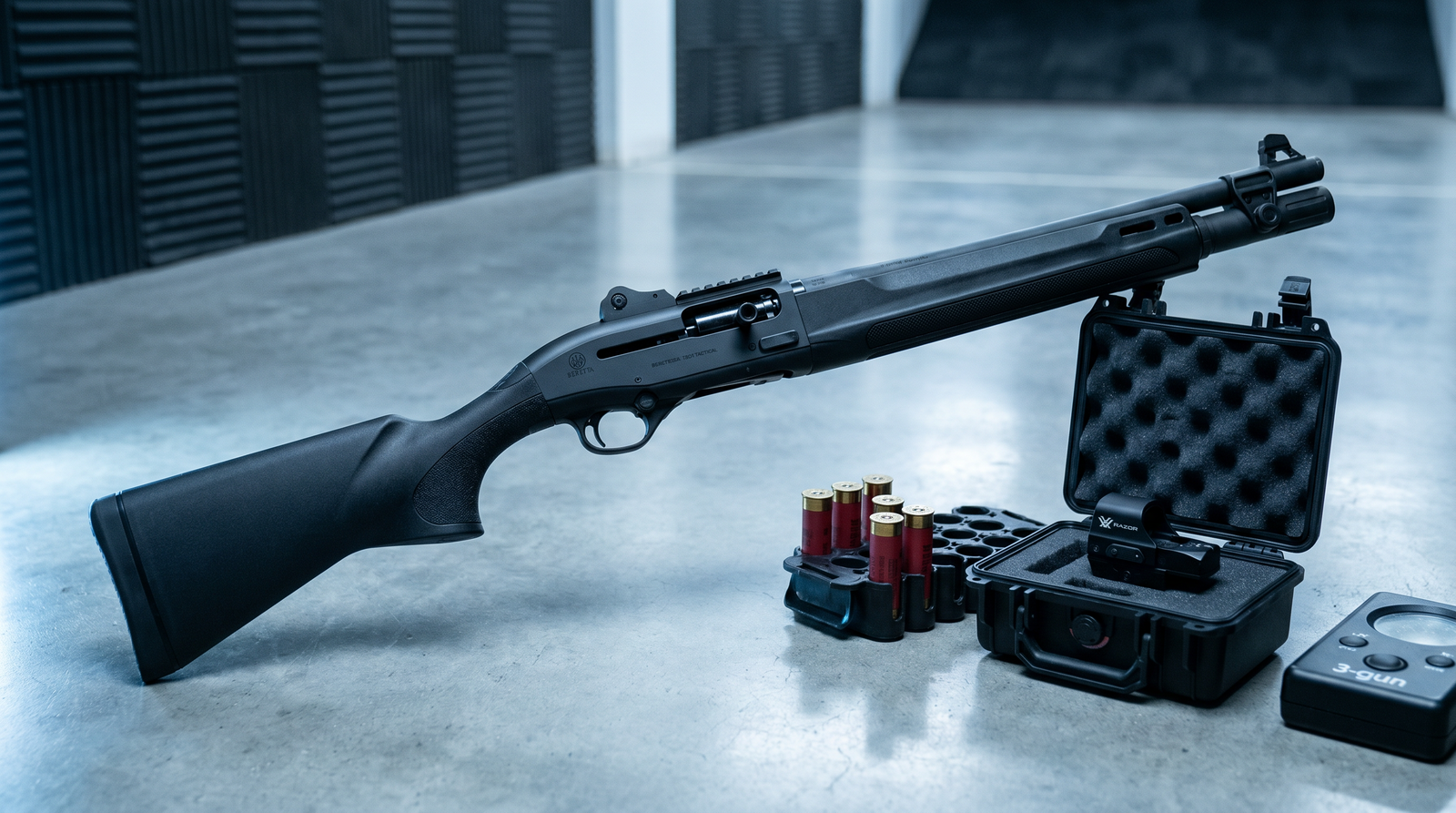
Pros
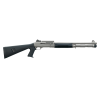
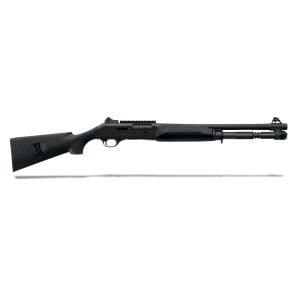
- BLINK gas action cycles roughly 36% faster than competing semi-auto shotguns, measurable advantage on 3-gun split times
- Best ergonomics out of the box at this price point, enlarged loading port, oversized bolt release, extended safety, lighter handling
- $500-$600 cheaper than the M4 with most of the practical performance, the budget you save buys ammo, training, and a Vortex Razor red dot
Cons
- Lighter 6.6 lb body produces snappier felt recoil than the M4, smaller-framed shooters notice it after a long session
- Sensitive to reduced-recoil and birdshot loads during break-in, confirm reliability with your home-defense load before staking your life on it
- Smaller aftermarket ecosystem than the M4, fewer stock, optic mount, and extended-tube options if you want a heavy build

How the Actions Work: ARGO vs BLINK
The M4 uses Benelli’s ARGO system. In my testing across reduced-recoil 1oz loads up to 3-inch magnums it adjusts itself with no input from me. ARGO stands for Auto Regulating Gas Operated. Two stainless steel pistons sit right at the barrel port and cycle directly without a long piston rod running back to the action. The gas vents forward into the pistons, drives the bolt carrier rearward, and the system self-regulates across a wide range of loads. That’s why the M4 digests everything from reduced-recoil 1-ounce loads to 3-inch magnums without any adjustment on your end.
The 1301 uses Beretta’s BLINK system, which is also gas-operated but engineered for raw speed. Beretta claims BLINK operates 36% faster than competing semi-auto actions. That’s a marketing number, but in my back-to-back range testing the reality matches it, I can feel the 1301 cycling noticeably quicker than the M4. You can feel the difference when you’re running the gun fast.
Both systems are self-cleaning to a degree. The M4 has a reputation for running filthy, going thousands of rounds between cleanings without complaint. The 1301 needs a bit more attention but is still far more forgiving than most gas guns. For a comparison of gas vs inertia actions and how they differ from pump-operated designs, that’s a deeper rabbit hole worth exploring on its own.
Reliability: Both Are Excellent, With Caveats
From everything I have personally shot through an M4, plus everything documented in the field, the reliability record is essentially unimpeachable. The USMC adopted it as the M1014 in 1999 after it passed extensive torture testing. Marines have run these guns in sand, mud, salt water, and extreme cold. The dual-piston ARGO system doesn’t care about any of that. It runs.
The The 1301 is also genuinely reliable in my experience, but it has a known sensitivity to reduced-recoil loads when running stock. Some users report light cycling issues with birdshot and low-recoil buckshot until the gun is properly broken in or the action spring wears in slightly.
Once it’s past the break-in period, the complaints mostly disappear. If you’re going to run light loads regularly, especially for home defense with reduced-recoil buckshot, this is worth knowing before you buy.
For duty use or anything where the gun has to work every single time with whatever’s in the magazine, the M4 has a slight edge. For range training with standard velocity shells and for competition with high-brass loads, the 1301 is just as reliable and noticeably faster.
Cycling Speed: The 1301 Wins. It’s Not Even Close.
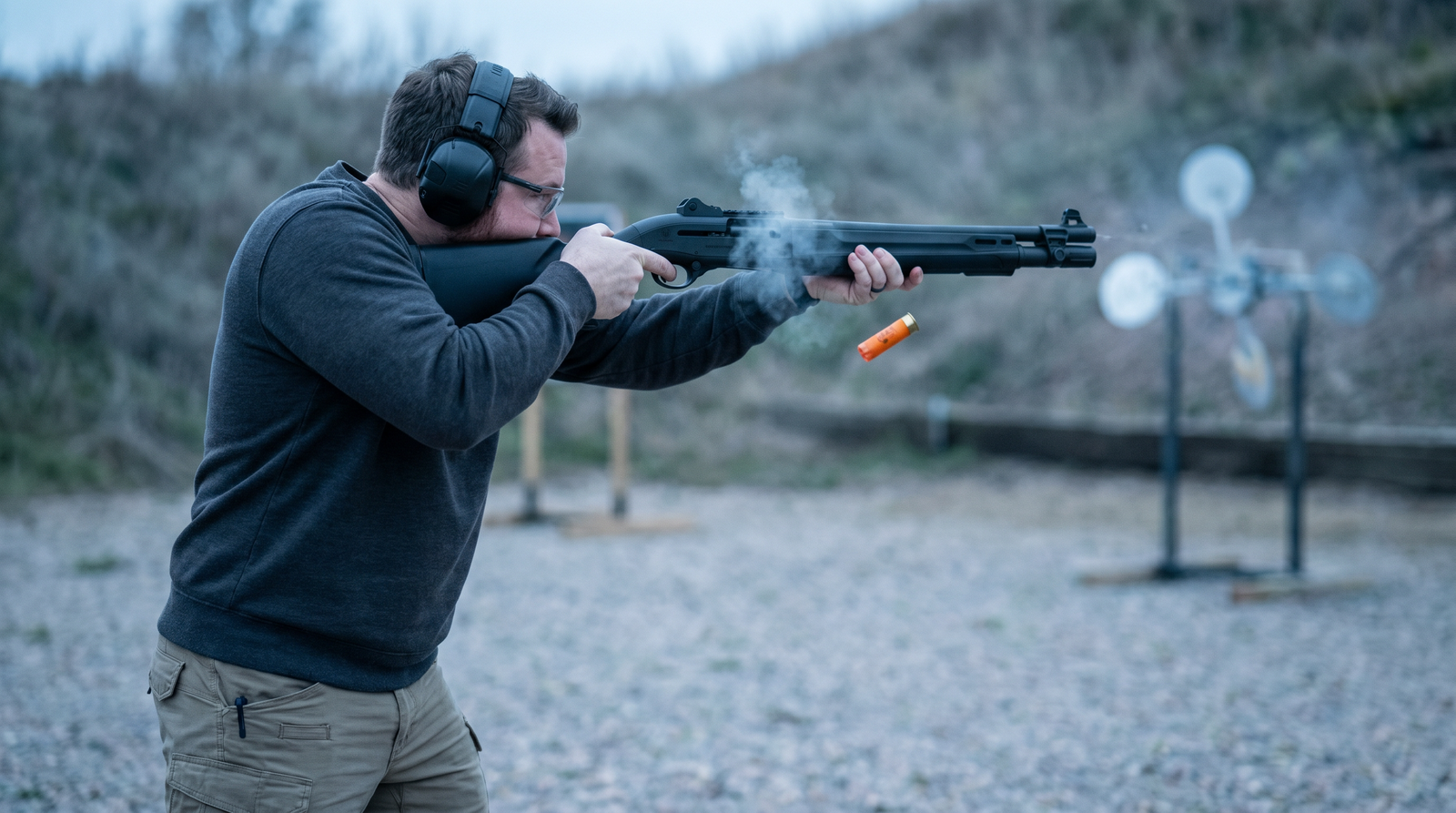
This is the 1301’s defining characteristic. In my range time the BLINK action is legitimately fast. Experienced 3-gun shooters consistently run faster splits on the 1301 than on any other semi-auto shotgun, including the M4. If you’re chasing competition times, that matters.
For home defense, cycling speed is less of a practical differentiator. You’re not running a stage. You’re not drawing from a start position and engaging eight steel targets. The M4’s slightly slower cycle time is irrelevant when you’re clearing a hallway in the middle of the night.
Where the speed gap genuinely shows up is at the range. The 1301 is a more fun gun to shoot fast. That’s not nothing. People who actually train with their defensive guns tend to train more when the gun is enjoyable to run.
Recoil: Heavier Wins Here
The M4 weighs 7.8 pounds unloaded. The 1301 comes in at 6.6 pounds. In my own shoulder that 1.2-pound difference is significant felt recoil. The heavier M4 soaks up more of the impulse, and the ARGO system does a good job distributing recoil over a longer cycle. Most shooters find the M4 noticeably softer to shoot than the 1301 with the same ammunition.
The 1301 isn’t brutal by any standard. It’s a gas gun, not a pump or an inertia-operated design, so it’s already managing recoil mechanically. But next to an M4, it’s a snappier gun. Smaller-framed shooters or anyone with shoulder issues will notice the difference after a long session.
Aftermarket recoil pads and buffer systems exist for both guns and can close the gap. But out of the box, the M4 shoots softer.
Ergonomics and Controls
This is where the 1301 really shines in my hands. Beretta designed the 1301 Tactical with actual defensive and competition use in mind, and it shows the first time you mount it.
The bolt release is oversized and easy to hit under stress. The safety is a cross-bolt design that’s simple to operate. The loading port is enlarged for faster reloads. The gun handles quickly because it’s lighter and the balance point is slightly more forward than the M4.
The M4’s controls are more military-spec than shooter-friendly. The bolt release works, but it’s not as intuitive as the 1301’s. The safety is a standard crossbolt design. Loading the tube is fine but not optimized for speed reloads the way the 1301’s enlarged port is. None of this is bad, exactly. It’s just less refined for high-speed use than the 1301.
The M4 does have a few ergonomic advantages. The ghost ring sights are a serious upgrade over the 1301’s basic front bead. For aimed fire at distance, the M4’s sight picture is considerably better out of the box. And the M4’s pistol grip variant (the one with the collapsible or pistol grip stock) offers more stock options for different shooters.
Aftermarket Support: It’s Not Even a Contest
The M4 has been in production since 1998 and has been the USMC’s standard-issue combat shotgun for over 25 years.
I have built more M4 platforms than any other shotgun in this category, the aftermarket is enormous. Mesa Tactical, Scalarworks, GG&G, Nordic Components, Aridus Industries: all of them build extensive M4-specific product lines. You can get extended tube kits, side saddle shell carriers, optic mounts, pistol grip stocks, collapsible stocks, Picatinny rail systems, and countless other upgrades specifically engineered for the M4. The gun is almost a platform at this point.
The 1301 is catching up, especially in the competition world. Nordic Components makes tube extensions. Aridus has shell carriers for it. Briley and a few others make choke tube upgrades. But the depth of aftermarket support is nowhere near the M4’s ecosystem. If you like customizing your guns, the M4 wins by a landslide.
That said, the 1301 is better equipped out of the box for competition use. The enlarged loading port, oversized bolt release, and included extended safety are features you’d pay extra to add to an M4. The guns are built for different buyers. See our best shotgun upgrades guide for the accessory categories that apply to either platform.
Which Is Better for Home Defense?
For home defense, the 1301 is the better buy for most people. Here’s why: it’s faster to cycle, has better ergonomics out of the box, costs $500-$600 less, and is still an extremely reliable shotgun when loaded with standard-velocity buckshot.
The gap in military pedigree doesn’t matter when you’re home in bed at 2 a.m.
The M4 is also excellent for home defense. Obviously. But you’re paying a significant premium for combat-proven reliability when home defense doesn’t actually require that level of vetting. The 1301 is plenty reliable for the use case. And the money you save can go toward training, which matters more than gun selection for defensive use.
One caveat: if you’re running reduced-recoil buckshot specifically because of noise concerns in a home environment, do a reliability test with your specific ammo in the 1301 before you count on it. Most owners report no issues, but the sensitivity to light loads is documented enough to be worth a hundred-round confirmation before staking your life on it.
For more options in this category, check out our best shotguns for home defense roundup or the apartment home defense guide if shared walls are part of your threat model.
Which Is Better for Competition and 3-Gun?
The 1301 is the competition choice. Full stop. The BLINK action’s cycling speed is a genuine competitive advantage, the ergonomics are optimized for fast stage running, and the price point leaves more budget for the pistol and rifle portions of your kit. Most serious 3-gun competitors who aren’t already deep in an M4 platform will choose the 1301.
The M4 can compete and compete well, especially in open divisions where aftermarket support matters. Some shooters prefer the M4 for its consistency across ammo types, particularly in matches where they’re running whatever’s cheapest and don’t want to gamble on cycling issues. And the platform customization available for the M4 is hard to beat if you want to dial in your competition setup precisely.
But if you’re asking where the competitive edge lives in 3-gun, it’s with the 1301. Cycling speed wins splits. Splits win matches.
See our full best semi-auto tactical shotguns guide and best tactical shotgun roundup for more on how both stack up against the broader field.
Military and LE Use
The Benelli M4 is the M1014 Joint Service Combat Shotgun. The U.S. Marine Corps adopted it in 1999, the U.S. Army followed, and it has served in Iraq and Afghanistan. When the military needed the most reliable semi-auto shotgun available for combat use, they chose this gun. That’s not marketing. That’s procurement.
The 1301 has seen some law enforcement adoption, and it’s a legitimate duty-capable shotgun. But it doesn’t have the combat pedigree of the M4. If that matters to you, it should factor into your decision. If it doesn’t, the 1301 is a serious defensive tool regardless of its resume.
Durability and Long-Term Ownership
Both guns are built to last. The M4’s mil-spec anodized aluminum receiver, stainless ARGO pistons, and overall construction quality are exceptional. These guns routinely hit 10,000+ rounds without major service. The 1301 is also well-built but hasn’t accumulated the same depth of long-term field data because it’s a newer design. The 1301 Tactical first appeared in 2013; the M4 has been in continuous production since 1998.
For most civilian owners who put a few hundred rounds through their shotgun per year, neither gun is going to fail. Both have corrosion-resistant finishes. Both are straightforward to maintain. Long-term durability is not a meaningful differentiator for typical use.
Who Should NOT Buy Either Gun
Both shotguns are excellent. Both are also wrong for some buyers. Save your money if you fall into these categories.
- Pure budget buyers, the cheapest of the two (1301) still runs $1,200+ street. If your total budget is under $800, look at a Mossberg 590A1 or Remington 870 Police at $500-$700. Either does 90% of the defensive work for half the money.
- Bird hunters, both of these are 18.5″ tactical guns with cylinder or removable HD chokes. For sporting clays or upland bird hunting you want a longer vent-rib barrel. Look at the Beretta A300 Ultima or the Benelli M2 Field instead.
- Recoil-sensitive shooters who won’t add a recoil pad, both guns kick. The 1301 at 6.6 lbs is snappier than the 7.8 lb M4. If recoil sensitivity rules out 12 gauge, an inertia-driven Benelli M2 20 gauge or a softer-shooting Beretta 1301 Comp in 20 gauge is the right answer.
- Anyone who refuses to do break-in shooting, the 1301 specifically benefits from 100-200 rounds of break-in before running reduced-recoil loads reliably. If you plan to load it once and stash it untested, get the M4 (or a pump like the Mossberg 500 Tactical).
Related: See where it ranks in our best Beretta pistols countdown.
The Verdict: Who Should Buy Which Gun
Buy the M4 if: you want the most proven tactical shotgun on the market, you’re building a serious platform with lots of aftermarket upgrades, you want mil-spec construction, or you just want the best regardless of price. It’s the gold standard. Always has been.
Buy the 1301 if: you want the best performance-per-dollar ratio in a tactical semi-auto, you’re running competition, or you want a fast and ergonomic home defense gun without spending $2,000. The cycling speed is genuinely impressive, the controls are better out of the box, and the price difference is real.
My pick? For most people, the 1301. The M4 is a better gun in the abstract, but the 1301 is the right gun for the specific uses most civilian buyers actually have. Better ergonomics, lower price, faster action. Unless you specifically need the M4’s combat pedigree and aftermarket depth, the 1301 delivers more where it matters.
That said, if someone handed me a loaded M4 and told me to clear a building, I wouldn’t complain. Not even a little.
Also check out our shotgun buying guide if you’re still working through the fundamentals, the inertia vs gas shotgun breakdown if you want to go deeper on action types, or our Benelli M2 review and Benelli Super Black Eagle 3 review if you’re cross-shopping the rest of the Benelli line.
Read the full standalone Beretta 1301 Tactical review.
FAQ: Benelli M4 vs Beretta 1301
Is the Benelli M4 worth the extra $500 over the Beretta 1301?
For most civilian buyers, no. The Benelli M4 is genuinely a better gun in the abstract, more aftermarket support, mil-spec construction, USMC combat pedigree, but the 1301 Tactical delivers 90% of the practical performance for $500-$600 less, with better ergonomics out of the box and a noticeably faster BLINK gas action. The M4 premium makes sense if you are building a heavy platform with deep aftermarket, or specifically want a duty-capable mil-spec gun. For pure home defense or competition use, the 1301 is the better buy.
Which is more reliable, the Benelli M4 or the Beretta 1301?
The M4 has the more battle-tested reliability record, the dual-piston ARGO gas system has been the USMC M1014 standard since 1999 and runs through sand, mud, salt water, and extreme temperatures without complaint. The 1301 Tactical is also genuinely reliable but has a documented sensitivity to reduced-recoil loads during break-in. With standard velocity buckshot or birdshot the 1301 runs flawlessly. With reduced-recoil home defense loads, plan on 100-200 rounds of break-in before staking your life on it.
Is the Beretta 1301 actually faster than the Benelli M4?
Yes, measurably. Beretta's BLINK gas action cycles about 36% faster than competing semi-auto designs. The marketing number matches range reality: experienced 3-gun shooters consistently run faster splits on the 1301 than on the M4. For competition this is a genuine competitive advantage. For home defense, cycling speed is rarely the limiting factor, you are not running stages in the dark.
Which has better aftermarket support, the M4 or the 1301?
The Benelli M4 wins by a landslide. After 25+ years as the USMC standard-issue combat shotgun, the M4 aftermarket is enormous, Mesa Tactical, Aridus Industries, Scalarworks, GG&G, Nordic Components all build deep M4-specific product lines covering stocks, side saddles, optic mounts, extended tubes, Picatinny rails. The 1301 aftermarket is growing (Nordic Components, Aridus, Briley) but nowhere near M4 depth. If you like customizing, the M4 wins.
Which has less recoil, the M4 or the 1301?
The Benelli M4 shoots softer out of the box. At 7.8 lbs unloaded it is over a full pound heavier than the 6.6 lb 1301, and the heavier mass plus the ARGO gas system distributes recoil over a longer impulse. Most shooters find the M4 noticeably softer than the 1301 with identical ammunition. Aftermarket recoil pads and buffer systems can close the gap on either gun, but stock-vs-stock the M4 is the lighter-kicking gun.
Can the Benelli M4 use interchangeable chokes?
The standard 18.5" cylinder-bore M4 ships with a fixed cylinder choke, not interchangeable. Some longer-barrel M4 variants (24" sport configurations) accept Benelli Crio choke tubes. The Beretta 1301 Tactical comes with the Optima-choke HP system that accepts interchangeable chokes. For tactical and home-defense use the fixed cylinder M4 setup is fine; for any patterning work where choke selection matters, the 1301 has the edge.
Is the Beretta 1301 Tactical good for home defense?
Yes, it is one of the best home defense semi-auto shotguns on the market. The BLINK action cycles fast, the controls are optimized for high-speed use under stress (oversized bolt release, enlarged loading port), and the price leaves budget for a Streamlight TL-Racker weapon light, an Esstac KYWI side saddle, and quality buckshot. The one caveat: do a 100-200 round break-in and confirm reliability with your specific home-defense load before counting on it with reduced-recoil buckshot.
Which shotgun does the U.S. Marine Corps use?
The Benelli M4, designated M1014 Joint Service Combat Shotgun. The USMC adopted it in 1999 after extensive torture testing across sand, mud, salt water, and extreme temperatures. The U.S. Army followed. It has served in Iraq and Afghanistan and remains the standard-issue combat shotgun. The Beretta 1301 has seen some law enforcement adoption but does not have the same military pedigree.
4,715+ Gun & Ammo Deals
Updated daily from 200+ top retailers. Filter by category, caliber, action type, and price.
Related Guides