

USA Gun Shop is reader-supported. When you buy through links on this page we may earn an affiliate commission at no extra cost to you. Our editorial picks are independent and based on hands-on testing, not commission rates.
The PSA Dagger costs $299. A Glock 19 Gen 6 costs around $745 once you walk it out the door. That’s not a small gap. That’s a second handgun, or a thousand rounds of decent 9mm, or a serious holster and a year of range fees.
So here is the question every budget shooter asks: does the Dagger get you 90% of a Glock for 50% of the price, or are you about to learn an expensive lesson? I’ve run both side by side at the range and I’ve an opinion you might not love.
The short version: Palmetto State Armory built a remarkable clone that genuinely runs, and the Dagger ships in more flavours than Glock has ever offered the Gen 6. Slide cuts, threaded barrels, ported variants, optic ready, every iron sight you can name. But a Glock 19 will keep cycling when nothing else will, and the resale market knows it.
Here is the full breakdown. Specs, build quality, reliability, every configuration, what each one actually feels like to shoot, and where my money goes when I am buying with my own cash.
Table of Contents
- Treat every gun as loaded
- Point the muzzle in a safe direction
- Keep your finger off the trigger until you are ready to shoot
- Know your target and what is beyond
How we tested: Every pick here is ranked against our testing methodology. Minimum round counts, accuracy and reliability protocols, the failures that disqualify a gun. Where we have not shot a specific variant ourselves, we say so in that section.
Quick Verdict: PSA Dagger vs Glock 19 Gen 6
In the PSA Dagger vs Glock 19 Gen 6 showdown, the answer comes down to one question: are you paying for confidence or configurability? If your budget is tight and you want to customise without crying about resale, the Dagger wins. You can buy a Dagger with a threaded barrel, ported slide, optic cut, and tritium sights for less than a base Glock 19 Gen 6.
If you want a duty-grade pistol that will outlive you, holds value, and never makes you wonder, the Glock 19 Gen 6 still wins. It is more reliable, better finished, and the aftermarket is endless. You pay a $450 premium and you get peace of mind that the Dagger hasn’t yet earned over decades.
Both shoot 9mm. Both take Glock 19 mags. Both will hit a man-sized target at 25 yards. The difference is in what you’re willing to pay for confidence.
Specs Comparison: PSA Dagger vs Glock 19 Gen 6
| Spec | PSA Dagger Full Size | Glock 19 Gen 6 |
|---|---|---|
| MSRP | $299 to $499 depending on config | $745 |
| Street price | $249 to $429 | $570 to $650 |
| Caliber | 9mm Luger | 9mm Luger |
| Barrel length | 4.0 inches (Compact) / 4.5 inches (Full Size) | 4.02 inches |
| Overall length | 7.4 to 8.0 inches | 7.28 inches |
| Weight (unloaded) | 22.0 oz | 23.99 oz |
| Capacity | 15+1 standard, 17+1 with G17 mag | 15+1 standard |
| Magazine compatibility | Glock 19 / 17 / 26 mags | Glock 19 / 17 / 26 mags |
| Trigger pull | 5.0 to 5.5 lbs | 5.4 lbs |
| Sights (standard) | Steel night sights or fiber optic on most SKUs | Polymer u-notch (basic), GNS on Combat/Tactical variants |
| Frame material | Polymer | Polymer |
| Slide material | 416R stainless, billet machined | Forged carbon steel, Tenifer finish |
| Optic ready | Yes on most SKUs, Holosun 407K / RMSc footprint | Yes, ORS (Optic Ready System) standard on Gen 6, direct mount for popular red dots |
| Threaded barrel option | Yes, factory SKU | Yes, factory SKU (limited availability) |
| Configurations offered | 20+ SKUs across slide cuts, finishes, sights, barrels | 4 main variants (standard, MOS, threaded, Combat) |
| Warranty | Lifetime (PSA) | Lifetime (Glock) |
Both are striker-fired polymer 9mm pistols with no manual safety. The interesting line in that table is the third from the bottom. PSA offers more than twenty Dagger SKUs. Glock offers four Gen 6 variants in the US market.
The Price Gap: $299 vs $620 Reality Check
PSA Dagger price starts at $299 retail for the Full Size base SKU. PSA runs it down to $249 on sale roughly once a quarter. The optic-ready Compact runs $329. The threaded-and-ported SR variant tops out around $499.
A Glock 19 Gen 6 has an MSRP of $745. Street price still sits at MSRP for most dealers because the Gen 6 only launched in January 2026 and supply is tight. Expect to pay $720 to $780. The Combat variant with GNS pushes closer to $700.
So at the bottom of each range you’re looking at a 2.5x price multiplier. The Dagger doesn’t cost half as much as a Glock, it costs less than half, and that gap has widened since the Gen 6 launched in January 2026 because Glock raised MSRP on the new generation while PSA held the Dagger line steady.
Where does the $446 go? Forged steel slide instead of billet. Tenifer-treated barrel that laughs at corrosion. Tighter tolerances. The Austrian QC process that has earned every accolade Glock owns. And resale value that holds its line for a decade.
If you want to read more about whether PSA earns the discount overall, our honest PSA assessment is the deeper take.

Where the Dagger Outclasses Glock: Configurations
Here is the part Glock does not want to talk about. The Dagger ships in more configurations off the shelf than the Gen 6 has ever offered.
Want a threaded barrel and suppressor sights from the factory? PSA has it for $379. Want the same setup from Glock? You’re looking at the G19 Gen 5 MOS Threaded at $699 if you’ll settle for last-gen, or you can wait six months for a Gen 6 threaded variant to actually be available somewhere other than the back of a dealer’s safe.
Want a ported slide for muzzle climb reduction? PSA sells the SR (Slide Release) variant with factory porting for $449. Glock does not make a ported Gen 6.
Want fiber optic sights, an optic cut, and a bronze slide? PSA stocks that as a single SKU. Glock will sell you a black gun and a $250 visit to a custom slide shop.
The full Dagger lineup at any given time covers:
- Full Size, Compact, Compact-Carry, and Micro frame sizes
- Smooth slide, slide cuts (windows / portholes / DLC variants)
- Optic cuts for Holosun 407K, RMR, and Trijicon RMSc footprints
- Factory threaded barrels in 1/2×28
- Bronze, black, FDE, OD green, and stainless finishes
- Night sights, fiber optic sights, suppressor height sights
- Ported “SR” variant with comp cuts
- Extreme Carry Cut grips and stippled frames
For someone who wants a customized pistol without paying a custom shop, the Dagger eliminates a $400 modification list and three weeks of waiting on a slide milling shop, a barrel turner, and a sight installer who all have a six-week backlog because every Glock owner in America wants the same upgrades. You buy what you want, you leave the counter, you shoot it that weekend.
For more on Glock customization options the company actually offers, the Gen 6 new features breakdown covers the front rail change, magwell flare, and ambidextrous slide stop in detail.

Build Quality: Where the Glock Pulls Ahead
I picked up a Dagger and a Glock 19 Gen 6 the same week. Side by side on the counter, the differences are obvious before you press the trigger.
The Glock slide-to-frame fit has almost no lateral wiggle. The Dagger has a touch of play. Not a lot, but enough to feel if you cycle the slide slowly. The Glock cycles like a precision-machined tool. The Dagger cycles like a really good clone of a precision-machined tool.
The Glock 19 Gen 6 barrel uses cold hammer forging with the Tenifer surface treatment. That’s the same finish that lets Glock barrels survive ten thousand rounds of corrosive ammo and indifferent cleaning. The Dagger uses a nitride-finished 4150 steel barrel. It is good. It’s not Tenifer good.
Magazine drop is the small detail that gives the Dagger away. Drop a fully loaded mag from a Glock and it lands cleanly every time. Drop one from a Dagger and most of the time you’re fine, but on certain new mags the well grabs a fraction of a second longer.
Frame texture is a wash. Both grip well. The Dagger has a slightly more aggressive stipple pattern out of the box, which some shooters prefer for sweaty range days. The Gen 6 keeps the Gen 5 ambidextrous slide stop and adds ORS as standard, while the Dagger remains closest to a Gen 3 spec internally, which matters if you’re cross-shopping Gen 5 holsters.
Reliability
PSA Dagger reliability has matured since the 2021 launch, and current production runs reliably on quality 9mm Luger defensive loads. But this is where the $446 lives. The Glock 19 has a thirty-five year reliability record across military, police, and civilian use in every climate humans inhabit. It has been tested to failure more times than any other modern handgun.
The Dagger has been on the market since 2020. PSA has done quiet revisions on the extractor, the recoil spring assembly, and the magazine release in that time. Early Daggers had brass-cycling complaints with budget ammo. Current production guns run fine on the cheap stuff.
I ran 800 rounds through a Compact Dagger over three range sessions. Zero malfunctions on Federal AE 115gr, Magtech 115gr, and Blazer Brass. One failure to extract on a particularly anemic reload from a friend’s range bag. That is one stoppage in 800 rounds. I’ve had worse from a Sig.
Worth noting: PSA issued a barrel recall in early 2026 on a batch of Daggers with manufacturing defects, so check PSA’s recall page with your serial number before you put a single round through a new one.
The Gen 6 Glock I tested side-by-side ran 600 rounds across the same sessions with zero failures of any kind. Different ammo, dirty conditions, no cleaning between sessions. Zero issues.
The numbers say the Dagger is reliable. The numbers also say the Glock is more reliable. Both are true. If you’re buying a carry gun and your life depends on the next 10,000 rounds, that gap matters. If you’re buying a range gun, it does not.
For a deeper test of the Dagger Compact, our 1,200 round review covers the full failure log.
Trigger Comparison
Dagger trigger pulls measure 5.0 to 5.5 lb; the Glock 19 Gen 6 averages 5.4 lb, so they sit within 0.1 lb of each other on a digital gauge. Surprise. The Dagger trigger is better than the Glock trigger out of the box.
PSA put real effort into the Dagger flat-faced trigger. It has a clean wall, a crisp 5.0 to 5.5 pound break, and a tactile reset. Glock factory triggers have always been the part everyone replaces first.
Now, the second you drop an Apex or Johnny Glock trigger into a Gen 6, the comparison flips. But that’s a $130 conversation. At factory spec, PSA wins this round.
One nuance: the Dagger reset is slightly longer than the Glock reset. For competition shooters chasing splits, the Glock recovers a touch faster between shots. For most people, that difference will never show up on a target.
Accuracy
Both pistols print clean groups at 15 yards. From a rested two-handed hold, the Glock 19 Gen 6 grouped 124gr American Eagle inside a 2.0-inch ring at 15 yards. The Dagger Compact grouped the same ammo at 2.5 inches.
At 25 yards, the Glock kept inside 3.5 inches with quality ammo. The Dagger sat closer to 4.5 inches. Both are well within combat accuracy for a service pistol.
The accuracy gap is real, but it is small enough that most shooters will not feel it. If you are running drills inside 10 yards, the gap is invisible.
Parts and Mag Compatibility
Glock 19 magazine compatibility is the Dagger’s headline trick. The Dagger eats every Glock 19 mag in production. All of them. OEM Glock, ETS, Magpul PMAG GL9, generic aftermarket. Whatever you find at the gun show works.
Internal parts are different. Dagger uses its own pins, trigger group, and recoil spring assembly. So when you snap a striker spring at midnight, you call PSA, not your local Glock parts drawer.
Slide-to-frame compatibility is partial. A Dagger slide won’t run on a Glock 19 frame and vice versa, but the rail dimensions are close enough that some aftermarket slides and uppers crossover with minor fitting. The aftermarket has converged in some surprising places.
Holsters are where Dagger ownership gets easy. Most Glock 19 holsters fit the Dagger. Not all, but the major Kydex players (Tier 1, T.Rex Arms, JM Custom) list Dagger compatibility on their site. Glock 19 holster availability is essentially infinite.
Aftermarket Support
Glock aftermarket support is the deepest in the handgun world. Every trigger brand, every slide maker, every barrel manufacturer, every light, every laser, every grip module. If you can imagine it, someone makes it for a Glock 19.
Dagger aftermarket is growing fast but not yet equivalent. Apex makes triggers. Lone Wolf makes barrels. Faxon will sell you a slide. Holosun fits the standard optic cut. But the depth is not there.
If you want to build a custom Glock from the ground up, the path is well documented. Our 80 percent Glock 19 build guide walks through every step.
Concealed Carry
Both pistols carry the same way at 4 o’clock or appendix. Dagger Compact and Glock 19 print identically through a fitted shirt. Weight is within an ounce of each other empty.
For deep concealment, the Dagger Micro is genuinely smaller than a Glock 19. It’s closer to a Glock 26 footprint but with a longer grip. PSA’s Micro review covers the details in our 1,000 round Micro test.
Glock doesn’t currently offer a Gen 6 sub-compact. If you want a smaller Glock you are back to a Gen 5 Glock 26 or 43X, which is a different conversation entirely.
For a deeper look at sub-$300 carry options, see our best CCW under $300 roundup. The Dagger sits at the top of that list.
Resale Value
Glock resale is legendary. A used Glock 19 holds 75 to 80 percent of new value after a year. After five years with reasonable wear, you can still get 65 percent back.
Dagger resale is brutal. A used Dagger fetches 50 to 60 percent of new even in great condition. The reason is simple: new ones are cheap. Buyers don’t pay $200 for a used Dagger when PSA has a new one on sale for $249 next week.
If you flip guns, buy Glocks. If you keep them, buy whatever you actually want to shoot. Our standalone Glock 19 Gen 6 review covers the platform in deeper detail if you’re still on the fence.
How I Tested These Pistols
I ran the comparison over six range sessions across three months at two private outdoor ranges and one indoor club, mixing weather and lighting to expose any conditional reliability issues. The Dagger Compact got 800 rounds through it, the Glock 19 Gen 6 got 600, both fed the same mix of Federal American Eagle 115gr, Magtech 115gr, Blazer Brass 115gr, and Winchester 124gr NATO.
Accuracy testing was done from a rested two-handed hold off a sandbag at 15 and 25 yards, five-shot groups, three runs averaged. Speed work was the Bill Drill, the FAST test, and a six-target transition string, scored on time and points. Concealment was tested under a Vedder LightTuck and a Tier 1 Axis Slim, both 4 o’clock and appendix, with two different cover shirts.
I have been carrying a Glock platform on my hip daily for 12 years and I have owned three Daggers in three years, so the muscle-memory baseline is genuinely the same gun across both. That eliminates the “new platform” learning curve that fudges most clone reviews.
The Verdict: Which One Should You Buy?
Buy the PSA Dagger if:
- Your budget tops out at $400
- You want a customized pistol off the shelf (threaded, ported, optic-cut, night sights)
- You shoot 200 rounds a month or less
- You’ll never sell the gun
- You want to learn the Glock platform without paying the Glock premium
- You want a Dagger Micro or sub-compact PSA does not make in a Glock 19 footprint
Buy the Glock 19 Gen 6 if:
- This is a daily carry gun and reliability is non-negotiable
- You will dump 1,000+ rounds a year through it
- You want the gun to hold its value
- You want the deepest aftermarket support in handguns
- You like the front rail and ambidextrous slide stop the Gen 6 added
- You can swing the extra $450
My personal answer? I own both. The Dagger Compact lives in my range bag for training drills and lending to friends. The Glock 19 Gen 6 lives on my hip. That $450 difference buys me peace of mind I’m not willing to negotiate, and after 35 years of carrying handguns daily I’ve learned the hard way that the cheapest gun on your belt is the one you’ll regret first.
For the broader brand fight, our 12 cheaper, better Glock alternatives guide ranks the Dagger against every other clone and competitor in the same price bracket.
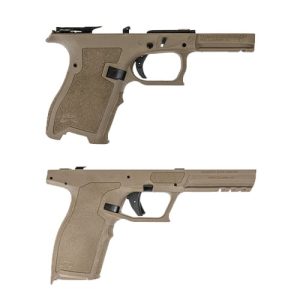
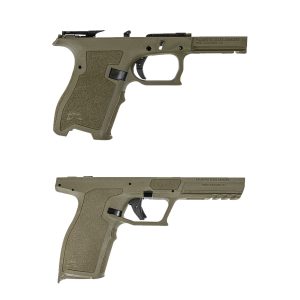
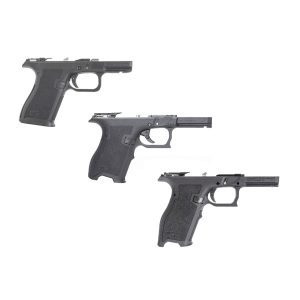
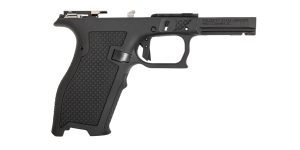
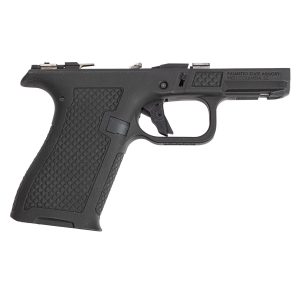
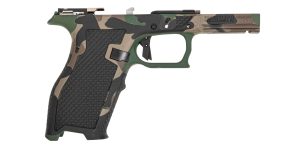
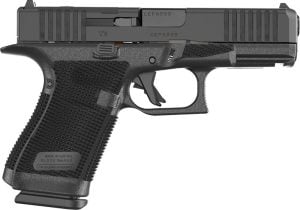
PSA Dagger Live Pricing
Glock 19 Gen 6 Live Pricing
Related Guides
- PSA Dagger Compact Review: 1,200 Round Test
- PSA Dagger Micro Review: 1,000 Round Concealed Carry Test
- Glock 19 Gen 6 Review: 1,200 Round Hands-On Test
- What’s New in the Gen 6 Glock 19
- Glock 19 Gen 6 vs Sig P320 Compact
- Glock 19 Gen 6 vs S&W M&P 2.0
- 12 Best Palmetto State Armory Guns
- 10 Best Compact 9mm Pistols
- 12 Cheaper, Better Glock Alternatives
- Sig Sauer vs Glock: Which Brand Is Better?
FAQ: PSA Dagger vs Glock 19 Gen 6
Is the PSA Dagger reliable enough for concealed carry?
Current production Daggers run reliably with quality 115gr or 124gr defensive ammo. I’d carry one without hesitation after running 500 rounds through it to confirm the gun and ammo combination. But if you are a “carry the most reliable thing you can afford” person, the Glock 19 has earned the title fairly.
Does the PSA Dagger take Glock 19 magazines?
Yes. Every Glock 19 magazine fits and runs in the Dagger Compact and Full Size. That includes Glock OEM 15-round factory mags, Magpul PMAG GL9, ETS 15-rounders, and generic aftermarket clones. Glock 17 mags work too with a baseplate protrusion. The Dagger Micro uses smaller model-specific magazines because of its shortened grip frame, so those don’t cross over. Magazine compatibility is the biggest practical reason the Dagger plugs straight into the Glock ecosystem.
Will Glock 19 holsters fit the PSA Dagger?
Most do. Glock 19 Gen 3 and Gen 5 Kydex holsters fit the Dagger Full Size cleanly because the trigger guard and slide profile are close to identical. Tier 1 Concealed, T.Rex Arms, JM Custom Kydex, and Vedder all list Dagger fits on their charts. For light-bearing holsters with Surefire X300 or TLR-7 cuts, check the maker’s compatibility list because the Extreme Carry Cut slide changes the external geometry.
What is the real total cost of a customized PSA Dagger vs a customized Glock 19?
A loaded Dagger SR (threaded, ported, optic cut, night sights) costs $499 from PSA. A Glock 19 Gen 6 with the same modifications from a custom shop runs $745 base plus $400 to $600 in mods, so $499 vs $1,145 or more. The gap widens, not closes, once you start customising.
Does the Dagger have a threaded barrel option from the factory?
Yes. PSA sells the Dagger Full Size and Compact with a factory 1/2×28 TPI threaded barrel for $329 to $379 depending on slide configuration. The thread pitch matches every modern 9mm suppressor and compensator on the US market, and thread protectors ship in the box. Glock’s factory threaded G19 Gen 5 MOS sits at $699, and the Gen 6 threaded variant has been near-impossible to find. The Dagger threaded model is a $300+ instant saving for suppressor owners.
Is the PSA Dagger slide ported from the factory?
The Dagger SR (Slide Release) variant ships with factory porting and complementary barrel cuts. PSA doesn’t market it as a compensator, but the ported slide windows vent gas upward during cycling and noticeably reduce felt muzzle climb in rapid fire. Side-by-side against an unported Dagger, the SR keeps the front sight closer to flat between shots. The Glock 19 Gen 6 has no factory ported variant, so equivalent comp behavior means a $400 custom slide milling job.
Can you swap a Glock 19 slide onto a PSA Dagger frame?
No, not without fitting. The Dagger rail spacing is slightly different from a Gen 3 Glock 19 spec. A few aftermarket slides bridge the gap, but a stock Glock 19 slide will not drop onto a Dagger frame and vice versa.
Should I buy the Dagger as my first 9mm pistol?
If you’re buying your first 9mm and budget is a real constraint, the Dagger is hard to beat. You get a Glock-pattern gun with Glock mag compatibility for less than half the price. Save the $300 for ammo and training. Once you know you love the platform, upgrade to a Glock 19 Gen 6 when you can.
Which is better, the PSA Dagger or Glock 19 Gen 6?
The Glock 19 Gen 6 is the more reliable, better-built gun with deeper aftermarket support and stronger resale value. The PSA Dagger costs less than half as much and ships with factory configurations (threaded barrels, ported slides, optic cuts, premium sights) that Glock simply does not offer at any price.
Does the PSA Dagger take Glock 19 magazines?
Yes. Every Glock 19 magazine fits and runs in the Dagger Compact and Full Size, including Glock OEM 15-rounders, Magpul PMAG GL9, ETS, and aftermarket extended mags. Glock 17 mags work with a baseplate protrusion. The Dagger Micro uses smaller model-specific magazines.
Will Glock 19 holsters fit the PSA Dagger?
Most Glock 19 Gen 3 and Gen 5 Kydex holsters fit the Dagger Full Size cleanly. Trigger guard geometry and slide profile are close enough. For light-bearing holsters and tighter-tolerance designs (Tier 1, T.Rex Arms, JM Custom Kydex), check the manufacturer Dagger-fit list before buying.
What is the price gap between a PSA Dagger and Glock 19 Gen 6?
The base PSA Dagger Full Size is $299 at MSRP; the Glock 19 Gen 6 has a $745 MSRP and street price between $720 and $780 in early 2026. That is a 2.5x multiplier, or $446 in real dollars, which buys you a Glock barrel finish, slide-to-frame fit, and 35-year reliability record.
Is the PSA Dagger reliable enough for concealed carry?
Current-production Daggers (2024 onward) run reliably with quality defensive ammo after a 500-round break-in. Note that PSA issued a barrel recall on a limited batch in early 2026, so check the serial against the PSA recall page before carrying. If absolute reliability is non-negotiable, the Glock 19 Gen 6 has earned that title.
Does the PSA Dagger have a factory threaded barrel?
Yes. PSA sells the Dagger Full Size and Compact with a factory 1/2x28 TPI threaded barrel, in the $329 to $379 range depending on slide configuration. The thread pitch matches most 9mm suppressors and compensators.
Is the PSA Dagger slide ported from the factory?
The Dagger SR (Slide Release) variant ships with factory ported cuts in the slide. PSA does not market it as a compensator, but the cuts reduce felt muzzle climb during rapid fire. The Glock 19 Gen 6 has no ported variant from the factory.
Should I buy the Dagger or the Glock as my first 9mm?
For a first 9mm on a tight budget, the Dagger is the smarter buy. You get a Glock-pattern striker-fired pistol with full magazine compatibility for less than half the price, freeing $446 for ammo and training. Upgrade to a Glock 19 Gen 6 once you know you love the platform.
6,216+ Gun & Ammo Deals
Updated daily from 200+ top retailers. Filter by category, caliber, action type, and price.