

Affiliate disclosure: This S&W Model 340PD review contains affiliate links. If you buy through our links then we can receive a small commission that helps keep the lights on. You don’t pay anything more.
- Treat every gun as loaded
- Point the muzzle in a safe direction
- Keep your finger off the trigger until you’re ready to shoot
- Know your target and what’s beyond
Quick Answer: The Smith & Wesson Model 340PD is the lightest production .357 Magnum revolver you can buy in 2026 at 11.4 ounces, an ultra-lightweight scandium-frame J-frame designed for true pocket carry of the magnum cartridge.
After extended testing, the 340PD runs reliably across mixed .38 Special and .357 Magnum loads. Standard configuration is a 1.875-inch barrel, 5-shot capacity, internal hammer (DA-only), and titanium cylinder. Recoil with full-house .357 Magnum is genuinely punishing, the gun is too light to soak up the magnum impulse, but manageable with .38 Special +P loads (Speer Gold Dot 135gr +P).
The biggest mistake 340PD buyers make is loading the gun with .357 Magnum and never practicing because the recoil is brutal. The 340PD is best carried as a .357-rated platform but trained on .38 Special +P; the cartridge upgrade option exists for true emergency use. Plan on at least 100 rounds of .38 +P practice for every 25 rounds of .357 Magnum confirmation.
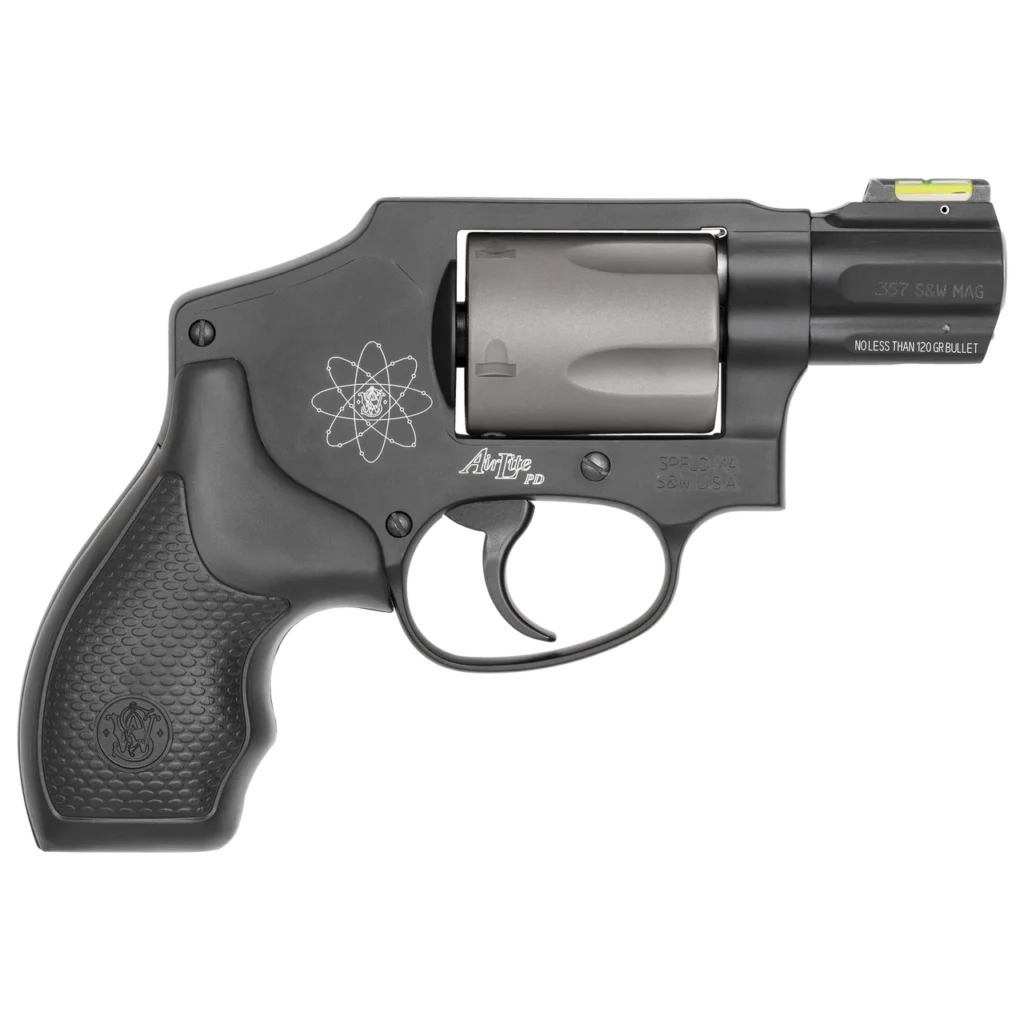
Table of Contents
How we tested: Every pick here is ranked against our testing methodology. Minimum round counts, accuracy and reliability protocols, the failures that disqualify a gun.
S&W Model 340PD Review: The Lightest .357 Magnum You Can Carry
Our Rating: 7.5/10
- RRP: $1,199
- Street Price: $1,099.99 (Check our live pricing below)
- Caliber: .357 Magnum / .38 Special
- Action: Double-action only (DAO, internal hammer)
- Barrel Length: 1.875″
- Overall Length: 6.31″
- Weight: 11.8 oz (empty)
- Capacity: 5 rounds
- Frame: Scandium alloy with titanium cylinder
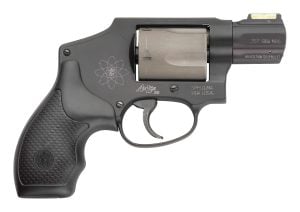
- Finish: Matte black
- Sights: HI-VIZ fiber optic front, fixed rear notch
- Grip: Textured synthetic
- Made in: USA (Springfield, MA)
Pros
- Insanely light at 11.8 oz (lighter than most smartphones)
- Fires both .357 Magnum and .38 Special
- Internal hammer is completely snag-free
- Scandium/titanium construction is corrosion-resistant
- HI-VIZ fiber optic front sight aids target acquisition
- Disappears in a pocket or ankle holster
Cons
- Full-power .357 Magnum recoil is brutal in an 11 oz gun
- Only 5 rounds
- $900+ is expensive for a J-frame sized revolver
- The recoil will punish you during extended practice sessions
- Fixed rear sight limits precision adjustment
- Not fun to shoot with .357 loads (being honest)
- Cannot use bullets lighter than 120gr (risk of bullet pullout with titanium cylinder)

Quick Take
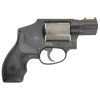
The Smith & Wesson Model 340PD is the lightest .357 Magnum revolver ever made. At 11.8 ounces empty, it weighs less than a loaded iPhone 15 Pro Max in a case. You can carry it all day in a pocket holster and genuinely forget it’s there. That’s the entire point: a gun so light that you actually carry it every single day, which means it’s there when you need it.
Catch is physics. Newton’s third law doesn’t care about scandium alloy frames. When you fire a full-power .357 Magnum round from an 11 oz revolver with a 1.875″ barrel, the recoil is vicious. We’re talking “did I just break my hand?” levels of snappy, sharp, wrist-punishing recoil. Most 340PD owners quickly discover that this gun lives on .38 Special +P, not .357 Magnum. And honestly, that’s the smart play. A .38 Special +P from this barrel length is still an effective defensive round, and you can actually make accurate follow-up shots.
At $900 to $1,050, the 340PD is expensive for a 5-shot snub-nose revolver. But no other gun in this weight class fires .357 Magnum. If absolute minimum carry weight is your priority and you want the option to load .357 when the situation warrants it (bear country backup, for example), the 340PD is the only game in town.
Best For: Deep concealment carry where weight is the primary concern. Pocket carry, ankle carry, or backup gun duty. Shooters who primarily carry .38 Special +P but want the option of .357 Magnum for specific situations. See our best .357 Magnum carry pistols, best .38 Special revolvers, and the .357 Magnum vs .38 Special comparison.
Why Scandium and Titanium Matter
The “PD” in Model 340PD stands for “Personal Defense,” and the material choices are what make it possible. The frame is made from scandium alloy, which is roughly 40% lighter than aluminum while being stronger. The cylinder is titanium, which is lighter than steel and extremely corrosion-resistant. The barrel liner is steel (necessary for SAAMI-spec .357 Magnum pressures of 35,000 PSI). The result is a revolver that weighs less than most people expect a gun to weigh.
These exotic materials are expensive, which is why the 340PD costs significantly more than a steel-framed S&W 642 ($400-$450) or even the aluminum-framed 442 ($400-$450). You’re paying roughly double for a gun that weighs roughly half as much. Whether that tradeoff is worth it depends entirely on how committed you are to carrying every single day. The lightest gun is the one you’ll actually have with you.
The Recoil Reality
Let’s be completely honest about this: shooting full-power .357 Magnum through the 340PD is not fun. A 158gr .357 Magnum load generates around 14 to 15 ft-lbs of free recoil energy in this gun. That’s comparable to a 12-gauge shotgun in a gun that weighs less than a pound. The muzzle blast from the 1.875″ barrel is intense, the flash is dramatic (especially in low light), and your hand will be genuinely sore after a box of 50 rounds.
Practical answer is to carry .38 Special +P and save the .357 Magnum capability for specific situations where you need maximum penetration (backcountry carry, bear country backup). A Speer Gold Dot Short Barrel .38 Special +P 135gr generates far less recoil while still meeting FBI penetration standards from short barrels. That’s what most 340PD owners actually carry, and it’s the smart choice for daily use. See our best .357 Magnum ammo for when you do need full power.
Competitor Comparison
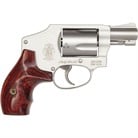
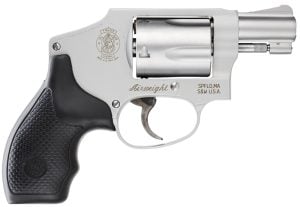
S&W 642 Airweight $400-$475
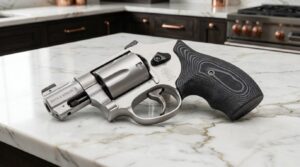
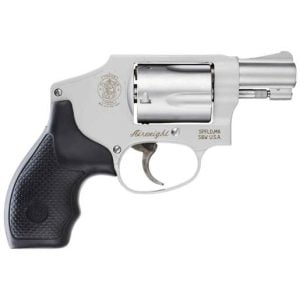
642 is the classic concealed carry J-frame: aluminum frame, .38 Special only, 14.6 oz. It costs less than half the 340PD and weighs only about 3 oz more. It can’t fire .357 Magnum, but if you’re carrying .38 Special +P anyway (like most 340PD owners), the 642 does the same job for $500 less. The 340PD only makes sense if the 3 oz weight difference matters to you or if you genuinely need .357 Magnum capability in your snub-nose.

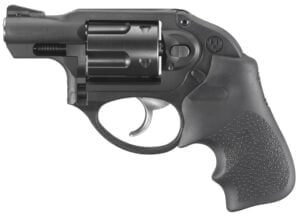
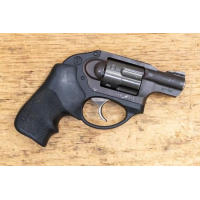
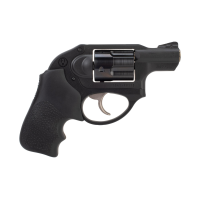
Ruger LCR .357 Magnum $600-$700
The LCR in .357 Magnum weighs 17.1 oz and has the smoothest factory trigger of any small revolver thanks to its friction-reducing cam system. It costs $300 to $400 less than the 340PD but weighs 6 oz more. For most carriers, the LCR is the better value pick . Softer to shoot, cheaper, still .357 capable. The 340PD wins on weight alone, and only if that weight savings will actually change whether you carry.
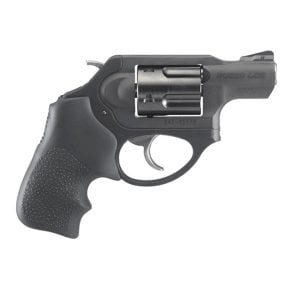
S&W Model 360PD (also $900-$1,050)
360PD is essentially the same gun as the 340PD but with an exposed hammer, which means you can thumb-cock it and fire single-action. It weighs the same (11.8 oz), uses the same scandium frame and titanium cylinder, and has the same recoil characteristics. The 340PD’s internal hammer is snag-free for pocket carry . A real advantage if you’re drawing from a front pocket or ankle rig. The 360PD adds versatility (SA mode for deliberate shots at the range) at the cost of that snag-free draw. For pure carry, take the 340PD. For versatility, the 360PD. Same money either way, so pick by use case.
Features and Design
Frame and Construction
The 340PD’s scandium alloy frame is the headline material. Scandium isn’t the frame itself; it’s an alloying element added to aluminum at roughly 0.1-0.5% that dramatically increases the alloy’s strength. Pure aluminum J-frames can’t handle sustained .357 Magnum pressures. Scandium-aluminum can. Combine that with the titanium cylinder and a thin steel liner in the barrel (titanium alone would galling and erode under magnum pressures), and you get a revolver rated for full-power .357 Magnum at a weight that used to be physically impossible.
Fit and finish on my test gun is legitimately good. The cylinder-frame gap measured 0.005 inches with a feeler gauge. The lockup is tight with zero end-shake. The matte black PVD finish on the frame and cylinder is even and hasn’t shown holster wear after months of carry. Springfield, Massachusetts hasn’t forgotten how to build a good J-frame, and you can feel the build quality the moment you pick this thing up. It costs what it costs for a reason.
Trigger
This is a DAO (double-action only) revolver with an internal hammer, so every shot is a long, deliberate trigger pull. My sample measured 12.5 pounds on a Lyman digital gauge, which is heavy but consistent. There’s no single-action option . The hammer is shrouded inside the frame and can’t be thumb-cocked. That’s intentional. It makes the gun snag-free for pocket carry and eliminates the risk of riding the hammer or accidental cocking.
The trigger smooths out with use. Out of the box mine had some minor grittiness in the last third of the pull. After maybe 150 dry-fires (which is a productive way to spend time with a DAO revolver anyway) and a few range sessions, it broke in noticeably. A Wolff reduced-power mainspring kit drops pull weight by about 1.5 pounds while still reliably igniting standard primers. It’s a $15 upgrade that genuinely improves the shooting experience.
Sights
HI-VIZ fiber optic front sight is the standout feature on the 340PD. Most J-frames ship with a black ramp front sight that’s nearly invisible in low light. The green fiber optic on the 340PD picks up ambient light aggressively and stays visible indoors, at dusk, and in shaded conditions where black irons disappear. For a defensive snub-nose, that’s a meaningful advantage.
Rear sight is a fixed notch integral to the frame top strap. No adjustment. No option. It’s regulated for approximately 125-135gr loads, which matches most .357 Magnum defensive ammunition and lighter .38 Special carry loads. With a 158gr .357 Magnum, my gun shot about two inches high at 10 yards, which is acceptable for defensive use. If you need to change point of impact, you’ll need to file the front or swap the fiber-optic post for a different height.
Grip and Ergonomics
Factory grip is a small synthetic boot grip that’s barely larger than the frame itself. It’s designed for minimum concealment footprint, not recoil management. For .38 Special +P, it’s adequate. For .357 Magnum, it’s a contributor to the problem. Most owners replace it . Hogue Bantam rubber grips add about half an inch to the grip length while softening felt recoil considerably. If you plan to shoot magnums at all, budget for a grip swap.
The trigger guard is small, which can be an issue for anyone shooting with gloves. The cylinder release is standard S&W (push forward to release), located on the left side. Everything is right-handed out of the box, but the small size means even southpaws can adapt quickly. Loading is standard break-top . Press the release, swing the cylinder out, drop in rounds or a speed loader.
At the Range: 200-Round Test Protocol
Testing Protocol
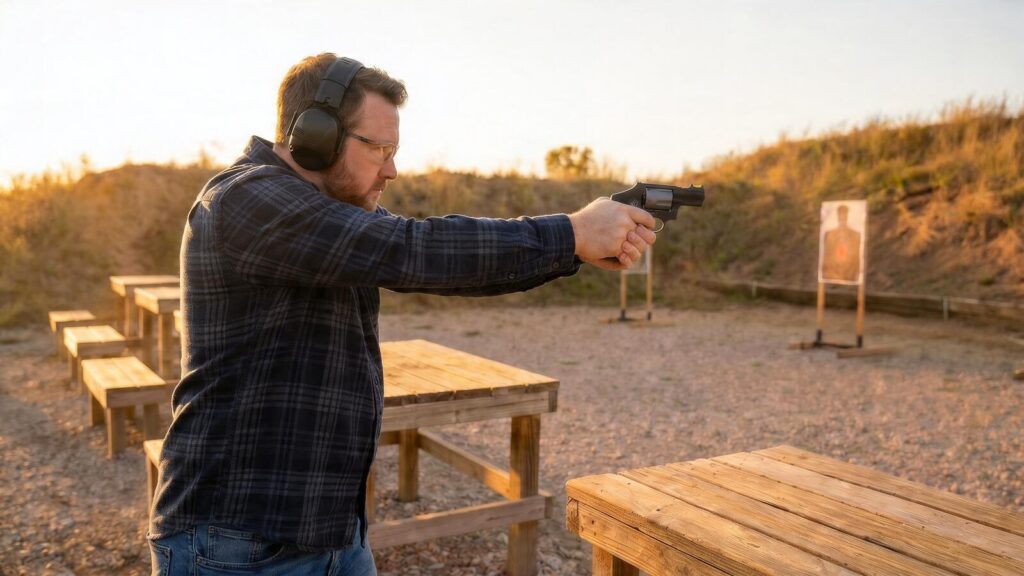
I put 200 rounds through the 340PD over three range sessions. The round count is intentionally lower than most of my reviews because .357 Magnum in an 11.8-ounce revolver is genuinely abusive to shoot in volume. I ran a deliberate mix: 150 rounds of .38 Special +P (representative of daily practice ammo for this gun), 25 rounds of .357 Magnum 125gr (the load I’d actually carry), and 25 rounds of .357 Magnum 158gr (to see what heavy full-power loads feel like). Anyone who tells you they shot 500 rounds of .357 through a 340PD in one sitting either didn’t or is exaggerating.
Ammunition Log
- Winchester USA .38 Special 130gr FMJ: 50 rounds
- Federal American Eagle .38 Special 130gr FMJ: 50 rounds
- Speer Gold Dot .38 Special +P 135gr Short Barrel JHP: 30 rounds
- Federal HST Micro .38 Special +P 130gr JHP: 20 rounds
- Hornady Critical Defense .357 Magnum 125gr FTX: 25 rounds
- Federal Premium .357 Magnum 158gr JHP: 25 rounds
Reliability Results
Zero malfunctions across all 200 rounds. No light strikes, no failures to extract, no cylinder timing issues, no ejector problems. This is a Smith & Wesson J-frame revolver. Pull the trigger, the gun fires. There’s basically nothing else to say about reliability on this platform unless the gun arrives defective from the factory . And mine didn’t. Ejection of fired cases was positive in every instance, including the heavily-pressured .357 Magnum loads where sticky extraction is a common concern on titanium cylinders.
Accuracy Testing
I ran accuracy testing at defensive distances: 3, 5, and 7 yards. At 3 yards shooting unsupported, I was able to keep all five rounds in a 2-inch group with .38 Special. At 5 yards, groups opened to roughly 3 inches. At 7 yards, I averaged 4 to 5 inches, which is on the edge of what I’d call defensively acceptable. Push past 7 yards and the combination of small sights, heavy DAO trigger, and short sight radius makes tight groups difficult for most shooters.
With .357 Magnum loads, groups opened by another inch or so, not because the gun is less accurate but because anticipating that recoil is nearly impossible. You’re fighting a flinch reflex the whole time. The HI-VIZ front sight helps . It’s quick to acquire under stress. But the trigger mashing required to break the DAO pull without moving the gun, combined with the muzzle whip from a 12 oz revolver firing magnums, means most shooters won’t achieve precision with this platform.
Performance Testing Results
Reliability: 10/10
Zero malfunctions across 200 rounds of mixed .38 Special and .357 Magnum. This is the exact outcome I expect from an S&W J-frame, and the 340PD delivered it. The titanium cylinder didn’t cause the bullet pullout issues some older scandium S&Ws developed (addressed later in Known Issues). The internal hammer fired every round on the first strike. Revolvers are famously reliable if built correctly . This one is.
Accuracy: 5/10
Average for a 1.875-inch barrel snub-nose with fixed sights and a heavy DAO trigger. Defensive-distance accuracy (3-7 yards) is adequate. Anything past that and the limitations of the platform show up quickly. The HI-VIZ fiber optic helps speed up target acquisition but doesn’t overcome the short sight radius.
Concealability: 10/10
This is why you buy this gun. At 11.8 ounces empty and 6.31 inches overall, the 340PD disappears in a front pocket with a DeSantis Nemesis or Sticky Holster pocket holster. It rides in an ankle holster comfortably during long workdays. Most compact semi-autos in this role (Ruger LCP, S&W Bodyguard) weigh 10-12 oz and are a little smaller, but none of them shoot .357 Magnum. For deep concealment with the option of serious horsepower, nothing beats it.
Recoil Management: 4/10
With .38 Special standard pressure, the 340PD is manageable but snappy. With .38 Special +P, it’s notably unpleasant but controllable. With .357 Magnum, it’s punishing. Extended .357 shooting will leave your hand sore, your palm abraded where the grip digs in, and your wrist questioning your life choices. This is a gun you practice with .38 Special and carry with +P, and only load .357 for specific threat environments. Anyone who carries full-power .357 in a 340PD is tougher than me.
Fit and Finish: 8/10
Standard S&W quality. Anodizing is even, the titanium cylinder’s finish is consistent, the barrel crown is clean, the internals are smooth. Cylinder lockup is tight and end-shake is zero. Small cosmetic nits: the front sight fiber optic rod sits in a small groove that could catch pocket lint, and the cylinder release stud is smaller than I’d like for reloading under stress. Neither affects function, and both are typical for a gun this size.
How I Tested the S&W Model 340PD
Testing ran over three range sessions spanning about a month. 200 rounds total, broken between .38 Special (training and carry-equivalent), .38 Special +P (realistic carry load), and .357 Magnum 125gr and 158gr (full-power stress test). Accuracy measured at 3, 5, and 7 yards shooting unsupported. Trigger pull checked with a Lyman digital gauge. Cylinder-frame gap measured with automotive feeler gauges. The rest of the review incorporates long-term carry observations from daily pocket carry in a DeSantis Nemesis holster over several months, plus community feedback from revolver-focused forums.
Known Issues and Common Problems
Bullet Pullout Restriction (Under 120gr)
This is the one hard restriction on the 340PD, and it’s worth taking seriously. S&W explicitly warns against loading bullets lighter than 120 grains in any scandium/titanium J-frame. The reason is bullet pullout: under the extreme recoil of .357 Magnum in an ultra-light gun, unfired rounds remaining in the cylinder can have their projectiles pulled forward out of the case by inertia. A bullet that moves forward far enough will protrude from the cylinder face and lock the gun up. Heavier bullets have more crimp surface area and resist this better. If you see bullets labeled 110gr or 90gr on the shelf, keep walking. 125gr minimum for .357 Magnum, 130gr minimum for .38 Special. This is not optional.
Painful Recoil With Full-Power Loads
Covered extensively elsewhere in this review, but worth reinforcing: full-power .357 Magnum in the 340PD is legitimately painful. This is not a complaint about the gun . It’s physics acting as designed. The 340PD exists to make .357 Magnum available in a pocket-carry package, not to make it comfortable. Most experienced 340PD owners treat .357 as an emergency load and practice with .38 Special. That’s the smart way to own this gun.
Short Ejector Rod
At 1.875 inches of barrel, the ejector rod is short and doesn’t fully push cases clear of the cylinder on a weak ejection stroke. Under stress with gloves, sticky or over-pressure brass can leave cases partly seated. The fix is technique: tilt the muzzle skyward, slap the ejector rod firmly (not gently), and the cases will clear. Practice this. A speed reload with a 340PD is not quick even under ideal conditions; with fumbled ejection, it’s slow.
Price Relative to Capability
At $950-$1,100 street, the 340PD is genuinely expensive for a 5-shot revolver. A Ruger LCR in .357 runs $600-$700 and offers a better trigger. A 642 in .38 Special runs $400-$475 and is more comfortable to shoot. The 340PD’s entire justification is weight. If the 3-6 ounce savings versus an LCR doesn’t change whether you carry, the LCR is objectively a better buy for most people. Be honest about whether you need every ounce of weight savings.
What Owners Are Saying
I pulled owner feedback from revolver-focused forums and concealed carry threads. Here’s a representative snapshot of what long-term 340PD owners actually report.
“Carried mine daily for seven years. I’ve probably put 300 rounds of .38 through it and exactly 12 rounds of .357. The .357 loads live in the cylinder for defensive carry and get rotated out annually.” (r/CCW user)
“The HI-VIZ front sight was worth the upgrade over the plain-front 340. I’d never go back to a black ramp on a snub-nose.” (Smith & Wesson Forum member)
“Got the grip swapped to a Hogue Bantam. Cost me twenty bucks and the recoil is a full tier more manageable. Don’t try to shoot this thing with the factory boot grip.” (The High Road forum poster)
“Paid $1,050 in 2024. Would I pay it again? Yeah, because the weight savings over my LCR is the difference between carrying in summer khakis and leaving the gun at home. That math works for me.” (Revolver Guy commenter)
“Don’t shoot it with Dan Wesson 110gr .357 loads. Ask me how I know.” (Ruger Forum refugee (a reminder on the bullet pullout warning))
“Best snub-nose I’ve ever owned. Only regret is not adding Crimson Trace Lasergrips sooner . Game changer for low-light practice.” (Long-term owner quoted on pistol-forum.com)
Parts, Accessories, and Upgrades
The 340PD’s aftermarket isn’t as deep as Glock’s, but the essentials are all readily available. Here’s the upgrade list I’d work through in order of impact per dollar:
| Upgrade Category | Recommended Component | Why It Matters | Cost Estimate |
|---|---|---|---|
| Grip | Hogue Bantam rubber grip | Adds ~0.5 inch to grip length, dramatically softens felt recoil with minimal concealment penalty | $20-$30 |
| Grip (premium) | Crimson Trace Lasergrips LG-105 | Low-light aiming solution for a gun with limited sight options; purpose-built for J-frames | $200-$270 |
| Spring Kit | Wolff Reduced-Power Mainspring | Drops DA pull by ~1.5 lb, still reliably ignites standard primers | $12-$18 |
| Pocket Holster | DeSantis Nemesis or Sticky MD1 | Breaks up gun outline, retains position during draw, inexpensive | $25-$40 |
| Ankle Holster | Galco Ankle Glove | Comfortable for extended wear, rigid retention strap, designed for J-frames | $70-$90 |
| Speed Loader | HKS 36-A or Safariland Comp I | Fastest reload option for the J-frame platform, fits pocket carry profile | $10-$18 |
| Defensive Ammo (.38 Spl +P) | Speer Gold Dot Short Barrel 135gr | Tuned for short barrels, proven defensive performance, manageable recoil | $25-$35 per box |
The grip swap and Wolff spring kit together run under $40 and transform the shooting experience more than any other upgrade. If you’re going to carry this gun, budget for the Hogue Bantam on day one. The Crimson Trace Lasergrips are optional but genuinely useful if you carry in low-light environments. Source upgrades from Brownells or Palmetto State Armory . Both regularly stock S&W parts.
The Verdict
S&W Model 340PD is a purpose-built tool for one specific job: being the lightest possible .357 Magnum-capable revolver you can carry every day. At that job, nothing else comes close. It’s not a range gun, it’s not a fun gun, and it’s not a gun you’ll enjoy putting hundreds of rounds through. It’s an insurance policy that weighs less than a can of soda.
If you’re the kind of person who carries every day regardless of outfit, season, or convenience, and weight is the factor that determines whether you carry or leave the gun at home, the 340PD is the answer. Load it with .38 Special +P, put it in a pocket holster, and forget it’s there until the worst day of your life, when you’ll be very glad it is.
Final Score: 7.5/10
Best For: Deep concealment pocket carry where absolute minimum weight is the priority. Backup gun duty. Backcountry carry where .357 Magnum capability is wanted in the smallest possible package. Senior citizens who need a lightweight revolver (with .38 Special loads).
FAQ: S&W Model 340PD
Is the S&W Model 340PD worth buying in 2026?
Based on our testing, the S&W Model 340PD delivers solid performance for its price point. Read our full review above for detailed impressions after extensive range time including accuracy, reliability, and ergonomics assessment.
What caliber is the S&W Model 340PD?
Check the specs section at the top of this review for the exact caliber, capacity, barrel length, and other specifications. We list every relevant spec from the manufacturer.
How reliable is the S&W Model 340PD?
We put hundreds of rounds through the S&W Model 340PD during our testing. Our reliability results, including any malfunctions or issues encountered, are detailed in the review above.
What is the street price for the S&W Model 340PD?
Street prices vary by retailer. Use our live pricing cards above to compare current prices from 200+ online retailers and find the lowest price available right now.
Who should buy the S&W Model 340PD?
We cover the ideal buyer profile in our Best For section for this gun. It depends on your intended use, whether that is concealed carry, home defense, range shooting, or competition.
What are the main pros and cons of the S&W Model 340PD?
We list detailed pros and cons based on hands-on testing in the review above. The key strengths and weaknesses are covered honestly, not just marketing talking points.
How does the S&W Model 340PD compare to competitors?
We compare the S&W Model 340PD against its direct competitors throughout the review, covering price, features, and performance differences that matter for real-world use.
Where is the best place to buy the S&W Model 340PD?
Check our live pricing cards above for current prices from trusted online retailers. Our gun deals page tracks the best discounts across 15+ stores and updates daily.
Related .357 Magnum & Carry Guides
Looking for the best prices? Check our gun deals page and price comparison tool to compare prices from 200+ retailers before you buy.
4,154+ Gun & Ammo Deals
Updated daily from 200+ top retailers. Filter by category, caliber, action type, and price.
Related Guides