
Affiliate disclosure: This article contains affiliate links. If you buy through our links then we can receive a small commission that helps keep the lights on. You don’t pay anything more.
Quick Answer: Nevada is a “shall-issue” concealed carry state in 2026 with no constitutional carry. Concealed Firearm Permits (CFPs) are issued through county sheriffs at age 21+ after a state-approved training course and fingerprinting. The fee is approximately $98 (varies by county).
Nevada has no statewide assault weapon ban, no magazine capacity limit, no waiting period (post-Background Check Act 2019 for private sales), and no statewide gun registration. Open carry of long guns and handguns is legal at age 18+ without a permit. Nevada passed universal background check requirements in 2019 (private sales must use an FFL).
The biggest mistake new Nevada gun owners make is open-carrying in Las Vegas casinos, which is private property and posted off-limits. Nevada honors out-of-state CCW permits from over 30 states. Clark County (Las Vegas) had additional registration requirements for “blue card” handguns historically, but those rules were repealed in 2015.
Last updated July 2026 · By Nick Hall, CCW instructor familiar with Nevada’s shall-issue CCW, the 2019 universal background check law, the NRS 33.500 red flag law, and the ghost gun ban upheld by the Nevada Supreme Court
Disclaimer: This is an editorial round-up of Nevada gun laws. We do our best to make sure it’s correct, but do not rely on this as legal advice. If you’re unsure about anything, consult a lawyer.
Best-priced firearms across 200+ retailers · Updated every 4 hours
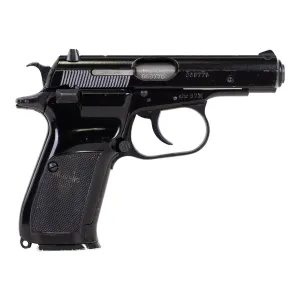
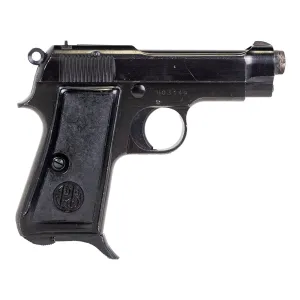
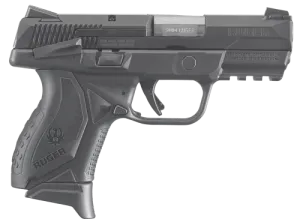
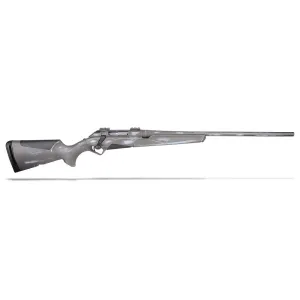
![FN 509 COMPACT TACTICAL [BLK]](https://www.usa-gun-shop.com/wp-content/uploads/ugs/img-cache/bfac51bce9df63fbafb86e7af1dab452.webp)

Looking for a brick-and-mortar shop in Nevada? See our best gun stores in Nevada guide for verified FFL dealers, ranges, and gunsmiths near you.
Best-priced ammunition across 200+ retailers · Updated every 4 hours


Table of Contents
How we tested: Every pick here is ranked against our testing methodology. Minimum round counts, accuracy and reliability protocols, the failures that disqualify a gun.
Intro
TL;DR: Nevada gun laws in 2026 are a mix of permissive and restrictive. Nevada is a shall-issue state with a CCW permit required for concealed carry under NRS 202.3657. Universal background checks on private sales since January 2020 (NRS 202.2547). Red flag law (high-risk protection orders) under NRS 33.500 effective January 2020. Ghost gun ban upheld by Nevada Supreme Court. No magazine limits, no assault weapons ban. Stand Your Ground under NRS 200.120, 200.130. Open carry legal at 18+.
Nevada gun laws place the state in a genuinely mixed category. Open carry has been legal since statehood, concealed carry is shall-issue post-Bruen, no magazine cap, no assault weapons ban, and Stand Your Ground is codified. A series of 2019-2022 legislative and voter-led changes to Nevada gun laws added universal background checks, a red flag law (high-risk protection orders), and a ghost gun ban that the Nevada Supreme Court has upheld.
The 2019 universal background check law (enacted via SB 143, tracing back to voter-approved Question 1 of 2016) took effect January 2, 2020. It requires private party gun sales and transfers to go through a federally licensed firearms dealer for a NICS check. Family transfers, executor transfers, and temporary range loans are exceptions. The red flag law (NRS 33.500 et seq.) went into effect the same day.
If you’re a Nevada resident, moving here, or visiting, this page covers the 2026 rules with statute citations and official sources.
Nevada Gun Laws: The Highlights
TL;DR: Nevada gun laws allow shall-issue CCW at 21+, open carry without permit at 18+, universal background checks on private sales, red flag law, ghost gun ban, no magazine or AWB restrictions, Stand Your Ground, partial state preemption.
- Shall-issue Concealed Carry Weapon (CCW) permit under NRS 202.3657. Requires approved training course, live-fire qualification, fingerprints, and background check. Valid 5 years.
- Universal background checks on all private firearm transfers under NRS 202.2547. Effective January 2, 2020.
- Red flag law (Order for Protection Against High-Risk Behavior) under NRS 33.500 et seq. Effective January 1, 2020.
- Ghost gun ban (unserialized firearms, 80% receivers) under NRS 202.3635 et seq. Effective January 1, 2022. Upheld by Nevada Supreme Court.
- Bump stock ban under NRS 202.275. Post-Las Vegas shooting legislation.
- No state magazine capacity limit, no assault weapons ban, no firearm registration.
- Stand Your Ground under NRS 200.120 and NRS 200.130. No duty to retreat outside the home when you have a legal right to be present.
- Castle Doctrine protects dwelling, occupied vehicle. Statutory presumption of reasonable belief under NRS 200.120.
- Partial state preemption. Clark County historically retained some authority, though LB 77-style preemption debates continue.
For the official state resource, see the Nevada Department of Public Safety and your local county sheriff’s CCW office.
Key Information at a Glance
Key Information: Nevada Gun Laws at a Glance (2026)
Fast answers first, with official sources at the bottom.
| Permitless Carry | No, CCW required for concealed |
|---|---|
| Open Carry | Legal without permit, 18+ |
| Concealed Carry | Shall-issue CCW via county sheriff, 21+ |
| Background Checks | Universal on private transfers (NRS 202.2547) |
| Purchase Permit | Not required |
| Waiting Period | None |
| Purchase Age | 21+ handguns, 18+ long guns |
| Firearm Registration | Not required (Clark County handgun registration repealed) |
| Magazine Capacity Limits | None |
| Assault Weapon Ban | No (bump stocks banned) |
| Ghost Gun Ban | Yes (NRS 202.3635, upheld by Nevada Supreme Court) |
| Red Flag Law | Yes (NRS 33.500, effective Jan 2020) |
| Stand Your Ground | Yes (NRS 200.120, 200.130) |
| Castle Doctrine | Yes (statutory presumption) |
| State Preemption | Partial |
| NFA Items (Suppressors/SBRs) | Legal with federal ATF approval |
Concealed Carry Weapon (CCW) Permit
TL;DR: Nevada gun laws include a shall-issue CCW under NRS 202.3657, administered by county sheriffs. Age 21+, 8-hour training course with classroom instruction on Nevada law and live-fire qualification. Fingerprints, background check, and roughly $80-$130 in fees. Valid 5 years.
Nevada requires a CCW permit to carry a concealed firearm in public. Following the 2022 Bruen decision, Nevada is shall-issue, sheriffs must issue permits to qualified applicants who meet statutory requirements. Requirements include:
- Age 21 or older
- Nevada residency or U.S. armed forces member stationed in Nevada (non-residents with qualifying ties can also apply)
- State-approved training course covering firearm safety, Nevada law, and lawful use of force. Includes classroom instruction and live-fire qualification at a shooting range.
- Fingerprints
- Background check
- No disqualifying criminal history, recent drug or alcohol offenses, or involuntary commitments
Fees vary by county but typically total $80-$130 for the initial permit. The CCW is valid for 5 years and renewable.
Universal Background Checks (NRS 202.2547)
TL;DR: Effective January 2, 2020. All private firearm transfers between unlicensed persons must go through a federally licensed firearms dealer (FFL) for a NICS background check. Family transfers, executor transfers, and temporary range loans are exempted.
Nevada’s universal background check law was enacted by the 2019 legislature (SB 143), tracing back to voter-approved Question 1 of 2016. The law requires all private firearm transfers between unlicensed persons to go through an FFL for a NICS check. Both parties must be present at the dealer.
Exceptions include:
- Transfers between immediate family members (spouse, parent, child, grandparent, grandchild, sibling, aunt/uncle, niece/nephew, first cousin)
- Transfers from executor administering an estate
- Temporary transfers at shooting ranges or while hunting
- Transfers to law enforcement or correctional officers
- Temporary transfers in self-defense situations
Failure to comply with the universal background check requirement is a gross misdemeanor on the first offense and a felony on subsequent offenses.
Red Flag Law: High-Risk Protection Orders
TL;DR: Nevada’s red flag law under NRS 33.500 et seq. took effect January 1, 2020. Family members, household members, and law enforcement can petition courts for an Order for Protection Against High-Risk Behavior, temporarily removing firearms.
Under Nevada’s Order for Protection Against High-Risk Behavior (commonly called a red flag order or ERPO), a family member, household member, or law enforcement officer can petition a court for:
- An ex parte (emergency) order lasting up to 7 days, based on sworn affidavit and evidence of imminent risk
- An extended order after a hearing, lasting up to 1 year and renewable
The respondent is prohibited from possessing firearms for the duration of the order. Law enforcement takes custody of firearms during the order period. The respondent has the right to appear at the extended-order hearing with counsel and contest the petition.
Ghost Gun Ban
TL;DR: Nevada’s ghost gun ban under NRS 202.3635 et seq. took effect January 1, 2022. Prohibits manufacturing, assembling, or possessing unserialized firearms and 80% receivers. Upheld by the Nevada Supreme Court in 2024.
Nevada’s 2021 ghost gun legislation prohibits:
- Manufacturing or assembling unserialized firearms
- Possessing, selling, transferring, purchasing, transporting, or receiving unserialized firearms
- Possessing or selling unserialized unfinished frames and receivers (80% receivers)
Earlier firearms made before serialization was required are generally grandfathered for personal use. The Nevada Supreme Court unanimously upheld the ghost gun ban as constitutional in 2024, reversing a lower court ruling that had struck it down as unconstitutionally vague.
Who Can Carry a Gun in Nevada?
TL;DR: 18+ for open carry and long guns, 21+ for concealed carry with a Nevada CCW permit. Must not be federally prohibited under 18 U.S.C. § 922(g).
Nevada’s age rules track the common pattern. Open carry of handguns is legal at 18+. Concealed carry requires a Nevada CCW permit, which in turn requires age 21+. Long gun possession and open carry at 18+. Federal prohibited-person rules apply.
Purchasing a Firearm in Nevada
TL;DR: No state purchase permit. Federal NICS at FFL dealers. Universal background check on private transfers (must go through FFL). No state waiting period. Age 21+ for handguns at FFL, 18+ for long guns.
Here’s the step-by-step for a first-time Nevada buyer:
- Choose a licensed dealer or private seller. For local shops, see our best gun stores in Nevada guide.
- For private sales: Both parties must be present at an FFL for background check under NRS 202.2547. Family and some narrow exceptions do not require FFL intermediation.
- Complete ATF Form 4473. Required at FFL dealers.
- Pass NICS check. Federal requirement. Nevada is a NICS state.
- Take delivery. No state waiting period. Same-day pickup once NICS clears.
- Optional: Apply for CCW. Provides reciprocity and NICS bypass at dealers.
Private sales between immediate family members are exempt from the NICS requirement but still subject to federal prohibited-person rules.
State Preemption and Local Rules
TL;DR: Nevada has partial state preemption. Clark County previously required handgun registration (since repealed under state law) and retains some administrative authority. Local ordinances cannot impose licensing schemes or registration requirements.
Nevada’s preemption framework is less absolute than many Western states. Clark County historically required handgun “blue card” registration, which was eliminated by state legislation. Today, local governments cannot create their own concealed carry permit schemes, magazine limits, or assault weapons bans, but they retain authority over discharge within city limits and restrictions on specific publicly owned properties.
Federal Law Still Sets the Ceiling
TL;DR: Nevada’s laws operate inside federal constraints. Federal prohibited-person rules, NFA rules, and gun-free federal buildings apply regardless of state law.
Federal prohibited-person rules under 18 U.S.C. § 922(g) apply. Federal buildings remain gun-free zones under 18 U.S.C. § 930. NFA items require ATF approval through the Form 4 process.
Nevada Gun Laws for Out-of-State Visitors
Nevada honors concealed carry permits from states that meet its reciprocity criteria under NRS 202.3688, maintained by the Nevada Department of Public Safety. Without a recognized permit, visitors cannot carry concealed in Nevada. Open carry is legal for any adult 18 or older who can lawfully possess a firearm, residents and visitors alike. Nevada’s universal background check requirement applies to any firearm transfer conducted in the state, including those involving out-of-state parties.
Reciprocity: Out-of-State Permits
Nevada Concealed Carry at a Glance
Constitutional carry: No
Honors non-resident permits: Selective — meets certain state criteria
Classification: Honors permits from states with fingerprint requirement
Map base: Wikimedia Commons (CC BY-SA). Color overlay and reciprocity data by USA Gun Shop.
Can I Carry in Nevada?
Select your home state to see if your permit authorizes carry in Nevada.
TL;DR: Nevada recognizes concealed carry permits from states with equivalent training requirements. The Nevada CCW is recognized in approximately 30 states.
Under NRS 202.3689, Nevada recognizes concealed carry permits from states whose training and background-check standards are substantially similar to Nevada’s. The Nevada Department of Public Safety publishes an official reciprocity list.
Non-residents can apply for a Nevada CCW. The Nevada CCW is recognized in roughly 30 other states.
States That Recognize the Nevada CCW
| Full Reciprocity (~30) | NOT Recognized In |
| Alabama, Alaska, Arizona, Arkansas, Colorado, Florida, Georgia, Idaho, Indiana, Iowa, Kansas, Kentucky, Louisiana, Michigan, Mississippi, Missouri, Montana, Nebraska, New Mexico, North Carolina, North Dakota, Ohio, Oklahoma, Pennsylvania, South Dakota, Tennessee, Texas, Utah, Vermont, West Virginia, Wisconsin, Wyoming | California, Connecticut, Delaware, Hawaii, Illinois, Maine, Maryland, Massachusetts, Minnesota, New Hampshire, New Jersey, New York, Oregon, Rhode Island, South Carolina, Virginia, Washington, Washington D.C. |
Reciprocity is subject to change. Verify through the NRS Chapter 202 and Nevada Department of Public Safety before traveling.
Where You Can’t Carry
TL;DR: Schools, courthouses, police stations, jails, state Capitol, airports (secured areas), federal buildings, some casinos, and posted private property. Full list in NRS 202.265 and NRS 202.3673.
Prohibited Places in Nevada
Nevada requires a CCW permit for concealed carry. Prohibited places under NRS 202.265 and NRS 202.3673 apply to all carriers.
- K-12 schools and school grounds
- Colleges and universities (CCW permit carriage typically requires institution permission)
- Daycare facilities
- Courthouses and courtrooms
- State and local public buildings with metal detectors or "no firearms" notice
- Police stations and detention facilities
- Airport secure areas per TSA
- Federal courthouses, post offices, agency offices
- Posted private property where owner has communicated a no-firearms policy
Under Nevada law, concealed carry with a CCW permit is prohibited in:
- K-12 schools, school buses, and school grounds
- College and university buildings (varies by institution)
- Child care facilities
- Courthouses and courtrooms
- Police stations and jails
- Nevada State Capitol and state government buildings
- Secured areas of commercial airports
- Certain casinos and gaming properties (by property-owner posting)
- Federal buildings under 18 U.S.C. § 930
- Posted private property where the owner has communicated a no-firearms policy
Carrying while intoxicated is prohibited independently under NRS 202.257 and can trigger additional charges.
Nevada Self-Defense Laws: Stand Your Ground and Castle Doctrine
TL;DR: Stand Your Ground codified in NRS 200.120 and 200.130. No duty to retreat anywhere you have a legal right to be. Castle Doctrine with statutory presumption of reasonable belief when defending home or occupied vehicle.
NRS 200.120 Nevada Justifiable Homicide and Stand Your GroundJustifiable homicide is the killing of a human being in necessary self-defense, or in defense of an occupied habitation, an occupied motor vehicle or a person, against one who manifestly intends or endeavors to commit a crime of violence, or against any person or persons who manifestly intend and endeavor, in a violent, riotous, tumultuous or surreptitious manner, to enter the occupied habitation or occupied motor vehicle of another...A person is not required to retreat before using deadly force as provided in subsection 1 if the person: (a) Is not the original aggressor; (b) Has a right to be present at the location where deadly force is used; and (c) Is not actively engaged in conduct in furtherance of criminal activity at the time deadly force is used.
Nevada’s self-defense statutes at NRS 200.120 (justifiable homicide) and NRS 200.130 (bare fear insufficient) establish Stand Your Ground. Outside the home, Nevada law provides that a person has no duty to retreat before using lethal force if:
- You are not the original aggressor
- You have a legal right to be at the location
- You are not actively engaged in criminal activity
Lethal force is justified when you reasonably believe it necessary to prevent imminent death, great bodily harm, sexual assault, or the commission of a forcible felony.
Castle Doctrine provides a statutory presumption of reasonable belief when defending against an unlawful intruder in your home or occupied vehicle. This shifts the burden to the prosecution to prove your force was unreasonable.
Magazine Capacity and Assault Weapons
TL;DR: No state magazine capacity limit. No assault weapons ban. Bump stocks prohibited under NRS 202.275 following the 2017 Las Vegas shooting.
Nevada imposes no state-level restrictions on magazine capacity or “assault weapon” features. Standard 30-round AR-15 magazines, 17-round Glock magazines, and drum magazines are all legal for possession and use. Nevada has never passed an assault weapons ban.
The one exception is bump stocks. NRS 202.275 prohibits bump stocks following the 2017 Las Vegas Route 91 Harvest Festival shooting. Federal law also prohibits bump stocks under current ATF interpretation, though that rule has faced legal challenges.
NFA Items: Suppressors, SBRs, and Machine Guns
TL;DR: NFA items (suppressors, SBRs, SBSs, pre-1986 machine guns) are legal in Nevada with federal ATF approval. No additional state-level restrictions.
Nevada does not add state-level restrictions to federal NFA items. Suppressors are legal for ownership and hunting. SBRs, SBSs, and lawfully registered pre-1986 civilian machine guns are legal with the federal ATF Form 4 process and federal tax stamp, now $0 for suppressors, SBRs, SBSs, and AOWs (down from $200) since January 1, 2026, though machine guns and destructive devices still carry the $200 tax.
Nevada Suppressor Facts & Figures
| Suppressor ownership | Legal with federal ATF registration (no state NFA layer) |
| Hunting with a suppressor | Legal to hunt with (no state suppressor restriction) |
| State suppressor permit | None required beyond the federal Form 4 |
| 2026 federal tax stamp | $0 (down from $200) |
Thinking about buying a suppressor? See our guides on how to buy a suppressor in 2026, the best suppressors for every caliber, and the $0 tax stamp explained.
Recent Changes (2024-2026)
TL;DR: Nevada Supreme Court upheld the ghost gun ban in 2024. No major new firearms legislation in the 2024 or 2025 sessions. The 2019 universal background check, 2020 red flag law, and 2022 ghost gun ban all remain in force.
- 2024: Nevada Supreme Court unanimously upheld NRS 202.3635 ghost gun ban as constitutional, reversing a lower court ruling.
- 2025-2026: Minor administrative updates. No major legislative changes to the CCW framework or purchase rules.
For current legislative tracking, see the Nevada Legislature.
Red Flag Law / Ghost Gun Ban Are the Main Restrictions
Nevada sits in the middle of the gun-law spectrum. The positives: no magazine cap, no assault weapons ban, shall-issue CCW, strong Stand Your Ground with statutory presumption in home and vehicle defense. The restrictions: universal background checks on private transfers, red flag law, ghost gun ban, and some sensitive-places rules.
Our Take
TL;DR: Nevada is a mixed state with meaningful positives (no mag limit, no AWB, Stand Your Ground) and meaningful restrictions (universal background checks, red flag law, ghost gun ban). Get a CCW for carry authority and reciprocity. Understand the private-transfer rules before selling or buying from another person.
For a regulatory comparison, Pacific-coast neighbor Oregon gun laws require a CHL and operate under SB 243 of 2025 restrictions including a 72-hour waiting period.
Practical takeaways for a Nevada gun owner:
- Get a CCW. It’s shall-issue, reasonably priced, and the only legal path to concealed carry outside your home or vehicle.
- Learn the universal background check exceptions. Family transfers and temporary range loans are the main ones that don’t require FFL intermediation.
- Understand the red flag law. Family or household members can petition without your knowledge.
- Don’t mess with ghost guns or 80% receivers. The Nevada Supreme Court upheld the ban, and it has teeth.
- Use the Stand Your Ground framework responsibly. NRS 200.120 provides strong protection for home and vehicle defense.
Bookmark NRS Chapter 202 and NRS Chapter 33 for current law.
Nevada-Specific Carry Questions
What does the Nevada Concealed Firearm Permit require?
Nevada is shall-issue for the Concealed Firearm Permit, administered by county sheriffs. The application requires a state-approved firearm safety course covering both revolver and semi-auto operation, a background check, and fingerprinting. The permit must be renewed every five years with a refresher requirement, and Nevada recognizes a separate process for non-resident applicants.
Does Nevada Stand Your Ground apply outside the home?
Yes. Nevada codified Stand Your Ground under NRS 200.120, removing the duty to retreat for a defender who is in a place they have a right to be, who is not the original aggressor, and who is using proportionate force. Castle Doctrine continues to apply inside the home with a rebuttable presumption that the defender acted reasonably.
What did Nevada Question 1 in 2016 require for private firearm transfers?
Nevada Question 1, the Background Check Initiative, required private firearm transfers to be processed through a federally-licensed dealer with a background check. The initiative passed by a narrow margin and has been the subject of subsequent enforcement and statutory clarification, including the 2019 SB 143. The current framework requires most private transfers between unrelated parties to be processed through an FFL.
Can I carry concealed on the Las Vegas Strip with a Nevada CFP?
Yes, under state law, but every casino property on the Strip enforces a no-carry policy under private-property authority. A casino can refuse entry to a concealed carrier and request the carrier leave. Permit holders should expect to check firearms with hotel security before entering most Strip casino properties, with retrieval at check-out.
What to Carry
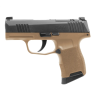
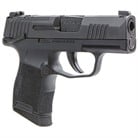
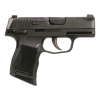
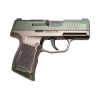
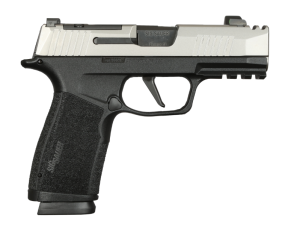
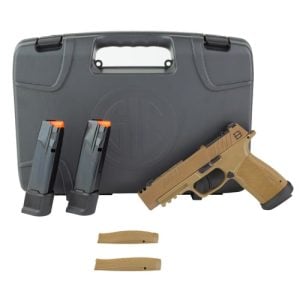
Now that you have the carry rules down, here is the gun most people reach for. The Sig Sauer P365 is the best-selling concealed-carry pistol in the country, slim enough to disappear under a t-shirt yet holding 10+1 or more.
Frequently Asked Questions
Does Nevada require a permit for concealed carry?
Yes. Nevada requires a Concealed Carry Weapon (CCW) permit under NRS 202.3657 to carry a concealed firearm. It is shall-issue through the county sheriff, requires age 21+, an approved training course with classroom instruction on Nevada law and live-fire qualification, fingerprints, and a background check. Fees run $80-$130 and the permit is valid 5 years.
Does Nevada have universal background checks?
Yes, effective January 2, 2020 under NRS 202.2547. All private firearm transfers between unlicensed persons must go through a federally licensed firearms dealer (FFL) for a NICS background check. Exceptions include transfers between immediate family members, transfers by an executor administering an estate, temporary transfers at shooting ranges or while hunting, and temporary transfers in self-defense situations.
Does Nevada have a red flag law?
Yes, effective January 1, 2020. Nevada's Order for Protection Against High-Risk Behavior under NRS 33.500 et seq. allows family members, household members, and law enforcement officers to petition courts to temporarily remove firearms from a person deemed a danger. An ex parte emergency order lasts up to 7 days; a final extended order after a hearing can last up to 1 year and is renewable.
Are ghost guns legal in Nevada?
No. Nevada's ghost gun ban under NRS 202.3635 et seq. took effect January 1, 2022. The law prohibits manufacturing, assembling, possessing, selling, transferring, purchasing, transporting, or receiving unserialized firearms and 80% receivers. The Nevada Supreme Court unanimously upheld the ghost gun ban as constitutional in 2024, reversing a lower court ruling.
Is open carry legal in Nevada?
Yes. Open carry of handguns is legal in Nevada without a permit for any adult 18 or older who can lawfully possess a firearm. The usual prohibited-places rules under NRS 202.265 and NRS 202.3673 still apply, schools, courthouses, police stations, secured airport areas, and posted private property are off-limits regardless of permit status.
Does Nevada have a magazine capacity limit?
No. Nevada has no state-level magazine capacity limit. Standard 30-round AR-15 magazines, 17-round Glock magazines, and drum magazines are all legal for possession and use. Nevada has also never passed an assault weapons ban. Bump stocks are prohibited under NRS 202.275 following the 2017 Las Vegas shooting.
Does Nevada have Stand Your Ground?
Yes. Stand Your Ground is codified in NRS 200.120 and NRS 200.130. You have no duty to retreat before using lethal force in self-defense if you are not the original aggressor, have a legal right to be present, and are not engaged in criminal activity. Lethal force is justified when reasonably believed necessary to prevent imminent death, great bodily harm, sexual assault, or a forcible felony. The Castle Doctrine provides a statutory presumption for home and vehicle defense.
Are suppressors and NFA items legal in Nevada?
Yes. Suppressors, short-barreled rifles (SBRs), short-barreled shotguns (SBSs), and lawfully registered pre-1986 machine guns are all legal in Nevada with proper federal ATF approval through the Form 4 tax-stamp process. Nevada imposes no additional state-level restrictions beyond federal NFA law. Suppressors are legal for hunting in the state.
Explore More States
Alabama Gun Laws (2026): Constitutional Carry, Stand Your Ground & Full Freedom, Alaska Gun Laws, Arizona Gun Laws (2026): Constitutional Carry, No Limits & Stand Your Ground, Arkansas Gun Laws (2026): Constitutional Carry, No Limits & Stand Your Ground, Bruen Decision Explained (2026): NYSRPA v. Bruen, History-and-Tradition Test & Downstream Litigation, California Gun Laws (2026): CCW, AWB, Roster & Everything You Need to Know, Castle Doctrine Explained (2026): All 50 States, Civil Immunity & Presumption of Reasonable Fear, Colorado Gun Laws (2026): 15-Round Cap, SB25-003 Semi-Auto Ban & Red Flag Law, Connecticut Gun Laws (2026): Permits, Carry Rules & Restrictions, Constitutional Carry States (2026): Complete List of 29 Permitless Carry States, Florida Gun Laws (2026): Constitutional Carry, Open Carry & Stand Your Ground, Georgia Gun Laws (2026): Constitutional Carry, No Limits & Full Freedom, Hawaii Gun Laws (2026): Registration, Permits & The Strictest State, Idaho Gun Laws (2026): Constitutional Carry, Stand Your Ground & Full Freedom, Illinois Gun Laws (2026): FOID Card, CCL, AWB & What You Need to Know, Indiana Gun Laws (2026): Constitutional Carry, Free Lifetime License & Stand Your Ground, Iowa Gun Laws (2026): Constitutional Carry, Strict Scrutiny & Full Freedom, Kansas Gun Laws (2026): Constitutional Carry, Stand Your Ground & Full Immunity, Kentucky Gun Laws (2026): Constitutional Carry, CDWL & Stand Your Ground, Louisiana Gun Laws (2026): Constitutional Carry at 18, CHP & Stand Your Ground, Louisiana Lets 18-Year-Olds Carry, Then Won’t Issue Them a Permit, Maine Gun Laws (2026): Constitutional Carry, 72-Hour Wait & Red Flag Law, Maryland Gun Laws (2026): HQL, Wear and Carry Permit, AWB & Sensitive Places, Massachusetts Gun Laws (2026): Chapter 135, LTC, FID & AWB, Michigan Gun Laws (2026): CPL, License to Purchase, Red Flag & Safe Storage, Minnesota Gun Laws (2026): Permit to Carry, Permit to Purchase & Red Flag, Mississippi Gun Laws (2026): Constitutional Carry, Enhanced Permit & Stand Your Ground, Missouri Gun Laws (2026): Constitutional Carry, Lifetime CCW & Stand Your Ground, Montana Gun Laws (2026): Constitutional Carry (HB 102), MCWP & Stand Your Ground, Nebraska Gun Laws (2026): Constitutional Carry (LB 77), CHP, HPC & Castle Doctrine, New Hampshire Gun Laws (2026): Constitutional Carry, PRL & Stand Your Ground, New Jersey Gun Laws (2026): FPIC, PPH, Chapter 131 CCP & Sensitive Places, New Mexico Gun Laws (2026): CHL, Universal Background Checks, HB 129 Status & Article 2 Section 6, New Mexico’s Waiting Period Lost in Court and Still Applies to You, New York Gun Laws (2026): CCIA, Pistol License, SAFE Act & Sensitive Locations, North Carolina Gun Laws (2026): CHP, SB 41 Repeal & Stand Your Ground, North Dakota Gun Laws (2026): Constitutional Carry, Class 1 & Class 2 CWL, Ohio Gun Laws (2026): Constitutional Carry (SB 215), CHL & Stand Your Ground, Oklahoma Gun Laws (2026): Constitutional Carry (HB 2597), SDA License & Make My Day, Oregon Gun Laws (2026): CHL, Measure 114 Status, SB 243 & Sandoval, Pennsylvania Gun Laws (2026): LTCF, PICS, Crawford & 18 Pa.C.S. § 6109, Red Flag Laws by State (2026): Complete List of 21 ERPO States, Rhode Island Gun Laws (2026): Blue Card, Dual Permits, 10-Round Cap & 2026 AWB, South Carolina Gun Laws (2026): Constitutional Carry, CWP & Stand Your Ground, South Dakota Gun Laws (2026): Constitutional Carry, Three-Tier Permits & Stand Your Ground, Stand Your Ground States (2026): Complete List of 38 SYG States, Tennessee Gun Laws (2026): Constitutional Carry, Enhanced HCP & Stand Your Ground, Texas Gun Laws (2026): Constitutional Carry, LTC, Castle Doctrine & Civil Immunity, Universal Background Check States (2026): Complete List of 22 UBC States, Utah Gun Laws (2026): Constitutional Carry, CFP, Stand Your Ground & Reciprocity, Vermont Gun Laws (2026): “Vermont Carry,” Universal Background Check & Magazine Cap, Virginia Gun Laws (2026): CHP, Universal Background Checks & Substantial Risk Order, Virginia Halts Private-Sale Background Checks Again (2026), Washington Gun Laws (2026): CPL, Universal Background Checks, Magazine Cap & 2023 AWB, West Virginia Gun Laws (2026): Constitutional Carry, CHL & Stand Your Ground, Wisconsin Gun Laws (2026): CCL, Castle Doctrine & Reciprocity, Wyoming Gun Laws (2026): Constitutional Carry, CFP, Stand Your Ground & 2A Sanctuary
4,009+ Gun & Ammo Deals
Updated daily from 200+ top retailers. Filter by category, caliber, action type, and price.