
Last updated and checked October 29, 2026 · By Nick Hall
- Treat every gun as loaded
- Point the muzzle in a safe direction
- Keep your finger off the trigger until you’re ready to shoot
- Know your target and what’s beyond
The gear around your gun decides how well you can actually use it. A floppy belt lets the holster tip away and print. A cheap mag pouch drops magazines on the range floor. A soft case with no lock gets your rifle turned away at the airline counter. None of it is glamorous, but it’s the stuff you touch every single time you shoot or carry.
We compare tactical gear from 200+ retailers: gun belts, battle belts, magazine pouches, chest rigs, range bags, backpacks, shooting gloves and rifle cases. Filter by type, brand and price. Below the finder, I’ve laid out what makes a gun belt work, how battle belts and chest rigs differ, what TSA and federal law say about cases, and what the good gear costs at maker prices.
 -42%
 -20%
 -42%
 -40%
 -40%
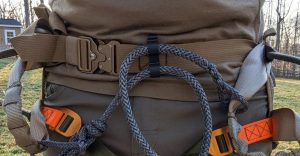
 -87%
Scorpus Double Magazine Pouch for .45/10mm Single-Stack Steel Magazines w/ Swivel Paddle and Belt Black
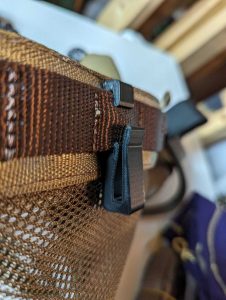
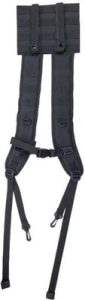
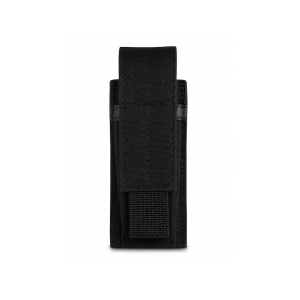
 -31%
 -31%
 -10%
Eberlestock MOLLE Adapter 3X1 2 Pack Black - FA6MB
 -46%
 -46%
 -33%
Table of Contents
What Makes a Gun Belt Work
A gun belt has one job: stay stiff under the weight of a pistol so the holster rides tight against your body. Stiffness comes from layering. Blue Alpha Gear’s EDC belts use “two layers of 1.5″ nylon webbing,” and Ferro Concepts’ EDCB2 adds a polymer core: “doubled up 1.5″ mil-spec webbing with a layer of high-density polyethylene sandwiched in between.” Ares Gear’s Aegis Enhanced uses two layers of its own scuba webbing. A department-store leather belt does none of this, which is why it sags by lunchtime.
| Belt | Width | Maker price |
|---|---|---|
| Blue Alpha Gear Low Profile EDC | 1.5 in, two layers | $44.97 |
| Kore Essentials X Series tactical | 1.5 in, ratchet | $69.95 |
| Ferro Concepts EDCB2 | 1.5 in, polymer core | $81 |
| Nexbelt NTAC-45 | 1.75 in, ratchet | $94.99 |
| Ares Gear Aegis Enhanced | 1.5 in, two layers | $129.99 |
Match the width to your holster before you buy. Most IWB clips and pant loops are built for 1.5 inches, so that’s the default for concealed carry. Ratchet belts like Kore and Nexbelt adjust in small steps instead of fixed holes, which is handy when you carry IWB and need a little more room. More picks in our best gun belts for concealed carry and women’s gun belt guides.
Belt Widths by Use
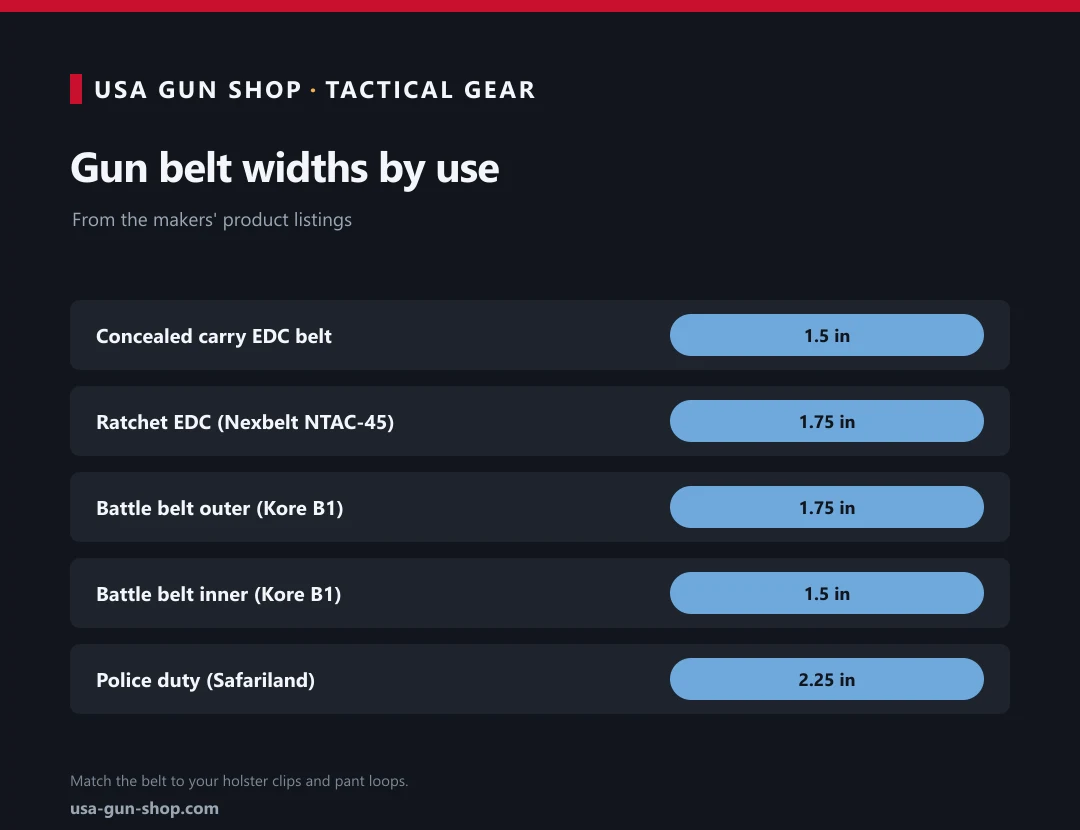
Concealed carry runs 1.5 inches. Battle belts are wider on the outside: Kore’s B1 kit pairs a 1.75 inch outer belt with a 1.5 inch Velcro inner belt that goes through your pant loops. Police duty belts are wider still, with Safariland’s classic duty belts at 2.25 inches. Wider belts spread more weight, but they won’t fit civilian pant loops or most IWB clips, so don’t buy a duty belt for everyday carry.
Battle Belts
A battle belt, or war belt, is an outer belt built to carry a full load: holster, rifle and pistol magazine pouches, a tourniquet and a dump pouch. Most use laser-cut MOLLE for attaching pouches and ride over a Velcro inner belt so they stay put. Kore’s B1 Battle Belt complete kit is $139.95, Blue Alpha Gear’s Battle Belt Lite runs $169.97 to $180.97, and Ferro Concepts’ Bora Belt is $224. You’ll see battle belts at carbine classes and multigun matches, and in home-defense kits that live next to the rifle.
MOLLE and PALS, Explained
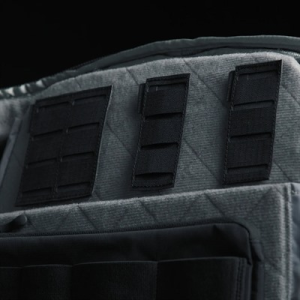
MOLLE is the Army’s modular load-carrying system, and PALS is the webbing grid that pouches weave into. PALS uses rows of 1 inch webbing spaced 1 inch apart, stitched to the backing every 1.5 inches. Any pouch built to that grid fits any MOLLE belt, chest rig, plate carrier or backpack, which is why you can mix brands freely. Laser-cut panels do the same job with slots cut into a single sheet of laminate instead of sewn webbing, and they’re lighter and lower profile.
Magazine Pouches
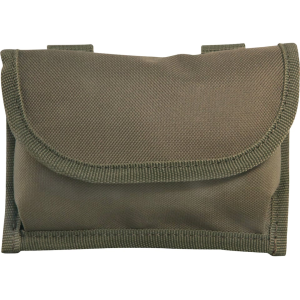
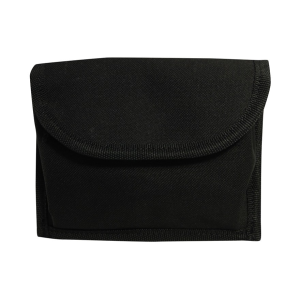
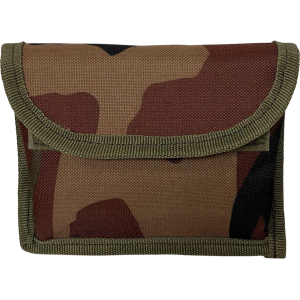
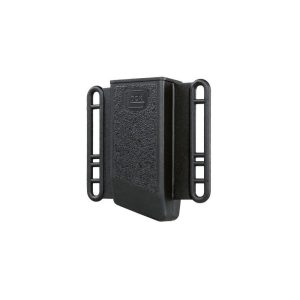
For pistol magazines on a belt, pick a pouch with adjustable retention so a magazine comes out clean on the draw but doesn’t fall out when you run. Esstac’s KYWI pouches use a Kydex insert inside a fabric shell; the Double Pistol GAP KYWI is $36 and fits 9mm, .40 and .45 double-stack magazines. Open-top pouches are faster, flap pouches are more secure, and shock-cord tops sit in between. For rifle magazines, buy a pouch that matches your magazine width, because a pouch built for AR mags won’t hold an AK or .308 magazine.
Chest Rigs
A chest rig carries rifle magazines on your chest instead of your belt. It’s faster to put on than a battle belt, it works sitting in a vehicle, and it doesn’t fight with a backpack hip belt. Spiritus Systems’ Micro Fight Chassis is the one you’ll see at most carbine classes: the Mk6 is $67.95 and the Mk4 is $75.95, and the 34 Alpha rig is $159.95. Belt or chest rig comes down to how you’ll move: a belt is better for running and going prone, a chest rig is better for vehicles and wearing a pack.
Range Bags and Backpacks
A range bag needs a padded spot for pistols, room for ammo and ear and eye protection, and a shape that sits upright on a bench. 5.11’s Range Ready Pro holds 19 liters for $120, and its Range Ready Backpack 38L is $175. Mystery Ranch makes the Go Deep Sling ($140) as a firing bag. For a general backpack, 5.11’s RUSH12 2.0 is $110 and the RUSH24 2.0 lists at $140. Mystery Ranch’s 3 Day Assault is $595; the company traces back to Dana Gleason, who founded Kletterwerks in Bozeman, Montana, in 1975. Our best competition range bags and best range bags for women guides go deeper.
Shooting Gloves
Shooting gloves need thin palms and fingertips so you can still feel the trigger and work a magazine release. Magpul’s Technical Glove 2.0 starts at $34.95, and Mechanix’s M-Pact adds knuckle protection, on sale for $28.99 from the maker. Try your carry gun with gloves on before you depend on them, because some gloves don’t fit inside a small trigger guard.
Hard and Soft Rifle Cases
If you fly or ship a rifle, buy a hard case. Pelican’s 1750 Protector Long Case is $359.95 with foam and carries Pelican’s lifetime guarantee against breakage and defects. The Vault V700 takedown case is $169.95, but Vault cases get a three-year warranty, not the lifetime one. Plano’s Rustrictor All Weather 2 42 inch is $179.99. A padded soft case is fine for driving to the range: 5.11’s 42 inch Double Rifle Case lists at $180. Our best gun cases guide compares more options.
Flying With a Gun
TSA’s rule is short. “Firearms must be unloaded and locked in a hard-sided container and transported as checked baggage only.” You declare the firearm and any ammunition to the airline at the ticket counter, and only you keep the key or combination unless TSA asks for it. Ammunition can ride in the same locked case if it’s packed the way TSA describes, and each airline sets its own quantity limit, so check with your carrier before the trip. That’s why a soft case won’t work for flying, and why a case with real lockable latches matters.
Driving Through Other States
Federal law, 18 U.S.C. 926A, protects you when you drive between two places where you can legally have the gun. The firearm has to be unloaded, and neither the gun nor the ammunition can be readily accessible from the passenger compartment. In a vehicle without a separate trunk, they go “in a locked container other than the glove compartment or console.” A locking hard case does that job. Stop for gas and food, but don’t take the gun out in a state where you can’t legally carry it.
Setting Up a Belt the Right Way
Order matters on a battle belt. Put the holster on your strong side, just behind the hip so your arm doesn’t hit it when you shoulder a rifle. Pistol magazines go on the support side, in front of the hip, with the bullets facing forward. Rifle magazines sit next to them, and the dump pouch rides at the back where it’s out of the way. Keep the front of the belt clear so you can go prone and bend at the waist without pouches digging in.
Then wear it. Do a few reloads and draws at home with an unloaded gun, walk around, sit in your car, and move anything that snags or rubs. A belt that looks right on a table and a belt that works when you’re moving are two different things, and you only find out by wearing it.
Medical Gear Belongs on the Belt
If you train with rifles or carry every day, put a tourniquet where both hands can reach it. Most people who run battle belts mount one in a dedicated pouch or open holder on the belt, and plenty of concealed carriers keep one on the ankle or in a pocket. Range bags should carry a full trauma kit with a tourniquet, pressure dressing and gauze. Medical gear doesn’t help if it’s buried at the bottom of the bag or still in the car, so put it where you’d grab it without thinking. Take a stop-the-bleed class and practice on yourself with both hands.
Home-Defense Kit
A home-defense rifle setup doesn’t need a full plate carrier and a battle belt. A light chest rig or a small bag with two spare magazines, a weapon light on the rifle, a tourniquet and a flashlight covers what you’ll realistically need at 3 a.m. Keep it next to the rifle in the safe so you can grab both in one motion. If you own body armor, the shooting protection hub covers the new NIJ levels.
My Shopping Order
Buy the belt first if you carry, because it fixes more carry problems than any holster swap. Second, a pistol mag pouch on that belt. Third, a range bag that holds everything for one trip. If you own a rifle, add a locking case before you need one at the airport, then a chest rig or battle belt once you start taking carbine classes. Pair it with the right holster from our gun holsters hub and spare magazines from the gun magazines hub.
Facts and Figures

- Checked bags only: firearms unloaded and locked in a hard-sided case, per TSA
- 18 U.S.C. 926A: unloaded and not readily accessible when you drive through, per the statute
- PALS grid: 1 inch webbing rows, 1 inch apart, stitched every 1.5 inches
- Pelican 1750: lifetime guarantee; Vault cases get three years
- 1.5 inches: the standard concealed carry belt width
Related Guides
- Best gun belts for concealed carry
- Best competition range bags
- Best gun cases
- Best hunting backpacks
- 5.11 Tactical
- Gun holsters
Frequently Asked Questions
How wide should a gun belt be?
A 1.5 inch belt is the standard width for concealed carry and fits most pant loops and holster clips. Duty and battle belts run wider, with 1.75 inch outer belts on many battle belt kits and 2.25 inch leather on classic police duty belts. Match the belt width to your holster's belt loops or clips before you buy.
What makes a gun belt stiff enough to carry a pistol?
Stiffness comes from layering. Good EDC belts use two layers of nylon webbing, and some add a polymer core, such as the high-density polyethylene layer in Ferro Concepts' EDCB2. A stiff belt keeps the holster from tipping away from your body and stops the belt from sagging under the weight of the gun.
What is the difference between a gun belt and a battle belt?
A gun belt is a single stiff belt worn through your pant loops for daily carry. A battle belt is a padded or framed outer belt with MOLLE webbing, paired with a Velcro inner belt, built to carry a holster, magazine pouches and a medical kit for training or duty. Battle belts from Blue Alpha Gear, Kore Essentials and Ferro Concepts run about $140 to $225.
What do MOLLE and PALS mean?
MOLLE is the Army's modular load-carrying system, and PALS is the webbing grid that pouches attach to. PALS uses rows of 1 inch webbing spaced 1 inch apart, stitched to the backing every 1.5 inches. Any MOLLE-compatible pouch weaves through those channels on a chest rig, backpack or battle belt.
How do I fly with a gun in my checked bag?
TSA requires the firearm to be unloaded and locked in a hard-sided container, carried as checked baggage only. You declare the firearm and any ammunition to the airline at the ticket counter, and only you keep the key or combination. Check your airline's own ammunition limits before you pack.
Can I pack ammunition in my rifle case when I fly?
Yes. TSA allows ammunition in the same locked, hard-sided case as the firearm if it is packed in the manner TSA describes. Each airline sets its own quantity limits, so confirm the limit with your carrier before the trip.
How do I legally drive a gun through a state with strict gun laws?
Federal law, 18 U.S.C. 926A, protects travel between two places where you can legally have the gun. The firearm must be unloaded, and neither the gun nor the ammunition can be readily accessible from the passenger compartment. In a vehicle without a trunk, both go in a locked container other than the glove compartment or console.
Does a Pelican case come with a lifetime warranty?
Pelican's injection-molded cases, such as the 1750 Protector Long Case, carry a lifetime guarantee against breakage and defects in workmanship. Vault by Pelican cases, including the V700, are not covered for life and get a three-year warranty instead. Pelican lists the 1750 at $359.95 with foam and the V700 at $169.95.
4,367+ Gun & Ammo Deals
Updated daily from 200+ top retailers. Filter by category, caliber, action type, and price.