
Last updated and checked October 29, 2026 · By Nick Hall
- Treat every gun as loaded
- Point the muzzle in a safe direction
- Keep your finger off the trigger until you’re ready to shoot
- Know your target and what’s beyond
Finding the right holster is half the battle of concealed carry. The right one depends on your gun, your body, your wardrobe and how you carry, and most people go through a drawer full of holsters before they find it. We’d like to make that drawer cheaper.
We compare holsters from 200+ retailers. Browse IWB, OWB, appendix, shoulder, ankle, pocket and duty holsters, and filter by carry style, brand and price. Below the finder, I’ve laid out how to pick the right type, with every price checked on the maker’s own site. If you already know your gun and light, our holster finder narrows it down in seconds.
 -20%
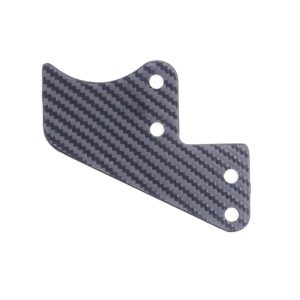
ShapeShift(R) Holster Trigger Guard for 1911
 -27%
 -50%
Uncle Mike's Inside-the-Pant Holstermall-Frame Revolvers 2" Barrels Right Hand Open
 -50%
Blackhawk Leather Tuckable Holster Glock 30/Smith & Wesson M&P Compact And Other Wide Frame Brown Right Hand
 -50%
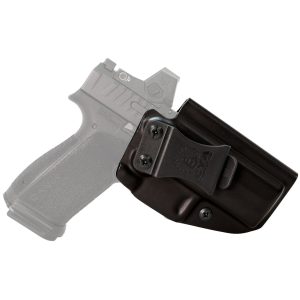
Blackhawk A.R.C. IWB Holster, Urban Gray - Glock 17/22/31
-50%Blackhawk A.R.C. IWB Holster, Urban Gray - Sig P365
-50%Blackhawk A.R.C. IWB Holster, Urban Gray - Sig P365L
 -74%
Cebeci Arms Leather Double Clip IWB Holsters Sig Sauer P320 Left Black
 -50%
 -16%
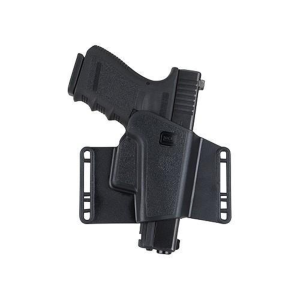
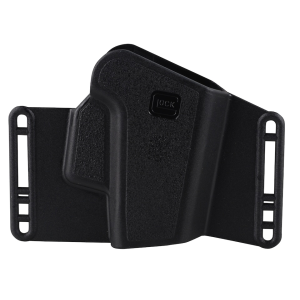
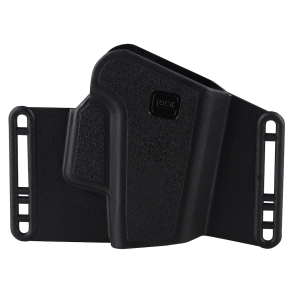
Glock Sport Combat Right-Handed OWB Holster for Glock Small Frame Pistols

 -27%
 -28%
Table of Contents
Carry Positions at a Glance
| Position | Where it rides | Best for |
|---|---|---|
| IWB | Inside the waistband, behind the hip | Everyday concealed carry |
| Appendix (AIWB) | Inside the waistband, forward of the hip | Fastest concealed access |
| OWB | Outside the waistband on a paddle or belt loop | Range, open carry, cover garment |
| In a pants pocket | Micro pistols, deep concealment | |
| Ankle | On the lower leg | Backup guns |
| Shoulder | Under the support arm on a harness | Seated carry, driving |
| Chest | On the chest over a pack strap | Hiking, backcountry |
| Duty / drop leg | Belt or thigh, with active retention | Patrol, armor |
Alien Gear calls IWB “the standard for concealed carry because they offer coverage, concealability, and direct body access.” Appendix carry puts the gun forward of the hips, which PHLster says is the fastest access for most people, but it needs a holster built for it. For the side-by-side, read IWB vs OWB holsters and our types of holsters explainer.
Kydex vs Leather vs Hybrid
DeSantis makes both, so its comparison is worth reading. Kydex “provides excellent retention from day one” and “maintains its exact shape indefinitely,” with full trigger guard coverage and screws to fine-tune the hold. Leather “excels at comfort during extended wear,” conforms to your body after a break-in of a few weeks, and gives a quieter draw.
A hybrid pairs a Kydex shell with a wide backing for comfort. The backing isn’t always leather: Alien Gear’s Cloak Tuck 3.5 ($79.99) uses breathable neoprene over a flexible steel core. Vedder’s honest take is that Kydex is the safer shell but can be uncomfortable against the skin, which is what the backing fixes. More in Kydex vs leather holsters.
Retention: Passive vs Active
Every holster has passive retention, the friction hold from the molded shell and tension screws. Tenicor’s Velo5 uses “dual retention screws” for exactly that, and Vedder’s LightTuck lets you set it tight or loose. That’s all most concealed carriers need.
Active retention adds a mechanical lock you have to release on the draw, and Alien Gear calls it essential for open carry and duty use. Safariland’s levels count the hand movements: Level I uses its ALS lock and “requires one manual hand movement,” Level II needs two, and Level III, “the most common model for patrol and general duty use,” combines ALS and SLS for three. Safariland says flatly that “passive retention is not considered a retention level.” Its 578 GLS ($80) locks automatically and releases when your middle finger takes a normal grip.
Claws, Wings and Wedges
These small parts are the difference between a holster that prints and one that vanishes. PHLster explains the wing: belt pressure pushes on it and “converts that linear pressure into rotational force on the grip, pushing it inward.” A wedge is a pad near the muzzle end that pushes the muzzle out and levers the grip tighter to your body.
They’re cheap: Tier 1 Concealed’s EZ Adjust Concealment Claw is $8, its wedges $5.99 to $7.49, and PHLster’s Wedge Rx $14 to $19. Most quality appendix holsters ship with a claw already fitted, like the Modwing on PHLster’s Enigma Express or the concealment wing on the LAS Concealment Ronin 3.0. If your gun prints at the grip, try a wedge before you buy a new holster.
Do You Need a Gun Belt?
The makers disagree, and both have a point. Vedder says flatly, “Do you need a gun belt for IWB Carry? In a word, yes,” and wants it stiff enough to hold the gun without sag. PHLster says “stiff, rigid, ‘hula-hoop’ gun belts are not necessary” and that a belt which conforms to your body works the claw better. What they agree on: a regular dress belt won’t do it. Buy a purpose-built gun belt with enough structure to keep the holster still on the draw, and if you can’t wear a belt at all, PHLster’s beltless Enigma Express ($160) is built for exactly that.
Light-Bearing Holsters
Alien Gear puts it plainly: weapon lights “fundamentally alter the dimensions of the firearm,” changing trigger guard length, dust cover profile and the holster’s locking points, and carrying a light-bearing gun in a non-light holster is “a recipe for binding, failed retention, or dangerous misalignment.” Light-bearing holsters are molded to one gun-and-light pair, so pick the light first. Our weapon lights and lasers hub covers light sizes, and the holster finder matches them.
Duty and Open Carry Holsters
Open carry and duty work change the math, because now someone can reach for your gun. That’s where active retention earns its weight. Safariland’s Level III holsters like the 6360 and 7360 combine the ALS lock and SLS hood so it takes three deliberate movements to free the gun, and Safariland says Level III is “the most common model for patrol and general duty use.” They aren’t cheap: the 6360 lists from $178 to $312.25 and the 7360 from $215.50.
For a range belt or open carry on a budget, a Level 2 holster like Blackhawk’s T-Series L2C ($84.95 to $129.95) or Safariland’s 578 GLS ($80) gives you an automatic lock without a duty price tag. Whatever level you pick, train the release until it’s automatic. A retention holster you fumble under stress is worse than a simple one you can run, and that’s why I tell new open carriers to spend a few hundred dry draws on it before wearing it in public.
Pick for Your Body and Your Wardrobe
The holster that disappears on a lean guy in a T-shirt can print like a billboard on someone with a belly, and the reverse is true too. Here’s what I tell people. If you carry weight up front, appendix can dig in when you sit; try strong-side IWB at 3 to 4 o’clock first, or an appendix holster with a wedge to angle the muzzle away from your body. If you’re slim, appendix with a claw is the most concealable carry there is.
Wardrobe matters as much as body type. Tucked shirts need a tuckable holster with clips that sit outside the shirt, like Alien Gear’s Cloak Tuck or Vedder’s LightTuck. Gym clothes and dresses need a beltless option. And a cold-weather OWB rig under a jacket is perfectly concealable from November to March; it just won’t work in July.
Pocket and Ankle Carry
Pocket carry works for micro pistols if the holster does two things: covers the trigger completely and stays in the pocket when the gun comes out. Alien Gear’s rule for pocket holsters is that they “must block the trigger completely.” Never put a bare gun in a pocket with keys and change. See our best pocket holsters.
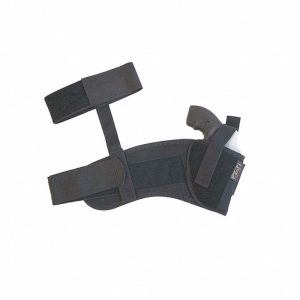
Ankle carry is for backup guns and deep concealment. Alien Gear calls ankle holsters a tool “for backup guns or deep concealment of small pistols,” and the classic leather option, Galco’s Ankle Glove, lists at $194. It’s slow to draw standing up, so treat it as a second gun, not your only one. More in our best ankle holsters guide.
Setting Up a New Holster
Most holsters need ten minutes of setup before they’re right. On Kydex, start with the retention screws loose, then tighten a quarter turn at a time until the unloaded gun holds upside down but still draws cleanly. Set the ride height and cant so the grip clears your belt and your hand can get a full firing grip in the holster. On leather, expect a break-in period; DeSantis puts it at a few weeks of regular carry, so don’t judge a leather holster on day one. Then practice the draw with an unloaded gun until it’s smooth.
What Good Holsters Cost
| Holster | Type | Maker list price |
|---|---|---|
| Bravo Concealment Torsion / BCA | IWB / OWB polymer | $39.99 |
| Alien Gear Photon | IWB/OWB convertible | $49.99 |
| Vedder LightTuck | IWB Kydex | From $69.99 |
| Safariland 578 GLS Pro-Fit | OWB, active retention | $80 |
| Blackhawk T-Series L2C | Level 2 OWB | $84.95 to $129.95 |
| LAS Concealment Ronin 3.0 | AIWB with mag carrier | $124.98 |
| Tenicor Velo5 AIWB | AIWB Kydex | $125 |
| Tier 1 Concealed Axis Elite | AIWB with mag carrier | $144.99 |
| PHLster Enigma Express | Beltless AIWB | $160 |
| Safariland 6360 ALS/SLS | Level III duty | $178 to $312.25 |
Tenicor’s Velo4 has been replaced by the Velo5, and Bravo’s IWB line is the Torsion (BCA is its OWB line). For our ranked picks, see best concealed carry holsters, best OWB holsters and best Glock holsters.
Holster Safety Rule
One rule beats every other spec on this page. PHLster: “The trigger guard must be completely enclosed by rigid material. You should not be able to manipulate the trigger from outside the holster, period.” Alien Gear says the same for pocket holsters: they must block the trigger completely. If a holster fails that test, it doesn’t matter how comfortable it is.
Facts and Figures

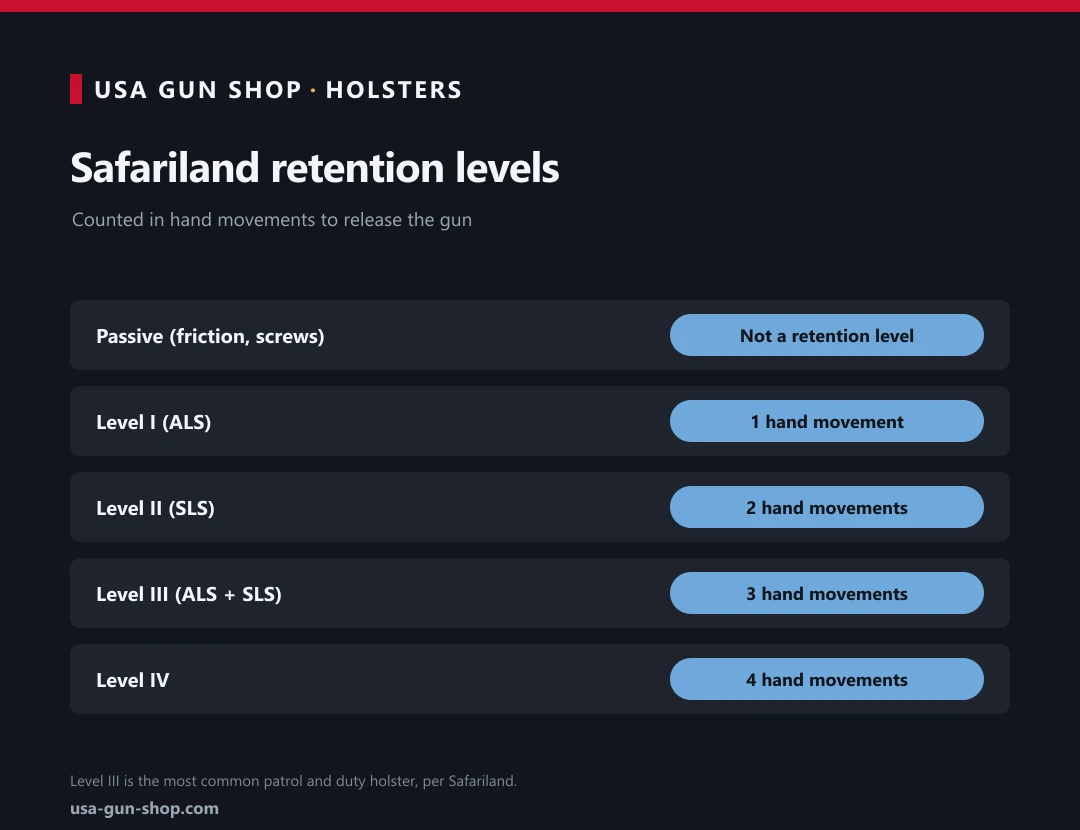
- Retention levels count hand movements to release the gun, per Safariland
- Trigger guard: must be fully enclosed by rigid material, per PHLster
- Concealment claw: $8 from Tier 1 Concealed; wedges from $5.99
- Replaced: Tenicor Velo4 is now the Velo5 ($125)
- Beltless option: PHLster Enigma Express, $160
Our Holster Guides
- Holster finder tool
- How to choose a concealed carry holster
- Best concealed carry holsters
- Best concealed carry holsters for women
- Best pocket holsters
- Best ankle holsters
- Best shoulder holsters
- Best chest holsters
- Best belly band holsters
- Holster brands
Frequently Asked Questions
What is the best IWB holster for concealed carry?
There is no single best IWB holster, so match it to your carry position. For appendix carry, the Tier 1 Concealed Axis Elite ($144.99), LAS Concealment Ronin 3.0 ($124.98), Tenicor Velo5 ($125) and T.REX Arms Sidecar (from $105) are rigid appendix rigs, and each one has adjustable retention and a concealment wing or claw. For strong-side IWB on a budget, the Bravo Concealment Torsion IWB is $39.99 and the Vedder LightTuck starts at $69.99. If comfort against the skin comes first, the Alien Gear Cloak Tuck 3.5 ($79.99) puts a molded shell on a neoprene backing.
IWB vs OWB: which should I choose?
Choose IWB (inside the waistband) if you want to hide the gun under a T-shirt or button-up, because IWB is the standard for concealed carry. OWB (outside the waistband) rides outside the pants on a paddle or belt slide. It is more comfortable for many shooters, but it is harder to hide without a jacket or an untucked shirt. OWB is the common choice for open carry and range training.
What holster material is best?
Kydex (and Kydex-style polymer) holds the gun with consistent retention from day one, keeps its shape, shrugs off sweat and gives an audible click when the gun seats. Leather is softer against the skin, molds to your body over a few weeks of carry and draws more quietly, but it needs conditioning and the mouth can collapse after the draw unless it is reinforced. A hybrid puts a Kydex shell on a leather or padded backing, so you get Kydex retention and trigger guard coverage with a wider, softer footprint against your body.
Do I need a holster with a claw?
If the grip of your gun prints through your shirt, yes. A claw (also called a wing) is a small lever that sits behind your belt. Belt pressure pushes on it and rotates the grip in toward your body. It only works with enough belt tension. A simple test from PHLster: press in on the grip, and if the gun rotates toward you, you need a wing or a taller wing.
What does a holster wedge do?
A wedge is a soft pad that attaches to the body side of an IWB holster near the muzzle. It pushes the muzzle end away from your body, which levers the grip and slide tighter against your torso. A claw rotates the grip in, and a wedge tilts it in, so the two work together. Tier 1 Concealed sells single wedges from $5.99 and PHLster's Wedge Rx runs $14 to $19, and both fit most rigid Kydex IWB holsters.
What are Level I, Level II and Level III retention holsters?
Safariland, which created the duty-rated levels, counts the separate hand motions needed to draw the gun. A Level I holster (ALS lock) takes one motion, Level II takes two, and Level III (ALS lock plus SLS hood) takes three. Safariland does not count passive retention, which is the friction fit of the shell plus any tension screw, as a retention level at all. Most concealed carry holsters use passive retention only, while duty holsters such as the Safariland 7360 add active locks.
Do I need a special holster for a gun with a weapon light?
Yes. A weapon-mounted light changes the shape of the gun at the trigger guard and dust cover, so a holster molded for the bare pistol will not fit or lock it. Buy a light-bearing holster made for your exact pistol and light combination, such as the LAS Concealment Ronin-L 3.0 ($144.98), PHLster Light Bearing Enigma Express ($200) or the light-bearing Alien Gear Photon ($49.99 base holster).
Do I need a gun belt to carry a holster?
For IWB and OWB carry on a belt, yes. You need a belt that is stiff enough to hold the gun without sagging. Vedder's answer to "Do you need a gun belt for IWB carry?" is "In a word, yes, you do," because a regular belt lets the grip sag away from your hip and print. The belt does not need to be a rigid duty belt. PHLster says a belt that flexes to your body while holding the holster in place activates the claw better, and that stiff "hula-hoop" gun belts are not necessary. If your clothes will not support a belt, a beltless rig such as the PHLster Enigma Express ($160) carries on its own waist belt and leg leash.
3,213+ Gun & Ammo Deals
Updated daily from 200+ top retailers. Filter by category, caliber, action type, and price.