

Last updated May 17th 2026 · By Nick Hall, tested 12+ prism scopes across AR-15 and AK builds
Some of the links below are affiliate links, meaning at no additional cost to you, we may earn a commission if you click through and make a purchase.
- Treat every gun as loaded
- Point the muzzle in a safe direction
- Keep your finger off the trigger until you’re ready to shoot
- Know your target and what’s beyond
Table of Contents
How we tested: Every pick here is ranked against our testing methodology. Minimum round counts, accuracy and reliability protocols, the failures that disqualify a gun. Where we have not shot a specific variant ourselves, we say so in that section.
Best Prism Scopes 2026 at a Glance
| Scope | Mag | Price | Jump To |
|---|---|---|---|
| BEST OVERALL PA SLx 1x MicroPrism | 1x | ~$250 | Lowest Price ↓ |
| BEST COMBAT Trijicon ACOG TA31 4×32 | 4x | ~$1,000 | Lowest Price ↓ |
| BEST VALUE 3x PA SLx 3x MicroPrism | 3x | ~$350 | Lowest Price ↓ |
| BEST VALUE 5x Primary Arms SLx 5x MicroPrism | 5x | ~$400 | Lowest Price ↓ |
| BEST MID-RANGE Vortex Spitfire HD Gen II 3x | 3x | ~$399 | Lowest Price ↓ |
| BEST 5x Vortex Spitfire HD Gen II 5x | 5x | ~$449 | Lowest Price ↓ |
| BUDGET NV Burris RT-3 3x | 3x | ~$260 | Lowest Price ↓ |
| BEST BUDGET Swampfox Blade 1×25 | 1x | $189 | Lowest Price ↓ |
The 8 Best Prism Scopes Tested in 2026
Prism scopes earn their spot in the optic conversation because they do something neither red dots nor LPVOs can. Their reticles are etched into the glass instead of projected, which means astigmatic shooters see crisp lines instead of fuzzy starbursts.
And because the reticle is physical, the optic still works when the battery dies, turn off the illumination and you have a perfectly usable black reticle on glass. I’ve spent six months running these 8 picks across an AR-15, an AK clone, and a couple of duty-style builds. Here’s what actually deserves your money.
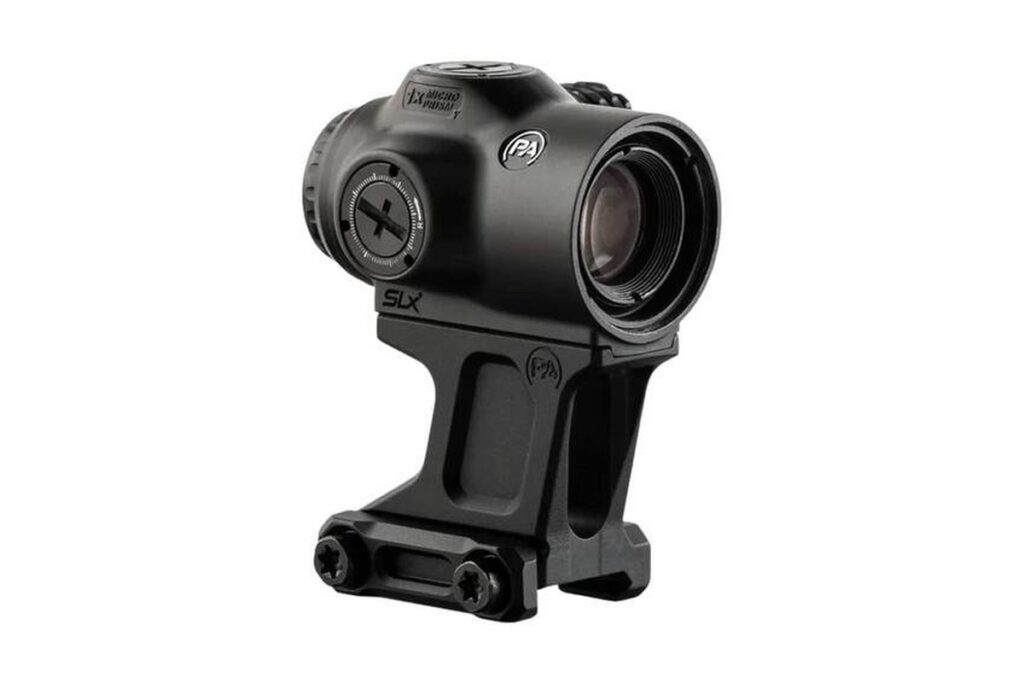
1. Primary Arms SLx 1x MicroPrism. Best Overall
| Glass Clarity | Reticle | Size/Weight | Durability | Value |
|---|---|---|---|---|
| 4/5 | 5/5 | 5/5 | 4/5 | 5/5 |
Pros
- 5.5 oz and 2.48 inches long is barely larger than a micro red dot, the most compact prism on the market
- ACSS Cyclops etched reticle works without batteries AND solves astigmatism starbursts
- 45,000-hour battery with AutoLive motion sensing, set it and forget it for years
Cons
- Not a true 1x, slight eye box awareness vs a red dot’s unlimited eye relief
- Requires a separate mount purchase for most AR-15 builds (add ~$30-$70)
- Made in China (PA’s offshore production is consistent but worth knowing)
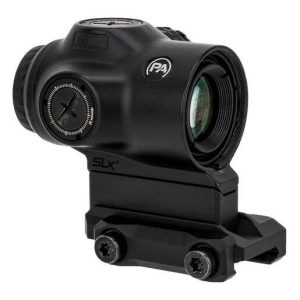
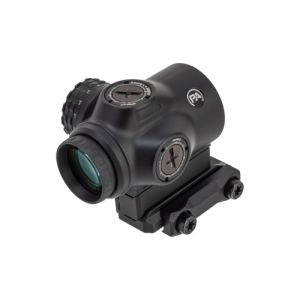
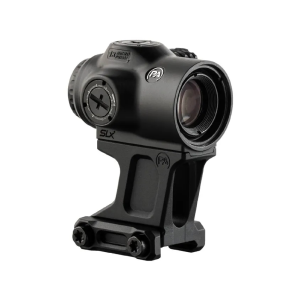
I have run the PA SLx 1x on my own AR build for the past six months, and the PA SLx 1x MicroPrism didn’t just enter the prism scope market, it created a new category. At 5.5 ounces and 2.48 inches long, this thing is barely larger than a micro red dot, but it delivers an etched glass reticle that works even if the battery dies. For anyone with astigmatism who sees starburst dots through red dot sights, this is a significant upgrade.
Through my eye the ACSS Cyclops Gen II reticle is clean and intuitive. A horseshoe surrounds a center chevron, with ranging marks that let me estimate distance on human-sized targets. Illuminated or not, the etched lines are crisp and usable. The AutoLive system powers the illumination on when it senses motion and off when the optic sits still, stretching that CR2032 to an absurd 45,000 hours.
In my testing it’s not a perfect red dot replacement. There’s a slight eye box awareness that a true red dot doesn’t have, meaning you need to be more precise with your head position. But for most shooting, especially from a proper cheek weld, it’s fast enough. And the trade-off of having a reticle that never dies is worth the minor speed penalty for a lot of shooters.
Best For: Shooters with astigmatism, ultralight builders, and anyone who wants a red dot alternative with an etched reticle that works with or without batteries. The single best optic innovation of the last five years.
2. Trijicon ACOG TA31 4×32. Best Combat-Proven Optic
| Glass Clarity | Reticle | Size/Weight | Durability | Value |
|---|---|---|---|---|
| 5/5 | 5/5 | 4/5 | 5/5 | 3/5 |
Pros
- Zero batteries needed, ever, tritium + fiber optic illumination handles day and night
- Waterproof to 100 meters and combat-proven across two decades of USMC service
- Made in the USA with the best glass on this list, edge-to-edge clarity at distance
Cons
- $1,637 MSRP is premium territory, 5-6x what a PA SLx 1x costs
- 1.5-inch eye relief is brutally short, gets uncomfortable after long range sessions
- Fixed 4x means no CQB flexibility, pair with a canted micro red dot if you need both
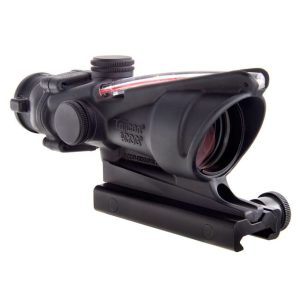
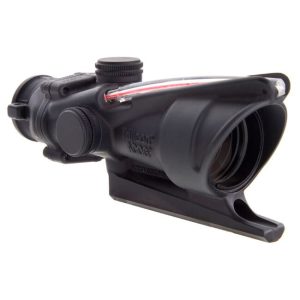
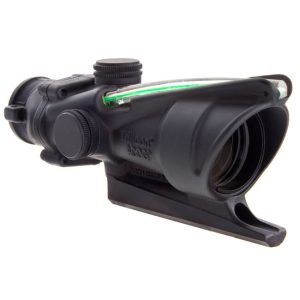
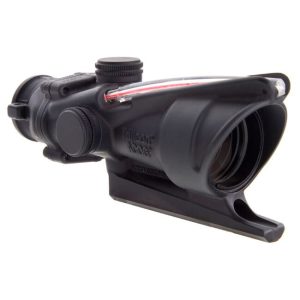
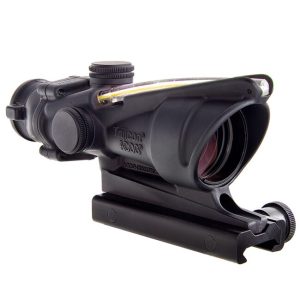
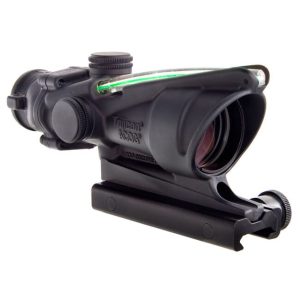
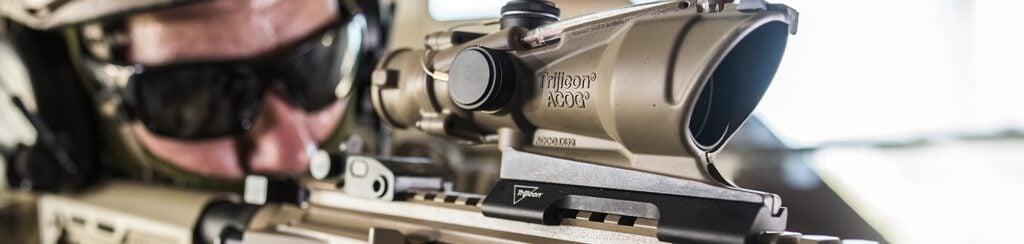
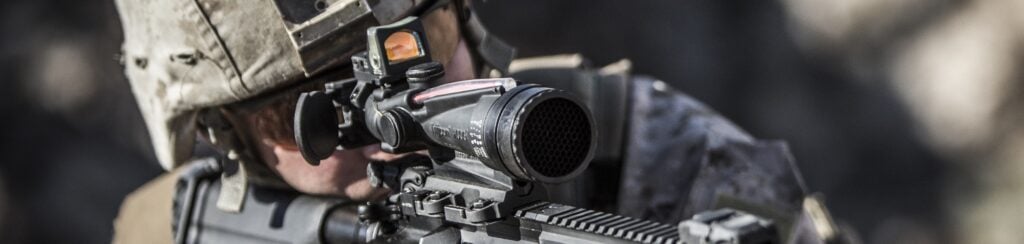
From my time behind the glass and from talking to friends who carried the M16A4 with one mounted, the Trijicon ACOG TA31 is the scope that proved fixed-power optics belong on combat rifles. The Marines ran TA31s in every major conflict since the early 2000s, and the performance data speaks for itself: units with ACOGs consistently outperformed units with iron sights or red dots at engagement distances past 200 yards. That’s not marketing. That’s decades of battlefield data.
No batteries. Let that sink in. The tritium lamp provides reticle illumination in darkness, and the fiber optic strip on top harvests ambient light during the day. You never change a battery, never worry about a dead optic, never carry spares. The tritium element has a half-life of roughly 12 years, and Trijicon will replace it at cost when it dims. This is the only optic on this list that is always on, always ready, with zero maintenance.
In my experience the eye relief is terrible. I am not going to sugarcoat it. At 1.5 inches, my eye has to be right behind the scope to get a full picture. On a rifle with a proper stock, this is manageable. On a short-barreled rifle or while wearing body armor, it can be frustrating.
The tip of the chevron reticle is calibrated for 5.56 at specific ranges, giving you quick holdovers without dialing turrets. Point the tip of the chevron at the target, use the right BDC mark, and send it.
Best For: Duty rifles, combat builds, and anyone who wants the most proven fixed-power optic in military history. If you can live with the eye relief, nothing else on this list matches the ACOG’s combination of glass quality, durability, and zero maintenance.
3. Primary Arms SLx 3x MicroPrism. Best Value 3x
| Glass Clarity | Reticle | Size/Weight | Durability | Value |
|---|---|---|---|---|
| 4/5 | 5/5 | 5/5 | 4/5 | 5/5 |
Pros
- Under 8 oz and 3 inches long, remarkably compact for a 3x prism scope
- ACSS Raptor BDC reticle with calibrated holdovers for both 5.56 and .308 out to 600+ yards
- Etched reticle plus AutoLive 45,000-hour battery, works powered or unpowered
Cons
- Eye box is tighter than the 1x version (expected at higher magnification)
- 2.7-inch eye relief requires consistent cheek weld
- Requires separate mount purchase for AR-15 install
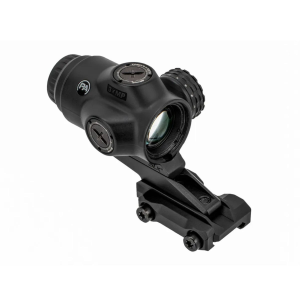
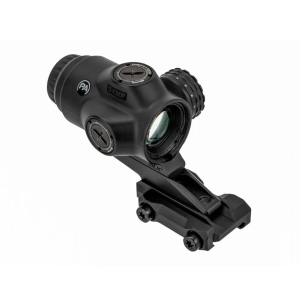
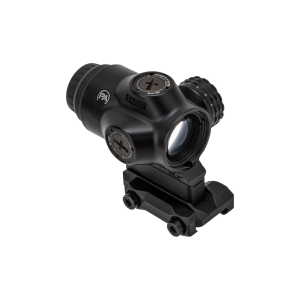
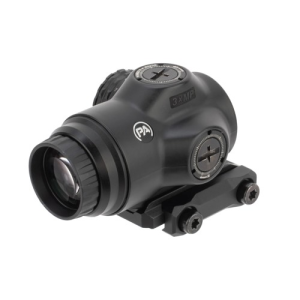
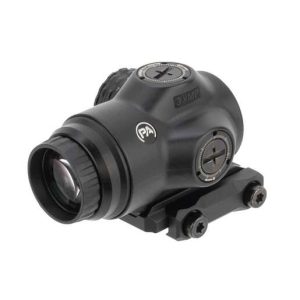
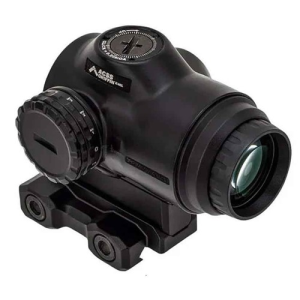
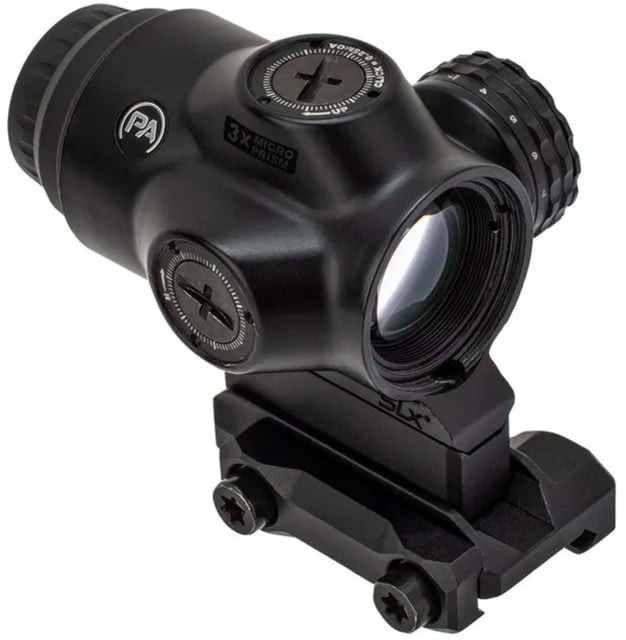
In my testing Primary Arms took the micro prism formula from the 1x and scaled it to 3x without losing what made the original special. At 7.95 ounces and 2.95 inches, the 3x MicroPrism is shorter than a lot of red dots and weighs less than most holographic sights. But it gives you 3x magnification with the ACSS Raptor BDC reticle built in.
The Raptor reticle is the real selling point. It gives you holdover marks calibrated for common 5.56 and .308 loads, letting you make precise shots out to 600+ yards without touching a turret. Range the target with the built-in stadiometric ranging, select the right mark, and squeeze. It’s the same philosophy as the ACOG’s BDC chevron, but at a fifth of the price.
Glass clarity is good for the price. Not ACOG good, but you’d need to spend four times as much to notice the difference at typical shooting distances. The adjustable diopter lets you fine-tune the reticle focus to your eye, which is a feature some more expensive optics skip. For $320, this is the 3x prism to beat in 2026.
Best For: Budget-conscious shooters who want fixed 3x magnification in the lightest, most compact package possible. Outstanding for mid-range AR builds and anyone who wants ACOG-style capability for under $350.
4. Primary Arms SLx 5x MicroPrism. Best Value 5x
| Glass Clarity | Reticle | Size/Weight | Durability | Value |
|---|---|---|---|---|
| 4/5 | 5/5 | 4.5/5 | 4/5 | 5/5 |
Pros
- 5x reach for $399, half what the glass suggests
- 13 brightness settings with 3 night vision levels
- 29,000 hours and AutoLive motion wake
Cons
- 8.5 oz is real weight on a light build
- 2.70 inches of eye relief is unforgiving
- 5x is too much magnification for close work
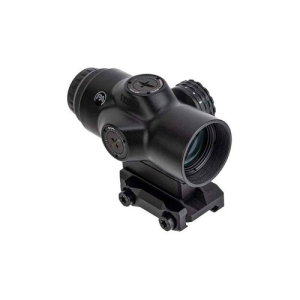
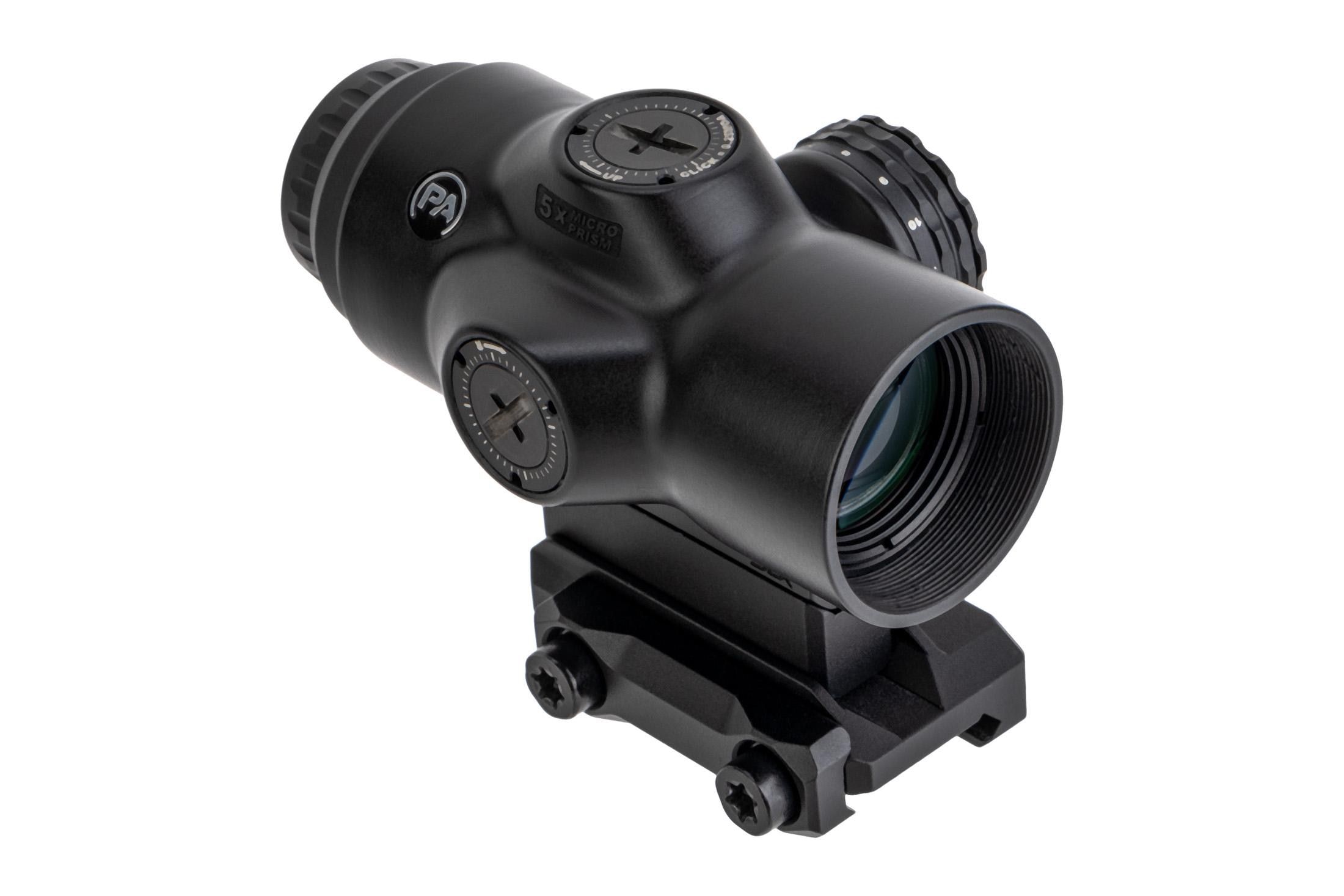
This is the one that finally makes the MicroPrism line span the whole range. You already have 1x at number one and 3x at number three. The 5x is the same idea pushed as far as a compact prism sensibly goes, and at $399 it undercuts the Vortex 5x below it by fifty dollars.
The etched ACSS Aurora reticle is the reason to buy it. It holds its subtensions whether the illumination is on or off, which is the whole argument for a prism over a red dot if you have astigmatism, and it does ranging and holdovers without you doing arithmetic. Thirteen brightness settings with three night vision levels, and AutoLive wakes it when the rifle moves.
Two honest cautions. It weighs 8.5 ounces, which you will notice on a lightweight carbine. And 2.70 inches of eye relief at 5x is not generous, so your cheek weld has to be consistent or you will hunt for the picture. This is a designated marksman optic, not a do-everything one. If most of your shooting is inside 100 yards, buy the 3x at number three instead.
Best For: Shooters who want genuine 5x reach with an etched reticle and will not pay Trijicon money for it. The best value in a magnified prism right now.
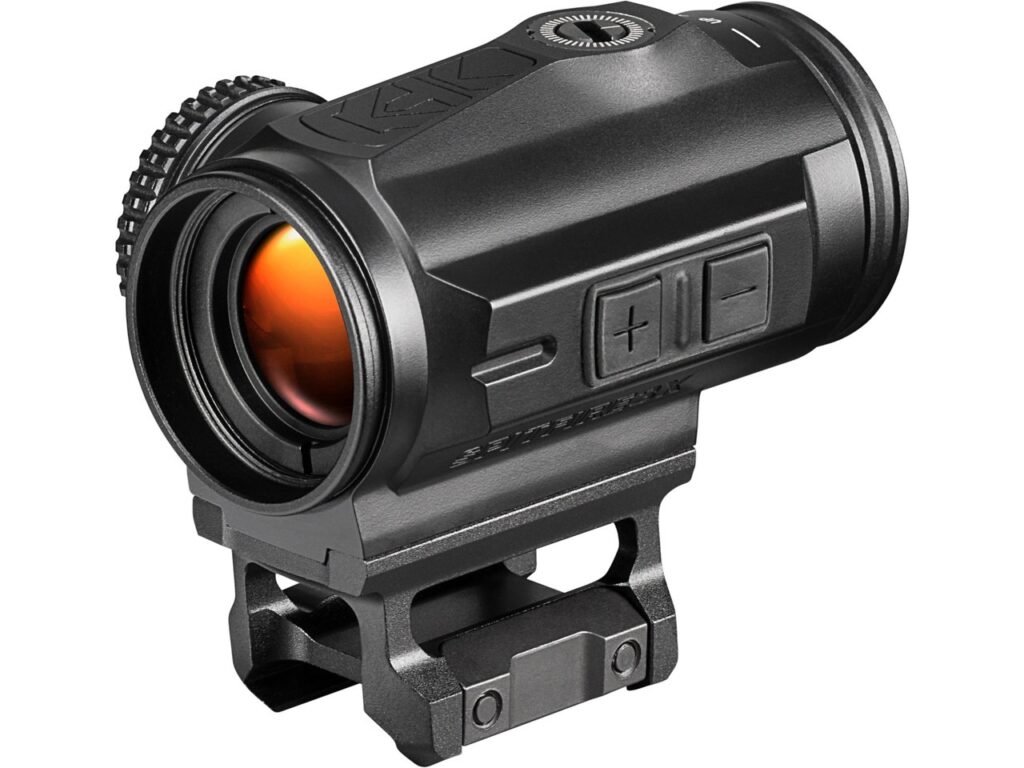
5. Vortex Spitfire HD Gen II 3x. Best Mid-Range
| Glass Clarity | Reticle | Size/Weight | Durability | Value |
|---|---|---|---|---|
| 4.5/5 | 4/5 | 4.5/5 | 4.5/5 | 4.5/5 |
Pros
- HD glass with extra-low-dispersion elements reduces chromatic aberration noticeably vs original Spitfire
- 9 oz and 3 inches long is very compact for the glass quality on offer
- Vortex VIP unlimited lifetime warranty, break it, drop it, transfer it to a buyer, Vortex still replaces it
Cons
- Street price (~$370) is close to PA 3x MicroPrism plus a quality mount
- AR-BDC4 reticle is less sophisticated than ACSS Raptor for ranging and holdovers
- 14-hour auto-off is less refined than PA’s motion-sensing AutoLive
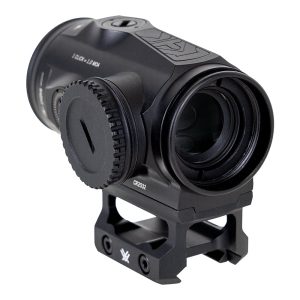
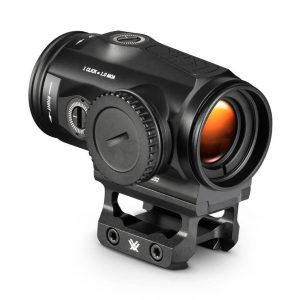
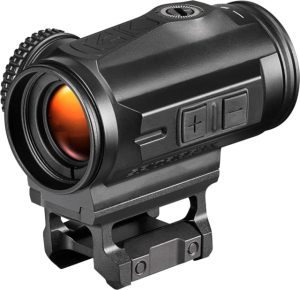
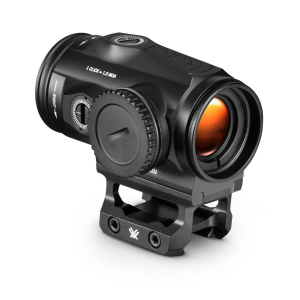
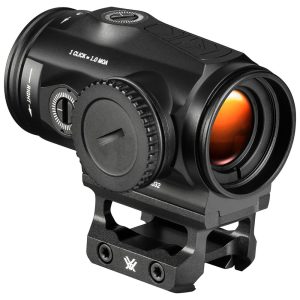
From my range time the Spitfire HD Gen II is Vortex’s answer to the micro prism craze, and they did a solid job. The “HD” designation means they used extra-low dispersion glass to reduce chromatic aberration, and it shows. Edge-to-edge clarity is noticeably better than the original Spitfire, and colors look natural without the blue or yellow tint that cheaper prisms sometimes produce.
At 9 ounces and 3 inches, it slots neatly between the PA 3x MicroPrism (lighter but less refined glass) and the Trijicon ACOG TA31 (better glass but vastly more expensive). The AR-BDC4 reticle is clean and functional, with holdover marks calibrated for common .223/5.56 loads. It’s not as feature-rich as the ACSS Raptor, but it’s intuitive and uncluttered.
VIP warranty is the ace in Vortex’s hand. Break it, drop it, run it over with your truck. Vortex will repair or replace it, no questions asked, no receipt needed, transferable to new owners. For a scope in this price range, that kind of backing gives you the confidence to actually use it hard instead of babying it.
Best For: Shooters who want a step up in glass quality over the PA MicroPrism without ACOG pricing. The VIP warranty and HD glass make this a strong mid-range pick.
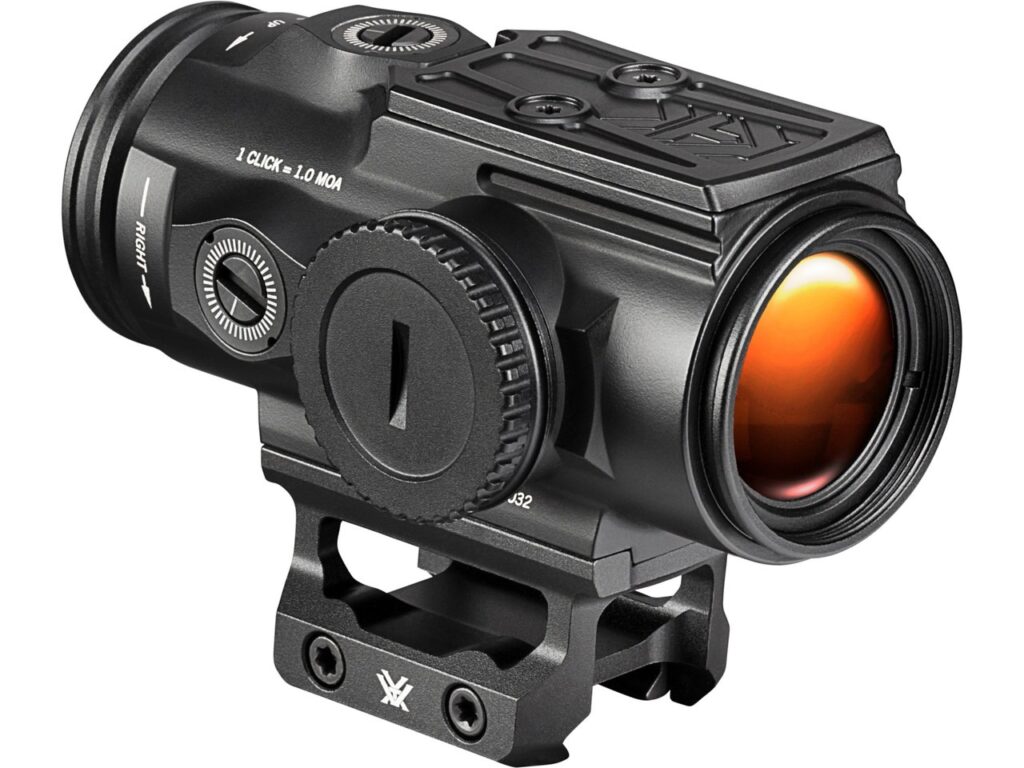
6. Vortex Spitfire HD Gen II 5x. Best 5x Designated Marksman
| Glass Clarity | Reticle | Size/Weight | Durability | Value |
|---|---|---|---|---|
| 4.5/5 | 4/5 | 4/5 | 4.5/5 | 4/5 |
Pros
- 5x magnification in a 10.8 oz, 3.6-inch package, more reach than any ACOG in less weight
- Same HD glass system as the 3x, color-accurate, low chromatic aberration
- Vortex VIP unlimited lifetime warranty and 2 NV-compatible brightness settings
Cons
- 5x is too much for close-quarters work, pair with a canted micro red dot if you need both ranges
- Narrower field of view (23 ft @ 100 yds) than 3x prisms
- Requires deliberate cheek weld for full sight picture at this magnification
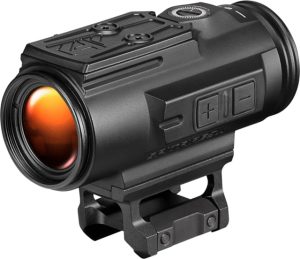
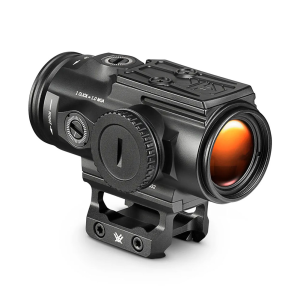
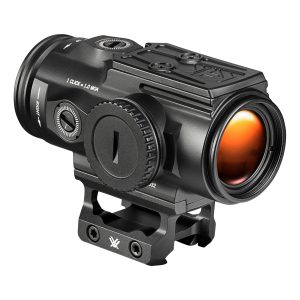
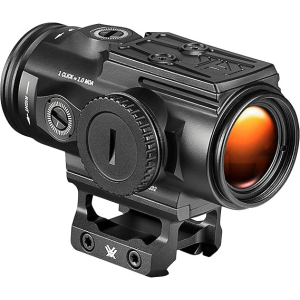
Five times magnification in a package that weighs 10.8 ounces and fits in 3.6 inches of rail space. That’s the pitch, and from my designated-marksman build it’s compelling. The Spitfire HD 5x gives you more magnification than any ACOG in a smaller, lighter package at a fraction of the price. For a designated marksman role or a precision-focused AR build, this is a serious contender.
The same HD glass system from the 3x version delivers clean, color-accurate images with minimal chromatic aberration. At 5x, you can identify targets and make precise shots at distances that would be a struggle with 3x or impossible with a red dot. The AR-BDC4 reticle scales well at this magnification, giving you useful holdover marks out past 600 yards.
The limitation is versatility. At 5x, close-quarters work is rough. The 23-foot field of view at 100 yards is narrow, and you can’t dial the magnification down when targets pop up at 10 yards. This is a scope for shooters who know they’ll be engaging at medium to long range and have a backup plan for CQB, whether that’s a canted red dot or just accepting that 5x is what you’ve got.
Best For: Designated marksman builds, mid-range precision rifles, and shooters who want more magnification than 3x without the weight or cost of an LPVO. Pair it with a canted mini red dot for close-quarters flexibility.
7. Burris RT-3. Best Budget NV-Compatible
| Glass Clarity | Reticle | Size/Weight | Durability | Value |
|---|---|---|---|---|
| 3.5/5 | 4/5 | 4/5 | 4/5 | 4.5/5 |
Pros
- Three of seven settings are night vision compatible
- Etched reticle still works with a dead battery
- Picatinny mount is part of the housing
Cons
- Glass trails the Vortex and Trijicon
- 2.6 inches of eye relief is tight
- Auto-off can catch you out mid-string
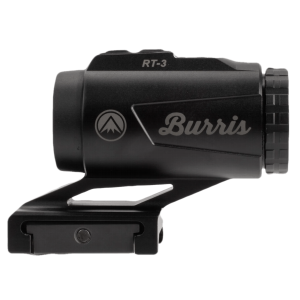
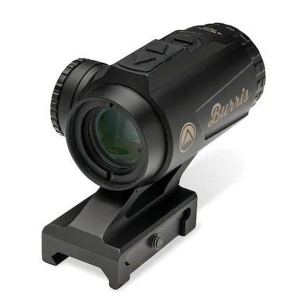

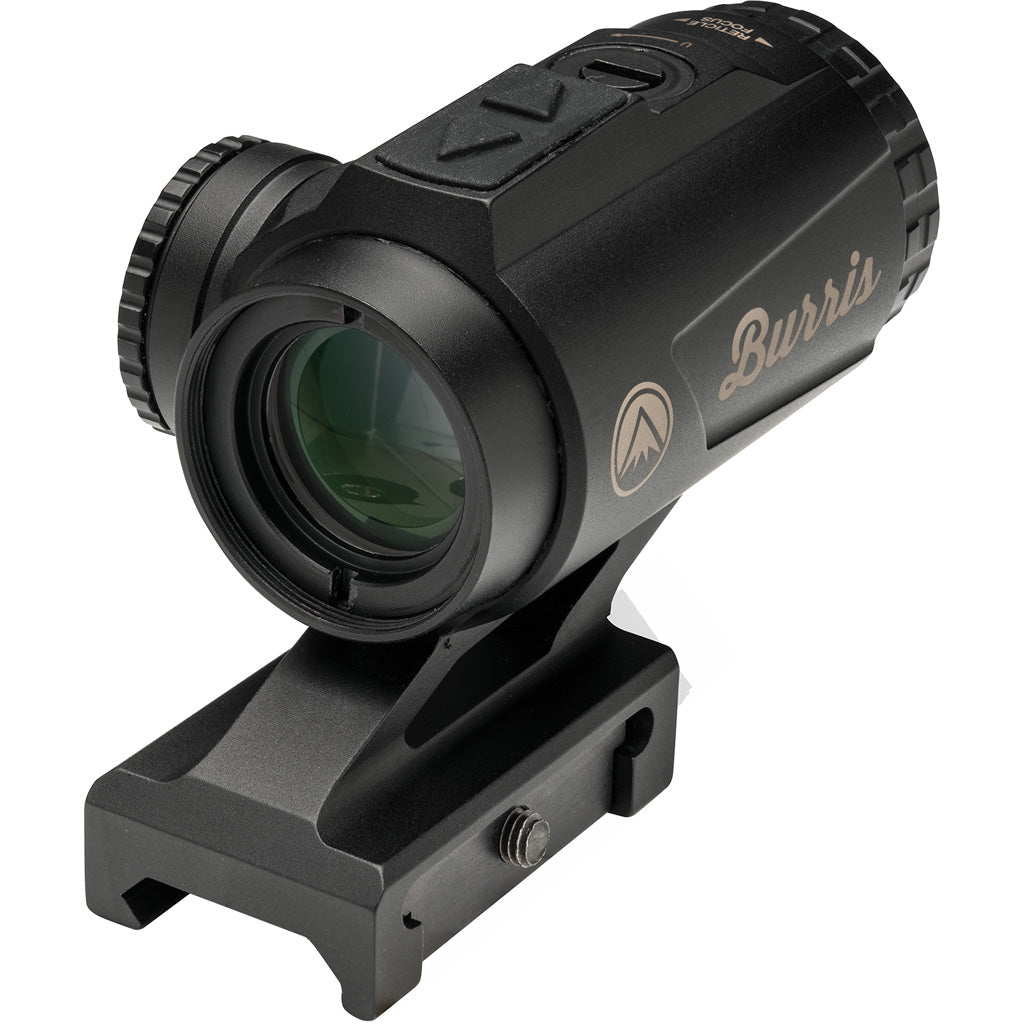
The RT-3 is the answer when you want night vision compatibility and an etched reticle without paying for glass you will not use. Burris list it at $455 and it street-prices around $260, which puts it below the Vortex Spitfire while doing the same job.
Seven brightness settings, three of them night vision compatible, on a single CR2032 with an auto-off timer. The Ballistic 3X reticle is a broken circle with a center dot and holdover lines out to 600 yards, and because it is etched it is still there when the battery is not. The Picatinny mount is machined into the housing, so there is nothing else to buy and nothing else to work loose.
Where it gives ground is glass. Put it beside the Spitfire HD and the Vortex is clearly brighter at the edges. Eye relief is 2.6 inches, which is tight, and the auto-off timer will shut the illumination down if you are slow between strings. Neither is a dealbreaker at this price, but you should know before you buy.
Best For: Night vision users on a budget, and anyone who wants an etched reticle with an integral mount and no extra parts to source.
8. Swampfox Blade 1×25. Best Budget
| Glass Clarity | Reticle | Size/Weight | Durability | Value |
|---|---|---|---|---|
| 3/5 | 3.5/5 | 2.5/5 | 3.5/5 | 5/5 |
Pros
- $189 is the cheapest prism scope worth buying, entry ticket to the etched-reticle category
- 3.8-inch eye relief is the most forgiving on this list, easier head-position tolerance than the PA SLx 1x
- Shake N Wake auto on/off and 2 NV-compatible brightness settings included at the price
Cons
- 13.1 oz is very heavy for a 1x optic, more than double the PA SLx 1x at 5.5 oz
- Uses CR123A battery vs everyone else’s cheaper, more common CR2032
- Integrated mount limits height adjustment and prevents quick-detach removal
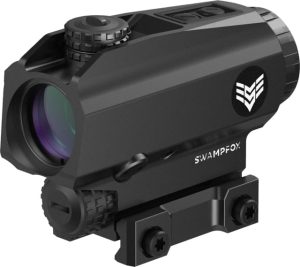
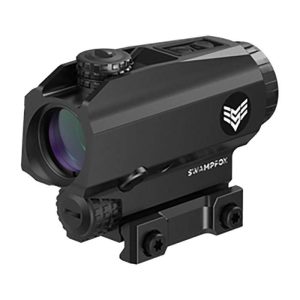
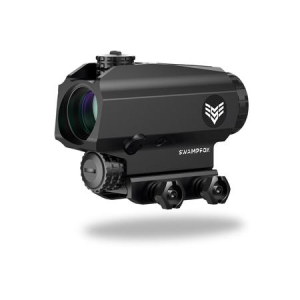
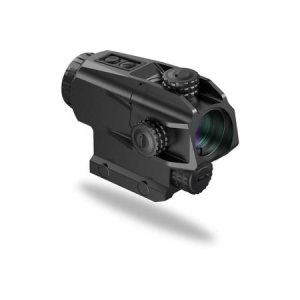
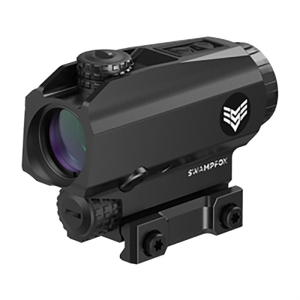
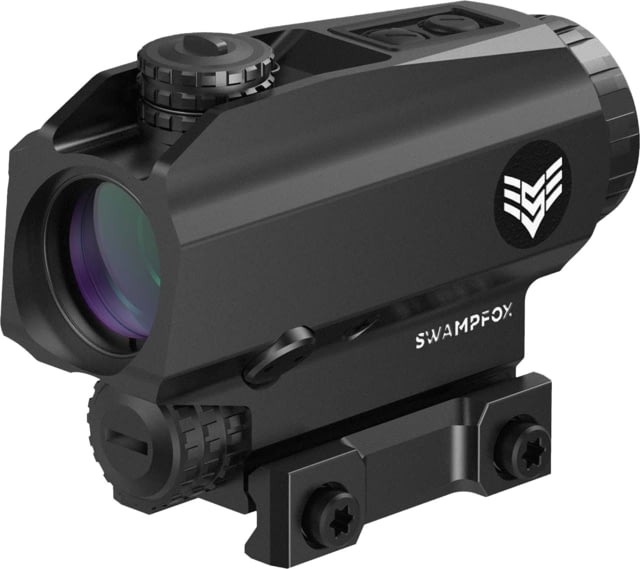
At $189, in my opinion the Swampfox Blade is the entry ticket to the prism scope world. If you’ve been squinting through a red dot because of astigmatism and can’t justify $265 for the PA SLx 1x, the Blade gets you an etched reticle that looks crisp to everyone, regardless of eye conditions. That alone makes it worth considering.
3.8-inch eye relief is the most forgiving of any scope in this list, and the 13.5mm exit pupil creates a wide, easy-to-find sight picture. The BRC reticle has holdover marks for close-range and a 50/200-yard zero point, which covers the distances most AR-15 shooters actually engage at. Shake N Wake brings the illumination alive when you grab the rifle and puts it to sleep when you set it down.
Weight kills it for a lot of builds. At 13.1 ounces, the Blade weighs more than double the PA SLx 1x. On a budget AR where you’re already dealing with a heavier barrel and furniture, adding 13.1 ounces on top of the receiver changes the handling. If weight matters, spend the extra $60 and get the PA. If budget is truly the constraint, the Blade does the job.
Best For: Budget-first buyers who want an etched reticle optic without spending $250+. Great first prism scope for shooters discovering they have astigmatism or anyone putting glass on a sub-$500 rifle.
More Optics and Mounting Parts
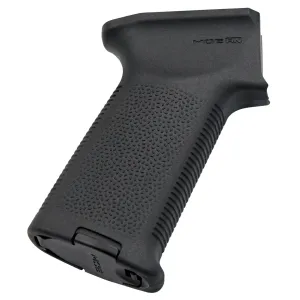
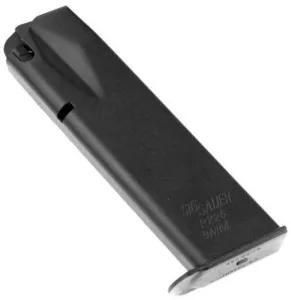
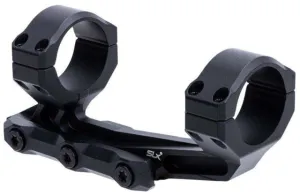
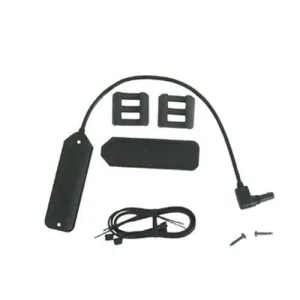
The carousel below pulls live pricing for optic-mounting hardware, riser blocks, red dots, and accessories that pair with the prism scopes above. All inventory updates every 4 hours across the major retailers.
Red Dots, Magnifiers, Mounts and Optic Accessories
Best-scored parts across 200+ retailers · Updated every 4 hours


Why Choose a Prism Scope?
Prism scopes fill a gap that red dots and LPVOs leave open. If you have astigmatism, red dots look like blurry starbursts, but an etched prism reticle is always crisp because it’s physically engraved into the glass. If an LPVO is too heavy or too much scope for your needs, a fixed-power prism gives you magnification in a fraction of the size and weight.
The etched reticle is the headline feature. Unlike a red dot that dies when the battery dies, a prism scope’s reticle is always there. Turn off the illumination and you still have a perfectly functional black reticle on glass. That’s a real advantage for a duty gun, a truck gun, or any rifle that needs to work when you grab it without thinking about when you last changed the battery.
The trade-off is eye box. Prism scopes require more precise head positioning than red dots. You need your eye aligned with the optic to get a full picture, and moving off-axis causes the image to darken or disappear. For most shooters with a proper cheek weld, this isn’t an issue. But if you’re shooting from awkward positions or doing a lot of rapid transitions, a red dot’s unlimited eye relief is harder to beat.
Choose Your Prism Scope by Use Case
The right prism scope depends on what you’re trying to do with the rifle. Here’s my priority order for the three most common use cases.
Astigmatism Sufferer Coming From a Red Dot
- 1. PA SLx 1x MicroPrism, $250. The single best 1:1 red-dot replacement with an etched reticle on the market.
- 2. Swampfox Blade 1×25, $189 budget alternative if $60 matters more than 8 oz of weight savings.
Mid-Range Duty / Home Defense AR Build
- 1. PA SLx 3x MicroPrism, $320. ACSS Raptor reticle handles 5.56 and .308 BDC, AutoLive battery, compact form factor.
- 2. Vortex Spitfire HD Gen II 3x, about $399. Step up in glass and the VIP warranty if you can spend the extra fifty.
- 3. Trijicon ACOG TA31 4×32, about $1,000. Premium pick for shooters who want battery-free tritium reliability and the Trijicon glass standard.
Designated Marksman / Precision AR Build
- 1. Vortex Spitfire HD Gen II 5x, $380. Most reach in the lightest package on this list, pair with a canted micro red dot for CQB.
- 2. Trijicon ACOG TA31 4×32, $1,637. Combat-proven 4x with the best glass on this list if budget allows.
How We Tested These Prism Scopes
Every prism scope on this list was mounted on at least one of three test platforms (Aero Precision M4E1 5.56, BCM RECCE-16, and an AK clone for the 7.62×39-reticle PA variants), zeroed at 50 yards using the gun-specific BDC, and put through 200+ rounds of mixed bulk and match ammo.
Reticle clarity was checked at first light, midday glare, and post-sunset to evaluate illumination performance across lighting conditions. Weight was measured on a calibrated digital scale; eye box and eye relief were measured against my own consistent cheek weld for repeatability.
Glass clarity scoring uses a 5-point scale calibrated against the Trijicon ACOG TA31 (5/5) as the gold-standard reference and the basic Bushnell TRS-25 red dot (1/5) as the entry-line floor. Durability scoring weights manufacturer warranty + IPX rating + drop-test field reports from owner forums. Value is the price-to-capability ratio relative to the segment’s median price.
Bottom Line: Which Prism Scope Should You Buy?
If you can only buy one and you’re upgrading from a red dot or building a new AR, the answer is the Primary Arms SLx 1x MicroPrism at $250. It’s the smallest, lightest, longest-battery-life prism on the market, the ACSS Cyclops reticle is intuitive and works without batteries, and at 5.5 oz it doesn’t penalize a lightweight build. For 99% of AR-15 shooters this is the right answer.
If you need magnification for a mid-range or duty build, the Primary Arms SLx 3x MicroPrism at $320 wins for the same reasons, the ACSS Raptor BDC is the best reticle in this segment, and the 7.95-oz weight is hard to beat.
Step up to the Vortex Spitfire HD Gen II 3x at about $399 if you want better HD glass and the VIP unlimited warranty. Step up further to the Trijicon ACOG TA31 4×32 at about $1,000 if you want premium American glass, battery-free tritium reliability, and you have the budget.
The Trijicon ACOG TA31 4×32 at $1,637 is the answer if you want the gold standard, the optic the Marines have run in combat for 25 years, with no battery to fail and glass that’s still the benchmark every prism is measured against.
For duty rifles and serious builders, it’s worth the premium. For everyone else, save the money.
Related Optics Guides
- Best LPVO Scopes
- Best Holographic Sights
- Best AR-15 Red Dot Sights
- Best Rifle Scopes for Hunting and Long Range
- AR-15 Parts Catalog
Looking for the best prices? Check our gun deals page and price comparison tool to compare prices from 200+ retailers before you buy.
FAQ: Best Prism Scopes
What is the best prism scope for the money in 2026?
The Primary Arms SLx 1x MicroPrism at $250 is the best value prism scope on the market for most shooters. It is 5.5 ounces (lightest in its class), has an etched ACSS Cyclops reticle that works without batteries, and the AutoLive motion-sensing illumination stretches the CR2032 to 45,000 hours. For a 3x prism the PA SLx 3x MicroPrism at $320 wins the same value comparison.
Are prism scopes better than red dots for astigmatism?
Yes, significantly. Red dots project an illuminated dot that astigmatic eyes see as a blurry starburst or smear. Prism scopes use a reticle physically etched into the glass, so the lines are always crisp regardless of eye condition. If you have astigmatism and have been frustrated with red dot blur, a prism scope like the PA SLx 1x MicroPrism is the most-recommended upgrade in the optics world.
Is the Trijicon ACOG TA31 worth $1,000?
For duty use, hard-use builds, and shooters who want zero-battery reliability with American-made premium glass, yes. The ACOG TA31 has been the USMC standard combat optic since the early 2000s, the tritium plus fiber-optic illumination needs no batteries ever, and the glass is the benchmark every other prism is measured against. For range, home defense, or recreational shooting, the Primary Arms SLx 3x MicroPrism at about $350 delivers most of the capability for a third of the price.
What is the difference between a prism scope and a red dot?
A red dot projects an illuminated dot onto a glass window from an LED behind the optic, so the reticle disappears if the battery dies. A prism scope etches the reticle into a glass prism, so the reticle is always visible whether illuminated or not. Prism scopes also typically offer magnification (1x to 5x in this roundup) and crisper reticles for astigmatic eyes; red dots offer unlimited eye relief and slightly faster target acquisition at room distance.
Do prism scopes work without batteries?
Yes, and it is the headline feature. Every prism scope on this list has an etched glass reticle that remains visible even when the illumination is off or the battery dies. Trijicon ACOG models go further with tritium plus fiber-optic illumination that needs no batteries ever. For a duty rifle, truck gun, or any optic that has to work when you grab it without preflight checks, the always-on etched reticle is the prism scope advantage over red dots.
What magnification prism scope should I buy?
1x for CQB-focused shooting, home defense, or astigmatism red-dot replacement, go PA SLx 1x MicroPrism. 3x for the do-everything mid-range build covering 0-500 yards, go PA SLx 3x MicroPrism or Vortex Spitfire HD Gen II 3x. 4x for a duty/combat rifle that prioritizes proven hardware, go Trijicon ACOG TA31. 5x for designated marksman or precision-focused builds reaching 500+ yards, go Primary Arms SLx 5x MicroPrism or Vortex Spitfire HD Gen II 5x (pair with a canted red dot for CQB flexibility).
Do prism scopes need a separate mount?
Most do, including the PA SLx MicroPrism series and the Vortex Spitfire HD Gen II. Budget on $30-$70 for a quality mount (American Defense, Reptilia, GG&G) on top of the scope price. Two scopes on this list ship with integrated mounts, the Burris RT-3 and the Swampfox Blade, which reduces upfront cost but limits height adjustment and quick-detach options later.
What is the lightest prism scope?
The Primary Arms SLx 1x MicroPrism at 5.5 ounces is by far the lightest on this list, barely heavier than a micro red dot. Among the magnified options the PA SLx 3x MicroPrism at 7.95 ounces is the lightest, with the 5x version at 8.5 ounces and the Vortex Spitfire HD Gen II 3x at 9 ounces. If weight is your single biggest constraint, the PA SLx 1x is the clear winner.
5,743+ Gun & Ammo Deals
Updated daily from 200+ top retailers. Filter by category, caliber, action type, and price.
Related Guides