

Last updated September 2, 2026 · By Nick Hall, who has owned four used Remington 870s: a 1972 Wingmaster he inherited, a 2014 Express that taught him about the Freedom Group era the hard way, an NYPD Police Magnum trade-in, and a current RemArms-era Tactical for home defense
Affiliate disclosure: USA Gun Shop is reader-supported. When you buy through links on our site, we may earn a small commission at no extra cost to you. Full disclaimer.
- Treat every gun as loaded
- Point the muzzle in a safe direction
- Keep your finger off the trigger until you’re ready to shoot
- Know your target and what’s beyond
Table of Contents
What a Used Remington 870 Is Worth Today
165 used Remington 870 listings are live with our dealers today, $280 to $1,600, median $501. That is 30% below the $715 median for a new one.
| Listings tracked | 165 |
|---|---|
| Lowest asking price | $280 |
| Median asking price | $501 |
| Average asking price | $566 |
| Highest asking price | $1,600 |
| Median new-production price | $715 (used saves 30%) |
| Repriced since we first saw them | 28 marked down, 2 marked up of 165 (average cut 5.5%) |
| Asking price | Listings | Share |
|---|---|---|
| Under $300 | 2 | 1% |
| $300 to $450 | 57 | 35% |
| $450 to $600 | 56 | 34% |
| $600 to $900 | 42 | 25% |
| $900 and up | 8 | 5% |
Asking prices from live dealer listings, refreshed nightly. They are what sellers want today, not a record of completed sales. Repricing counts cover the guns listed right now, so a gun that has already sold is not in them.
Is a Used Remington 870 Worth Buying in 2026?
The Remington Model 870 sits on top of the deepest used-shotgun market on the planet. Over 11 million produced since 1950, three distinct manufacturer eras, and a parts ecosystem so deep you can rebuild one from a parts bin in an afternoon. Cycle a 1972 Wingmaster against a 2023 RemArms Fieldmaster and the mechanism is fundamentally identical: bolt locks into the barrel extension, twin action bars cycle the bolt, shell carrier rises from the magazine.
What makes the 870 the right used buy in 2026 is also what makes it the wrong used buy if you don’t know what you are looking at. The same model number covers three mechanically different guns. A pre-2007 Wingmaster will outlast you. A 2014 Express might rust in the safe. A 2023 RemArms Tactical is the closest a new 870 has come to feeling like a 1990s Wingmaster in twenty years. The price tag does not tell you which one you are buying. The serial number does.
For the broader used-shotgun decision framework, see our used shotguns buyer guide and the pillar used guns hub. The 870 deserves a dedicated spoke because the era-decoding question is unique to this platform.
The Three Eras of the Remington 870 (Why It Matters)
There are three Remington 870s, not one: a 1950-2007 Remington Arms gun, a 2007-2020 Freedom Group gun, and a 2021-present RemArms gun. The middle one is the one you have to inspect twice before you buy.
1950-2007: Remington Arms Company (Ilion, NY)
The original Remington Arms produced the 870 in Ilion, New York for 57 years. Lead designer L.R. Crittendon, with Phillip Haskell, Ellis Hailston, and G. E. Pinckney, engineered the action around twin steel action bars and a single-piece milled-steel bolt. Wingmaster receivers passed through a vibratory deburring tank that smoothed every internal edge. Chrome-plated lifters appeared from launch in 1950 and dropped in 1975, making pre-1975 chrome-lifter Wingmasters the collector sweet spot. The 10 millionth gun rolled off the line in April 2009, but build-quality slip had already started by then.
The 870 also picked up serious military pedigree during this era. The United States Marine Corps adopted the M870 Mark 1 in 1969 as a combat shotgun, modified from the Police Magnum with parkerized finish, extended magazine tube, and bayonet lug. The USAF Security Forces ran the 870 as a base-defense and patrol shotgun throughout the 1970s and 1980s; surplus USAF SF guns occasionally appear on GunBroker with “USAF/SF” or “Property of U.S. Government” stamps that command modest collector premiums. Wilson Combat still hand-builds a Wilson Combat Border Patrol 870 with extended magazine, ghost-ring sights, dehorned receiver, and polished action; used Border Patrol-spec Wilson Combats run $1,800-$2,500 on GunBroker.
2007-2020: Freedom Group / Cerberus Capital (Ilion, NY)
Cerberus Capital Management bought Remington in 2007, rolled it into the Freedom Group holding company, and used leveraged-buyout debt to extract cash from the operating business. Quality control was the first casualty.
MIM (metal injection molded) extractors replaced machined parts. Express finishes became porous enough that guns developed surface rust in a closed safe, which is how the 2010-2018 Express earned the nickname “Rustington” in forum threads. Chambers came out of tooling rough enough to grip plastic hulls. This is the era to inspect twice, especially 2010-2018 Express production.
2021-Present: RemArms LLC (LaGrange, GA)
Remington filed Chapter 11 in 2018, again in 2020, and the firearms division was acquired by Roundhill Group LLC. The bankruptcy estate sold the firearms division to Roundhill Group LLC and the ammunition division separately to Vista Outdoor. The new entity, RemArms LLC, set up production in LaGrange, Georgia and shipped the first new 870s in 2021. The recovery is real: tighter chamber tolerances, harder finishes, MIM phased out on critical parts.
The current Fieldmaster, Wingmaster, Tactical, TAC-14, and Home Defense models are mechanically the closest a new 870 has been to the 1990s Wingmaster in two decades. They are not perfectly equivalent, but the worst of the Freedom Group era is gone.
I learned this distinction the hard way. My 2014 Express developed surface rust on the receiver and along the magazine tube despite living in a dehumidified safe. Refinishing cost $180. My 1972 Wingmaster (inherited, never refinished) still has a deep mirror-blue finish that beads water. The era matters more than the variant.
Remington 870 Wingmaster: The Collector Tier
The Wingmaster is what the 870 used to be. Aluminum trigger group, chrome-plated bolt, walnut stock, polished-blue finish, and a receiver that ran through a vibratory deburring tank before it ever saw a stock, which is why a 1972 Wingmaster still cycles like glass.
A used Remington 870 Wingmaster runs $399 to $750 for standard 12-gauge field guns, with the collector tier ranging $700-1,400+ depending on sub-gauge, condition, and the era within the era. A 1968-1973 (S-prefix) Wingmaster with a chrome lifter and original walnut is the sweet spot at $550-700.
A 1990s (B or C prefix) Wingmaster runs $400-550. A pre-1975 chrome-lifter sub-gauge can hit $900-1,200 at GunsInternational. Police-trade Wingmasters at Classic Firearms run $399 to $500 because they show holster wear, but the action is nicer than a new Express.
What you are paying for over an Express is fit-and-finish, not function. The lockup, action bars, magazine tube spec, and shell carrier are common across both variants. The Wingmaster’s premium buys you a polished receiver, walnut furniture, aluminum trigger group (vs Express plastic), chrome bolt, and a vibratory-deburred internal finish that the Express skips. None of that affects reliability with field loads; all of it affects how the gun feels in your hands at the 1,000-round mark.
Remington 870 Express: What It Really Costs
The Express was Remington’s 1987 answer to the Mossberg 500’s price tag. Same lockup as the Wingmaster, but with a plastic trigger group, MIM extractor, hardwood furniture, and a matte finish that, between 2010 and 2018, was thin enough to rust in a gun safe.
A used Remington 870 Express runs $200-400 across the full range. A worn 2010-2015 Freedom Group Express with rust spots and dimples in the magazine tube goes for $200-275. A clean pre-2007 Remington Arms Express (W or X prefix, hardwood stock) runs $275-375. A 2023+ RemArms Fieldmaster (the rebranded Express line) goes used at $350-425. The Express Tactical with synthetic furniture and an extended magazine tube adds $50-100 across each tier.
One thing every Express buyer asks about: those small dimples on the magazine tube. From 1990 onward, Remington stamped two dimples into the Express magazine tube as a manufacturing keying feature. They are normal. They are not a defect.
You can remove them with a long brass rod and a hammer if you want to install a magazine extension, but stock Express guns ship with dimples and that is the factory spec. Do not walk away from a dimpled Express thinking it has been damaged.
Remington 870 Police Magnum Trade-Ins
A police trade-in 870 Police Magnum is the cheapest serious shotgun in America. Parkerized, three-inch chambered, eighteen or twenty-inch barreled, agency-marked, and almost guaranteed to have fewer than five hundred rounds through it because cops shoot qualifiers, not weekend range trips.
The Police Magnum is a different gun than a parkerized Express. It uses a different ejector, a heavy-duty sear spring, a 3-inch chamber as standard, and an internal lockup tuned for high round counts and hot duty loads. The receiver carries a “Police Magnum” or “P” rollmark distinct from the Express stamp.
NYPD, LAPD, Chicago PD, and most large municipal departments ran 870 Police Magnums as standard patrol shotguns from the 1970s through the 2010s, then cycled them out as patrol rifles took over the close-quarters mission. The trade-ins arrive at Classic Firearms, Aim Surplus, Recoil Gun Works, and Atlantic Firearms at $399 to $409 in 2026.
My NYPD trade-in cost $395 with a worn NY-stamped synthetic stock, scuff marks along the receiver from rack carry, and a bore that mic’d as cleaner than the new Tactical I bought the same year. Agency markings (NYPD, LAPD, dept initials, evidence-tape residue) are character, not damage. The receiver carries a “Department Inventory” stamp on most municipal-PD trade-ins; federal contracts (Border Patrol, ATF) carry their own markings.
Remington 870 Marine Magnum: The Nickel-Plated Specialist
I priced a Marine Magnum against my Police Magnum last summer when I was considering a boat-mounted shotgun for the coastal house, and the $300 premium worked out to maybe $20 per year over the rifle’s expected service life. Worth it for boat use; not worth it for Phoenix. The Marine Magnum is electroless-nickel-plated everywhere. Inside the bore, inside the receiver, every metal surface, including parts you cannot see without disassembling the gun. That is the only reason to pay the premium over a parkerized Police Magnum.
A used Remington 870 Marine Magnum runs $550-850 depending on condition and era. The nickel finish covers every internal and external surface, providing genuine corrosion resistance against saltwater, humidity, and brine spray. If your gun lives on a boat, at a coastal cabin, or in a humid climate where a parkerized finish will rust within a season, the Marine Magnum premium is worth it. If you live in Phoenix or Denver, you do not need it; a Police Magnum is mechanically identical at half the price.
One inspection note specific to the Marine Magnum: the electroless nickel finish wears differently than parkerizing. Look for bright wear spots at the magazine tube band, the bolt rails, and the action bar contact points. These are normal. What you want to avoid is pitting under the nickel, which indicates the protective layer has been compromised. Test by running a fingernail across any rough-looking spot; if it catches, the underlying steel has corroded and the Marine Magnum’s whole purpose has failed.
Remington 870 Prices by Variant (2026)
The prices below are what dealers are asking right now, read from the 183 used 870s in our live inventory. Each range covers the middle half of listings for that variant, so the outliers at both ends sit outside it. Marine Magnum, TAC-14, Classic Trap and pre-1975 figures carry no live listings behind them and are editorial estimates, marked as such. Expect private sale and gun-show prices to run below every row.
| Variant | Dealer asking price (2026) | Era / Identifier | What You Get | Best For |
|---|---|---|---|---|
| Express Trade-In | $429-575 | 1990-2020, dimpled mag tube | Plastic trigger, hardwood or synthetic furniture, matte blue finish. Working condition only. | First shotgun, parts donor, beater truck gun |
| Wingmaster Police Trade-In | $399-500 | Pre-2007, holster wear | Walnut stock, polished-blue (worn), aluminum trigger group, chrome bolt. Cosmetic wear but excellent internals. | Best dollar-per-quality play on the platform |
| Express Standard / Magnum | $429-575 | 2007-2020 Freedom Group inspect twice | Hardwood or synthetic furniture, matte finish, 2¾” or 3″ chamber, plain bead sight. | Hunting, home defense, beginner gun |
| Police Magnum Trade-In | $399-409 | 1970s-2010s, agency markings | Parkerized finish, 3″ chamber, 18-20″ barrel, heavy-duty sear, cylinder bore, ghost-ring sights option. | Home defense, duty-grade build |
| Standard Wingmaster | $399-750 | Pre-2007 Remington Arms ideal | Walnut stock, polished-blue, aluminum trigger group, chrome bolt, vibratory-deburred internals. | Field hunting, upland, value buy |
| Marine Magnum | $550-850 | Electroless nickel everywhere | Nickel-plated inside and out, synthetic stock, 18.5″ barrel, 3″ chamber. | Coastal climate, boat gun, brine duty |
| TAC-14 (non-NFA firearm) | $400-550 | 2017+, 14″ barrel + Raptor grip | Federally a “firearm” not a shotgun (no shoulder stock), 14″ barrel, 4+1 capacity, Magpul or Raptor pistol grip. | Compact home defense, RV gun |
| Wingmaster Classic Trap | $850-1,400+ | 1980s-2000s, ported barrel | Premium walnut, gold-plated trigger, ported 30″ Monte Carlo barrel, target sights, hand-cut checkering. | Trap competition, collector |
| Pre-1975 Chrome Lifter | $700-1,200 | None or S prefix, chrome lifter visible | Earliest production, chrome-plated shell lifter (dropped 1975), highest collector demand. | Collector, investment |
The spread within a single variant comes down to era, condition, and source channel. A 1995 (B-prefix) Wingmaster with original walnut from a private GunBroker seller runs $475 with a single mag plug and choke tube. The same vintage at GunsInternational runs $625 because they have hand-inspected the bore, refinished the stock, and graded the receiver. For the broader pump-shotgun price-tier framework, see our best pump-action shotguns guide.
How to Date Your Used 870 (Serial Prefix + Barrel Code)
Remington 870 serial numbers decode to a manufacturing year by their first letter. No prefix is 1950-1967, S is 1968-1973, T is 1974-1977, V is 1978-1983. The two-letter barrel date code spells the company’s old gunpowder line: BLACKPOWDERX.
| Serial Prefix | Manufacturing Years | Era / Key Features |
|---|---|---|
| (none) | 1950-1967 | Earliest Remington Arms production, chrome lifter, walnut field stock |
| S | 1968-1973 | Chrome lifter (dropped mid-1975) |
| T | 1974-1977 | Chrome lifter dropped 1975 mid-production |
| V | 1978-1983 | Remington Arms, flex-tab carrier introduced mid-1980s |
| W | 1984-1989 | Flex-tab era, Express line introduced 1987 |
| X | 1990 | Magazine tube dimples added to Express line |
| A | 1991-1993 | Remington Arms late |
| B | 1994-1996 | Remington Arms |
| C | 1997-2000 | Remington Arms |
| D | 2001-2007 | Remington Arms final years |
| RP / RR / etc. (post-D) | 2007-2020 | Freedom Group / Cerberus, “Rustington” era |
| Post-bankruptcy serials | 2021+ | RemArms LLC, LaGrange GA production |
The two-letter barrel date code lives on the left side of the barrel near the receiver. The letters represent the month and year via the cipher BLACKPOWDERX, where B=1, L=2, A=3, C=4, K=5, P=6, O=7, W=8, D=9, E=0. So a barrel stamped “LA” decodes to month 2 + year 3 = February 2003 (or 1973, 1983, 1993, depending on other production tells). Combine the serial prefix and the barrel code to pin down the era precisely.
If both codes are illegible or worn, Remington Society of America maintains a free manufacture-date lookup based on serial number ranges, and RemArms customer service will cross-reference current production runs over the phone. The era you are buying matters more than any other single fact about a used 870.
The 10-Point Pre-Purchase Inspection
On the 2014 Express I bought used, the chamber finish was rough enough that plastic hulls stuck on extraction; an $18 chamber-polish job from a local gunsmith fixed it. Cycle dummy rounds through the full action, run a flashlight down the bore, check the action bars for peening, look at the bolt face for wear rings, inspect the locking lug shelf for chipping, and run your finger inside the chamber. Sticky hulls live in machining marks.
- 1. Bore condition. Drop the barrel out, point it at a light source, look down the bore from the chamber end. The bore should be mirror-bright with sharp lands. Pitting near the chamber is a Freedom Group-era tell on Express models. Bulging mid-barrel is an obstruction-fired tell and a walk-away. Surface frosting from old powder residue cleans up; pitting does not.
- 2. Chamber finish. With the barrel out, look inside the chamber. The walls should be smooth and uniform. Rough machining marks (more common on 2010-2018 Express production) cause sticky extractions with plastic hulls. A bore brush will tell you the difference between a dirty chamber that cleans up and a roughly-machined chamber that needs polishing.
- 3. Action bars. Field-strip the gun and look at the twin action bars connecting the forend slide to the bolt assembly. The bars should be smooth, parallel, and free of peening or hairline cracks. Peened action bars indicate very high round counts and accelerate carrier wear. Replacement runs $40-65 plus install.
- 4. Bolt face. Look at the face of the bolt where it contacts the rim of the cartridge. Light wear ring is normal. Deep grooves, cracks, or galling indicate excessive headspace or extreme round count. Bolt replacement is OEM at $90-130.
- 5. Locking lug shelf (the #1 failure point on high-mileage guns). Look at the area inside the receiver where the bolt locks up against the barrel extension. Hairline cracks at the locking shelf are the single most common high-mileage 870 failure mode and are not field-repairable. Receiver replacement requires a new serial number and FFL transfer.
- 6. Extractor and ejector. Manually load a dummy round into the chamber, close the bolt, then cycle the action vigorously. The extractor should grab the rim cleanly and the ejector should kick the dummy clear of the receiver. A weak ejector spring is the most common minor 870 fault and replacement runs $15-25 in parts.
- 7. Shell carrier and lifter. Load four shells into the magazine and cycle through the full action. The shell carrier should rise smoothly from the magazine on each cycle. Pre-1975 chrome lifters are a collector tell. Post-1975 black-oxide lifters are functionally identical. A lifter that hangs or fails to rise indicates a worn pawl spring; replacement is $20.
- 8. Magazine tube and spring. Disassemble the magazine, pull the spring and follower. The tube interior should be smooth and rust-free. On 1990+ Express models, the two dimples near the cap are normal manufacturing keys (not damage). The spring should fully extend its specified length; a compressed spring causes feed failures and replacement is $12.
- 9. Shell-latch staking. Look at the small punched dimples around the shell-latch retaining pins on the inside of the receiver. Proper staking holds the latches in place under recoil. Unstaked or loose latches cause feeding inconsistencies and indicate prior amateur disassembly. Re-staking is a gunsmith job.
- 10. Choke threads and muzzle. If the barrel is choke-threaded (Rem Choke), inspect the threads. Cross-threaded or galled threads indicate forced choke installation. Inspect the muzzle crown for nicks. A damaged crown costs accuracy with slug loads but is easy to recrown for $40-60.
The full 10-point inspection takes 8-12 minutes at the dealer counter. Bring a bore light and a small armorer’s tool kit if you want to verify staking and shell-carrier function. Most reputable dealers will let you inspect to this depth on a used shotgun purchase. For the broader shotgun-inspection framework, see our best shotgun for beginners guide.
Gauges Beyond 12: 20, 16, 28, and .410
A used Remington 870 was produced in five gauges across its 76-year run. 12 gauge is the default and dominates the used market. 20 gauge is the second-deepest pool, increasingly popular as youth and recoil-sensitive shooters discover that modern 20-gauge loads handle everything short of waterfowl. 16 gauge is the upland enthusiast’s choice and commands collector premiums. 28 gauge appears on Wingmaster sub-gauge sets. .410 bore is the youth and small-game variant.
Used 20-gauge Wingmasters run $450-700, often slightly above 12-gauge equivalents because production volume was lower. A used 20-gauge Express runs $250-400. The 20-gauge youth model with shortened length-of-pull and 21-inch barrel is the go-to first-shotgun pick for younger shooters; expect $300-450 used. For the broader 20-gauge landscape across all manufacturers, see our best 20-gauge shotguns guide.
16-gauge Wingmasters command serious collector money. Production was relatively low-volume and the gauge has near-religious status among upland hunters. A clean used 16-gauge Wingmaster runs $700-1,100 at GunsInternational. 28-gauge Wingmaster sub-gauge sets (12-gauge Wingmaster with a dedicated 28-gauge barrel and forend) run $1,200-1,800 because they bridge field and clay-shooting use. .410-bore 870s are the smallest pool; $400-600 used for an Express, $500-750 for a Wingmaster.
Chamber Length Decoder (2¾ vs 3 vs 3.5)
Older 870s have 2¾-inch chambers. Modern 870s have 3-inch magnum chambers as standard. Super Magnum 870s have 3.5-inch chambers identified by an “A” suffix in the model designation. Never chamber a 3-inch or 3.5-inch shell in a 2¾-inch-chambered gun. The shell will fit, but the crimped case mouth will not have room to fully open at firing, generating pressure spikes that can damage the gun or the shooter.
The chamber length is stamped on the left side of the barrel near the receiver. Pre-1970 Wingmasters with 2¾-inch chambers are common in the used market and run fine with field loads but cannot shoot modern magnum loads. The Super Magnum 870 with 3.5-inch chamber appeared in 1998 and is identifiable by the “A” suffix (e.g., “Express Super Magnum”). Super Magnum guns shoot 2¾, 3, and 3.5-inch shells; 3-inch standard magnums shoot 2¾ and 3-inch; 2¾-inch guns shoot 2¾ only.
Tactical and TAC-14 Variants
My current home-defense 870 is a 2022 RemArms Tactical with the Magpul SGA stock; the action feels noticeably tighter than my 2014 Express and the trigger pull is cleaner from the factory. The 870 Tactical line shares the Express’s mechanical platform but ships with an 18-inch barrel, synthetic stock, extended magazine tube (6+1 or 7+1 capacity), and frequently a Magpul SGA stock or Knoxx Spec-Ops recoil-reducing stock. Used 870 Tactical runs $400-550 depending on era and aftermarket configuration. The Magpul SGA-stocked variant runs roughly $50 above the standard polymer-stocked Tactical.
The TAC-14 is the federally fascinating one. Built on the same 870 receiver but with a 14-inch barrel and a Raptor or Shockwave pistol grip in place of a shoulder stock.
The TAC-14 is federally classified as a “firearm” (not a shotgun, not a short-barreled shotgun) under 18 USC 921(a)(3) because it was manufactured at that configuration from the factory and never had a shoulder stock attached. No NFA stamp, no $200 transfer tax, no 12-month wait. Used TAC-14s run $400-550. The Mossberg 590 Shockwave is its direct competitor at similar pricing.
For the broader tactical-shotgun landscape, see our best tactical shotgun guide. For ultra-compact options including the TAC-14, see best short-barrel shotguns.
Where to Buy a Used Remington 870 in 2026
The honest hierarchy is Classic Firearms and Aim Surplus for police trade-ins, Guns.com and Sportsman’s Outdoor for graded inventory, GunBroker for auctions, GunsInternational for collector-grade Wingmasters, and your local FFL for the gun you can actually shoulder before you pay for it.
Tier 1: Police Trade-In Specialists
- Classic Firearms: Highest volume of police trade-in 870 Police Magnums in 2026. Inventory rotates by agency batch (NYPD, LAPD, Chicago PD listed by department on individual listings) at $399 to $409.
- Aim Surplus: Mid-volume rotation, occasionally cleaner-graded NYPD and Chicago PD pistols at $400-475. Better grading consistency than Classic Firearms at a small premium.
- Atlantic Firearms: Specialized in 870 Police Magnum and Marine Magnum LE returns. Smaller volume but condition is excellent.
Tier 2: Graded Used Catalogs
- Guns.com: Curated used 870 inventory hand-inspected by in-house gunsmith, condition-graded honestly. Best path for Wingmasters with documented era and original walnut. Pricing $40-80 above raw trade-in but worth the inspection assurance.
- Sportsman’s Outdoor Superstore: Mid-volume used 12- and 20-gauge 870s at brick-and-mortar locations. Best for hands-on inspection before purchase.
- Bud’s Gun Shop: 3-day inspection-and-return policy makes Bud’s the safest mail-order option for premium Wingmasters and Marine Magnums.
Tier 3: Auction and Collector
- GunBroker: The deepest listing pool, all variants from $200 Express trade-ins to $1,400 Classic Trap collectors. Verify seller feedback (500+ transactions, 99%+ positive), require photos of the bore, action bars, serial number prefix, and barrel date code.
- GunsInternational: Collector-grade marketplace. Pre-1975 chrome-lifter Wingmasters, sub-gauge sets, Classic Trap models. Pricing reflects collector market not shooter market.
- Local independent gun shops and gun shows: Variable pricing and condition; best for hands-on inspection and building a relationship with one dealer over time. Always negotiate; the dealer knows the era variance and can confirm the production date from the serial number.
Live Used Remington 870 Inventory
Live inventory from our partner dealer network, filterable by variant, era, gauge, and condition. Police trade-in batches at Classic Firearms and Aim Surplus refresh Monday mornings; GunsInternational collector-grade listings rotate weekly. Use the filter to isolate the band you care about: Express trade-in for first-shotgun or beater duty, Police Magnum for home defense, Wingmaster for hunting and value, Marine Magnum for coastal climates, Classic Trap or pre-1975 chrome-lifter for collectors. Verify the serial prefix and barrel date code before paying.
Remington 870 Wingmaster $399-$750 used
Remington 870 Express $429-$575 used
Remington 870 Police Magnum $399-$409 used
Remington 870 Marine Magnum $550-$850 used
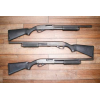
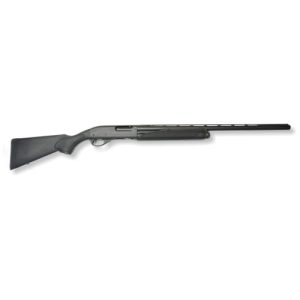
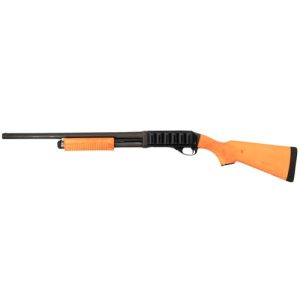
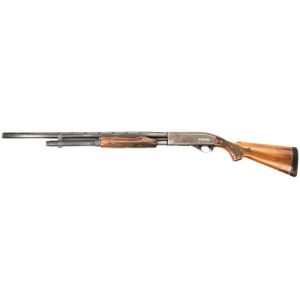
Remington 870 Express Magnum 12GA Police Trade-In Shotgun
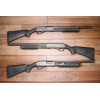
Remington 870 Express Magnum 12 Gauge Police Trade-In Shotgun with Synthetic Stock and 18 Inch Barrel
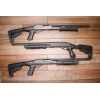
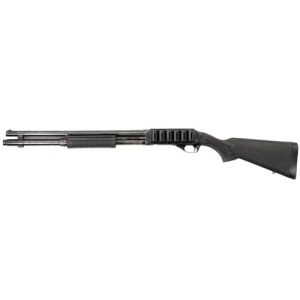
Remington 870 Police Magnum 12GA Police Trade-In Shotgun with Pistol Grip
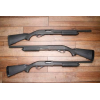
Remington 870 Police Magnum 12GA Police Trade-In Shotgun with Synthetic Stock

Remington 870 Police Magnum 12GA Police Trade-In Shotgun with 20 Inch Barrel
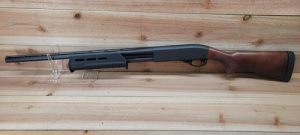
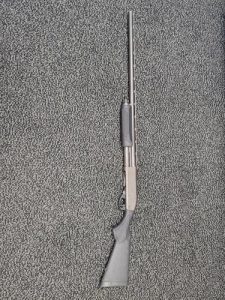
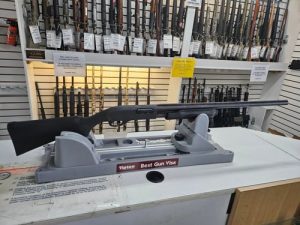
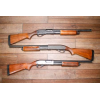
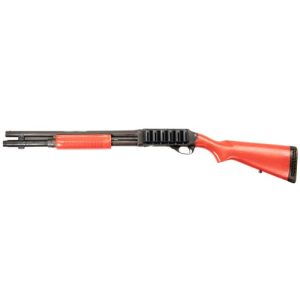
Remington 870 Police Magnum 12GA Police Trade-In Shotgun with Wood Stock
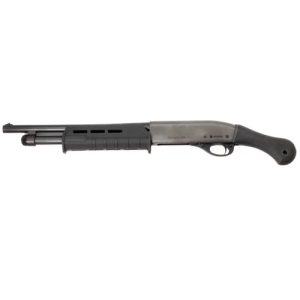
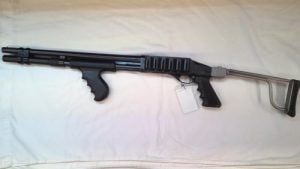
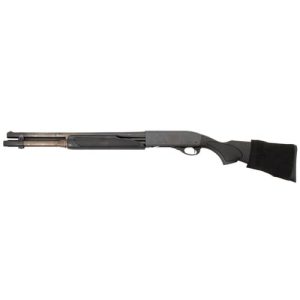
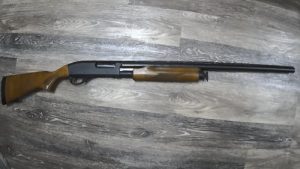
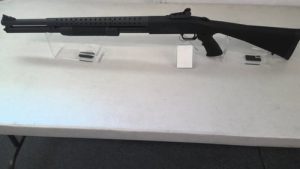
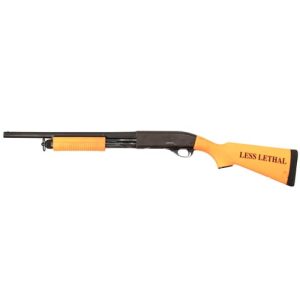
Remington 870 Police Magnum 12GA Police Trade-In Shotgun with Extended Tube Magazine
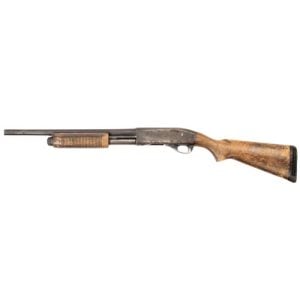
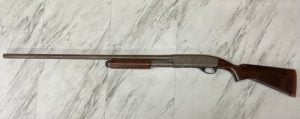
Should You Buy a Mossberg 500 Instead?
The Mossberg 500 is the 870’s natural competitor. Same gauge selection, same general pump-action format, similar price tier on the used market. The two platforms have different design philosophies and serve slightly different buyer profiles.
The Mossberg 500 has a tang-mounted safety (better for left-handed shooters), a dual-extractor design, an aluminum receiver (lighter, but some buyers consider it less durable), and a barrel-shroud design that lets you swap barrels in seconds without tools. The 870 has a cross-bolt safety, single-extractor design, machined-steel receiver (heavier but more durable), and a barrel system that requires removing the magazine cap. Mossberg 500s tend to be slightly lighter; 870s tend to be slightly tighter cycling.
I have shot both extensively. Other pump-action competitors include the discontinued Winchester Model 1300 (replaced by the SXP in 2008) and the Browning BPS, a bottom-eject pump favored by left-handed shooters because the shells eject downward instead of right. For most buyers, the 870 wins on long-term durability and parts ecosystem depth. The Mossberg 500 wins on ergonomic preference (tang safety especially) and lighter weight. Pricing tracks within $50-100 used across most variants. Our Remington 870 vs Mossberg 500 deep-dive covers the full comparison; Mossberg 500 vs 590 covers the duty-grade Mossberg variants. If cross-shopping handguns instead, our used Glock 19 guide, used Sig P226 guide, and used AR-15 guide · used M1 Garand buyer guide · used 1911 buyer guide cover the equivalent tier ladders in their respective markets.
Who Should Not Buy a Used Remington 870
The 870 is the most adaptable pump shotgun in shooting sports, but four buyer profiles should walk away from the used market and either buy new or buy a different platform entirely.
- Left-handed shooters intolerant of a right-hand-only safety. The 870 cross-bolt safety lives on the right side of the trigger guard, awkward for southpaws. A used Mossberg 500 or Mossberg 590 with its ambidextrous tang safety is the better choice. Best Mossberg shotguns covers the options.
- Buyers who do not know what era to look for. The 2010-2018 Freedom Group Express is the trap. If you cannot read a serial-prefix chart and verify a barrel date code, pay the premium for a graded Wingmaster from Guns.com or buy new RemArms instead. A $250 Express that needs $200 of refinishing work is worse than a $400 RemArms Fieldmaster from a dealer.
- Shooters who want an out-of-box optic-ready receiver. Standard used 870s have plain bead-sight barrels. Optic mounting requires drilling and tapping ($120-180), a saddle mount that requires sight-in, or buying a specific Police Magnum variant with a ghost-ring rib. A Benelli Nova or Beretta A300 Ultima Patrol with factory optic cuts is a better one-stop buy.
- Concealed-carry licensees looking for a defensive long gun under 30 inches. Standard 18-inch-barrel 870s ride 38 inches OAL with a full stock. A TAC-14 at 26.3 inches is the only sub-30-inch 870 option and requires comfort with the Raptor pistol grip. A Mossberg 590 Shockwave or a folding-stock Benelli M4 may be the better-balanced compact-defense buy.
Remington 870 Buyer Glossary
- Wingmaster: The 870’s sporting/premium tier since 1950. Walnut stock, polished-blue finish, aluminum trigger group, chrome bolt, vibratory-deburred internals. Made in 12, 20, 16, 28, and .410 gauges.
- Express: The 870’s budget tier since 1987. Plastic trigger group, MIM extractor, hardwood or synthetic stock, matte-blue finish. Same receiver and lockup as Wingmaster, different finish quality.
- Police Magnum: The 870’s duty/law-enforcement variant. Parkerized finish, 3-inch chamber, 18-20″ barrel, heavy-duty sear, dedicated ejector. Used examples are agency trade-ins.
- Marine Magnum: The 870’s nickel-plated corrosion-resistant variant. Electroless nickel covers every metal surface including the bore. For boats and coastal climates.
- TAC-14: Federally classified as a “firearm” (not a shotgun) due to factory 14-inch barrel and Raptor pistol grip never paired with a shoulder stock. No NFA stamp required. Compact home defense.
- Action Bars: The twin steel rails connecting the forend to the bolt assembly. Inspect for peening or hairline cracks. Replacement runs $40-65 in parts.
- Flex-Tab Carrier: An improved shell-carrier design introduced mid-1980s to reduce shell-jam failures. Post-flex-tab 870s carry “Flex-Tab” marking near the carrier; pre-flex-tab guns shoot fine but are more susceptible to specific double-feed situations.
- MIM (Metal Injection Molded): A casting process used by Freedom Group 2007-2020 to reduce extractor and small-parts manufacturing cost. MIM parts are weaker and wear faster than the pre-2007 machined steel originals.
- Chrome Lifter: The shell-carrier finish on pre-1975 production 870s. Chrome plating gave way to black oxide in mid-1975. Chrome-lifter 870s command a $150-300 collector premium over equivalent-condition post-1975 guns.
- BLACKPOWDERX Barrel Code: Remington’s two-letter month/year cipher stamped on the barrel. Letters represent digits via B=1, L=2, A=3, C=4, K=5, P=6, O=7, W=8, D=9, E=0. So “LA” = month 2, year 3 (e.g., February 2003).
- Vibratory Deburring: The internal-finishing process applied to Wingmaster receivers. Tumble-finishing in a vibratory media tank smooths every internal edge and contributes to the Wingmaster’s “cycles like glass” feel that the Express skips.
- Super Magnum: An 870 variant with a 3.5-inch chamber, identifiable by “A” suffix in the model designation. Introduced 1998. Shoots 2¾, 3, and 3.5-inch shells. 2¾-inch and 3-inch chambered 870s cannot fire 3.5-inch shells.
Related Reading
- Used shotguns buyer guide: the full used-shotguns sub-hub covering Remington 870s, Mossberg 500s, Benelli pumps, and vintage Winchesters.
- USA Gun Shop’s used guns hub: the pillar guide covering handguns, rifles, and shotguns across the used market.
- Used Glock 19 buyer guide: the sibling spoke covering used 9mm carry pistols with the same buyer-tier framework.
- Used Sig P226 guide: the sibling spoke covering federal trade-in handguns and variant pricing.
- Used AR-15 buyer guide: the sibling spoke covering 870’s rifle counterpart with the same brand-tier framework.
- Remington 870 review (2026): the new-market review covering current RemArms Fieldmaster, Wingmaster, Tactical, TAC-14, and Home Defense.
- Remington 870 vs Mossberg 500: the head-to-head comparison covering both platforms across price tiers.
- Best pump-action shotguns 2026: the broader pump-shotgun new-market ladder that sets used pricing expectations.
Frequently Asked Questions
Is a used Remington 870 worth buying?
Yes, especially a pre-2007 Remington Arms Wingmaster. The 870 has the deepest parts ecosystem of any pump shotgun ever built, with over 11 million produced since 1950, a steel receiver that outlasts the shooter, and a price floor at $200 for a working Express trade-in. The catch: manufacturing era matters. Avoid 2010-2018 Freedom Group production unless you inspect it carefully.
How much is a used Remington 870 worth?
A used Remington 870 ranges from $200 (worn Express trade-in) to $1,400+ (Wingmaster Classic Trap collector). Standard used Wingmaster averages $399 to $750 depending on gauge and era; police trade-in Wingmaster runs $399 to $500; Express Magnum runs $429 to $575; Marine Magnum runs $550-850; Police Magnum trade-in runs $399 to $409. Pre-1975 chrome-lifter Wingmasters command $700-1,200 collector premiums.
What is the difference between a Remington 870 Wingmaster and an Express?
The Wingmaster uses an aluminum trigger group, chrome-plated bolt, walnut stock, polished-blue finish, machined steel extractor, and vibratory-deburred internals. The Express uses a plastic trigger group, plastic mag retention, hardwood or synthetic stock, matte-blue finish, MIM extractor, and unfinished internal edges. Same receiver and lockup; different fit and finish. The Wingmaster premium buys you how the gun feels at 1,000 rounds.
How do I tell what year my Remington 870 was made?
Two methods. First, the serial-number prefix: no prefix = 1950-1967, S = 1968-1973, T = 1974-1977, V = 1978-1983, W = 1984-1989, X = 1990, A = 1991-1993, B = 1994-1996, C = 1997-2000, D = 2001-2007, post-D = 2007-2020 Freedom Group, post-bankruptcy = 2021+ RemArms. Second, the two-letter barrel date code spells the cipher BLACKPOWDERX where B=1, L=2, A=3, C=4, K=5, P=6, O=7, W=8, D=9, E=0.
Is the Remington 870 still being made?
Yes, by RemArms LLC out of LaGrange, Georgia. After Remington's 2020 bankruptcy, Roundhill Group LLC acquired the firearms division and formed RemArms; production resumed in 2021. The current Fieldmaster, Wingmaster, Tactical, TAC-14, and Home Defense models are all in active production with improved fit and finish over the 2010-2020 Freedom Group era.
What is the difference between a Remington 870 Wingmaster and Police Magnum?
The Wingmaster is the sporting-grade flagship with walnut, polished blue, and a 2¾-inch chamber on older guns. The Police Magnum is the duty-grade variant with parkerized matte finish, 3-inch magnum chamber, 18- or 20-inch cylinder-bore barrel, heavy-duty sear spring, and an internal lockup tuned for high round counts. Police Magnums also use a different ejector and frequently a "Police Magnum" or "P" receiver rollmark.
Are police trade-in Remington 870s reliable?
Yes. Most agency 870s see qualification rounds twice a year, not weekend range sessions, so actual round counts sit under 500. The external wear is cosmetic (holster scuffs, rack rash on the receiver) but the internals are excellent because departments follow strict maintenance schedules. Inspect the bore, action bars, and bolt face anyway, since the same gun may have been issued for many years.
What should I look for when buying a used Remington 870?
Cycle dummy rounds through the full action. Check the bore for bulging, pitting, or rust. Inspect action bars for peening or chipping. Look at the bolt face for excessive wear. Verify the magazine tube isn't dented (1990+ Express guns have intentional dimples, those are normal manufacturing keys). Confirm ejector and shell-latch alignment. Cosmetic dings are fine; rust under the finish or a cracked locking lug shelf is a deal-breaker.
4,659+ Gun & Ammo Deals
Updated daily from 200+ top retailers. Filter by category, caliber, action type, and price.