
Affiliate disclosure: This SIG Cross review contains affiliate links. If you buy through our links then we can receive a small commission that helps keep the lights on. You don’t pay anything more.
- Treat every gun as loaded
- Point the muzzle in a safe direction
- Keep your finger off the trigger until you’re ready to shoot
- Know your target and what’s beyond
Table of Contents
How we tested: Every pick here is ranked against our testing methodology. Minimum round counts, accuracy and reliability protocols, the failures that disqualify a gun.
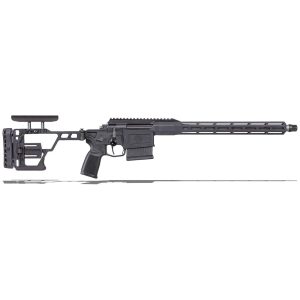
Review: SIG Cross – A Precision Rifle That Folds Into a Backpack
Our Rating: 8.5/10
- Street Price: $1,600 (Use our live pricing for the best up to date deal)
- Caliber: .308 Winchester
- Action: Bolt action
- Barrel Length: 16 in (406.4 mm)
- Barrel Material: Stainless steel
- Twist Rate: 1:10
- Threads: 5/8-24, tapered shoulder
- Muzzle Device: Thread protector with taper cap
- Overall Length: 36.9 in extended, 34.9 in collapsed, 26.1 in folded
- Overall Width: 3.4 in (86 mm)
- Height: 7.1 in
- Weight: 6.6 lb (3.0 kg)
- Stock: Folding precision adjustable
- Trigger: Two-stage adjustable match, curved shoe
- Safety: Ambidextrous AR-style
- Forend: Free-floating, M-LOK
- Receiver: Alloy, black anodized
- Magazine: AICS pattern, one 5-round polymer included
- Item Number: CROSS-308-16B
Pros
- Folds to 26.1 inches and still shoots precisely
- 6.6 lb with a chassis stock is remarkable
- Two-stage adjustable match trigger as standard
- Takes AICS magazines everybody already owns
Cons
- Costs three times a Bergara that shoots as well
- 16 inch barrel gives up velocity at distance
- Folding hinge adds a wear point a solid stock doesn’t have
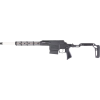
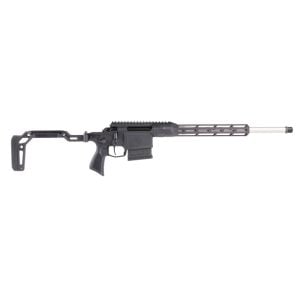
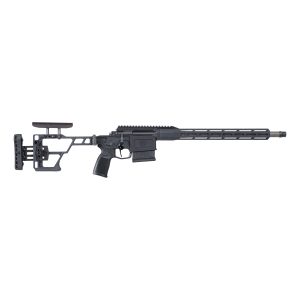
Quick Take
Precision rifles are heavy. That’s the deal you accept: a chassis, a heavy barrel and a proper stock buy you consistency, and you carry twelve or fourteen pounds to get it. The SIG Cross weighs 6.6 pounds and folds to 26.1 inches, which is shorter than most rifle cases are wide.
I spent 400 rounds finding out whether that costs you anything at the target. Mostly it doesn’t. The two-stage trigger is genuinely good, the chassis is rigid where it matters, and half-MOA groups with match ammunition are realistic rather than optimistic.
What it costs you is money. At $1,600 this is three times a Bergara B-14 that will shoot just as small from a bench. You’re paying for the folding hinge, the weight saving and the fact that this rifle goes places a conventional precision rifle simply cannot.
Best For: Backcountry hunters, anybody who packs a rifle rather than carries it in a case, and shooters who want one rifle that works from a pack and off a bipod. Skip it if the rifle lives in a truck and gets shot off a bench, where a Bergara or a Tikka does the same job for a third of the money.
Why SIG Built It This Way
There were two kinds of bolt gun before this. Hunting rifles are light and carryable and give up adjustability. Precision rifles are adjustable and consistent and weigh as much as a small child. Anybody who wanted both had to build it, usually badly, usually heavy anyway.
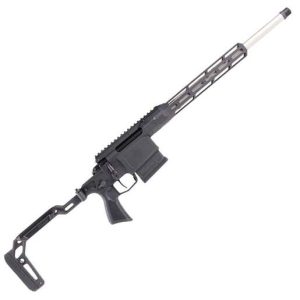
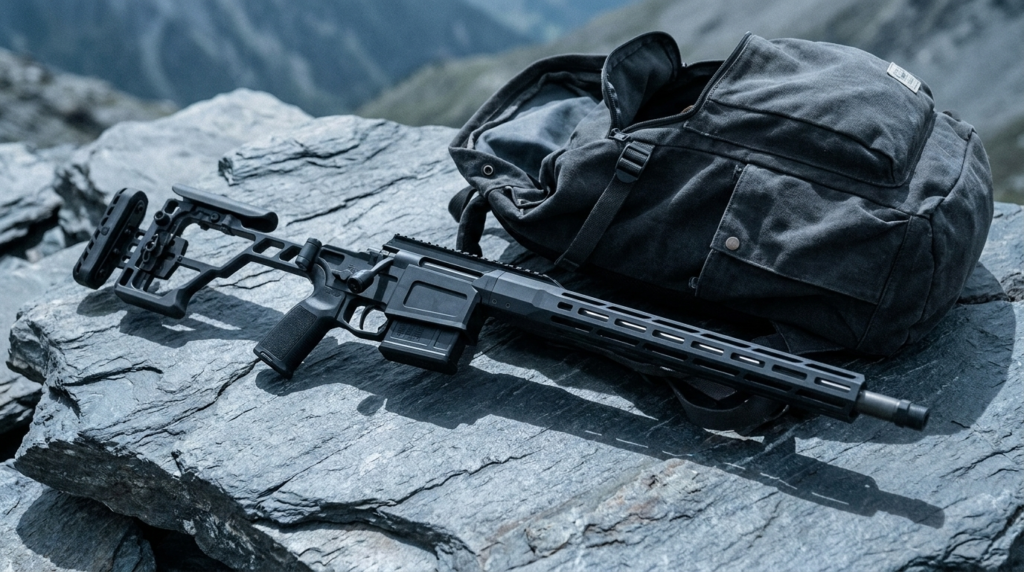
SIG Sauer approached it from the chassis side rather than the hunting side. The receiver is alloy rather than steel, the chassis is skeletonised aggressively, and the stock folds against the left of the receiver. Add it up and you get 6.6 pounds with a fully adjustable cheek riser and length of pull, which is roughly what a plain hunting rifle weighs with none of that.
The whole design reads as a series of consequences flowing from one decision, which is that the rifle had to fit inside a pack rather than a case, and once you accept that constraint the alloy receiver, the skeletonised chassis, the sixteen inch barrel and the folding hinge all stop looking like separate choices and start looking like the only way to get there.
The AICS magazine choice is the quietly clever part. Every precision shooter already owns AICS magazines, and they’re available everywhere in every capacity. SIG could have designed a proprietary magazine and sold them at forty dollars each. They didn’t.
Sixteen inches of barrel is the other deliberate call. It’s short for .308 and it costs you velocity, but it’s what makes a 26 inch folded package possible. This rifle was designed around fitting in a pack, and every other decision follows from that.
How the Cross Compares
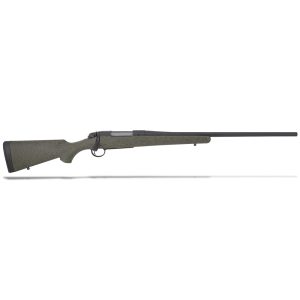
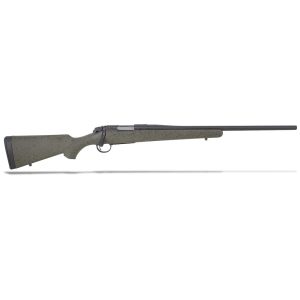
Bergara B-14 ($570–$770)
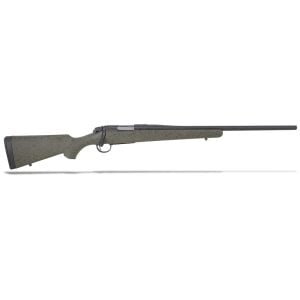
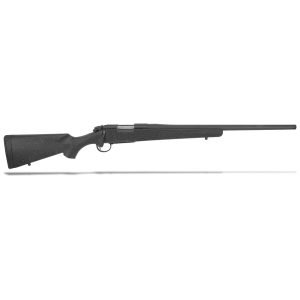
The B-14 is the value benchmark in precision-capable bolt guns and it is a third of the price. Bergara barrels are genuinely excellent, the action is smooth, and a Hunter or Ridge will group with anything here off a bench.
What it won’t do is fold, and it weighs two to three pounds more depending on configuration. If your rifle only ever travels between the truck and the bench, buy the Bergara and spend the difference on glass and ammunition. That’s the honest recommendation for most buyers.
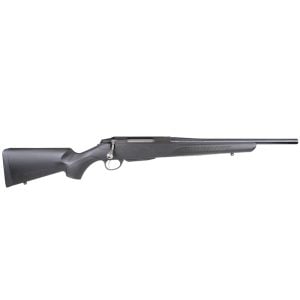
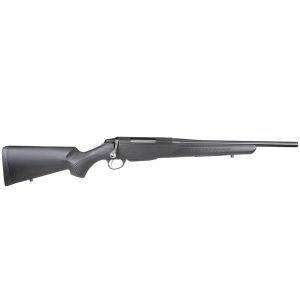
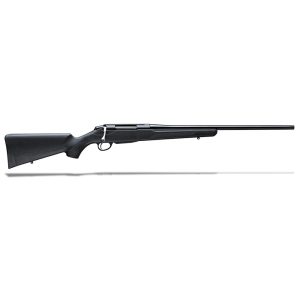
Tikka T3x ($520–$769)
The T3x has the smoothest factory bolt throw of anything in this comparison and a deserved reputation for shooting well out of the box. Tikka builds them light, and the Lite models run around six and a half pounds, which puts them right alongside the Cross on weight.
The difference is adjustability. A T3x Lite has a fixed comb and a plastic stock. The Cross gives you an adjustable cheek riser, adjustable length of pull, a proper chassis and a folding hinge. If you want light and simple, Tikka. If you want light and adjustable, this.

Christensen Arms Mesa ($850–$999)
Christensen chases the same lightweight-precision brief and gets there with carbon fiber rather than a skeletonised chassis. A Mesa FFT lands close to six pounds, which undercuts the Cross, and the carbon-wrapped barrel options are genuinely good.
It’s a conventional stock though, so nothing folds and nothing adjusts without an aftermarket part. At $850 to $999 it also sits neatly between the Bergara and the SIG, which makes it the sensible middle answer if the folding hinge is not the thing you’re buying.


Savage 110 ($389–$534)
The 110 is here to mark the floor. Savage’s AccuTrigger is still one of the best factory triggers at any price, the actions shoot well above their cost, and you can be in a capable .308 for under four hundred dollars.
Nobody cross-shops a $389 Savage against a $1,600 SIG. It belongs here because it answers the question honestly: if all you need is a rifle that hits things accurately, this does that, and everything above it is buying convenience, adjustability or weight saving.
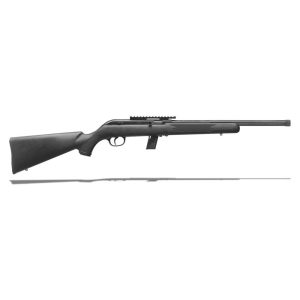
Verdict: On pure accuracy per dollar the Bergara wins and it isn’t close. The Cross earns its price on portability, and only if you actually pack a rifle. See our best .308 rifles guide for the wider field.
Testing Protocol
Phase 1: Break-In
First 40 rounds were Federal Gold Medal Match 168gr, shot fire-and-clean for the first ten and then in five-round strings, on a still 64-degree morning. Bolt lift was slightly stiff for the first twenty rounds and freed up noticeably after that. The chassis needed no attention beyond setting the cheek height and length of pull to fit me.
Phase 2: Reliability
Another 360 rounds across three sessions, mixing Federal Gold Medal Match 168gr, Hornady Precision Hunter 178gr ELD-X, Prvi Partizan 145gr and a hundred rounds of Winchester 147gr bulk. Temperatures ran from 58 to 91 degrees.
No failures to feed and no failures to extract across all 400 rounds. AICS magazines from three different makers all seated and fed without complaint, which is exactly the point of choosing a standard pattern.
The folding hinge is the thing everybody wants to know about. I folded and unfolded it deliberately at the start of every string, somewhere north of eighty cycles. Lockup at the end was indistinguishable from lockup at the start, with no perceptible play and no shift in zero that I could measure. Eighty cycles is not eight thousand, but nothing about it felt like a weak point.
Phase 3: Accuracy
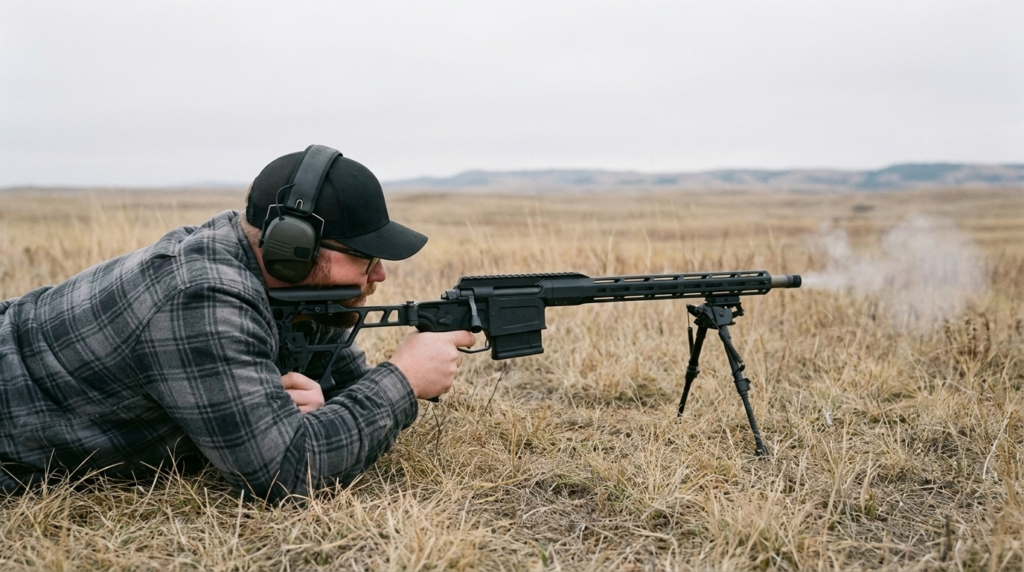
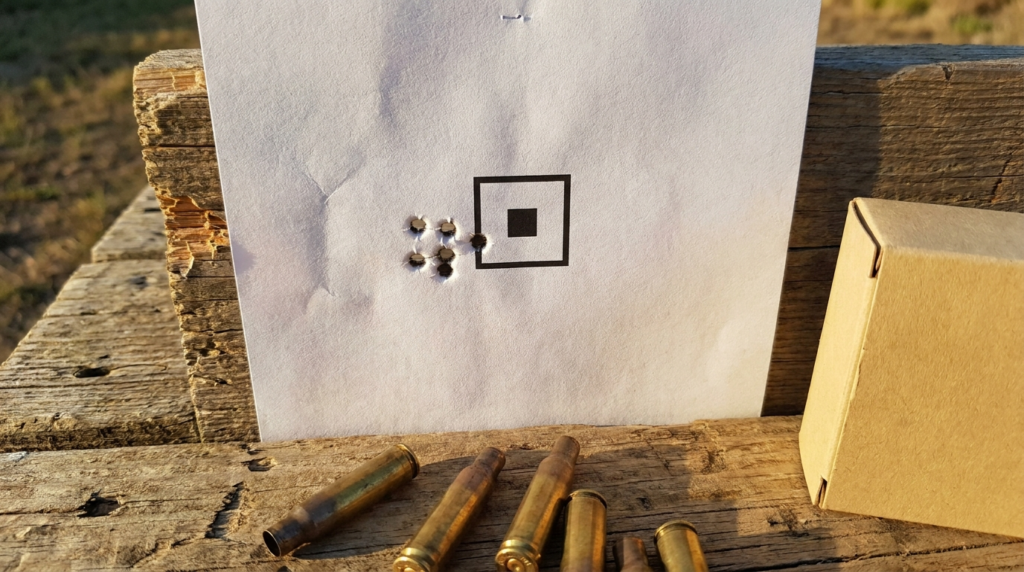
Accuracy testing at 100 yards off a bipod and rear bag, five-shot groups, with a 4-16x optic. Federal Gold Medal Match 168gr averaged 0.6 MOA across five groups with a best of 0.4. Hornady 178gr ELD-X came in at 0.8. The Prvi 145gr opened to 1.6 and the Winchester bulk to 1.9, which is what bulk ammunition does.
The two-stage trigger deserves most of the credit. It breaks cleanly after a defined first stage and it is adjustable, which at this price it should be, and plenty of rifles costing more do not offer it.
Worth being clear about the barrel though. Sixteen inches of .308 gives up meaningful velocity against a 22 or 24 inch tube, and that shows up as drop and drift once you get past four hundred yards. The rifle is more precise than its barrel length lets it be at distance.
Ammunition Log
- Federal Gold Medal Match 168gr, 140 rounds
- Hornady Precision Hunter 178gr ELD-X, 80 rounds
- Prvi Partizan 145gr, 80 rounds
- Winchester 147gr bulk, 100 rounds
Total: 400 rounds, zero malfunctions, roughly 80 fold cycles.
Tracking & Observations
At 400 rounds the bore shows normal throat wear and cleans up without effort. The anodizing on the chassis has held up with only light rub marks where the folded stock contacts the receiver. Bolt lugs show even wear on both sides. The hinge detent still snaps positively into place.
What This Means for You
- Break-in: bolt lift frees up in the first twenty rounds. Nothing else needs settling.
- Ammo: feed it match ammunition. The gap between 168gr match and bulk was more than a full MOA.
- Magazines: any AICS pattern works. Buy whatever is cheapest and in stock.
- Zero: folding and unfolding did not shift zero measurably across eighty cycles.
- Recoil: 6.6 lb in .308 is brisk. A brake or a can transforms it, and the muzzle is already threaded.
Performance Testing Results
Reliability (8/10)
Four hundred rounds with no feeding or extraction problems, across four ammunition types and three brands of magazine. For a bolt gun that’s the expected result rather than a triumph, and the AICS choice removes the most common source of trouble before it starts.
The score holds at 8 rather than 9 purely because a folding hinge is a moving part that a solid stock doesn’t have. Mine showed no wear at eighty cycles. Ask me at eight hundred.
Accuracy (9/10)
A 0.6 MOA average with match ammunition from a 16 inch barrel on a 6.6 pound rifle is genuinely impressive. Light rifles are usually harder to shoot small because there’s less mass to absorb your mistakes, and this one shrugs that off. The free-floating forend and the two-stage trigger are doing real work.
Ergonomics & Recoil (9/10)
Everything adjusts, and the controls are where an AR shooter already expects them. The safety is ambidextrous and falls under the thumb, the grip takes standard AR grips if you dislike the factory one, and the M-LOK forend means you’re not buying an adapter to mount a bipod.
Recoil is the honest trade. Six and a half pounds of .308 with no brake fitted is noticeably sharper than a ten pound precision rifle, and after forty rounds off a bipod you feel it. The muzzle is threaded 5/8-24 from the factory, which tells you SIG expected most owners to fit something.
Fit, Finish, and Quality Control (9/10)
The machining is excellent and the anodizing is even throughout. The hinge locks with no detectable play, which is the single thing that would have sunk this design if SIG had got it wrong. Bolt throw is smooth rather than glassy, and that’s the one area where a Tikka still beats it.
Technical Deep Dive
The Folding Chassis
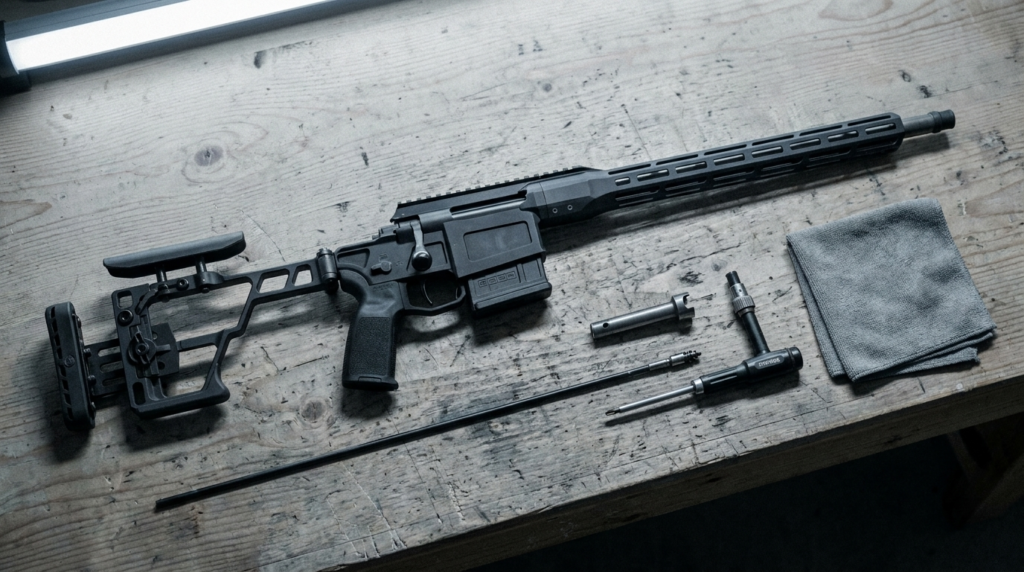
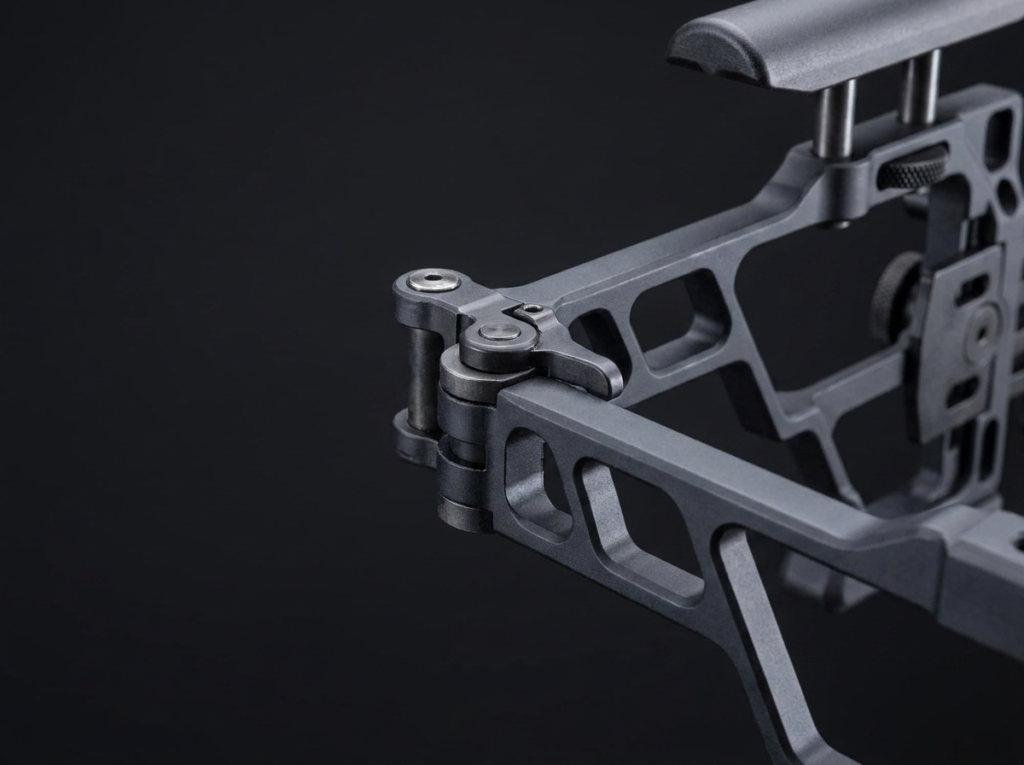
The stock folds to the left against the receiver, taking the rifle from 34.9 inches collapsed to 26.1 inches folded. That number is the entire reason this rifle exists. A 26 inch package fits inside a large daypack, goes in an aircraft case that isn’t obviously a rifle case, and rides across a back without catching on everything. If you’re weighing it against conventional options for a pack-in hunt, our best elk rifle guide covers the field it’s competing with.
The hinge is the engineering risk and SIG clearly knew it. It locks with a positive detent and there’s no play at the joint when deployed. Folding does not touch the barrelled action or the optic, which is why zero survives the cycle.
Alloy Receiver and Weight
The receiver is alloy rather than steel, which is where a large share of the weight saving comes from. That’s the decision purists will argue about, and it is a genuine trade: steel is stiffer and more forgiving of hard use. At 400 rounds there’s no evidence of a problem, and 6.6 pounds with a full chassis is not achievable any other way.
Barrel and Threads
Sixteen inches of stainless with a 1:10 twist, threaded 5/8-24 with a tapered shoulder and shipped with a thread protector rather than a brake. The 1:10 twist handles 168 and 178 grain match bullets properly, which is the weight band this rifle is aimed at.
The tapered shoulder matters more than it sounds. It gives a muzzle device or a suppressor a proper concentric seat rather than relying on the thread alone, which is the correct way to do it and not universal at this price.
| Component | Specification | Benefit |
| Folded Length | 26.1 in | Fits a daypack; the whole reason the rifle exists |
| Weight | 6.6 lb (3.0 kg) | Hunting-rifle weight with full chassis adjustability |
| Receiver | Alloy, black anodized | Where most of the weight saving comes from |
| Trigger | Two-stage adjustable match | Defined first stage and a clean break, adjustable |
| Magazine | AICS pattern | Cheap, everywhere, and you probably own some |
| Threads | 5/8-24, tapered shoulder | Concentric seat for a can or brake, not thread-only |
Cross Variants
SIG sells the Cross in several chamberings and barrel lengths, and there are now TRAX and STX evolutions of the original.
Cross .308 Win 16 inch (CROSS-308-16B) $1,600
The rifle tested here and the most portable of the range. 16 inch stainless barrel, 1:10 twist, 6.6 lb, folds to 26.1 inches. The right pick if the folding length is what you are buying.
Cross 6.5 Creedmoor 18 inch (CROSS-65-18B) $1,600
Two more inches of barrel and a 1:8 twist for heavier 6.5 bullets. The better choice if you shoot past 600 yards, since 6.5 Creedmoor gives up far less to a short barrel than .308 does.
Cross TRAX / STX $1,600
Later evolutions of the platform. TRAX is the current mainstream configuration at broadly the same money, and STX adds a 20 inch barrel and a more competition-oriented setup. Check which one a listing actually refers to before buying.
Upgrades Worth Making
| Upgrade Category | Recommended Component | Why It Matters | Cost Estimate |
| Muzzle Device | Brake or suppressor, 5/8-24 | 6.6 lb in .308 needs help; threads are already there | $90 – $1,200 |
| Optic | 4-16x or 3-18x with an exposed elevation turret | The rifle out-shoots cheap glass easily | $500 – $1,400 |
| Bipod | M-LOK-mount bipod, no adapter needed | Forend is already M-LOK, so skip the rail | $90 – $300 |
| Magazines | Any AICS 5 or 10 round | One is included; standard pattern keeps spares cheap | $35 – $60 each |
| Ammunition | 168gr or 178gr match | Worth more than a full MOA over bulk in our testing | $35 – $50 per 20 |
Common Problems & Solutions
- Stiff bolt lift when new: normal, and it frees up inside the first twenty rounds. Do not start polishing lugs on a rifle you have shot twice.
- Groups opening with cheap ammunition: this rifle rewards match ammunition more than most. Bulk 147gr opened to nearly 2 MOA for us against 0.6 with 168gr match.
- Sharp recoil off a bipod: 6.6 pounds is light for .308. Fit a brake or a suppressor; the muzzle is threaded from the factory for exactly this reason.
- Confusion between Cross, TRAX and STX: listings use the names loosely. Check the item number and the barrel length rather than trusting the title.
- Velocity loss at distance: not a fault, a design consequence. If you shoot past 600 yards regularly, take the 6.5 Creedmoor version.
Who Should NOT Buy This Gun
- Bench shooters: if the rifle only ever sees a bench, you are paying $1,000 for a hinge you’ll never use. A Bergara or Tikka shoots as well for a third of the money.
- Long-range shooters: a 16 inch .308 gives up too much velocity past 600 yards. Take the 6.5 Creedmoor version, or a longer barrel from our chassis rifle guide.
- Anyone recoil sensitive: 6.6 lb in .308 without a brake is genuinely sharp. Budget for a muzzle device or look at something heavier.
- Steel-action purists: the receiver is alloy. That is how the weight target was hit, and if it bothers you on principle, no amount of test data will fix that.
- Budget buyers: at $1,600 before glass, this is a considered purchase. A capable precision rifle exists at half the price if portability isn’t the point.
Final Verdict
The SIG Cross solves a problem nobody had solved properly. It puts a genuinely adjustable chassis rifle into a 6.6 pound package that folds to 26 inches, and it does that without giving up the accuracy that makes a precision rifle worth owning. Half-MOA groups from a 16 inch barrel on a rifle this light is a real achievement.
Think about how the rifle will actually be used before the price makes any sense, because the answer changes the maths completely: a rifle carried on foot for eight hours across broken ground is solving a problem that a rifle carried forty yards from a truck simply does not have, and the folding hinge is worth real money in the first case and nothing at all in the second.
The catch is that portability is a narrow benefit. If you hunt on foot, pack into country, or fly with a rifle, it’s worth every penny of the premium. If your rifle lives in a truck and gets shot off a bench, you are paying about a thousand dollars for a hinge, and a Bergara will embarrass the value proposition every time.
Be honest with yourself about which of those you are, and the buying decision makes itself.
Final Score: 8.5/10 – Brilliant at the one thing it was built for, and expensive if that thing isn’t what you need.
FAQ: SIG Cross
How short does the SIG Cross fold?
26.1 inches with the stock folded, down from 34.9 inches collapsed and 36.9 inches at full extension. That is the entire reason the rifle exists. A 26 inch package fits inside a large daypack and travels in a case that doesn't announce itself as a rifle case, which no conventional .308 bolt gun manages.
How much does a SIG Cross cost?
Street pricing sits around $1,600 and has been stable. That is roughly three times a Bergara B-14 and about double a Tikka T3x, both of which will group with it off a bench. You are paying for the folding chassis and the 6.6 lb weight, not for accuracy the cheaper rifles lack.
How accurate is the SIG Cross?
Ours averaged 0.6 MOA with Federal Gold Medal Match 168gr across 400 rounds, measured as five-shot groups at 100 yards. That is genuinely good for a 16 inch barrel on an alloy receiver. Bulk 147gr ammunition opened up to about 2 MOA, which is the ammunition talking rather than the rifle.
What magazines does the SIG Cross use?
AICS-pattern box magazines, which is one of the best decisions SIG made. They are cheap, available everywhere, and most people who own a precision rifle already have a drawer of them. There is no proprietary magazine to hunt for and no premium to pay when you want spares.
How much does the SIG Cross weigh?
6.6 pounds unloaded, per SIG. That is the number that makes the rifle unusual: it weighs what a plain hunting rifle weighs while giving you an adjustable cheek riser, adjustable length of pull and a full chassis. The alloy receiver and the aggressively skeletonised stock are where the weight went.
Is the 16 inch barrel too short for .308?
It costs you velocity, and past roughly 600 yards you will feel it. Inside that, no. If you plan to shoot further, the 6.5 Creedmoor Cross with the 18 inch barrel is the better buy, because 6.5 Creedmoor gives up far less to a short barrel than .308 does. Choose the chambering by your distance, not by preference.
Is the SIG Cross threaded for a suppressor?
Yes, 5/8-24 with a tapered shoulder rather than thread-only. The tapered shoulder matters more than people assume: it gives a can or brake a concentric seat to index against, which is what keeps point of impact repeatable when you take the suppressor on and off.
SIG Cross vs Bergara B-14, which should I buy?
On accuracy per dollar the Bergara wins and it isn't close, at roughly a third of the price for equal groups off a bench. Buy the Cross only if you genuinely pack a rifle rather than carry it in a case. Portability is the one thing the Bergara cannot do, and it is the only thing you are paying the premium for.
4,715+ Gun & Ammo Deals
Updated daily from 200+ top retailers. Filter by category, caliber, action type, and price.
Related Guides