Last updated August 2026 · By Nick Hall, has looked at enough fired brass under magnification to know what a firing pin actually leaves behind
Quick take: Congress asked NIST to look at the research behind firearm microstamping. It found the studies do not agree on whether the marks can be made reliably or read at all. Ruger, Smith & Wesson and Glock have each told a court that California’s rule cannot be met. Those two facts now sit on the same table.
- What happened: NIST, an agency within the Department of Commerce, reviewed the existing microstamping research at the request of House members and declined to validate the technology’s reliability.
- What it found: Significant disagreement across the literature over whether microstamping can produce repeatable and legible identifying marks on fired cartridge cases.
- What the makers say: Ruger, Smith & Wesson and Glock have all told a court that compliance with California’s microstamping regulations is not achievable.
- Why it matters: Microstamping mandates are the mechanism behind California’s handgun roster, which has frozen the list of new pistols approved for sale in the state.
A technical mandate that no manufacturer can satisfy stops being a regulation and becomes a prohibition with extra steps. That is the argument gun makers have been making for over a decade, and a federal technical agency has just declined to contradict it.
Deals of the Day
Today's best discounts · Updated 3x daily
Gun Deals
See All →
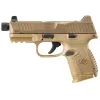
Ammo Deals
See All →




Table of Contents
What Microstamping Was Supposed to Do
The concept is simple enough to explain in a sentence, which is part of why it has survived so long politically. Machine a microscopic identifier onto the firing pin so that every cartridge case a gun fires carries a unique code, then let investigators read that code off brass recovered at a scene.
In a laboratory, on a new gun, with clean brass, it can work. That has never been the objection.
The objection is everything else: firing pins wear, fouling fills the engraving, the part is replaceable in minutes with a punch and a screwdriver, and anyone can pick up somebody else’s brass at a range and scatter it wherever they like.
What NIST Actually Said
NIST is the federal government’s measurement science agency. It is not a firearms body and it has no position in the gun debate, which is exactly why House members asked it to look at the question.
Its review found the research does not agree on whether the marks can be made again and again, or read once they are. That is careful wording. It is not a yes.
For a technology that has been mandated in state law for years on the premise that it works, a federal technical review declining to say so is a meaningful result.
NIST exists to set measurement standards for everything from atomic clocks to forensic methods, and its assessments carry weight precisely because it has no stake in the outcome of any policy fight. That institutional distance is the whole reason the review was commissioned.
The Manufacturers Are Unusually Aligned
Ruger, Smith & Wesson and Glock do not agree on much. They compete directly across the entire handgun market and they have every commercial reason to differentiate themselves from one another.
All three have told a court the same thing. California’s rule cannot be met. When the three biggest names in the American handgun trade file the same technical answer, the simplest reading is that the answer is right.
Backers of the idea have a different answer. They say the gun trade is refusing to spend the money. That case gets weaker each year, because no maker anywhere has built a pistol that meets the rule at scale.
What This Does to California’s Roster
California’s handgun roster is the practical consequence of all this. A new pistol model cannot be sold in the state unless it meets the roster requirements, and microstamping is one of them.
The effect has been a slow freeze. New models stop arriving, the approved list ages, and California buyers end up choosing from a catalogue that increasingly reflects what was available years ago rather than what is on the market now.
Our guide to California-legal handguns covers what is actually on the roster today, which is a shorter list than most people expect.
Why the Idea Will Not Die
Microstamping keeps reappearing in proposed legislation in multiple states despite the technical record, and the reason is that it polls well. It sounds like forensic science, it sounds targeted, and it does not read as a ban.
But a requirement that cannot be satisfied functions as a prohibition regardless of what it is called, and that is the substance of the legal challenge. The question courts are being asked is whether a mandate is a regulation of handgun sales or an effective ban on new ones.
The Justice Department is separately suing California over its ban on the sale of Glocks and other striker-fired handguns, which is a related front in the same fight.
Both disputes turn on the same underlying complaint, which is that a requirement no manufacturer can satisfy operates as a ban whatever the legislature calls it. The NIST review does not decide that question, and it removes one of the assumptions the other side has been relying on.
What to Watch
Watch whether the NIST review shows up in briefing. A federal technical agency declining to validate the premise of a state mandate is exactly the kind of evidence that changes how a court reads the record.
Watch the states with bills still pending. A bill written before this review is a different thing once it comes up for a vote after it.
And watch the roster. If California buyers keep losing access to current-production handguns, the political pressure comes from an unusual direction, which is people who simply want to buy a gun that exists.
Firing pins wear. Fouling builds. Parts swap out. Brass gets picked up. NIST just declined to pretend otherwise.
Frequently Asked Questions
What is firearm microstamping?
It is a proposed technology in which a microscopic identifier is machined onto a gun's firing pin so that each fired cartridge case carries a unique code, intended to let investigators trace brass recovered at a scene back to a specific firearm.
What did NIST conclude?
NIST reviewed the existing research at the request of House members and found significant disagreement over whether microstamping can reliably produce repeatable and legible marks. It did not validate the technology.
Why do manufacturers say they cannot comply?
Because firing pins wear, fouling obscures fine engraving, the part can be replaced in minutes, and fired brass is easily collected and moved. Ruger, Smith and Wesson and Glock have all told a court compliance is not achievable.
What is the California handgun roster?
It is the list of handgun models approved for sale in California. A pistol cannot be sold new in the state unless it satisfies the roster requirements, of which microstamping is one.
Has any manufacturer produced a compliant handgun?
No manufacturer has brought a microstamping-compliant pistol to market at scale, which is the central practical fact in the dispute and the reason the mandate is described by challengers as a de facto ban.
What is NIST?
The National Institute of Standards and Technology, the federal measurement science agency within the Department of Commerce. It has no role in firearms policy, which is why its technical assessment carries weight here.
Does this ruling change what I can buy in California?
No. The NIST review is a technical assessment rather than a court ruling or a change in law. The roster operates exactly as it did before, and the litigation over it continues.
Are other states considering microstamping?
Microstamping requirements continue to appear in proposed legislation in several states. Whether the NIST review affects those bills is one of the open questions this raises.
Related Reading
- California-legal handguns explained
- California gun laws explained
- The best California CCW guns
- California-legal AR-15 rifles
- The best 9mm pistols
4,587+ Gun & Ammo Deals
Updated daily from 200+ top retailers. Filter by category, caliber, action type, and price.
Related Guides