

Last updated September 23, 2026 · By Nick Hall, who has run ACOGs on AR-15s, a .308 gas gun and a 9mm carbine
Some of the links below are affiliate links, meaning at no additional cost to you, we may earn a commission if you click through and make a purchase.
The best Trijicon ACOG for most AR-15 owners is the TA31 4×32 BAC, the model the Marine Corps fielded as the RCO. If you run a .308 or you can’t live with 1.5 inches of eye relief, step to the 3.5×35 TA11. Want a battery you control instead of fiber optic? Get one of the two LED models. Carbine and 9mm shooters are better served by the tiny 1.5x16S. Below are nine ACOGs, what each one is actually for, and what they cost in September 2026.
- Treat every gun as loaded
- Point the muzzle in a safe direction
- Keep your finger off the trigger until you’re ready to shoot
- Know your target and what’s beyond
How we tested: Every pick here is ranked against our testing methodology. Minimum round counts, accuracy and reliability protocols, the failures that disqualify a gun. Where we have not shot a specific variant ourselves, we say so in that section.
Best ACOG Scopes in 2026 at a Glance
| ACOG | Magnification | Price |
|---|---|---|
| BEST OVERALL Trijicon ACOG 4×32 BAC (TA31) | 4x | Check Price ↓ |
| BEST FOR .308 Trijicon ACOG 3.5×35 (TA11) | 3.5x | Check Price ↓ |
| BEST LED Trijicon ACOG 3.5×35 LED (TA110) | 3.5x | Check Price ↓ |
| LIGHTEST 3x Trijicon ACOG 3×30 (TA33) | 3x | Check Price ↓ |
| BEST FOR 9MM CARBINES Trijicon ACOG 1.5x16S (TA44) | 1.5x | Check Price ↓ |
Table of Contents
Introduction: Buying a Trijicon ACOG in 2026
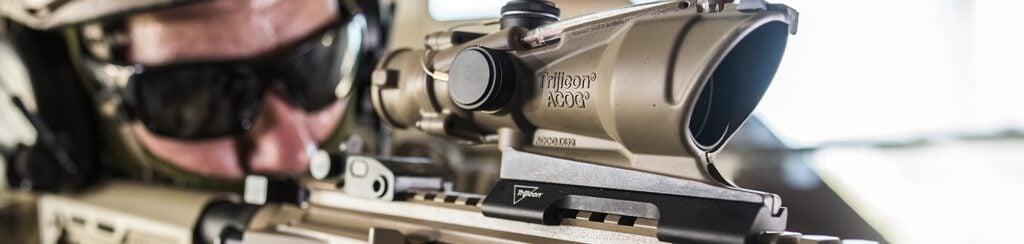
The ACOG is the optic most people picture when they think “military scope,” and for once the reputation is earned. Trijicon says it has built more than one million of them. It’s a fixed-power prism scope in a forged 7075 aluminum housing, and most models light the reticle with fiber optic and tritium, so there’s no battery to die on you.
The trouble is that “ACOG” isn’t one scope. Trijicon’s current spec sheet lists twelve families, from a 7.2-ounce 1.5x to a 36.9-ounce 6x machine gun optic, and each family comes in half a dozen reticles calibrated for different cartridges. Buy the wrong one and your bullet drop marks are off at every distance. That’s the mistake I see most often at the range.
I’ve had ACOGs on a 16-inch AR-15, an 18-inch .308 gas gun and a 9mm carbine, and I’ve shot the BDC holds out to 500 yards on steel to see where they actually land. This guide sorts the lineup by what you shoot and how you shoot it. If you’re still deciding between a fixed prism and a variable, our best LPVO scopes guide and the wider AR-15 optics guide cover the other side of that choice.
Every price below comes from the live pricing card under each pick, pulled from retailers we track. Those numbers move, so treat the card as the current word and the prose as a snapshot from September 2026.
How to Read an ACOG Model Number
Nobody explains this, and it’s the fastest way to avoid buying the wrong reticle. The “TA” number is the family. The letters and suffixes after it tell you the reticle, the color and the caliber. Here’s how the codes read across Trijicon’s catalog and dealer listings:
| Code | What it means | Example |
|---|---|---|
| TA31 | Family: 4×32 BAC (fiber optic and tritium) | TA31, TA31-CH, TA31H |
| TA01 | Family: 4×32, tritium only, the 1987 original | TA01NSN |
| TA11 / TA110 | Family: 3.5×35 fiber and tritium / 3.5×35 LED | TA11H-308, TA110 |
| TA02 | Family: 4×32 LED | TA02 |
| TA33 / TA44 / TA648 | Families: 3×30 / 1.5x16S / 6×48 | TA648-308H |
| -CH | Crosshair reticle | TA31-CH |
| A (right after the number) | Triangle reticle | TA31A |
| F | Chevron reticle | TA11F |
| H | Horseshoe/dot reticle | TA31H, TA11H |
| No letter (TA31, TA11) | Donut reticle | TA31 |
| -G / -A | Green or amber illumination (no suffix = red) | TA31-G, TA31H-A |
| -308 | BDC calibrated for .308 instead of .223 | TA11H-308 |
| RCO | Rifle Combat Optic, the military TA31 variant | TA31RCO |
Newer Trijicon SKUs also carry a long numeric tail, like TA31-D-100548 or TA110-C-100492. That tail identifies the exact configuration, so match it against Trijicon’s own listing when you want to be certain which reticle you’re getting.
Fiber Optic, Tritium or LED: Pick Your Illumination First
Most ACOGs light the reticle two ways at once. A fiber optic strip on top gathers daylight, and a tritium lamp takes over in the dark. Trijicon’s wording is that the reticle “automatically adjusts the brightness based on available light.” There’s no switch and no battery.
Here’s the catch nobody puts on the box. Tritium is radioactive hydrogen, and the EPA lists its half-life at 12.3 years. A lamp that’s 12 years old glows at half its original strength, and one that’s 20 years old is down to roughly a third. The fiber keeps the daytime reticle bright regardless, but night brightness on an old surplus ACOG is noticeably weaker. Check the manufacture date before you pay new money for a used one.
The opposite problem shows up in bright sun. With the fiber flooding the reticle, a red chevron can bloom and wash out against a sunlit target. I’ve taped over part of a fiber strip on a hot afternoon to tame it, and plenty of shooters do the same.
The two LED models skip all of that. The 3.5×35 LED and 4×32 LED run on a single AA battery with six brightness settings, and Trijicon rates battery life at 12,000+ hours on setting 4 of 6 at 70°F. The oddball is the TA01 4×32, which is tritium only, with no fiber at all. Its reticle is black in daylight and glows only in low light.
1. Trijicon ACOG 4×32 BAC (TA31): Best ACOG Overall
- Magnification: 4x, 32mm objective
- Eye Relief: 1.5 in.
- Field of View: 36.6 ft. at 100 yds.
- Weight: 14.9 oz. with mount
- Illumination: Fiber optic and tritium
- BDC Calibrations: .223, .308, M193, 300 BLK, 6.8 SPC
Pros
- Widest field of view at 4x
- No battery, ever
- Most reticle and caliber options
Cons
- Only 1.5 inches of eye relief
- Fiber can wash out in sun
- Tritium dims with age
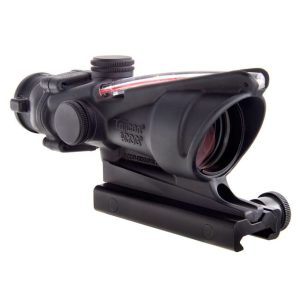
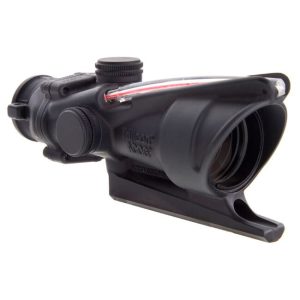
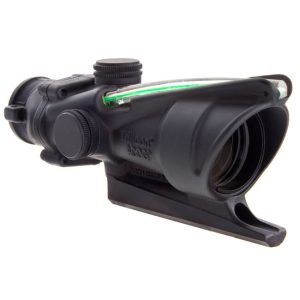
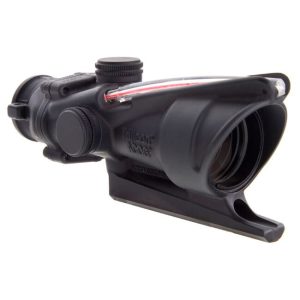
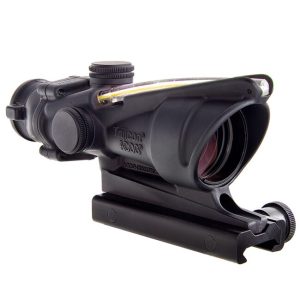
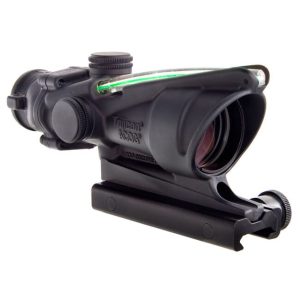
If you only buy one ACOG, this is the one. The TA31 is the 4×32 with Trijicon’s Bindon Aiming Concept, which is a fancy name for shooting with both eyes open. Your non-dominant eye sees the target at 1x while the other sees the lit reticle, and your brain stacks them. It sounds like a gimmick until you try it on a close target and realize you’re not tunnel-visioned at 4x.
I ran a TA31 with the red chevron on a 16-inch mid-length AR-15 for about 2,000 rounds over two seasons. With 77-grain OTM it held about 1.5 MOA at 100 yards, which is the rifle and me, not the scope. The part I care about is the holds. With M193 55-grain, the BDC stadia landed within a few inches of center on steel at 300, 400 and 500 yards. That’s exactly what a combat BDC is supposed to do.
The real downside is eye relief. At 1.5 inches, you have to put your face in the same spot every time, and a sloppy cheek weld gives you a black ring or nothing at all. On a rifle that runs a collapsible stock, set the stock position once and leave it. The 36.6-foot field of view at 100 yards makes up for a lot.
Best For: A 5.56 AR-15 that needs a tough, battery-free 4x for 100 to 600 yards. Pick the .223 BDC for a 14.5 to 16-inch carbine.
2. Trijicon ACOG 4×32 (TA01): Best Tritium-Only Classic
- Magnification: 4x, 32mm objective
- Eye Relief: 1.5 in.
- Weight: 15.6 oz. with mount
- Illumination: Tritium only
- BDC Calibrations: .223, .308
Pros
- Black crosshair never washes out
- No fiber strip to snag
- The 1987 original design
Cons
- Reticle only glows in low light
- Tritium dims over the years
- Short eye relief again
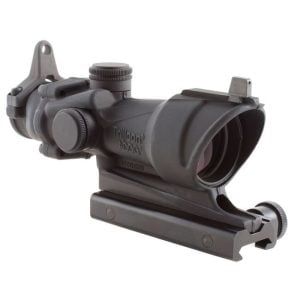
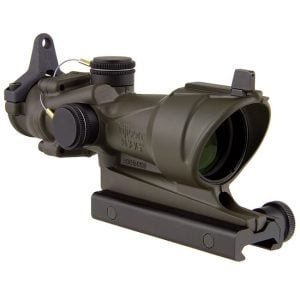
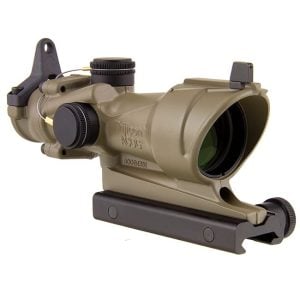
The TA01 is where the ACOG started. Trijicon introduced the 4×32 TA01 in 1987, and the early ones had a black crosshair for daytime and a tritium-lit red reticle at night. The current tritium-only model keeps that idea. There’s no fiber optic and no battery, just an etched crosshair that reads black in daylight, with a tritium-lit center that shows when the light drops.
Why buy it over the TA31? Two reasons. A black crosshair never blooms on a bright target, which some precise shooters prefer, and there’s no fiber strip on top to crack or catch on gear. I’d call it the purist’s ACOG. For most people the TA31’s lit daytime reticle is faster, so this is a specialist’s choice, not a default.
Best For: Shooters who hate reticle bloom in bright sun and want the simplest, most original ACOG on a .223 or .308 rifle.
3. Trijicon ACOG 3.5×35 (TA11): Best ACOG for .308
- Magnification: 3.5x, 35mm objective
- Eye Relief: 2.4 in.
- Field of View: 28.8 ft. at 100 yds.
- Weight: 17.6 oz. with mount
- Illumination: Fiber optic and tritium
- BDC Calibrations: .223, .308, M193, 300 BLK
Pros
- 2.4 inches of eye relief
- .308 BDC reticles available
- Safer behind real recoil
Cons
- Heavier than the 4×32
- Narrower field of view
- Costs more than a TA31
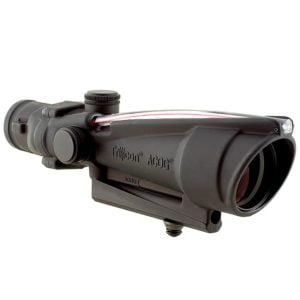
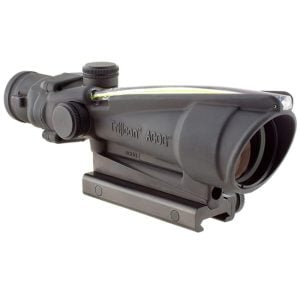
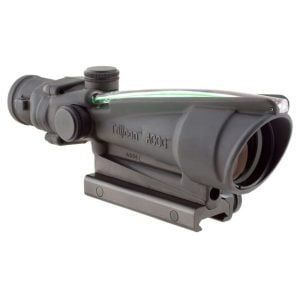
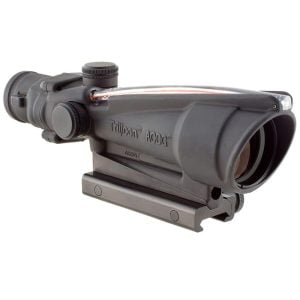
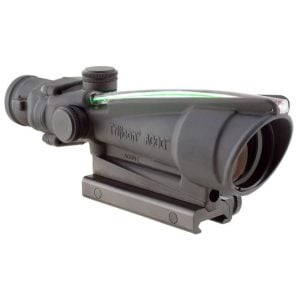
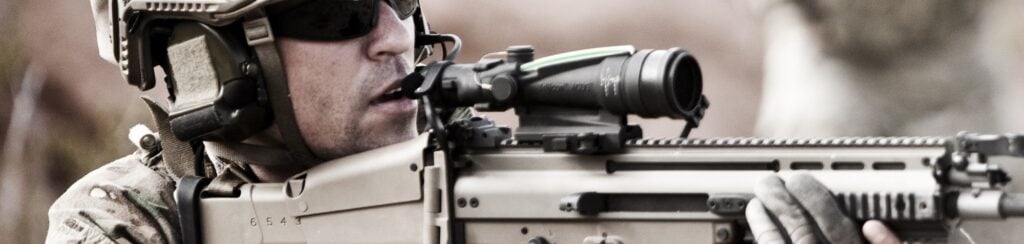
The 3.5×35 is the ACOG I’d put on anything that kicks. It gives you 2.4 inches of eye relief against the 4×32’s 1.5, and that extra inch is the difference between a comfortable .308 and a scope ring on your eyebrow. I learned that the hard way with a 4×32 on an 18-inch .308 gas gun. The TA11H-308 that replaced it never touched me, even shooting prone off a bipod.
The trade is weight and field of view. It’s 17.6 ounces with the mount and shows 28.8 feet at 100 yards, so it’s a little slower to find a target in than the 4×32. Glass is the same Trijicon standard. The Navy SEALs started field-testing the 3.5×35 back in 1991, and the Marine Corps later built its Squad Day Optic around the TA11.
Best For: .308 and 7.62 rifles, anyone who shoots with a heavy helmet or a varied cheek weld, and shooters who simply found the 4×32’s eye relief too tight.
4. Trijicon ACOG 3.5×35 LED (TA110): Best LED ACOG
- Magnification: 3.5x, 35mm objective
- Eye Relief: 2.4 in.
- Weight: 20.8 oz. with mount and battery
- Illumination: LED, single AA, six settings
- Battery Life: 12,000+ hours (setting 4 of 6 at 70°F)
- BDC Calibrations: .223, .308
Pros
- You control reticle brightness
- No sun bloom, no dimming tritium
- Long 2.4-inch eye relief
Cons
- Needs an AA battery
- Heaviest of the 3.5x models
- Fewer caliber calibrations
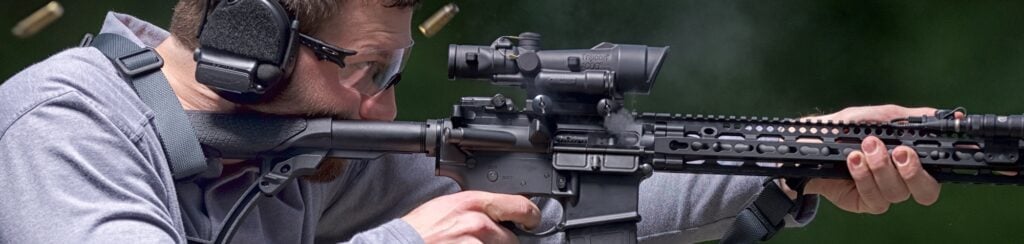
The LED version fixes the two things people complain about with fiber ACOGs. There’s no bloom on a bright target because you pick the brightness, and there’s no tritium clock ticking down. Six settings, one AA, and Trijicon quotes 12,000+ hours on setting 4. In practice that’s a battery a year for most people, and I change mine on the same day I change the smoke detectors.
You pay for it in weight. At 20.8 ounces it’s the heaviest 3.5x model, and the battery housing adds bulk to the side. You also give up the “always on” promise, so if the battery dies, you’re left with the etched reticle. For a home or truck rifle that gets checked regularly, I don’t see that as a real risk.
Best For: Shooters who hunt or compete in bright sun and hate fiber bloom, or anyone buying their ACOG to keep for 15 or 20 years.
5. Trijicon ACOG 4×32 LED (TA02): Best LED 4x
- Magnification: 4x, 32mm objective
- Eye Relief: 1.5 in.
- Weight: 17.5 oz. with mount and battery
- Illumination: LED, single AA, six settings
- BDC Calibrations: .223, 300 BLK
Pros
- Adjustable LED at 4x
- 300 BLK reticle option
- Same wide 4x view
Cons
- Tight 1.5-inch eye relief
- Heavier than the TA31
- Harder to find in stock
Think of the TA02 as a TA31 with a dimmer switch. Same 4x magnification, same field of view, same short eye relief, but an LED you set yourself instead of fiber and tritium. It’s also the ACOG to look at for a 300 Blackout build, since Trijicon offers it with a 300 BLK crosshair.
It’s the least stocked model on this list. Only a couple of retailers we track had one in September 2026, so check the card below before you get your heart set on it. If you want an LED ACOG and your rifle kicks, the 3.5×35 LED above is the easier choice.
Best For: A 5.56 or 300 Blackout rifle where you want the 4x view without fiber bloom.
6. Trijicon ACOG 3×30 (TA33): Lightest Magnified ACOG
- Magnification: 3x, 30mm objective
- Eye Relief: 1.9 in.
- Field of View: 19.3 ft. at 100 yds.
- Weight: 9.8 oz. with mount
- Illumination: Fiber optic and tritium
- BDC Calibrations: .223, .308, 7.62×39, 300 BLK
Pros
- Under 10 ounces with mount
- 7.62×39 and 300 BLK reticles
- Q-LOC quick-detach mount option
Cons
- Narrow 19.3-foot field of view
- Less magnification than 4×32
- Eye relief still under 2 inches
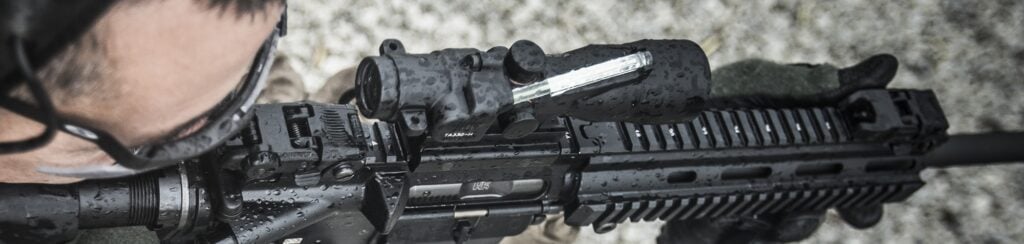
At 9.8 ounces with its mount, the 3×30 weighs about two-thirds of a TA31. On a light carbine you feel that every time you shoulder it. It’s also one of the few ACOGs Trijicon calibrates for 7.62×39, which makes it the obvious pick if you’re putting a magnified optic on an AK or a 7.62×39 AR.
The narrow field of view is what you give up. At 19.3 feet at 100 yards, it’s far tighter than the 4×32, and moving targets are harder to track. I ran one on a 300 Blackout pistol build and liked it for exactly one reason: it was light and it disappeared on the gun. For general AR use, the TA31 is the better scope.
Best For: AKs, 7.62×39 ARs, 300 Blackout builds and lightweight carbines where every ounce counts.
7. Trijicon ACOG 1.5x16S (TA44): Best ACOG for 9mm Carbines
- Magnification: 1.5x, 16mm objective
- Eye Relief: 2.4 in.
- Field of View: 39.0 ft. at 100 yds.
- Weight: 7.2 oz. with mount
- Illumination: Fiber optic and tritium
- BDC Calibrations: .223, 9mm (RTR reticles)
Pros
- Only 7.2 ounces
- Dedicated 9mm PCC reticle
- Widest view of any ACOG
Cons
- Just 1.5x magnification
- Priced like a full-size ACOG
- Not for 400-yard shots
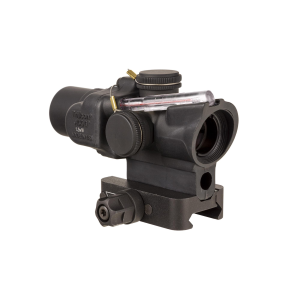
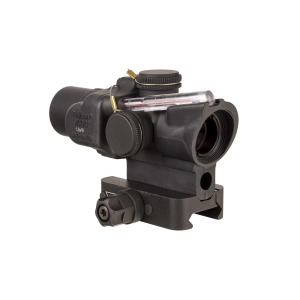
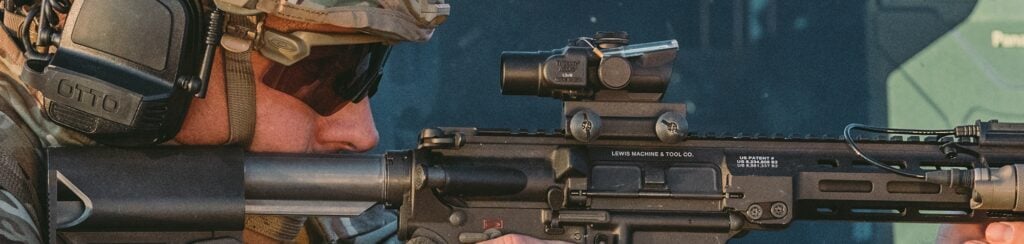
This is the ACOG for people who think they want a red dot but keep squinting at 75 yards. At 1.5x it’s nearly as quick as a dot up close, and the 39-foot field of view is the widest in the lineup. The newer RTR reticles are what sold me. Trijicon offers a 9mm PCC version with a 2 MOA dot and holds out to 300 yards from a 50-yard zero, calibrated for 115-grain FMJ from a 16-inch barrel.
I put the 9mm RTR on a 16-inch pistol-caliber carbine and zeroed it at 50 yards with 115-grain range ammo. The 100-yard hold put me on a 10-inch plate every time, and the 150-yard hold was close enough that I only walked it once. The .223 RTR version gives a 5.56 carbine holds out to 700 yards, though at 1.5x you’re not seeing much at that distance.
Best For: 9mm carbines and short, light 5.56 carbines where you want a touch of magnification without the weight.
8. Trijicon ACOG 6×48 (TA648): Best ACOG for Long Range
- Magnification: 6x, 48mm objective
- Eye Relief: 2.7 in.
- Field of View: 17.3 ft. at 100 yds.
- Weight: 36.9 oz. with mount
- Illumination: Fiber optic and tritium
- BDC Calibrations: .308, .50 BMG
Pros
- 6x with 2.7 inches of eye relief
- Built for .308 and .50 BMG
- Rated for machine gun recoil
Cons
- Weighs over two pounds
- Costs twice a TA31
- Overkill for a carbine
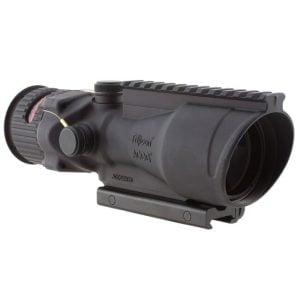
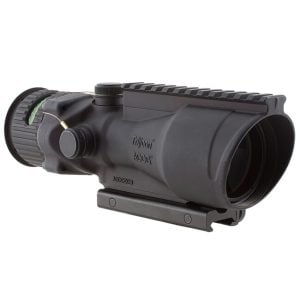
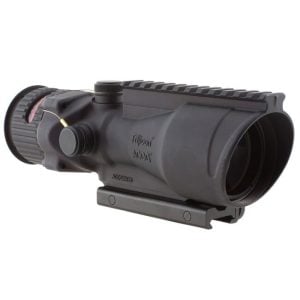
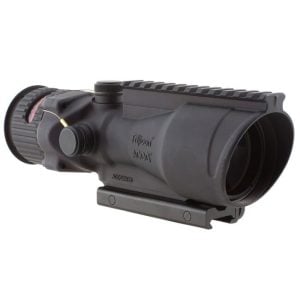
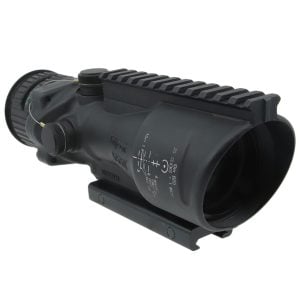
Trijicon calls this one the Machine Gun Optic, and it’s built for the M240 and M2 world. For civilians it makes sense on exactly two kinds of rifle: a heavy .308 where you want real magnification without a variable scope’s fragility, and a .50 BMG. The 2.7 inches of eye relief is the most generous in the lineup, and it needs to be.
It’s also 36.9 ounces with the mount, which is more than a lot of complete scope-and-ring setups. I’ve only shot one on a borrowed .308 gas gun, and the glass was the best of any ACOG I’ve looked through. It was also the only one I didn’t want to carry. Unless you already know you need 6x on a fixed, bomb-proof optic, a quality variable scope serves most .308 owners better.
Best For: Heavy .308 rifles, .50 BMG owners and anyone who wants a fixed 6x that shrugs off heavy recoil.
9. Trijicon ACOG and RMR Combo: Best for Close and Far
- Available On: 3×30, 3.5×35, 4×32 and 6×48 ACOGs
- Setup: RMR red dot mounted on top of the ACOG
- Typical Pairing: 4×32 BAC with RMR
Pros
- Red dot for close targets
- Factory-matched mount, no guesswork
- Magnified view still underneath
Cons
- Higher dot needs a cheek change
- Adds weight up top
- Priced well above a TA31
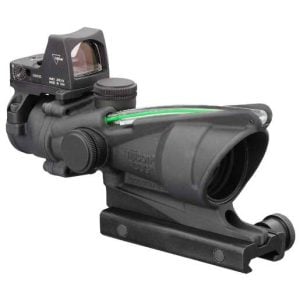
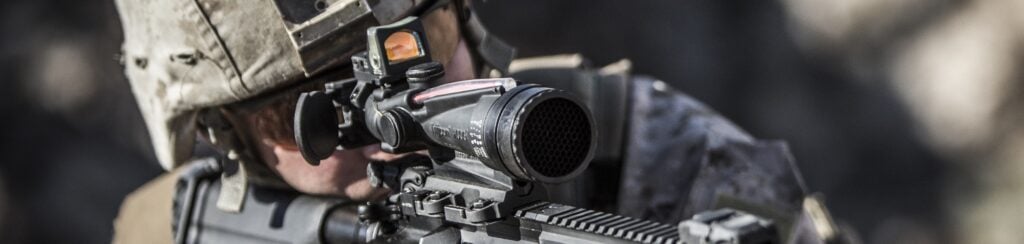
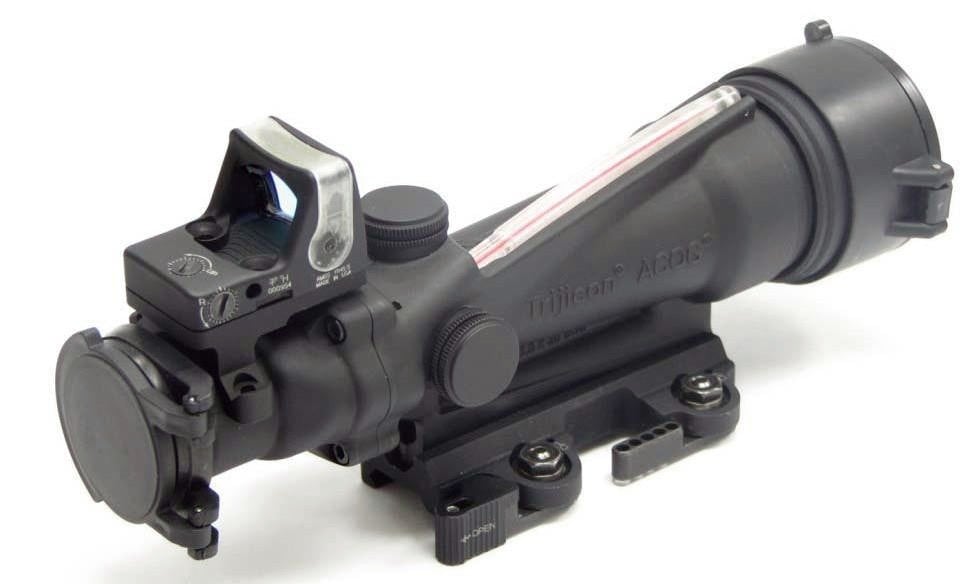
The combo answers the ACOG’s one real weakness, which is anything inside 25 yards. With an RMR sitting on top, you break your cheek weld slightly, look over the ACOG through the dot, and shoot a close target at 1x. Then you drop back down for the 4x view. The military uses the same idea: the Marine Corps Squad Day Optic is a TA11 3.5×35 with an RMR on top, mounted on the M249.
It takes some practice. The dot sits high, so your head position changes between optics, and I needed a couple of range sessions before the switch felt automatic. Trijicon sells the combo on the 3×30, 3.5×35, 4×32 and 6×48. If you already own an ACOG, pricing out the mount and an RMR separately is worth a look before buying the combo.
Best For: A do-everything AR-15 that needs a fast close-range option on top of 4x magnification.
ACOG Specs Compared: Every Model Side by Side
Here’s the full lineup from Trijicon’s ACOG spec sheet, so you can compare the models I didn’t pick too. Weights include the mount, and the battery on LED models.
| Model | Family | Eye Relief | Illumination |
|---|---|---|---|
| 1.5x16S | TA44 | 2.4 in. | Fiber and tritium |
| 1.5×24 | TA45 | 3.6 in. | Fiber and tritium |
| 2×20 | TA47 | 2.1 in. | Fiber and tritium |
| 3×24 | TA50 | 1.4 in. | Fiber and tritium |
| 3×30 | TA33 | 1.9 in. | Fiber and tritium |
| 3.5×35 | TA11 | 2.4 in. | Fiber and tritium |
| 3.5×35 LED | TA110 | 2.4 in. | LED, one AA |
| 4×32 | TA01 | 1.5 in. | Tritium only |
| 4×32 BAC | TA31 | 1.5 in. | Fiber and tritium |
| 4×32 LED | TA02 | 1.5 in. | LED, one AA |
| 5.5×50 | TA55 | 2.2 in. | Fiber and tritium |
| 6×48 | TA648 | 2.7 in. | Fiber and tritium |
Source: Trijicon ACOG specification sheet, PML4036 Rev(8), February 2025.
Which ACOG Reticle Matches Your Rifle?
An ACOG’s bullet drop marks only work for the cartridge they were calibrated for. Put a .223 BDC on a .308 and every hold past 300 yards is wrong. These are the calibrations Trijicon lists for each family:
- 4×32 BAC (TA31): .223, .308, M193, 300 BLK, 6.8 SPC
- 3.5×35 (TA11): .223, .308, M193, 300 BLK
- 3×30 (TA33): .223, .308, 7.62×39, 300 BLK
- 4×32 (TA01) and 3.5×35 LED (TA110): .223, .308
- 4×32 LED (TA02): .223, 300 BLK
- 3×24 (TA50): .223, 7.62×39
- 1.5x16S (TA44) and 2×20 (TA47): .223, 9mm
- 5.5×50 (TA55): .223, .308
- 6×48 (TA648): .308, .50 BMG
One more wrinkle. Trijicon’s RTR .223 reticle on the compact models is calibrated for 55-grain FMJ from a 16-inch barrel. Run heavier bullets or a shorter barrel and expect your holds to drift at distance. I confirm every BDC on paper and steel before I trust it, and you should too.
ACOG vs LPVO: The Eye Relief Problem
This is the honest comparison most ACOG pages skip. A modern low-power variable optic gives you true 1x for close work and 6x to 10x for distance, with around 3.5 inches of eye relief. The 4×32 ACOG gives you 1.5 inches and one magnification. On paper, the LPVO wins.
What the ACOG has is weight and toughness. A TA31 is 14.9 ounces with its mount, and most good LPVOs end up closer to 25 or 30 ounces once you add a mount. It’s a forged housing with no moving magnification ring, and Trijicon tests every design to 5,000 rounds with no reticle shift. If you want a scope you can drop, forget about and still trust, the ACOG is still a strong answer. If you want flexibility, our best AR-15 LPVO guide is the better place to start. And if you’re weighing brands rather than formats, see Trijicon vs EOTech.
The Military ACOG: RCO, SDO and Where It Came From
Glyn Bindon, an engineer who had worked on Navy aircraft and NASA projects, built the first ACOG after noticing how binoculars fold light with a prism. Trijicon launched the 4×32 TA01 in 1987 and received the ACOG patent on February 21, 1989, according to Trijicon’s own ACOG history. The first “big” military order came in early 1991 for Operation Desert Storm, and it was for 36 scopes.
Things grew from there. The military’s M150 Rifle Combat Optic is a TA31RCO, and the Army’s PEO Soldier office describes it as giving the ability “to recognize and engage targets from 300 to 600 meters with the M4, M16A2, M16A4, and M249 weapons.” Trijicon says the ACOG was selected as the official medium-distance engagement optic of the U.S. Marine Corps and U.S. Special Operations Forces.
That military history is why you’ll see “RCO” and “SDO” on the used market. Surplus RCOs sell, but check the tritium age and the reticle calibration before you buy. A military RCO is calibrated for the 5.56 loads the military shoots, which is a fine match for most civilian 5.56 rifles.
What an ACOG Costs in 2026
These are the lead prices on each pricing card in our September 2026 tracking. They move with stock, so use the cards above for the current number.
| ACOG | Card Price | Retailer |
|---|---|---|
| 1.5x16S (TA44) | $974.99 | GrabAGun |
| 3×30 (TA33) | $1,006.99 | GrabAGun |
| 4×32 BAC (TA31) | $1,149.99 | GrabAGun |
| 3.5×35 LED (TA110) | $1,196.99 | Palmetto State Armory |
| 4×32 Tritium (TA01) | $1,228.99 | Palmetto State Armory |
| 3.5×35 (TA11) | $1,229.99 | GrabAGun |
| 4×32 LED (TA02) | $1,259.00 | Optics Planet |
| 4×32 BAC with RMR | $1,745.99 | Palmetto State Armory |
| 6×48 (TA648) | $2,403.99 | Palmetto State Armory |
Most ACOGs sit between about $975 and $1,260, with the 6×48 and the RMR combos well above that. For comparison shopping across the whole optics market, our AR-15 optics guide covers red dots and prisms at every price.
FAQ
What does ACOG stand for?
ACOG stands for Advanced Combat Optical Gunsight. It is Trijicon's line of fixed-power prism rifle scopes, first sold as the 4x32 TA01 in 1987. Trijicon says more than one million have been produced.
Which ACOG is best for an AR-15?
For most 5.56 AR-15s, the 4x32 BAC (TA31) with a .223 BDC reticle is the best all-around ACOG. It gives you 4x magnification, a 36.6-foot field of view at 100 yards and battery-free fiber optic and tritium illumination. If you want more eye relief, the 3.5x35 (TA11) gives you 2.4 inches instead of 1.5.
What is the best ACOG for a .308?
The 3.5x35 (TA11) with a .308 BDC reticle is the best fit for most .308 rifles, because its 2.4 inches of eye relief keeps the scope off your eyebrow under recoil. For heavy .308 rifles and long range, the 6x48 (TA648) offers 2.7 inches of eye relief and a .308 calibrated reticle.
Does an ACOG need batteries?
Most ACOGs do not. They light the reticle with fiber optic in daylight and tritium in the dark. The two LED models, the 3.5x35 LED (TA110) and 4x32 LED (TA02), run on a single AA battery with six brightness settings, and Trijicon rates battery life at 12,000+ hours on setting 4 at 70 degrees F.
How long does the tritium in an ACOG last?
Tritium has a half-life of 12.3 years, according to the EPA. That means the lamp glows at about half its original brightness after 12 years and roughly a third after 20. The fiber optic keeps the daytime reticle bright regardless, but check the age of a used ACOG if night brightness matters to you.
What is the difference between an ACOG and an RCO?
The RCO, or Rifle Combat Optic, is the military version of the 4x32 ACOG, designated TA31RCO and M150. The Army's PEO Soldier office describes the M150 as helping soldiers recognize and engage targets from 300 to 600 meters with the M4, M16A2, M16A4 and M249.
Is an ACOG better than an LPVO?
It depends on what you value. An LPVO gives you true 1x and more magnification with more eye relief. An ACOG is lighter, has no moving magnification ring, and most models need no battery. The 4x32 ACOG weighs 14.9 ounces with its mount, and Trijicon tests every design to 5,000 rounds with no reticle shift.
How much does a Trijicon ACOG cost?
In our September 2026 tracking, most ACOGs sold for between about $975 and $1,260. The 1.5x16S was $974.99, the 4x32 BAC (TA31) $1,149.99 and the 3.5x35 (TA11) $1,229.99. The 6x48 was $2,403.99, and a 4x32 with an RMR combo was $1,745.99.
5,743+ Gun & Ammo Deals
Updated daily from 200+ top retailers. Filter by category, caliber, action type, and price.
Related Guides