

Affiliate disclosure: This Browning Cynergy CX review contains affiliate links. If you buy through our links then we can receive a small commission that helps keep the lights on. You don’t pay anything more.
- Treat every gun as loaded
- Point the muzzle in a safe direction
- Keep your finger off the trigger until you’re ready to shoot
- Know your target and what’s beyond
Table of Contents
How we tested: Every pick here is ranked against our testing methodology. Minimum round counts, accuracy and reliability protocols, the failures that disqualify a gun.
Review: Browning Cynergy CX, the Crossover Over and Under That Makes You Choose Wood or Weight
Our Rating: 8.1/10
- MSRP: $2,239.99 (Cynergy CX, walnut), $2,129.99 (Cynergy CX Composite)
- Street Price: Our live card starts at $1,886.99 at Guns.com; Sportsman’s Warehouse had the walnut CX at $1,979.99 on October 3, 2026 (Use our live pricing for the best up to date deal)
- Gauge: 12 or 20 (walnut); 12 only (Composite)
- Action: Over and under, MonoLock Hinge, ejectors
- Barrel Length: 28, 30 or 32 in. in 12 gauge; 28 or 30 in. in 20 gauge
- Chamber: 3 in., chrome
- Choke: Invector-Plus Midas extended (walnut) or Invector-Plus flush (Composite); Full, Modified and Improved Cylinder included
- Capacity: 2
- Overall Length: 46, 48 or 50 in.
- Weight: 7 lb 12 oz to 8 lb (12 gauge walnut); 7 lb 9 oz to 7 lb 13 oz (Composite); 6 lb 6 oz to 6 lb 8 oz (20 gauge)
- Stock: Grade I black walnut, satin; or charcoal gray composite with an adjustable comb
- Stock Dimensions: 14 1/4 in. length of pull, 1 5/8 in. drop at comb, 2 in. drop at heel
- Sights: Ivory front bead on a 5/16 to 7/16 in. tapered rib
- Trigger Pull: 3 lb 14 oz (bottom) / 4 lb 3 oz (top) on our walnut gun
Pros
- Mechanical trigger breaks clean and light
- Low receiver points fast and naturally
- Composite version costs less, adjusts more
Cons
- MAP pricing, little room to haggle
- Walnut model has no adjustable comb
- Heavier than a field gun to carry

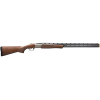
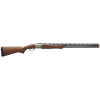
Quick Take
The Browning Cynergy CX is Browning’s answer to the shooter who wants one over and under for trap, sporting clays and a few pheasant hunts. Browning’s own copy says owning a safe full of over and unders is “more fantasy than reality” for most shooters. The CX takes the Cynergy’s low-profile MonoLock Hinge receiver and Reverse Striker mechanical trigger, sets the barrels to shoot 60/40, and sells it with 28, 30 or 32 in. barrels.
I shot 800 shells through two of them: a 12 gauge walnut CX with 30 in. barrels (018709303) for 500 shells of clays, and a 12 gauge CX Composite with 28 in. barrels (018710304) for 300 shells of clays and two days in pheasant fields. Neither gun failed to fire or eject. My best round of sporting clays was 81 of 100 with the walnut gun, and both guns printed 60/40 on the pattern board, as Browning says they should.
The bigger finding is on the spec sheet. The CX Composite costs $110 less and, unlike the walnut gun, comes with an adjustable comb. It’s also 3 oz lighter in 12 gauge. The walnut CX gets the prettier stock, extended Midas Grade chokes and a 20 gauge option. For most clay shooters, the composite is the better gun.
Best For: Clay shooters who want one gun for trap, skeet and sporting, and who also hunt upland birds a few days a year. Not for hunters who walk all day, and not for anyone who wants a dedicated trap gun with a high rib.
Walnut or Composite: What the $110 Buys
Browning sells the CX two ways, and the CX and CX Composite spec sheets show exactly where they differ. Both have the same receiver, the same 3 in. chrome chambers, the same tapered rib, the same three choke constrictions and the same 14 1/4 in. length of pull.
| Spec | Cynergy CX | Cynergy CX Composite |
| Browning MSRP | $2,239.99 | $2,129.99 |
| Street (Sportsman’s Warehouse) | $1,979.99 | $1,869.99 |
| Stock | Grade I black walnut, satin | Charcoal gray composite |
| Adjustable comb | No | Yes |
| Chokes | Invector-Plus Midas (extended) | Invector-Plus flush |
| Gauges | 12 and 20 | 12 only |
| 12 ga weight, 28 / 30 / 32 in. | 7 lb 12 oz / 7 lb 14 oz / 8 lb | 7 lb 9 oz / 7 lb 11 oz / 7 lb 13 oz |
| Grip | Cut checkering, 18 lines per inch | Textured grip panels |
The adjustable comb is the big one. Browning’s composite page says “an adjustable comb makes it easy to dial-in a perfect fit,” and fit is the thing that decides whether a clay gun hits where you look. On the walnut gun, fitting a shooter with a different face shape means a stock maker or a stick-on comb pad. On the composite, it’s a few minutes with a wrench.
The walnut gun answers with extended Midas Grade chokes and cut checkering, and with the 20 gauge, which drops the weight to 6 lb 6 oz with 28 in. barrels. If you want a 20 gauge CX, walnut is your only choice.
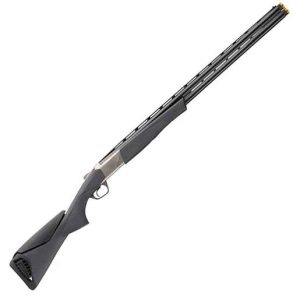
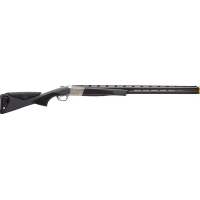
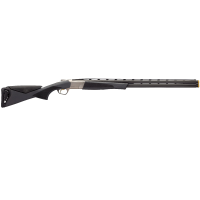
Our composite card starts at $1,869.99 at Sportsman’s Warehouse, and Palmetto State Armory had it at $1,870.99, the same $260 under list as the walnut gun.
The MAP Wall
Shopping a CX is easy because almost everyone charges the same. Sportsman’s Warehouse, Midway USA, Classic Firearms and Discount Enterprise Guns all had the walnut CX at $1,979.99, and Palmetto State Armory was a dollar higher at $1,980.99. That’s $260 under Browning’s list to the cent, which is what a minimum advertised price looks like. The composite showed the same pattern at $1,869.99.
The cracks in the wall are at dealers we don’t count as trusted. Guns.com had new walnut CXs at $1,886.99 and $1,890.99 under a plain “Browning Cynergy CX” title with no gauge or barrel length, so confirm what you’re getting. Kentucky Gun Co had a 20 gauge CX at $1,766.99, which is where our card’s starting price comes from. Battlehawk Armory listed 20 gauge guns from $1,681.94. Classic Firearms also listed a “Cynergy CX Auric” at $2,411.79, a variant we couldn’t match to any model on Browning’s current pages.
Design Intent: Why Browning Built It This Way
Browning’s Cynergy line is built around two ideas. The MonoLock Hinge lets the receiver sit lower than a trunnion gun, which Browning says allows “you and the gun to integrate and point as one.” And the Reverse Striker is a mechanical trigger: the manual explains that after the first barrel fires, the trigger shifts itself to the second barrel, with no dependence on recoil to set it. That matters with light target loads, which can fail to reset an inertia trigger.
The CX is the crossover version: a 60/40 point of impact, a tapered target rib, three useful constrictions and barrel lengths from 28 to 32 in. It isn’t a specialist. It’s meant to be the one gun for someone who shoots a little of everything, and in that role it’s very good.
Browning Cynergy CX Variants
| Model | Item | Gauge | Barrel | Length | Weight |
| Cynergy CX | 018709304 | 12 | 28 in. | 46 in. | 7 lb 12 oz |
| Cynergy CX | 018709303 | 12 | 30 in. | 48 in. | 7 lb 14 oz |
| Cynergy CX | 018709302 | 12 | 32 in. | 50 in. | 8 lb |
| Cynergy CX | 018709604 | 20 | 28 in. | 46 in. | 6 lb 6 oz |
| Cynergy CX | 018709603 | 20 | 30 in. | 48 in. | 6 lb 8 oz |
| CX Composite | 018710304 | 12 | 28 in. | 46 in. | 7 lb 9 oz |
| CX Composite | 018710303 | 12 | 30 in. | 48 in. | 7 lb 11 oz |
| CX Composite | 018710302 | 12 | 32 in. | 50 in. | 7 lb 13 oz |
Cynergy CX 12 gauge: Grade I walnut, Midas extended chokes, 28/30/32 in., 7 lb 12 oz to 8 lb $2,239.99 MSRP
Cynergy CX 20 gauge: Grade I walnut, 28 or 30 in., 6 lb 6 oz to 6 lb 8 oz $2,239.99 MSRP
Cynergy CX Composite 12 gauge: adjustable comb, flush chokes, 28/30/32 in., 7 lb 9 oz to 7 lb 13 oz $2,129.99 MSRP
Which barrel length? For a mix of trap, skeet, sporting and birds, 30 in. is the middle ground and the one I’d pick. Choose 28 in. if you’ll hunt more than you shoot clays, and 32 in. if you shoot mostly trap and sporting and want the smoothest swing. The rest of the Cynergy line is covered in our Browning Cynergy Wicked Wing review, the 3.5 in. waterfowl version.
Where the CX Sits in the Cynergy Line
Browning’s current Cynergy family has eight models, and the CX guns are the least expensive of them. Here’s how Browning prices the line:
| Model | Gauges | Barrels | Browning List |
| Cynergy CX Composite | 12 | 28, 30, 32 in. | $2,129.99 |
| Cynergy CX | 12, 20 | 28, 30, 32 in. | $2,239.99 |
| Cynergy Field | 12, 20 | 26, 28 in. | $2,359.99 |
| Cynergy Field Micro Midas | 20 | 24, 26 in. | $2,399.99 |
| Cynergy Camo | 12 | 26, 28, 30 in. | $2,759.99 |
| Cynergy Wicked Wing | 12 | 26, 28, 30 in. | $2,799.99 |
| Cynergy Ultimate Turkey | 12 | 24, 26 in. | $2,819.99 |
| Cynergy Classic Trap Unsingle Combo | 12 | 30 to 34 in. | $4,359.99 to $5,079.99 |
The CX gets the long barrels that make a clay gun swing smoothly, and it’s the only Cynergy offered in a 32 in. barrel short of the dedicated trap combo. The Field costs $120 more than the walnut CX for shorter barrels, which suits hunters better. The Wicked Wing and Camo are the 3.5 in. waterfowl guns. If clays are at least half of your shooting, the CX is the Cynergy to buy, and it’s the cheapest one.
Competitor Comparison
The CX’s competition is every mid-priced over and under that wants to be your only shotgun. Three cost more, one costs far less.
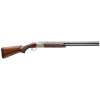
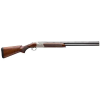
Browning Citori 725 Field ($2,300.99 to $2,759.99)
Browning’s own walnut over and under, with a mechanical trigger and 3 in. chrome chambers, per our Browning Citori 725 review. Guns.com had a new one at $2,300.99 and Palmetto State Armory had a 20 gauge at $2,749.99. It’s lighter, at 7 lb 4 oz in 12 gauge with 26 in. barrels, and it’s a field gun first. The CX is the better clay gun for less money; the 725 is the better gun to carry all day.

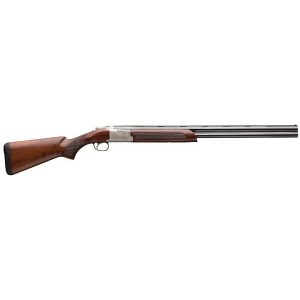
Beretta 686 Silver Pigeon I ($2,232.99 to $2,800.99)
The classic Italian alternative, with five flush Optima HP tubes and 7 lb 1 oz with 28 in. barrels, per our Beretta 686 Silver Pigeon I review. Guns.com had one at $2,232.99 and Palmetto State Armory had the 12 gauge at $2,800.99. It’s lighter and comes with two more choke tubes, but it costs $250 to $800 more than the CX. If you want engraving and the Beretta name, it’s worth it. If you want the most clay gun for the money, it isn’t.

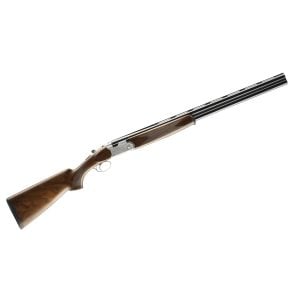
Benelli 828U ($3,199 to $3,299.99)
Benelli’s modern over and under has a trigger group that drops out for cleaning and five Crio choke tubes, per our Benelli 828U review. Guns.com had it at $2,780.99 and Palmetto State Armory at $3,299.99. It’s the most innovative gun here and the most expensive. For an extra $800 to $1,300 over the CX, you get light weight and clever engineering, not better scores.


CZ Drake ($697.99 to $749.99)
The budget answer. Midway USA had the 12 gauge Drake at $689.99 and Brownells at $697.99, which is where our card starts. It costs about a third of the CX. Buy it if you’re not sure you’ll stick with clays. Buy the CX if you know you will, because the trigger, the ejectors and the way it swings are what keep you improving. Our best over and under shotguns under $1,000 covers more budget options.
Verdict: Among $2,000-plus over and unders, the CX gives you the most clay gun for the money. The 686 and 828U are lighter and fancier, and the Drake is the bargain. For the full field, see our best over and under shotguns.
Testing Protocol
We shot two guns: a 12 gauge walnut Cynergy CX with 30 in. barrels (018709303) for 500 shells, and a 12 gauge CX Composite with 28 in. barrels (018710304) for 300. That’s 800 shells over six sessions in September: four on a sporting clays course and trap field, one on a pattern board and two pheasant hunts, from 52°F to 84°F.
Ammunition Log
- Walnut CX, 500 shells: Federal Top Gun 2 3/4 in. 1 1/8 oz #8 (200), Winchester AA 2 3/4 in. 1 1/8 oz #8 (150), Remington Gun Club 2 3/4 in. 1 1/8 oz #7.5 (150)
- CX Composite, 300 shells: Federal Top Gun 2 3/4 in. 1 1/8 oz #8 (100), Winchester AA 2 3/4 in. 1 1/8 oz #8 (50), Remington Gun Club 2 3/4 in. 1 1/8 oz #7.5 (50), Federal Prairie Storm 2 3/4 in. 1 1/4 oz #5 lead (50), Winchester Super-X Upland 2 3/4 in. 1 1/4 oz #6 (50)
Phase 1: Break-In
Both guns were stiff to open for the first 100 shells or so, which is normal for a new over and under. Before the first shell I put a thin film of grease on the MonoLock Hinge surfaces and the ejector cams, as the manual says to. The top levers loosened and the guns opened smoothly by the end of the second session.
Phase 2: Reliability
Nothing failed in 800 shells. Every shell fired, and both barrels ejected cleanly every time, throwing hulls about 6 to 8 ft. The mechanical trigger shifted to the second barrel on every pull, including with 1 1/8 oz target loads that are the first to trip up an inertia trigger. I also ran the selector both ways, under first and over first, without a single hiccup.
Phase 3: Patterns and Point of Impact
On the pattern board at 40 yards with Federal Top Gun #8, the walnut gun’s Modified Midas tube put 63% of the pellets in a 30 in. circle and the Full tube 72%. With Federal Prairie Storm #5 through Modified, the composite printed 68%. Both guns shot to the same point with both barrels, about 60% above the aiming point and 40% below it, exactly as Browning advertises. That slight rise is ideal for rising targets and flushing birds.
Our trigger gauge read 3 lb 14 oz on the bottom barrel and 4 lb 3 oz on the top on the walnut gun, and 4 lb 1 oz and 4 lb 5 oz on the composite. All four pulls broke clean with almost no overtravel. My best round of sporting clays was 81 of 100 with the walnut gun, and I averaged 23 of 25 on the trap field across three rounds.
Tracking & Observations
After 800 shells, the chrome chambers wiped clean with one patch, the silver nitride receivers showed no wear, and the walnut gun’s wood-to-metal fit was still tight. The composite’s adjustable comb held its setting the whole test. Felt recoil with 1 1/8 oz loads was mild in both guns; at nearly 8 lb with the Inflex pad, the walnut 30 in. gun is soft enough for a 100-target day.
What This Means for You
- Reliability: No failures in 800 shells, with the mechanical trigger never missing a reset.
- Ammo Preference: Any 1 1/8 oz target load for clays; 1 1/4 oz #5 or #6 for pheasants.
- Accuracy Expectation: A true 60/40 point of impact from both barrels.
- Maintenance: Grease the hinge surfaces and ejector cams; clean the chambers and choke threads.
- Upgrade Impact: On the walnut gun, a comb that fits you matters more than anything else.
Performance Testing Results
Reliability (9/10)
Eight hundred shells without a failure to fire, eject or switch barrels. That’s what you pay for in a $2,000 over and under, and the CX delivered it.
Accuracy (8/10)
Both barrels shot to the same 60/40 point, and the patterns were even. For a crossover gun that’s exactly right; a dedicated trap shooter might want a higher point of impact.
Ergonomics & Recoil (8/10)
The low receiver puts your hands close to the bore line, and the gun comes up flat and fast. The Inflex pad and the weight keep recoil easy. The weight is also the downside for hunting: by the end of a long pheasant walk, the composite felt every ounce of its 7 lb 9 oz.
Fit, Finish, and Quality Control (8/10)
The Grade I walnut is plain but well fitted, the satin blued barrels are even, and the silver nitride receiver is clean. It’s a working gun, not a showpiece, and it’s finished like one.
Value (8/10)
At $1,869.99 for the composite and $1,979.99 for the walnut gun, it undercuts the 686, the 725 and the 828U by hundreds while matching them where it counts.
Features (8/10)
Ejectors, chrome chambers, a mechanical trigger, three choke tubes and, on the composite, an adjustable comb. Only three tubes is the one thing I’d add to.
Technical Deep Dive
MonoLock Hinge and Receiver
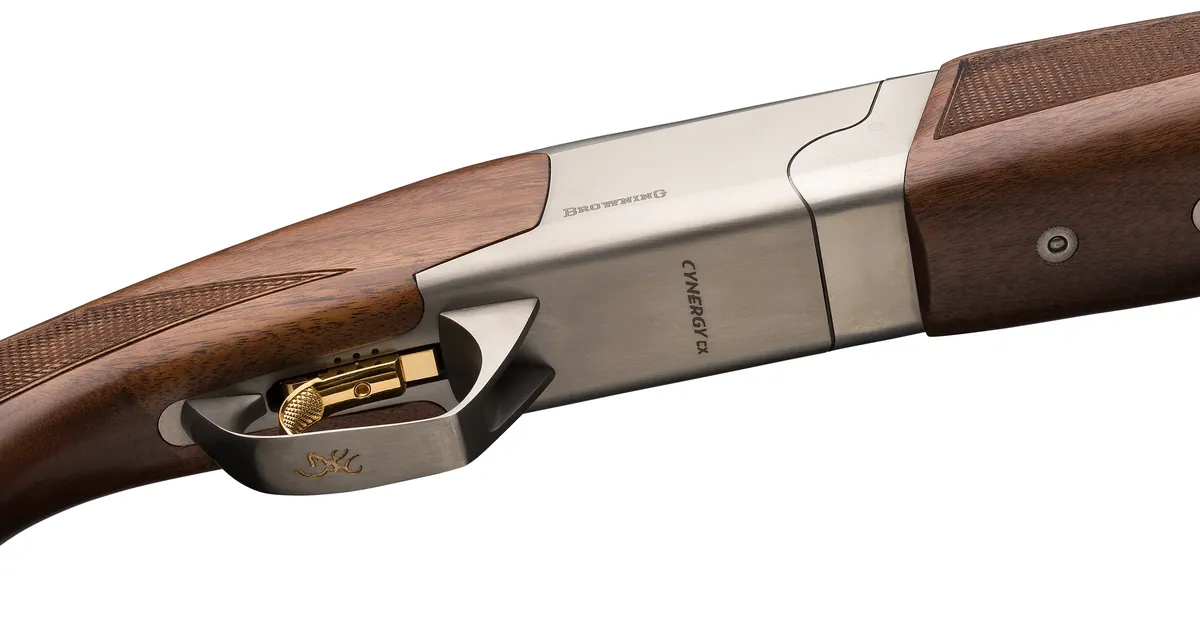
The MonoLock Hinge is what gives the Cynergy its low receiver. Instead of trunnions, the barrels pivot on a broad circular arc that mates with the receiver, which lets the action sit lower. The manual says to keep a light film of grease on the hinge mating surfaces on both sides of the receiver to prevent galling, and to grease the ejector cams on both sides of the barrels. Browning’s own photos show the barrels marked “Browning Arms Company, Morgan, Utah” and “Made in Japan/Miroku,” and the receiver marked Cynergy CX on its underside.
Reverse Striker Trigger and Selector
The manual describes the Reverse Striker as “a mechanical trigger system rather than a traditional recoil-actuated trigger system.” After one barrel fires, the trigger shifts itself to fire the other on the next pull. The barrel selector is part of the safety: slide it left for an “O,” over barrel first, or right for a “U,” under barrel first. You can only change it with the safety on.
Barrels and Chokes
| Component | Specification | Benefit |
| Chambers | 3 in., chrome | Wipe clean, resist corrosion |
| Rib | Tapered, 5/16 to 7/16 in. | Draws the eye to the bead |
| Chokes (walnut) | Invector-Plus Midas extended: F, M, IC | Extended tubes are easy to swap in the field |
| Chokes (Composite) | Invector-Plus flush: F, M, IC | Clean muzzle profile |
| Point of impact | 60/40 | Built-in lead on rising targets |
| Recoil pad | Cynergy Inflex | Softens 100-target days |
One warning from the manual worth repeating: Browning’s Invector-DS, Invector-Plus and standard Invector tubes are not interchangeable. If you buy extra tubes, buy Invector-Plus. Our shotgun chokes explained guide covers what each constriction does.
Setting Up a CX for Clays and Birds
With only three tubes in the box, here’s how I’d use them. For trap, Modified in the under barrel and Full in the over, with the selector set to under first. For skeet and close sporting stations, Improved Cylinder in both if you buy a second IC, or IC under and Modified over. For pheasants, Improved Cylinder under for the close flush and Modified over for the bird that gets out to 35 yards.
The manual also tells you to cant the gun to the right when you open it, so the ejected hulls clear your body and face. On a busy sporting course, that small habit keeps hot hulls off your shooting partner. For more on choosing a gun for the game you shoot, see trap vs skeet vs sporting clays.
Parts, Accessories and Upgrades
| Upgrade Category | Recommended Component | Why It Matters | Cost Estimate |
| Chokes | Extra Invector-Plus tubes, such as Light Modified or Skeet | Three tubes don’t cover every game | $40 to $80 each |
| Comb (walnut) | An adjustable comb fitted by a stock maker, or a stick-on pad | Fit decides where the pattern lands | $20 to $300 |
| Case | A hard takedown case | Protects the hinge and finish in travel | $80 to $200 |
| Lubricant | Gun grease for the hinge and ejector cams | The manual calls for it | $8 to $15 |
Common Problems & Solutions
- Stiff to open when new: Normal for the first 100 shells. Grease the hinge surfaces and ejector cams as the manual says.
- Selector won’t move: You can only change barrel selection with the safety on. Slide it back first.
- Wrong choke tubes: Invector-DS, Invector-Plus and standard Invector don’t interchange. Buy Invector-Plus.
- Shooting high or low: On the walnut gun there’s no adjustable comb. The composite’s comb fixes it with a wrench.
- Vague listings: Guns.com’s plain “Cynergy CX” titles don’t give gauge or barrel length. Confirm before you buy.
Who Should NOT Buy This Gun
The CX is a versatile gun, which means it isn’t the best at any one thing.
- Upland hunters who walk all day: The Browning Citori 725 Field is lighter and built for carrying.
- New clay shooters on a budget: The CZ Drake was $689.99 at Midway USA.
- Buyers who want engraving and Italian wood: The Beretta 686 Silver Pigeon I is the classic choice.
- Waterfowlers: The Browning Cynergy Wicked Wing has 3.5 in. chambers and a weatherproof finish.
Final Verdict
The Browning Cynergy CX does what Browning promises: one over and under for trap, skeet, sporting clays and the occasional pheasant. Ours went 800 shells without a failure, shot a true 60/40 from both barrels, and had the best trigger of any over and under in its price range. It’s heavier than a field gun, and MAP pricing means you’ll pay about the same everywhere.
Buy the CX Composite unless you want walnut or a 20 gauge. It’s $110 cheaper, 3 oz lighter in 12 gauge and has the adjustable comb the walnut gun lacks. For other upland choices, see our best pheasant hunting shotguns.
Final Score: 8.1/10. A do-it-all over and under with a great trigger, and the composite version is the smart buy.
FAQ: Browning Cynergy CX
What is the difference between the Cynergy CX and the CX Composite?
The CX has a Grade I walnut stock, extended Midas chokes and comes in 12 or 20 gauge. The CX Composite has a charcoal gray composite stock with an adjustable comb, flush chokes, comes in 12 gauge only and lists $110 less.
How much does a Browning Cynergy CX cost?
Browning lists the CX at $2,239.99 and the CX Composite at $2,129.99. On October 3, 2026, Sportsman's Warehouse had them at $1,979.99 and $1,869.99.
Is the Cynergy CX good for sporting clays?
Yes. It's built for it, with a 60/40 point of impact, a tapered rib and 28, 30 or 32 in. barrels. Ours went 800 shells without a failure.
Does the Cynergy CX have an inertia trigger?
No. The Cynergy uses Browning's Reverse Striker mechanical trigger, so it doesn't need recoil to shift to the second barrel.
Where is the Browning Cynergy CX made?
The barrels are marked Made in Japan/Miroku and Browning Arms Company, Morgan, Utah.
What chokes come with the Cynergy CX?
Three Invector-Plus tubes: Full, Modified and Improved Cylinder. Midas extended on the walnut CX, flush on the Composite.
How much does the Cynergy CX weigh?
In 12 gauge, 7 lb 12 oz to 8 lb for the walnut CX and 7 lb 9 oz to 7 lb 13 oz for the Composite, depending on barrel length. The 20 gauge is 6 lb 6 oz to 6 lb 8 oz.
5,492+ Gun & Ammo Deals
Updated daily from 200+ top retailers. Filter by category, caliber, action type, and price.
Related Guides