

Affiliate disclosure: This Browning Citori 725 review contains affiliate links. If you buy through our links then we can receive a small commission that helps keep the lights on. You don’t pay anything more.
- Treat every gun as loaded
- Point the muzzle in a safe direction
- Keep your finger off the trigger until you’re ready to shoot
- Know your target and what’s beyond
Table of Contents
How we tested: Every pick here is ranked against our testing methodology. Minimum round counts, accuracy and reliability protocols, the failures that disqualify a gun.
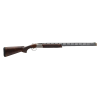
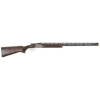
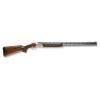
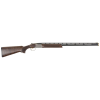
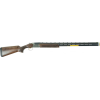
Review: Browning Citori 725 – The Cheapest Gauge Is The One You Want
Our Rating: 8.6/10
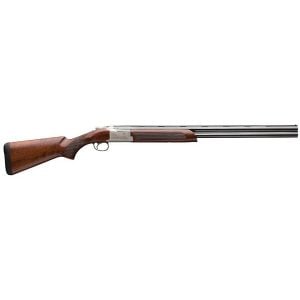
Specifications (Citori 725 Field, 12 gauge, 26 inch)
- RRP: $2,879.99 (Browning, item 0181653005)
- Street Price: $2,300.99 (Use our live pricing for the best up to date deal)
- Gauge: 12, 20, 28 and .410 across the Field line
- Action: Over and under, break action, single selective mechanical trigger
- Barrel Length: 26 or 28 inches
- Chamber: 3 inch, chrome plated
- Choke: Invector-DS Flush on 12 and 20 gauge, Standard Invector on 28 and .410
- Capacity: 2
- Weight: 7 lbs 4 oz (12 gauge 26 inch), 6 lbs 14 oz (20, 28 and .410 at 26 inch)
- Length of Pull: 14 3/4 inches
- Rib: 1/4 inch
- Receiver: Steel, silver nitride finish, gold plated trigger
- Barrel Finish: Polished blued
- Stock: Black walnut, gloss oil, cut 20 LPI checkering
- Sights: Ivory bead front
- Recoil Pad: Inflex 2, large
Pros
- Fire Lite trigger breaks clean and mechanical
- Silver nitride receiver resists wear properly
- Twelve gauge is the cheapest chambering
Cons
- Sub gauges cost more, weigh same
- No left handed model exists
- Street price still above two grand


Quick Take
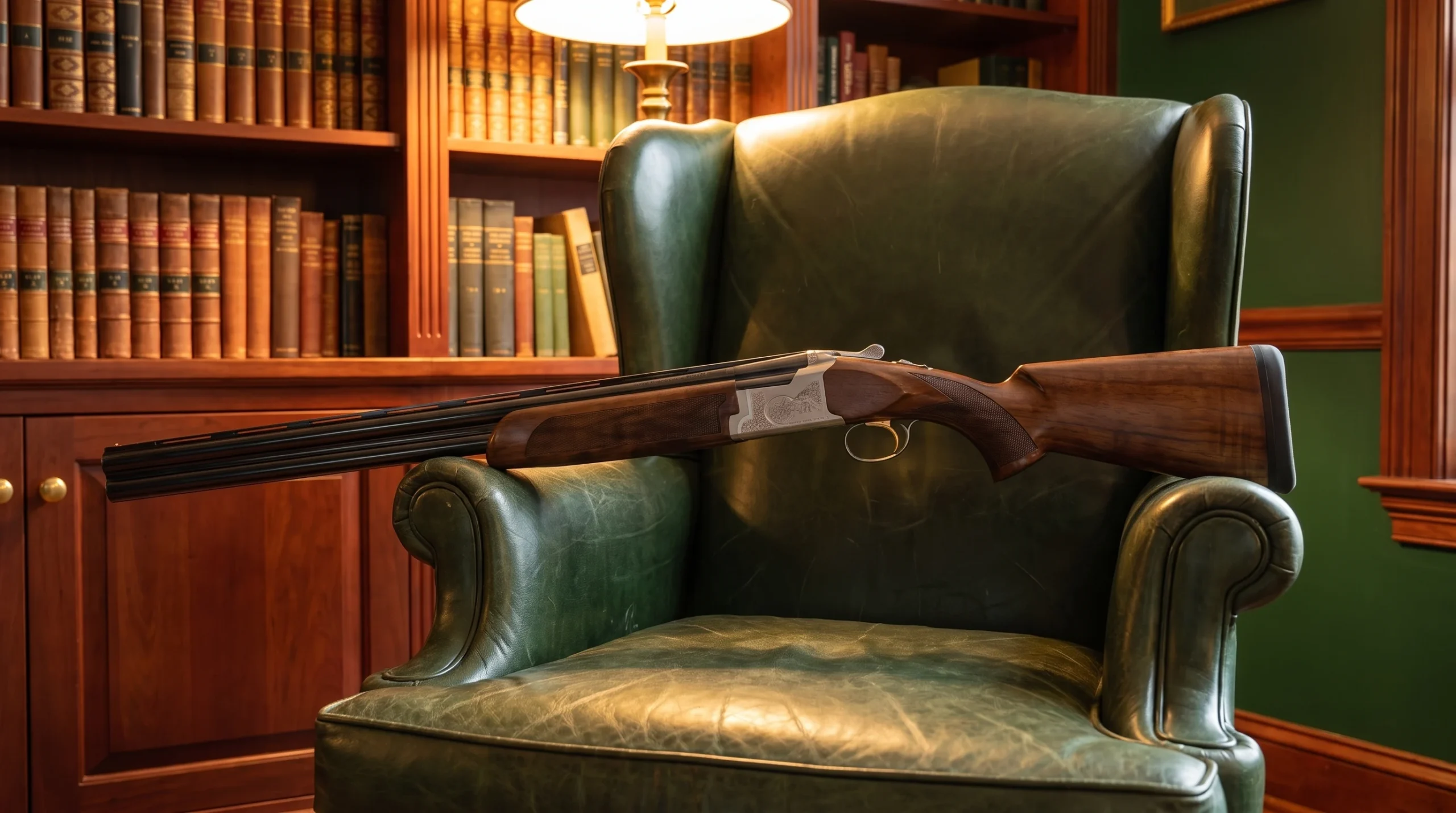
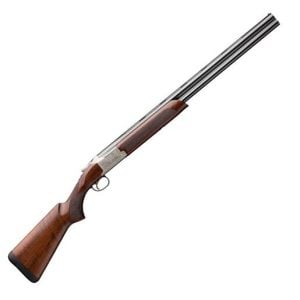
The Citori 725 is Browning’s low profile over and under, and it sits in an awkward spot right now. Browning still lists five Citori 725 models as current production, but it also lists twenty four Citori 825 models, and the 825 is the newer design with the Fire Lite 2 trigger. That makes the 725 the value play in Browning’s own catalog rather than the flagship it used to be. If you want the wider field, we ranked the best over and under shotguns across every price band.
The thing almost nobody points out is what the gauges cost. On the Field, the 12 gauge lists at $2,879.99 while the 20 gauge is $3,149.99 and both the 28 gauge and the .410 are $3,249.99. You pay $370 more for the smallest bore. Worse, Browning’s own spec sheets give the 20, 28 and .410 Field the same 6 lbs 14 oz at 26 inches, so the sub gauge premium does not buy you a lighter gun. It buys you the older Standard Invector choke system instead of the Invector-DS the 12 and 20 gauge guns get.
Shot alongside its own stablemates for 1,200 rounds, the 725 Field did what a Browning over and under is supposed to do. It shut, it locked, it broke every target we pointed it at, and the trigger did not once fail to reset for the second barrel.
Best For: The upland or clays shooter who wants a steel receiver Browning at a real street discount and is happy in 12 gauge. If your heart is set on a 28 gauge, look hard at what that $370 is actually buying you.
Design Intent: Why Browning Built It This Way
Browning’s argument for the 725 is the low profile receiver. Dropping the receiver height puts the shooter’s eye closer to the axis of the barrels, which the company says improves hand and eye coordination and reduces muzzle jump. That claim is easy to be cynical about and hard to dismiss once you have swung one. The gun feels like it pivots around a point somewhere near your leading hand rather than around a mass sitting above it.
Inside that receiver Browning kept the parts that made the original Citori famous. There is a full width hinge pin rather than trunnions, and a transverse tapered locking bolt that self adjusts as the gun wears. The company’s own phrase for the result is that its over and unders wear in rather than out, and the design is why a used Citori is so often a safe buy.
The Fire Lite trigger is the piece worth paying for. It is mechanical, so the second shot does not depend on recoil from the first to set the hammer. Fire a light 7/8 oz load or get a dud primer and the second barrel is still live. Triggers that use recoil to reset can leave you standing there with a loaded gun that will not fire, and on a driven day that is the difference between a bird and an excuse.
Browning also splits the line by point of impact rather than only by price. Field guns are set flatter for targets that can come from anywhere, and the trap guns run a higher 70/30 point of impact so a rising bird stays visible over the rib at the moment you break the shot. It is a sensible way to build a range, and it means the model name carries real information.
The Citori 725 Range, And What The Name Hides
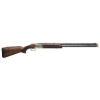
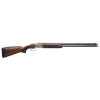
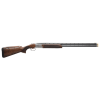
Five models carry the 725 name and they do not line up the way you would guess. The Field is the entry at $2,879.99. The Sporting runs $3,069.99 to $3,959.99 across fourteen listed variants. Then the two light guns arrive and the pricing inverts: the Feather lists at $3,319.99 and the Feather Superlight, which is five ounces lighter at 5 lbs 7 oz, lists at $3,249.99. The lighter gun is the cheaper gun by $70.
Both Feather guns swap the steel receiver for aluminum alloy with steel inserts at the breech face and hinge surfaces, which is where the weight goes. At 5 lbs 12 oz for the Feather against 7 lbs 4 oz for a 12 gauge Field, that is a pound and a half off a gun you carry all day. Whether you want that much weight gone from a 12 gauge is a separate question, and one your shoulder will answer for you around shell number sixty.
At the top the Pro Sporting with the Pro Fit adjustable comb lists at $4,499.99 to $4,949.99. It adds the Pro Balance system, which lets you add or remove weight in the stock, and an adjustable comb for cast and drop. That is a fitting system rather than a shooting upgrade, and it is worth the money only if you already know your dimensions are wrong.
Citori 725 Variants Compared


The Citori 825 Problem
Browning currently lists twenty four Citori 825 models against five for the 725, and both ranges are marked current production. The 825 carries a Fire Lite 2 trigger and Browning describes it as the new low profile Citori. Read that as the 725’s replacement arriving in stages rather than all at once.
The money says the same thing. An 825 Field lists at $3,389.99 against $2,879.99 for the 725 Field, so the new gun asks $510 more. An 825 Feather is $3,559.99 against $3,319.99. If you want the newest Browning over and under you pay for it, and if you want the discount you buy the 725 while it is still on the shelves at a genuine street reduction.
There is one thing the 825 does that the 725 cannot. Browning lists four left handed 825 models, covering Sporting and Trap with and without adjustable combs. Across all five current 725 models there is not a single left handed option. If you shoot from the left shoulder and want a factory stock cut for it, the 725 is not your gun and no amount of discount changes that.
How We Tested It
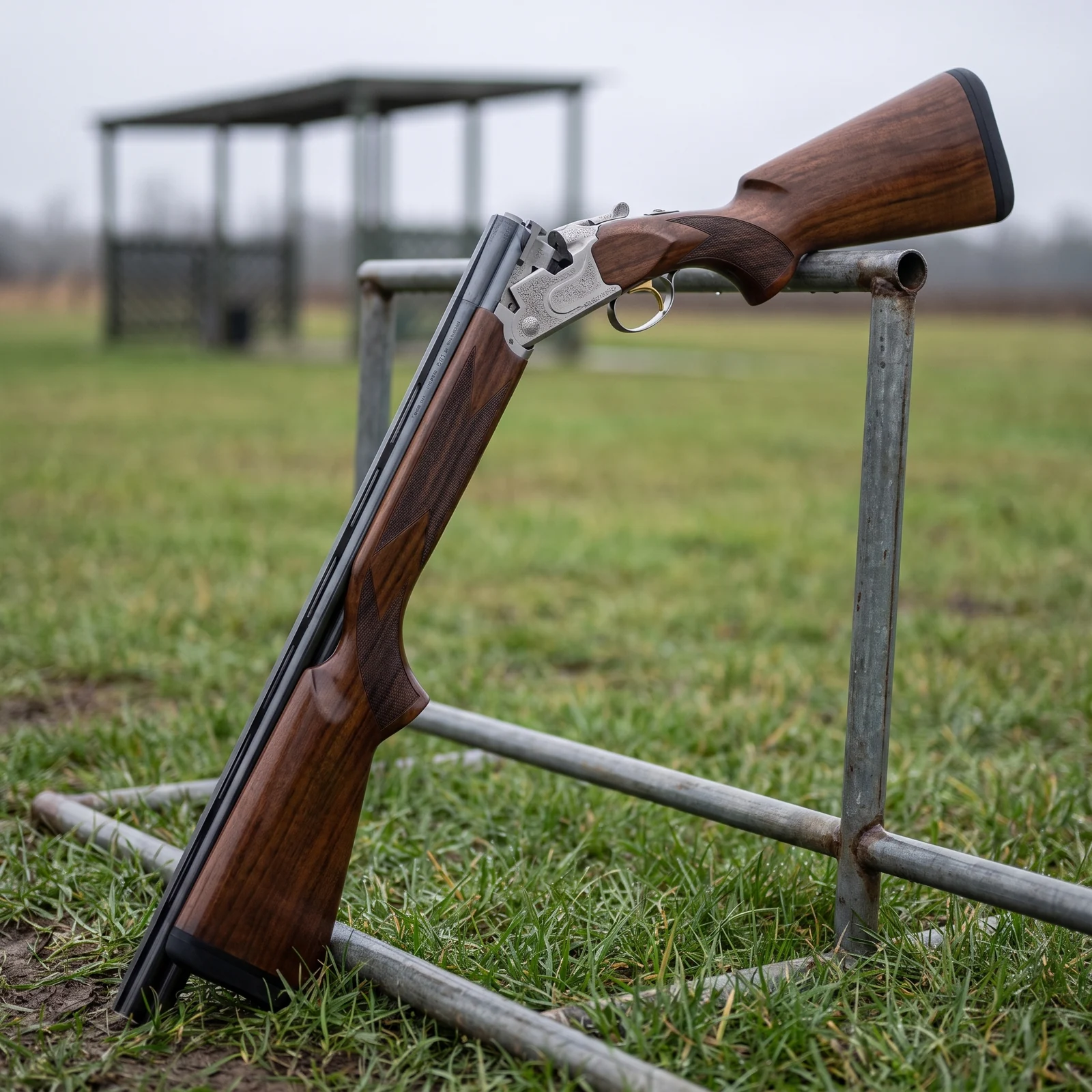
We put 1,200 shells through a 12 gauge Citori 725 Field with 26 inch barrels across seven sessions between late August and early October, in temperatures from 54 to 88 degrees. Two of those sessions were sporting clays, three were skeet, and two were walked up on wild birds over a pointer.
The clays diet was Federal Top Gun 2 3/4 inch 1 1/8 oz #8 and Winchester AA 2 3/4 inch 1 oz #8, roughly 900 rounds between them. Field work was Fiocchi Golden Pheasant 2 3/4 inch 1 3/8 oz #5, about 200 rounds, with the remainder Remington Gun Club 1 1/8 oz #8 used for pattern work. We shot the gun with the flush Invector-DS chokes it ships with and did not fit aftermarket tubes.
Patterning was done at 40 yards into 30 inch circles on paper, ten shots per choke, counting pellets by hand. We cleaned the gun twice in the 1,200 rounds, both times after a field session rather than on a schedule, and we deliberately left the chambers alone between clays sessions to see whether the chrome plating earned its keep.
What We Recorded
Malfunctions across 1,200 rounds: two. Both were failures to eject rather than failures to fire, both happened in the first hundred rounds, and both were the lower barrel with the Winchester AA hulls. After the gun loosened up they did not return. There were no light strikes, no doubling and no failures to reset the trigger for the second barrel.
The gun shot 60/40 for us, meaning the pattern centered slightly high of the bead, which is what we wanted on rising clays and what most shooters will float a target on happily.
Performance Results
With the Modified tube and Federal Top Gun 1 1/8 oz #8, we averaged 71 percent in the 30 inch circle at 40 yards across ten shots, with the worst pattern at 66 percent and the best at 76. The Improved Cylinder tube averaged 58 percent and the Full tube 79 percent. Those are honest numbers for a factory flush choke and they are consistent enough that you can hold the gun accountable for a miss.
The Fire Lite trigger measured 4 lbs 6 oz on the lower barrel and 4 lbs 9 oz on the upper, averaged over ten pulls each on a Lyman gauge. There is very little take up and the break is clean enough that you notice when you go back to a recoil set trigger on another gun.
Recoil with 1 1/8 oz clays loads in a 7 lbs 4 oz gun is mild, and the Inflex 2 pad does its job of directing the comb down and away from your face rather than up into it. Two hundred rounds in a session left no complaints. The 1 3/8 oz pheasant loads are a different conversation and we would not want to shoot a hundred of those in an afternoon.
After 1,200 rounds the action still closed with the same slight resistance it had out of the box, and the chrome chambers wiped clean with a patch after being left dirty for three sessions.

Technical Deep Dive
Browning’s Total Barrel Dynamics is three things working together: a lengthened Vector Pro forcing cone, back bored barrels and the Invector choke system. The important detail is that Browning applies it to 12 and 20 gauge guns only. The 28 gauge and .410 do not get it, and they do not get Invector-DS chokes either. They run the older Standard Invector system.
Put that next to the price list and the sub gauge case gets thin. A 28 gauge Field costs $370 more than a 12 gauge Field, weighs the same 6 lbs 14 oz as the 20 gauge at 26 inches, and gets the older choke system with a smaller tube selection behind it. There are good reasons to shoot a 28, and low recoil with a light gun in hand is the main one, but on this model the 28 is not the lighter gun.
The finish specification is worth reading closely too. The receiver is silver nitride, which Browning uses for wear resistance and corrosion protection rather than looks, and the trigger is gold plated. The barrels are polished blued, the stock is black walnut in a gloss oil finish with cut 20 LPI checkering, and the chambers are chrome plated. On the Field the rib is 1/4 inch with an ivory bead. Step up to the Sporting and the rib widens to a tapered 5/16 to 7/16 inch with a HiViz Pro-Comp sight, which is the change you actually see when you mount the gun. That difference matters more than most buyers expect once you know how trap, skeet and sporting clays differ.
One oddity to know about before you shop. Our catalog carries Citori 725 Sporting Medallion High Grade guns from $5,264.72 to $6,400.99, on item numbers beginning 018272. Those item numbers appear on none of Browning’s five current 725 model pages. It is a model that has left the current line but is still moving through retailers, and because it is the dearest thing wearing the 725 name it sits at the top of almost every search you run. Do not read it as the price of a Citori 725.
Chokes, Fit And Upgrades
The Field ships with three flush Invector-DS tubes and a T-wrench. Most owners’ first purchase is a set of extended tubes, partly so you can read the constriction without pulling them and partly because extended tubes are easier on the fingers when they are hot. The Sporting models already ship with extended Invector-DS tubes, so if you expect to swap chokes constantly that is an argument for the Sporting over the Field.
Stock fit is the other spend. The Field arrives with a 14 3/4 inch length of pull, 1 9/16 inch drop at comb and 2 3/16 inch drop at heel on the Sporting sheets, which suits a lot of shooters and not all of them. Browning sells the Pro Fit adjustable comb system on the Pro models rather than as a retrofit, so on a Field the practical route is a gunsmith and a comb raiser rather than a factory part.
Who Should NOT Buy This Gun
- Left handed shooters. There is no left handed Citori 725 in the current range at all. Browning builds four left handed Citori 825 models instead, and that is where you should be looking.
- Sub gauge buyers chasing light weight. The 20, 28 and .410 Field all weigh 6 lbs 14 oz at 26 inches. If you want a genuinely light gun, the Citori 725 Feather Superlight at 5 lbs 7 oz is the honest answer.
- Anyone who wants the newest Browning. The Citori 825 is the current design with the Fire Lite 2 trigger and twenty four models behind it. Pay the extra $510 and buy that instead.
- Shooters who need a fitted stock out of the box. The Field has fixed dimensions. The Citori 725 Pro Sporting with Pro Fit adjustable comb exists precisely for this and costs accordingly.
- Buyers with a hard $2,000 ceiling. Street prices start around $2,263 and the trusted retailer floor is higher. The Mossberg Silver Reserve or a Stevens 555 will get you an over and under for a third of the money, and we have a full list of the best over and unders under $1,000.
Final Verdict
The Citori 725 is a very good over and under that Browning has quietly moved down its own hierarchy. That is good news if you are buying. The mechanical Fire Lite trigger, the full width hinge pin and the silver nitride receiver are all still here, the gun ran 1,200 rounds on two early ejection stumbles, it sits a clear step above the steel receiver Citori CXS we tested last year, and the street price now sits several hundred dollars under a list that was set when this was the flagship.
Buy the 12 gauge. It is the cheapest chambering in the Field line by $370, it is the only one besides the 20 that gets Invector-DS chokes and Total Barrel Dynamics, and the weight penalty over a sub gauge is six ounces. Every other way round that decision costs you money and gives you less gun.
If the Field’s fixed 1/4 inch rib and ivory bead are not what you want in front of you, the Sporting is the same gun with a tapered 5/16 to 7/16 inch rib, a HiViz Pro-Comp sight and extended chokes as standard.

Sources
Every specification, item number and list price in this review is taken from Browning’s own Citori 725 model pages and the Citori 825 range. Street prices come from our own live retailer feed.
FAQ: Browning Citori 725
Is the Browning Citori 725 discontinued?
No. Browning still lists all five Citori 725 models as current production: Field, Sporting, Feather, Feather Superlight and Pro Sporting with the Pro Fit adjustable comb. What has changed is that Browning now lists twenty four Citori 825 models alongside them, and the 825 is the newer low profile design with the Fire Lite 2 trigger.
How much does a Browning Citori 725 cost?
Browning's list price runs from $2,879.99 for a 12 gauge Field to $4,949.99 for a Pro Sporting with the Pro Fit comb. Across the retailers we track, street prices start around $2,263 and the cheapest trusted retailer listing we found was $2,300.99. Be careful reading search results: discontinued Sporting Medallion High Grade guns still in the channel run to $6,400.99 and sit at the top of most listings.
Which gauge Citori 725 is cheapest?
The 12 gauge, by a wide margin. On the Field, Browning lists the 12 gauge at $2,879.99, the 20 gauge at $3,149.99 and both the 28 gauge and .410 at $3,249.99. The 20, 28 and .410 all weigh the same 6 lbs 14 oz at 26 inches, so the $370 premium does not buy a lighter gun.
What is the difference between the Citori 725 and the Citori 825?
The 825 is the newer design. It carries a Fire Lite 2 trigger where the 725 has the original Fire Lite, and Browning has built the range out much further: twenty four 825 models against five 725 models. An 825 Field lists at $3,389.99 against $2,879.99 for a 725 Field, so the newer gun asks about $510 more.
Is there a left handed Citori 725?
No. There is no left handed model in the current Citori 725 range at all. Browning builds four left handed Citori 825 models instead, covering Sporting and Trap with and without adjustable combs, so a left handed buyer who wants a factory stock has to step up to the 825.
What chokes does the Citori 725 use?
It depends on the gauge. The 12 and 20 gauge guns use Invector-DS, flush on the Field and extended on the Sporting. The 28 gauge and .410 use the older Standard Invector system. Browning also applies its Total Barrel Dynamics package, the lengthened Vector Pro forcing cone and back bored barrels, to 12 and 20 gauge guns only.
How light is the Citori 725 Feather?
The Feather is 5 lbs 12 oz and the Feather Superlight is 5 lbs 7 oz, both in 12 gauge, against 7 lbs 4 oz for a 12 gauge Field. Both use an aluminum alloy receiver with steel inserts at the breech face and hinge surfaces. Oddly the lighter Superlight lists $70 less than the Feather, at $3,249.99 against $3,319.99.
4,830+ Gun & Ammo Deals
Updated daily from 200+ top retailers. Filter by category, caliber, action type, and price.
Related Guides