
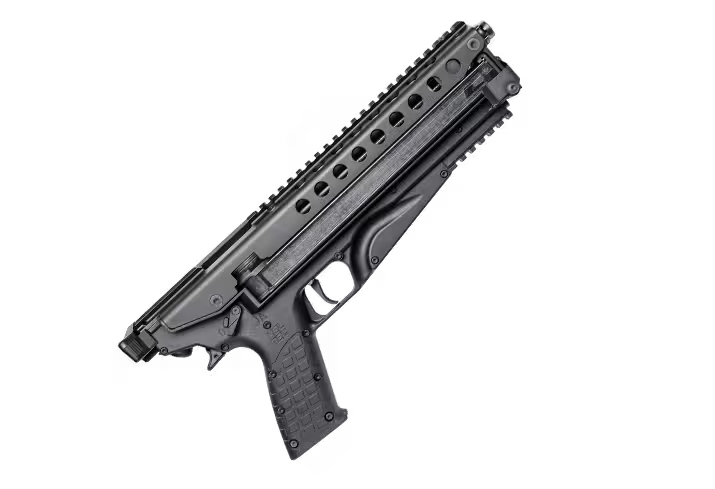
Last updated August 21st 2026 · By Nick Hall, 5.7mm shooter who has run the FN Five-seveN, Ruger-57, and PSA Rock through extended tests
Some of the links below are affiliate links, meaning at no additional cost to you, we may earn a commission if you click through and make a purchase.
- Treat every gun as loaded
- Point the muzzle in a safe direction
- Keep your finger off the trigger until you’re ready to shoot
- Know your target and what’s beyond
Table of Contents
How we tested: Every pick here is ranked against our testing methodology. Minimum round counts, accuracy and reliability protocols, the failures that disqualify a gun. Where we have not shot a specific variant ourselves, we say so in that section.
Introduction: The 5.7x28mm Has Arrived
Five years ago, if you wanted a 5.7x28mm pistol, you had exactly one option: the FN Five-seveN. It cost over $1,200 and you were lucky to find one in stock. The ammo was expensive, availability was spotty, and half the gun community thought you were crazy for wanting one.
Fast forward to 2026, and the 5.7 market has exploded. You can get into the caliber for under $400. Multiple manufacturers are making pistols, ammo prices have dropped, and the round’s advantages (flat trajectory, low recoil, high velocity, serious capacity) are finally getting the recognition they deserve. I’ve been shooting 5.7 pistols for years now, and the current lineup is the strongest it’s ever been.
This guide covers every 5.7x28mm pistol worth buying in 2026. I’ve ranked them based on range time, real-world reliability, value, and how well each one takes advantage of what makes this caliber special. Whether you want the original legend, a budget entry point, or something completely wild (looking at you, P50), there’s a 5.7 pistol here for you.
If you’re also shopping for more conventional options, check out our picks for the best compact 9mm pistols and best full size 9mm pistols. But if you want something different, something that turns heads at the range and pokes holes in paper at distances most pistol shooters don’t even attempt, keep reading.
What 5.7x28mm Actually Is
The short version: 5.7x28mm is a small, bottlenecked centerfire cartridge that fires a .224-inch bullet, the same diameter an AR-15 uses, in weights from 27 to 40 grains, out of a case 28mm long. FN Herstal developed it in the late 1980s for NATO’s Personal Defense Weapon requirement: a round that would shoot flatter than 9mm, recoil less, and defeat the soft body armor a 9mm could not. The P90 carbine came first in 1990, the Five-seveN pistol followed in 1998, and for the better part of two decades those two guns were effectively the only way to shoot it.
Out of a pistol it runs between 1,700 and 2,216 fps for 222 to 294 ft-lbs, and which end of that range you get depends entirely on the bullet weight you load. That is roughly two-thirds the muzzle energy of a 124-grain 9mm defensive load, delivered with a fraction of the recoil and twenty-plus rounds in the magazine. Whether that trade is worth making is covered further down. Here are the numbers it rests on.
5.7x28mm ballistics, by load and by barrel
These are FN Herstal’s own published figures. FN quotes every load twice, once from the Five-seveN pistol and once from the 16-inch PS90 carbine, which is the single most useful thing anybody publishes about this cartridge and the thing almost every article about it leaves out.
| FN load | Bullet | Five-seveN pistol (4.8") | PS90 carbine (16") |
|---|---|---|---|
| SS201 GUNR | 40 gr FMJ | 1,700 fps / 257 ft-lbs | 2,040 fps / 370 ft-lbs |
| SS197SR | 40 gr V-Max | 1,738 fps / 268 ft-lbs | 2,034 fps / 368 ft-lbs |
| SS195LF | 27 gr aluminum-core HP | 1,890 fps / 222 ft-lbs | 2,132 fps / 282 ft-lbs |
| SS200 DFNS | 30 gr JHP | 1,894 fps / 239 ft-lbs | 2,240 fps / 334 ft-lbs |
| SS198LF | 27 gr aluminum-core HP | 2,216 fps / 294 ft-lbs | 2,530 fps / 384 ft-lbs |
Three things fall out of that table, and all three get misreported constantly.
1. A 5.7 velocity figure is meaningless without a barrel length attached. The “5.7 does 2,000 fps” line you see everywhere is a carbine number. Load SS197SR, the most common range ammunition, into any pistol on this page and you get 1,738 fps, not 2,000. The PS90’s extra 11 inches of barrel is worth about 300 fps and a third more energy on the same cartridge. Quote the pistol figure when you are talking about a pistol.
2. Velocity moves a long way, energy barely moves at all. Across FN’s five civilian loads, pistol velocity spans 1,700 to 2,216 fps, a 30 percent swing. Pistol energy spans 222 to 294 ft-lbs. You are not buying more power by going faster; you are buying a flatter trajectory and a lighter bullet.
3. The lightest bullet makes the most energy, which is the opposite of how it works in every other handgun cartridge. SS198LF’s 27-grain bullet at 2,216 fps produces 294 ft-lbs from a pistol. The 40-grain SS197SR produces 268. If you have been buying 40-grain because heavier sounds better, the numbers do not support it.
For context, a 124-grain Federal HST 9mm makes about 364 ft-lbs at the muzzle. The 5.7 gives up roughly a third of that. What it hands back is recoil you can shoot one-handed, a bullet that barely drops inside 100 yards, and a magazine that holds twenty or more. That is the whole pitch, and it is a real one.
| Firearm | Caliber | Weight | Capacity | Barrel | MSRP | Price |
|---|---|---|---|---|---|---|
| BEST OVERALL FN Five-seveN MK3 MRD | 5.7x28mm | 25.2 oz | 20+1 | 4.8" | ~$1,509 | Lowest Price ↓ |
| BEST ALL-ROUNDER Smith & Wesson M&P 5.7 | 5.7x28mm | 26.7 oz | 22+1 | 5" | ~$699 | Lowest Price ↓ |
| BEST BUDGET PSA 5.7 Rock | 5.7x28mm | 25 oz | 23+1 | 5.2" | ~$499 | Lowest Price ↓ |
| BEST MID-RANGE Ruger-57 | 5.7x28mm | 24.5 oz | 20+1 | 4.94" | ~$549 | Lowest Price ↓ |
| BEST FOR CARRY KelTec PR-5.7 | 5.7x28mm | 13.86 oz | 20+1 | 4" | ~$399 | Lowest Price ↓ |
| MOST AFFORDABLE Tisas PX-5.7 | 5.7x28mm | 25.75 oz | 20+1 | 4.8" | ~$500 | Lowest Price ↓ |
| BEST PDW CMMG Dissent Mk57 | 5.7x28mm | 4.9 lbs | 20+1 | 6.5" | ~$1,950 | Lowest Price ↓ |
| MOST UNIQUE KelTec P50 | 5.7x28mm | 3.2 lbs | 50+1 | 9.6" | ~$899 | Lowest Price ↓ |

1. FN Five-seveN MK3 MRD: Best Overall
- Caliber: 5.7x28mm
- Barrel Length: 4.8″
- Weight: 25.2 oz (without magazine)
- Capacity: 20+1
- Frame: Polymer
- MSRP: $1,509
| Category | Rating |
| Ergonomics | 4.5/5 |
| Trigger | 4/5 |
| Reliability | 5/5 |
| Recoil Management | 5/5 |
| Value | 3.5/5 |
Pros
- The original 5.7 pistol, proven over 25+ years
- MK3 adds optics-ready MRD slide cut
- 20+1 capacity with almost zero felt recoil
- Delayed blowback action is butter-smooth
- Extremely lightweight at under 23 oz
Cons
- Most expensive of the conventional pistols here
- SA-only trigger won’t appeal to everyone
- Proprietary magazine design (no cross-compatibility)
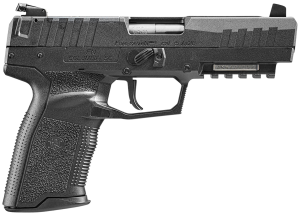
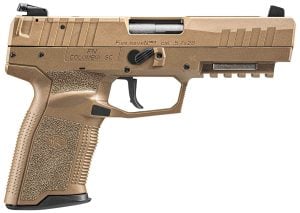
FN publishes the full spec sheet on its own MRD product page, worth reading before you spend this much. The FN Five-seveN created the 5.7x28mm caliber. FN designed the round and the gun together for NATO in the late 1990s, and the Five-seveN has been the gold standard ever since. The MK3 MRD is the latest version, and it finally adds the one thing the platform was missing: an optics cut. Mount a red dot without adapter plates, and you’ve got one of the flattest-shooting, lightest-recoiling pistols on the market with a proper modern sighting setup.
Shooting the Five-seveN is unlike anything else. The delayed blowback action, combined with the inherently low recoil of the 5.7x28mm round, makes follow-up shots almost effortless. At 25 yards, I can keep rapid strings inside a playing card. At 50 yards, it’s still making hits that would challenge most 9mm pistols. The 20-round magazine doesn’t hurt either.
The downsides are price and trigger preference. FN asks $1,509 for it, which makes it the second most expensive gun here behind the CMMG, though the retailers below have been running it a long way under that. The single-action trigger is good but not great by modern striker-fired standards, and the safety is a bit unusual if you’re used to Glocks or M&Ps. None of that changes the fact that this is the most proven 5.7 pistol ever made.
If you can afford it, the MK3 MRD is the definitive 5.7 experience. Everything else on this list is measured against it. The card above tracks it across six retailers, and stock moves faster than price does, so buy on availability rather than on sticker.
Best For: Shooters who want the original and the best, with no compromises. If you believe in buying once and buying right, this is your gun.

2. Smith & Wesson M&P 5.7: Best All-Rounder
- Caliber: 5.7x28mm
- Barrel Length: 5″
- Weight: 26.7 oz
- Capacity: 22+1
- Frame: Polymer
- MSRP: $699
| Category | Rating |
| Ergonomics | 4.5/5 |
| Trigger | 4.5/5 |
| Reliability | 4.5/5 |
| Recoil Management | 5/5 |
| Value | 4.5/5 |
Pros
- Gas-operated Tempo system makes recoil even softer than the FN
- 22+1 capacity (highest of the traditional pistols)
- Excellent flat-face trigger with clean break
- Optics-ready from the factory
- Half the price of the FN Five-seveN
Cons
- Slightly heavier than the FN at 24 oz
- Gas-operated system requires more break-in (100+ rounds)
- Not as many aftermarket accessories yet
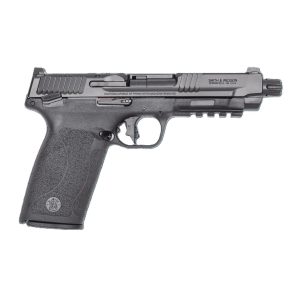
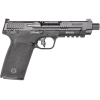
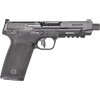
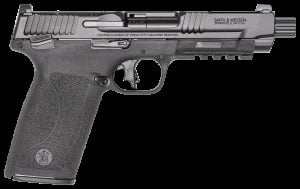
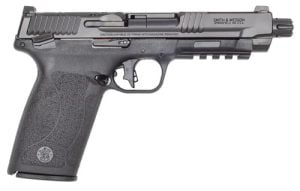
Smith & Wesson’s M&P 5.7 was the gun that told the world this caliber wasn’t just an FN novelty. When S&W commits to a platform, that’s a signal. And they didn’t just phone it in. The gas-operated Tempo barrel system is a genuinely clever design that tames recoil even further than the Five-seveN’s delayed blowback. Shooting this thing feels like a .22 that hits like a centerfire.
The trigger is the star of the show. It’s a flat-face design with a crisp, predictable break and a short, tactile reset. I’d put it up against most aftermarket 9mm triggers. Paired with the near-zero recoil and 22+1 capacity, this is probably the easiest pistol to shoot fast and accurately on this entire list.
At around $649, the M&P 5.7 is roughly half the price of the FN Five-seveN while matching or beating it in several categories. The optics cut is standard, the grip ergonomics are pure M&P (which is a compliment), and it feeds everything I’ve run through it after the initial 100-round break-in. If I could only recommend one 5.7 pistol to a friend, this would probably be it.
It undercuts the FN by a few hundred dollars and gives up very little to do it. Current pricing is in the card above.
Best For: The shooter who wants the best overall package of performance, features, and value. This is the 5.7 pistol I’d recommend to most people.

3. PSA 5.7 Rock: Best Budget
- Caliber: 5.7x28mm
- Barrel Length: 5.2″
- Weight: 25 oz (with empty magazine)
- Capacity: 23+1
- Frame: Polymer
- MSRP: $499 (street about $400)
| Category | Rating |
| Ergonomics | 3.5/5 |
| Trigger | 3.5/5 |
| Reliability | 3.5/5 |
| Recoil Management | 4.5/5 |
| Value | 5/5 |
Pros
- Under $400 for a 5.7x28mm pistol
- 23+1 capacity (highest in a traditional format)
- Optics-ready with included plate
- Lightweight and comfortable to shoot
Cons
- Some ammo sensitivity (avoid steel-cased)
- Trigger is serviceable but not exceptional
- Fit and finish is “budget” in places
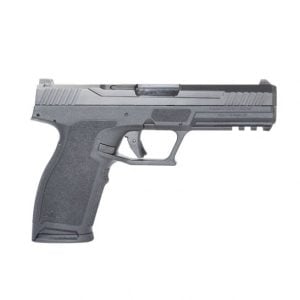
Palmetto State Armory did what PSA does best: they took a platform that was considered premium and made it affordable. The 5.7 Rock put a 5.7x28mm pistol in the sub-$400 bracket for the first time ever. That’s the same price as a basic 9mm. For a caliber that used to be reserved for people with FN money, that’s a big deal. We did a full writeup on it in our PSA 5.7 Rock review.
Is it as refined as the FN or S&W? No. The trigger is adequate, the fit and finish has some rough spots, and you’ll want to stick with brass-cased ammo for the best reliability. Some owners have reported occasional feeding issues with certain loads during break-in. But after a few hundred rounds, mine settled in and runs reliably with quality ammo.
What you do get is 23+1 rounds of 5.7x28mm in a lightweight, optics-ready package for less than $400. The recoil is the same “barely there” experience you get from every 5.7 pistol. It’s accurate enough for anything you’d realistically do with it. And at this price, you can buy the gun and a case of ammo for less than the cost of just the FN Five-seveN.
PSA make it and PSA sell it cheapest, and the card above links straight to them. Also check out our guide to the best PSA guns if you want to see what else they’re doing right.
Best For: Budget-conscious shooters who want into the 5.7 caliber without spending FN money. Get one, shoot it, and decide if you want to upgrade later.

4. Ruger-57: Best Mid-Range
- Caliber: 5.7x28mm
- Barrel Length: 4.94″
- Weight: 24.5 oz
- Capacity: 20+1
- Frame: Glass-filled polymer
- MSRP: $549
| Category | Rating |
| Ergonomics | 4/5 |
| Trigger | 4.5/5 |
| Reliability | 5/5 |
| Recoil Management | 4.5/5 |
| Value | 4/5 |
Pros
- Classic Ruger build quality and reliability
- Excellent single-action trigger
- Fiber optic front sight and adjustable rear
- Eats all 5.7x28mm ammo without complaint
- Ambidextrous safety and mag release
Cons
- Slide is drilled and tapped for optics, but the adapter plate is sold separately
- Slightly heavier than competitors
- Same price bracket as the M&P 5.7 (tough competition)
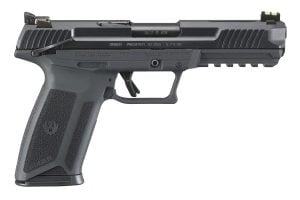
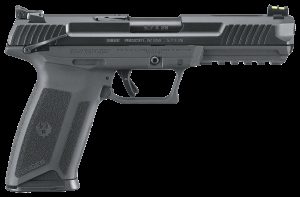
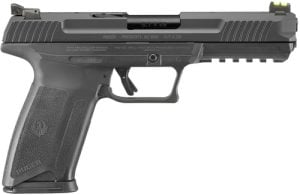
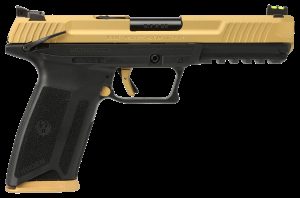
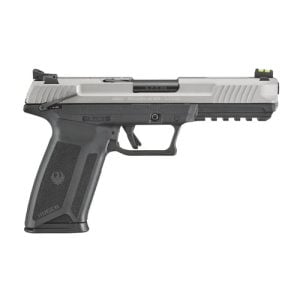
Ruger has been making reliable, no-nonsense firearms for decades, and the Ruger-57 is exactly what you’d expect from them. It works. Every time. With every kind of 5.7x28mm ammo I’ve fed it. That’s not something every 5.7 pistol on this list can claim, and for a lot of shooters, that reliability alone is worth the price of admission.
The trigger is excellent. It’s a single-action design with a crisp, clean break that surprised me when I first shot it. The fiber optic front sight is bright and easy to pick up, and the adjustable rear sight lets you dial in your zero at whatever distance you prefer. These are iron sights done right.
The Ruger-57 used to sit in the same price bracket as the M&P 5.7. It does not any more: Ruger lists it at $549 against the S&W’s $699, and the live listings below have been putting it lower still. The S&W is the better buy if you want a red dot and the higher capacity. The Ruger is now the cheaper gun, which changes the argument. But if you prefer irons, value bomb-proof reliability, and trust the Ruger name, the 57 is a fantastic choice. It’s the Toyota Camry of 5.7 pistols: not flashy, but it’ll never let you down.
It is the easiest gun on this list to actually find in stock, which counts for more than a twenty dollar price difference. See the card above.
Best For: Ruger loyalists and iron-sight shooters who want a 5.7 pistol that just works, every single time, without fuss.

5. KelTec PR-5.7: Best for Carry
- Caliber: 5.7x28mm
- Barrel Length: 4″
- Weight: 13.86 oz unloaded
- Capacity: 20+1
- Frame: Polymer
- MSRP: $399.99
| Category | Rating |
| Ergonomics | 3.5/5 |
| Trigger | 3/5 |
| Reliability | 4/5 |
| Concealability | 5/5 |
| Value | 4.5/5 |
Pros
- Under one pound unloaded (lightest 5.7 ever)
- 20+1 capacity in a carry-size package
- Completely unique concept, nothing else like it
- Sub-$400 price point
- 3″ barrel still gets respectable velocity from 5.7x28mm
Cons
- Very new (2025), limited long-term track record
- 3″ barrel means significant velocity loss from the caliber
- Snappy recoil compared to full-size 5.7 pistols
![KELTEC PR-5.7 [GRN]](https://www.usa-gun-shop.com/wp-content/uploads/ugs-pc-img/a2355ac23d5df09b3165a94adf91c43d.jpg)
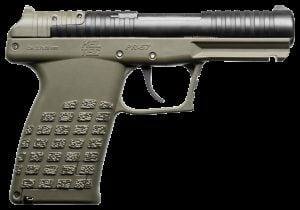
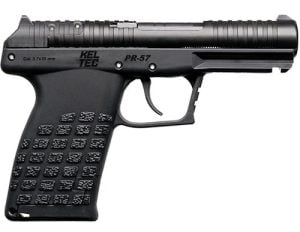
KelTec is known for making guns nobody else would even think of, and the PR-5.7 might be their most compelling idea yet. It’s a carry-sized 5.7x28mm pistol that weighs under one pound unloaded. That’s not a typo. Under a pound, with 20+1 rounds of a caliber that was designed to defeat body armor. Nothing else in the firearms industry comes close to this concept.
The 3-inch barrel does sacrifice some of the 5.7’s velocity advantage. You’re not going to get the same 2,000+ fps that a full-size barrel delivers. But you’re still getting a centerfire round with significantly less recoil than 9mm, meaningful capacity, and terminal performance that’s more than adequate for personal defense. The trade-off is absolutely worth it for concealed carry.
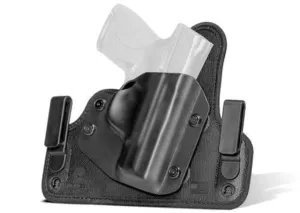
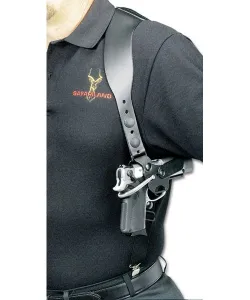
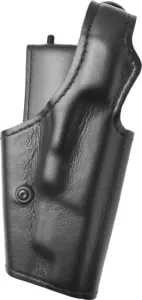
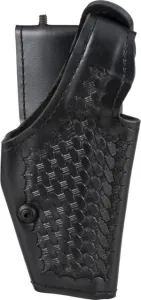
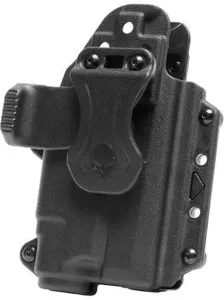
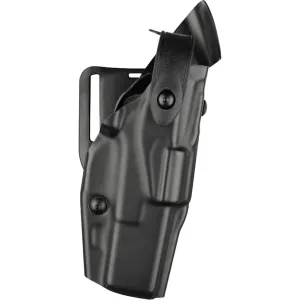
Holsters for a 5.7
Best-scored accessories across 200+ retailers · Updated every 4 hours

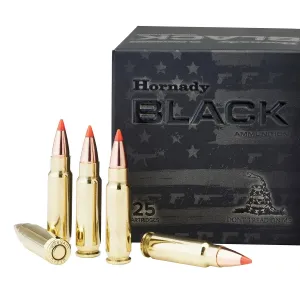
5.7x28 Ammo on Sale
On-sale 5.7x28 from 200+ retailers · Updated every 4 hours


Being a 2025 release, the PR-5.7 doesn’t have the long-term track record of the Ruger or FN. Early reports are positive, and KelTec has a history of iterating on their designs quickly if issues crop up. The trigger is typical KelTec (functional, not luxurious), and the recoil is noticeably snappier than the full-size 5.7 options. That’s physics, not a design flaw.
If you’ve ever wanted to carry 20+1 rounds of 5.7x28mm on your hip without feeling like you strapped on a full-size duty gun, the PR-5.7 is the only game in town. Get one before everyone else figures out how cool this is.
Best For: Concealed carry shooters who want maximum capacity and minimum weight. Twenty-one rounds of 5.7 in your waistband. Think about that.

6. Tisas PX-5.7: Most Affordable
- Caliber: 5.7x28mm
- Barrel Length: 4.8″
- Weight: 25.75 oz (without magazine)
- Capacity: 20+1
- Frame: Polymer
- MSRP: $499.99
| Category | Rating |
| Ergonomics | 3.5/5 |
| Trigger | 4/5 |
| Reliability | 4/5 |
| Recoil Management | 4/5 |
| Value | 4.5/5 |
Pros
- Adjustable rear sight and fiber optic front, standard
- Cheapest full-size 5.7 in the line-up on street price
- Aggressive pricing undercuts most competitors
- Solid fit and finish for the price
Cons
- Turkish-made (some buyers have brand hesitancy)
- Heavier than the FN or S&W options
- Limited aftermarket support
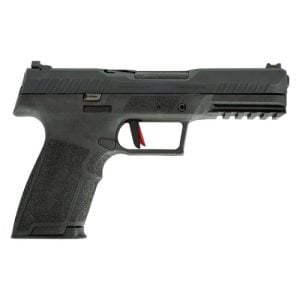
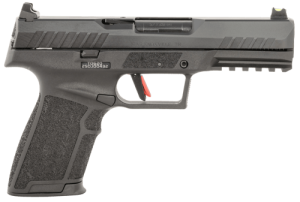
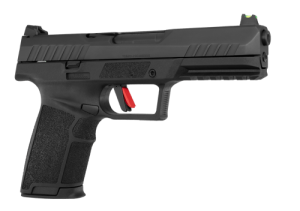
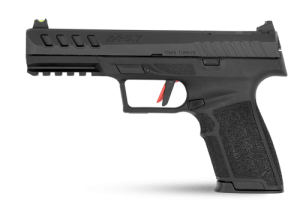
Tisas has been earning a solid reputation in the US market with their affordable 1911 clones, and the PX-5.7 shows they’re not afraid to try something different. This Turkish-made 5.7x28mm pistol is a delayed-blowback design like the FN, with a single-action trigger, an adjustable rear sight and a fiber optic front. It is the cheapest way into the caliber that still feels like a full-size service pistol rather than a budget one.
The 20-round magazines are the same capacity as the FN’s, and Tisas mags are cheap and easy to find, but do not buy this gun assuming FN Five-seveN magazines will drop in. Published sources do not agree on whether the two are interchangeable, and nobody at Tisas advertises that they are. The single-action trigger is clean and predictable, and the overall build quality punches above the price.
At 25.75 ounces without a magazine it is a little heavier than the FN, and there is essentially no aftermarket for it. You will not find custom holsters or accessories as easily as you would for the FN, Ruger or S&W. But it lists at $499.99 and the retailers below have been well under that, which is a lot of 5.7 pistol for the money.
Best For: Shooters who want into 5.7x28mm for the least money without dropping to a compact. Great second 5.7 pistol or entry point for DA/SA fans.

7. CMMG Dissent Mk57: Best PDW
- Caliber: 5.7x28mm
- Barrel Length: 6.5″
- Weight: 4.9 lbs
- Capacity: 20+1 (FN Five-seveN pattern magazines)
- Frame: Aluminum/polymer AR-pattern
- MSRP: $1,949.95
| Category | Rating |
| Build Quality | 5/5 |
| Reliability | 5/5 |
| Suppressor-Ready | 5/5 |
| Versatility | 4.5/5 |
| Value | 3.5/5 |
Pros
- Radial delayed blowback is whisper-quiet suppressed
- AR-pattern controls everyone already knows
- 6.5″ barrel extracts maximum velocity from 5.7x28mm
- Folding brace makes it incredibly compact for storage
- Top-tier CMMG build quality
Cons
- Most expensive gun on this list at $1,949.95
- Not a traditional pistol (PDW/pistol brace format)
- Heavy compared to standard 5.7 pistols
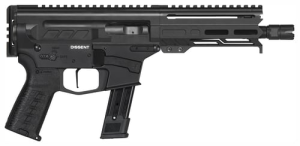
The CMMG Dissent takes the 5.7x28mm out of the traditional pistol format and puts it where the caliber arguably makes the most sense: a personal defense weapon. The 5.7 round was originally designed for the FN P90 submachine gun, and a short-barreled PDW is much closer to that original concept than any handgun. The 6.5-inch barrel gets the round moving faster than any handgun here, though it is worth being honest about the size of the gain: FN needs the PS90’s 16 inches to reach 2,034 fps with SS197SR, and 6.5 inches lands well short of that.
CMMG’s radial delayed blowback system is the real star. It’s one of the smoothest-cycling actions in the AR world, and when you pair it with the 5.7’s already-low recoil impulse, the result is a gun that barely moves during rapid fire. Add a suppressor and the Dissent becomes one of the quietest, flattest-shooting home defense platforms you can own. The 5.7 round loves suppressors.
Yes, CMMG lists it at $1,949.95, and the Mk57 has been selling a little under that. Yes, it is not a pistol in the traditional sense. But if you want a serious defensive tool that takes full advantage of what the 5.7x28mm can do, the Dissent format makes a strong case. AR controls mean there is virtually no learning curve, and CMMG’s quality control is excellent. One thing to know before you shop: CMMG builds the Dissent in 5.7 twice. The Mk57 priced here takes FN Five-seveN pattern magazines and holds 20. The Mk4 uses CMMG’s own 32-round AR-pattern magazines and sells for several hundred less. Both are good; they are not the same gun, and listings do not always make the difference obvious.
Pricing is in the card above, and read the row before you click. A bare Dissent upper receiver shows up in the same searches for less than half the money, and it is not a pistol.
Best For: Home defense and suppressor enthusiasts who want the ultimate 5.7x28mm platform. If you’re building a nightstand gun, this is it.

8. KelTec P50: Most Unique
- Caliber: 5.7x28mm
- Barrel Length: 9.6″
- Weight: 3.2 lbs
- Capacity: 50+1
- Frame: Polymer
- MSRP: $899
| Category | Rating |
| Fun Factor | 5/5 |
| Capacity | 5/5 |
| Reliability | 3.5/5 |
| Practicality | 2/5 |
| Value | 3.5/5 |
Pros
- 50+1 rounds. Fifty. Plus one.
- Uses actual FN P90 magazines
- 9.6″ barrel maximizes 5.7x28mm velocity
- Threaded barrel for suppressor use
- Absolute conversation starter at any range
Cons
- Awkward ergonomics (it’s shaped like nothing else)
- Reloading the P90 magazines takes practice
- Not practical for carry or most defensive scenarios
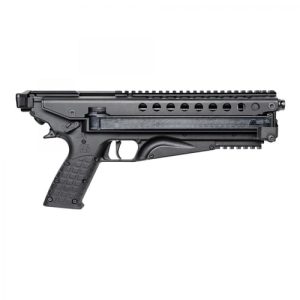
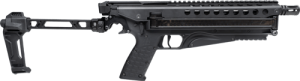
Fifty rounds. In a pistol. Let that sink in for a second. The KelTec P50 uses actual FN P90 magazines, the same ones designed for a military submachine gun, and stuffs them into a pistol-format package that looks like it fell out of a science fiction movie. It’s absurd. It’s impractical. It is the most fun I’ve had at a range in years.
The 9.6-inch barrel is the longest of any gun on this list, which means the P50 is extracting every bit of velocity the 5.7x28mm has to offer. You’re getting close to true rifle-like performance out of this thing. Suppressed, it’s even better. The threaded barrel comes standard, and the 5.7 round is quiet enough through a can that you’ll genuinely enjoy shooting it without ear pro (though you should still wear it).
The ergonomics are, well, KelTec. The gun opens like a clamshell to accept the P90 magazine, the grip angle is unconventional, and it takes some practice to get comfortable with it. Reloading P90 mags is also its own skill. This is not a gun you buy for efficiency or practicality. This is a gun you buy because you want to dump 50 rounds of 5.7 downrange and watch everyone at the range stop shooting to stare.
Best For: Range toy enthusiasts and 5.7 fanatics who want maximum capacity and maximum fun. Life is short. Buy the weird gun.
How These Eight Actually Work
Something that gets glossed over in every 5.7 round-up I have read: these guns do not share an action. The cartridge sits in an awkward place, too energetic for simple blowback in a light pistol and not energetic enough to need a full locked-breech system, and every manufacturer has solved that differently. It explains most of the differences in how they feel to shoot.
| Pistol | Action | What it means at the range |
|---|---|---|
| FN Five-seveN MK3 MRD | Delayed blowback, single-action only | The original solution. Smooth, and the reason the gun is so light. |
| Smith & Wesson M&P 5.7 | Gas-operated (Tempo barrel system), hammer-fired | A gas piston delays the slide. Softest shooter of the eight. |
| PSA 5.7 Rock | Delayed blowback, striker-fired | Barrel stays put on firing, which helps mechanical accuracy. |
| Ruger-57 | Delayed blowback | Barrel travels about a quarter-inch with the slide before it stops. |
| KelTec PR-5.7 | Rotating barrel | The only locked-breech gun here, and the only one under a pound. |
| Tisas PX-5.7 | Delayed blowback | Conventional execution of the FN approach at half the money. |
| CMMG Dissent Mk57 | Radial delayed blowback | CMMG’s rotating-bolt delay, borrowed from their pistol-caliber ARs. |
| KelTec P50 | Blowback, bolt on twin guide rods | Simplest action here. Mass and springs do all the work. |
The practical upshot: the M&P 5.7 and the KelTec PR-5.7 are doing real mechanical work to soften recoil, and you feel it. The delayed-blowback guns rely on slide mass and spring rate, which is why the FN’s slide is cut and lightened so aggressively and why the Tisas, with a conventional slide, is the snappiest of the full-size guns.
How I Tested and Ranked These
Three of the eight I own or have put extended range time on: the FN Five-seveN, the Ruger-57 and the PSA 5.7 Rock. Those are the guns the reliability and trigger notes come from, and the ammunition sensitivity note on the Rock is my own experience with it rather than something I read.
The other five are ranked on published manufacturer specification, current street pricing from the live retailer feeds on this page, and action type. Where a number appears here it came from the maker’s own sheet, not from a retailer listing: FN America for the Five-seveN and for every ballistics figure above, Ruger’s specification sheet for model 16401, Smith & Wesson’s published figures for the M&P 5.7, KelTec for the PR-5.7 and P50, CMMG for the Dissent Mk57, and Palmetto State Armory for the 5.7 Rock. Several of those disagreed with what this page previously said, and the maker won every time.
Prices move. The MSRP column in the table above is what the manufacturer asks; the price buttons pull live retailer stock, and on most of these guns the street price is well under MSRP. Check the card under each pick rather than trusting a number in a paragraph, including mine.
Why 5.7x28mm?
The 5.7x28mm was designed by FN Herstal in the late 1980s for NATO’s Personal Defense Weapon program. The goal was simple: create a round that could defeat body armor at close range while being controllable in a compact platform. The result was a small, bottlenecked cartridge that pushes a lightweight projectile past 2,000 fps out of the 16-inch PS90 carbine and between 1,700 and 2,216 fps out of a pistol, depending on the load. That is handgun-sized packaging with rifle-like velocity.
For civilian shooters, the armor-piercing capability is mostly academic (the AP loads are restricted). But the other benefits are very real. The 5.7 shoots flat, meaning holdover at 50-100 yards is minimal compared to 9mm. The recoil is laughably light, making it one of the easiest centerfire calibers to shoot accurately. And the capacity is outstanding because the small cartridge dimensions let you stack 20+ rounds into a standard-sized grip.
The knock on 5.7x28mm has always been terminal performance. A 40-grain bullet at high velocity doesn’t create the same wound channel as a 124-grain 9mm hollow point. That’s a fair criticism, and I wouldn’t call the 5.7 a clear upgrade over 9mm for self-defense. But with modern defensive loads from Federal and Speer designed specifically for civilian use, the gap has narrowed significantly. For shooters who prioritize capacity, recoil control, and flat trajectory, the 5.7 is a legitimate option.
5.7x28mm Ammo: What You Need to Know
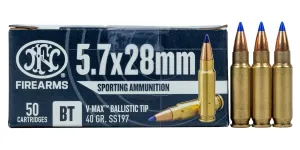
Ammo selection matters more with 5.7x28mm than with most pistol calibers. The most common loads you’ll encounter are the FN SS197SR (sporting round, 40-grain V-Max, which FN publishes at 1,738 fps from the Five-seveN), which is the standard range and target load. Federal American Eagle also makes a 40-grain FMJ that’s widely available and runs well in everything. For defensive use, look at the Speer Gold Dot 40-grain or Federal Personal Defense loads, which are designed for reliable expansion out of short barrels.
Expect to pay around $0.40-0.60 per round depending on the load and where you buy. That’s more than 9mm but significantly less than it was five years ago when 5.7 ammo regularly exceeded $1 per round. The increased competition in the pistol market has driven ammo prices down as manufacturers ramped up production. Buy in bulk when you see it under fifty cents a round, because 5.7 still moves around a lot more than 9mm does.
One important note: avoid the cheapest steel-cased imports if you’re shooting a PSA 5.7 Rock or any budget-tier 5.7 pistol. These guns can be more ammo-sensitive than the FN or Ruger. Stick with brass-cased ammo from established manufacturers and you’ll have zero issues. The FN Five-seveN and Ruger-57 tend to eat everything without complaint.
Frequently Asked Questions
What is the best 5.7mm pistol?
The FN Five-seveN MK3 MRD is the best overall 5.7mm pistol. It created the caliber, holds 20+1 rounds, and now comes with a factory optics cut. For the best value, the PSA 5.7 Rock and the KelTec PR-5.7 both sit around $400 and are hard to beat.
Is 5.7x28mm better than 9mm?
5.7x28mm has flatter trajectory, less felt recoil, higher velocity (1,700 to 2,216 fps from a pistol, depending on load, against about 1,150 fps for 9mm), and often higher capacity. But 9mm is cheaper (half the ammo cost), more widely available, and has vastly more gun options. On muzzle energy the 9mm still wins: a 124-grain Federal HST makes about 364 ft-lbs against 222 to 294 ft-lbs for FN's civilian 5.7 loads out of a pistol. For self-defense, 9mm is the more practical choice. For fun, flat shooting, and high capacity, 5.7 is hard to beat.
Can 5.7x28mm penetrate body armor?
Certain military and law enforcement loadings (SS190) can defeat Level IIIA soft body armor. Civilian ammunition cannot. Commercial 5.7x28mm ammo performs similarly to other handgun rounds against soft armor. The armor-piercing capability is restricted to military/LE use only.
What is the cheapest 5.7mm pistol?
The KelTec PR-5.7 and the PSA 5.7 Rock both sit around $400 on the street, and the Tisas PX-5.7 has been going lower still. The FN Five-seveN, at $1,509 MSRP, is the most expensive of the conventional pistols; the CMMG Dissent Mk57 at $1,949.95 is the most expensive gun on the list.
Is 5.7x28mm good for self-defense?
Yes, with proper ammunition. Modern hollow point loads like Speer Gold Dot 5.7 and Federal Premium offer effective terminal performance. The high velocity, low recoil, and high capacity (20+ rounds) make 5.7mm pistols viable defensive tools. Ammo selection matters more with 5.7 than with 9mm.
How much does 5.7x28mm ammo cost?
FMJ range ammo runs about $0.40 to $0.60 per round, roughly double the cost of 9mm. Premium defensive ammo costs $1.00 to $2.00+ per round. Prices have come down significantly as more manufacturers enter the market and more guns are chambered in the caliber.
Is the 5.7x28mm a good self-defense round?
It is a capable and unusual choice. The 5.7 fires a small, very fast bullet with light recoil and high capacity, often 20 rounds, and it penetrates well. Critics note its lighter projectile and higher ammo cost versus 9mm, but defenders value the flat shooting and round count. It works, with tradeoffs.
What pistols are chambered in 5.7?
The FN Five-seveN is the original and most famous, joined by the value-priced Ruger-57, the compact PSA Rock 5.7 and the Smith & Wesson M&P 5.7. That growing lineup has made the once-exotic cartridge far more accessible and affordable than it was a few years ago.
Related Reviews
6,216+ Gun & Ammo Deals
Updated daily from 200+ top retailers. Filter by category, caliber, action type, and price.
Related Guides