
Last updated March 28th, 2026. This post contains affiliate links. If you click and buy, I may earn a small commission at no extra cost to you. Full disclosure here.
- Treat every gun as loaded
- Point the muzzle in a safe direction
- Keep your finger off the trigger until you’re ready to shoot
- Know your target and what’s beyond
The AR-15 has more individual parts than any other common firearm. That’s both its greatest strength (everything is modular and replaceable) and its biggest source of confusion for new builders. How many parts are in an AR-15? Depending on how you count, roughly 100 individual components.
I’ve built more AR-15s than I can count, from bare receivers to complete rifles. This guide covers every single component, what it does, what it costs, and where you should spend versus save. Bookmark this page. You’ll reference it every time you build or upgrade.
Lower Receiver Group
The lower receiver is the serialized, legally-regulated part of the AR-15. It’s what the ATF considers the “firearm.” Everything else is just parts. The lower receiver group includes everything that attaches to or sits inside the lower.
Stripped Lower Receiver
The foundation. This is the serialized housing that holds the trigger group, magazine, buffer system, and stock. Forged 7075-T6 aluminum is the standard. Billet lowers are machined from solid stock and can have enhanced features. For most builds, a quality forged lower ($60-100) from Aero Precision, Anderson, or Palmetto State Armory is perfect. Premium options from BCM, LMT, and Radian run $200-400.
Lower Parts Kit (LPK)
The LPK contains all the small parts that go into the lower: trigger, hammer, disconnector, safety selector, bolt catch, magazine release, pivot and takedown pin detents and springs, trigger guard, and pistol grip. A complete mil-spec LPK runs $30-50. Many builders buy an LPK minus the trigger and fire control group, then add an aftermarket trigger separately.
Trigger
The fire control group (trigger, hammer, disconnector) determines pull weight, feel, and reset. Mil-spec triggers run 6-8 pounds with noticeable grit. Aftermarket options are the single biggest improvement you can make. The LaRue MBT-2S ($100) is the best value in the industry. The Geissele SSA-E ($240) is the gold standard for precision. The ALG ACT ($65) is the best polished mil-spec upgrade.
Buffer System
The buffer system includes the buffer tube (receiver extension), buffer, buffer retainer, buffer retainer spring, castle nut, and end plate. For detailed guidance, see our buffer weight guide. Mil-spec buffer tubes are 7075-T6 aluminum with a 1.148″ outer diameter. Always go mil-spec here. The mil-spec vs commercial guide explains why.
Stock
The stock slides onto the buffer tube and provides the shoulder interface. The Magpul MOE SL ($50), B5 Systems SOPMOD ($60-100), and BCM Gunfighter SOPMOD ($55) are all excellent choices. Make sure you match mil-spec or commercial spec to your buffer tube. For fixed stock builds, the Magpul MOE Rifle Stock or classic A2 stock pair with rifle-length buffer tubes.
Pistol Grip
The grip attaches to the bottom of the lower receiver and holds the trigger hand. The A2 grip that comes in most LPKs is serviceable but has a steep angle most shooters find uncomfortable. The Magpul MOE+ ($20), BCM Gunfighter Mod 3 ($18), and Magpul K2+ ($22) are popular upgrades with better angles and rubberized textures.
Magazine Release
The button on the left side of the receiver that drops the magazine. Standard mil-spec works fine. Extended magazine releases from Magpul, Odin Works, and Troy are available for those who want a larger, easier-to-reach button ($10-25).
Bolt Catch
The bolt catch holds the bolt open after the last round and releases it to chamber a new round. Mil-spec is adequate. Enhanced bolt catches from Geissele (Maritime), Magpul, and Phase 5 offer larger paddles for easier manipulation ($20-50). Ambidextrous bolt releases add a catch on the right side for left-handed shooters.
Safety Selector
The safety lever. Standard mil-spec is fine for right-handed shooters. Ambidextrous safeties from Radian (Talon, $50), BAD-ASS, and Geissele add a lever on the right side. This is a worthwhile upgrade for most shooters, not just lefties. Check our left-handed AR-15 guide for more ambi options.
Pivot and Takedown Pins
These two pins connect the upper and lower receivers. Standard pins are fine. Enhanced versions with captive detents (KNS anti-rotation pins) or extended pull tabs make disassembly easier but aren’t necessary. If your standard pins feel loose, an accu-wedge ($3) takes up the slop between receivers.
Upper Receiver Group
The upper receiver group is where all the action happens. This is the non-serialized half of the rifle that contains the barrel, bolt carrier group, and gas system. You can swap uppers freely without any legal considerations (in most states).
Stripped Upper Receiver
The A3/A4 flat-top upper receiver is the standard. It’s forged from 7075-T6 aluminum with a picatinny rail on top for optic mounting. Aero Precision ($70), BCM ($100), and FN ($100) make excellent forged uppers. The upper includes the forward assist housing and ejection port cover.
Bolt Carrier Group (BCG)
The heart of the rifle. The BCG includes the bolt, bolt carrier, cam pin, firing pin, firing pin retaining pin, gas key, and gas key screws. Mil-spec BCGs use a Carpenter 158 bolt and 8620 carrier with phosphate coating. Look for MPI and HPT tested BCGs. Toolcraft ($80), Microbest ($90), and BCM ($150) are top picks. NiB and DLC coated BCGs run $120-200 and clean much easier.
Charging Handle
The charging handle sits in the upper receiver and is used to manually cycle the action. The standard GI charging handle works but is small and hard to grab. The Radian Raptor ($80) is the gold standard upgrade with ambidextrous latches. The BCM Gunfighter Mod 4 ($45) and Breek Arms Warhammer ($30) are excellent budget alternatives.
Barrel
The barrel is the most important accuracy component. Key specifications include length, twist rate, chamber, material (4150 CMV or 416R stainless), profile (pencil, government, SOCOM, Hanson), and finish (chrome-lined, nitrided/melonite, bare). Our barrel length guide and twist rate guide cover the details. Quality barrels from Criterion ($270-320), Faxon ($150-200), and Ballistic Advantage ($140-200) are where you should spend money.
Gas Block
The gas block sits over the gas port on the barrel and directs gas into the gas tube. Fixed low-profile gas blocks ($15-30) are the standard for free-float builds. Adjustable gas blocks ($40-100) from Superlative Arms, SLR, and Wojtek let you tune gas volume. Pinned front sight bases (FSB) are the military standard and work with drop-in handguards.
Gas Tube
A simple stainless steel tube that carries gas from the gas block back to the upper receiver. Available in pistol, carbine, mid-length, and rifle lengths to match your gas system. These are cheap ($10-15) and rarely need replacement unless damaged. Our gas system guide explains the lengths.
Handguard
The handguard surrounds the barrel and provides a gripping surface and accessory mounting. Free-float handguards mount only to the barrel nut for better accuracy. Drop-in handguards use the delta ring and are simpler to install. See our free-float vs drop-in guide for the complete comparison. Budget $80-200 for a quality free-float rail.
Muzzle Device
The muzzle device threads onto the barrel and manages recoil, flash, or sound. A2 flash hiders ($8) are the standard and do a good job hiding flash. Muzzle brakes ($30-80) reduce felt recoil but increase blast and noise. Compensators ($30-60) reduce muzzle rise for faster follow-up shots. Flash hider/brake combos like the SureFire WarComp ($150) and Dead Air Flash Hider ($80) double as suppressor mounts.
Forward Assist
A plunger on the right side of the upper that pushes the bolt into battery. Controversial. Many experienced shooters consider it unnecessary and prefer slick-side uppers without it. If a round won’t go into battery on its own, forcing it with the forward assist is questionable practice. But it’s part of the mil-spec TDP and included on most uppers.
Ejection Port Cover (Dust Cover)
The spring-loaded cover over the ejection port that keeps debris out when the rifle is not being fired. It snaps open automatically when you charge the rifle. Keep it. It’s cheap insurance against dirt, sand, and dust getting into the action.
Complete Build Cost Breakdown
| Component | Budget | Mid-Range | Premium |
|---|---|---|---|
| Stripped Lower | $50 | $80 | $300 |
| LPK (minus trigger) | $25 | $35 | $50 |
| Trigger | $35 (mil-spec) | $100 (LaRue) | $240 (Geissele) |
| Buffer Kit | $30 | $50 | $120 |
| Stock | $30 | $55 | $100 |
| Pistol Grip | $5 (A2) | $20 | $35 |
| Stripped Upper | $50 | $80 | $150 |
| BCG | $70 | $120 | $220 |
| Charging Handle | $15 | $50 | $90 |
| Barrel | $100 | $180 | $320 |
| Gas Block + Tube | $20 | $60 | $100 |
| Handguard | $60 | $130 | $300 |
| Muzzle Device | $8 | $40 | $150 |
| TOTAL | $498 | $1,000 | $2,175 |
These prices don’t include optics, sights, sling, light, or magazines. Budget another $200-500 for those essentials. For complete build guidance with step-by-step instructions, see our how to build an AR-15 guide. If you’d rather buy a complete rifle, our best AR-15 rifles guide covers every price point.
Where to Spend and Where to Save
Spend More On:
- Barrel: The single biggest accuracy factor. Don’t cheap out.
- BCG: Reliability depends on a quality bolt carrier group. Get MPI/HPT tested.
- Trigger: The best bang-for-buck upgrade. A $100 LaRue transforms the rifle.
- Optic: Not listed above but equally important. Buy once, cry once.
Save Money On:
- Lower receiver: A $50 Anderson functions identically to a $300 Radian for most purposes.
- Lower parts kit: Mil-spec springs and detents are mil-spec. They all work the same.
- Muzzle device: The standard A2 flash hider is excellent. Upgrade only if you need a suppressor mount or brake.
- Charging handle: Mil-spec works fine. Upgrade for convenience, not necessity.
For the full accessory rundown, check our best AR-15 parts and accessories guide. And if you want to see what complete rifles offer at different price points, our guides on cheap AR-15s, AR-15s under $1,000, and AR-15s under $2,000 cover every budget.
Shop AR-15 Parts
Best-scored accessories across 80+ retailers · Updated every 4 hours
Browse All AR-15 Parts & Upgrades →
Frequently Asked Questions
Related Guides
How many parts are in an AR-15?
Approximately 100 individual components. The lower receiver group has about 40 parts and the upper receiver group has about 60 parts.
Which AR-15 part is the firearm?
The stripped lower receiver. It is the only serialized, regulated part. You must purchase it through an FFL dealer and pass a background check.
Is it cheaper to build or buy an AR-15?
At the budget level, buying is usually cheaper. At mid-range they are roughly equal. At the premium level, building lets you spec exactly what you want and can save money.
What tools do I need to build an AR-15?
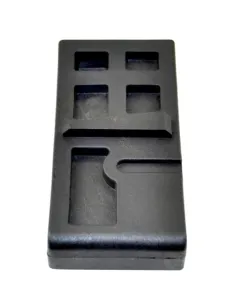
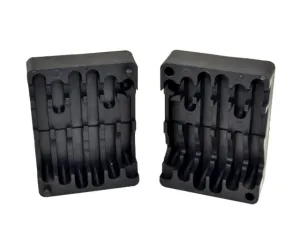
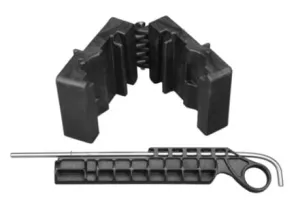
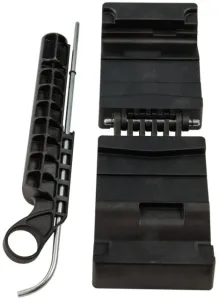
At minimum: armorers wrench, vise block, roll pin punches, torque wrench, brass hammer, and a bench vise. Budget about 80 to 120 dollars for a basic tool kit.
What is the most important part of an AR-15?
For accuracy the barrel. For reliability the bolt carrier group. For shootability the trigger. If you spend extra on any three components, make it these three.
Can I mix parts from different AR-15 manufacturers?
Yes. The AR-15 platform is built on standardized mil-spec dimensions. Parts from any reputable manufacturer will interchange.
Do I need a forward assist on my AR-15?
No. Many experienced shooters prefer slick-side uppers without it. If a round will not chamber on its own, forcing it with the forward assist is debatable.
What does a lower parts kit include?
A complete LPK includes trigger, hammer, disconnector, springs, pins, safety selector, bolt catch, magazine release, pivot and takedown pins with detents and springs, trigger guard, and pistol grip.
14,528+ Gun & Ammo Deals
Updated daily from 10+ top retailers. Filter by category, caliber, action type, and price.