

Last updated November 22nd 2026
Some of the links below are affiliate links, meaning at no additional cost to you, we may earn a commission if you click through and make a purchase.
- Treat every gun as loaded
- Point the muzzle in a safe direction
- Keep your finger off the trigger until you’re ready to shoot
- Know your target and what’s beyond
By Nick Hall, who wrote our ballistic coefficient guide.
Quick Answer: Ballistic gel is a block of 10% ordnance gelatin, chilled to 4°C or 39.2°F and checked by firing a steel BB into it, that stands in for soft muscle tissue when ammo makers test how far a bullet penetrates and how much it expands. The FBI wants at least 12 in. of penetration. The famous 18 in. figure was only ever its “Maximum Desirable,” and the FBI’s 1989 report says no maximum was set. Even the 10% is a starting point: the FBI’s own 2011 gelatin lot needed 11.75% to pass calibration.
Every ammo box that says “FBI protocol” traces back to ballistic gel. Here’s what the gel actually is, how the FBI test works, what the makers’ own gel numbers show, and what a gel block can’t tell you.
Table of Contents
What Is Ballistic Gel?
Ballistic gel is ordnance gelatin mixed with water at about 10% by weight, set into a block and kept cold so it resists a bullet roughly the way soft muscle does. The name is short for ballistic gelatin, though synthetic brands sell gelatin-free ballistic gel blocks under the same name. The FBI’s 1989 report on its new ammo tests says “10% ballistic gelatin was selected to simulate soft human muscle tissue,” based on the research of Dr. Martin Fackler.
It isn’t kitchen gelatin. The FBI text published by Hornady specifies “Kind & Knox or Vyse 250-A ordnance gelatin,” a higher strength grade. The standard block is about 6.25 x 6.25 x 16 in., and each block takes a maximum of five shots, one in each corner and one in the center.
Cold matters as much as the mix. The FBI method sets the fridge to 4°C, or 39.2°F, cures the block for 36 hours, and older FBI guidance said to shoot a block within 20 minutes of taking it out.
How Ballistic Gel Is Calibrated: The BB Test
Every block has to pass a BB test before it counts. The FBI method fires a .177 steel BB at 590 feet per second, plus or minus 15 fps, into the block, and the BB has to stop at 8.5 cm, plus or minus 1 cm, which is 2.95 to 3.74 in. Blocks that fail are thrown away.
That test, not the 10% figure, is the real standard. The FBI’s own text calls the 10% figure “nominal” and says the exact ratio has to be found by testing. Its February 2011 gelatin lot needed 2.35 lb of powder to 17.65 lb of water to pass, which works out to 11.75%, not 10%.
The tolerance is looser than it used to be. A forensic review says Fackler set the original standard at 85 mm, plus or minus 5 mm, for the same BB speed. The FBI’s window of plus or minus 1 cm is twice as wide.
The FBI Ballistic Gel Test: Six Events
The FBI ammo test protocol fires each load into ballistic gel through six different setups, five shots each, all from 10 ft. The idea, in the FBI’s words, is a bullet that is “barrier blind,” one that performs the same through clothing, car doors, walls and glass.
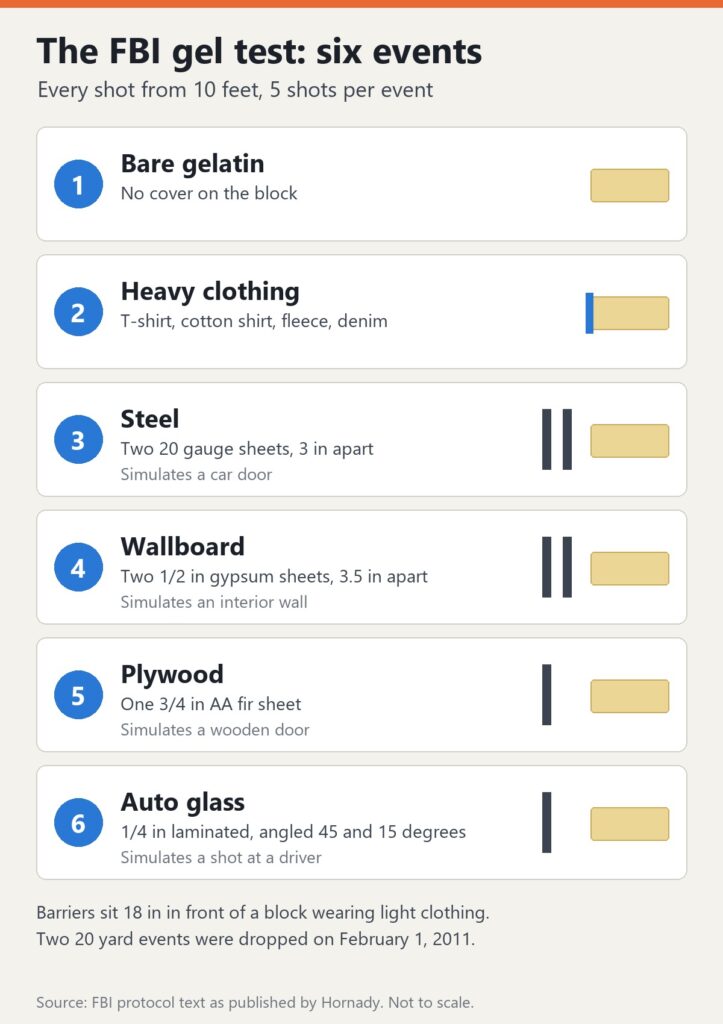
- Bare gelatin. No cover at all.
- Heavy clothing. Four layers: T-shirt material, cotton shirt, Polartec 200 fleece and denim. Fleece replaced a down comforter layer on January 1, 2004.
- Steel. Two sheets of 20 gauge galvanized steel, 3 in. apart, to simulate “the weakest part of a car door.”
- Wallboard. Two sheets of 1/2 in. gypsum board, 3.5 in. apart, to simulate an interior wall.
- Plywood. One sheet of 3/4 in. AA fir plywood, to simulate a wooden door.
- Auto glass. 1/4 in. laminated safety glass at 45 degrees down and 15 degrees to the side, to simulate a shot at a driver from the left front quarter of a car.
For events three to six, the barrier sits 18 in. in front of a block wearing light clothing. The test started in December 1988, after the FBI’s 1987 wound ballistics workshop that followed the 1986 Miami shootout.
It used to have eight events, not six. The original 1989 list added two more events at 20 yards, light clothing and auto glass, for 40 shots per load in all. The FBI dropped them on February 1, 2011, after “An analysis of 23 years of ballistic data” found the 20-yard results made no real difference.
Why 12 Inches of Penetration?
12 in. is the minimum because a bullet often has to go through an arm or the side of the torso before it reaches anything vital. The FBI’s 1989 Firearms Training Unit report says “a shot from the side through an arm must penetrate at least 10-12 inches to pass through the heart.” It quotes two participants in the FBI’s 1987 workshop: “too little penetration will get you killed.”
The 18 in. number is the part everyone gets wrong. The FBI’s November 1989 Law Enforcement Bulletin lists it as “Maximum Desirable,” then adds: “It should be noted that no maximum penetration standard was established.” The FBI judged that a bullet that stops short is a bigger risk to an officer than one that goes too far is to a bystander.
So 12 to 18 in. is the target zone, not a pass or fail window. That’s worth knowing if you shop for home defense ammo and worry about over-penetration, because deeper isn’t automatically a fail in the FBI’s eyes. Our over-penetration guide covers that trade off.
What the Makers’ Own Gel Numbers Show
Ballistic gel results are where terminal ballistics claims get tested, and several jacketed hollow point loads sold on “FBI protocol” testing show results under 12 in. on some events in their makers’ own published data. That isn’t a scandal. It’s what a six-event test looks like when you report every event instead of the best one.
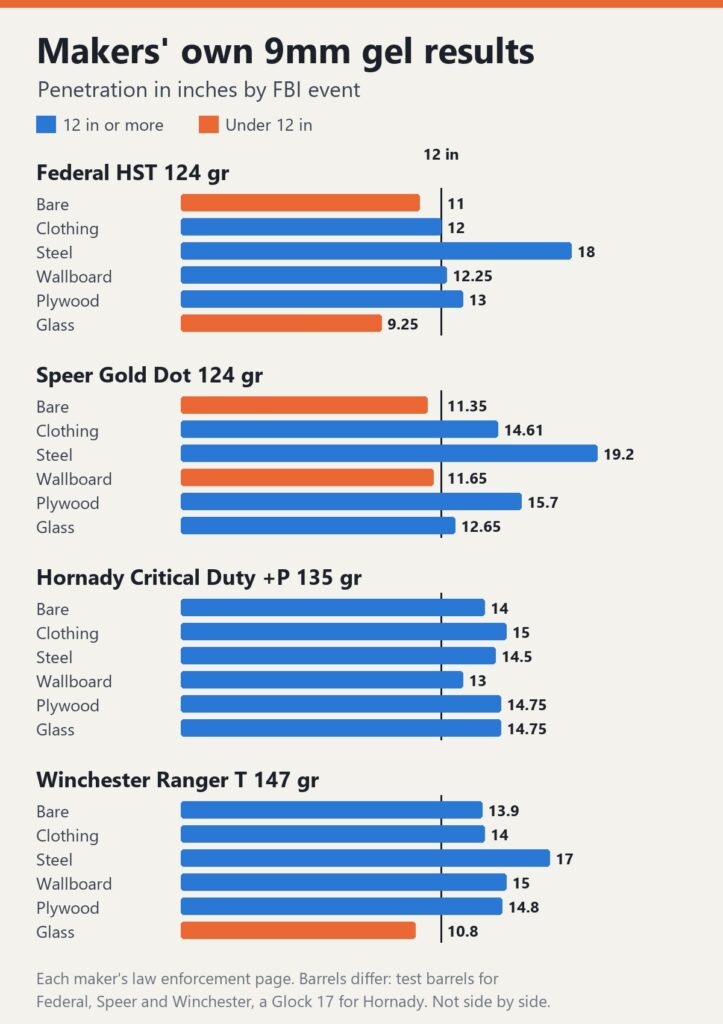
| Load, maker data | Bare gel | Heavy clothing | Lowest event |
|---|---|---|---|
| Federal HST 9mm 124 gr | 11.00 in., .880 in. wide | 12.00 in. | Auto glass, 9.25 in. |
| Speer Gold Dot 9mm 124 gr | 11.35 in., .682 in. wide | 14.61 in. | Bare gel, 11.35 in. |
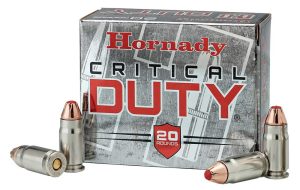
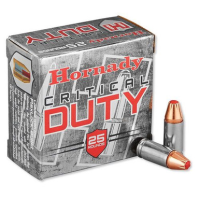
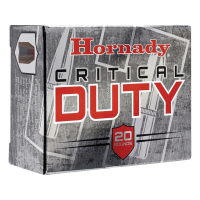
| Hornady Critical Duty 9mm +P 135 gr | 14 in., .60 in. wide | 15 in. | Wallboard, 13 in. |
| Winchester Ranger T 9mm 147 gr | 13.9 in., .65 in. wide | 14 in. | Auto glass, 10.8 in. |
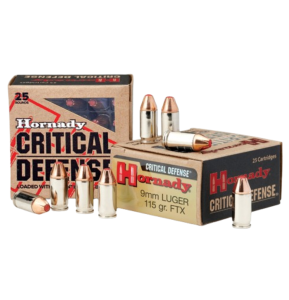
| Hornady Critical Defense 9mm 115 gr | Not published | 11.25 in. from a 3 in. Kahr | Only heavy clothing published |
These come from each maker’s own law enforcement data, and they aren’t like for like. Federal and Speer list a 4 in. test barrel in their specs, and Winchester says its velocities come from test barrels. Federal’s HST page doesn’t give a shot count, while Hornady’s Critical Duty numbers come from a Glock 17 and are “an average of five fired test shots.” Hornady’s only published Critical Defense 9mm number is from a 3 in. Kahr MK9, a much shorter barrel.
Notice the trade off in Federal’s own numbers. HST expanded widest in bare gel, to .880 in., and that was also its shallowest soft-target result, 11 in. The FBI saw this back in 1989, writing that more velocity “actually diminishes the penetration performance of hollow point bullets in gelatin by increasing the rate and degree of expansion.”
The FBI’s contracted service load is Hornady Critical Duty 9mm +P 135 gr. Hornady says the FBI “chose Hornady Critical Duty® 9mm+P 135 gr FTX pistol ammunition as its contracted service ammunition.” Make sure you buy the +P version if that’s the load you want, because Hornady publishes no gel data for the standard pressure Critical Duty.
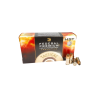
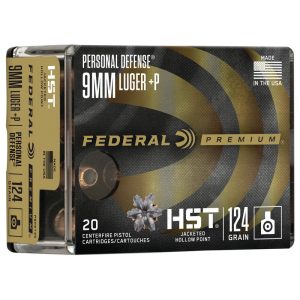
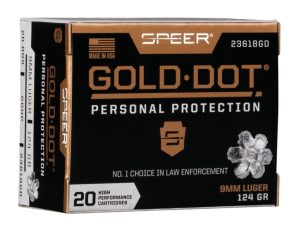
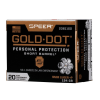
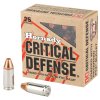
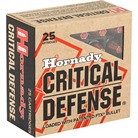
Our Federal HST review and Speer Gold Dot review cover those two loads in depth. For more picks, see our best 9mm ammo guide.
The 9mm Story: Why the FBI Left It and Came Back
Ballistic gel played a big part in the FBI dropping the 9mm in 1989, and in bringing it back. In the original tests, the 9mm load was Winchester’s 147 gr subsonic hollow point, and it met the 12 in. minimum on only 27 of 40 shots, or 67.5%, against 39 of 40, or 97.5%, for the 10mm. The FBI went to the 10mm.
By 2014, bullets had improved. A 2014 FBI training division memo, which circulated publicly but isn’t posted on fbi.gov, says contemporary projectiles since 2007 “have dramatically increased the terminal effectiveness” of premium law enforcement loads, especially 9mm, and that most study participants shot faster and more accurately with 9mm Glocks. It also says a handgun bullet needs to exceed roughly 2,000 fps before the temporary cavity does much wounding.
10% vs 20% Ballistic Gel
US testing uses 10% gel at 4°C. Much European testing uses 20% gel at 10°C, and the two don’t give comparable numbers. A 2025 peer-reviewed review of tissue simulants names both standards and notes that “there is no recognized NATO standard for gelatin,” even though 20% gel is widely called NATO gel.
A 2026 systematic review found that differences in gel strength, concentration, mold shape, temperature and age “resulted in significant variation in penetration, yaw, and temporary cavities, limiting comparability.” If a video doesn’t tell you the gel percentage, the temperature and whether it passed a BB check, you can’t compare its numbers with anyone else’s.
Real Gelatin vs Synthetic Clear Gel
Synthetic clear gel is easier to use, but it doesn’t behave exactly like real ordnance gelatin. Clear Ballistics, the best known brand, says its gel “is gelatin-free,” “closely replicates 10% ordnance gelatin used by the FBI,” and can be remelted “an average of eight to 10 times.” It also ships pre-calibrated.
Independent researchers are more cautious. The 2026 systematic review found that synthetics like Clear Ballistics “often increase penetration, delay yaw, and pose calibration issues,” and concluded that “Properly formulated and calibrated 10% gelatin remains the best validated soft-tissue simulant for ballistic testing.” Passing a BB check at 590 fps doesn’t guarantee the same result at bullet speed.
For backyard testing, synthetic gel is still the practical choice. It stores at normal room temperatures, with Clear Ballistics rating it from -10°F to 95°F, it’s clear enough to film, and you can melt it down and pour it again. Just treat its numbers as a comparison between your own loads, not as a match for maker data. Clear Ballistics’ FBI block is 16 x 6 x 6 in., close to the FBI’s size.
How to Make Ballistic Gel at Home
You can make real ballistic gel with 250-A ordnance gelatin, water, a mixing paddle, a mold and a fridge, but you need a BB gun and a chronograph to know if it’s any good. Here’s the FBI ballistic gel recipe as Hornady publishes it, for a 20 lb block:
- Weigh the water and powder. The FBI uses 2 lb of gelatin powder to 18 lb of water at 60°C, or 140°F, with a few drops of cinnamon oil to stop mold. Water that hot can scald, so wear gloves.
- Add the powder slowly. Stir with a drill paddle without whipping air into it. Let it stand for about 4 hours.
- Pour and chill. Pour into a mold about 6 x 6 x 16 in., set the fridge to 4°C, or 39.2°F, and cure it for 36 hours.
- Calibrate. Fire a .177 steel BB at 590 fps, plus or minus 15, measured over a chronograph. It should stop at 8.5 cm, plus or minus 1 cm. Adjust your powder ratio next time if it doesn’t. Steel BBs can bounce back, so everyone wears eye protection.
- Shoot it cold, with a real backstop. Use the block soon after it comes out of the fridge, and put a safe backstop behind it, because some 9mm loads go deeper than a 16 in. block. Don’t reuse it. The FBI never reuses gel, and the gelatin maker GELITA says never to remelt a used block.
Experts don’t agree on the water temperature. Fackler warned, citing the Gelatin Manufacturers Institute of America, that heating gelatin above 40°C can damage it, the gelatin maker GELITA says to avoid going above 60°C, and a 2004 study from the Finnish police found water temperature mattered far less than people thought. Gel also changes as it ages: one study found no difference over 5 days, while another found a significant drop in penetration after 4 weeks of storage.
What Ballistic Gel Doesn’t Tell You
Ballistic gel tells you how a bullet behaves in uniform soft tissue, and a body isn’t uniform. It has no bone, no skin and no organs of different density, so it’s a consistent yardstick for comparing bullets, not a prediction of what happens in a real shooting.
- Expansion is less reliable in people. The FBI’s 1989 report says “Handgun bullets expand in the human target only 60-70% of the time at best,” and that clothing can plug a hollow point.
- Barrier spacing changes the result. A study found hollow points that failed to expand with the barrier pressed against the gel did expand when the barrier sat 7 ft. away. The FBI’s fixed 18 in. gap is just one point on that curve.
- The stretch you see on video is misleading. High speed footage shows the temporary cavity, which the FBI calls “frequently, and grossly, overrated as a wounding factor.”
- Penetration comes first. The FBI’s rule is that “Expansion must never be the basis for bullet selection,” and that it’s a bonus if it happens.
How We Checked It
Every fact on this page comes from primary sources: the FBI’s 1989 and 1995 Law Enforcement Bulletins, the 1989 FBI Firearms Training Unit report, the FBI test protocol text as published by Hornady, each ammo maker’s own law enforcement gel data, the Clear Ballistics product pages, GELITA’s gelatin guide, and peer-reviewed forensic studies. We also read the top-ranking ballistic gel articles, and where they disagreed with the FBI’s own documents, we went with the FBI. We didn’t shoot gel for this guide. Prices are from our live price check on November 22, 2026.
Frequently Asked Questions
What is ballistic gel made of?
Real ballistic gel is ordnance gelatin and water, about 10% gelatin by weight for FBI testing. The FBI uses Kind & Knox or Vyse 250-A gelatin. Synthetic gels like Clear Ballistics contain no gelatin.
What is the FBI ballistic gel test?
It fires each load through six events from 10 ft: bare gel, heavy clothing, steel, wallboard, plywood and auto glass, five shots each, and measures penetration and expansion.
How much penetration does the FBI require?
At least 12 in. The FBI listed 18 in. as "Maximum Desirable," and its 1989 report says no maximum penetration standard was set.
How deep should a 9mm penetrate in ballistic gel?
At least 12 in., the FBI minimum. The FBI listed 18 in. as "Maximum Desirable" but set no maximum. Makers' own data shows good 9mm loads landing anywhere from about 9 to 19 in. depending on the barrier.
Why does the FBI want 12 inches of penetration?
Because a shot from the side has to pass through an arm first. The FBI says such a shot must penetrate at least 10 to 12 in. to reach the heart.
What temperature should ballistic gel be?
The FBI method chills it to 4°C, or 39.2°F, and older FBI guidance said to shoot it within 20 minutes of leaving the fridge.
How is ballistic gel calibrated?
With a .177 steel BB at 590 fps, plus or minus 15 fps. It must stop at 8.5 cm, plus or minus 1 cm, or 2.95 to 3.74 in.
What is the difference between 10% and 20% ballistic gel?
10% gel at 4°C is the US and FBI standard. 20% gel at 10°C is common in Europe and often called NATO gel, though there is no recognized NATO standard. Their results don't compare directly.
Is Clear Ballistics gel the same as real ballistic gelatin?
No. It's a synthetic that the maker says replicates 10% FBI gel. A 2026 review found synthetics often increase penetration and delay yaw compared with real gelatin.
Can you reuse ballistic gel?
Not real gelatin. The FBI never reuses gel, and GELITA says not to remelt it. Clear Ballistics says its synthetic gel can be remelted 8 to 10 times.
Can I make ballistic gel with Knox gelatin?
You can make a block, but FBI gel uses 250-A ordnance gelatin, and any homemade block only counts if it passes the BB calibration test.
Does ballistic gel act like human tissue?
Only roughly. It models soft muscle, not bone or organs, and the FBI says handgun bullets expand in people only 60 to 70% of the time at best.
What ammo does the FBI use?
Hornady says the FBI chose Critical Duty 9mm +P 135 gr as its contracted service ammunition, for two consecutive 9mm contracts.
How long does ballistic gel last?
Real gelatin blocks are best used within days. One study found no change over 5 days, while another found a significant drop in penetration after 4 weeks of storage. Synthetic gel can be remelted and reused.
2,799+ Gun & Ammo Deals
Updated daily from 200+ top retailers. Filter by category, caliber, action type, and price.
Related Guides