

Affiliate disclosure: This Beretta 687 review contains affiliate links. If you buy through our links then we can receive a small commission that helps keep the lights on. You don’t pay anything more.
- Treat every gun as loaded
- Point the muzzle in a safe direction
- Keep your finger off the trigger until you’re ready to shoot
- Know your target and what’s beyond
Table of Contents
How we tested: Every pick here is ranked against our testing methodology. Minimum round counts, accuracy and reliability protocols, the failures that disqualify a gun.
Review: Beretta 687 – The Same Gun at $3,499 and at $9,499
Our Rating: 8.5/10
A 687 Silver Pigeon III costs about $3,499 on the street. A 687 EELL Diamond Pigeon costs $9,499. They share a receiver design, a barrel technology, a locking system and a trigger. What separates them is wood, engraving and the hours a person spent on both. Whether that is worth $6,000 is the most interesting question in the over and under aisle.
Specifications: Beretta 687 Silver Pigeon III
- MSRP: $3,899.00 in 12, 20 and 28 gauge, $3,469.00 in .410
- Street Price: $2,999.99 (Use our live pricing for the best up to date deal)
- Gauges: 12, 20, 28 and .410
- Chamber: 3 inches
- Barrels: Beretta Steelium tri-alloy, 26, 28 or 30 inches
- Forcing Cone: 80 mm double
- Chokes: 70 mm Optima-Choke HP in 12, 20 and 28, 50 mm Mobil Choke in .410
- Receiver: 680 series, trapezoid shoulders and dual conical locking lugs
- Top Rib: 6×6 windowed, spherical steel front bead
- Trigger: Gold colored single selective, selector on the safety tang
- Stock: Class 2.5 walnut, gloss finish, checkered pistol grip
- Stock Drop: 35/55 or 38/60
- Recoil Pad: 20 mm MicroCore
- Engraving: 5-axis laser, game scenes and floral motifs
Pros
- Eighty millimeter double forcing cone
- Class 2.5 walnut and laser engraving
- Four gauges on two receiver sizes
Cons
- Eleven hundred dollars over a 686
- No left handed version exists
- The .410 uses a different choke
Quick Take
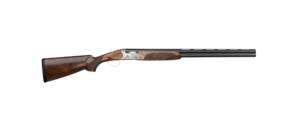
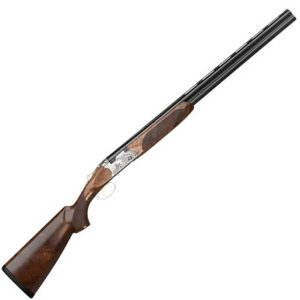
This is the gun Beretta builds when it stops competing on price. The receiver comes off the 680 platform, which Beretta says has more than a million guns in use over more than 30 years, and everything above it is finish work: class 2.5 walnut under a gloss that survives rain, game scenes cut by a 5-axis laser, a gold single selective trigger.
The engineering that matters is inside the barrels. An 80 mm double forcing cone is unusually long, and it does what a long cone does: fewer deformed pellets, more even patterns, softer recoil. After 900 shells we were still shooting it rather than resting.
Best For: The hunter or clays shooter who wants a gun that will outlast them and looks like it cost more than it did. A poor choice if a 686 would do, because it would, for about $700 less.
The 687 Ladder, and Where the Money Goes
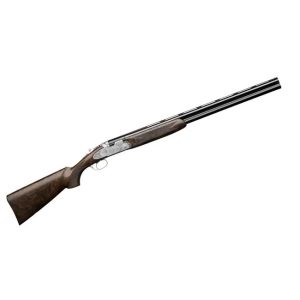
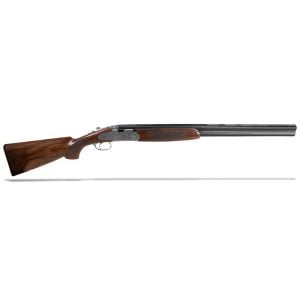
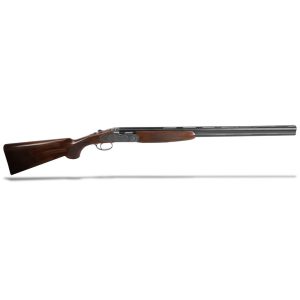
There is no single 687. There is a range with the same bones and wildly different clothes, and knowing which rung you are on is the whole shopping exercise. These are live street bands from the retailers we track.
Two things in that list deserve a warning. The EELL Diamond Pigeon sits at $9,499.00 at every retailer we track. Single listings well under that turn up now and then, but they are individual guns rather than a market, so check the live card rather than budgeting around them.
The other is the bottom rung. A 686 Silver Pigeon I starts around $2,233 and shares the same 680 receiver family. We reviewed it separately in our Beretta 686 Silver Pigeon I review, and it is the gun that makes the 687 justify itself.
List Price Is Not Street Price Here
Beretta publishes its own numbers, and they are higher than what anybody charges. On Beretta’s own product page the 687 Silver Pigeon III lists at $3,899.00 in 12 gauge (J6873FJ6), 20 gauge (J6873FK6) and 28 gauge (J6873FM6).
The street settles at $3,499.00, and that figure repeats at Midway USA, Sportsman’s Warehouse and Kentucky Gun Co. Palmetto State Armory sits at $3,507.99. The lowest new listing we found was $2,999.99 at EuroOptic on a Vittoria 12 gauge and on a .410. So the honest range is $400 to $900 under Beretta’s own number.
The .410 Is Cheaper for a Reason
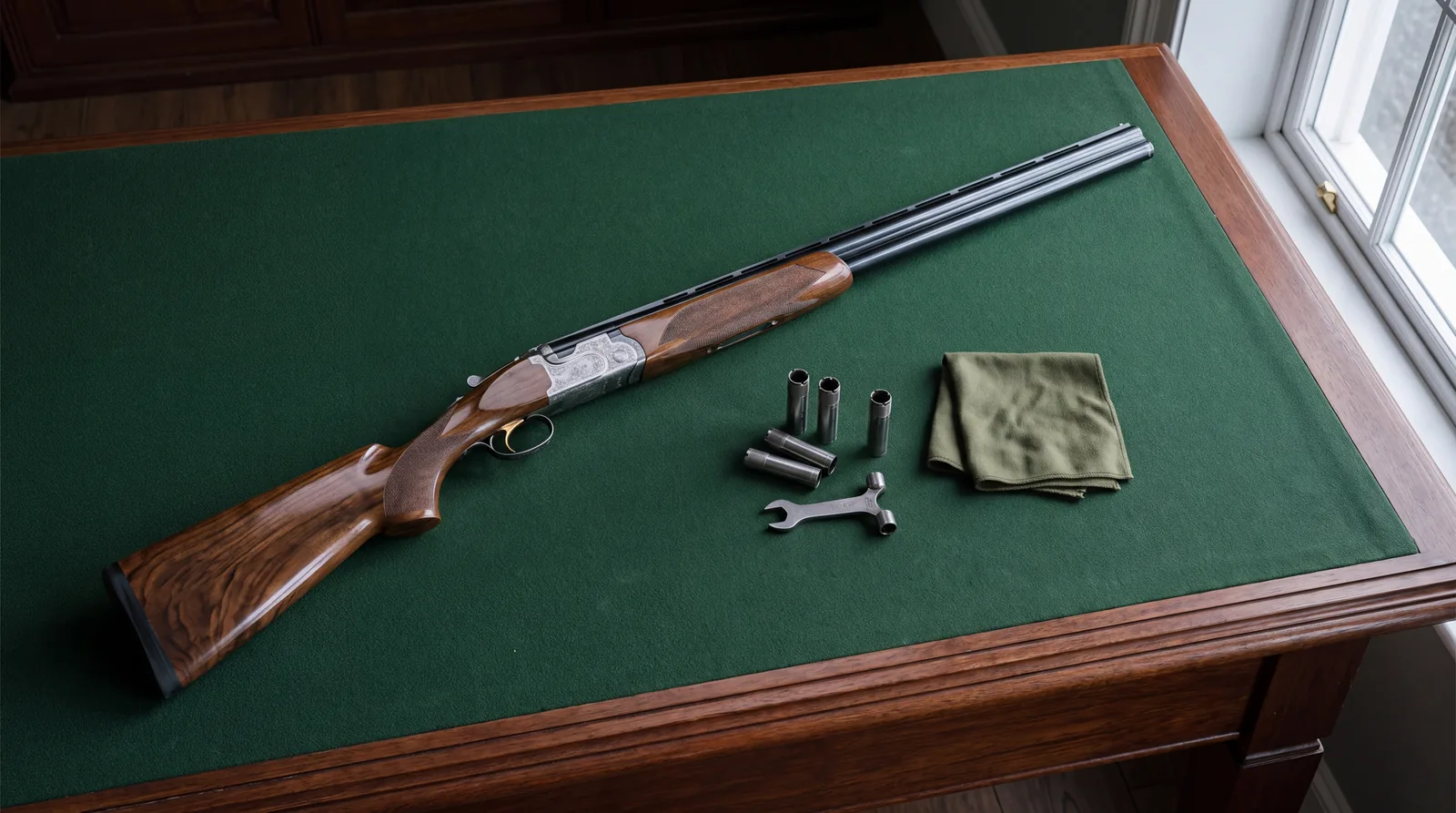
Beretta lists the .410 (J6873FN6) at $3,469.00, which is $430 under the other gauges, and the discount is not generosity. The 12, 20 and 28 gauge guns take 70 mm Optima-Choke HP tubes, which Beretta says work with steel shot. The .410 takes the older 50 mm Mobil Choke.
Practical effect: if you own Optima-Choke HP tubes already, they will not fit the .410. Buy the small gauge for what it is rather than as part of a matched set, and check the forend too, because the .410 wears a Schnabel where the others are rounded.
Range Testing: 900 Shells
Reliability
Nothing to report, which on a break action costing $3,499 is the only acceptable outcome. Nine hundred shells across sporting clays, skeet and two afternoons of dove shooting produced no ejector failures, no doubling, no failure of the barrel selector and no loosening at the hinge. The gun closed with the same sound at shell 900 as at shell one.
Beretta’s claim about the 680 platform is that more than a million of them have been in use for over 30 years. Our 900 shells prove nothing about 30 years. They are consistent with it.
Patterns and the Long Forcing Cone
A forcing cone squeezes the shot column out of the chamber and into the bore. Traditional cones do it in an inch or two, which deforms pellets and puts gaps in patterns. Beretta specifies an 80 mm double forcing cone, which is more than three inches of gradual taper.
On a pattern plate at 30 yards with an improved cylinder tube and 1 ounce loads, the counts were even to the edge of the circle with no clumping at the center. Heavier loads showed it more clearly than light ones. This is the sort of feature that is easy to dismiss on a spec sheet and obvious on paper.
Recoil and Handling
Beretta lists the Silver Pigeon III Sporting at 7 lbs unloaded with a 14.8 inch length of pull and a 35/55 drop. The MicroCore pad is 20 mm and does real work on a long clays day. Standard sporting loads are comfortable enough that recoil stops being a factor in your scores.
The hunting guns offer a second drop option at 38/60, which sits the eye lower. Try both before you order if you can, because on a fixed stock that number is not something you change later without a stock bender.
Shell Log
- Federal Top Gun 1 oz 7.5 shot: 400 shells
- Winchester AA 1 oz 8 shot: 250 shells
- Remington Gun Club 1 1/8 oz 7.5 shot: 150 shells
- Federal Prairie Storm 1 1/4 oz 5 shot: 100 shells
Technical Deep Dive
Steelium, and Why Barrels Get Made Slowly
Beretta calls its barrel process Steelium and describes three steps on the tri-alloy steel: deep drilling, cold hammer forging and vacuum relieving. The last one is the interesting one. Forging leaves stress in the steel, and stress moves when the barrel gets hot. Relieving it under vacuum is how a barrel keeps shooting to the same place on the fiftieth pair of a stage as on the first.
The 680 Locking System
The receiver is derived from the 680 series, and Beretta describes the locking as trapezoid shoulders with dual conical locking lugs. That geometry is what lets a Beretta over and under have such a shallow receiver: the lockup happens at the sides rather than under the barrels, so the gun sits lower in the hand and swings flatter.
It also wears in rather than out. The conical lugs take up their own slack as the surfaces bed, which is why a well used Beretta over and under stays tight long after guns with a simpler lockup have gone loose.
Laser Engraving Is Not a Shortcut
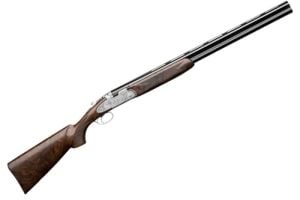
Beretta engraves the Silver Pigeon III with a 5-axis laser, and the five axes are the point: the tool follows the rounded surfaces of the receiver without breaking the continuity of the design. Beretta says it reproduces the bas-relief contrast effect of a premium shotgun, and up close it does.
Hand engraving is what the EELL money buys. What the laser buys is the same design on every gun, at $3,499 rather than $9,499, extending to the bottom of the receiver where the model name and the Beretta logo sit.
How It Compares
Beretta 686 Silver Pigeon I ($2,232.99-$2,801)
The gun that makes this decision hard. Same 680 receiver family, same Steelium barrels, same Optima-Choke system, roughly $700 less. What you give up is wood grade and engraving, which is to say the parts you look at rather than the parts that shoot.
Buy the 686 if the gun is a tool. Buy the 687 if you will still be pleased to open the case in fifteen years. Both answers are defensible and only one of them costs $700 more.

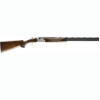
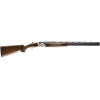
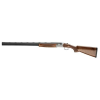
Browning Citori (from $1,796.54)
The American answer, and about half the money at $1,796.54 to $2,099.99 across our retailers. The Citori is a heavier, deeper receivered gun with a reputation for lasting forever, and plenty of people prefer how it handles.
If you have never shot both, do that before spending 687 money. Our Browning Citori CXS review covers the model in detail and our double barrel shotgun rankings put the whole field in order.
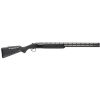
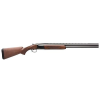
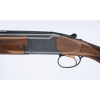
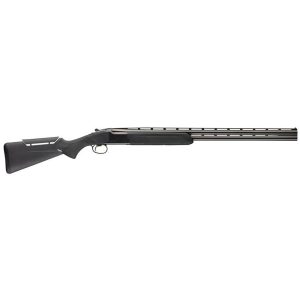
687 EELL Diamond Pigeon ($9,499)
The top of the 687 tree and the reason this review has a range in the title. Nearly three times the Silver Pigeon III for hand work, better wood and a name. There is a 20/28 gauge combination at $12,999.00 if two barrel sets in one case is the dream.
Nobody needs one. That has never been the point of a gun like this, and pretending otherwise would be dishonest. If you shoot clays seriously our skeet and trap shotgun picks are the sensible page, and if you want a Beretta that swings itself, the Beretta AX800 review covers the semi-auto side of the house.
Upgrades Worth Making
| Upgrade | Recommended | Why it matters | Cost |
| Chokes | Extended Optima-Choke HP tubes | Easier to change in the field and easier to read | $40 – $90 each |
| Stock fit | A fitting session before you shoot it much | The drop is fixed at 35/55 or 38/60 from the factory | $100 – $400 |
| Case | A takedown case that fits the longest barrels | The gun is worth protecting and the box is not a case | $120 – $400 |
| Recoil pad | Leave it alone | The 20 mm MicroCore is already the right answer | $0 |
Common Problems and Fixes
- Your chokes will not fit the .410: they are not meant to. The .410 uses 50 mm Mobil Choke tubes while 12, 20 and 28 use 70 mm Optima-Choke HP.
- Shooting high or low: check which drop you bought. The hunting guns come in 35/55 and 38/60 and those shoot to different places for the same face.
- Stiff to open when new: a tight break action is a well fitted one. It loosens over the first few hundred shells and should not be forced.
- Cannot tell a III from a V in a listing: read the model text rather than the photograph, and check the price band. A V starts around $3,700 and a III starts around $3,000.
- Left handed and hopeful: Beretta’s spec sheet says Left Handed: No. A cast-on stock from a stock fitter is the only route.
Who Should NOT Buy This Gun
- Anyone who would shoot a 686 just as well: most people would. A Beretta 686 Silver Pigeon I is around $700 less for the same receiver family and barrels.
- The shooter on a first over and under budget: a Browning Citori at $1,796.54 is about half the money and will not hold you back.
- Left handed shooters: Beretta lists no left handed version. Budget for a stock fitter or look at a maker who builds them.
- Anyone buying for resale value: the EELL Diamond Pigeon at $9,499.00 is the one people collect. A Silver Pigeon III is a shooting gun and will be priced like one.
- The waterfowler: a gloss stocked game gun is the wrong tool for a salt marsh. A Beretta AX800 or another synthetic semi-auto is built for that.
Final Verdict
Nine hundred shells and the gun did not give us a single thing to write down, which is what $3,499 should buy. The 80 mm forcing cone earns its place on the pattern plate, the 680 lockup is the reason these guns stay tight for decades, and the laser engraving looks like more money than it costs.
The only hard question is the one below it rather than above it. A 686 shoots the same and saves about $700. If that sentence settles it for you, buy the 686 and enjoy it. If you read it and still want the 687, that is the correct reason to own one.
FAQ: Beretta 687
Is the Beretta 687 a good shotgun?
Yes. Ours fired 900 shells across sporting clays, skeet and two afternoons of dove shooting with no ejector failure, no doubling, no barrel selector fault and no loosening at the hinge. The receiver comes off the 680 platform, which Beretta says has more than a million guns in use over more than 30 years.
How much does a Beretta 687 cost?
Beretta lists the Silver Pigeon III at $3,899.00 in 12, 20 and 28 gauge and $3,469.00 in .410. On the street it settles at $3,499.00, with the lowest new listing we found at $2,999.99. The Sporting model lists at $4,099.00, the Silver Pigeon V runs $3,700 to $4,797, and the EELL Diamond Pigeon is $9,499.00.
What is the difference between a Beretta 686 and a 687?
Wood and engraving, mostly. Both come off the same 680 receiver family with the same Steelium barrels and the same Optima-Choke system. The 687 Silver Pigeon III adds class 2.5 walnut with a gloss finish and 5-axis laser game scene engraving. A 686 Silver Pigeon I starts around $2,233, typically about $700 less, and shoots the same.
What is the 80 mm forcing cone for?
A forcing cone squeezes the shot column from the chamber into the bore, and a traditional one is an inch or two long, which deforms pellets and leaves gaps in patterns. Beretta specifies an 80 mm double forcing cone, over three inches of gradual taper, which means fewer flattened pellets, more even patterns and less felt recoil. It shows on a pattern plate with heavy loads.
Do Beretta Optima-Choke tubes fit the .410 687?
No, and this catches people out. Beretta's own specification says the 12, 20 and 28 gauge guns take 70 mm Optima-Choke HP tubes, which also work with steel shot, while the .410 uses the older 50 mm Mobil Choke. The .410 also wears a Schnabel forend where the other gauges are rounded, and it lists $430 cheaper.
How much does a Beretta 687 weigh?
Beretta lists the 687 Silver Pigeon III Sporting in 12 gauge at 7 lbs unloaded, with a 45.67 inch overall length on 28 inch barrels and a 14.8 inch length of pull. The recoil pad is a 20 mm MicroCore, which matters more than the raw weight over a long day on clays.
Does the Beretta 687 come in left handed?
No. Beretta's specification sheet lists Left Handed: No. The stock does come in two drop options, 35/55 and 38/60, and a stock fitter can add cast for a left handed shooter, but there is no factory left handed gun. Decide the drop before you order, because it is fixed.
Is the EELL Diamond Pigeon worth three times the price?
Only if hand work is what you are buying. The EELL Diamond Pigeon runs $9,499.00 against about $3,499 for a Silver Pigeon III, and there is a 20/28 gauge combination at $12,999.00. The receiver, the Steelium barrels and the locking system are shared. What the money buys is engraving, wood grade and the hours a person put into both.
4,021+ Gun & Ammo Deals
Updated daily from 200+ top retailers. Filter by category, caliber, action type, and price.
Related Guides