

Last updated July 23rd 2026
Some of the links below are affiliate links, meaning at no additional cost to you, we may earn a commission if you click through and make a purchase.
How we tested: Every pick here is ranked against our testing methodology. Minimum round counts, accuracy and reliability protocols, the failures that disqualify a gun.
Best .22-250 Rifles in 2026 at a Glance
| Rifle | Caliber | Capacity | Barrel | Street Price | Price |
|---|---|---|---|---|---|
| BEST OVERALL Tikka T3x Varmint | .22-250 Rem | 5+1 | 23.7″ | $899-$1,099 | Price ↓ |
| BEST VALUE Bergara B-14 Varmint | .22-250 Rem | 4+1 | 26″ | $949-$1,149 | Price ↓ |
| BEST BUDGET Savage Axis II XP | .22-250 Rem | 4+1 | 22″ | $449-$549 | Price ↓ |
| BEST HUNTING RIFLE Browning X-Bolt 2 | .22-250 Rem | 4+1 | 22-24″ | $999-$1,299 | Price ↓ |
| BEST HEAVY BARREL Howa 1500 Varmint | .22-250 Rem | 5+1 | 24″ | $699-$899 | Price ↓ |
| BEST LONG-RANGE VALUE Weatherby Vanguard | .22-250 Rem | 5+1 | 24″ | $849-$1,049 | Price ↓ |
Table of Contents
Why the .22-250 Still Rules the Varmint World
The .22-250 Remington has been the coyote and prairie dog king for decades, and nothing has really knocked it off the throne. It pushes a 50-grain bullet out the muzzle at around 3,800 feet per second, which is fast enough that a properly zeroed rifle stays inside a coyote’s chest from the muzzle to well past 300 yards without you touching the turret. Wind is your only real enemy, and even that is manageable out to 400.
What makes the round so easy to love is the recoil, or the lack of it. You can watch your own impacts through the scope, which matters a lot when you’re calling coyotes solo or thinning a prairie dog town and want to make quick follow-up shots. It’s flat, it’s accurate, and factory ammo is everywhere. The only tax you pay is barrel life. Run it hard on a hot summer prairie dog shoot and you’ll cook a barrel faster than a .223, so most of the rifles here are built with heavier tubes that shrug off the heat.
I sorted through the current crop of factory .22-250 rifles and ranked the six that earn their keep, from a sub-$500 Savage that punches way above its price to a Tikka that shoots like a custom gun out of the box. If you’re weighing the .22-250 against other options, our best .223 rifles and best .243 Winchester rifles guides cover the neighbors, and you’ll want good glass on top from our best hunting scopes roundup.
1. Tikka T3x Varmint – Best Overall .22-250 Rifle
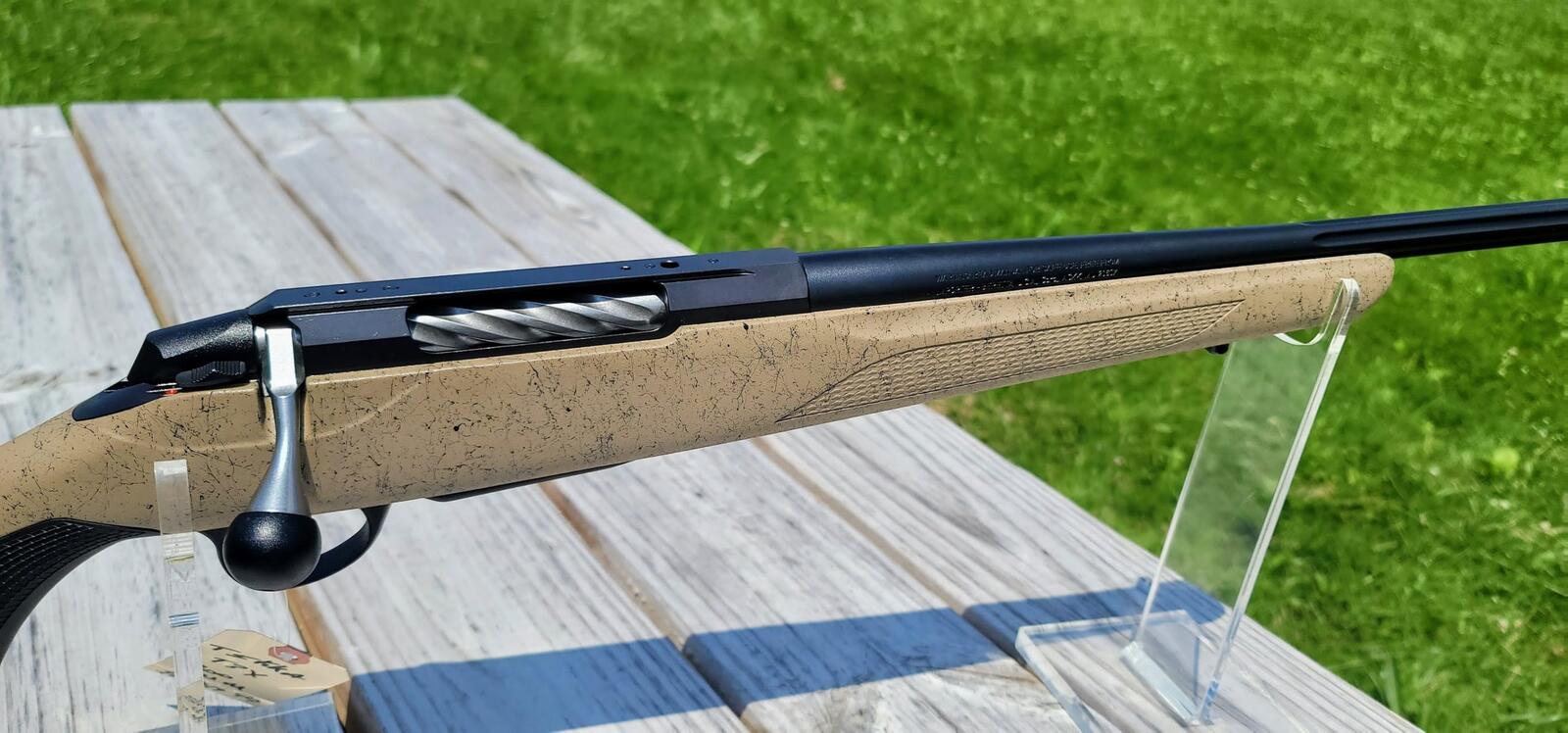
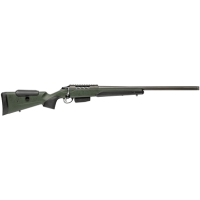
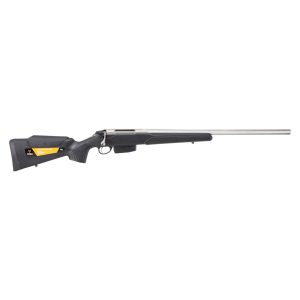
If you want one .22-250 that just works, buy the Tikka. The T3x Varmint has the smoothest factory bolt in this price class, a single-stage trigger that breaks clean and adjusts down to a crisp two pounds, and a cold-hammer-forged barrel that routinely shoots sub-MOA with ammo it likes. I’ve watched box-stock T3x Varmints print half-inch groups with 55-grain Hornady, which is custom-rifle territory for a rifle you can buy off the shelf.
The heavy contour barrel is the reason it’s here instead of the lighter Tikka Hunter. It holds zero through a long string and doesn’t walk when the barrel heats up, which is exactly what you want on a summer dog town. The synthetic stock is stiff, the detachable magazine drops free, and the whole thing feeds like it’s on rails. It’s not the cheapest gun on this list, but it’s the one I’d hand a new varmint hunter and tell them to stop shopping.
Pros
- Sub-MOA accuracy straight out of the box with factory ammo
- Smoothest bolt and cleanest trigger in its price class
- Heavy barrel holds zero through long shooting strings
Cons
- Costs more than the budget bolt guns here
- Factory magazines are pricey to replace
2. Bergara B-14 Varmint – Best Value .22-250 Rifle
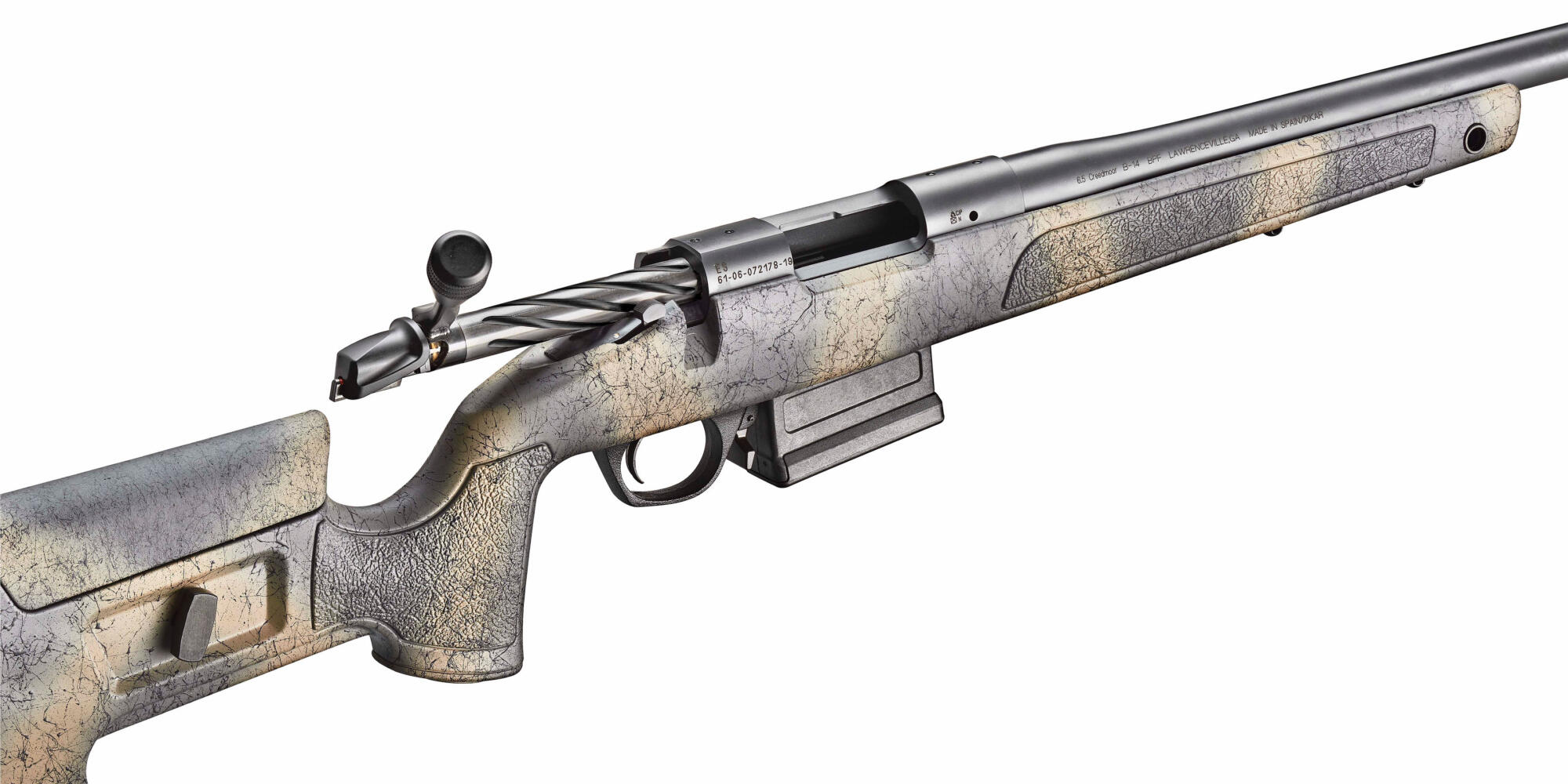
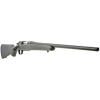
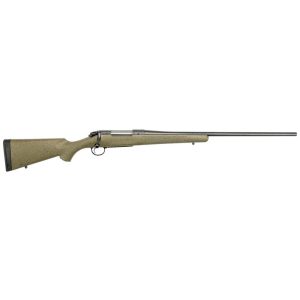
Bergara made its name on barrels, and the B-14 is where that reputation meets a price real people can pay. The .22-250 version wears a 26-inch heavy barrel that turns the round’s velocity into genuine long-range varmint reach, and the accuracy guarantee is not marketing fluff. These rifles shoot. For the money, nothing else here matches the barrel quality you get with the Bergara.
The trade-off is weight and handling. That long tube and the molded stock make the B-14 a bench and blind gun more than a walk-around coyote rifle. If most of your shooting happens from a bipod on a prairie dog flat or from a truck window on a called stand, that’s exactly what you want. The trigger is good out of the box and gets better with a small adjustment, and the two-lug action cycles cleanly. This is the value pick if accuracy per dollar is your yardstick.
Pros
- Bergara barrels are the best in this price range, period
- Long heavy barrel maximizes .22-250 velocity and reach
- Honest sub-MOA accuracy guarantee it actually meets
Cons
- Heavy and long, not a walking rifle
- Factory stock is functional rather than premium

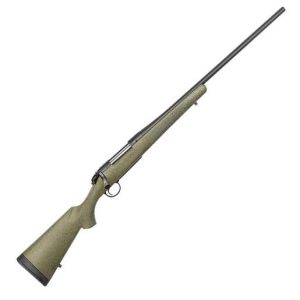
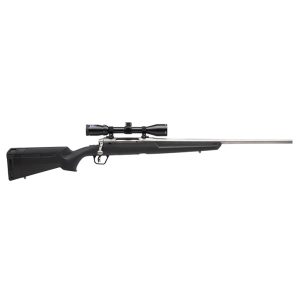
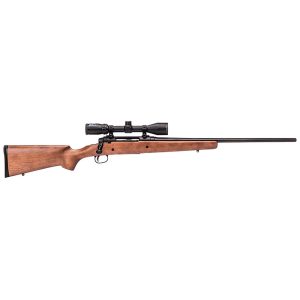
3. Savage Axis II XP – Best Budget .22-250 Rifle
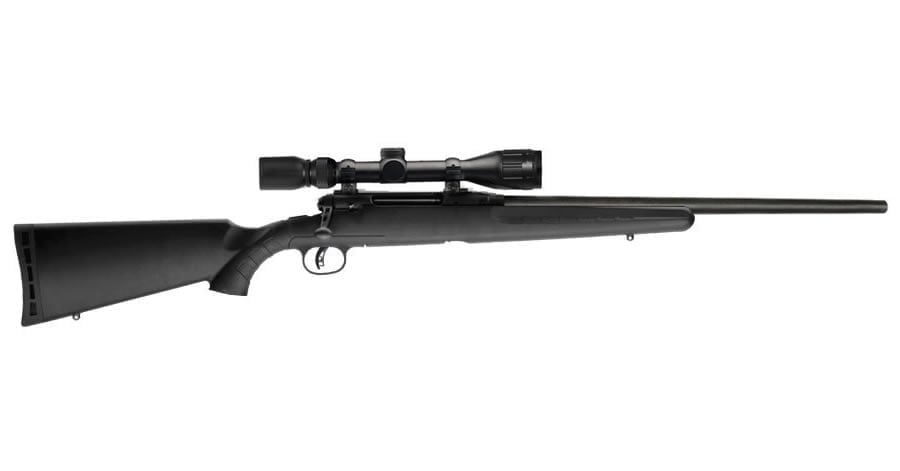
Here’s the honest truth about the Axis II XP: it comes with a mounted and bore-sighted scope, sells for under $550, and shoots better than a rifle at that price has any right to. Savage’s button-rifled barrels have always been the brand’s secret weapon, and the AccuTrigger on the II model gives you a genuinely adjustable trigger on a budget gun. For a first varmint rifle or a truck gun you won’t cry over, it’s hard to beat.
The bundled scope is a starter piece, and most shooters will upgrade the glass before they upgrade anything else on the rifle. The stock is hollow and a little cheap-feeling, and the bolt isn’t as slick as a Tikka’s. None of that stops it from putting three coyotes in a row on the ground. If your budget is tight and you want to be shooting this weekend, this is the entry point, and it leaves money in your pocket for ammo and a better scope down the road.
Pros
- Under $550 with a scope already mounted and bore-sighted
- AccuTrigger is a real adjustable trigger at a budget price
- Savage barrel accuracy that embarrasses the price tag
Cons
- Bundled scope is a starter piece you’ll outgrow
- Hollow stock feels cheap next to the pricier rifles

4. Browning X-Bolt 2 – Best Hunting Rifle
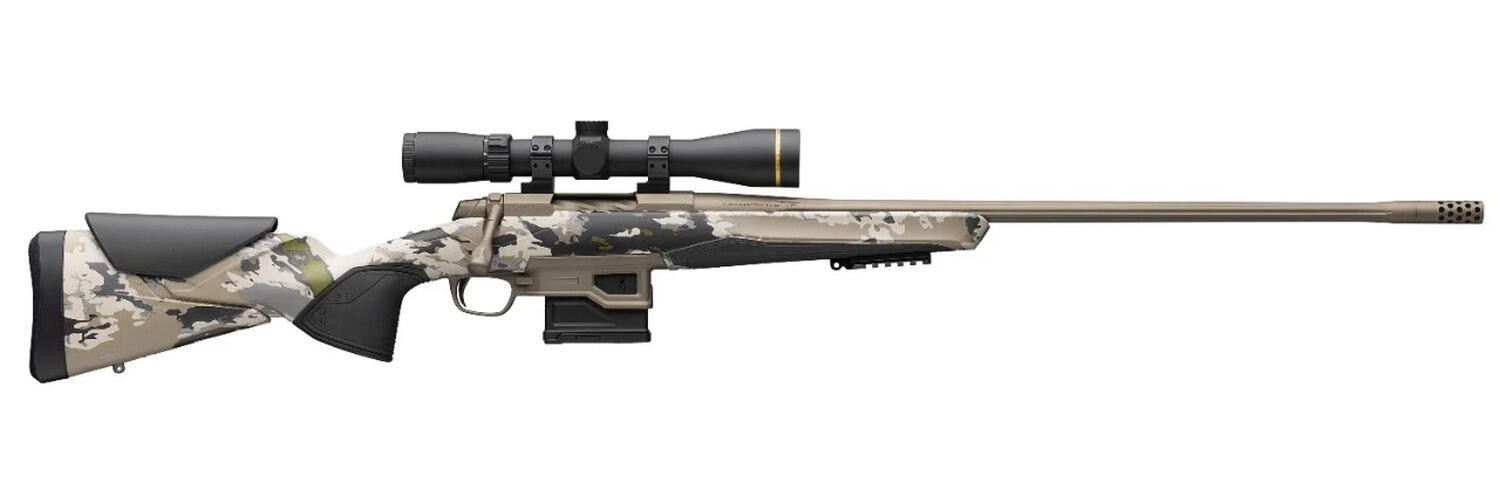
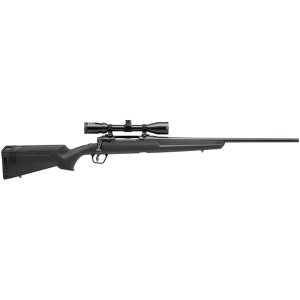
The X-Bolt 2 is the rifle for the hunter who wants a .22-250 that carries like a big-game rifle. It’s lighter and better balanced than the heavy-barrel guns here, the tang safety and bolt unlock button fall right under your thumb, and the fit and finish are a cut above everything else on this list. Browning’s feather trigger breaks clean, and the rotary magazine feeds without a hitch.
Because the barrel is a sporter or medium contour rather than a bull tube, it heats up faster than the Howa or the Bergara, so it’s happier on a walked-up coyote stand than a marathon prairie dog session. That’s the trade you make for a rifle you can carry all day without your arm falling off. If your .22-250 doubles as a predator and light deer rifle and you value handling over pure bench accuracy, the X-Bolt 2 is the nicest gun in the group.
Pros
- Best fit, finish, and handling of any rifle here
- Light enough to carry all day on called stands
- Crisp feather trigger and smooth rotary magazine
Cons
- Sporter barrel heats faster than the heavy-barrel picks
- Premium price for a varmint-primary cartridge
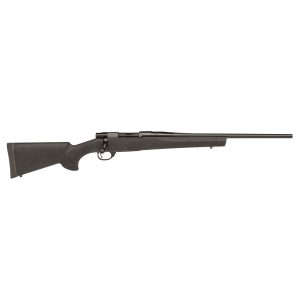
5. Howa 1500 Varmint – Best Heavy Barrel
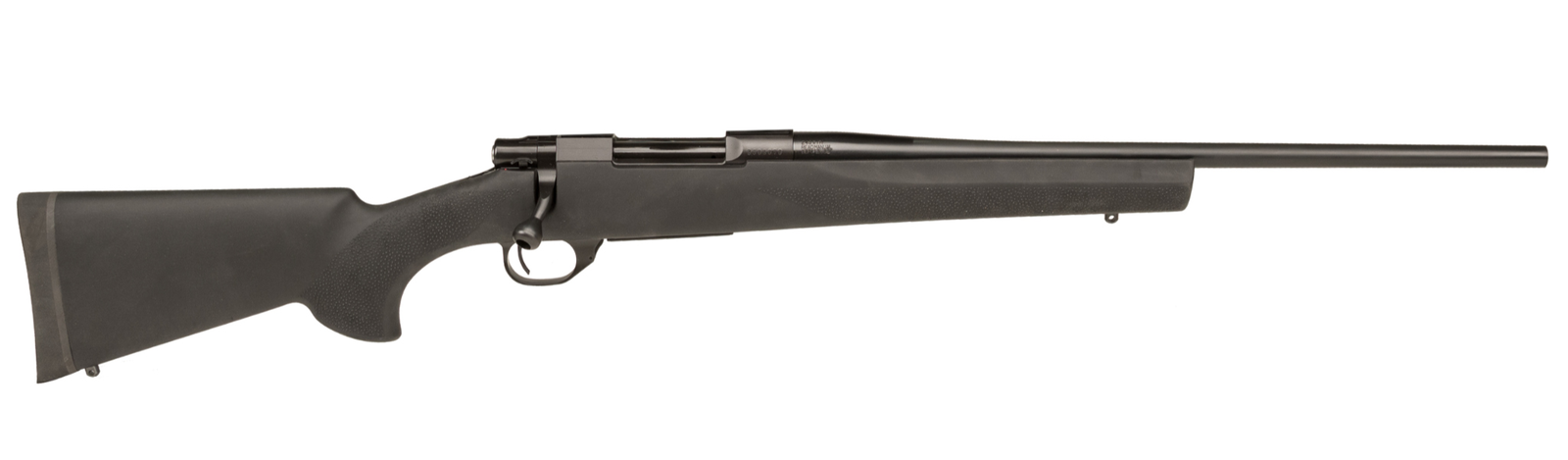
The Howa 1500 action is a tank, and the Varmint model bolts a fat 24-inch heavy barrel to it for the guy who parks behind a rifle and stays there. This is the dog-town rifle. That barrel soaks up heat through a long string, the two-stage-feeling factory trigger is better than it should be, and the whole rig comes in well under the Bergara while giving up very little on the target.
Howa sells these as barreled actions and in a dozen stock and package configurations, so you can spend about $580 on a Hogue-stocked rifle (the cheapest .22-250 Howa on the card below) or step up to a chassis if you want. It’s heavy, and nobody would call the ergonomics exciting, but pound for dollar it might be the most accurate rifle on this list. If your .22-250 lives on a bipod and never has to be carried far, the Howa is a lot of gun for the money.
Pros
- Beefy heavy barrel and action built for long shooting strings
- Surprisingly good factory trigger for the price
- Huge range of stock and package options
Cons
- Heavy, purely a bench and bipod rifle
- Plain ergonomics next to the Browning and Tikka
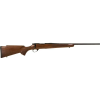
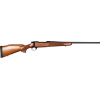
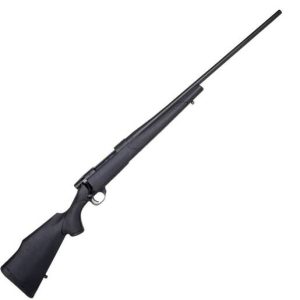
6. Weatherby Vanguard – Best Long-Range Value
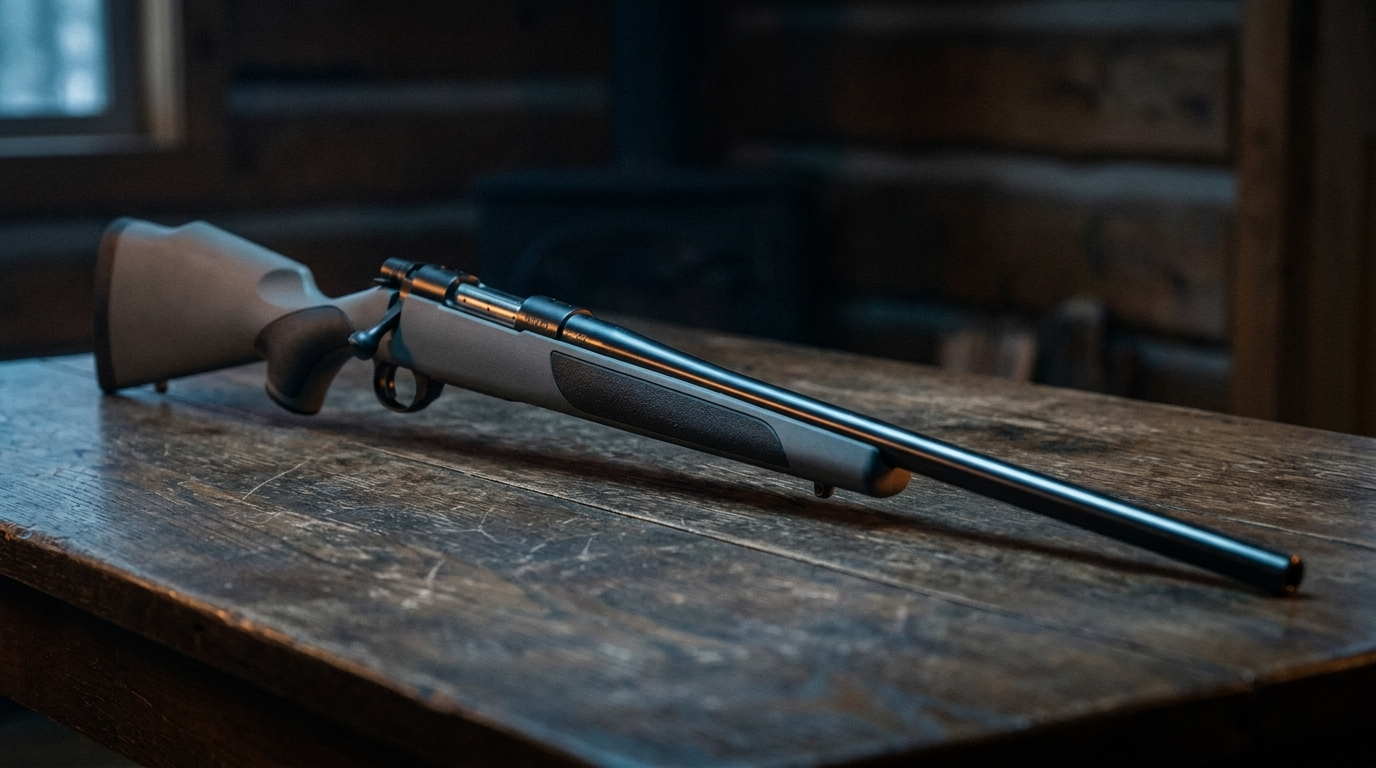
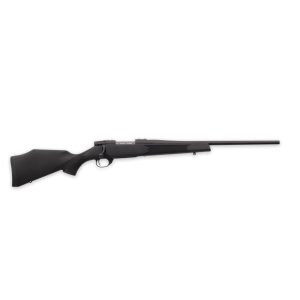
The Vanguard is built on a Howa action, which tells you the bones are solid, and Weatherby backs every one with a sub-MOA three-shot guarantee using premium ammo. In .22-250 with the 24-inch barrel, that guarantee turns into a rifle that reaches out to the far edge of the round’s window. It sits between the budget guns and the premium rigs on price and gives up almost nothing to either.
You get a two-stage match trigger from the factory, a nicely finished barrel, and a stock that handles better than the Howa it shares an action with. It’s the pick for the shooter who wants long-range varmint accuracy with a name and a guarantee behind it, without paying custom money. Feed it good ammo, put decent glass on top, and it will hold its own against rifles costing twice as much.
Pros
- Sub-MOA guarantee backed by a proven Howa action
- Two-stage match trigger from the factory
- Long barrel wrings out the .22-250’s long-range potential
Cons
- Heavier than a dedicated walking rifle
- Best accuracy needs premium ammo to hit the guarantee
How I Ranked These .22-250 Rifles
I weighted this list toward the things that actually matter with a .22-250: accuracy, barrel quality, and how well the rifle handles heat. A varmint round lives and dies on precision, so a rifle that can’t hold a group when the barrel warms up is useless no matter how nice it feels. I gave heavy-barrel guns credit for holding zero through long strings, and I docked lighter rifles for walking when they get hot, while giving them back points for carrying well.
Trigger quality, bolt smoothness, magazine function, and out-of-the-box readiness rounded out the scoring. Price matters too, but only in context. A $500 Savage that shoots and a $1,100 Tikka that shoots can both earn a spot, because they answer different questions. Every rifle here is chambered in .22-250 from the factory and available new in 2026.
.22-250 Ballistics: Speed, Range, and Recoil
The .22-250 launches a 50-grain bullet at roughly 3,800 feet per second and a 55-grain at around 3,680. Zeroed two inches high at 100 yards, a 55-grain load is still dead-on around 250 and only drops a few inches by 300, which is why so many coyote hunters treat it as a point-and-shoot cartridge inside 300 yards. Muzzle energy runs near 1,650 foot-pounds, plenty for coyotes, bobcats, and prairie dogs, and enough for close deer where it’s legal, though it is primarily a varmint and predator round.
Recoil is genuinely mild, in the neighborhood of a few foot-pounds, which is the round’s superpower. You can spot your own hits and stay on target for fast follow-ups. The catch is throat erosion. Pushed hard on hot days, a .22-250 barrel can start to lose its edge somewhere between 1,500 and 3,000 rounds of accuracy-critical shooting, sooner than a .223. That’s not a reason to avoid it, just a reason to let the barrel cool between strings and to buy a rifle with a barrel worth rebarreling later.
.22-250 vs .223 and .243 Winchester
The .22-250 sits right between the .223 and the .243 in the varmint world. Against the .223 Remington, the .22-250 is noticeably faster and flatter, giving you more reach and less wind drift, at the cost of more powder, shorter barrel life, and no cheap surplus ammo. If most of your shots are inside 250 yards or you shoot a lot, the .223 is easier on the wallet. If you want to stretch to 400 on coyotes, the .22-250 pulls ahead.
Step up to the .243 Winchester and you gain a real dual-purpose round that handles deer cleanly out to normal hunting ranges while still working as a long-range varmint cartridge with light bullets. The .243 kicks more and burns barrels too, but it’s the pick if you want one rifle for both jobs. The .22-250 is the specialist: nobody flattens a distant coyote flatter, but it was never meant to be a deer rifle first.
Twist Rate, Ammo, and Barrel Life
Most factory .22-250 rifles come with a 1:14 twist, which is optimized for the light 40 to 55-grain varmint bullets the round was built around. That twist will not stabilize the heavy 70 to 80-grain bullets some shooters want for wind bucking, so if long-range work with heavies is your goal, look for a faster 1:12 or 1:9 barrel or plan on a rebarrel. For classic varmint and predator use with 50 and 55-grain bullets, the standard twist is exactly right.
Factory ammo is widely available from Hornady, Federal, Winchester, and Nosler, with polymer-tipped varmint loads being the sweet spot for explosive expansion on small game. To stretch barrel life, let the barrel cool between strings on hot days, keep the throat clean, and resist the urge to run bench-melting strings in July. Treated with a little respect, a good .22-250 barrel will deliver years of shooting before accuracy falls off.
Common .22-250 Buying Mistakes
The biggest mistake is buying a light sporter barrel and then treating it like a bench gun. If you plan on long shooting sessions, get a heavy barrel. The second mistake is skimping on glass. A flat, fast round deserves a scope that tracks and holds zero, and cheap optics undo an accurate rifle in a hurry. The third is expecting a 1:14 twist rifle to shoot heavy bullets it was never built to stabilize. Match the rifle to how you actually shoot and the .22-250 will reward you.
The Bottom Line
If you want one rifle and you’re done shopping, the Tikka T3x Varmint shoots like a custom gun for factory money. If accuracy per dollar is the whole game, the Bergara B-14 gives you the best barrel in its class. Tight budget? The Savage Axis II XP gets you shooting this weekend with a scope already on top. The Browning X-Bolt 2 is the one to carry, the Howa 1500 Varmint is the one to park behind, and the Weatherby Vanguard splits the difference with a guarantee. Every one of them will flatten coyotes way out there. Pick the one that fits how you hunt.
FAQ: .22-250 Rifles
What is a .22-250 good for?
The .22-250 Remington is a varmint and predator specialist. It excels on coyotes, prairie dogs, bobcats and other small game out past 400 yards, thanks to a flat, fast trajectory and very mild recoil. It can take close-range deer where legal, but it is primarily a varmint round.
How far will a .22-250 shoot accurately?
A good .22-250 rifle is comfortably effective on coyote-size game to around 400 to 450 yards in decent conditions. Zeroed a couple inches high at 100 yards, a 55-grain load stays close to point of aim inside 300 yards, which is why many hunters treat it as point-and-shoot to that distance.
Is the .22-250 better than the .223?
For reach, yes. The .22-250 is noticeably faster and flatter than the .223 with less wind drift, so it pulls ahead past 250 yards. The trade-offs are more powder, shorter barrel life and no cheap surplus ammo, so the .223 is the better pick for high-volume or closer-range shooting.
What twist rate is best for a .22-250?
Most factory .22-250 rifles use a 1:14 twist, which is ideal for the light 40 to 55-grain varmint bullets the cartridge was built around. If you want to shoot heavy 70 to 80-grain bullets for long-range wind bucking, look for a faster 1:12 or 1:9 barrel instead.
Can you deer hunt with a .22-250?
It is legal for deer in some states and capable at close range with premium controlled-expansion bullets, but the .22-250 is a varmint cartridge first. Always check your local regulations, since many states set a minimum caliber for deer, and choose a tougher bullet if you do use it on deer.
4,021+ Gun & Ammo Deals
Updated daily from 200+ top retailers. Filter by category, caliber, action type, and price.
Related Guides