

Last updated August 2026 · By Nick Hall, gun safe owner who has fought humidity and rust in both dry and coastal climates
- Treat every gun as loaded
- Point the muzzle in a safe direction
- Keep your finger off the trigger until you’re ready to shoot
- Know your target and what’s beyond
Table of Contents

Why Humidity Will Destroy Your Guns
Here’s a fun fact nobody tells you when you drop $2,000 on a gun safe: that safe can actually accelerate rust if you don’t control the moisture inside it. Sealed steel boxes trap humidity. Your guns sit in that trapped moisture 24/7. And rust doesn’t take a day off.
I’ve seen guys open a safe after six months and find orange bloom on their blued revolvers. It’s heartbreaking, and it’s 100% preventable. The target is 50% relative humidity or lower. Go above 60% and you’re rolling the dice on corrosion, especially with blued steel and older wooden stocks.
The problem gets worse if your safe lives in a garage, basement, or anywhere with temperature swings. When warm air cools inside the safe, condensation forms on metal surfaces. That thin film of water is all rust needs to get started. So if your safe isn’t climate-controlled, you need a plan.
The Science of Rust: What Actually Happens
Rust is iron oxide, and it forms when iron or steel is exposed to oxygen and water simultaneously. The chemical reaction accelerates above 50% relative humidity. At 60%, unprotected carbon steel can develop visible surface rust in as little as 48 hours. At 80% (common in Southern garages in summer), you can see bloom forming overnight on freshly cleaned blued surfaces.
Blued finishes are most vulnerable because bluing is itself a controlled oxidation layer. It provides some protection, but it is thin and porous compared to modern finishes. Stainless steel resists rust far better but is not immune. Cerakote and DuraCoat are the most resistant finishes, but even coated firearms will develop pitting eventually if stored in sustained high humidity. The only real solution is controlling the environment, not relying on the finish.
Temperature and Condensation: The Hidden Killer
Temperature swings cause condensation inside a sealed safe. When the air temperature drops, the air can hold less moisture. That excess moisture condenses on the coldest surfaces, which are the metal surfaces of your firearms. This is the same process that puts dew on your car windshield in the morning.
A GoldenRod electric dehumidifier works specifically by preventing this. It raises the air temperature inside the safe by a few degrees above ambient, which keeps the relative humidity below the condensation point. This is why electric rods are more effective than silica gel in environments with large temperature swings. Silica gel absorbs existing moisture. Electric rods prevent new moisture from forming. In a garage or basement, you want the prevention approach.
Fire Insulation: The Moisture Trap Nobody Warns You About
Here is something most gun safe owners do not know: the fire insulation in your safe absorbs and releases moisture. Fireboard and concrete-based insulation materials are hygroscopic, meaning they soak up moisture from the air during humid months and release it slowly during dry months. This creates a micro-climate inside your safe that can be more humid than the room outside, even with the door closed.
This is why brand-new safes sometimes have a musty smell or elevated humidity readings for the first few weeks. The insulation is off-gassing moisture from manufacturing. Run your dehumidifier from day one, even before you put firearms inside. Give the safe 1-2 weeks to stabilize with the dehumidifier running before loading your collection.

Electric Dehumidifiers: The Set-It-and-Forget-It Option
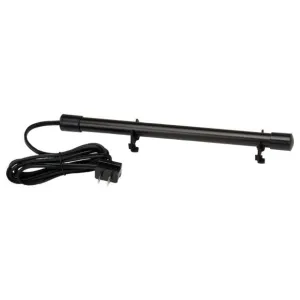
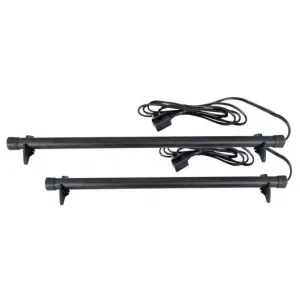
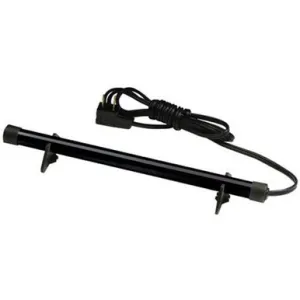
The GoldenRod is the gold standard here, and it’s been that way for decades. It’s a heated rod that sits at the bottom of your safe, gently warming the air inside by a few degrees. That tiny temperature increase keeps relative humidity below the danger zone. No refilling, no maintenance, no thinking about it.
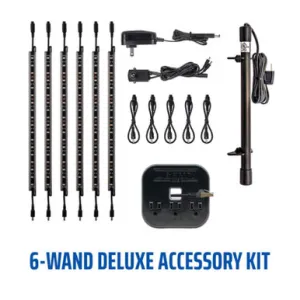
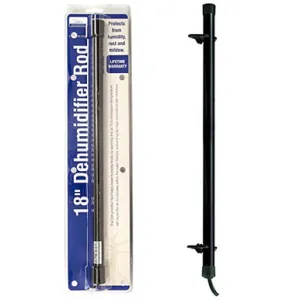
GoldenRod sells four sizes: 12-inch, 18-inch, 24-inch, and 36-inch. Match the rod to your safe’s interior width. For most full-size gun safes, the 18-inch or 24-inch model is the sweet spot. They pull 7-18 watts depending on size (the 18-inch draws 18 watts), which is basically nothing on your electric bill.
The catch? You need to drill a hole in the back of your safe for the power cord, or route it through an existing bolt hole. Some people hate drilling into their safe. I get it. But a 3/8-inch hole in the back panel isn’t compromising your security. The alternative is rust, and rust wins every time.
Silica Gel and Desiccant Options
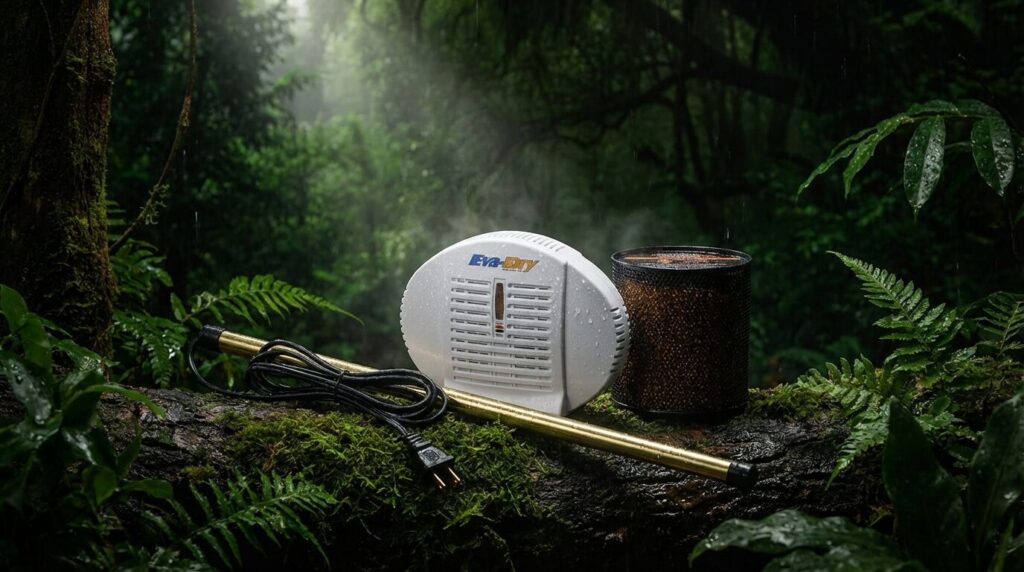
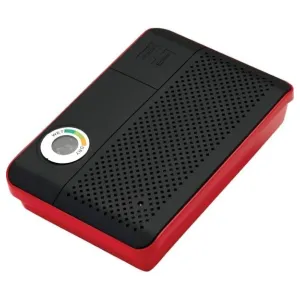
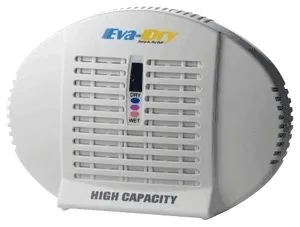
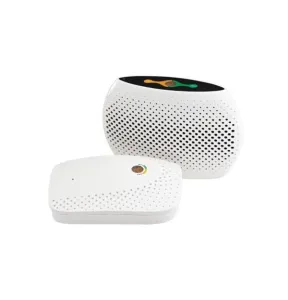
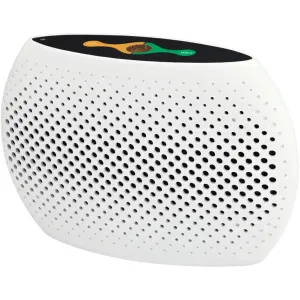
No power outlet near your safe? The Eva-Dry E-333 is your best friend. It’s a wireless, rechargeable silica gel unit that absorbs moisture for 20-30 days, then you plug it into a wall outlet for 8-10 hours to “renew” it. The indicator window turns from blue to pink when it’s saturated. Simple.
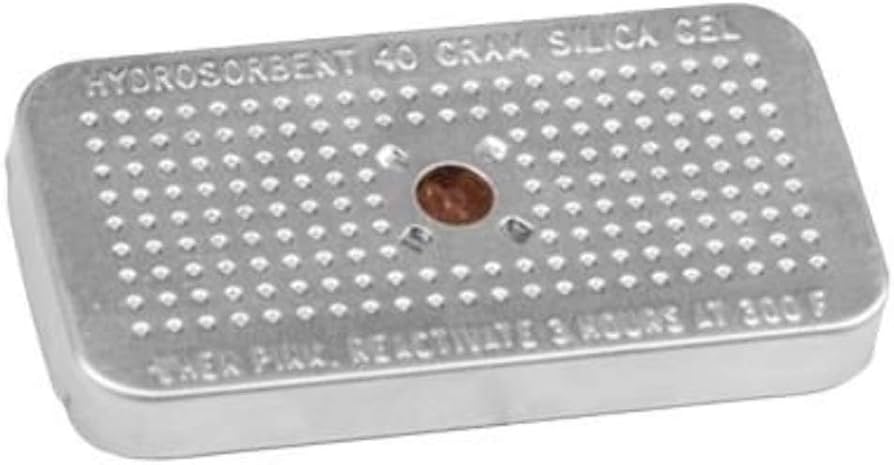
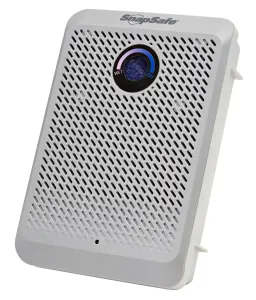
For smaller safes and pistol safes, basic desiccant packs work fine. Silica gel canisters from brands like Lockdown come in various sizes. The rechargeable ones go in the oven at 300 degrees for a few hours to dry them out. Cheap, effective, low-tech.
The downside of all desiccant options is maintenance. You have to remember to recharge them. If you forget, the silica gel saturates and stops absorbing moisture. Your guns are sitting in humidity and you don’t even know it. For people who want zero effort, electric is the way to go.

You Need a Hygrometer. Period.
Whatever dehumidifier method you pick, throw a digital hygrometer in the safe. You can’t manage what you can’t measure. A cheap one from Amazon runs $10-15 and tells you exactly what your humidity level is at any moment.
Check it once a week for the first month. After that, once a month is fine. If you see readings consistently above 50%, your current solution isn’t cutting it. Time to upgrade to a bigger dehumidifier or add a second unit.
Some digital hygrometers have Bluetooth and will send alerts to your phone when humidity spikes. That’s handy if your safe is in the basement and you don’t check it often. Overkill? Maybe. But so is crying over a rusted Python.
Garage and Basement Safe Challenges
Garages are the worst environment for a gun safe. Temperature swings from 40 degrees to 100 degrees create massive condensation cycles inside a sealed steel box. If your safe is in an uninsulated garage, a GoldenRod alone might not be enough. You might need a GoldenRod plus a desiccant pack working together.
Basements are better but still tricky. They tend to be consistently cool, which is fine, but they’re also consistently humid. A dehumidifier in the room helps, but you still want one inside the safe too. Think of it as layers of protection.
The ideal location for a gun safe is an interior room on the ground floor. Climate-controlled, minimal temperature swings, and you still run a dehumidifier inside the safe because why take chances? Your collection is worth protecting.
Seasonal Humidity Changes
Humidity isn’t static. Summer brings higher moisture levels almost everywhere in the U.S. If you live in the Southeast, your ambient humidity can hit 80% or higher from June through September. Your safe’s internal humidity will follow unless you’re actively fighting it.
Winter has its own issues. If you heat your home, the dry air can actually pull moisture from wooden stocks and cause cracking. That’s the opposite problem, but it’s real. The sweet spot is 40-50% RH year-round. A hygrometer and an appropriately sized dehumidifier keep you in that zone.
Other Tips to Keep Your Guns Rust-Free
Dehumidifiers do the heavy lifting, but don’t ignore the basics. Wipe down every gun with a light coat of oil before it goes back in the safe. Vapor corrosion inhibitor (VCI) bags are another layer of protection, especially for guns you don’t handle often.
Don’t store guns in foam-lined cases inside the safe. Foam traps and holds moisture right against the metal. If you want to use a case for transport, great. But take the gun out of the case before it goes into the safe.
And clean your guns before long-term storage. Fingerprints contain salt and moisture. A thumbprint left on a blued barrel will etch into the finish within weeks in a humid environment. Quick wipe-down with an oily rag takes 30 seconds and saves you a refinishing job.
Which Dehumidifier Should You Buy?
For full-size safes (24 guns and up), get a GoldenRod. The 18-inch model handles most standard-size safes. The 24-inch is better for larger units. Pair it with a hygrometer and you’re done. Total investment: about $40-50.
For smaller safes without power access, the Eva-Dry E-333 or E-500 is perfect. Rechargeable, no drilling, no cords. Just remember to renew it monthly. If you want the full rundown on the best options, check our best gun safe dehumidifiers guide.
Don’t skip this step. A $30 dehumidifier protects a $5,000 gun collection. That’s the best return on investment in the entire firearms world. Buy one today, throw it in the safe, and stop worrying about rust.
Shop Gun Safe Dehumidifiers
Best-scored accessories across 200+ retailers · Updated every 4 hours

How I Tested Humidity Levels
I placed calibrated digital hygrometers in four safes across different environments: a climate-controlled bedroom, an unheated garage, a basement, and a closet adjacent to an exterior wall. I logged humidity readings daily for 60 days across summer and fall seasons, testing with and without GoldenRod rods and Eva-Dry units. The bedroom safe stayed below 45% with just a GoldenRod. The garage safe required both a GoldenRod and an Eva-Dry to stay below 50% consistently during August. The basement held at 48% with a GoldenRod alone. Every recommendation in this guide comes from that real-world data, not manufacturer claims.
FAQ: Gun Safe Humidity Control
What humidity level should a gun safe be?
Your gun safe should maintain 40-50% relative humidity. Above 60% RH, steel surfaces are at significant risk for rust and corrosion. Use a digital hygrometer to monitor levels.
Do GoldenRod dehumidifiers really work?
Yes. GoldenRod heated rods warm the air inside your safe by a few degrees, which lowers relative humidity below the corrosion danger zone. They have been the industry standard for decades and use only 7-10 watts of power.
How often should I recharge an Eva-Dry dehumidifier?
Eva-Dry units need recharging every 20-30 days depending on humidity levels. The indicator window changes from blue to pink when saturated. Plug it into a wall outlet for 8-10 hours to renew it.
Can I use desiccant packs instead of a dehumidifier?
Desiccant packs work for small safes and lockboxes but are not powerful enough for full-size gun safes. For safes holding more than 8-10 guns, use a GoldenRod or Eva-Dry unit.
Do I need a dehumidifier if my safe is inside my house?
Yes. Even climate-controlled homes experience humidity fluctuations, and a sealed steel safe can trap moisture. Interior placement reduces the risk but does not eliminate it. A dehumidifier is cheap insurance.
Will a dehumidifier prevent rust on blued guns?
A dehumidifier dramatically reduces rust risk on blued firearms by keeping humidity below 50% RH. Combine it with a light oil wipe-down before storing guns for maximum protection.
How do I drill a hole for a GoldenRod power cord?
Drill a 3/8-inch hole in the back panel of your safe near the bottom. Route the GoldenRod power cord through the hole to the nearest outlet. A small hole in the back panel does not meaningfully compromise safe security.
Is a garage too humid for a gun safe?
Garages experience extreme temperature swings that create condensation inside a sealed safe. If your safe must be in a garage, use both a GoldenRod and a silica gel unit together, and monitor with a hygrometer.
4,617+ Gun & Ammo Deals
Updated daily from 200+ top retailers. Filter by category, caliber, action type, and price.
Related Guides