The SKS is the last cheap piece of serious military history left on the American market, and the price of that history has roughly doubled in a decade. A Chinese Type 56 that sold for $89 in a barrel at a gun show now runs about $400, and a clean Russian one can ask four figures. So the question is no longer whether an SKS is cheap. It’s which one you’re actually buying, and what it does and doesn’t need once it’s home.
That last part is where most buying guides stop being useful. They repeat the same three lines of history, tell you to fit a synthetic stock and a detachable magazine, and never mention that doing both of those things at once is what puts a federal parts count on your rifle. They also all repeat one mechanical claim about the bolt that the rifle’s own manual contradicts in a footnote.
Deals of the Day
Today's best discounts · Updated 3x daily
Gun Deals
See All →
Ammo Deals
See All →





We went to the source for this one. The Soviet Ministry of Defence published a 133 page manual for the carbine, third edition, Moscow 1984, and it’s free to read. Everything in the specification table below is transcribed from it, and it settles a detail about the firing pin that gets repeated wrongly on every SKS page we can find.
How we tested: Every pick here is ranked against our testing methodology. Minimum round counts, accuracy and reliability protocols, the failures that disqualify a gun. Where we have not shot a specific variant ourselves, we say so in that section.
SKS Rifles at a Glance
| Variant | What it is | Watch for | Typical price |
|---|---|---|---|
| Chinese Type 56 | Most common, most available | Late thin-wall receivers vary | $345 to $600 |
| Romanian M1956 | Budget milsurp, often refurbished | Import marks on the barrel | $449 |
| Serbian turn-in | Police storage, honest condition | Sold as turn-in, not new | $449 |
| Yugoslav M59/66 | Grenade launcher and gas valve | No chrome lining in the bore | $479 to $899 |
| Chinese trade-in | Often complete with bayonet | Condition graded, not perfect | $499 |
| Norinco commercial | Factory Chinese, known maker | Price climbs on clean ones | $500 to $650 |
| Yugoslav, dealer graded | Better condition, higher ask | Check the gas valve position | $849 |
| Russian SKS-45 | The original, collector grade | Matching numbers drive price | $1,100 and up |
Table of Contents
What the Soviet manual actually specifies
Competing pages quote velocity and barrel length from each other. The rifle has an official specification table, so here it is, transcribed from the 1984 Ministry of Defence manual rather than from another blog.

A few of those are worth pulling out. The sight is graduated to 1000 m, but the manual puts the most effective fire at 400 m and the point-blank range on a 50 cm chest target at 365 m, which is a much more honest description of what the rifle does. Practical rate of fire is given as 35 to 40 rounds per minute. The barrel is 520 mm with 474 mm of that rifled, four grooves, one turn in 240 mm, and the sight radius is 480 mm. That long sight radius on open sights is a large part of why a plain SKS shoots better than people expect.
The cartridge figures are the 1943 pattern round: 16.2 g loaded, a 7.9 g steel-cored bullet, 1.6 g of powder, 735 m/s at the muzzle. The manual also notes the bullet stays lethal to 1500 m and can travel 3600 m, which is the number that matters when you’re thinking about a backstop.
The bolt difference nobody cites
Here is the claim you’ll read everywhere: the SKS firing pin is free floating, it has no spring, and that’s why a bolt full of hardened cosmoline can slam fire. The first half is right for most rifles and the advice that follows is good. Degrease the bolt properly before you shoot a surplus SKS, every time, no exceptions.
But the manual doesn’t describe one bolt. Its standard disassembly runs the pin out and withdraws the firing pin with no spring involved. Then it adds a note covering bolts of the first production run, and those are described differently: separate the extractor, remove the extractor spring, drive out the pin, then withdraw the firing pin with its spring and take the spring off the firing pin.
Note. In bolts of the first production run: separate the extractor, remove the extractor spring, drive out the pin, withdraw the firing pin with its spring, and remove the spring from the firing pin.
USSR Ministry of Defence, manual for the 7.62mm Simonov self-loading carbine, 3rd edition, Moscow 1984, translated from the Russian
So the blanket statement that the SKS firing pin has no spring is wrong, and the Soviet army documented that itself. It matters in two practical places. If you’re buying an early Russian rifle, its bolt isn’t the part number everyone else is discussing. And if you buy a loose bolt or a parts kit to fix a rifle, matching the firing pin to the bolt type is a real step, not a formality. Either way, degreasing still applies.
Which SKS you are actually buying
Chinese Type 56 and Norinco
The most common SKS in America and the easiest to find at a sane price. Chinese production ran across military and commercial factories for decades, so condition and finish vary more than on any other variant. Type 56 rifles came in as military turn-ins and as commercial Norinco guns, and the commercial ones tend to ask more for the same rifle in better shape. If you want an SKS to shoot rather than to collect, this is where the value is.
Yugoslav M59 and M59/66
The distinctive one, and the one with the most traps. Zastava built the M59/66 with a spigot type grenade launcher permanently attached at the muzzle and a gas cut-off valve in the gas block. It’s a heavier rifle than the Soviet original, 4.1 kg empty against 3.75, with a 550 mm barrel measured with the launcher in place.
Russian SKS-45
The original Simonov, and now a collector item rather than a shooter. Tula and Izhevsk guns with matching numbers carry a real premium, and the early ones are the rifles the manual’s first-production bolt note applies to. Expect four figures for anything clean.
Romanian, Serbian and the rest
Romanian Model 1956 rifles are the budget entry, frequently sold refurbished and often carrying visible import marks. Serbian police turn-ins are Yugoslav rifles that went into storage and came back out, and they’re sold honestly by condition grade. Albanian, East German and North Korean guns exist but you won’t meet one at a normal price. Owners cross-shopping the other cheap communist-bloc rifle should read the AK-47 buyers guide, because the two rifles are priced closer together than they were ten years ago.
The two things that catch Yugo buyers
First, the gas valve. The M59/66 gas block has a cut-off that shuts gas away from the piston so the rifle can launch a grenade, and rotating the knob from the side of the gas block to the top closes that flow and raises the ladder sight at the same time. With the valve closed the rifle is a straight-pull single shot. Every forum has a thread from someone convinced their new Yugo is broken because it won’t cycle, and a good share of those threads end with the valve.
Second, the bore. The M59/66 barrel has no chrome lining. That single line breaks the most repeated piece of SKS advice there is, because “SKS bores are chromed, so corrosive surplus ammo is fine” does not describe this rifle. If you shoot corrosive ammunition through an M59/66, clean it that day with something water based before you oil it, and read our guide to 7.62×39 ammunition before you buy a case of surplus. The rifle is otherwise robustly built and will outlast you, but the bore is the part you can ruin in a weekend.
Sources for both: the M59/66 technical description at Modern Firearms, which records the gas cutoff knob and states plainly that the barrel has no chrome lining.
Before you fit a magazine and a stock
This is the section other SKS pages skip, and it’s the one that can turn a $400 rifle into a legal problem. The rule lives at 27 CFR 478.39, and it isn’t about owning an imported rifle. It’s about assembling one into a configuration that couldn’t have been imported in the first place.
The regulation says no person shall assemble a semiautomatic rifle using more than ten of the imported parts it lists. The list has twenty entries, and these are the ones an SKS project touches: frames and receivers, barrels, barrel extensions, mounting blocks or trunnions, muzzle attachments, bolts, bolt carriers, operating rods, gas pistons, trigger housings, triggers, hammers, sears, disconnectors, buttstocks, pistol grips, forearms and handguards, magazine bodies, followers, and floorplates.
Read that list against a typical build. A surplus SKS arrives with imported parts throughout. Add an aftermarket detachable magazine and you’ve introduced a magazine body, a follower and a floorplate. Add a stock with a pistol grip and you’ve touched two more entries. The count is what matters, and the fix is the same either way: use US-made parts for the pieces you change, and keep the count of imported parts at ten or fewer.
We’re not your lawyer and this isn’t legal advice. Read the regulation yourself, it’s short: 27 CFR 478.39. The practical takeaway is that the cheapest safe SKS is the one you leave alone, and a rifle with its original ten-round magazine and original stock isn’t assembled into anything.
The 8 best SKS rifles you can actually buy
Milsurp stock moves fast and every rifle below is a specific graded gun rather than a production run, so treat the prices as the going rate rather than a fixed tag. We’ve put them in price order, cheapest first.
1. Chinese SKS Type 56: Best Overall Value
The default answer for most people. This is a military turn-in Type 56, the pattern that made the SKS ordinary in America, and at around $400 it’s the cheapest honest way into a real service rifle. Condition is graded rather than new, which is the trade you accept at this price. Check the bore and the bolt face before anything else, and plan on a thorough degrease before the first range trip.
Pros
- Cheapest route into a real milsurp rifle
- Most available variant by a distance
- Parts and magazines are everywhere
Cons
- Condition varies between individual rifles
- Finish is often worn from service use
2. Romanian SKS Model 1956: Best Budget Milsurp
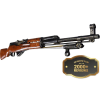
Romanian production out of Cugir, arriving refurbished more often than not, and wearing import marks on the barrel. Mechanically it’s the same carbine as the Soviet pattern and it shoots like it. The import marking bothers collectors and means nothing at all to shooters, which is exactly why this is a good rifle to buy if you plan to use it.
Pros
- Same mechanical package as the Soviet gun
- Refurbished examples often have strong bores
- Priced below the Chinese commercial guns
Cons
- Import marks hurt collector value
- Refurb finish is not original
3. Serbian Police SKS: Best Honest Condition Grade
Yugoslav rifles that went into Serbian police storage and came back out, sold by condition rather than dressed up as new. The appeal is that you know what you’re getting. These are M59/66 pattern guns, so everything in the gas valve and chrome lining section above applies directly to this rifle.
Pros
- Sold on an honest condition grade
- Storage guns often better than field guns
- Yugoslav build quality is well regarded
Cons
- No chrome lining in the bore
- Gas valve catches first-time owners
4. Yugoslav SKS M59/66: Most Distinctive
The grenade launcher rifle. Heavier than the Soviet carbine at 4.1 kg, longer at the muzzle because the launcher is part of the barrel, and fitted with the gas cut-off valve that confuses every new owner once. It’s the most interesting SKS to own and the one that most rewards knowing how it works before you buy it.
Pros
- Genuinely different from every other SKS
- Ladder sight and launcher are intact history
- Zastava build quality holds up
Cons
- Heaviest SKS at 4.1 kg empty
- Bore has no chrome lining
5. Chinese SKS Police Trade-In: Best Complete Package
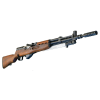
Trade-in Chinese guns frequently arrive with the bayonet still attached and the accessories present, which matters more than it sounds. Buying a bare rifle and then sourcing a correct bayonet, cleaning kit and sling separately costs more than the gap between this and a plain rifle.
Pros
- Often complete with bayonet fitted
- Accessories cost more bought separately
- Trade-in grading errs conservative
Cons
- Service wear is part of the deal
- Individual condition varies by rifle
6. Norinco SKS: Best From a Trusted Retailer
Factory Norinco production sold through a mainstream retailer rather than a surplus specialist. You pay more than the turn-in price and you get a known maker, a return policy and a clean transaction. For a first milsurp purchase, that’s worth the difference to a lot of buyers.
Pros
- Known factory rather than mixed surplus
- Bought through a mainstream retailer
- Condition beats most military turn-in guns
Cons
- Costs more than a military turn-in
- Commercial guns carry no service history
7. Yugo SKS, Dealer Graded: Best Yugoslav Condition
The same M59/66 pattern rifle bought at the better end of the condition scale through a mainstream retailer. If you want the distinctive Yugoslav rifle without gambling on a surplus grade, this is the version to buy. The gas valve and the unlined bore still apply.
Pros
- Better condition than surplus grading
- Mainstream retailer backing the sale
- Distinctive rifle without the condition gamble
Cons
- Roughly double a surplus M59/66
- Still needs same-day cleaning after corrosive ammo
8. Russian SKS-45: The Original
The Simonov as Tula and Izhevsk built it, and the rifle the 1984 manual was written for. This is a collector purchase now rather than a shooter, with matching numbers driving the price hard. If you buy an early one, it’s the rifle the manual’s first-production bolt note was written about, so check what firing pin is in it.
Pros
- The original rifle, not a licensed copy
- Matching numbers hold value well
- Early guns carry the documented bolt variation
Cons
- Four figures for anything clean
- Too valuable for most people to shoot
Three things worth buying with the rifle
Stripper clips
The SKS was designed around them. The manual describes the clip as the tool for rapid loading and gives its capacity as ten rounds, the same as the magazine, and loading from the top with the bolt held back is how the rifle is meant to be fed. Clips are a few dollars for a pack and they change how the rifle handles at the range.
A receiver cover scope mount
The stock sights are good and the sight radius is long, so this is optional rather than a fix. If you do want glass, a receiver cover mount is the least invasive route and doesn’t touch anything on the parts list in the regulation above.
A synthetic stock, with the count in mind
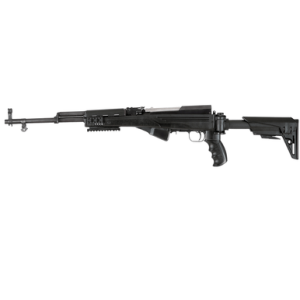
A polymer stock makes the rifle lighter and easier to keep clean, and it’s the single most common SKS modification. Read the section above before you fit one, because a buttstock, a pistol grip and a handguard are three separate entries on that twenty item list.
So which one should you buy
If you want to shoot it, buy the Chinese Type 56 or the Romanian and spend the difference on ammunition. If you are still deciding between platforms rather than variants, our roundup of 7.62×39 rifles puts the SKS next to the AK and AR options in the same chambering. If you want the most interesting rifle on the rack, buy the Yugoslav M59/66 and learn the gas valve before it worries you. If you want the original and you’re buying to keep, the Russian is the one, and it’s the only one where matching numbers should change your mind about a price.
Whichever you pick, degrease the bolt before the first round. That’s the one piece of universal SKS advice that survives contact with the manual.
Frequently Asked Questions
Is the SKS firing pin really free floating?
On the standard bolt, yes, and that is why you degrease a surplus SKS thoroughly before shooting it. But the Soviet manual for the carbine adds a note covering bolts of the first production run, and those are described with a spring on the firing pin, removed separately during disassembly. So the blanket claim that no SKS has a firing pin spring is wrong. Check what is actually in your bolt before you order a replacement pin.
Why will my Yugoslav M59/66 not cycle?
Almost always the gas valve. The M59/66 has a gas cut-off in the gas block so the rifle can launch grenades, and turning the knob from the side of the gas block to the top shuts the gas off and raises the ladder sight at the same time. With the valve closed the rifle works as a straight-pull single shot and will not self-load. Open the valve and it cycles.
Are SKS barrels chrome lined?
Not all of them, and the exception is the one people buy most often for the looks. The Yugoslav M59/66 barrel has no chrome lining. That matters because the usual advice, that corrosive surplus ammunition is safe in an SKS because the bore is chromed, does not describe that rifle. If you shoot corrosive ammunition through an M59/66, clean the bore the same day with a water-based solvent before oiling.
Can I fit a detachable magazine to an SKS?
You can buy them, but read 27 CFR 478.39 first. The regulation bars assembling a semiautomatic rifle from more than ten of the twenty imported parts it lists, and a detachable magazine brings in three of those entries on its own: the magazine body, the follower and the floorplate. Add an aftermarket stock with a pistol grip and a handguard and you have touched several more. The count is what matters, and US-made parts do not count against it.
How accurate is an SKS?
Better than its reputation, largely because of the sights. The Soviet manual gives a 480 mm sight radius, which is long for a carbine, and puts the most effective fire at 400 m with a point-blank range of 365 m against a 50 cm chest target. The rear sight is graduated to 1000 m, but that is an aspiration rather than a practical range for the rifle and the open sights.
Which SKS variant should I buy to shoot rather than collect?
A Chinese Type 56 or a Romanian Model 1956. Both are the same mechanical carbine as the Soviet original, both sit at the bottom of the price range at roughly $400 to $450, and neither carries collector value you would feel bad about wearing out. Save the Russian guns for people buying to keep, because matching numbers there push prices past $1,100.
What does an SKS cost in 2026?
Roughly $345 at the very bottom for a plain commercial Chinese rifle, $400 to $500 for most Chinese and Romanian surplus, $450 to $900 for Yugoslav M59/66 rifles depending on condition and who is grading them, and $1,100 upward for a Russian SKS-45. The barrel-of-cheap-rifles era is long over, so treat any advertised price well under $350 as a condition question.
6,867+ Gun & Ammo Deals
Updated daily from 200+ top retailers. Filter by category, caliber, action type, and price.
Related Guides