
Last updated March 10th 2026
I own multiple gun safes at different price points and have researched, tested, and installed safes ranging from $200 bedside vaults to $3,000+ full-size units. Every recommendation in this guide is based on personal use and real-world evaluation — not just spec sheets. Some links are affiliate links that support our independent testing. Read our editorial policy.

Quick Answer: Best Gun Safes by Category
If you know what you need and just want recommendations:
- Best Overall Full-Size Safe: Liberty Safe Centurion 24 — 24-gun capacity, 40 minutes fire protection at 1200°F, $799-$999
- Best Budget Full-Size Safe: Stack-On Sentinel 18 — 18-gun capacity, basic fire protection, $399-$499
- Best Premium Safe: Liberty Fatboy Jr. 48 — 48-gun capacity, 75 minutes fire protection, $1,599-$1,899
- Best Bedside Safe: Vaultek DS2i — Biometric + keypad + app, fast access, $299-$349
- Best Hidden Safe: Tactical Walls 1450M — In-wall concealment shelf, $200-$299
- Best Under-Bed Safe: Stealth Defense Vault DV652 — Low profile, quick access, $249-$299
- Best Budget Bedside Safe: GunVault SpeedVault SV500 — Biometric drop-down design, $129-$149
Why You Need a Gun Safe
If you own firearms, you need a safe. Full stop. This is not optional, and it is not about government mandates — it is about responsibility. Here are the four reasons that apply to every single gun owner:
Child safety. Every year, hundreds of children are killed or injured by unsecured firearms in the home. If there is any possibility a child could access your firearms — your children, grandchildren, nieces, nephews, their friends — those firearms must be locked up. No excuses. A $150 bedside safe eliminates this risk.
Theft prevention. According to the DOJ, approximately 380,000 firearms are stolen from homes each year. Stolen guns fuel the black market and violent crime. A bolted-down safe significantly increases the time and noise required to steal your firearms — most burglars work fast and will skip anything that slows them down. Your guns are valuable targets.
Fire protection. A house fire reaches 1,100°F in minutes. Ammunition stored outside a safe can cook off (low risk of injury, but the guns are destroyed). More importantly, the firearms themselves warp and become permanently ruined. A safe with 30+ minutes of fire protection at 1,200°F gives firefighters time to arrive and saves your collection.
Legal protection. Some states require firearms to be stored securely, especially in households with minors. Even in states without storage mandates, securely storing your firearms demonstrates responsible ownership — which matters enormously if a firearm is used in an accident or stolen and used in a crime. Check your state’s gun laws for specific storage requirements.
Types of Gun Safes
Not every gun owner needs the same type of safe. Your choice depends on how many guns you own, where you live, your budget, and how quickly you need to access a firearm.
Full-Size Gun Safes (Long Gun Storage)
Full-size safes are the gold standard for gun storage. They hold rifles, shotguns, and handguns in an upright, organized configuration. Capacities range from 12 to 72+ guns (though manufacturer gun counts are always inflated — a “24-gun safe” realistically holds 14-18 with scopes and accessories).
Key features to look for: Fire rating (minimum 30 minutes at 1,200°F), steel gauge (12-gauge or thicker for the body, 10-gauge for the door), locking bolt count (minimum 4 active bolts), interior organization (adjustable shelving, door organizer), and overall weight (heavier is better — a 400-pound safe is much harder to steal than a 200-pound one).
Best for: Anyone with 5+ firearms, long gun storage, collections, homes with children, anyone who wants fire protection.
See our 10 best gun safes and best gun safes under $1,000 for detailed comparisons.
Bedside / Quick-Access Safes

Bedside safes are designed for one purpose: keeping your home defense handgun secured while allowing rapid access in an emergency. They typically hold 1-2 handguns and open via biometric fingerprint scanner, electronic keypad, or both. The best ones open in under 2 seconds.
Key features to look for: Biometric reliability (the scanner must work the first time, every time — even with sweaty or dirty fingers), backup access methods (keypad code, physical key), interior lighting, tamper alerts, and cable or bolt-down mounting. Battery life matters too — a dead battery in a safe you need at 3 AM is a serious problem.
Best for: Home defense handgun storage, nightstand access, apartment dwellers who cannot install a full-size safe, quick access while maintaining child safety.
See our best biometric gun safes for detailed reviews.
Hidden / Concealment Safes
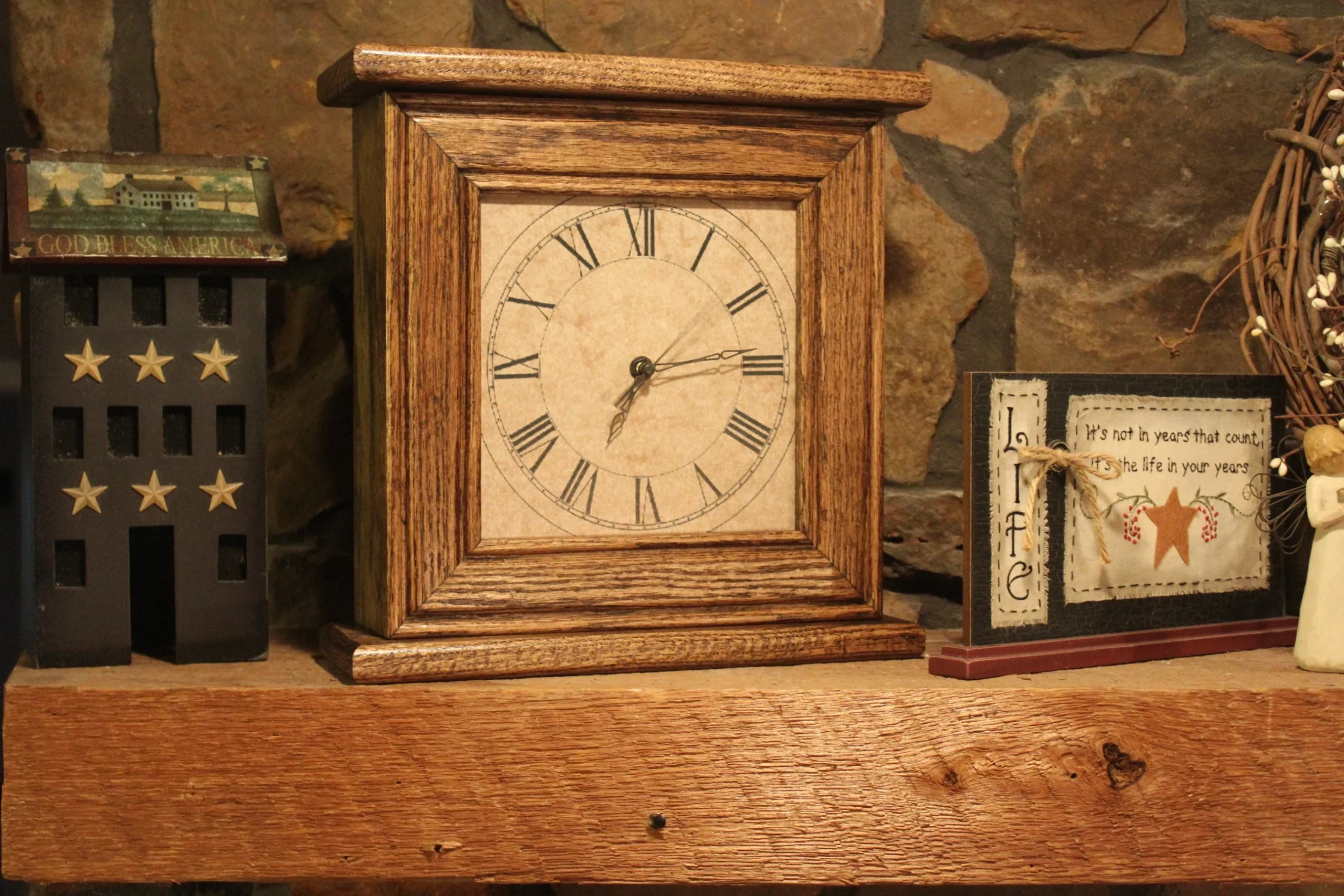
Concealment safes hide firearms in plain sight — inside wall-mounted shelves, picture frames, furniture, clocks, and mirrors. They combine quick access with the security advantage of nobody knowing a firearm is there. A burglar cannot steal what they cannot find.
Key considerations: Concealment safes prioritize access speed and stealth over theft resistance. Most use magnetic locks or RFID keys rather than heavy steel construction. They are not a replacement for a full-size safe — think of them as strategic staging points for home defense firearms.
Best for: Home defense staging (living room, hallway, home office), apartments or rental homes where bolting down a safe is impractical, people who want firearms accessible but invisible to visitors.
See our best hidden gun safes for creative concealment options.
Under-Bed Safes

Under-bed safes slide beneath your bed frame and provide a low-profile storage solution for long guns and handguns. They are an excellent compromise between full-size safe security and quick bedroom access. Most hold 2-3 rifles or shotguns plus handguns.
Best for: Bedroom access to long guns for home defense, apartment living, supplementing a full-size safe in a different room.
Vehicle Safes
If you carry concealed, you will encounter locations where you cannot bring your firearm (post offices, courthouses, some workplaces). A vehicle safe — either cable-locked in your trunk or bolted to your vehicle — provides a legal, secured storage option. The Console Vault and Fort Knox PB1 are popular choices. Never leave a firearm unsecured in a vehicle — car break-ins are a leading source of stolen firearms.
How to Choose the Right Gun Safe: Key Factors
Size and Capacity
The golden rule: buy bigger than you think you need. Every gun owner I know — myself included — has outgrown their first safe. A “24-gun” safe holds maybe 16 rifles with scopes and accessories. If you currently own 8 guns, buy a safe rated for 24. You will fill it.
Manufacturer gun counts assume bare rifles with no scopes, lights, or accessories, standing shoulder-to-shoulder. In reality, a scoped rifle takes up 1.5-2 slots. A rifle with a bipod or suppressor takes even more. Some safes have fixed barrel rests that force awkward configurations. Look for safes with adjustable interiors and flexible shelving.
Measure your space first. Full-size safes are heavy — a quality 24-gun safe weighs 350-500 pounds empty. Make sure your floor can support the weight (upper floors, especially in older homes, may require consultation). Measure doorways, hallways, and stairways along the delivery route. Many people have bought a safe only to discover it will not fit through their basement door.
Fire Protection
Fire ratings are listed as duration at temperature — for example, “30 minutes at 1,200°F.” This means the interior stayed below the critical temperature (usually 350°F, the point at which firearms and documents are damaged) for at least 30 minutes at 1,200°F external temperature.
Minimum recommendation: 30 minutes at 1,200°F. The average house fire burns for 20-30 minutes before the structure becomes compromised. A 30-minute rating gives firefighters time to arrive and begin suppression.
Better: 60-90 minutes at 1,200°F-1,400°F. Premium safes from Liberty, Browning, and Fort Knox offer 60-90+ minute ratings. If you live in a rural area with longer fire department response times, this extra protection is worth the cost.
Important note: Fire ratings are largely self-certified by manufacturers — there is no universal independent testing standard. Some companies test with UL (Underwriters Laboratories), which is more rigorous. Take fire ratings with a grain of salt and prioritize thicker fire board insulation and door seals (expanding gaskets that seal the door gaps during a fire).
Steel Gauge and Construction
Steel gauge is the primary indicator of theft resistance. Lower gauge numbers mean thicker steel:
- 14-gauge (0.075″): Budget safes. Provides basic pry resistance but can be defeated with a crowbar and time. Acceptable for keeping kids out and deterring casual theft.
- 12-gauge (0.105″): Mid-range. Significantly more pry-resistant, requires power tools to defeat. This is the minimum I recommend for a real gun safe.
- 11-gauge (0.120″): Premium. Very resistant to pry attacks. Most high-quality safes use 11-gauge bodies.
- 10-gauge (0.134″) and thicker: Top-tier. Found in commercial and luxury safes. Extremely difficult to breach without significant time and specialized tools.
The door matters most. The door is the primary attack surface. Look for a door that is thicker than the body (composite doors with multiple layers are common in quality safes) and uses anti-pry tabs or continuous welds rather than spot welds.
Locking Mechanism
Mechanical dial locks are the most reliable — no batteries, no electronics, no failures. They are slower to open (3-5 rotations of the dial) but will work in 50 years. S&G (Sargent & Greenleaf) mechanical locks are the gold standard.
Electronic keypad locks are faster (3-6 second entry) and allow multiple user codes. They require batteries (CR123A or 9V) and will eventually fail. S&G electronic locks and SecuRam electronic locks are the best. Budget safes often use cheap electronic locks that fail within 2-3 years — this is the most common complaint in gun safe reviews.
Biometric (fingerprint) locks offer the fastest access (under 1 second). They are ideal for bedside safes but less common on full-size safes. Reliability has improved dramatically in recent years, but always have a backup method (keypad or key).
My recommendation: Mechanical dial for a full-size safe you access a few times per week. Electronic keypad for a full-size safe you access daily. Biometric for any safe where you need sub-2-second access in an emergency.
Locking Bolts
Locking bolts are the steel rods that extend from the door into the safe body when locked. More bolts and thicker bolts mean more pry resistance. Look for a minimum of 4 active locking bolts on a full-size safe. Premium safes have 8-18+ bolts on three or four sides of the door. “Active” means the bolts move when you lock the door — “dead” or “static” bolts are fixed protrusions that the door closes over (still useful for anti-pry, but do not provide the same resistance as active bolts).
Anchoring and Installation
Bolt your safe to the floor. This is the single most important thing you can do to prevent theft. An unbolted 400-pound safe can be tipped onto a hand truck and wheeled out the door in under 5 minutes. A bolted safe requires cutting the bolts or destroying the floor — dramatically increasing the time and noise required. Use the manufacturer-provided anchor kit and lag bolts into concrete or through subfloor into joists.
For maximum security, bolt through both the bottom and back of the safe into concrete and wall studs. Consider placing your safe in a closet or corner where it can only be attacked from the front.
Best Full-Size Gun Safes (2026 Picks)
These are the safes I recommend based on personal research, owner feedback, and value assessment at each price point.
Best Budget: Stack-On Sentinel 18 ($399-$499)
The Sentinel 18 is the entry point for real gun safes. It holds 18 long guns (realistically 10-12 with scopes), has basic fire protection, a 14-gauge steel body, and an electronic lock. Is it going to stop a determined thief with power tools? No. Will it keep your kids out, deter casual theft, and survive a short fire? Yes. At under $500, it is dramatically better than no safe at all. If budget is your primary constraint, this is where to start.
Best Value: Liberty Safe Centurion 24 ($799-$999)
The Centurion line is where Liberty Safes start getting serious. The Centurion 24 offers 24-gun capacity (16-18 realistic), 40 minutes of fire protection at 1,200°F, 12-gauge steel body, and 4-way active locking bolts. The Liberty name carries weight — their safes have been trusted by gun owners for decades, and their warranty is excellent. This is the sweet spot of price vs. protection for most gun owners.
A note on the Liberty Safe backdoor access controversy: Liberty now allows customers to opt out of master code access. I still recommend their safes — the quality and fire protection are excellent.
Best Mid-Range: Liberty USA 30 ($1,199-$1,399)
The USA series is made in America (many budget safes are imported) and features 60 minutes of fire protection, 11-gauge steel, a more robust door with anti-drill plate, and a better locking mechanism. The 30-gun capacity (20-24 realistic) gives you room to grow. The interior is better organized with a factory door panel and adjustable shelving. If you can stretch to this price point, the jump in quality from the Centurion is significant.
Best Premium: Liberty Fatboy Jr. 48 ($1,599-$1,899)
The Fatboy Jr. is a wider-body safe that maximizes interior space without being excessively tall. It holds 48 long guns (30-35 realistic) with 75 minutes of fire protection at 1,200°F, 11-gauge steel, 4-way locking with 14+ bolts, and Liberty’s top-tier interior organization. If you have a growing collection or want a safe that will last decades without running out of space, this is the one.
Also excellent: The Browning ProSteel series and Fort Knox Defender offer comparable quality. Cannon and Winchester safes provide good budget alternatives in the $500-$800 range. See our complete best gun safes roundup and best Liberty gun safes for more options.
Best Quick-Access and Bedside Safes (2026 Picks)
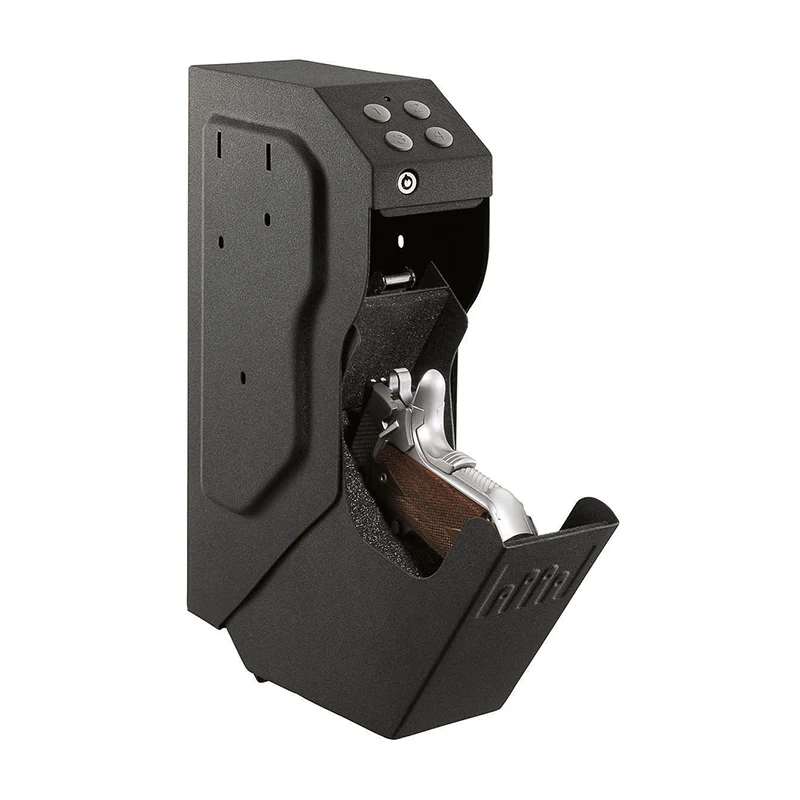
Best Overall: Vaultek DS2i ($299-$349)
The Vaultek DS2i is the most feature-rich bedside safe on the market. Biometric fingerprint scanner (stores 20 fingerprints), backlit keypad, Bluetooth app control, interior LED lighting, anti-impact latches, and a rechargeable lithium-ion battery that lasts months. It holds 2 full-size handguns with room for spare magazines. The build quality is excellent — 14-gauge steel body with anti-pry construction. The app lets you check battery status, review access logs, and configure settings remotely.
Best Budget: GunVault SpeedVault SV500 ($129-$149)
The SpeedVault mounts to the side of your nightstand, desk, or bed frame and drops your handgun into your hand in a single motion. The biometric scanner is fast, the drop-down design is intuitive under stress, and at under $150, it is the most affordable reliable quick-access option. It holds one full-size handgun. The trade-off: the mounting bracket must be screwed into furniture, and the steel is thinner than the Vaultek.
Best Under-Bed: Stealth Defense Vault DV652 ($249-$299)
The DV652 slides under your bed and holds 2 AR-15s or shotguns plus handguns. Heavy-duty steel construction, foam-lined interior, and both electronic keypad and key backup access. The slide-out drawer design lets you access firearms without getting on the floor. If your home defense plan includes a long gun staged in the bedroom, this is the best way to store it securely and accessibly.
For more biometric and quick-access options, see our best biometric gun safes guide.
Gun Safe Organization and Interior Setup
A disorganized safe is frustrating to use and wastes space. Here is how I set up my safes for maximum efficiency:
Door organizer. Many quality safes include a door-mounted panel with holsters and pockets. This is the best place for handguns — they are visible, accessible, and do not take up shelf space. If your safe does not include one, aftermarket door organizers from Liberty, Browning, and Stealth are available for $50-$100.
Rifle arrangement. Place your most-used rifles in the front. Alternate barrel direction (muzzle left, muzzle right) to fit more guns without scopes clashing. If you have scoped rifles, consider a single-gun rack system that prevents stock-to-scope contact.
Dehumidifier. This is mandatory. Moisture inside a sealed safe causes rust and corrosion, even in dry climates. A rechargeable silica gel dehumidifier (Eva-Dry E-333 or E-500, $25-$30) absorbs moisture and can be “recharged” in an oven every few weeks. For larger safes or humid climates, a GoldenRod electric dehumidifier ($25-$40) maintains constant low humidity using gentle heat. I use both — silica gel as backup and a GoldenRod as primary.
Lighting. A battery-powered LED light strip ($15-$20) with a motion sensor or door-activated switch makes it easy to see inside the safe. Many premium safes include factory lighting, but aftermarket strips are brighter and easy to install with adhesive backing.
Valuables storage. Your gun safe is also the best place in your home for important documents, jewelry, cash, hard drives, and irreplaceable items. Use a small fireproof document bag ($15-$20) inside the safe for extra protection. Many gun owners store more non-firearm valuables in their safe than firearms.
Gun Safe Placement: Where to Put Your Safe
The ideal location for a gun safe considers security, fire protection, access, and structural support:
Ground floor or basement. Safes are heavy (350-800+ pounds for a quality full-size unit). Placing them on the ground floor or in a basement eliminates floor load concerns. Basements also stay cooler during fires, giving your safe’s fire rating more effective time.
Interior wall, corner placement. An interior wall corner gives you two walls for back and side bolting, limits attack angles to the front, and provides some fire protection from the surrounding structure. Avoid exterior walls — they are exposed to direct fire and weather.
Closet installation. A walk-in closet is ideal — it conceals the safe from casual visitors, limits access to a narrow doorway, and allows you to bolt to the back wall and floor. Many gun owners build their safe room around a closet location.
Avoid garages. Garages are the most common entry point for burglars, experience extreme temperature swings (bad for humidity and ammunition storage), and are often the first part of a home to ignite in a fire. If you must put a safe in a garage, invest heavily in fire protection and climate control.
Gun Safe Budget Guide
Here is what you can realistically expect at each price point:
- Under $300: Bedside or quick-access safes only. Adequate for 1-2 handguns with biometric access. Not suitable for long gun storage. Examples: GunVault SV500, Amazon Basics quick-access.
- $300-$600: Entry-level full-size safes. Basic fire protection (20-30 minutes), 14-gauge steel, 12-18 gun capacity. Keeps kids out and deters casual theft. Examples: Stack-On Sentinel, Cannon 18-gun.
- $600-$1,200: The sweet spot. Real fire protection (30-60 minutes), 12-gauge steel, quality locking mechanisms, better interior organization, 24-36 gun capacity. Examples: Liberty Centurion, Winchester Big Daddy, Browning Sporter.
- $1,200-$2,500: Premium protection. 60-90+ minutes fire protection, 11-gauge steel, American-made, comprehensive bolt work, premium interiors. Examples: Liberty USA series, Liberty Fatboy, Browning ProSteel.
- $2,500+: Professional-grade. 90-150+ minutes fire protection, 10-gauge steel or thicker, commercial-grade locks, extreme security. Examples: Fort Knox Protector, American Security BF series, Sturdy Safe.
My advice: Buy the most safe you can afford. You will never regret buying too much protection. The difference between a $500 safe and a $1,000 safe is substantial — it is worth stretching your budget if you can. Our best gun safes under $1,000 guide finds the best value in the most popular price range.
Common Gun Safe Mistakes to Avoid
- Not bolting the safe down. An unbolted safe is a heavy box. A bolted safe is a security fixture. Bolting takes 30 minutes and makes the difference between a determined thief leaving empty-handed and wheeling your entire collection out the door.
- Buying too small. Your collection will grow. Your safe will not. Buy at least 50% more capacity than your current collection — you will thank yourself in two years.
- Skipping the dehumidifier. Rust inside a sealed safe is devastatingly common and completely preventable. A $25 dehumidifier protects thousands of dollars in firearms. Every safe needs one.
- Trusting manufacturer gun counts. A “24-gun safe” does not hold 24 guns with scopes, lights, and accessories. Reduce the manufacturer count by 30-40% for a realistic number.
- Ignoring delivery logistics. A 500-pound safe does not go up stairs easily. Plan your delivery route, measure every doorway, and hire professional safe movers if needed ($150-$300 is worth not destroying your back or your home).
- Sharing your combination. Only people who genuinely need access should have the combination. This includes not posting photos of your safe on social media — you are advertising what is inside it.
Frequently Asked Questions
What is the best gun safe brand?
Liberty Safe offers the best combination of quality, fire protection, and value across all price points. Fort Knox builds the most security-focused safes. Browning and Winchester/Amsec are also excellent. For bedside safes, Vaultek leads the market. Avoid no-name safes from Amazon — the electronic locks fail quickly and the steel is often misrepresented.
Do I need a fire-rated safe?
Yes. House fires are far more common than home invasions. A fire-rated safe with at least 30 minutes of protection at 1,200°F is the minimum. If you live in a rural area with longer fire department response times, 60+ minutes is strongly recommended. The cost difference between a fire-rated and non-fire-rated safe is small compared to the value of your firearms collection.
Can I put a gun safe upstairs?
It depends on the safe’s weight and your floor construction. Most residential floors can support 40 pounds per square foot. A 500-pound safe on a 4-square-foot footprint is 125 pounds per square foot — exceeding the standard. Place heavy safes against load-bearing walls, over floor joists (not between them), and ideally on the ground floor or basement. Consult a structural engineer if you are unsure.
Electronic lock or mechanical dial?
Mechanical dial locks never need batteries and last virtually forever. Electronic locks are faster and allow multiple codes. For a safe you access daily, electronic is more convenient. For long-term storage or maximum reliability, mechanical wins. Either way, choose a quality lock from S&G, SecuRam, or LaGard — a cheap electronic lock is the weakest point of many budget safes.
How do I move a gun safe?
Hire professional safe movers. Seriously. A 500-pound safe on a hand truck going down stairs is genuinely dangerous. Professional movers have the equipment (stair-climbing dollies, furniture pads, straps) and experience. Expect to pay $150-$400 depending on distance, stairs, and safe weight. The alternative is hospital bills and a crushed hand. Remove all firearms and contents before moving to reduce weight.
Are gun safes required by law?
Requirements vary by state. Some states (California, Connecticut, Massachusetts, New York, and others) require firearms to be stored securely, especially in households with minors. Even in states without mandates, negligent storage can result in civil and criminal liability if an unsecured firearm is accessed by a child or unauthorized person. Check your state’s gun laws for specific requirements.
What should I store in my gun safe besides guns?
Your gun safe is likely the most secure and fire-resistant container in your home. Use it for: important documents (birth certificates, passports, titles, insurance policies), jewelry and precious metals, external hard drives and USB drives with irreplaceable data, emergency cash, prescription medications you want to keep from children, and ammunition (though large quantities of ammo are heavy — consider a separate ammo storage solution).
Final Thoughts
A gun safe is not an accessory — it is a responsibility. If you own firearms, you owe it to your family, your community, and yourself to store them securely. The right safe depends on your collection size, your budget, and your access needs, but any safe is better than no safe.
Start with a quality bedside safe for your home defense handgun and work toward a full-size safe as your collection grows. Bolt it down, add a dehumidifier, and keep the combination to yourself. It is the most boring purchase you will ever make — and the most important.
Browse our best gun safes roundup for detailed reviews, or check the best safes under $1,000 for the top values. If quick access is your priority, our biometric gun safes guide covers the best options. And for creative concealment, see our best hidden gun safes. For your firearms themselves, use our price comparison tool to find the best deals, and check out our handgun buyer’s guide and AR-15 buyer’s guide for help choosing your next firearm.