
Last updated September 2026 · By Nick Hall, who has worn issued ECWCS layers through a lot of cold mornings and still sleeps under a poncho liner on every camping trip
Affiliate disclosure: USA Gun Shop is reader-supported. When you buy through links on our site, we may earn an affiliate commission at no extra cost to you. Full disclaimer.
Military surplus is the best-value clothing and gear I own, and it isn’t close. My poncho liner has lived behind the truck seat for years. A Gen III grid fleece top is the first layer I grab for a November deer stand. And the steel ammo cans in my garage hold everything from batteries to the first aid kit, because nothing else I’ve bought seals as well for the money.
The catch is that “military surplus” covers everything from new, still-bagged issue gear to worn-out castoffs to commercial copies that were never near a military contract. This guide covers what’s worth buying, why new or unissued is the smart default for clothing and gear, how to read the tag so you know what you’re holding, and where to buy it online.
Table of Contents
How we tested: Every pick here is ranked against our testing methodology. Minimum round counts, accuracy and reliability protocols, the failures that disqualify a gun. Where we have not shot a specific variant ourselves, we say so in that section.
What Military Surplus Actually Is (and What It Isn’t)
Real surplus is property the military bought, then no longer needed. The Defense Logistics Agency’s Disposition Services handles the disposal, and the stuff the public can buy is mostly coded DEMIL A, meaning it needs no demilitarization before sale. Clothing, packs, cans and camp gear sit squarely in that bucket. DLA sells through contracted partners such as GovPlanet, mostly in bulk lots, and dealers break those lots down and resell them. That’s why the same field jacket turns up at five stores at once.
Not everything sold as surplus came from that pipeline, though. Here’s how the labels you’ll see actually break down:
| Label | What it means | Should you buy it? |
|---|---|---|
| New / New Unissued | Made on a military contract, never issued to a service member. Often still bagged with the tag. | Yes. This is the sweet spot. |
| Grade 1 | Unissued or barely used. Minor storage marks at most. | Yes. |
| Grade 2 / Used | Issued and worn. Serviceable, but expect fading, small stains or repairs. | Only for hard goods where wear doesn’t matter. |
| Grade 3 | Heavy wear. Broken zippers, missing snaps, holes. | No, unless you want parts or a project. |
| “GI type” / “Mil-spec” | New commercial gear built to the military pattern. Rothco, Mil-Tec, Fox Outdoor and Tru-Spec sell a lot of it. | Often, yes. Just know it isn’t issue gear. |
| “Military style” | A look, not a spec. Could be anything. | Judge it like any civilian product. |
That last pair matters more than people think. A “GI type” ALICE pack from a commercial maker can be perfectly good gear, and it’s new. But it isn’t surplus, and it shouldn’t carry a surplus price premium. When a listing says “U.S. Military Surplus” or names the issuing country, that’s the real thing. When it says “style” or “type,” it’s a copy.
New vs Used: Why I Buy Surplus Clothing New
There’s no official grading standard for surplus. Every seller sets its own, which is why one store’s Grade 1 can look like another store’s Grade 2. MidwayUSA grades 1 through 3 in the product title. Sportsman’s Guide uses plain words: New, Like New and Used. Read the title, then read the photos.
My rule is simple. Anything that touches skin or feet, I buy new or unissued. Base layers, fleece, socks, boots and gloves all take on the shape and the smell of whoever wore them, and a worn-out boot is molded to somebody else’s stride. The price gap between new and used surplus clothing is small, often a few dollars, and new still undercuts the civilian equivalent by a wide margin.
The honest exception is hard goods. A Grade 2 steel ammo can with a good gasket seals exactly like a new one, and a canteen doesn’t care who drank from it first. Even there, I’d rather pay a few dollars more for Grade 1 and skip the dents.
How to Read a Military Tag: The NSN Decoder
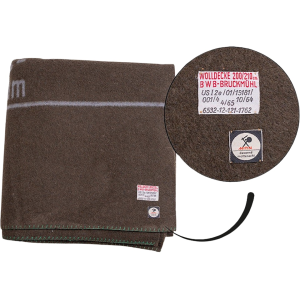
Genuine US issue clothing carries a sewn-in label with a National Stock Number (NSN), a contract number and a size. Once you know how to read them, a real tag tells you what the item is, who codified it and whether the size will fit. Hardly any surplus guide explains this, and it’s the fastest way to spot a fake.
An NSN is 13 digits, written XXXX-XX-XXX-XXXX. The first four digits are the Federal Supply Class, which tells you the category:
| First 4 digits (FSC) | Category | You’ll see it on |
|---|---|---|
| 8405 | Outerwear, men’s | Field jackets, uniform coats and trousers |
| 8415 | Clothing, special purpose | ECWCS layers, cold weather and flame-resistant gear |
| 8430 | Footwear, men’s | Combat and jungle boots |
| 8465 | Individual equipment | Packs, pouches, canteens, sleeping bags, e-tools |
The next two digits are the country code of the NATO codification bureau that assigned the number. That’s how you confirm foreign surplus is what the listing says it is:
- 00 or 01: United States
- 12: Germany
- 13: Belgium
- 14: France
- 15: Italy
- 16: Czech Republic
- 17: Netherlands
- 20 or 21: Canada
- 99: United Kingdom
So a jacket tagged 8415-01-something is US special-purpose clothing, and a pack tagged 8465-12-something is German individual equipment. The contract number is the other giveaway. Current US clothing contracts run through DLA Troop Support in Philadelphia and carry the SPE1C1 prefix. Sizes read as a pair, like Medium-Regular, and the label prints the height and chest range each one fits, which is handy when you’re buying online without trying anything on.
A “GI type” commercial item won’t have an NSN or a contract number, and that’s fine as long as it isn’t priced like issue gear. A tag with misspellings, the wrong format or an NSN that doesn’t match the item’s category is the one to walk away from.
9 Pieces of Military Surplus Worth Buying New
These are the surplus items I’d buy again tomorrow. Each one has a live price card pulling new-condition listings from across 200+ retailers, with used and Grade 2 rows filtered out.
| Item | Why it earns a spot | Price |
|---|---|---|
| ECWCS Gen III layers | A complete cold weather system, sold piece by piece | Check price ↓ |
| Poncho liner | The most useful blanket you’ll ever own | Check price ↓ |
| M-65 field jacket | Sixty years of proven design | Check price ↓ |
| Wool blanket | Warm when damp, won’t melt near a fire | Check price ↓ |
| Jungle boots | Drains and dries fast in hot, wet country | Check price ↓ |
| MOLLE assault pack | A day pack you can rebuild around any job | Check price ↓ |
| Steel ammo cans | Gasket-sealed storage for almost anything | Check price ↓ |
| Canteen and cup | Carry water, then boil it in the same kit | Check price ↓ |
| Entrenching tool | A folding shovel that rides in a pack | Check price ↓ |
1. ECWCS Gen III Layers
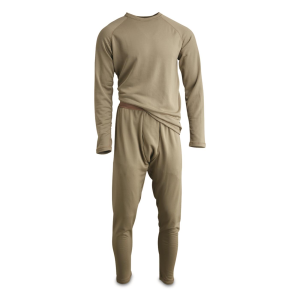
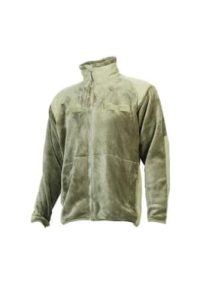
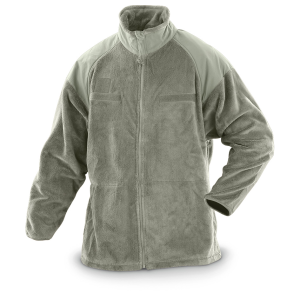
The Extended Cold Weather Clothing System is the smartest thing the Army ever sold off. Gen III is a seven-level layering system, and you can buy each level separately and build only what your climate needs:
- Level 1: lightweight base layer, top and bottom, for wicking sweat
- Level 2: midweight grid fleece base layer, the one I wear most
- Level 3: high-loft fleece jacket, the main insulating layer
- Level 4: wind jacket
- Level 5: soft shell jacket and trousers
- Level 6: waterproof cold/wet weather parka and trousers
- Level 7: heavily insulated PrimaLoft parka and trousers for standing still in serious cold
Start with Level 2. The grid fleece traps warm air against your skin while still letting sweat move out, and I’ve worn the same top under a hunting jacket from October to March. Sportsman’s Guide regularly lists genuine Gen III Level 2 sets as New, which is exactly how you want to buy a base layer. Tru-Spec sells commercial ECWCS pieces cut to the same pattern if you can’t find your size in surplus.
Pros
- Buy only the levels you need
- Level 2 fleece is incredibly versatile
- New sets are easy to find
Cons
- Sizing runs long in the body
- Level 7 is overkill for most
- Tan and gray colors look military
Best For: hunters, winter campers and anyone who wants a real layering system for a fraction of civilian prices.

2. Poncho Liner (the Woobie)
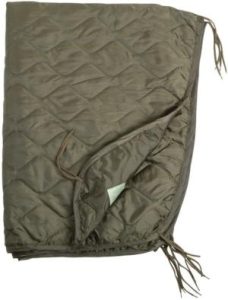
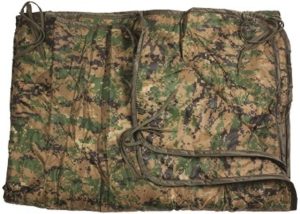
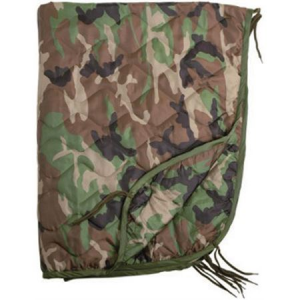
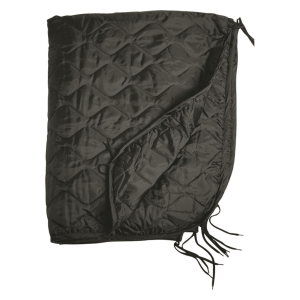
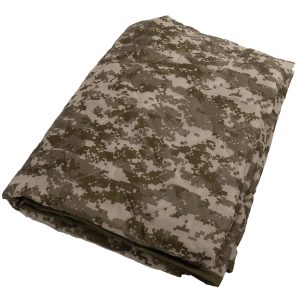
Ask ten veterans what they kept from their service and half will say the woobie. It’s a thin quilted nylon blanket, about 62 by 82 inches, with ties on the edges so it can snap inside a rain poncho. On its own it’s a blanket, a sleeping bag liner, a car blanket and a picnic throw. It packs down smaller than a loaf of bread and dries in an hour.
Mine goes camping on every trip, gets thrown over my knees in a deer stand and lives in the truck from November on. The only thing it doesn’t do well is fire: nylon melts, so keep it back from the flames.
Pros
- Packs small, weighs almost nothing
- Dries fast after rain
- Doubles as a sleeping bag liner
Cons
- Nylon melts near open flame
- Not warm enough alone in winter
- Camo patterns vary by maker
Best For: campers, hunters and anyone who wants one blanket that does five jobs.
3. M-65 Field Jacket
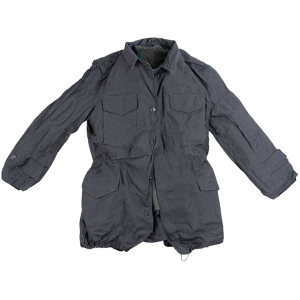
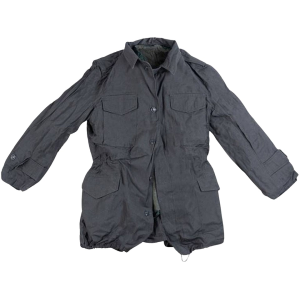
The M-65 is named for the year it was adopted, 1965, and the design has barely changed since. It’s a wind-resistant cotton-blend shell with four big snap pockets, a hood that rolls away inside the collar and buttons for a zip-in liner. Add the liner and it’s a real winter coat. Take it out and you’ve got a three-season jacket that shrugs off brush.
Genuine US-issue M-65s are getting scarce, so foreign-issue versions are where the value is now. MidwayUSA stocks Greek M-65s graded 1, and Propper, a longtime military uniform contractor, sells new ones cut to the original pattern.
Pros
- Stands up to brush and barbed wire
- Liner makes it a winter coat
- Hood hides in the collar
Cons
- Heavy compared to modern shells
- Not waterproof in steady rain
- Liner often sold separately
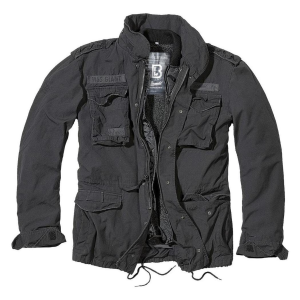
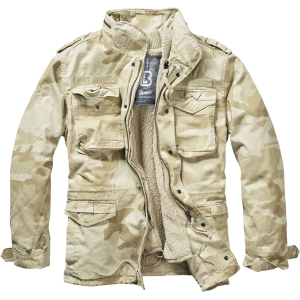
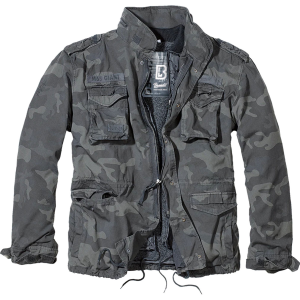
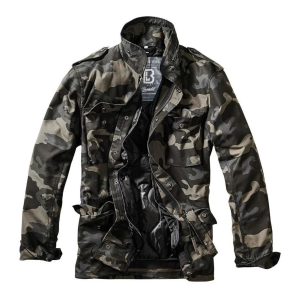
Best For: an everyday outdoor coat that will outlast anything from a mall store. More jackets and coats are in the Sportsman’s Guide surplus jackets section.
4. Wool Blanket
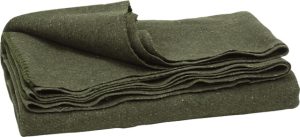
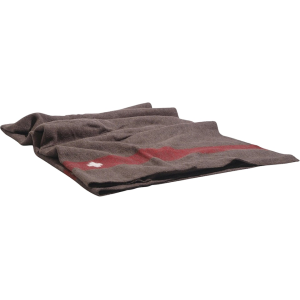
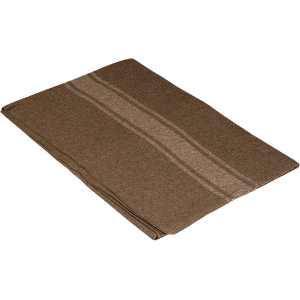
Wool stays warm when it’s damp, and a spark that lands on it smolders instead of melting a hole. That’s why every army in Europe issued wool blankets for a century, and why they’re still my choice around a campfire. I keep one in the truck and one folded over the back of the couch.
Foreign surplus is the best source. German, Swiss and Italian army blankets are dense, heavy and built to last decades. Commercial versions in the military pattern are cheaper and lighter, and they’re fine for the car.
Pros
- Warm even when damp
- Safe around campfire sparks
- Lasts for decades
Cons
- Heavy and bulky to pack
- Scratchy against bare skin
- Needs airing out when new
Best For: vehicle kits, cabins and campfire nights.
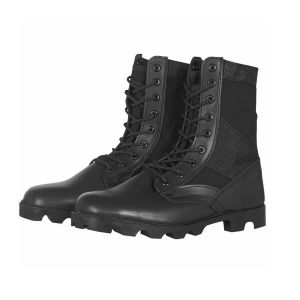
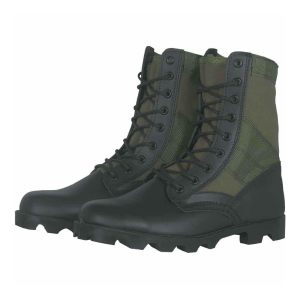
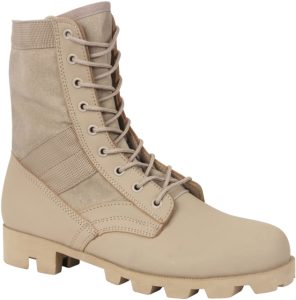
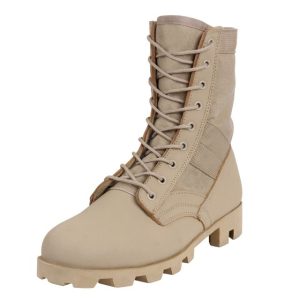
5. Jungle Boots
Jungle boots are the Vietnam-era answer to wet feet: canvas uppers, leather lowers and drain vents near the instep so water runs out instead of sloshing around. They dry faster than any leather boot and they’re light enough to wear all day in heat.
Boots are the one thing I never buy used. A worn boot has taken the shape of someone else’s foot, and the break-in you’d be buying is theirs, not yours. Buy them new. Fox Outdoor’s version is a budget pick, and the Rocky S2V jungle boot is the modern issue-grade option. For cold or rough country, look at our best hunting boots instead.
Pros
- Drains and dries fast
- Light for hot, wet country
- New pairs are affordable
Cons
- No insulation for cold weather
- Canvas uppers wear through eventually
- Sizing varies between makers
Best For: hot, wet climates, river crossings and swampy hunting ground. The full range is in the Sportsman’s Guide surplus boots section.
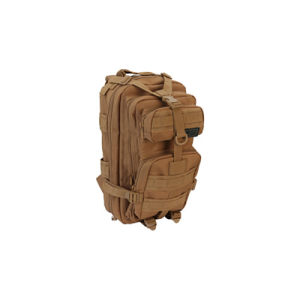
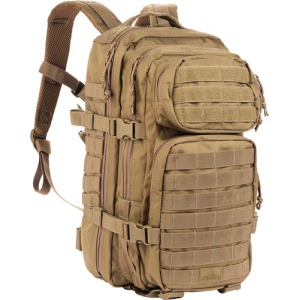
6. MOLLE Assault Pack
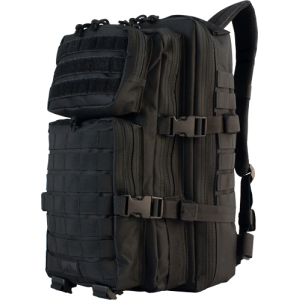
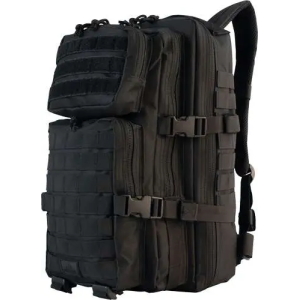
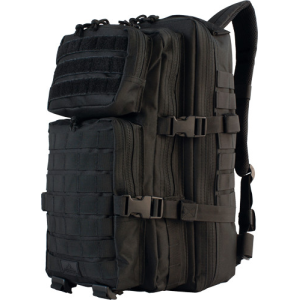
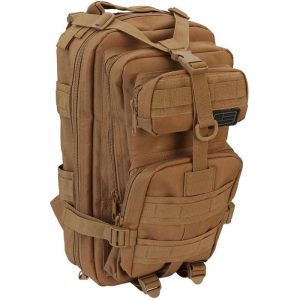
MOLLE stands for Modular Lightweight Load-carrying Equipment. The key is the PALS webbing: rows of 1-inch nylon strap spaced 1 inch apart and bar-tacked every 1.5 inches, so any MOLLE pouch from any maker weaves on and locks down. That lets you build one pack for hunting, another for your truck kit and a third for a range bag, all from the same parts.
The MOLLE II 3-Day Assault Pack is the one to know. It’s big enough for an overnight trip and small enough for a day hunt. If you want the old-school option, the ALICE pack (All-purpose Lightweight Individual Carrying Equipment) was the Army’s pack from the 1970s on, and new “GI type” ALICE packs with frames are easy to find. More options are in the Sportsman’s Guide surplus packs and bags section.
Pros
- Every MOLLE pouch fits
- Tough nylon, heavy stitching
- Right size for overnight trips
Cons
- Heavier than civilian daypacks
- Minimal padding on the straps
- ACU camo looks dated now
Best For: a do-anything day pack or the foundation of a bug-out bag. Hunters who want more suspension should see our best hunting backpacks.

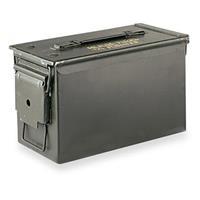
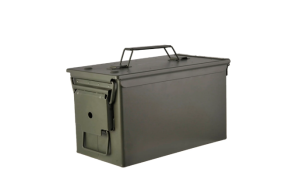
7. Steel Ammo Cans
A military ammo can is a steel box with a rubber gasket in the lid and a cam latch that squeezes it shut. That seal keeps out water, dust and bugs better than any plastic tote I’ve bought. The M19A1 is the .30 cal can, the M2A1 is the bigger .50 cal can, and both stack neatly on a garage shelf.
Mine hold ammunition, sure, but also batteries, a first aid kit, paperwork and the emergency supplies in the photo above. Check the gasket first. A cracked or missing seal turns the can into an ordinary box. That’s why I buy Grade 1, where the gasket is almost always good.
Pros
- Gasket seals out water and dust
- Stacks cleanly, carries easily
- Nearly indestructible steel
Cons
- Heavy when full
- Check the gasket before trusting it
- Paint chips on rough handling

Best For: ammo, batteries, documents and emergency kit storage. The Sportsman’s Guide ammo cans and military storage section carries every size.
8. Canteen and Canteen Cup
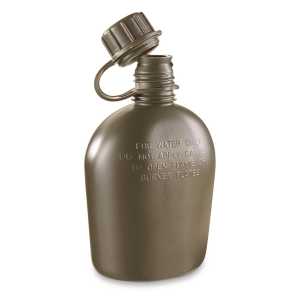
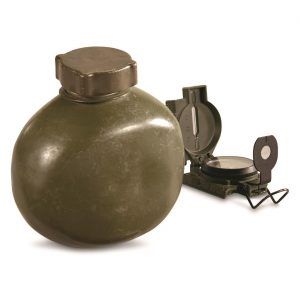
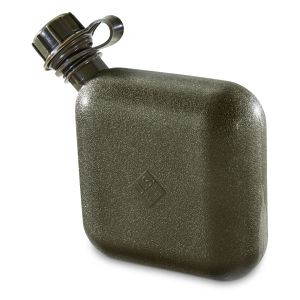
The GI 1-quart canteen nests into a steel canteen cup, and together they’re a water bottle and a cook pot in one. Fill the canteen, then boil water or heat coffee in the cup right on the coals. Collapsible 2-quart bladder canteens hold more and roll flat when they’re empty.
New plastic canteens are cheap enough that there’s no reason to buy one somebody else drank from for years. Old ones also carry that plastic taste that never fully washes out.
Pros
- Canteen and cook pot in one
- Cup nests under the canteen
- Cheap to buy new
Cons
- Plastic canteens hold odors
- One quart runs out fast
- Cup handle gets hot
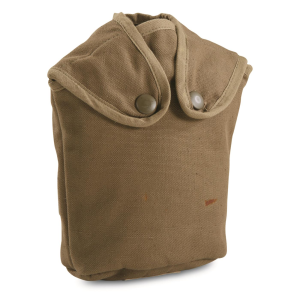
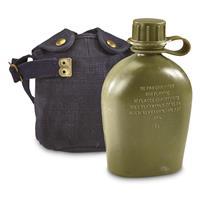
Best For: campers and hunters who want water and a way to boil it in one kit.
9. Entrenching Tool
The tri-fold entrenching tool is a full shovel that folds into a pouch about the size of a hardback book. It digs a fire pit, clears a tent site, chops roots and gets a truck out of a snowbank. It’s the one tool I’ve used in every season.
Surplus e-tools vary a lot in condition, and a worn locking collar lets the blade fold while you dig. Buy new. SOG makes a good commercial version with a serrated edge.
Pros
- Folds small, rides on a pack
- Digs, chops and pries
- Locks at several angles
Cons
- Worn collars let blades slip
- Heavy for backpacking
- Short handle means more bending

Best For: vehicle kits, camp chores and winter driving.
One more worth knowing: the Modular Sleep System, a green patrol bag, a black intermediate cold weather bag and a waterproof bivy cover that stack together. It’s among the best sleeping setups the military has ever issued. New sets are rare, so this is the one place I’d consider a clean Like New set. Check the Sportsman’s Guide military camping section for what’s in stock.
Foreign Surplus: Where the Real Bargains Are

American surplus gets the attention, but European armies sell off huge stocks of well-made gear, and much of it has never been worn. Switzerland in particular stored decades of equipment it never used. That’s why Swiss snow ponchos, wool blankets and even leather bicycle bags turn up in Grade 1.
- Germany: flecktarn camo parkas, wool blankets and some of the best-made rucksacks and duffels you can buy
- Switzerland: snow ponchos, alpenflage M70 field pants, wool blankets and leather goods, much of it unissued
- Britain: MTP camo field shirts and jackets, lined mittens and canteens
- Czech Republic and Belgium: parkas, waterproof pants and M95 fleece jackets, often sold New
- Italy and Romania: wool blankets, rucksacks and haversacks at rock-bottom prices
MidwayUSA has the widest foreign surplus selection graded in the title, and its military surplus listings are worth scrolling just to see what’s come in. Sportsman’s Guide tags foreign pieces as New, Like New or Used. Use the NSN country code above to confirm the origin.
What I’d Skip
- Used boots and socks. Buy these new, every time.
- Used body armor. Plates and soft armor have service lives, and you can’t see damage from the outside. If you need armor, buy it new. Our plate carrier guide covers the good options.
- Gas masks and filters of unknown age. An old filter is a question mark you’re breathing through.
- Old MREs. Shelf life depends on how hot they were stored, and a surplus seller rarely knows.
- Anything priced as surplus that says “style.” It’s a commercial copy. Pay the commercial price.
Where to Buy Military Surplus Online

A local surplus store is still the best place to try on clothing. For everything else, these are the sources I use and what each one is good for:
| Seller | Best for | Condition labels |
|---|---|---|
| Sportsman’s Guide | The deepest US and foreign surplus catalog online, from clothing to ammo cans | New, Like New, Used |
| MidwayUSA | Foreign surplus in bulk, especially German, Swiss and British | Grade 1, 2, 3 and New Unissued |
| Optics Planet, Palmetto State Armory | New “GI type” gear from Rothco, Propper and others | New commercial |
| Gritr, The Real Grit | Fox Outdoor and Tru-Spec pattern clothing and boots | New commercial |
| GovPlanet | DLA’s own sales channel, mostly bulk lots and vehicles | As-is lots |
Start with the Sportsman’s Guide military clothing section if you’re buying layers, and filter by New. Its Buyer’s Club membership knocks a little more off, which adds up if you’re outfitting a family. GovPlanet is interesting to browse, but its lots are sized for resellers, not for one jacket.
If you’re after surplus rifles instead of gear, that’s a different market with its own rules. Start with our used and surplus rifles page and our guide to buying vintage guns online.
FAQ
Is military surplus clothing actually new?
A lot of it is. Items listed as New or New Unissued were made on a military contract and never issued to a service member, often still in the original bag. Grade 1 is unissued or barely used. Grade 2 and Used mean the item was issued and worn. For clothing, boots and anything that touches skin, buy New or Grade 1.
What do Grade 1, Grade 2 and Grade 3 mean on military surplus?
There is no official standard, so every seller grades a little differently. In general, Grade 1 is unissued or like new, Grade 2 is issued and worn but fully serviceable, and Grade 3 has heavy wear such as broken zippers, missing snaps or holes. MidwayUSA puts the grade in the product title; Sportsman's Guide uses New, Like New and Used.
How can I tell if military surplus is real?
Check the tag. Genuine US issue clothing carries a 13-digit National Stock Number, a contract number and a two-part size such as Medium-Regular. The first four NSN digits give the category (8415 is special-purpose clothing, 8465 is individual equipment) and the next two give the country (00 or 01 for the United States, 12 for Germany, 99 for the United Kingdom). Current US clothing contract numbers carry the SPE1C1 prefix. Items sold as GI type or military style are commercial copies.
Where is the best place to buy military surplus online?
Sportsman's Guide has the deepest US and foreign surplus catalog and labels condition as New, Like New or Used. MidwayUSA is strongest on foreign surplus graded 1 to 3. Optics Planet, Palmetto State Armory and Gritr sell new GI-type gear from brands like Rothco, Propper, Fox Outdoor and Tru-Spec. GovPlanet is the Defense Logistics Agency's own sales channel, but it mostly sells bulk lots.
Is it legal to wear military surplus clothing?
Yes. Civilians wear field jackets, ECWCS fleece and surplus boots every day. The line is wearing a full uniform with rank, unit insignia or awards to pass yourself off as a service member, which federal law restricts. Remove rank and unit patches from anything you plan to wear.
Is military surplus better than civilian outdoor gear?
For the money, yes. Surplus is built to military specifications for hard use, and new-condition surplus often costs a fraction of comparable civilian gear. Civilian gear wins on weight and fit. A Gen III grid fleece, a poncho liner and a steel ammo can are hard to beat at any price.
4,969+ Gun & Ammo Deals
Updated daily from 200+ top retailers. Filter by category, caliber, action type, and price.
Related Guides