Last updated September 2026 · By Nick Hall, covers firearms industry news for USA Gun Shop
Quick take: SAAMI, the century-old body that writes the safety and dimensional standards behind American ammunition, voted in late June 2026 to open full voting membership to U.S. suppressor manufacturers and designers. It is a quiet bylaw change with real weight for buyers: the companies building your cans now get a formal seat at the table that sets industry standards, right as the 2026 suppressor rush takes off. SAAMI announced the change on June 29, 2026.
Table of Contents
The change is small on paper and large in practice
Suppressor makers can now hold the same voting status as gun and ammo companies. On June 29, 2026, the Sporting Arms and Ammunition Manufacturers’ Institute announced it had expanded eligibility for voting membership to U.S. companies that design or build sound suppressors. Until now, silencer makers could join only as non-voting associate or supporting members, while full voting seats were reserved for domestic makers of firearms, ammunition, and propellants. Under the new rule, eligible suppressor companies can also sit on the SAAMI Board of Directors. That means a direct hand in the standards SAAMI publishes, not just a view from the sidelines.
Deals of the Day
Today's best discounts · Updated 3x daily
Gun Deals
See All →
Ammo Deals
See All →



What SAAMI actually does
SAAMI is the reason a box of factory ammo fits and fires safely in your rifle. Founded in 1926 at the request of the federal government, the group develops voluntary industry standards for cartridge and chamber dimensions, maximum chamber pressures, and product safety. When a cartridge is called SAAMI spec, its case dimensions, pressure ceiling, and headspace are defined so that any maker’s ammo works in any maker’s chamber. That interchangeability is invisible when it works and dangerous when it does not. The standards are voluntary, yet nearly every serious American manufacturer builds to them, which is exactly why the system holds together.
Suppressors are the newest product on SAAMI’s bench
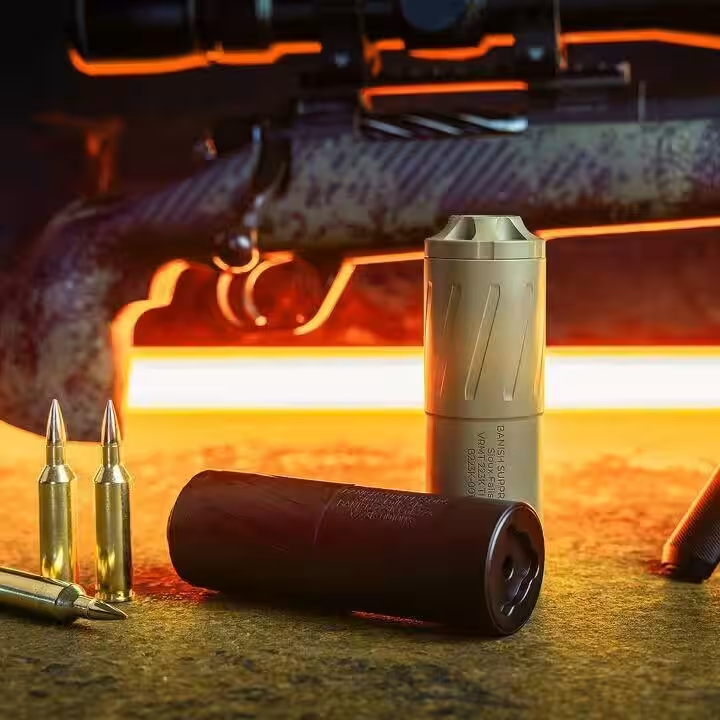
The institute only recently started writing rules for cans. In August 2025 SAAMI issued its first suppressor document, the Voluntary Industry Performance Standards Criteria for Firearm Sound Suppressors, after roughly eight years of testing and collaboration. It covers thread and socket dimensions, how a maker should communicate the cartridge a can is rated for, minimum barrel length, maximum firing cadence, rounds before a required cooling break, sound measurement procedures, bore-alignment checks, and overpressure and abuse testing. If you want the plain-English version of what those tests protect against, our guide on how suppressors work walks through the pressure and hot gas a can actually has to handle. Bringing the engineers who understand baffle stacks and blast chambers into voting membership means those people help write the specs that govern their own products.
The timing is not an accident
This lands in the middle of a suppressor buying surge. On January 1, 2026, the federal $200 transfer tax on suppressors dropped to $0 under the tax law passed in 2025, and demand jumped hard. The can itself is still a National Firearms Act item that requires an ATF Form 4 and a background check, so if you are new to the process our explainer on what the National Firearms Act covers lays out what still applies. With far more first-time buyers entering the market, and with entry-level pricing covered in our breakdown of how much a suppressor costs, an industry-wide safety and dimensional standard matters more than it did when cans were a niche purchase.
What it means for you as a buyer
For a buyer, this is quietly good news. More voices from the suppressor side inside SAAMI should push toward cans that are tested to a shared bar, labeled clearly for the cartridges and barrel lengths they handle, and built to thread and seal consistently across brands. Standardized thread patterns and honest cartridge ratings cut the odds of a mounting mismatch or a can rated below the round you run through it. None of it is mandatory, and a SAAMI reference is not a legal requirement to buy or own. But when the standards body and the companies building the product finally sit on the same side of the table, the gear that reaches your safe tends to get safer and better documented over time.
Frequently Asked Questions
What did SAAMI change in June 2026?
On June 29, 2026, SAAMI expanded voting-membership eligibility to include U.S. suppressor manufacturers and designers. Eligible suppressor companies can now hold full voting status and even sit on the SAAMI Board of Directors, rather than being limited to non-voting membership.
What is SAAMI?
SAAMI is the Sporting Arms and Ammunition Manufacturers' Institute, founded in 1926. It writes voluntary industry standards for cartridge and chamber dimensions, maximum chamber pressures, suppressors, and product safety so that ammunition and firearms from different makers work together safely.
Were suppressor makers already in SAAMI before this?
Yes, but only as non-voting members. Silencer companies could join under associate or supporting membership. The June 2026 change adds full voting membership, giving them a direct role in shaping the standards.
Does SAAMI already have suppressor standards?
Yes. In August 2025 SAAMI issued its first suppressor standard, the Voluntary Industry Performance Standards Criteria for Firearm Sound Suppressors, after about eight years of testing. It covers thread dimensions, cartridge ratings, sound measurement, bore alignment, and overpressure and abuse testing.
Why does a standards body for suppressors matter to me?
Shared standards push toward consistent thread patterns, clear cartridge and barrel-length ratings, and tested durability. That lowers the chance of a mounting mismatch or a can rated below the round you fire, which protects your gear and you.
Are SAAMI standards legally required?
No. SAAMI standards are voluntary, and there is no law forcing a maker to follow them or a buyer to look for them. In practice, most reputable American manufacturers build to SAAMI specs because interchangeability and safety are selling points.
Why is this happening now?
The federal $200 suppressor transfer tax dropped to $0 on January 1, 2026, driving a wave of first-time buyers. As the market grows fast, industry-wide safety and dimensional standards for cans become far more important.
Do I still need ATF paperwork to buy a suppressor?
Yes. Even with the $0 transfer tax, a suppressor is still a National Firearms Act item. You still file an ATF Form 4, pass a background check, and wait for approval before you can take possession.
4,015+ Gun & Ammo Deals
Updated daily from 200+ top retailers. Filter by category, caliber, action type, and price.