

Last updated October 27th 2026
Some of the links below are affiliate links, meaning at no additional cost to you, we may earn a commission if you click through and make a purchase.
By Nick Hall
There are two families of bullets: ones built not to expand, like full metal jacket, lead round nose, wadcutter and frangible, and ones built to expand, like hollow points, soft points, polymer-tipped, bonded and solid copper bullets. Non-expanding bullets are for practice and targets. Expanding bullets are for self-defense and hunting, because they open up and stop inside the target instead of zipping through.
Below is every common bullet type with how it’s built, what it’s for, a real load you can buy with live prices from our 200+ retailers on October 27, 2026, and our own ballistic gel numbers from the defensive loads we’ve tested. You’ll also find bullet shapes and bases, and the federal rules on armor-piercing ammo.
Table of Contents
How we tested: Every pick here is ranked against our testing methodology. Minimum round counts, accuracy and reliability protocols, the failures that disqualify a gun.
Bullet vs Cartridge: Getting the Words Right
A bullet is only the projectile, the part that leaves the barrel. The whole round you load is a cartridge: the bullet, the brass case, the powder and the primer. Shotguns fire shells loaded with shot or a slug. Saying “a box of bullets” is fine at the gun counter, but a box of bullets at a reloading shop is just projectiles. For how the primer lights the powder, see our rimfire vs centerfire guide.
Types of Bullets at a Glance
| Bullet type | How it’s built | Expands? | Best for | Example on this page |
|---|---|---|---|---|
| Full metal jacket | Lead core, copper jacket over the nose | No | Practice, plinking | Blazer Brass FMJ |
| Lead round nose | Bare lead, rounded nose | No | Cheap revolver practice | Magtech LRN |
| Wadcutter | Flat-fronted lead cylinder | No | Paper targets, some snub defense loads | none in stock |
| Frangible | Compressed copper powder | Breaks apart on steel | Steel targets, indoor ranges | SinterFire |
| Polymer coated | Lead core in a polymer skin | Practice versions no | Cleaner indoor practice | Syntech Defense |
| Jacketed hollow point | Jacket with a cavity in the nose | Yes | Self-defense | Federal HST |
| Bonded hollow point | Jacket bonded to the core | Yes, holds together | Defense through barriers | Speer Gold Dot |
| Polymer-tipped hollow point | Hollow point plugged with a polymer tip | Yes | Defense, short barrels | Critical Defense |
| Soft point | Jacket with exposed lead tip | Yes | Deer hunting | Core-Lokt |
| Polymer-tipped rifle | Pointed polymer tip over a cavity | Yes, fast | Long-range hunting | ELD-X |
| Bonded rifle | Jacket fused to the core | Yes, holds weight | Big game, tough shots | Federal Fusion |
| Solid copper | One piece of copper, hollow nose | Yes, petals | Lead-free hunting | Barnes VOR-TX |
| Match | Open-tip boat tail | Not reliably | Target and long range | Sierra MatchKing |
Non-Expanding Bullets
Full Metal Jacket
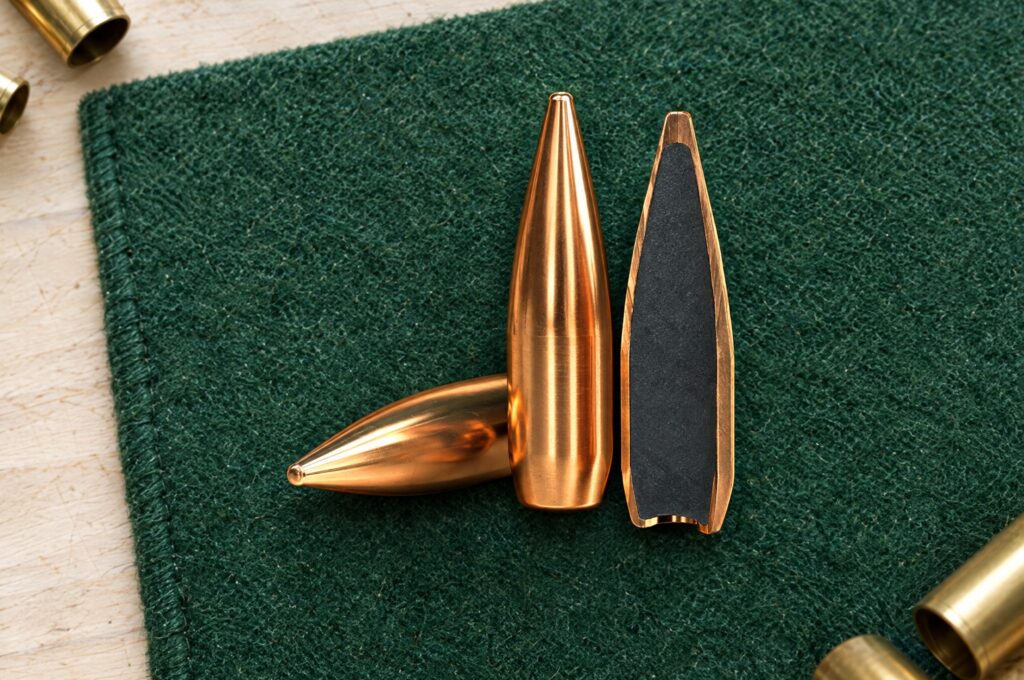
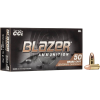
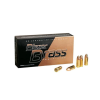
A full metal jacket bullet is a lead core wrapped in a copper or gilding-metal jacket that covers the nose and leaves the base open. It feeds smoothly, keeps lead off your hands and barrel, and holds its shape on impact, so it punches a narrow hole and keeps going. That makes FMJ the default practice round and a poor self-defense round. It’s also what the U.S. military uses, because it follows the 1899 Hague Declaration against expanding bullets in war.
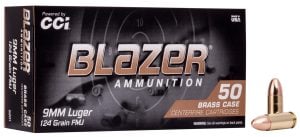
A total metal jacket, or TMJ, also covers the base, so there’s no exposed lead at all. Our CCI Blazer Brass review ran 10,330 rounds of FMJ through 45 guns with 8 stoppages.

Lead Round Nose and Cast Bullets
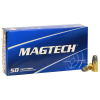
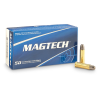
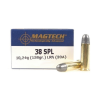
The oldest design still sold: a bare lead bullet with a rounded nose. Lead round nose, or LRN, is cheap and gentle on revolver barrels, which is why it’s the standard .38 Special practice load. Harder cast lead bullets, alloyed with tin and antimony, are popular with reloaders and in hard-cast hunting loads for bear country. Bare lead smokes more and leaves lead fouling in the bore, so many indoor ranges ban it.
Wadcutters and Semi-Wadcutters
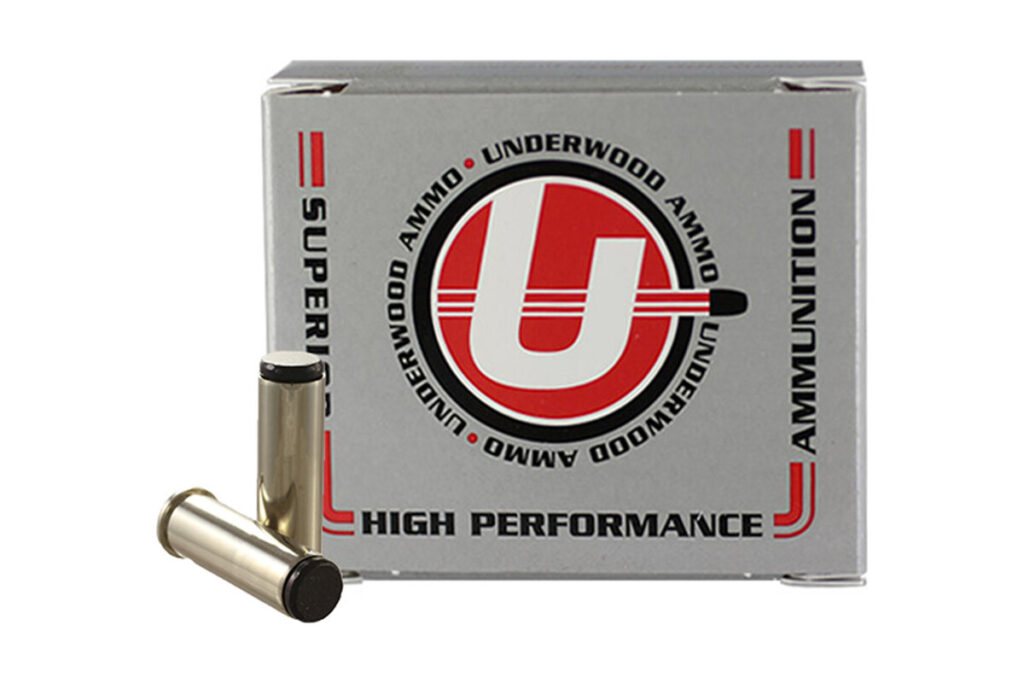
A wadcutter is a flat-fronted cylinder of lead seated flush with the case mouth. It cuts a perfectly round hole in paper, which makes scoring easy, and it’s the classic bullseye load for target revolvers. Some snub-nose owners carry a full-wadcutter load because it penetrates deeply without needing velocity to expand. A semi-wadcutter adds a cone-shaped nose in front of a sharp shoulder, for better feeding and a clean hole. None of the wadcutter loads were at our trusted retailers when I checked.
Frangible Bullets
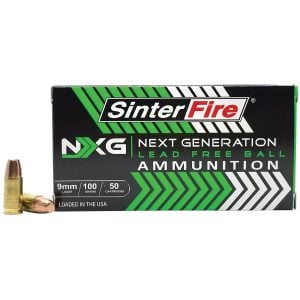
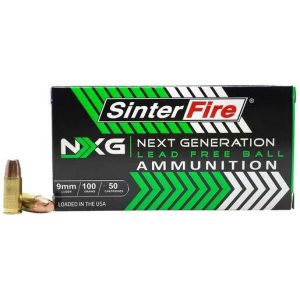
A frangible bullet is made from compressed copper or tin powder that holds together in flight and breaks into dust when it hits steel. That means far less splash-back on steel targets and close-range steel drills, and it’s why some indoor ranges require it. Federal law specifically excludes a frangible projectile designed for target shooting from the definition of armor-piercing ammo. SinterFire makes lead-free frangible ball for practice and a Special Duty frangible hollow point.


Polymer-Coated Bullets
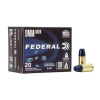
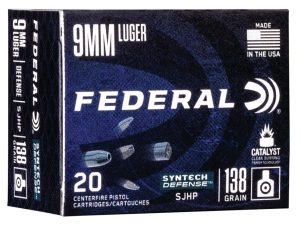
Federal’s Syntech line wraps a lead core in a polymer skin instead of copper. There’s no metal-on-metal contact with the barrel and no exposed lead, so it shoots cleaner and is easier on steel targets. Syntech Defense is the expanding version, with a segmented core that splits into three pieces plus a base. Our Federal American Eagle review compares Syntech to FMJ.

On-sale 9mm from 200+ retailers · Updated every 4 hours



On-sale 38 special from 200+ retailers · Updated every 4 hours
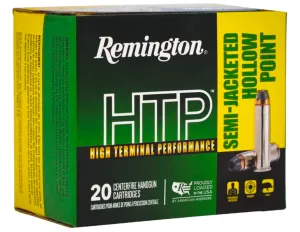
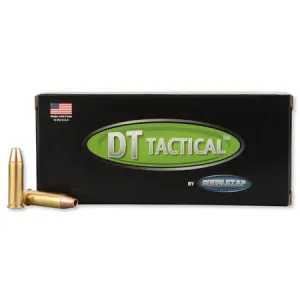
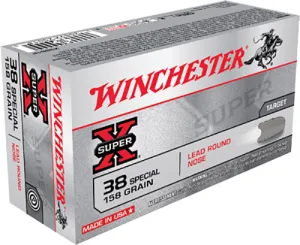


Expanding Handgun Bullets
Self-defense bullets are built to open up into a wider shape, slow down and stop inside the target. The FBI’s standard asks for 12 to 18 inches of penetration in ballistic gel, so a bullet reaches vital organs from any angle without over-penetrating. Every defensive load below was shot into gel in our tests, through four layers of heavy clothing from compact pistols.
Jacketed Hollow Points
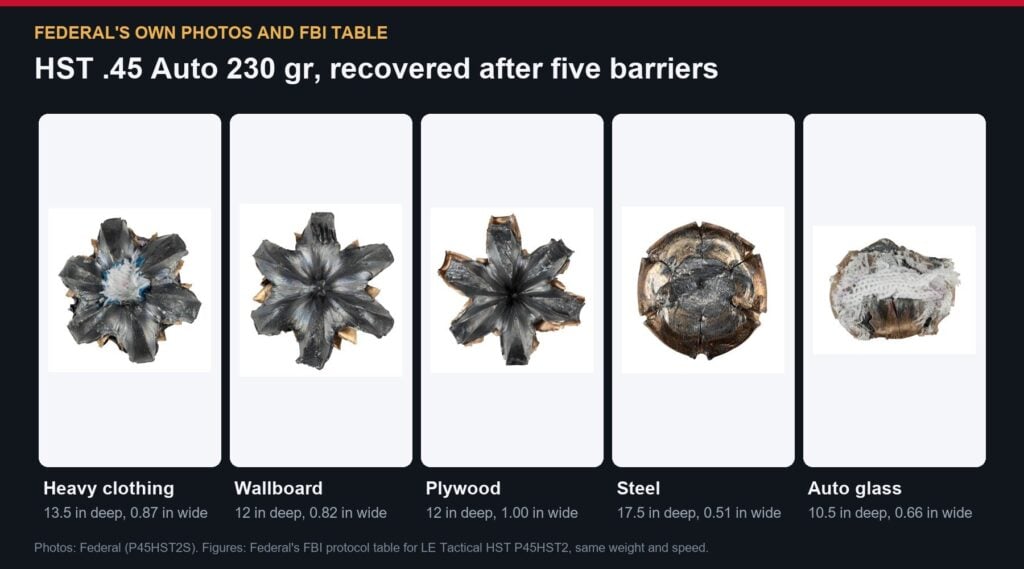
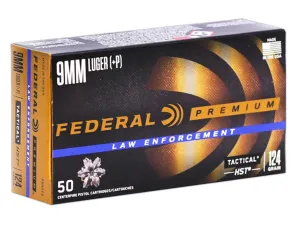
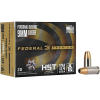
A jacketed hollow point, or JHP, has a cavity in the nose. When it hits tissue, fluid pressure in the cavity peels the jacket back into petals, and the bullet mushrooms to one and a half to twice its original width. Modern designs like Federal HST and Winchester Ranger T cut the jacket so it opens evenly every time, even after clothing clogs the cavity. In our 9mm test, HST 124 gr went 18.28 inches and opened to 0.61 inches, and Ranger T 147 gr was the widest 9mm load we shot at 0.74 inches. Our Federal HST review charts every shot.
Bonded Hollow Points
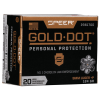
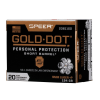
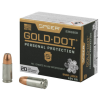
Speer plates the copper jacket onto the lead core, so the two cannot separate when the bullet hits glass, steel or bone. Bonded bullets keep more of their weight and expand more consistently through barriers, which is why so many police departments carry Gold Dot. In our test the 9mm 124 gr Gold Dot went 18.14 inches and opened to 0.54 inches. Our Speer Gold Dot review has the full table.

Polymer-Tipped Hollow Points
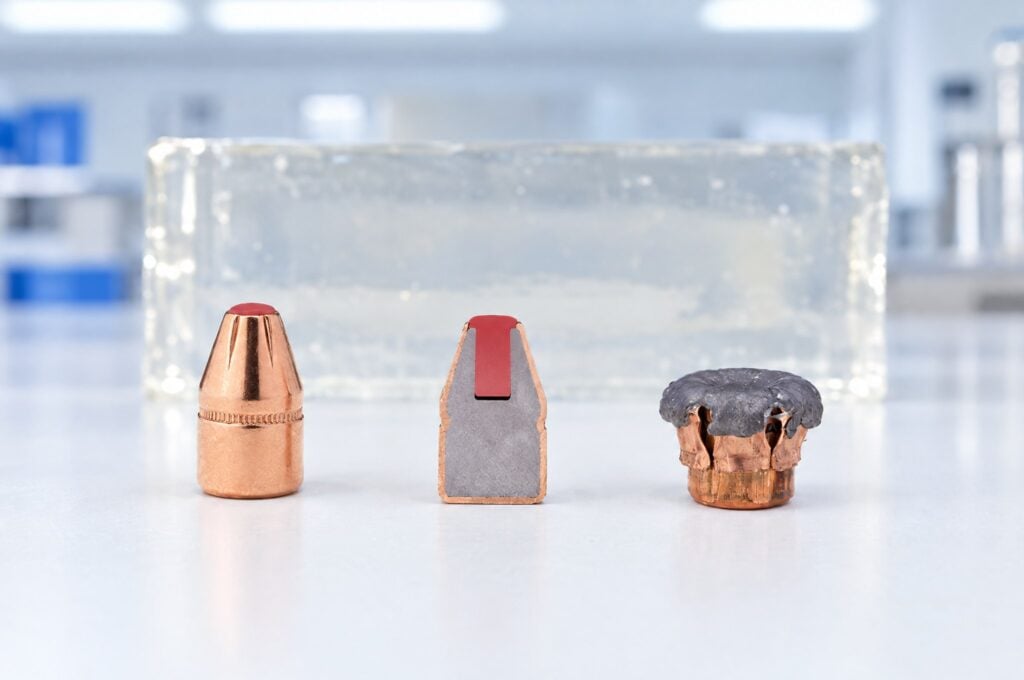
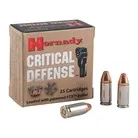
Hornady fills the cavity of its FTX bullet with a soft red polymer tip. The tip can’t clog with denim, and on impact it’s driven back into the cavity to start expansion, which helps at the lower speeds of a short barrel. Hornady Critical Defense 9mm 115 gr averaged 13.06 inches and 0.50 inches wide in our test, shallower than the HST but well inside the FBI window. Our Hornady Critical Defense review covers six calibers.
Our Gel Results by Bullet Type
Here’s how the defensive designs compared in our heavy clothing test from a 3.5 inch Smith & Wesson M&P9c, against the FBI’s 12 to 18 inch window:
| 9mm load | Bullet type | Average depth | Average width | Shots in 12 to 18 in |
|---|---|---|---|---|
| Federal HST 124 gr | Jacketed hollow point | 18.28 in | 0.61 in | 2 of 5 |
| Federal HST 147 gr | Jacketed hollow point | 15.24 in | 0.61 in | 4 of 5 |
| Speer Gold Dot 124 gr | Bonded hollow point | 18.14 in | 0.54 in | 2 of 5 |
| Speer Gold Dot 115 gr | Bonded hollow point | 16.44 in | 0.55 in | 5 of 5 |
| Hornady Critical Defense 115 gr | Polymer-tipped hollow point | 13.06 in | 0.50 in | 4 of 5 |
Two lessons stand out. Heavier, slower bullets stayed in the window more often from a short barrel, and an FMJ or a hollow point that fails to open behaves the same way: it goes deep and narrow. A 9mm FMJ is about 0.355 inches wide going in and the same coming out.
Rifle and Hunting Bullets
Soft Point
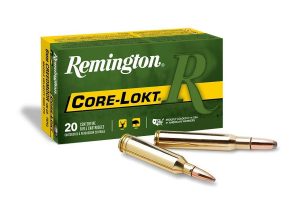
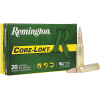
A soft point has a copper jacket with the lead core exposed at the tip. The soft lead starts expansion on impact and the jacket controls how far it goes. Remington’s Core-Lokt has dropped more deer than probably any bullet made since 1939. In our gel test the .308 150 gr pointed soft point went 18.5 inches, opened to 0.54 inches and kept 70% of its weight, which is right for deer-sized game. Our Remington Core-Lokt review has the details.

Polymer-Tipped Rifle Bullets
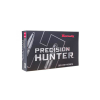
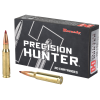
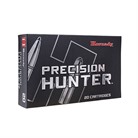
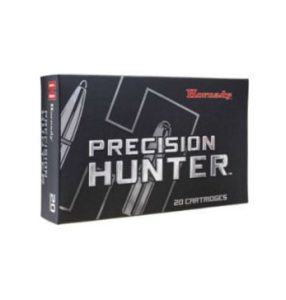
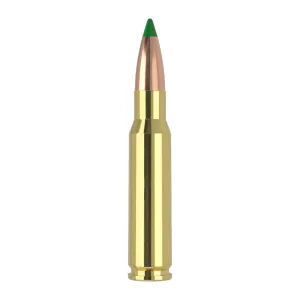
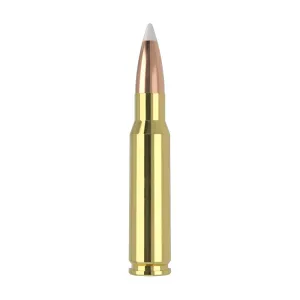
A pointed polymer tip over a hollow cavity does two jobs: it gives the bullet a sleek, streamlined nose that holds velocity at long range, and it drives into the cavity to start rapid expansion. Nosler’s Ballistic Tip made the idea famous. Hornady’s ELD-X adds a heat-resistant tip and a high ballistic coefficient for elk at long range.

Bonded Rifle Bullets
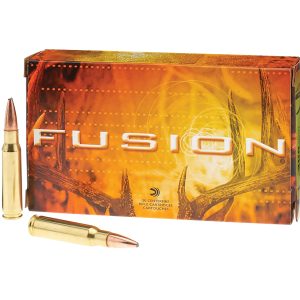
Just like the bonded handgun bullets, a bonded rifle bullet fuses the jacket to the core so it holds together on bone and at close range, when impact speed is highest. Federal Fusion is the affordable bonded load I’d pick for deer, hogs and black bear.

Solid Copper Bullets
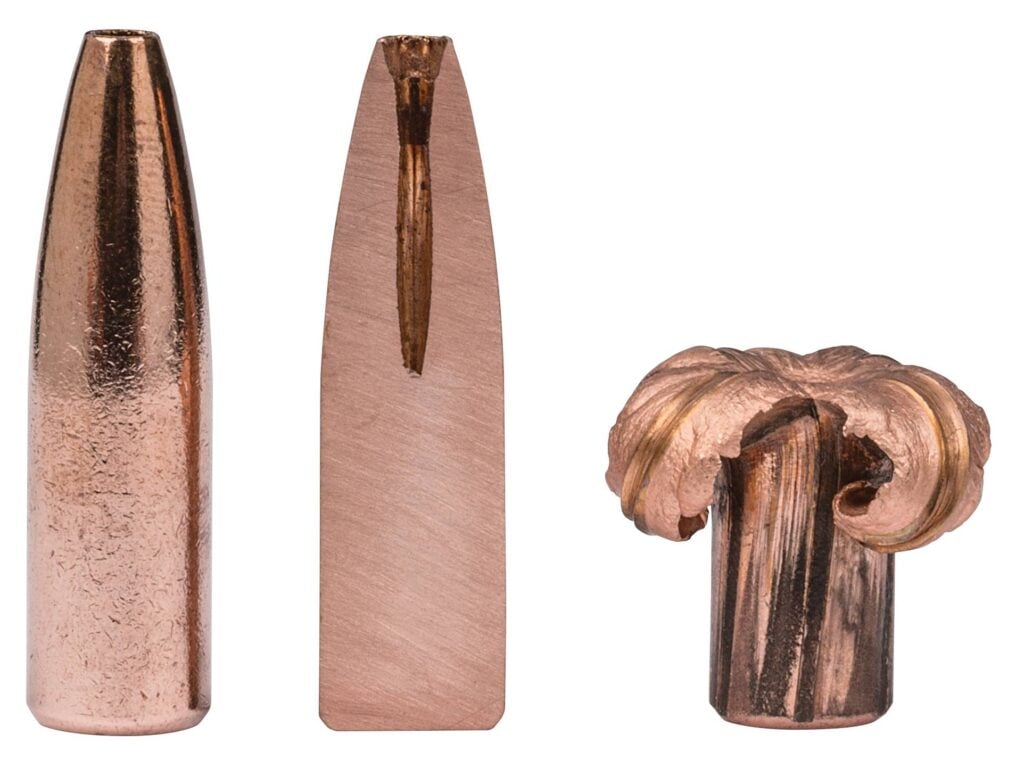
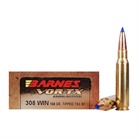
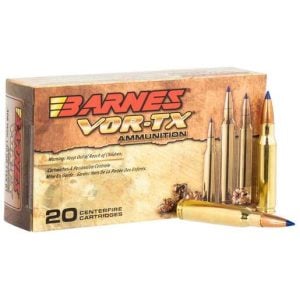
A monolithic bullet is one piece of copper with a hollow nose. On impact the nose splits into petals and the shank keeps going, so it holds close to 100% of its weight and penetrates deep. Barnes TSX and TTSX, Hornady CX and Federal Trophy Copper are the big names. They’re required in California, where all hunting has needed lead-free ammo since July 1, 2019, and on many wildlife refuges. Copper is lighter than lead, so a copper bullet is longer for its weight; pick one a step lighter than your usual lead load.
Match Bullets
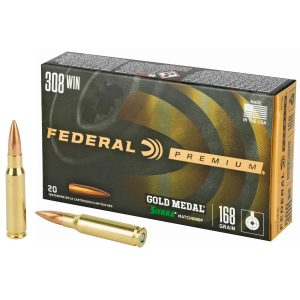
Match bullets like the Sierra MatchKing have a tiny open tip and a boat tail, made that way because it’s the most consistent way to build an accurate jacket, not to expand. They’re the standard for target and long-range shooting. Despite the hollow tip, a match bullet does not expand reliably, so it’s not a hunting bullet unless the maker says it is.
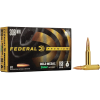
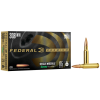
On-sale 308 from 200+ retailers · Updated every 4 hours


On-sale 5.56 from 200+ retailers · Updated every 4 hours



Bullet Shapes and Bases
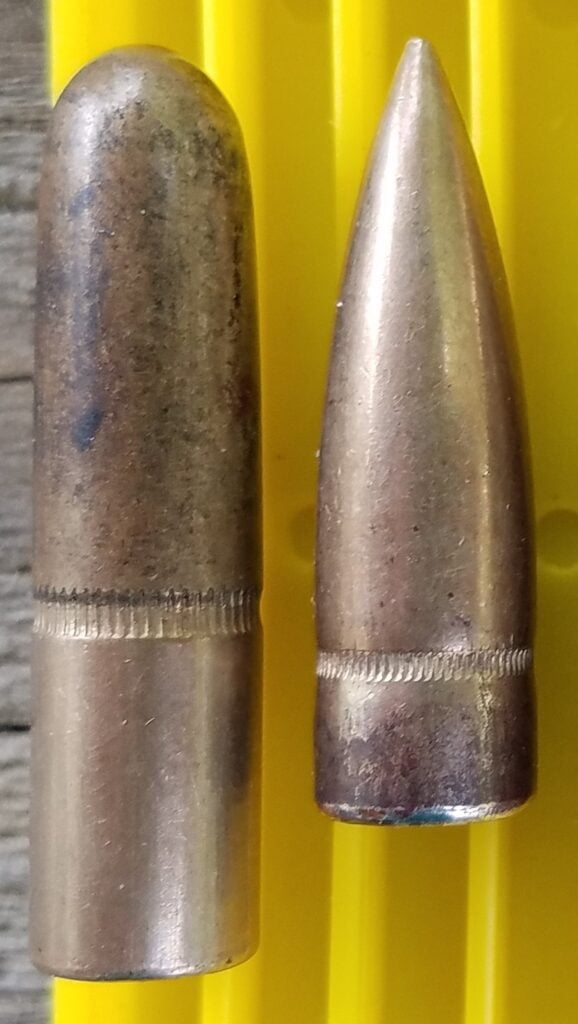
Bullets are also named for their shape, and the names stack: a “BTHP” is a boat tail hollow point.
- Round nose: feeds reliably and is safe in tube magazines, but sheds speed fast.
- Flat nose: the shape for lever guns with tube magazines, so the tip can’t set off the primer of the round in front, and the standard for hard-cast bear loads.
- Spitzer: a pointed nose for less drag, the standard on modern rifle bullets.
- Flat base: simple, accurate at short range and easy on barrels.
- Boat tail: a tapered base that cuts drag at long range.
Armor-Piercing and Green Tip Ammo: What the Law Says
Under 18 U.S.C. 921, armor-piercing ammunition is a handgun bullet or core made entirely of tungsten alloys, steel, iron, brass, bronze, beryllium copper or depleted uranium, or a jacketed handgun bullet larger than .22 caliber whose jacket is more than 25% of its weight. Licensed makers and importers can’t sell it to the public. Copper is not on that list, which is why solid copper handgun bullets are legal. The law excludes hunting shot, frangible target bullets and anything ATF finds is meant for sporting use.
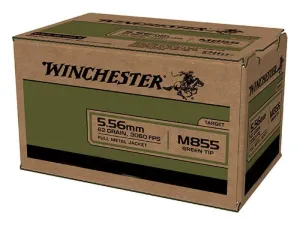
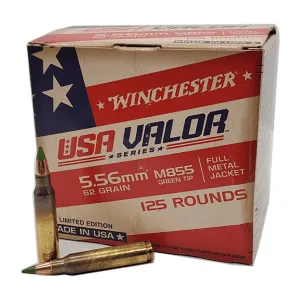
Green tip 5.56, M855 or SS109, has a small steel penetrator in front of a lead core. Because it’s a rifle round and not built entirely of steel, it’s legal to buy and own, though many indoor and steel-target ranges ban it. Steel-cased ammo is a different thing entirely: the case is steel, not the bullet. State and local laws on hollow points and armor-piercing ammo vary, so check yours.
Which Bullet Type for Which Job?
| Job | Bullet type | Why |
|---|---|---|
| Range practice | FMJ or lead round nose | Cheapest and feeds reliably |
| Steel targets | Frangible or polymer coated | Less splash-back |
| Concealed carry and home defense | Jacketed or bonded hollow point | Expands and stops inside the target |
| Short-barrel pocket guns | Polymer-tipped hollow point | Expands at lower speed |
| Deer | Soft point or bonded | Controlled expansion, holds together |
| Elk and long-range hunting | Polymer-tipped or solid copper | Holds speed, deep penetration |
| California or lead-free areas | Solid copper | Required by law |
| Paper and precision | Match or wadcutter | Accuracy and clean holes |
For shotguns, the choice is shot size and slugs instead; our buckshot vs slugs vs birdshot guide covers it. For picking a caliber first, see our handgun calibers chart and rifle caliber guide, and for buying in bulk, our ammo buying guide. Our best 9mm ammo picks the top defense and range loads.
Frequently Asked Questions
What are the main types of bullets?
Non-expanding bullets include full metal jacket, lead round nose, wadcutter and frangible. Expanding bullets include jacketed hollow points, bonded hollow points, polymer-tipped hollow points, soft points, polymer-tipped rifle bullets, bonded rifle bullets and solid copper bullets. Match bullets are built for accuracy.
What is the difference between FMJ and hollow point?
An FMJ has a copper jacket over the nose and keeps its shape, so it penetrates deeply and narrowly. A hollow point has a cavity that makes it expand on impact, so it slows down and stops inside the target. FMJ is for practice; hollow points are for self-defense.
What is the best bullet type for self-defense?
A modern jacketed or bonded hollow point such as Federal HST or Speer Gold Dot. In our gel tests from a compact 9mm, these loads expanded to 0.54 to 0.74 inches and penetrated within or near the FBI 12 to 18 inch window.
What is the best bullet type for deer hunting?
A soft point like Remington Core-Lokt, or a bonded bullet like Federal Fusion. Both expand in a controlled way and hold together. Solid copper bullets work too and are required in California.
Are hollow points legal?
Hollow points are legal to buy and own under federal law and are the standard police and self-defense round. A few states and cities restrict where you can carry or use them, so check your state law.
Is green tip ammo armor piercing?
Not under federal law. Green tip M855 has a steel penetrator in a lead core, but the federal armor-piercing definition covers handgun bullets made entirely of certain metals, so M855 rifle ammo is legal to buy. Many ranges ban it because it damages steel targets.
What is a frangible bullet?
A bullet made from compressed copper or tin powder that breaks into small particles when it hits a hard surface. It cuts splash-back on steel targets and is required at some indoor ranges.
What does BTHP mean?
Boat tail hollow point. It describes a match bullet with a tapered base and a small open tip. The tip is a byproduct of how the jacket is formed for accuracy, so BTHP match bullets are not designed to expand like defensive hollow points.
3,979+ Gun & Ammo Deals
Updated daily from 200+ top retailers. Filter by category, caliber, action type, and price.
Related Guides