

Last updated October 27th 2026
Some of the links below are affiliate links, meaning at no additional cost to you, we may earn a commission if you click through and make a purchase.
By Nick Hall
A reticle is the aiming pattern inside a scope, the crosshairs and whatever marks sit on them. The main types are the duplex, the BDC or bullet drop reticle, the mil-dot, the hash mark reticle, the Christmas tree, the horseshoe and chevron styles on AR-15 optics, and illuminated versions of all of them. Each one sits in either the first or second focal plane, and each one is measured in MOA or mils.
I’ve hunted with duplex scopes, rung steel past 800 yards with tree reticles, and run BDC LPVOs on carbines. Below is how each type works, the magnification trap that makes most BDC holdovers wrong, the ranging math with worked numbers, and a real scope for each type with live prices from our 200+ retailers on October 27, 2026.
Table of Contents
How we tested: Every pick here is ranked against our testing methodology. Minimum round counts, accuracy and reliability protocols, the failures that disqualify a gun.
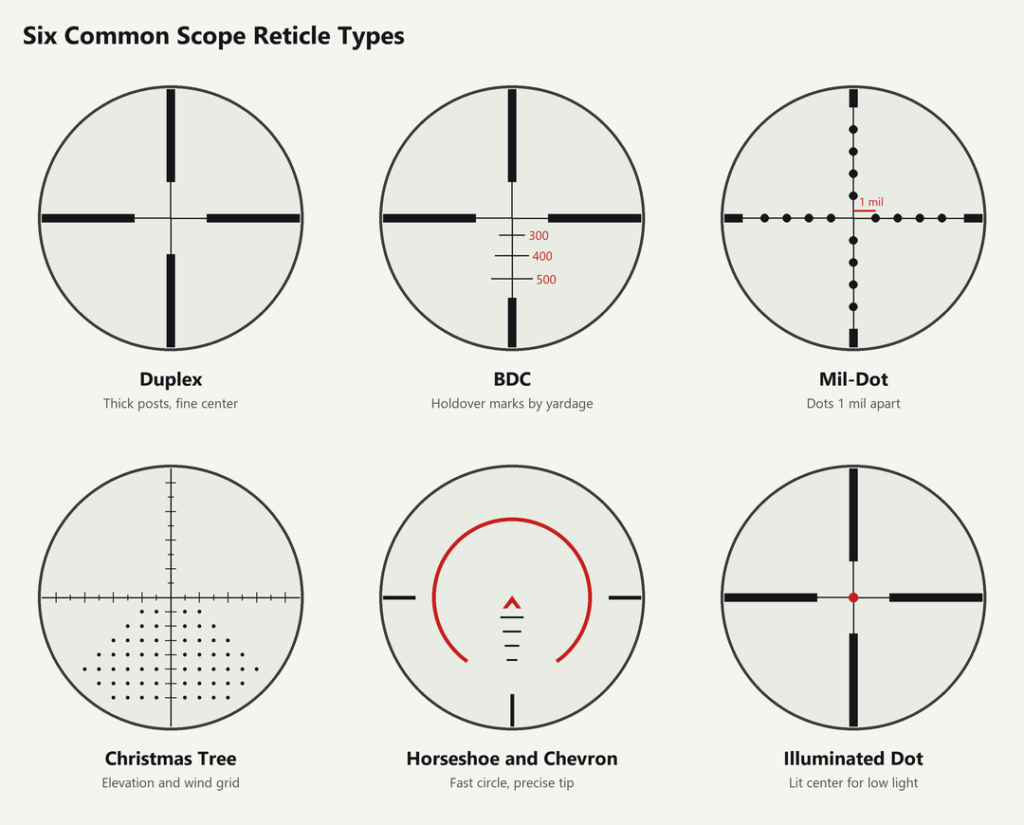
Types of Scope Reticles at a Glance
| Reticle | What it adds | Holdovers | Ranging | Best for | Example on this page |
|---|---|---|---|---|---|
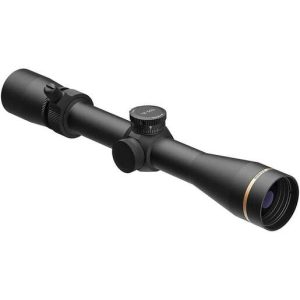
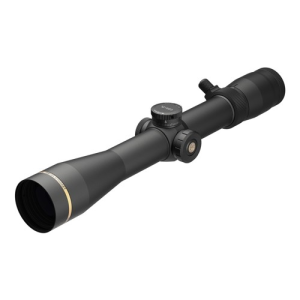
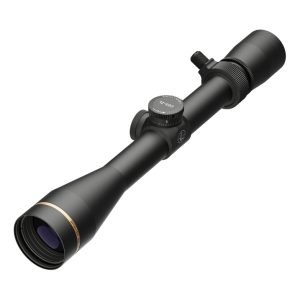
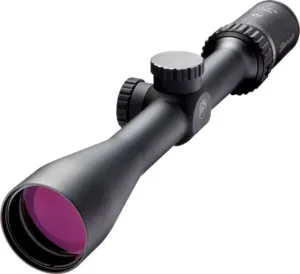
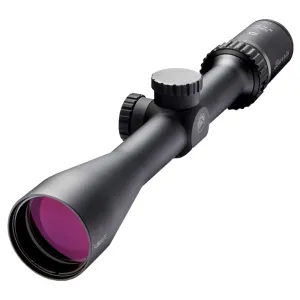
| Duplex | Thick outer posts, fine center | No | Rough | Deer and big game | Leupold VX-3HD |
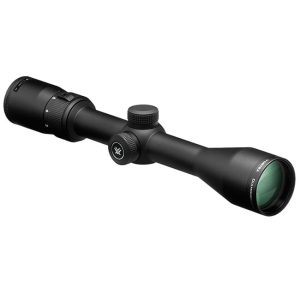
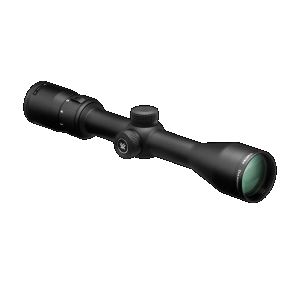
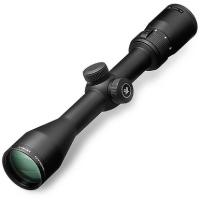
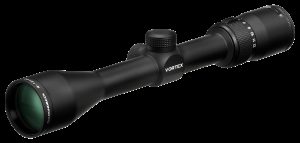
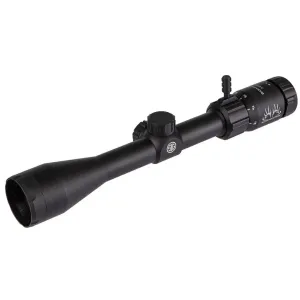
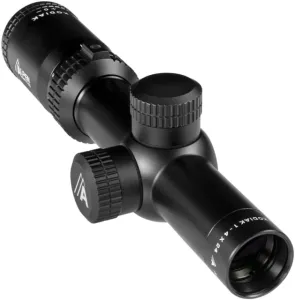
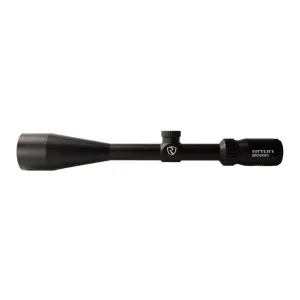
| BDC | Drop marks below center | Yes, by yardage | Rough | Hunting out to 500 yd | Vortex Diamondback BDC |
| Mil-dot | Dots 1 mil apart | Yes, in mils | Yes | Classic tactical and varmint | Ranging math below |
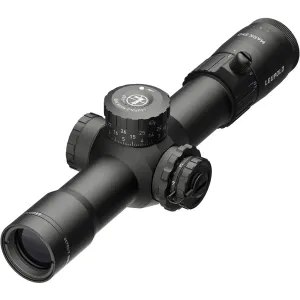
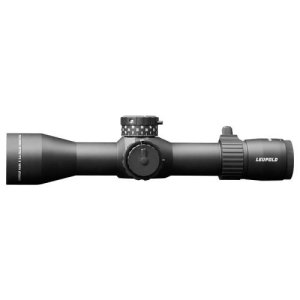
| Hash mark | Lines in MOA or mils | Yes | Yes | Dialing and holding, PRS | Leupold Mark 5HD |
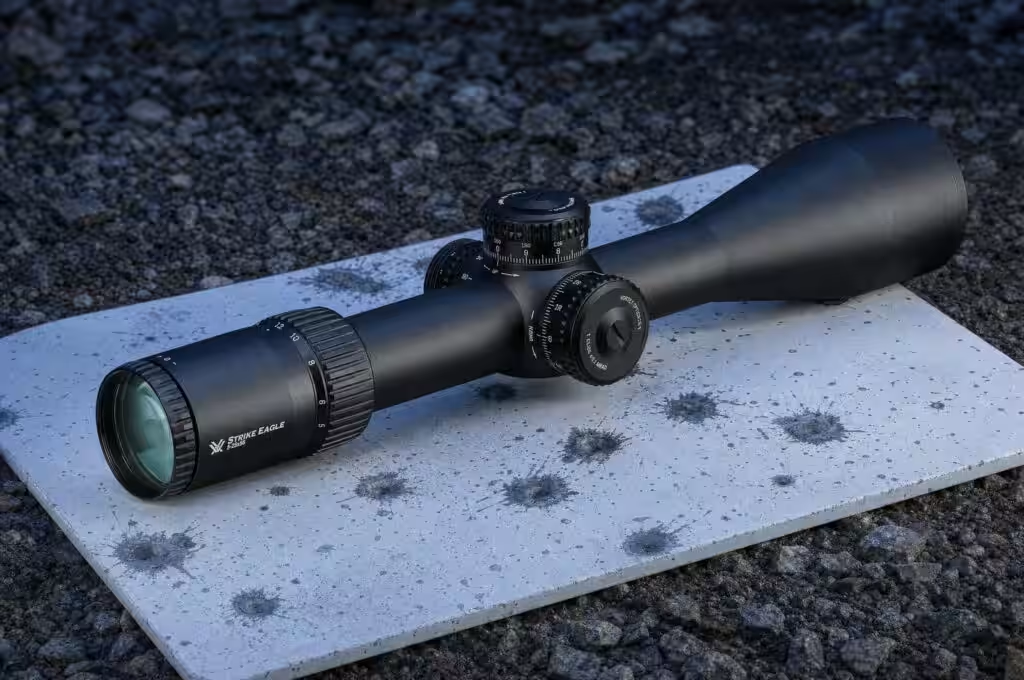
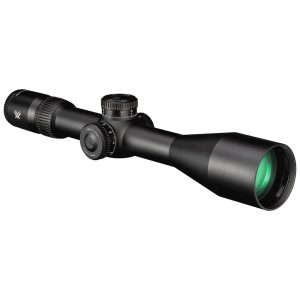
| Christmas tree | Grid of drop and wind holds | Yes, with wind | Yes | Long range, fast follow-ups | Vortex Venom EBR-7C |
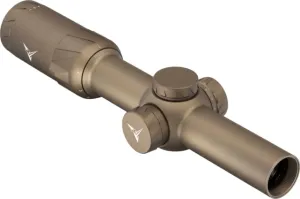
| Horseshoe and chevron | Fast circle, BDC for one caliber | Yes, by yardage | Built in | AR-15 and LPVOs | Primary Arms SLx ACSS |
| Illuminated | Lit dot or crosshair | Depends on pattern | Depends | Dawn, dusk, timber, 1x LPVOs | Leupold VX-5HD FireDot |
What a Reticle Is: Wire vs Etched Glass
The reticle sits inside the scope tube at one of the two focal planes, and when you look through the scope you see it laid over the target. Older and cheaper scopes use a wire reticle, thin metal wires stretched across a ring. A wire reticle can only be lines that run to the edge, which is why every wire reticle is some kind of crosshair.
Most modern reticles are etched onto a glass plate and filled. Etching lets the maker draw anything: floating dots, numbers, a tree of holdover points or a horseshoe. That’s why every BDC, tree and chevron reticle is etched glass. An etched reticle adds a layer of glass to the light path, but you won’t see that in any scope from a decent maker.
Duplex and Plex Reticles

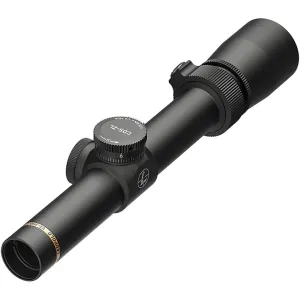
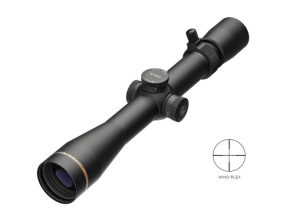
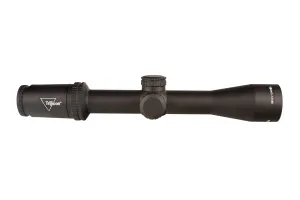
The duplex is the classic hunting reticle and still the most common one sold on deer scopes. Leupold describes it as heavy lines that draw your eye to the center, where it narrows into a fine crosshair. The thick posts stay visible in the last light of the day, when a thin crosshair vanishes against dark timber, and the thin center will not cover a deer’s vitals at 200 yards. Leupold’s Hunt-Plex goes further, with posts twice as heavy as the Duplex tapering to the same fine center.
Vortex calls its version the V-Plex, and Burris and Nikon have their own Plex names. They all work the same way. A duplex has no holdover marks, so you zero at 200 yards and hold a little high on the back past about 250, or you dial. That’s the reason Leupold pairs it with its CDS custom turret: you dial the yardage and hold dead on.
There’s one trick hidden in the duplex. The gap between the post tips is a fixed size at a given power, so once you measure it on a grid at 100 yards you can use it to range and hold. Do that at the power you hunt at, because on a second focal plane scope it changes as you zoom.
BDC Reticles

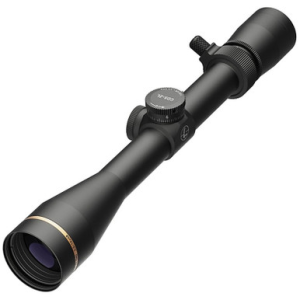
A BDC, short for bullet drop compensating, reticle adds marks below the center crosshair. Each mark is a holdover for a longer distance, so instead of dialing a turret you hold the right mark on the target and shoot. On a hunting scope there are three to six marks, and the maker’s chart tells you which yardage each one matches for a given load. Vortex calls theirs the Dead-Hold BDC, Sig uses BDC-1, Burris has the Ballistic Plex and Leupold has the Boone and Crockett, which even has 10 mph wind holds for 300 and 400 yards.
The catch is that a BDC is built for an average bullet. If your load matches the chart, the marks will be close. If you shoot something faster or slower, the 400 yard mark might be your 350 or your 450. The fix is to shoot at the real distances, write down what each mark is worth for your load, and tape that list to the stock. The free ballistic calculators from the scope makers do the same job on paper first.
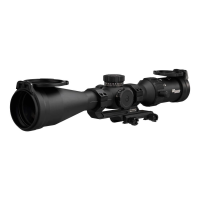
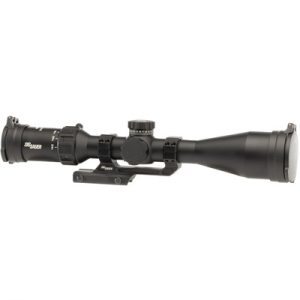
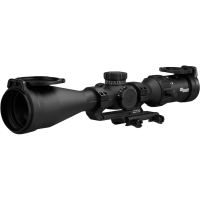
Duplex and BDC Scope Deals Under $300
Best-scored accessories across 200+ retailers · Updated every 4 hours


The BDC Magnification Trap
Almost every hunting BDC sits in the second focal plane, where the reticle stays the same size as you zoom. The target gets bigger and the reticle does not, so the holdover marks only mean what the chart says at one magnification. Vortex states it plainly: on its second focal plane BDC scopes the listed subtensions are accurate at the highest magnification. A few scopes are calibrated at a lower power, so check the manual for yours.
The value of any mark scales with magnification. At half power, every mark is worth twice as much. Here’s a 3-9x scope with its BDC calibrated at 9x and a mark that sits 4 MOA below center, which at 300 yards covers about 12.6 in of drop:
| Power | Mark is worth | Drop at 300 yd | Drop at 400 yd |
|---|---|---|---|
| 9x (calibrated) | 4.0 MOA | 12.6 in | 16.8 in |
| 7x | 5.1 MOA | 16.2 in | 21.5 in |
| 6x | 6.0 MOA | 18.8 in | 25.1 in |
| 4.5x | 8.0 MOA | 25.1 in | 33.5 in |
| 3x | 12.0 MOA | 37.7 in | 50.3 in |
Hold that mark at 4.5x thinking it’s your 300 yard hold, and you’ll hold for twice the drop and shoot a foot high. I’ve watched it happen on a sheep hunt. If you run an SFP BDC, either crank it to the calibrated power before every long shot or use the table to learn what the marks are worth at the power you use. A first focal plane reticle grows and shrinks with the image, so its marks are correct at every power. Our first focal plane vs second focal plane guide covers that choice in full.
AR-15 and LPVO Reticles: Horseshoe, Chevron and BDC

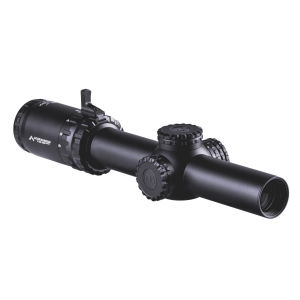
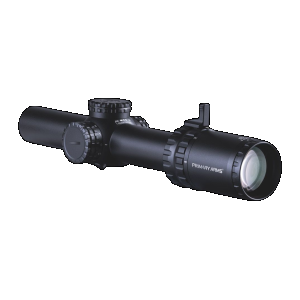
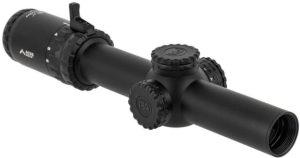
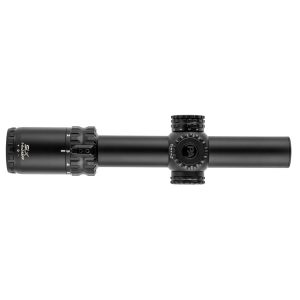
Optics for carbines need a reticle that works at 1x up close and at 4x to 8x past 300 yards. The answer most makers landed on is a big, bright aiming shape for speed and a BDC ladder underneath for distance. A horseshoe or circle frames the target fast at 1x, the way an EOTech ring does, and a chevron or fine dot at the center gives you a precise point for the long shots.
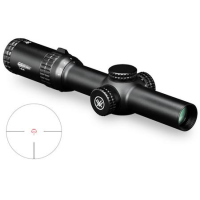
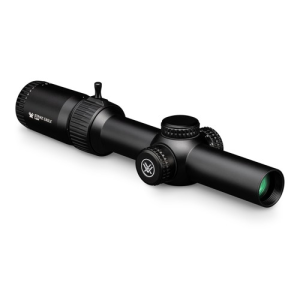
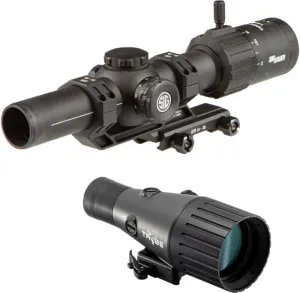
Primary Arms’ ACSS reticles put a chevron inside a horseshoe, with a drop ladder under the chevron that’s matched to a caliber and barrel length. Vortex uses AR-BDC3 on the Strike Eagle and Burris uses Ballistic AR on the RT-6. Because the ladder is built for one cartridge, buy the version for what you shoot. A 5.56 ladder on a .308 rifle puts every hold in the wrong place. Most are in the second focal plane, so the trap above applies: the ladder is calibrated at top power.
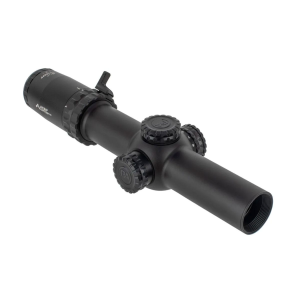
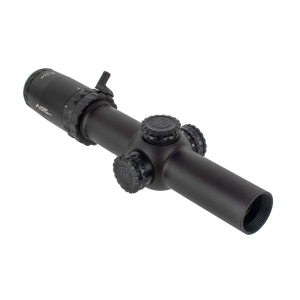
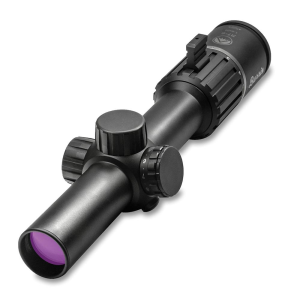
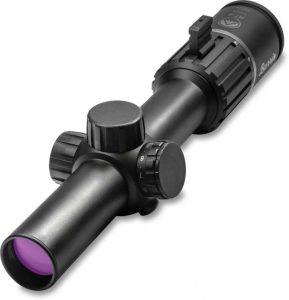
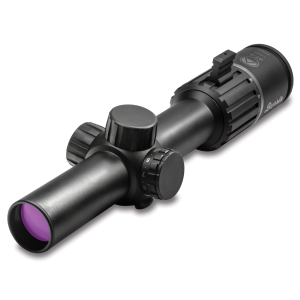
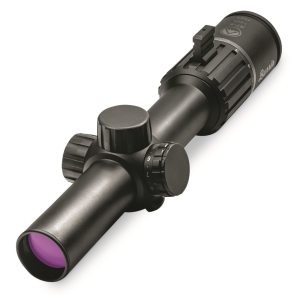
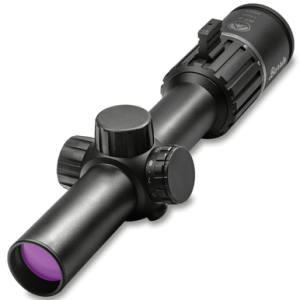
For more, see our best LPVO scopes and the AR-15 optics guide.
BDC, LPVO and FFP Scope Deals $300 to $700
Best-scored accessories across 200+ retailers · Updated every 4 hours





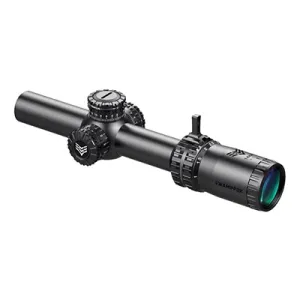
Mil-Dot Reticles
The mil-dot was the first reticle built for ranging and holding with math instead of a chart. Dots sit along the crosshairs 1 mil apart, center to center. A mil, short for milliradian, is an angle: 1 mil covers 3.6 in at 100 yards, 36 in at 1,000 yards, or 10 cm at 100 meters. It has nothing to do with the military, even though the Marine Corps made the reticle famous.
Because the spacing is an angle, it works with any cartridge. You hold the second dot under center and that’s 2 mils of holdover, whatever your rifle is. Pair it with a scope whose turrets also click in mils and your holds and your dial talk the same language. Our MOA vs MRAD guide explains both units. The plain mil-dot has mostly given way to hash mark reticles with finer lines, but it’s still common on budget tactical and varmint scopes.
How to Range a Target With Your Reticle
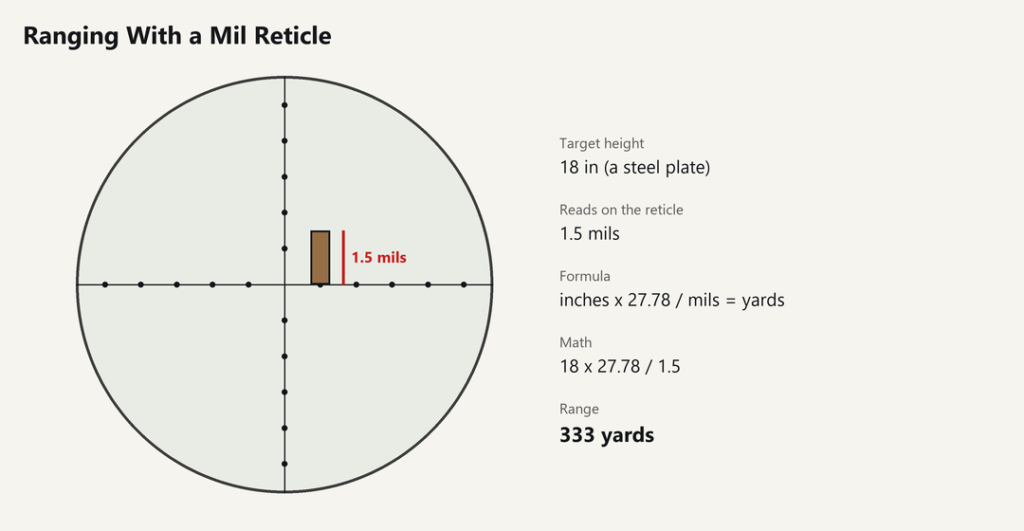
If you know how big something is, a mil or MOA reticle tells you how far away it is. Put the bottom of the target on a line, read how many mils or MOA tall it is, and run one of these formulas:
- Mils, inches: target size in inches x 27.78 / mils = range in yards.
- Mils, meters: target size in millimeters / mils = range in meters.
- MOA, inches: target size in inches x 95.5 / MOA = range in yards.
| Target | Size | Reads | Range |
|---|---|---|---|
| Steel plate | 12 in | 1.0 mil | 333 yd |
| Steel plate | 18 in | 1.5 mils | 333 yd |
| Steel silhouette, width | 20 in | 2.0 mils | 278 yd |
| Standing person | 72 in | 4.0 mils | 500 yd |
| Steel plate | 12 in | 3 MOA | 382 yd |
| Steel plate | 18 in | 6 MOA | 286 yd |
The weak spot is the reading. Half a mil of error on that 18 in plate is the difference between 278 and 417 yards, which is why everyone with a laser rangefinder uses it instead. Reticle ranging is the backup when the batteries die or the target is too small for the laser to catch. On a second focal plane scope, do it only at the power the reticle is calibrated for.
Hash Mark and Christmas Tree Reticles
Hash Mark Reticles
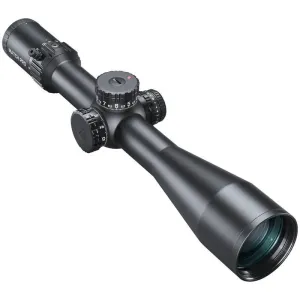
A hash mark reticle swaps the mil-dot’s round dots for thin lines at every mil, half mil or 2 MOA, with numbers along the stadia. The lines cover less of the target, and you can split them more finely than dots. Most come in first focal plane on long-range scopes, so the marks stay true at every power. If you dial your elevation and only hold for wind, a clean hash reticle is all you need.
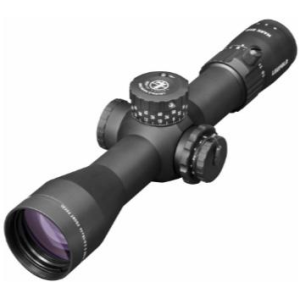
Leupold’s TMOA is a good example of how thin these get, with 0.5 MOA heavy lines, 0.1 MOA fine lines and an open 0.2 MOA center. On the Mark 5HD, Leupold’s first focal plane PR-1 and PR2 reticles come in MOA and mil versions, so you can match your turrets.


Christmas Tree Reticles
A Christmas tree reticle adds a grid of floating dots below the center, spreading wider as it goes down, so it looks like a tree. Every dot is a hold for both drop and wind at once. You call the miss, read where the splash landed against the grid, and hold that dot for the next shot without touching a turret. That’s why tree reticles took over precision rifle matches, where you’re engaging several targets against a clock.
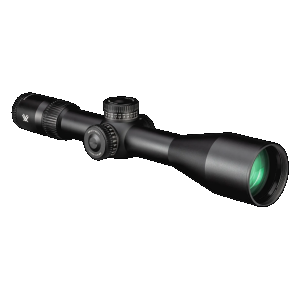
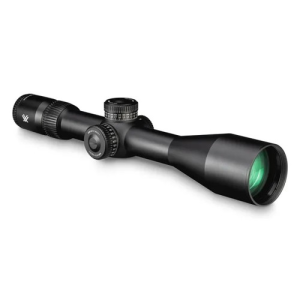
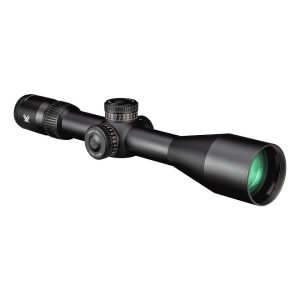
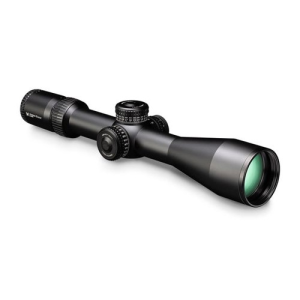
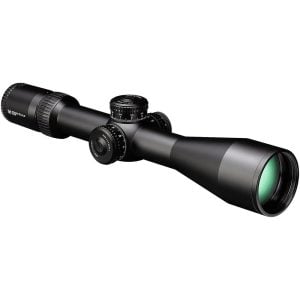
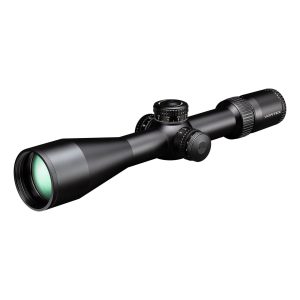
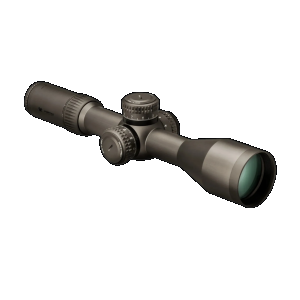
Vortex’s EBR-7C on the Venom and Strike Eagle 5-25×56 is the most affordable tree you can buy, and the Horus H59 on the Razor HD Gen II is the one the style grew from. A tree reticle is busy. At low power it can clutter the view, and for a hunter who’ll take one careful shot it’s more than you need. For steel at 600 to 1,200 yards, it’s the fastest system there is.

Long-Range and Illuminated Scope Deals $700 and Up
Best-scored accessories across 200+ retailers · Updated every 4 hours



Illuminated Reticles
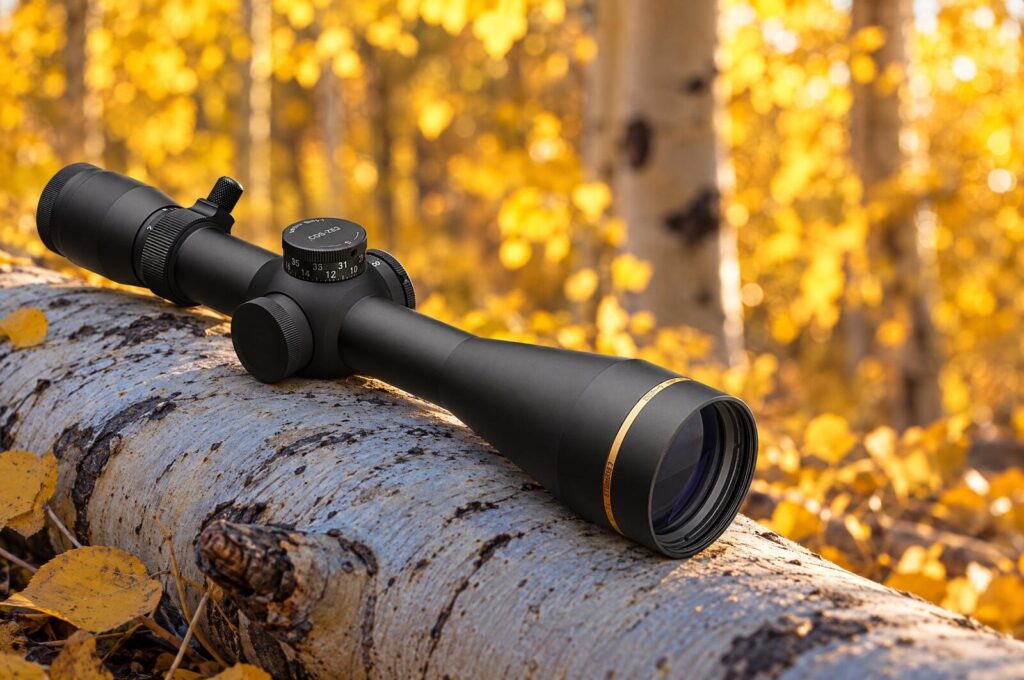
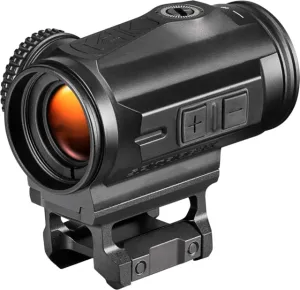
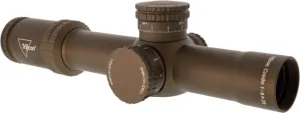
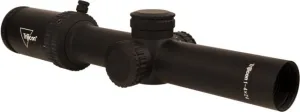
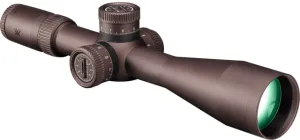
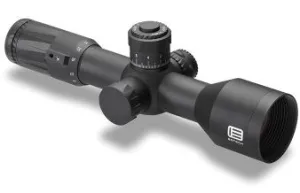
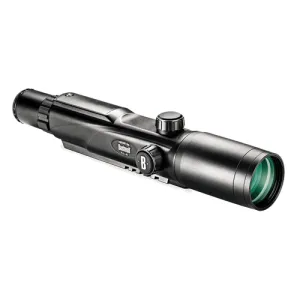
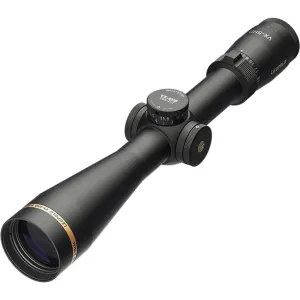
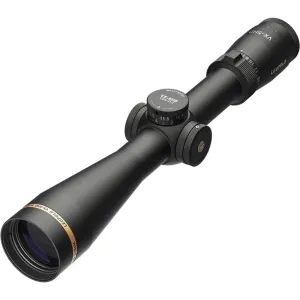
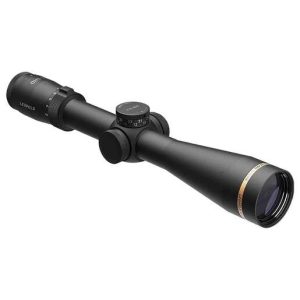
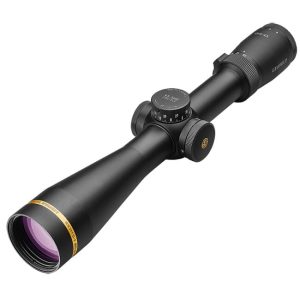
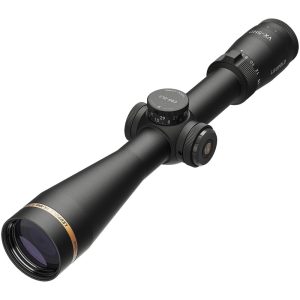
An illuminated reticle uses a small LED, powered by a coin cell in the turret cap, to light part of the reticle red or green. Some light only a center dot, like Leupold’s FireDot, a fine red dot at the center of a duplex. Others light the whole crosshair or the horseshoe on an LPVO.
On a hunting scope the lit dot earns its place in the last 20 minutes of legal light, when a black crosshair disappears against a dark animal in the trees. On an LPVO it’s what makes 1x work like a red dot. In bright sun most hunting scope illumination washes out, and that’s fine because you can see a black reticle in daylight. Turn the brightness down until the dot is just visible. Too bright and it blooms, covers the target and wrecks your night vision.
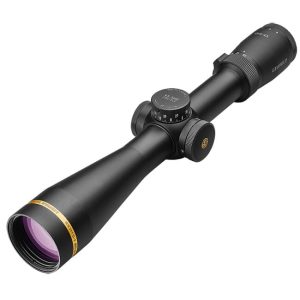
First or Second Focal Plane Reticle
Every reticle above comes in one plane or the other. A first focal plane reticle grows as you zoom, so its marks are right at every power, and it’s the standard on long-range scopes. A second focal plane reticle stays the same size, which keeps the center fine at high power and the reticle bold at low power, but the marks are only right at one setting. For a duplex that doesn’t matter. For anything with holdover marks it does. We tested three scopes in both planes in our FFP vs SFP guide.
MOA or Mil Reticle
Hash marks and trees come in MOA or mils. Neither is more accurate. What matters is that the reticle matches your turrets, so a correction you read on the reticle is the same number you dial. A mil reticle with MOA turrets means doing conversion math on every shot. Most precision shooters and most new long-range scopes use mils, and most hunting BDCs are MOA. Our MOA vs MRAD guide goes through the math.
Which Reticle Should You Buy?
- Deer rifle inside 300 yards: a duplex. Nothing to think about at the moment of truth.
- Hunting out to 500 yards: a BDC you have verified at real distances, or a duplex with a custom dial turret.
- AR-15 with an LPVO: an illuminated horseshoe and chevron or AR-BDC matched to your cartridge.
- Dialing for elevation: a first focal plane hash mark reticle in the same unit as your turrets.
- Precision matches and steel past 600 yards: a first focal plane Christmas tree.
- Low light in heavy timber: an illuminated center dot.
Whichever you pick, shoot it at distance before you trust it. For the rest of the sighting picture, see our types of gun sights, gun optics guide, best rifle scopes and how to sight in a rifle scope.
Frequently Asked Questions
What are the main types of scope reticles?
The main types are the duplex, the BDC or bullet drop compensating reticle, the mil-dot, the hash mark reticle, the Christmas tree, the horseshoe and chevron reticles on AR-15 optics, and illuminated versions of each. Every one sits in the first or second focal plane and is measured in MOA or mils.
What is a reticle?
A reticle is the aiming pattern you see inside a scope, the crosshairs plus any dots, lines or holdover marks. Older scopes use thin wires, and most modern scopes use a pattern etched onto glass.
What is the best reticle for deer hunting?
A duplex suits most deer hunting inside 300 yards. The thick posts stay visible in low light and the fine center will not cover the vitals. For longer shots, a BDC you have verified at real distances or an illuminated center dot are the common upgrades.
What is a BDC reticle?
A BDC, or bullet drop compensating, reticle has marks below the center crosshair that act as holdovers for longer distances. The marks match an average load, so you should confirm what each one is worth with your ammo at real distances.
Why is my BDC reticle off at lower magnification?
Most BDC reticles are in the second focal plane, where the marks are only correct at one power, which on most is the highest. At half power every mark is worth twice as much, so a 300 yard hold can put you a foot high. Turn the scope to its calibrated power before using the marks.
How do you range with a mil-dot reticle?
Read how many mils tall a target of known size is, then multiply its size in inches by 27.78 and divide by the mils to get yards. An 18 inch plate that reads 1.5 mils is 333 yards away.
What is a Christmas tree reticle?
A Christmas tree reticle has a grid of floating dots below the center that widens as it goes down. Each dot is a hold for both bullet drop and wind, so you can correct a miss without dialing. It is used for long-range and precision rifle shooting.
Is an illuminated reticle worth it?
On an LPVO, yes, because it lets the scope work like a red dot at 1x. On a hunting scope, a lit center dot helps in the last minutes of legal light against dark animals. In bright daylight most illumination washes out and is not needed.
4,005+ Gun & Ammo Deals
Updated daily from 200+ top retailers. Filter by category, caliber, action type, and price.
Related Guides