

Wild Bill Hickok’s favorite guns were a pair of ivory-gripped, nickel-plated Colt 1851 Navy revolvers, .36-caliber cap-and-ball six-shooters engraved “J.B. Hickok-1869” on the backstrap. He wore them butt-forward in his belt or a sash and drew them with a twisting cavalry draw. The gun most tied to him today is a rifle, though: the Springfield trapdoor that was buried beside him in Deadwood in 1876 and sold at auction in 2021 for $475,312.50. When Jack McCall shot him in the back of the head that August, Hickok was carrying a Smith & Wesson .32 and a four-barrel derringer, and holding what became known as the dead man’s hand.
Here’s every Hickok gun, the famous duel that made his name, the gun that killed him, and what you’d pay for the same guns new today.
Table of Contents
Wild Bill Hickok Guns at a Glance
| Gun | Caliber | Story |
|---|---|---|
| Pair of Colt 1851 Navy revolvers | .36 cap and ball | His favorites: ivory grips, nickel finish, engraved “J.B. Hickok-1869” |
| Springfield trapdoor sporting rifle | .45-70 | Buried beside him in 1876; sold for $475,312.50 in 2021 |
| Smith & Wesson No. 2 Army | .32 rimfire | On him when he was killed; failed to sell at a $220,000 bid in 2013 |
| Sharps four-barrel derringer | .32 rimfire | Also on him when he was killed |
| Adams and Deane percussion revolver | .44 | Carried as marshal of Hays, Kansas |
| Jack McCall’s Colt Single Action Army, serial 2079 | .45 | The gun that killed him |
Hickok’s Navy Colts
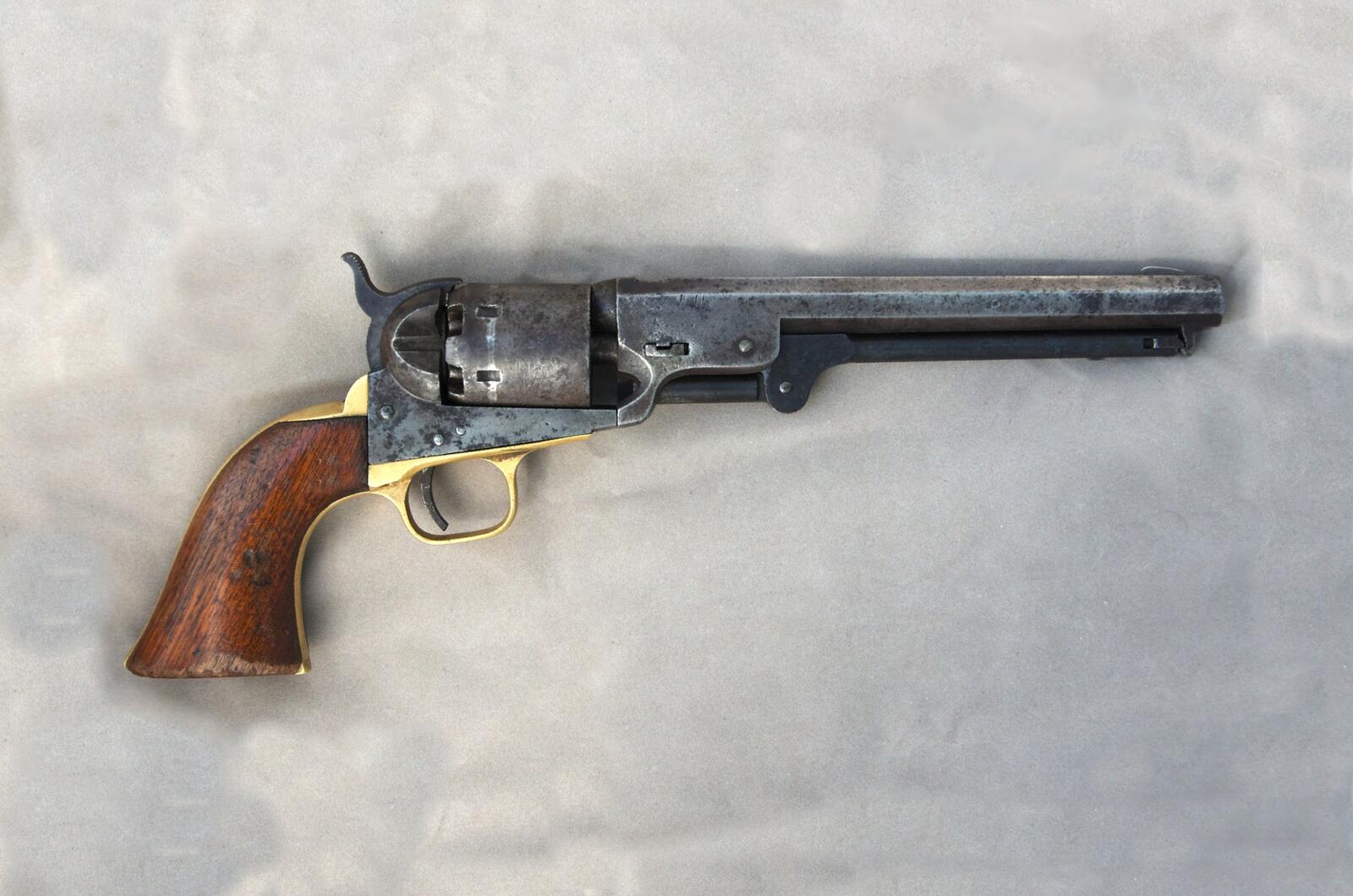
The Colt 1851 Navy was the handgun of the frontier before the metallic cartridge took over. It was a six-shot, .36-caliber cap-and-ball revolver, much lighter than Colt’s big Dragoons, and it stayed in production until 1873, when the Single Action Army replaced it. Its cylinder carried a rolled engraving of a Texas Navy victory at the Battle of Campeche, which is where the “Navy” name comes from. Colt built about 215,000 in America and about 42,000 more in London, and its famous users included Buffalo Bill, Doc Holliday and Richard Francis Burton.
Hickok’s pair were nickel-plated with ivory grips and engraved “J.B. Hickok-1869” on the backstrap. He rarely used holsters. With city clothes he pushed them into his belt, and with buckskins into a sash, both butts facing forward. He drew them with a “reverse” or “twist” draw, the way a cavalryman does, rotating each pistol out and up. It looks awkward to modern eyes, but it kept the guns secure on horseback and let him draw across his body.
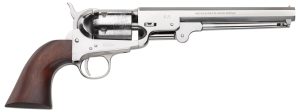
You can buy a faithful copy today. Italian makers Uberti and Pietta build 1851 Navy reproductions that shoot with real black powder, caps and lead balls, and Pietta even makes a nickel-look “Old Silver” .36 close to Hickok’s finish. Our best black powder revolvers guide compares them, and cowboy action shooting is the place to shoot one competitively:
The Hickok-Tutt Duel: 75 Yards With a Navy Colt
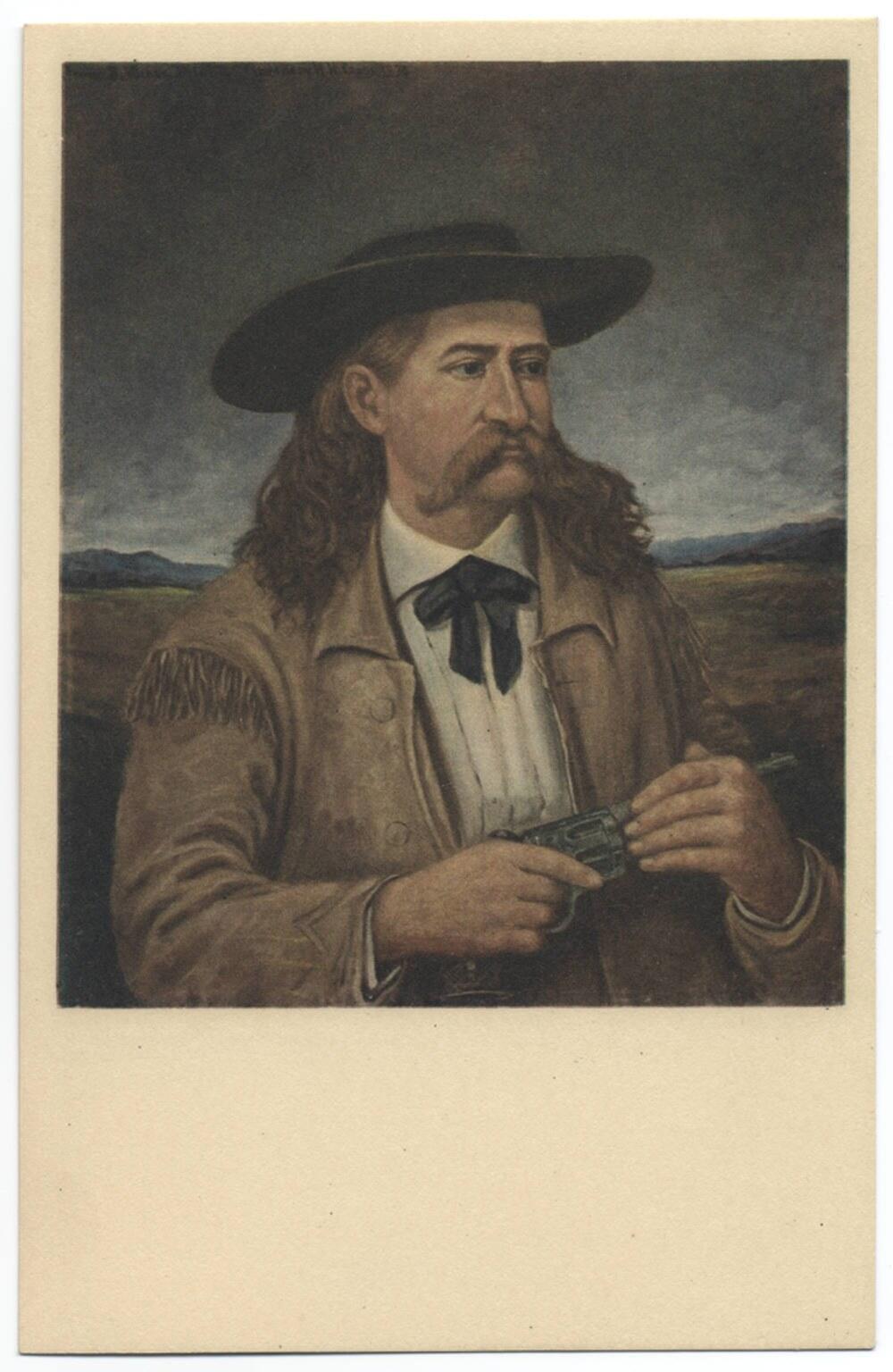
The quick-draw duel in the street is a movie cliché, but Hickok fought one of the very few real ones. In Springfield, Missouri, in July 1865, a gambler named Davis Tutt took Hickok’s prized Waltham gold repeater watch off a poker table as security for a disputed debt and announced he would wear it in the town square. Hickok warned him not to. On July 21, a few minutes before 6 p.m., Hickok walked into the square with his Colt Navy in hand, stopped about 75 yards from Tutt and called out, “Dave, here I am.” Then: “Don’t you come across here with that watch.”
Both men fired. Tutt missed. Hickok’s ball hit him in the chest from about 75 yards, a remarkable shot with a cap-and-ball revolver, and Tutt called out “Boys, I’m killed” before he fell. Hickok was tried for manslaughter and acquitted on August 6, 1865, after the jury decided Tutt had started it. Two years later a Harper’s magazine article made Hickok a national celebrity. For more fights like it, see our roundups of famous duels and the most famous gunfights in history.
Lawman’s Guns: Hays and Abilene
Hickok spent the late 1860s and early 1870s as an Army scout and a frontier lawman. As marshal of Hays, Kansas, he carried an Adams and Deane .44 percussion revolver, a British design. On July 17, 1870, two 7th Cavalry troopers jumped him in a Hays saloon. One pinned him to the floor while the other, John Kyle, put a gun to his ear and pulled the trigger. It misfired. Hickok shot the first trooper in the knee and killed Kyle. In April 1871 he became marshal of Abilene, where the young John Wesley Hardin later claimed to have disarmed him with the “road agent’s spin,” a story that, like much of Hardin’s autobiography, may well be exaggerated. Abilene was also where Hickok, the most famous gunfighter of his day, fought his last gunfight. On October 5, 1871, he shot saloon owner Phil Coe after a dispute, then fired at a figure running toward him and accidentally killed Special Deputy Marshal Mike Williams, who was coming to help him. Hickok never shot another man.
Deadwood, 1876: The Guns He Carried When He Died
By the summer of 1876 Hickok was in the gold rush camp at Deadwood, in Dakota Territory, making his living at cards. On August 2 he joined a poker game at Nuttal & Mann’s Saloon No. 10. He normally sat with his back to the wall, but the only open chair faced away from the door. He asked another player, Charles Rich, to swap seats twice. Rich refused.
A drunk, broke gambler named Jack McCall, who had lost to Hickok the day before, walked in behind him, drew a Colt Single Action Army .45 with serial number 2079, shouted “Take that!” and shot him in the back of the head. Hickok died instantly. His last recorded words, to another player, were “The old duffer. He broke me on the hand.”
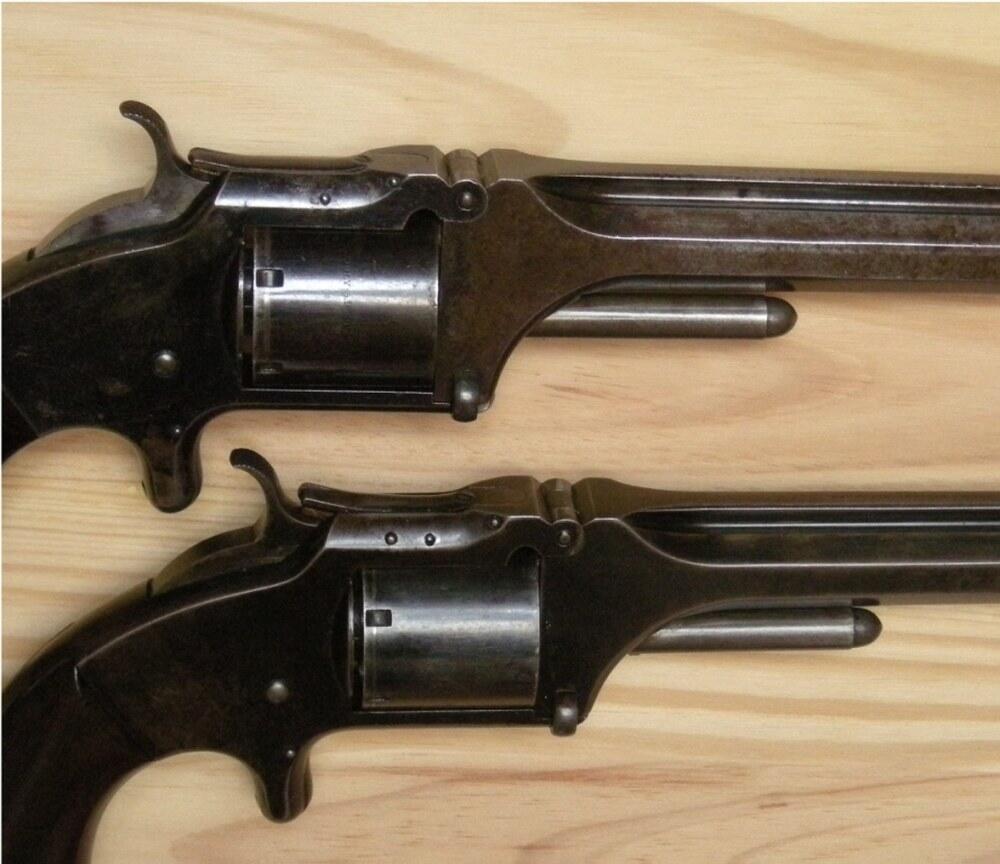
The guns on him that day weren’t the Navy Colts. He was wearing a Smith & Wesson No. 2 Army, a .32 rimfire and one of the first revolvers to use metallic cartridges, a favorite of Union officers during the Civil War. He also had a Sharps Model 1859, a tiny four-barreled .32 rimfire derringer. Bonhams offered a S&W No. 2 described as Hickok’s, serial number 29963, in November 2013. It did not sell: the top bid of $220,000 fell short of the reserve.
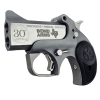
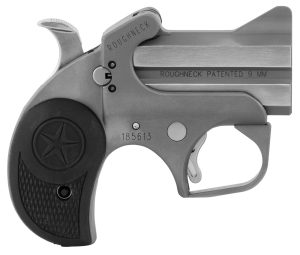
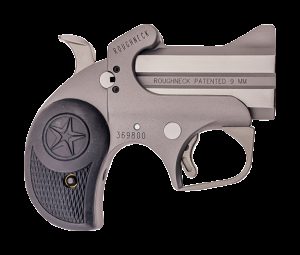
Small backup guns never went out of style. The modern equivalent of the Sharps is a two-shot derringer like the Bond Arms line, which our best derringers guide covers:
The Dead Man’s Hand: Aces and Eights
Every poker player knows that Hickok died holding two pair, black aces and black eights, now called the dead man’s hand. The catch is that no source from 1876 records what cards he held. The phrase “dead man’s hand” existed earlier for other hands, and it wasn’t tied to Hickok’s aces and eights until a 1926 book, 50 years after he died. Hickok biographer Joseph Rosa noted that the “accepted” hand, with a queen of clubs as the fifth card, has no contemporary source at all.
The Gun That Killed Wild Bill
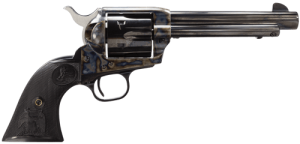
McCall’s gun was a Colt Single Action Army, the same model that replaced Hickok’s Navy in Colt’s lineup. A makeshift miners’ court in Deadwood acquitted him after he claimed Hickok had killed his brother. He then bragged about it in Wyoming, where officials ruled that the Deadwood trial had no legal standing. A federal court in Yankton retried him, convicted him in December 1876, and he was hanged on March 1, 1877, the first person executed by federal officials in Dakota Territory. Colt still builds the Single Action Army, and Uberti’s Cattleman is the popular, affordable copy covered in our Uberti Cattleman review:
The Rifle Buried With Wild Bill
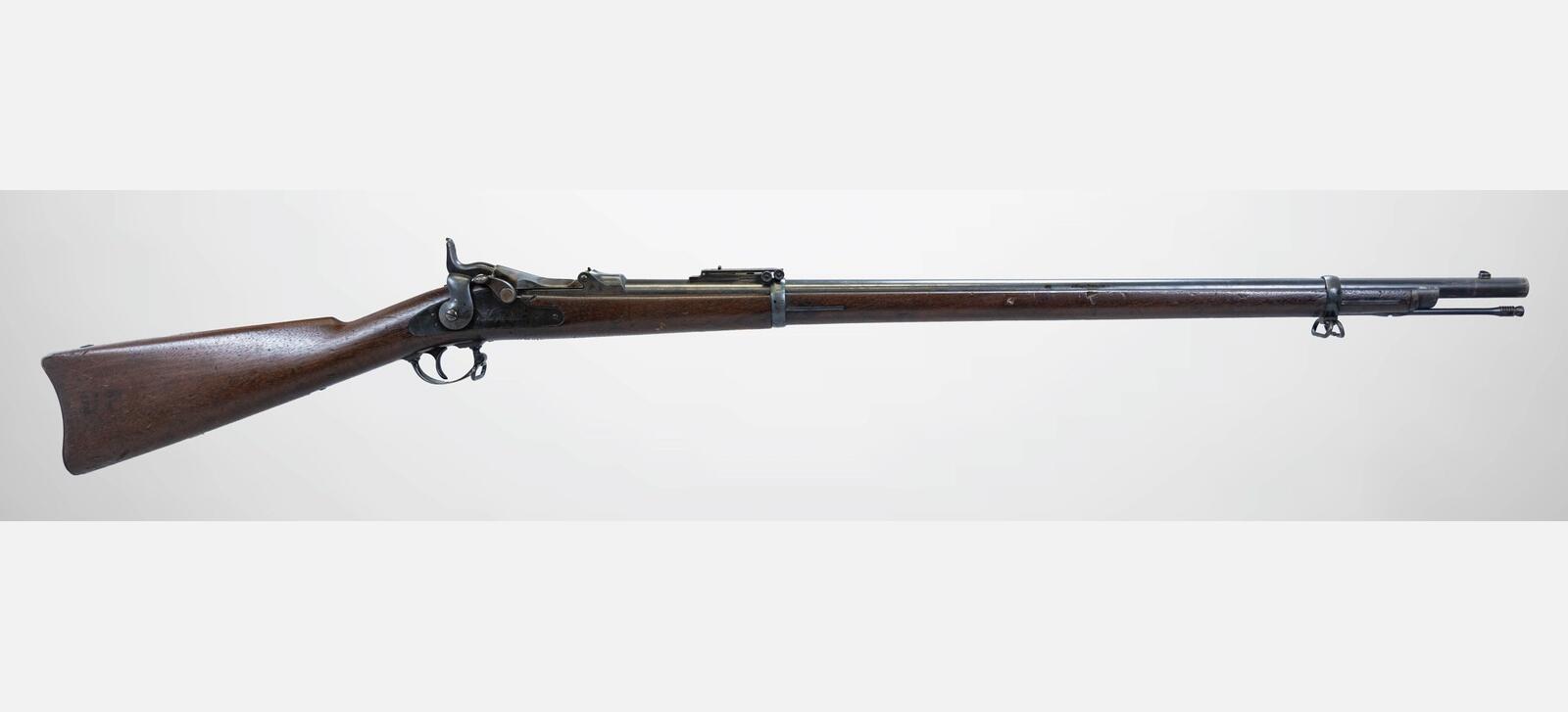
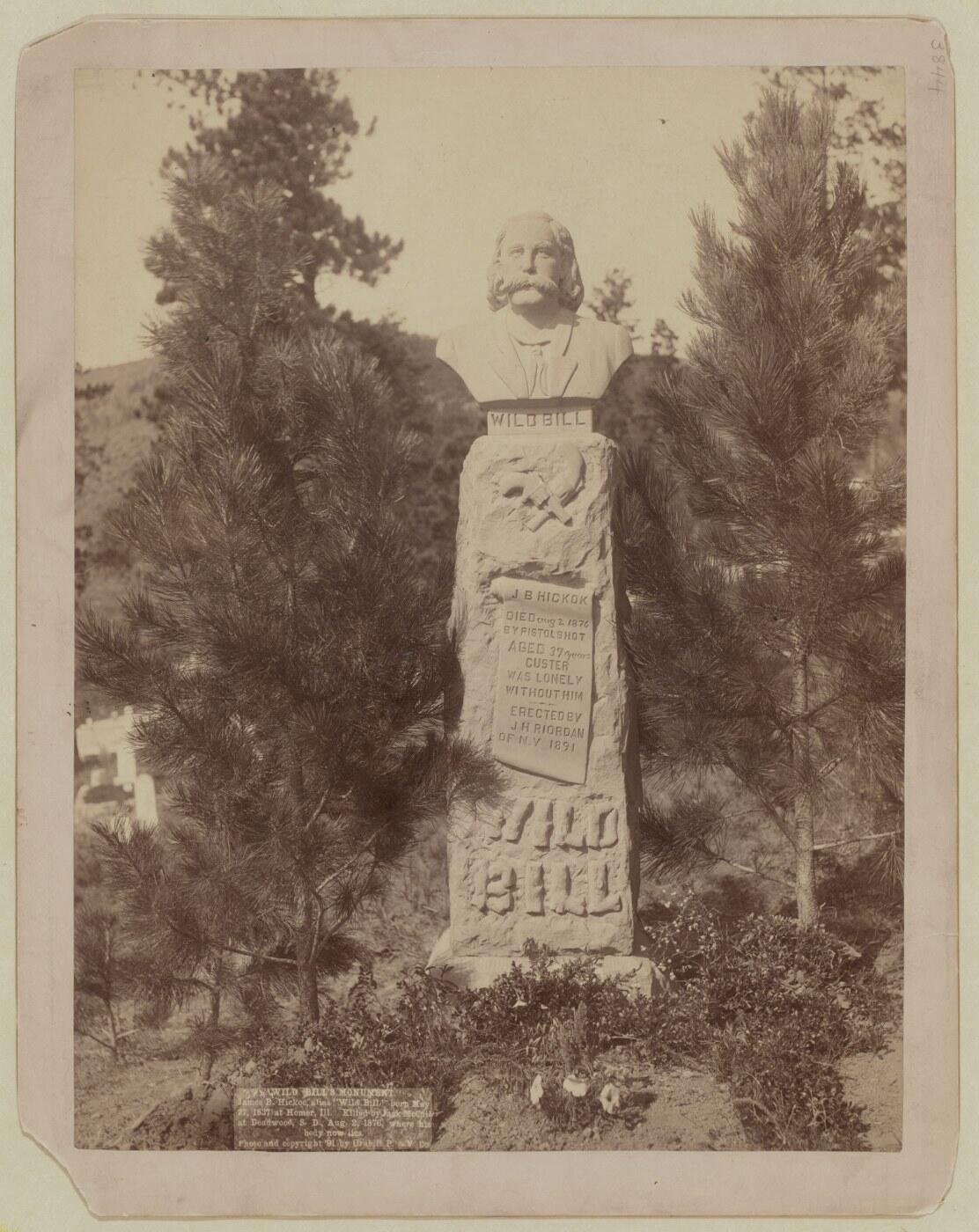
Hickok was buried in Deadwood’s first cemetery on August 3, 1876, with his rifle beside him. Journalist Leander Richardson, who had met him days earlier, described the scene: “Beside the dead hero lay his rifle, which was buried with him.” When Deadwood moved its dead to the new Mount Moriah Cemetery in 1879, the rifle came out of the grave. Calamity Jane was later buried beside him, by her own dying wish, and according to members of her burial committee partly as a joke, since Hickok had “absolutely no use” for her in life.
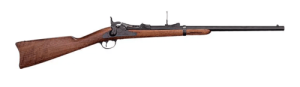
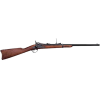
It’s a Springfield trapdoor in .45-70, made around 1870, with a 29 5/8-inch barrel, “J.B. Hickock” crudely carved into the left side of the stock and a JB monogram on the right. It had been reworked as a sporting rifle, with a shortened, re-carved stock and a Schuetzen-style buttplate. After the reburial it passed through Spearfish, South Dakota, families, was shown at Deadwood’s Adams Museum from 1940 to 1953, and ended up in the Jim and Theresa Earle collection. Bonhams called it “the most documented Wild Bill Hickok gun known”, and it sold on August 27, 2021, for $475,312.50, at the same sale where Pat Garrett’s Colt set the all-time record. That story is in Billy the Kid’s guns.
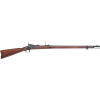
The .45-70 is still going strong, now in lever actions as much as single shots. Pedersoli makes an accurate Springfield trapdoor reproduction, and our best .45-70 Government rifles guide covers the modern options:
Where Are Wild Bill Hickok’s Guns Now?
Wild Bill Hickok’s guns are scattered. The Buffalo Bill Center of the West in Cody, Wyoming, holds one of his .36 Colt Navy revolvers, which was sold to help pay for his burial and later bought for 25 cents. The trapdoor rifle from his grave spent 1940 to 1953 on display at the Adams Museum in Deadwood before it sold at Bonhams in 2021. The Smith & Wesson said to have been on him in Deadwood failed to meet its reserve at Bonhams in 2013. And the claims keep coming: Bonhams has also sold a Colt Single Action Army that a showman named Fred Sutton claimed Hickok carried when he was killed, a claim the record doesn’t support.
More Guns of the Old West
Hickok’s story overlaps with most of the West’s big names. Read about Billy the Kid’s guns, the wider Wild West outlaw guns roundup, and the guns of Tombstone, and Wyatt Earp’s guns. For a modern single action, start with our best revolvers guide. Hickok’s life ran from Missouri and Kansas to Dakota Territory, and our Missouri, Kansas and South Dakota gun law guides explain the rules there today. The used gun market is a good place to find older revolvers and lever guns.
Frequently Asked Questions
What gun did Wild Bill Hickok use?
His favorite guns were a pair of Colt 1851 Navy revolvers in .36 caliber, nickel-plated with ivory grips and engraved "J.B. Hickok-1869." He wore them butt-forward in his belt or a sash and drew them with a reverse, cavalry-style draw.
What gun did Wild Bill Hickok carry when he was killed?
A Smith & Wesson No. 2 Army, a .32 rimfire revolver, and a Sharps Model 1859 four-barreled .32 derringer. He was shot from behind by Jack McCall in Deadwood on August 2, 1876, before he could draw either.
What gun killed Wild Bill Hickok?
Jack McCall shot him in the back of the head with a Colt Single Action Army .45, serial number 2079, at Nuttal & Mann's Saloon No. 10 in Deadwood, Dakota Territory, on August 2, 1876.
Was Wild Bill Hickok buried with his rifle?
Yes. His Springfield trapdoor sporting rifle in .45-70 was buried beside him on August 3, 1876, and removed when his grave was moved to Mount Moriah Cemetery in 1879. It sold at Bonhams in August 2021 for $475,312.50.
What is the dead man's hand?
Black aces and black eights, the two pair Hickok supposedly held when he was killed. No source from 1876 records his actual cards, and the aces-and-eights version was not attached to Hickok until a 1926 book.
How far was the Hickok-Tutt shootout?
About 75 yards. On July 21, 1865, in the town square of Springfield, Missouri, Hickok shot gambler Davis Tutt with a Colt Navy revolver over a dispute about a pocket watch, and was acquitted of manslaughter.
Can you buy a Wild Bill Hickok Colt Navy replica?
Yes. Uberti and Pietta make Colt 1851 Navy reproductions that fire black powder, caps and lead balls, including nickel-finish versions close to Hickok's own pair. They're sold as antique-style muzzleloaders, which most states treat differently from modern cartridge guns.
Where are Wild Bill Hickok's guns now?
The Buffalo Bill Center of the West in Cody, Wyoming, holds one of his Colt Navy revolvers. The trapdoor rifle buried with him was shown at Deadwood's Adams Museum from 1940 to 1953 and sold at Bonhams in 2021 for $475,313. Others are in private collections.
Featured image: digital restoration of a public-domain portrait of James Butler “Wild Bill” Hickok, with added text.
5,743+ Gun & Ammo Deals
Updated daily from 200+ top retailers. Filter by category, caliber, action type, and price.
Related Guides