

Last updated June 2026 · By Nick Hall, AR-15 instructor who has coached dozens of first-time buyers through their first rifle
Some of the links below are affiliate links, meaning at no additional cost to you, we may earn a commission if you click through and make a purchase.
- Treat every gun as loaded
- Point the muzzle in a safe direction
- Keep your finger off the trigger until you’re ready to shoot
- Know your target and what’s beyond
Quick answer: the Ruger AR-556 is the best first AR-15 in 2026, a reliable, no-drama rifle around $750 that does not overwhelm a new shooter with features or price. The classic alternative is the Smith & Wesson M&P15 Sport III.
On the tightest budget, the PSA PA-15 gets you shooting for about $500. The Springfield Saint is the mid-range step up, and the Sig M400 Tread is the quality pick. For your first AR, buy from a maker with a real warranty and good support, then spend your next dollars on ammo and training.
| Rifle | Caliber | Barrel | MSRP | Details |
|---|---|---|---|---|
| BEST FIRST AR Ruger AR-556 | 5.56 | 16.1″ | ~$800 | Lowest Price ↓ |
| BEST BUDGET PSA PA-15 | 5.56 | 16″ | ~$500 | Lowest Price ↓ |
| BEST CLASSIC S&W M&P15 Sport III | 5.56 | 16″ | ~$799 | Lowest Price ↓ |
| BEST VALUE PREMIUM IWI Zion-15 | 5.56 | 16″ | ~$850 | Lowest Price ↓ |
| BEST QUALITY Sig M400 Tread | 5.56 | 16″ | ~$900 | Lowest Price ↓ |
Table of Contents
How we tested: Every pick here is ranked against our testing methodology. Minimum round counts, accuracy and reliability protocols, the failures that disqualify a gun. Where we have not shot a specific variant ourselves, we say so in that section.
Introduction: Buying Your First AR-15 in 2026
Buying your first AR-15 should be exciting, not stressful. But I get it. You hop on Reddit or a gun forum and suddenly everyone’s telling you that you need a $2,000 Daniel Defense, a $300 optic, a $250 weapon light, and a $150 trigger upgrade. Before you know it, you’re looking at $3,000 for a rifle you haven’t even learned to shoot yet. That’s insane. Don’t do that.
AR-15 remains the most popular rifle platform in America with over 24 million in civilian hands according to NSSF estimates.
Here’s the truth: a $500-900 AR-15 from a reputable manufacturer will do everything a first-time buyer needs. It’ll shoot accurately, run reliably, and teach you the platform. You don’t need Gucci parts to learn fundamentals. You need ammo, range time, and maybe a basic red dot sight. I’ve taught dozens of new shooters, and not one of them could tell the difference between a PSA and a BCM at 25 yards.
This guide is specifically for people buying their first AR-15. I’ve picked eight rifles that are reliable, widely available, reasonably priced, and require zero modification to start shooting. Buy one, add a basic optic, grab some ammo, and go learn. You can upgrade later when you know what you actually want. For the full lineup across all budgets, see our best AR-15 rifles guide.
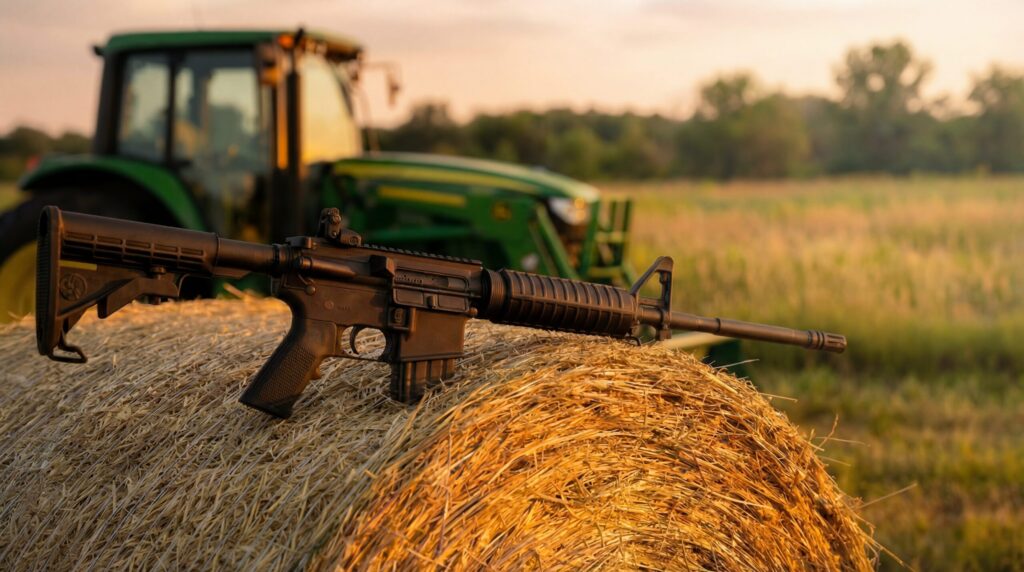
1. Ruger AR-556: Best Overall First AR-15
- Caliber: 5.56 NATO / .223 Rem
- Barrel Length: 16.1″ (cold hammer forged, 1:8 twist)
- Weight: 6.5 lbs
- Gas System: Mid-length
- Rail: M-LOK free-float handguard
- MSRP: ~$800
Pros
- Ruger’s legendary quality control means no surprises
- Cold hammer forged barrel (usually a premium feature)
- Available at literally every gun store in America
- Reliable out of the box, no break-in needed
- Free-float M-LOK handguard for future accessories
Cons
- Trigger is basic (but functional for learning)
- Furniture feels budget (you’ll want to upgrade eventually)
- Not the cheapest option
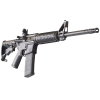

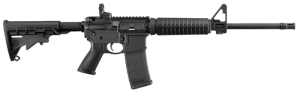
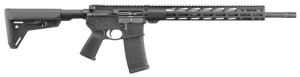
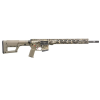
Ruger AR-556 is my default recommendation for first-time AR-15 buyers, and it has been for years. Why? Because I’ve never seen a bad one. Every single Ruger AR-556 I’ve handled has been properly assembled, properly headspaced, and ready to shoot out of the box. When you’re spending your hard-earned money on your first rifle, that confidence matters.
Ruger includes a cold hammer forged barrel on the AR-556, which is a feature you typically don’t see until the $1,200+ price range. CHF barrels are more accurate and more durable than standard button-rifled barrels. It’s like getting a premium engine in an economy car. The free-float M-LOK handguard is another thoughtful inclusion that gives you room to add a bipod, light, or other accessories down the road.
Walk into any gun store, big box retailer, or sporting goods shop and they’ll have the Ruger AR-556 in stock. That availability matters for beginners. You can hold it, feel the weight, check the ergonomics, and buy it that day. No waiting for an online order, no FFL transfer headaches. Just walk in, fill out your 4473, and walk out with a great rifle.
Best For: First-time AR buyers who want zero risk and zero drama. The Ruger AR-556 is the safe bet that never disappoints. Buy it with confidence.

2. Smith & Wesson M&P15 Sport III: The Classic First AR
- Caliber: 5.56 NATO / .223 Rem
- Barrel Length: 16″ (Armornite finish, 1:8 twist, 5R rifling)
- Weight: 6.5 lbs
- Gas System: Mid-length
- Rail: 15″ free-float M-LOK handguard, flat-top upper
- MSRP: ~$799
Pros
- Free-float M-LOK handguard is a massive upgrade over the Sport II
- Mid-length gas system runs softer than carbine-length
- 1:8 twist handles 62gr and 77gr bullets with no issues
- S&W brand reliability and customer service
- Available everywhere at competitive prices
Cons
- No iron sights included (need to buy flip-ups)
- Trigger is still basic mil-spec
- At $799, competition from IWI Zion-15 is fierce
- 5R rifling is nice but not a big deal at this level
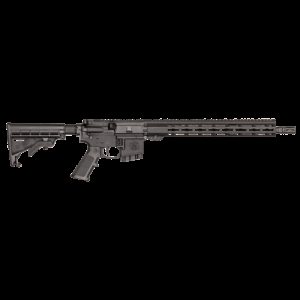
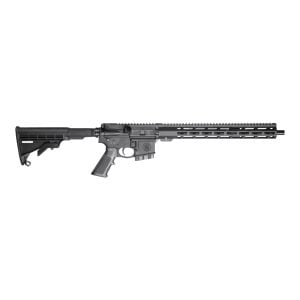
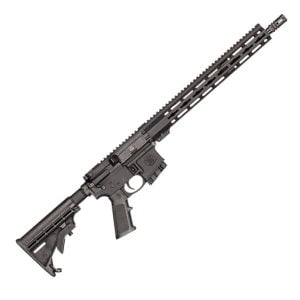
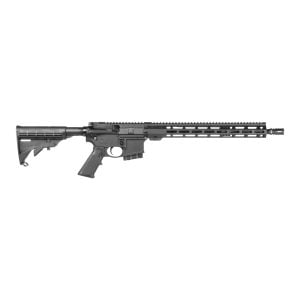
Smith & Wesson finally listened. The Sport III is what the Sport II should have been three years ago. They ditched the dated drop-in handguard for a 15-inch free-float M-LOK rail, upgraded from carbine to mid-length gas, and switched to a 1:8 twist with 5R rifling. Every major complaint about the Sport II has been addressed. For the full breakdown, read our M&P Sport III review with 1,500 rounds through it.
Mid-length gas system is the biggest functional upgrade. It moves the gas port further from the chamber, which means lower gas pressure at the port, softer recoil impulse, and less wear on the bolt carrier group. The 1:8 twist is the other key change. The Sport II’s 1:9 twist struggled with heavier 77gr match bullets. The Sport III handles 55gr through 77gr without complaint. That opens up your ammo options significantly.
One downside: no iron sights. The Sport II came with an A2 front sight that at least gave you something to aim with out of the box. The Sport III ships with a flat-top rail and nothing on it. Budget $30 for a set of Magpul MBUS flip-ups or plan on mounting an optic immediately. At $799, the IWI Zion-15 at $850 is still a strong competitor with B5 Systems furniture and a similar free-float setup. But the Sport III has closed the gap dramatically and the S&W name carries weight with first-time buyers.
Best For: First-time buyers who want a modern, well-equipped AR from a trusted brand. The Sport III finally competes with the Zion-15 and Ruger MPR on features, not just name recognition.
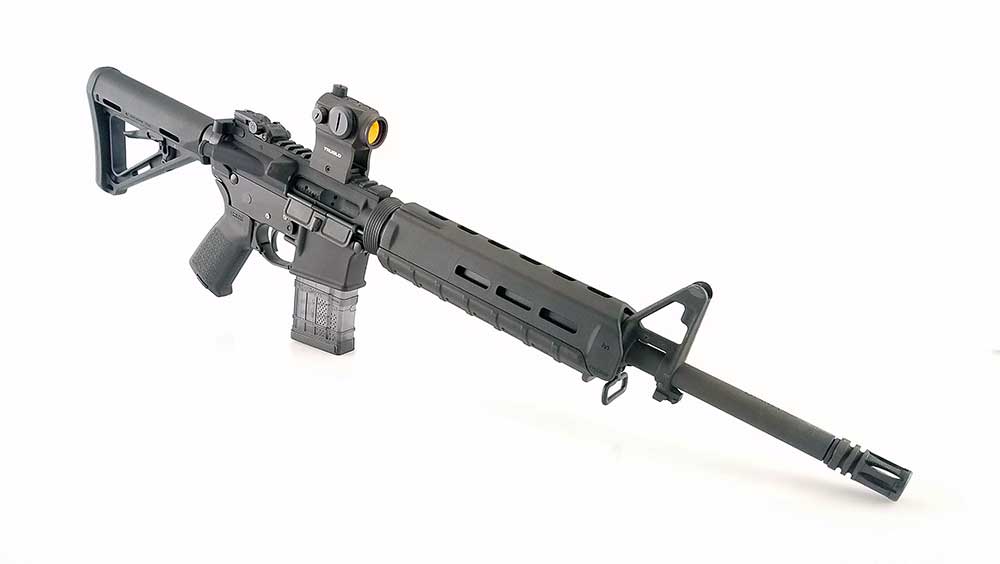
3. PSA PA-15: Best Budget First AR-15
- Caliber: 5.56 NATO
- Barrel Length: 16″ (nitride coated, 1:7 twist)
- Weight: 6.4 lbs
- Gas System: Mid-length
- Rail: M-LOK free-float handguard
- MSRP: ~$500 (frequently on sale for $450)
Pros
- Complete AR-15 for under $500 (on sale)
- Free-float M-LOK handguard at this price is remarkable
- Spend the savings on ammo and training
- Made in America
- Good enough for home defense and range use
Cons
- QC can be inconsistent (test yours thoroughly)
- Furniture feels cheap (because it is)
- Customer service is slow when issues arise
- Not the rifle to bet your life on without testing first




I’m going to say something controversial: for most beginners, a PSA PA-15 is all you need. It costs about $500. It shoots. It works. And the $300-500 you save over a Ruger or IWI can go directly into ammo and training. A beginner with a PSA and 1,000 rounds of practice will outshoot a beginner with a Daniel Defense and 200 rounds every single time.
PSA has gotten significantly better over the years. Their current PA-15 line includes a free-float M-LOK handguard, which was unheard of at this price point five years ago. The nitride-coated barrel is adequate for thousands of rounds. The 1:7 twist rate stabilizes everything from 55gr to 77gr bullets. It’s a functional, capable rifle at an impossible price.
QC caveat is real though. When your PSA arrives, check everything. Make sure the front sight isn’t canted. Verify the handguard is tight. Run 200 rounds through it and watch for any cycling issues. If everything checks out (and it usually does), you’ve got a great first rifle for the price of a nice dinner. For more budget options, see our cheap AR-15 rifles guide.
Best For: Budget-conscious first-timers who’d rather spend money on ammo and training than brand name. The smart money move for new shooters.
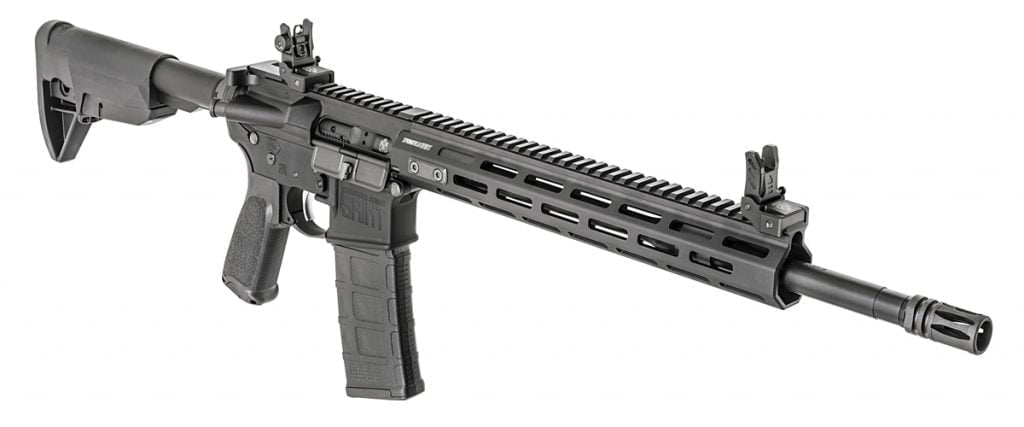
4. Springfield Saint: Best Mid-Range First AR-15
- Caliber: 5.56 NATO
- Barrel Length: 16″ (Melonite coated, 1:8 twist)
- Weight: 6.9 lbs
- Gas System: Mid-length
- Rail: M-LOK free-float handguard
- MSRP: ~$950
Pros
- Springfield’s Accu-Tite system gives premium feel
- Nickel boron trigger is better than standard mil-spec
- Mid-length gas system for smoother cycling
- BCM Gunfighter grip and B5 stock included
- Lifetime warranty from Springfield
Cons
- More expensive than Ruger/IWI for similar performance
- Heavier than competitors at 6.9 lbs
- Not as feature-rich as the Saint Victor
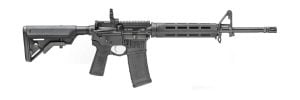
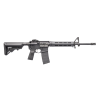


Springfield Saint is the “nice” starter AR. It feels more refined than the PSA or basic Ruger, with a nickel boron coated trigger that’s noticeably smoother, BCM Gunfighter grip and B5 Systems stock that feel great in hand, and Springfield’s Accu-Tite system that eliminates any wobble between the upper and lower. These are touches that make the rifle feel premium without costing premium prices.
Mid-length gas system is a meaningful advantage over the carbine-length gas on cheaper rifles. Mid-length gas produces lower bolt velocities, which means less recoil impulse, less wear on internal parts, and smoother overall cycling. For a new shooter learning the platform, a smoother shooting rifle builds better habits. You flinch less when the gun doesn’t bark at you.
Springfield includes quality furniture that most other manufacturers cheap out on. The BCM Gunfighter grip is one of the most popular aftermarket grips for a reason, and the B5 Systems stock is a genuine upgrade over standard mil-spec stocks. These are parts that buyers typically spend $60-80 upgrading to on cheaper rifles. Springfield just includes them from the factory.
Best For: First-time buyers who want a step up from budget tier without entering premium territory. The Saint is the goldilocks option.
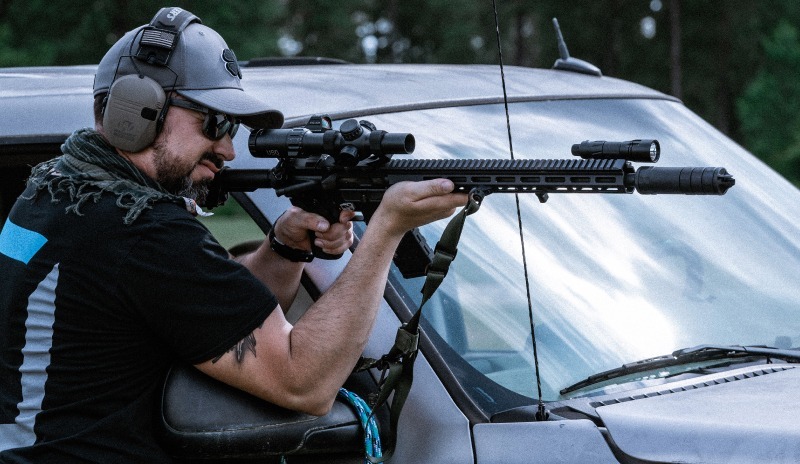
5. IWI Zion-15: Best Value Premium First AR-15
- Caliber: 5.56 NATO
- Barrel Length: 16″ (cold hammer forged, 1:8 twist)
- Weight: 6.8 lbs
- Gas System: Mid-length
- Rail: IWI free-float M-LOK
- MSRP: ~$850
Pros
- BCM-quality barrel at half the price
- B5 Systems grip and stock included
- Sub-MOA accuracy from factory (remarkable for $850)
- IWI’s military heritage (Tavor, Galil, Uzi)
- Free-float M-LOK handguard
Cons
- Proprietary barrel nut limits handguard swaps
- Trigger needs upgrading for best performance
- Slightly heavier than competitors
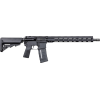

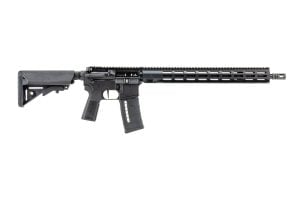
IWI Zion-15 is the rifle that changed the value equation for first-time AR buyers. Before the Zion-15, getting BCM-quality features meant spending BCM-quality money ($1,400+). IWI proved you could deliver a sub-MOA, free-float, mid-length gas AR with premium furniture for $850. The rest of the industry is still playing catch-up.
For a beginner, the Zion-15 offers a rifle you’ll never need to “upgrade out of.” Many people buy a budget AR, then spend $500 in upgrades to make it what they wanted in the first place. The Zion-15 comes from the factory with B5 Systems furniture, a genuinely accurate barrel, and a free-float handguard. The only upgrade I’d recommend is a trigger swap (Larue MBT-2S for $90) and a basic red dot sight.
IWI makes weapons for the Israel Defense Forces. That military pedigree isn’t marketing fluff. The engineering and quality standards that go into IDF weapons carry over to the Zion-15. You’re getting a rifle designed by people who build guns for a military that’s in active combat operations. That means something. For a full brand comparison, see our AR-15 brands ranked guide.
Best For: First-time buyers who want to buy once and be done. The Zion-15 is the best value in the AR-15 market. Period.
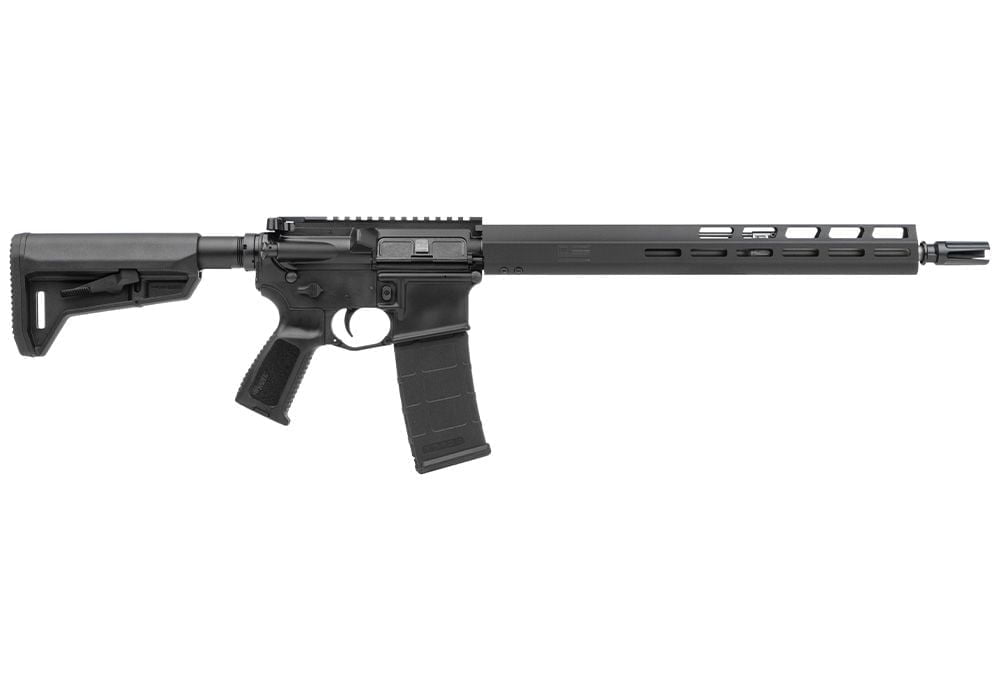
6. Sig Sauer M400 Tread: Best Quality First AR-15
- Caliber: 5.56 NATO
- Barrel Length: 16″ (stainless, 1:8 twist)
- Weight: 7.0 lbs
- Gas System: Direct impingement, mid-length
- Rail: Sig M-LOK free-float
- MSRP: ~$900
Pros
- Sig Sauer brand = military credibility
- Stainless barrel resists corrosion
- Clean Cerakote finish throughout
- Tread accessory ecosystem for future upgrades
- Excellent customer service and warranty
Cons
- Slightly heavier at 7.0 lbs
- Trigger is adequate, not impressive
- $900 is close to the mid-range tier
Sig Sauer makes the U.S. Army’s handgun (M17/M18) and won the Next Generation Squad Weapon contract. When someone asks “can I trust Sig?” the answer is backed by billions of dollars in military contracts. The M400 Tread brings that reputation to the entry-level AR-15 market, and it delivers.
The stainless barrel and Cerakote finish are nice touches for a first rifle. Many beginners don’t clean their guns as often as they should (it’s fine, we’ve all been there), and the corrosion resistance gives you a buffer against neglect. The Tread ecosystem also lets you swap handguards, stocks, and grips within Sig’s modular system as your preferences develop.
At $900, the M400 Tread is at the upper end of what I’d recommend for a first AR. But if your budget can handle it, the Sig delivers a more refined shooting experience than the PSA or base Ruger. The fit and finish feel like they belong on a more expensive rifle. Add a Sig Romeo5 red dot ($120) and you’ve got a setup that looks and shoots like a $1,500 package.
Best For: First-timers who want military-pedigree quality and can stretch their budget to $900. The Sig name on your rifle means something.
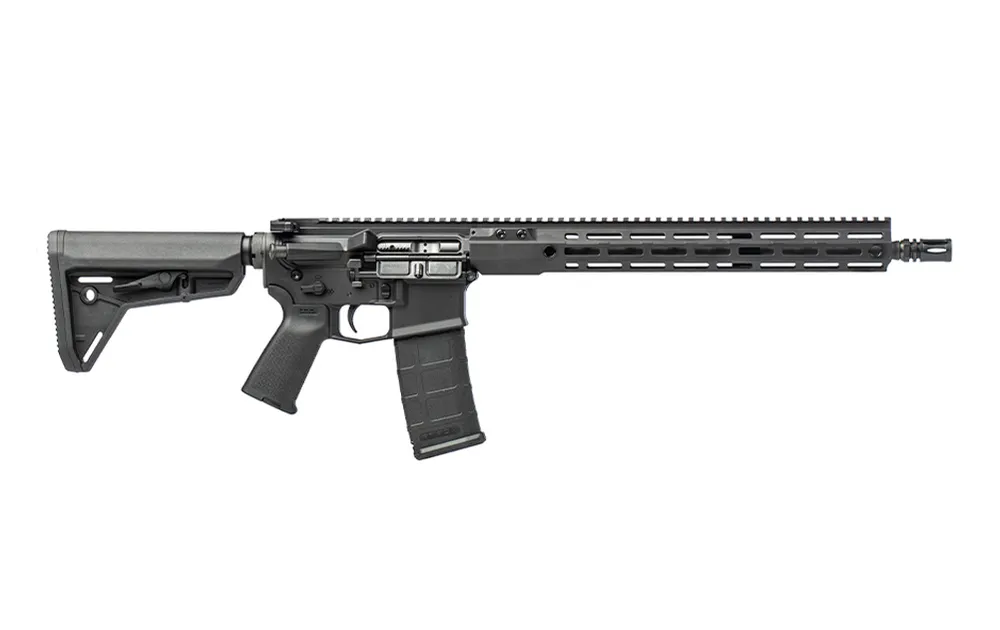
7. Aero Precision M4E1 Complete: Best for the Build-Curious
- Caliber: 5.56 NATO
- Barrel Length: 16″ (configurable)
- Weight: ~6.5 lbs (depends on configuration)
- Gas System: Mid-length
- Rail: ATLAS S-ONE or R-ONE M-LOK
- MSRP: ~$900 (complete rifle) or $700 (assembled from parts)
Pros
- M4E1 lower with threaded pins is the best enhanced lower
- Aero complete rifles are properly assembled and tested
- Gateway to building future ARs (you’ll learn the platform)
- Outstanding anodize quality and fit
- Can be assembled from a complete lower + complete upper
Cons
- Aero completes aren’t always in stock
- Trigger needs upgrading for the best experience
- Furniture is adequate but basic
If you’re the kind of person who wants to understand how your rifle works, Aero Precision is your entry point. You can buy a complete Aero rifle for about $900, or (even better) buy a complete lower and complete upper separately and assemble them yourself in about 30 seconds. It’s literally two push pins. That tiny bit of hands-on assembly demystifies the AR-15 platform and opens the door to future builds.
The M4E1 lower receiver is the best enhanced lower on the market for the money. Threaded takedown pins (no hammering roll pins), integrated trigger guard, and a tension screw that eliminates upper/lower receiver wobble. Once you’ve used an M4E1 lower, standard lowers feel primitive. Every builder I know has at least one M4E1 in their collection.
Aero also sells their complete rifles in a variety of configurations: different barrel lengths, different handguards, different finishes. That customization from the factory level means you can spec a rifle closer to your preferences without building from scratch. For the complete build walkthrough, check our AR-15 build guide. And for parts recommendations, see our parts and accessories guide.
Best For: Mechanically curious beginners who want to understand their rifle and might want to build future ARs. The gateway drug to the AR-15 building addiction.
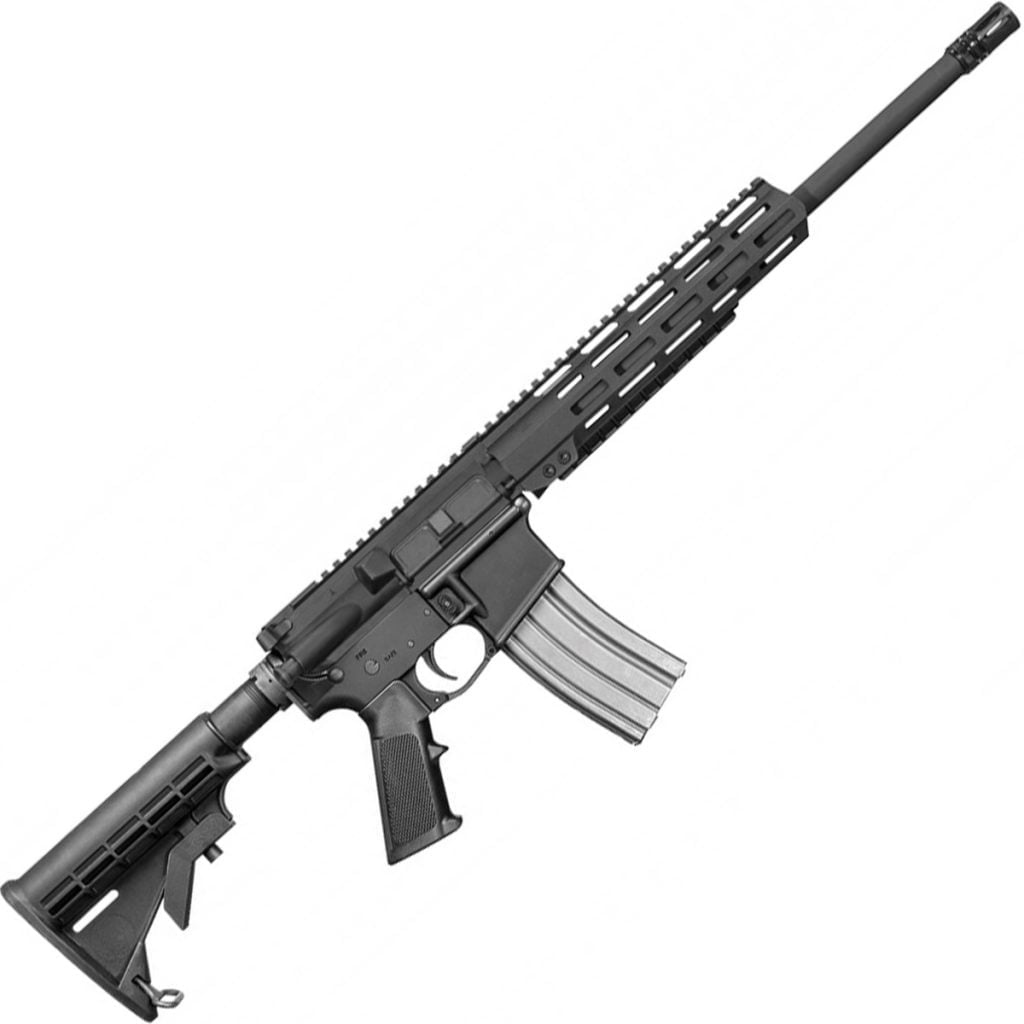
8. Del-Ton Echo 316H: Cheapest Quality First AR-15
- Caliber: 5.56 NATO
- Barrel Length: 16″ (chrome-moly, 1:9 twist)
- Weight: 6.4 lbs
- Gas System: Mid-length
- Rail: Drop-in handguard with upper rail
- MSRP: ~$475
Pros
- Sub-$500 AR-15 from a reputable manufacturer
- Del-Ton has been building quality ARs in NC for 20+ years
- Chrome-moly barrel is adequate for thousands of rounds
- Lightweight at 6.4 lbs
- American made
Cons
- Drop-in handguard (non-free-float)
- 1:9 twist limits heavy bullet options
- Furniture is bare-bones basic
- You’ll want to upgrade the handguard eventually
Del-Ton has been quietly building solid, no-frills AR-15s in North Carolina since 2002. They don’t have PSA’s marketing budget or Ruger’s brand recognition, but they make honest rifles at honest prices. The Echo 316H is their entry-level model, and at sub-$500, it’s one of the cheapest quality ARs you can buy from a reputable manufacturer.
What separates Del-Ton from the absolute bottom-tier brands (looking at you, Anderson) is consistency. Del-Ton rifles are properly assembled, properly headspaced, and properly finished. Every one I’ve handled has been ready to shoot out of the box. They won’t win accuracy competitions, but 2 MOA with standard ammo is typical, and for a beginner learning the platform, that’s more than adequate.
The Echo 316H uses a drop-in handguard, which is the one feature I’d eventually upgrade. A free-float handguard improves accuracy and gives you M-LOK slots for accessories. But as a starting point for a new shooter on a tight budget, the Del-Ton gets you into the AR-15 game for less than any other quality option. Spend the savings on ammo. It matters more than the rifle.
Best For: Absolute budget buyers who want a quality AR from a reputable company at the lowest possible price. Del-Ton proves you don’t need to spend $800 to own a functional AR-15.
Buyer’s Guide: What First-Time AR Buyers Need to Know
You Don’t Need to Spend $2,000
I see this mistake constantly. New buyers jump on forums, read about Daniel Defense and BCM, and think they need to spend $1,500+ for a “good” AR-15. That’s wrong. A $700-900 rifle from Ruger, IWI, or Springfield will do everything a recreational shooter or home defender needs for years. Save the $2K Daniel Defense for when you know the platform well enough to appreciate the difference.
Put the money you save toward ammo (budget $200-300 for your first range sessions), a basic red dot sight ($120-200 for a Sig Romeo5 or Holosun 403B), and at least one introductory training class ($150-250). A trained shooter with a $500 PSA is more dangerous than an untrained shooter with a $3,000 KAC. Every single time.
Essential First AR Accessories
Start with these and only these: a quality red dot sight (Sig Romeo5 or Holosun 403B), a basic two-point sling ($30-50), and a gun safe or lockbox for secure storage (see our AR-15 safe guide). That’s it. Don’t buy a weapon light, a magnifier, a bipod, a custom trigger, backup iron sights, and a new handguard before you’ve even shot the rifle. Learn what you actually need first, then buy it. See our red dot sights guide and parts guide for specific recommendations.
Maintenance Basics
Clean your AR-15 after every range trip for the first few hundred rounds. After that, you can extend cleaning intervals to every 500-1,000 rounds. Use a basic cleaning kit with CLP (clean, lube, protect) and a bore snake. Keep the bolt carrier group lubricated. The AR-15 likes to run wet. A dry AR is an unreliable AR. It takes 15 minutes once you know what you’re doing, and YouTube has a thousand tutorials showing exactly how to do it.
Shop Beginner AR-15 Rifles
Best-scored accessories across 200+ retailers · Updated every 4 hours
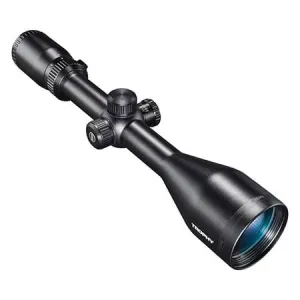
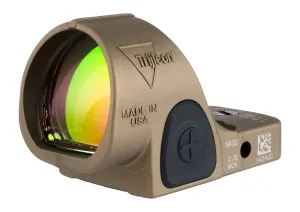
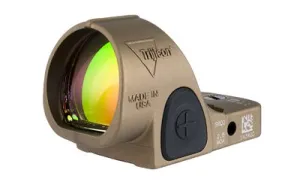
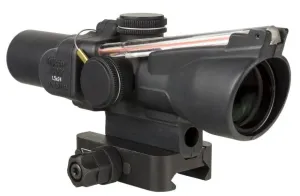


Compare prices on our gun deals page or use the price comparison tool to find the lowest price. For AR-15 specific deals, check our AR-15 deals page.
FAQ: Best AR-15 for Beginners
Related: New to buying? Our guide breaks down how much guns cost across every category, from budget to premium.
What is the best first AR-15 to buy?
The Ruger AR-556 is the best overall first AR-15. It offers Ruger quality control, a cold hammer forged barrel, and wide availability at about 800 dollars. For a tighter budget, the PSA PA-15 at 500 dollars is the best value starter.
How much should I spend on my first AR-15?
Plan to spend 500-900 dollars on your first AR-15 rifle, plus 120-200 dollars for a red dot sight, and 200-300 dollars for initial ammo and training. You do not need to spend 2000 dollars on your first rifle.
Do I need to modify my first AR-15?
No, buy a quality factory rifle and shoot it as-is for your first 1000 rounds. Learn the platform before spending money on upgrades. The only immediate addition worth making is a basic red dot sight like the Sig Romeo5.
Is the PSA PA-15 a good first AR?
The PSA PA-15 is an excellent budget first AR-15 at about 500 dollars. Most are reliable and functional. Inspect yours carefully when it arrives and put 200 rounds through it to verify function. The money saved can go toward ammo and training.
What optic should I put on my first AR-15?
A Sig Sauer Romeo5 (120 dollars) or Holosun 403B (150 dollars) red dot sight is the best first optic. Both are durable, have long battery life, and are easy to use. Skip magnified scopes until you master the basics.
Is the AR-15 hard to learn to shoot?
The AR-15 is one of the easiest rifles to learn. Low recoil, ergonomic controls, and simple manual of arms make it ideal for beginners. Take a basic rifle course to learn proper fundamentals before your first range trip.
What ammo should I buy for my first AR-15?
Start with brass-cased 5.56 NATO or 223 Remington in 55-grain FMJ for range practice. Federal American Eagle, PMC Bronze, and Winchester White Box are all reliable and affordable at about 30 cents per round.
How do I store my AR-15 safely?
Store your AR-15 in a quality gun safe or locking cabinet, unloaded, with a cable lock through the action. For quick-access home defense, a biometric rifle safe keeps the gun secure from unauthorized users while allowing rapid access.
4,626+ Gun & Ammo Deals
Updated daily from 200+ top retailers. Filter by category, caliber, action type, and price.