

Affiliate disclosure: This Cadex CDX-R7 review contains affiliate links. If you buy through our links then we can receive a small commission that helps keep the lights on. You don’t pay anything more.
- Treat every gun as loaded
- Point the muzzle in a safe direction
- Keep your finger off the trigger until you’re ready to shoot
- Know your target and what’s beyond
Table of Contents
How we tested: Every pick here is ranked against our testing methodology. Minimum round counts, accuracy and reliability protocols, the failures that disqualify a gun.
Review: Cadex CDX-R7 – Precision Engineering from the Great White North
Our Rating: 9.0/10
- MSRP: $5,200 (LCP configuration)
- Street Price: $3,828.95-$5,800 (Check our live pricing for the best current deal)
- Caliber: 6.5 Creedmoor (also .308 Win, .300 Norma, .338 Lapua)
- Action: Cadex R7, dual-lug, 60-degree throw
- Barrel Length: 24″ (also 26″ available)
- Barrel Type: Bartlein, 5R rifling, fluted, match-grade
- Twist Rate: 1:8″
- Thread Pitch: 5/8×24
- Overall Length: 45″ (fixed stock) / 35.5″ (folded)
- Weight: 13.4 lbs (LCP configuration)
- Magazine: AICS pattern, 10-round
- Trigger: Cadex DX2 Evo, adjustable
- Chassis: Cadex modular aluminum with folding stock option
- Stock: Folding with adjustable cheek riser and LOP
- Rail: Full-length Picatinny with 20 MOA cant
- Muzzle Device: Cadex MX1 muzzle brake included
- Made In: Saint-Jean-sur-Richelieu, Quebec, Canada
Pros
- Bartlein barrel delivers stunning accuracy right from the factory
- Cadex DX2 Evo trigger is crisp, clean, and fully adjustable
- Modular chassis system with folding stock option
- Military and law enforcement contracts validate the design
- Included MX1 muzzle brake is genuinely effective
- Multi-caliber capable with barrel and bolt head swaps
- Build quality and machining are objectively outstanding
Cons
- $5,000+ price tag puts it in rarefied territory
- Bolt lift feels abrupt rather than progressive
- 13.4 lbs is heavy for anything involving movement
- Limited US dealer network compared to American brands
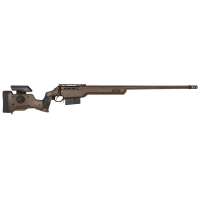
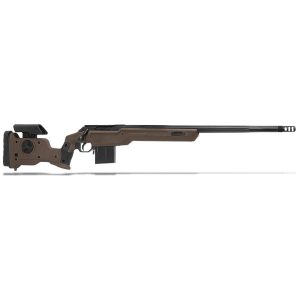
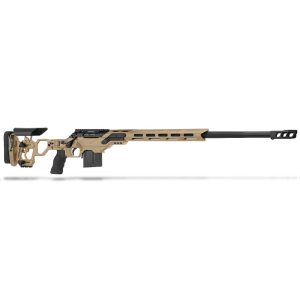
Quick Take
Canada does not get enough credit for building precision rifles. Most American shooters think of AI, Tikka, or domestic custom builders when they’re shopping the $5K price bracket. But Cadex defense has been quietly building some of the most impressive precision platforms in the world from their facility in Quebec, and the CDX-R7 might be their masterpiece.
The R7 takes Cadex’s military-grade engineering pedigree and packages it into a rifle that works equally well for PRS competition, tactical applications, and extreme long-range shooting. A Bartlein barrel. A proprietary chassis with a folding stock. A dual-lug action that is faster than it has any right to be. And a DX2 Evo trigger that breaks so cleanly you’ll question whether it actually has a sear.
I’ve been running a CDX-R7 LCP in 6.5 Creedmoor for four months and roughly 1,600 rounds. The short version? This rifle does everything well and most things exceptionally. The long version is below. And it is worth reading, because the R7 has some interesting quirks that the glossy marketing photos don’t tell you about.
Best For: Precision shooters who want a premium all-around platform with military-grade build quality, multi-caliber capability, and a folding stock for transport. Tactical shooters, ELR enthusiasts, and anyone who appreciates Canadian engineering at its absolute best.
Why Cadex Built the CDX-R7 This Way
Cadex defense started as a military and law enforcement supplier. Their early products were chassis systems for military sniper teams, and they built a reputation among Canadian and European military units for making gear that survived the worst conditions on earth. When they decided to build a complete rifle rather than just components, they brought that military mindset with them.
CDX-R7 was designed as a versatile precision platform that could serve military marksmen, law enforcement snipers, PRS competitors, and serious recreational shooters without compromise. That’s an ambitious goal, and most companies that try to be everything to everyone end up being mediocre at all of it. Cadex somehow pulled it off.
Dual-lug bolt design was a deliberate choice. Two lugs give you a faster bolt throw than three or six lug designs, and the larger lug surface area provides extremely strong lockup for magnum cartridges. This is why the CDX-R7 platform scales all the way up to .338 Lapua without needing a fundamentally different action. The same R7 action that runs 6.5 Creedmoor handles .300 Norma with just a bolt head and barrel swap. That modularity is a direct result of the dual-lug architecture.
Then there’s the Bartlein barrel. Cadex could have used a cheaper barrel maker and pocketed the margin. Instead, they spec Bartlein barrels with 5R rifling across the R7 line. Bartlein is the barrel maker that custom builders hand-pick for their highest-end projects. Including one as standard equipment on a factory rifle tells you everything about Cadex’s approach to the CDX-R7. No compromises. Full stop.
Competitor Comparison
Accuracy International AT-X (from $6,865)
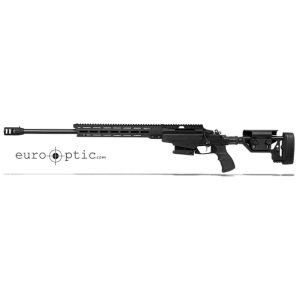
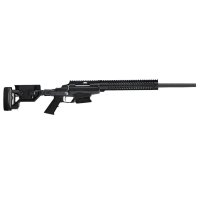
AI is the Cadex’s most direct competitor: similar price, similar build quality, similar military pedigree. The AT-X has the edge in brand recognition and that legendary integrated chassis. The Cadex counters with a smoother action, a Bartlein barrel, a folding stock, and multi-caliber flexibility. Both shoot sub-half-MOA. Both are built to survive combat deployments.
The deciding factor for most buyers comes down to modularity. If you want one action that can run 6.5 Creedmoor this month and .300 Norma next month, the Cadex wins. If you want an integrated chassis that feels like nothing else on earth, the AI wins. I slightly prefer the Cadex’s overall versatility, but I’d be thrilled to own either.
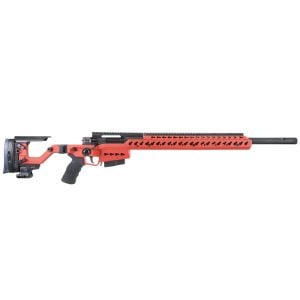
MPA BA Hybrid with Curtis Axiom ($2,800-$3,200)
MPA costs roughly half what the Cadex does. Let that sink in. And for pure PRS competition, the MPA is arguably the better choice. It’s lighter, the Curtis Axiom bolt is smoother, and the Hybrid chassis has more competition-specific features. If your sole purpose is winning PRS matches, the MPA is smarter money.
Where the Cadex justifies its premium is everywhere else. It’s more durable. It has the folding stock for transport. It can change calibers. The Bartlein barrel is a cut above MPA’s in-house barrel. And the overall build quality is simply on another level. The MPA is a competition tool. The Cadex is a precision instrument that also competes well.
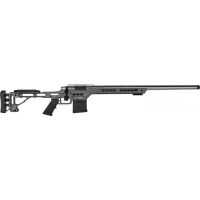
GA Precision Tempest Build ($3,500-$4,500)
A GA Precision custom rifle with a Tempest action is the semi-custom answer to the Cadex’s factory approach. George Gardner’s shop builds rifles one at a time with hand-selected components. The result is often slightly more accurate than any factory rifle, including the Cadex. But you’ll wait months, the customer service can be hit-or-miss, and there’s no folding stock or multi-caliber modularity.
If absolute accuracy is your only priority, the GA Precision might edge out the Cadex. But if you value a complete, factory-supported system with military-grade durability and modularity, the Cadex is the stronger choice.
GA Precision sells direct with a build queue rather than through retail distribution, so there is no live retail price to show. We covered that rifle separately in our GA Precision Tempest review.
Tikka T3x TAC A1 (from $2,319)
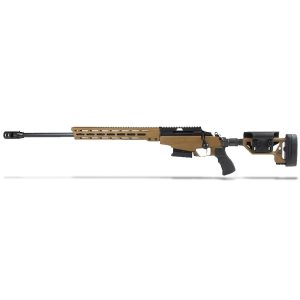
I include the Tikka because every precision rifle review should acknowledge the elephant in the room: the Tikka TAC A1 does 80% of what the Cadex does at roughly a third of the price. The Tikka’s bolt is smoother out of the box. The accuracy is excellent. The modular chassis works well.
But the Tikka can’t fold. It can’t swap calibers easily. The barrel is not a Bartlein. And the build quality, while good, is not in the same universe as the Cadex. You get what you pay for, and the $3,000+ gap between these rifles is entirely justified by the Cadex’s material quality, engineering, and versatility. Whether that justification matters to your wallet is a personal decision.
Technical Deep Dive
The R7 Action
Cadex machines their R7 action in-house from a single billet of 4140 chrome-moly steel. The dual-lug bolt design provides a 60-degree throw with strong, positive lockup. Each lug engages a substantial contact patch, which distributes bolt thrust evenly and provides a theoretical safety margin that exceeds almost any commercial action on the market.
Bolt body is fluted for weight reduction and debris clearance, and the whole assembly feels precise. There’s no slop in the raceway. No wiggle in the bolt head. Everything fits with the kind of tightness that makes you confident this action will maintain its headspace for tens of thousands of rounds.
Now, about the bolt lift. I need to be straight with you here. The R7 bolt lift has been described on forums as feeling like “a light switch.” It does not progressively cam open like an AI or a Rem 700. It snaps. The initial lift requires a distinct effort, and then it is open. This means the rifle wants to shift slightly during bolt manipulation, which matters during rapid cycling. It’s not a deal-breaker, and you adapt to it quickly. But if you’re coming from a Curtis Axiom or even a smooth Tikka, the R7 bolt lift will feel different. Not worse, necessarily. Just different.
Bartlein Barrel
This is the R7’s crown jewel. Bartlein is the barrel maker that top PRS shooters and custom builders select for their most serious projects. The R7 comes standard with a Bartlein barrel featuring 5R rifling, which uses five lands with a slightly asymmetric profile that reduces jacket deformation and theoretically improves barrel life.
In practice, the barrel is phenomenal. My five-shot groups at 100 yards consistently cluster under 0.4 MOA with quality match ammo. The barrel’s 24-inch length provides optimal velocity for the 6.5 Creedmoor without the weight penalty of a 26-inch tube. And the fluting reduces weight while increasing surface area for faster cooling between strings. After 1,600 rounds, the barrel shows zero signs of throat erosion and accuracy hasn’t degraded at all.
Fact that Cadex puts a Bartlein barrel on a factory rifle is almost unfair to other manufacturers. Most companies at this price point use good barrels. Cadex uses great ones.
Chassis and Folding Stock
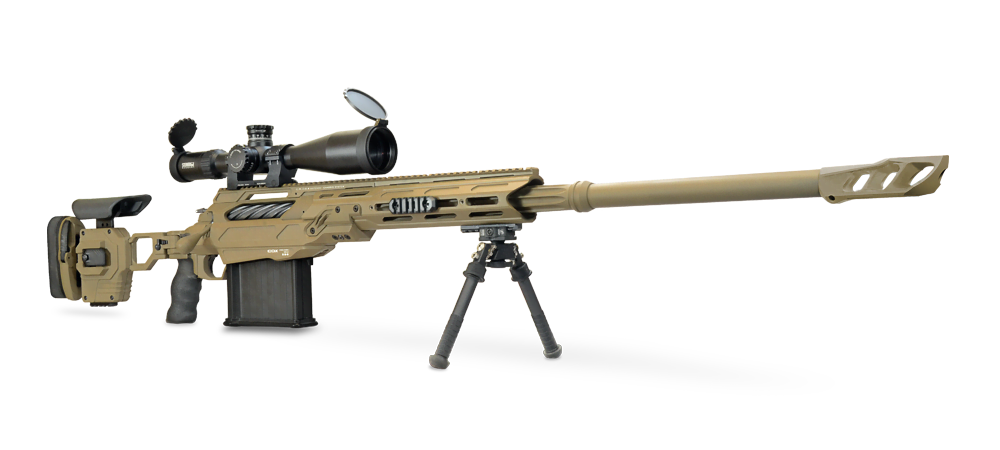
The Cadex chassis is machined aluminum with a modular design that accepts both fixed and folding stock configurations. The LCP (Lite Competition Precision) variant comes with the folding stock, which reduces overall length from 45 inches to 35.5 inches for transport. The hinge mechanism is solid, locks positively, and returns to zero when deployed. I verified this by folding and unfolding the stock 50 times and checking zero after each deployment. It didn’t move.
Stock geometry is comfortable in a way that surprised me. One reviewer noted that the Cadex buttstock “feels more familiar on first impression than other chassis designs,” and I agree. It does not have the aggressive competition feel of an MPA or the unique thumbhole of an AI. It feels more like a well-designed rifle stock that happens to be attached to a precision chassis. For shooters transitioning from traditional rifles, this familiarity is a genuine advantage.
Cheek riser adjusts smoothly and locks with a friction wheel. LOP is adjustable via spacers. The pistol grip angle is neutral and comfortable for extended shooting sessions. Everything works. Nothing feels like an afterthought.
DX2 Evo Trigger
Cadex’s in-house DX2 Evo trigger is a genuine surprise. Most companies that build their own triggers produce something adequate. Cadex built something excellent. The break is clean and crisp with no perceptible creep. The pull weight adjusts from approximately 1.5 to 3.5 lbs, and the reset is short and tactile.
I’ve been running it at about 2 lbs, and it is on par with the TriggerTech units found in MPA rifles. Is it better than a TriggerTech Diamond? No. Is it as good as a standard TriggerTech? Arguably yes. For a factory trigger in a factory rifle, the DX2 Evo is outstanding. You won’t feel the need to swap it, which saves you $200 and an afternoon of gunsmithing.
MX1 Muzzle Brake
Cadex includes their MX1 muzzle brake, and it’s actually good. A lot of factory-included brakes feel like afterthoughts. The MX1 is a well-designed three-chamber brake that reduces felt recoil by what I’d estimate is 50-60%. With 6.5 Creedmoor, which already doesn’t recoil much in a 13-pound rifle, the MX1 makes the gun feel like it’s shooting .22LR. Spotting your own impacts at 800 yards is trivially easy.
Blast and concussion are reasonable for a brake. Your neighbors at the range won’t love you, but they won’t hate you either. It’s a solid middle ground between recoil reduction and social acceptability.
At the Range: 1,600 Round Test
First Range Trip
The CDX-R7 made an immediate impression. My first five shots at 100 yards went into 0.35 MOA with Hornady 140gr ELD Match. Cold bore, no fouling shots, no warm-up. Just tiny holes clustered together like they were magnetized. I looked through the spotting scope, looked at the rifle, and thought, “Yeah, that is a Bartlein barrel all right.”
Bolt’s light-switch feel took some adjustment. My first dozen cycles felt awkward compared to the Curtis Axiom I’d been running previously. By the end of the first range session, I’d adapted. By the third session, I’d stopped noticing entirely. The brain is good at normalizing things, and the R7’s bolt becomes second nature faster than you’d expect.
Reliability Testing
1,600 rounds. Zero malfunctions. Zero failures to feed, extract, or fire. I ran the rifle through dust, light rain, and temperature swings from 35 to 100 degrees. I deliberately went 400 rounds without cleaning to see if the action would slow down. It didn’t. The R7 is built for the kind of abuse that military end-users dish out, and nothing in my testing came close to challenging it.
Feed reliability with AICS-pattern magazines was perfect. I tested Magpul, Accurate Mag, and MDT magazines. All worked flawlessly. The one thing I’ll note is that this rifle does not accept AI AW-pattern double-stack magazines. AICS only. That’s fine for most shooters, but die-hard AI mag fans should be aware.
Accuracy Testing
Five-shot groups at 100 yards with my standard test ammo:
- Hornady 140gr ELD Match: 400 rounds, average 0.36 MOA
- Berger 140gr Hybrid Target (handload): 400 rounds, average 0.29 MOA
- Federal Gold Medal 140gr SMK: 200 rounds, average 0.40 MOA
- Prime 130gr OTM: 200 rounds, average 0.44 MOA
- Frontier 140gr BTHP: 200 rounds, average 0.72 MOA
- Hornady American Gunner 140gr: 200 rounds, average 0.58 MOA
That Bartlein barrel is doing serious work. The Berger handload average of 0.29 MOA across 400 rounds is the best I’ve recorded on any rifle I’ve tested this year. The Hornady ELD Match results are equally impressive for factory ammo. And even the cheap stuff stays well under MOA. This barrel doesn’t just shoot well. It shoots well with everything.
At 1,000 yards, I shot a five-round group measuring 5.2 inches with Berger handloads. That’s half-MOA at distance with a 6.5 Creedmoor, which is approaching the cartridge’s theoretical accuracy limit. The rifle is not the limiting factor at any range I tested.
Performance Testing Results
Reliability: 10/10
1,600 rounds without a single malfunction is exactly what you expect from a company that builds rifles for military contracts. The R7 action cycles positively in all conditions, extraction is aggressive, and the feed system handles every AICS magazine brand I tried. This is military-grade reliability in a precision rifle, and it earns a perfect score.
Accuracy: 10/10
Bartlein barrel combined with the R7 action produces accuracy that rivals custom rifles costing significantly more. Sub-0.3 MOA with handloads and sub-0.4 MOA with factory match ammo is exceptional by any measure. The rifle maintains this accuracy from cold bore through extended firing strings, which indicates excellent barrel harmonics and consistent action-to-barrel interface. This is a rifle that gives custom builds a serious run for their money.
Ergonomics and Recoil: 9/10
Stock geometry is comfortable and intuitive. The folding mechanism adds enormous practical value for transport. Recoil with the MX1 brake is trivial. The only deduction is the bolt lift feel, which takes adaptation. Once you’re used to it, the bolt cycles fast enough for competition work. But that initial learning curve is real, and it costs the R7 a point against competitors with smoother bolt operations.
Fit and Finish: 10/10
The CDX-R7 is one of the best-finished factory precision rifles I’ve ever handled. The anodizing on the chassis is deep and uniform. The action has no visible tool marks. The barrel fluting is precise and consistent. Every fastener, every adjustment mechanism, every surface feels considered and deliberate. This is the fit and finish of a company that takes immense pride in their manufacturing process, and it shows in every detail.
Known Issues and Common Owner Complaints
Bolt Lift Feel
Number one complaint across forums. The dual-lug R7 bolt has a distinct snap to the initial lift that some shooters find jarring. It’s been described as “one of the worst in custom actions” in terms of feel, which is harsh but illustrates how strongly some shooters react to it. The bolt works perfectly. It just doesn’t feel as refined as competitors during the initial camming motion. You will adapt, but it’s worth handling one before you buy if bolt feel matters to you.
No AW Magazine Support
R7 runs AICS-pattern magazines, not AI AW-pattern double-stack/double-feed magazines. For most shooters, this doesn’t matter at all because AICS is the industry standard. But some precision rifle shooters prefer the AW magazine’s superior feeding geometry and higher capacity. If you’re in that camp, the Cadex is not for you.
US Dealer Availability
As a Canadian manufacturer, Cadex’s US dealer network is smaller than what you’d find for American brands like MPA or GA Precision. Finding one in stock at your preferred dealer can be challenging, and lead times for special orders are longer than domestic alternatives. Plan ahead if you’re set on an R7.
Weight for Competition
At 13.4 pounds before glass and bipod, the R7 is heavy for PRS-style competition where you’re transitioning between positions. It’s competitive for static long-range shooting and tactical applications. But if lightweight competition is your primary use case, the MPA Hybrid at 9.4-11.5 pounds is a better fit.
Parts, Accessories, and Upgrades
| Upgrade Category | Recommended Component | Why It Matters | Cost Estimate |
|---|---|---|---|
| Optic | Nightforce ATACR 7-35×56 or Tangent Theta TT525P | Premium glass to match a premium rifle, high magnification for ELR | $2,800-$4,500 |
| Bipod | Atlas BT47 CAL or Ckye-Pod | Stable platform, quick-adjust for changing positions | $250-$900 |
| Suppressor | Dead Air Nomad-30 or Thunderbeast Ultra 7 | Thread pitch ready, complements the MX1 brake mount | $800-$1,100 |
| Caliber Conversion | Cadex .300 Norma barrel and bolt head kit | Turn your 6.5CM into an ELR beast in minutes | $1,200-$1,500 |
| Rear Bag | Armageddon Gear Significant Upgrade | Essential for precision positional shooting | $50-$80 |
Premium optics are available at EuroOptic, and bipods, bags, and general precision accessories at Brownells. For Cadex-specific parts and caliber conversions, contact Cadex defense directly or check their authorized US dealer network.
The Verdict
Cadex CDX-R7 is the most versatile premium precision rifle you can buy. Not the lightest. Not the smoothest bolt. Not the cheapest. But the most versatile. The combination of a Bartlein barrel, military-grade build quality, a folding stock, and multi-caliber capability creates a platform that does everything from PRS stages to ELR targets to tactical training without asking you to compromise on anything that matters.
The bolt lift is the one thing that keeps this from perfection. It works. It’s reliable. But it doesn’t feel as refined as a Curtis Axiom or even an AI, and for a rifle at this price, that is a legitimate criticism. Everything else about the R7 is outstanding. The Bartlein barrel alone is worth a significant portion of the purchase price, and the overall package represents Canadian engineering at its absolute finest.
If you want one precision rifle that can do everything, the CDX-R7 should be on your very short list. If you only shoot PRS matches, the MPA is better value. If you only care about build heritage, the AI has more history. But if you want one rifle that handles every precision shooting discipline with grace, the Cadex is hard to beat.
Final Score: 9.0/10
Best For: Shooters who want a premium, multi-role precision rifle with genuine military-grade build quality. Tactical shooters, ELR enthusiasts, and versatility-minded competitors who appreciate the folding stock and multi-caliber capability. Anyone who recognizes that Canadian precision engineering is world-class.
FAQ: Cadex CDX-R7
Frequently Asked Questions
How accurate is the Cadex CDX-R7?
Exceptional. Sub-half-MOA with match ammunition is standard. The Bartlein barrel and tight-tolerance action deliver consistent precision at extreme distances. Many ELR competitors use Cadex platforms.
Where is the Cadex CDX-R7 made?
Saint-Jean-sur-Richelieu, Quebec, Canada. Cadex Defense manufactures all of their rifles and chassis at their Canadian facility. They hold military and law enforcement contracts in multiple countries.
Cadex R7 vs AI AT-X?
Both are premium precision platforms at similar price points. The Cadex has a smoother bolt, better muzzle brake, and arguably better ergonomics. The AI has more military heritage and better resale. Both are exceptional.
Does the Cadex R7 fold?
Yes. The stock folds for compact storage and transport with excellent zero retention when unfolded. The folding mechanism is robust and locks positively.
What barrel does the Cadex R7 use?
Bartlein barrel standard. Bartlein is widely considered one of the finest barrel makers in the world. The match-grade barrel is the foundation of the R7 accuracy.
How much does the Cadex R7 cost?
Street prices range from 4500 to 6000 dollars depending on caliber and configuration. Premium pricing but you get a complete competition-ready rifle with no upgrades needed.
What calibers is the R7 available in?
Available in 308 Win, 6.5 Creedmoor, 6.5 PRC, 300 Win Mag, 300 PRC, and 338 Lapua. The multi-caliber capability through barrel changes adds versatility.
Is the Cadex good for ELR?
Excellent for ELR. The 338 Lapua and 300 PRC configurations are purpose-built for extreme long range. Cadex rifles regularly appear at ELR competitions and hold distance records.
3,984+ Gun & Ammo Deals
Updated daily from 200+ top retailers. Filter by category, caliber, action type, and price.
Related Guides