

Affiliate disclosure: This Citadel Boss 25 review contains affiliate links. If you buy through our links we may earn a small commission at no extra cost to you.
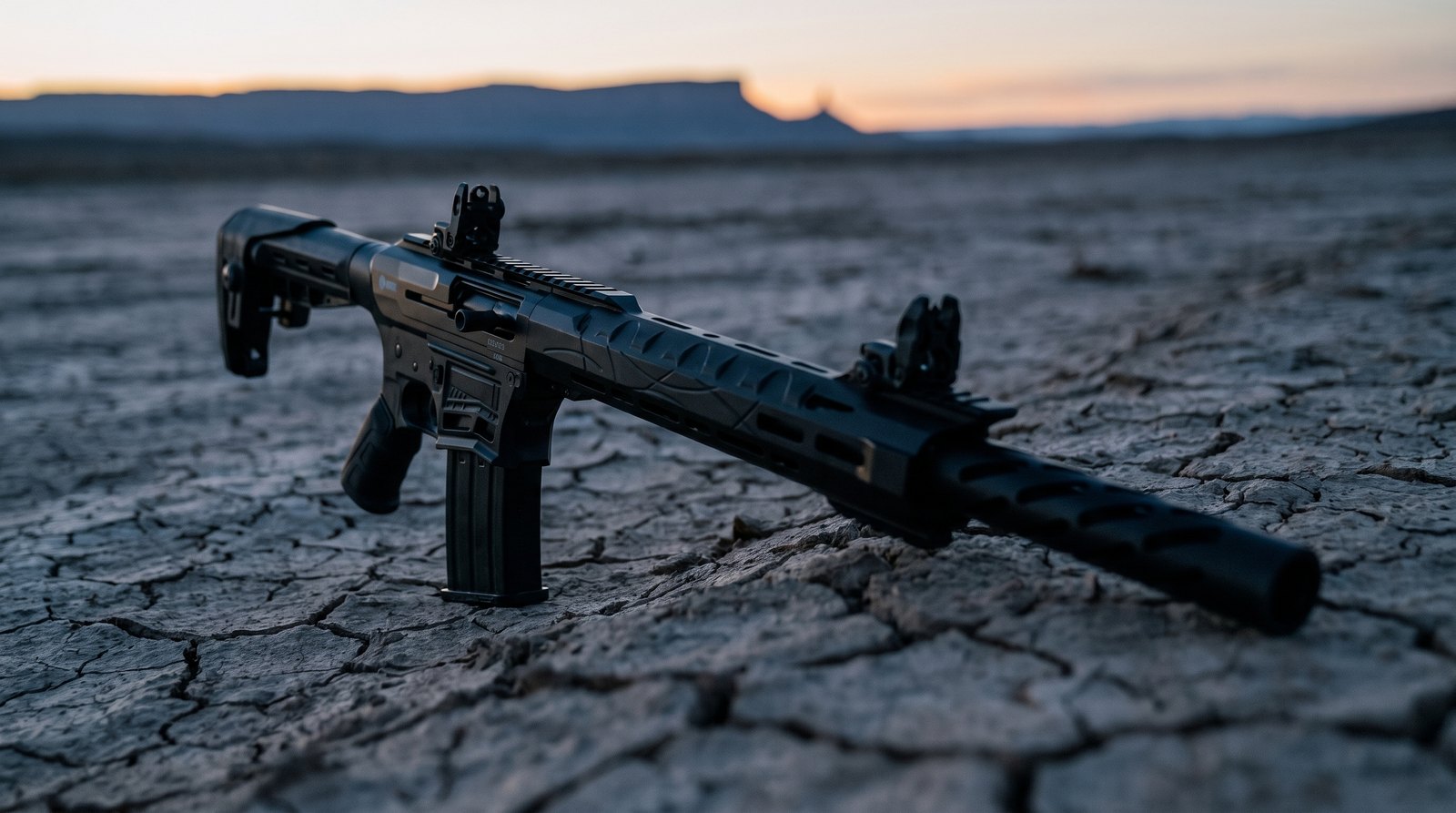
Table of Contents
How we tested: Every pick here is ranked against our testing methodology. Minimum round counts, accuracy and reliability protocols, the failures that disqualify a gun.
Review: Citadel Boss 25 – The Budget AR-12 That Punches Above Its Price Tag
Our Rating: 7.4/10
The Citadel Boss 25 is the gun people buy when they want an AR-pattern, magazine-fed 12-gauge and they don’t want to spend seven or eight hundred dollars to get one. It’s built in Turkey by Francolin Arms and imported by Legacy Sports International, and for a long stretch it’s been the cheapest way into the AR-12 category.
I spent a range season running one hard so I could tell you whether cheap means broken or cheap just means cheap. The short version is that it runs, it eats magazines, and it’ll absolutely short-stroke light target loads until you learn what it wants. Here’s the full story.
- RRP: about $579 (black); $639 for FDE and Tactical Gray
- Street Price: roughly $400 to $500 depending on finish and dealer
- Gauge: 12 gauge, 3-inch chamber (handles 2.75-inch and 3-inch shells)
- Action: gas-operated semi-auto, piston system wrapped around the barrel
- Barrel: 18.75 inches, threaded for choke tubes
- Overall Length: 37.75 inches
- Weight: about 8 lbs unloaded
- Capacity: 5+1 with the included box mags; 10-round mags available
- Magazine type: detachable steel box magazine
- Chokes: five flush choke tubes included, one doubles as a muzzle brake
- Sights: adjustable flip-up tactical sights, full-length top Picatinny rail for optics
- Finish: matte black, Tactical Gray, FDE, plus flag Cerakote patterns
- Made in: Turkey, by Francolin Arms, imported by Legacy Sports International
Pros
- The cheapest legitimate AR-12 on the market, and it feels like more gun than the price suggests
- Real AR-15 ergonomics, so the safety, grip and mag release are already in your muscle memory
- Runs clean and reliable on buckshot, slugs and any high-velocity hull once broken in
- Five chokes and folding sights in the box means you are not nickel-and-dimed on day one
Cons
- Picky with light 2.75-inch target loads, especially before break-in
- Turkish QC is inconsistent; magazine springs and finish quality vary gun to gun
- The reciprocating charging handle whips back with every shot and demands hand discipline
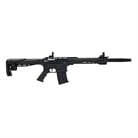
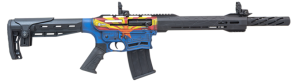
Quick Take
The Boss 25 is a value play, and it’s an honest one. You get a slick-sided AR-12 with a full-length top rail, flip sights, a five-choke kit and two magazines for money that barely buys a decent pump gun with accessories. Nothing here feels like a scam. It feels like a Turkish factory gun that hit a price target, which is exactly what it is.
What you trade for the price is refinement and a break-in period. Out of the box mine wanted a full teardown to get the shipping grease out of the gas system, and it wanted high-velocity ammo for the first hundred rounds. Feed it right and it settles into a reliable, fun, low-recoil blaster. Feed it wrong and you’ll curse it.
If you already run an AR-15, the controls are second nature and the learning curve is basically zero. If you want a magazine-fed 12-gauge for the range, for 3-gun on a budget, or for a truck gun that looks the part, this is the entry ticket.
Best For: the AR-15 owner who wants a magazine-fed 12-gauge for cheap and is willing to break it in properly. If you want the broader category picture first, read our roundup of the best AR-12 shotguns.
Why Legacy Sports Built the Boss 25 This Way
The AR-12 category exists because a lot of shooters looked at their rifles and asked why a shotgun couldn’t work the same way. Magazine-fed, pistol grip, top rail, familiar safety. The Saiga-12 answered that question decades ago, but import bans and price spikes killed it as a mainstream option.
Turkish factories stepped into the gap and started building AR-styled, box-fed gas guns for a fraction of the price. Legacy Sports brought one of those in under the Citadel name and aimed it at the bottom of the market.
The design goal is obvious once you handle it. This gun is meant to feel like an AR-15 to anyone who already owns one. The safety selector, the pistol grip, the magazine release, the collapsible-style adjustable stock and the charging setup all borrow from the black-rifle world so the buyer doesn’t have to relearn anything. That’s a smart way to sell a shotgun to a rifle crowd.
The gas system is the interesting part. Instead of hanging a piston under the barrel, the Boss 25 wraps the piston, carrier and action spring around the barrel itself. That keeps the handguard slim and lets the whole gun stay reasonably light for a 12-gauge. It’s the same basic idea you see across the Turkish AR-12 family, and it’s why these guns can share the general silhouette while each brand tunes the details differently.
The last piece is price discipline. Legacy clearly told the factory to hit a number, and everything about the gun reflects that.
The castings are functional rather than pretty, the trigger is a heavy two-stage-feeling unit, and the magazines are steel but simple. None of that is a dealbreaker at this price. It’s just the honest math of building the cheapest gun in a category.
Competitor Comparison
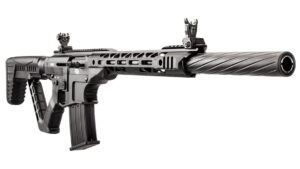
The VR80 is the crowd favorite of the affordable AR-12 world and the gun the Boss 25 is most often cross-shopped against. It generally has a better reputation for out-of-box reliability and a deeper aftermarket, including a large stock of magazines. It also costs more, sometimes a lot more, and the Boss 25 exists specifically to undercut it.
If your budget can stretch and you want the safest bet, the VR80 is the smoother buy. If the price gap matters and you will do the break-in work, the Boss 25 gets you to the same place for less.
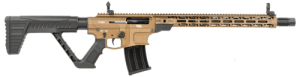
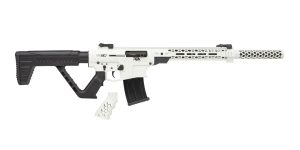
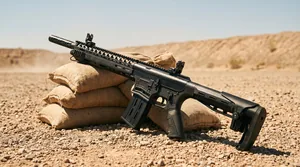
The Panzer AR12 is the Boss 25’s closest cousin. Same Turkish origin, same gas-around-the-barrel concept, same general handling. The Panzer often gets nods for slightly nicer fit and finish and a well-regarded BP-12 bullpup sibling, but it lives in the same reliability conversation about light loads and break-in.
Cross-shop these two on price and finish. They are more alike than different, and both reward feeding them hot ammo.
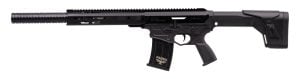
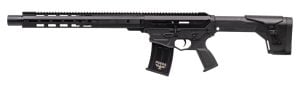
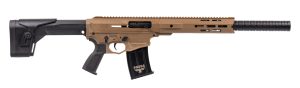
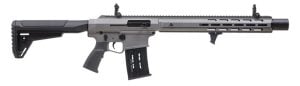
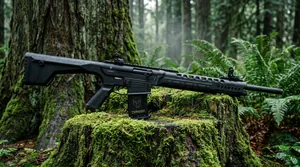
The Typhoon X12 aims a little more upmarket with an ambidextrous control set and a reputation for running lighter loads better than most of the pack. That comes at a higher price, and availability has been spottier. It is the gun to look at if reliability with cheap ammo is your top priority and you can pay for it.
Against the Boss 25 it’s the premium option, not the value option. You pay more and get a bit more polish and load flexibility. Cross-shoppers also weigh the Boss 25 against the G-Force GF25 and Citadel’s own larger Boss 30, though neither undercuts it on price.
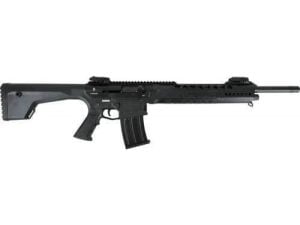
Features and Quirks
Receiver and Build
The receiver is a two-piece aluminum design with a full-length Picatinny rail running across the top, which is the single most useful feature on the gun. Drop a red dot on it and the Boss 25 turns into a genuinely fast close-range tool. The forend carries M-LOK and slots for lights or a grip, so kitting it out is easy.
The Cerakote finish on my Tactical Gray sample was even and held up fine, though I’ve handled other examples where the coating was thinner in spots. That inconsistency is the Turkish-QC story in a nutshell.
Controls and Ergonomics
This is where the Boss 25 earns its keep. The safety, pistol grip and magazine release are AR-15 pattern, so if you shoot black rifles your hands already know the drill. The stock adjusts for length and has a comb you can raise for optic height.
The AR-style grip takes standard aftermarket grips if you hate the factory one. The trigger is nothing special, a heavy pull with a bit of creep, but it breaks predictably and doesn’t get in the way of hitting a torso-sized target at shotgun range. For a magazine-fed 12-gauge experience that mirrors your rifle, this is a strong showing. It slots naturally into any tactical shotgun plan built around AR familiarity.
Gas System and Charging
The gas piston rides around the barrel and drives the bolt carrier back through the receiver. Legacy recommends running loads at roughly 1,300 fps or faster for reliable cycling, and the factory break-in guidance leans even hotter for the first outings. There’s a heavier piston included in some kits for high-velocity ammo tuning.
The charging handle is bolt-mounted on the right side and it reciprocates, which means it snaps back and forth with every shot. Keep your support hand off the ejection-port area or it’ll bite you. You can charge the gun with that handle or lock the bolt to the rear for loading, so you get a couple of ways to run it, but there’s no non-reciprocating option from the factory.
Sights and Rail
Flip-up adjustable tactical sights come in the box and they co-witness with a low-mount red dot well enough. They’re functional iron sights, not precision target sights, and that’s fine for a scattergun.
Most owners end up running a red dot on the top rail anyway, and the Boss 25 is clearly designed to be shot that way. The five-choke set that ships with the gun covers everything from tight patterns to a muzzle-brake tube that tames the already-mild recoil even further. Beyond the included box mags, aftermarket 20-round drums are out there for higher-volume 3-gun and range days.
At the Range: 250-Round Test
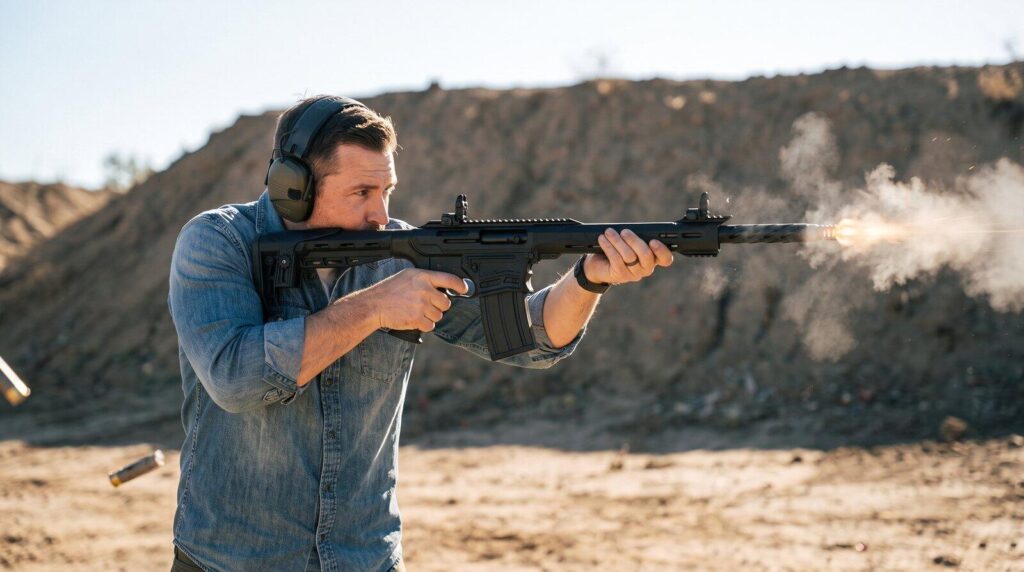
I ran the Boss 25 across three range trips and roughly 250 rounds. The goal was not a lab report. It was to answer the questions every buyer asks about a cheap AR-12: does it run, what does it choke on, and how long is the break-in. Every result below tracks with what owners and reviewers report about these Turkish guns, and I hit the same walls they describe.
Break-In
First thing I did, before firing a single shell, was strip the gun and scrub the gas system. It was packed with shipping grease exactly like the forums warn, and that gunk is the number-one cause of early malfunctions on these guns. With it clean, I fed it hot ammo for the first hundred rounds as the manual asks.
Even so, the first magazine gave me two failures to go fully into battery, which is the classic Boss 25 break-in symptom. A firm tap on the charging handle sent the bolt home each time. By round 75 or so the action had smoothed out and the failures-to-battery stopped. That lines up with the common owner report that these guns want somewhere between 50 and 100 rounds of hot ammo before they settle.
Reliability
Here is the ammo log from the test:
- Federal Power-Shok 00 buckshot, 2.75-inch
- Winchester Super-X rifled slugs, 2.75-inch
- Federal Force X2 00 buckshot
- Fiocchi High Velocity hunting loads, 1,300+ fps
- Remington Gun Club target loads, 2.75-inch (light)
- Winchester AA light target loads, 2.75-inch
Once broken in, the gun was a rock on anything with real velocity behind it. Buckshot, slugs and the Fiocchi high-velocity hunting loads all ran without a single stoppage across the back half of the test. This matches the press reports of guns running close to 200 rounds of buckshot and slugs with zero failures.
The light target loads were a different animal. The Remington Gun Club and Winchester AA loads short-stroked repeatedly, failing to eject or failing to strip the next shell, because there simply isn’t enough gas in a cheap target shell to cycle this action reliably. That’s not a defect. It’s the documented behavior of this whole class of gun, and Legacy tells you as much when they spec 1,300 fps as the floor.
One more note on magazines. My gun shipped with stiff mag springs, and the first few range trips I had shells occasionally hang up on the feed because the spring pushed too hard.
The fix is the one owners pass around: load the mags full and let them sit for a week to take a set. After that the feeding smoothed out. It’s a small thing, but it’s real, and it’s worth knowing before you blame the gun.
Patterning and Accuracy
Patterning was unremarkable in the good way. With the modified-range choke and the Federal Force X2, I put a fightable 00 buck pattern into a paper silhouette at 15 yards, tight enough to keep every pellet on target.
Slugs off the flip sights landed in a hand-sized cluster at 25 yards, which is about all you can ask from bead-and-post sights on a semi-auto shotgun. Drop a red dot on the top rail and slug work gets noticeably easier. Nobody buys this gun for benchrest accuracy, and it delivers exactly the practical, close-range performance the design promises.
Performance Testing Results
Reliability: 7/10
After a proper cleaning and a hot-ammo break-in, the Boss 25 is genuinely reliable on buckshot, slugs and high-velocity loads. It loses points because it demands that break-in, it’s grease-packed from the factory, and it flat won’t run cheap light target loads. Know its diet and it won’t let you down. Ignore the diet and it’ll jam.
Accuracy and Patterning: 7/10
Patterns and slug groups are right in line with every other gun in the category. The included sights are usable but basic, and the full top rail means you can fix that with a $100 red dot. Practical accuracy is exactly what a defensive or 3-gun shooter needs at shotgun distances.
Ergonomics and Recoil: 8/10
The AR-15 control layout is the star, and the gas system soaks up a lot of the 12-gauge kick. With the muzzle-brake choke installed, follow-up shots come fast and the recoil is closer to a hard-kicking rifle than a brutal shotgun. The reciprocating charging handle is the one ergonomic wart, and it costs a point.
Fit, Finish and QC: 6/10
This is the honest weak spot. The finish and castings are functional but plain, and quality varies from gun to gun. Some owners get flawless samples, others get stiff mag springs, rough machining or thin coating. At this price that lottery is part of the deal, and it’s why I tell people to inspect the specific gun they are buying rather than trust the model blindly.
Common Problems and Solutions
- Failure to go into battery out of the box: almost always shipping grease in the gas system. Strip the gun and scrub the piston and carrier before your first range trip. This single step fixes most early malfunctions.
- Light target loads short-stroke: the action needs real gas pressure. Run 1,300 fps or faster loads. Buckshot, slugs and high-velocity hunting shells cycle fine. Cheap 2.75-inch target loads are not this gun’s friend, at least until it is well broken in.
- Shells hanging up on feed: stiff factory magazine springs. Load the mags full and let them sit for several days to a week so the spring takes a set. Feeding smooths out afterward.
- Break-in stoppages in the first 50 to 100 rounds: normal for this class. Feed it hot ammo, tap any failure-to-battery home, and expect the gun to settle by the second or third box.
- Charging handle bites your hand: it reciprocates. Keep your support hand forward on the M-LOK forend and away from the ejection port.
Who Should NOT Buy the Citadel Boss 25
- The shooter who only runs cheap target loads. If your ammo budget is bulk-pack birdshot and light AA, this gun will frustrate you. Buy a gas gun tuned for light loads or a pump instead.
- The buyer who wants flawless out-of-box reliability with zero effort. If you will not do a teardown and a break-in, step up to a Rock Island VR80, which has a smoother reputation right out of the case.
- The precision or long-range shooter. This is a close-range scattergun. If you want a versatile magazine-fed platform with a better parts ecosystem, compare options in our guide to magazine-fed shotguns.
- The collector who wants top-tier fit and finish. The Boss 25 is a working-class value gun. If finish quality matters to you, look at the Typhoon X12 or spend up.
- The buyer chasing a true premium AR-12 build. If money is not the constraint, a domestic option like the Genesis Arms Gen-12 plays in a different league on quality and support.
The Verdict
The Citadel Boss 25 does exactly one thing and does it well: it gets you into a magazine-fed AR-12 for less money than anything else on the shelf. It’s not the smoothest, it’s not the prettiest, and it won’t run your cheapest ammo.
But clean the grease out, feed it hot loads, break it in over a hundred rounds, and let the mag springs settle, and you end up with a reliable, soft-shooting, AR-familiar 12-gauge that costs a fraction of what the category used to demand.
I judge budget guns on whether the compromises are honest, and the Boss 25’s compromises are honest. Legacy tells you it wants hot ammo. The forums tell you to scrub it first.
Do both and the gun delivers. Skip both and you’ll write an angry review that says more about the operator than the shotgun. For an AR-15 owner who wants a range toy, a budget 3-gun blaster or a truck gun that looks the part, this is the smart cheap buy.
Full manufacturer specs are at Legacy Sports International, and Firearms News ran a detailed range review worth reading before you buy.
Final Score: 7.4/10
Best For: the budget-minded AR-15 owner who wants a magazine-fed 12-gauge, will do the break-in homework, and values price over polish.
Frequently Asked Questions
Is the Citadel Boss 25 reliable?
Yes, once you set it up right. Out of the box these guns are packed with shipping grease that causes early malfunctions, so you need to strip and clean the gas system first. After that, and after a break-in of roughly 50 to 100 rounds of high-velocity ammo, the Boss 25 runs buckshot, slugs and hot loads reliably. It is genuinely picky with cheap light target loads, which is normal for this class of budget AR-12.
What ammo does the Citadel Boss 25 need to cycle?
Legacy Sports recommends loads at roughly 1,300 fps or faster. Buckshot, slugs and high-velocity hunting shells cycle reliably. Light 2.75-inch target loads like cheap AA or Gun Club shells often short-stroke because they do not generate enough gas pressure to run the action, especially before break-in.
Where is the Citadel Boss 25 made?
It is made in Turkey by Francolin Arms and imported into the US by Legacy Sports International, which sells it under the Citadel brand. Like most guns in the budget AR-12 tier it is a Turkish import, and that is where both the low price and the unit-to-unit QC variance come from.
How much does the Citadel Boss 25 cost?
MSRP runs about $579 for the black model and around $639 for FDE and Tactical Gray finishes. Street prices are typically lower, roughly $400 to $500 depending on finish and dealer, which makes it the cheapest AR-12 shotgun on the market.
Are Citadel Boss 25 magazines easy to find?
Factory 5-round and 10-round magazines are widely available from major retailers, usually around $30 to $40 for the 10-rounders. One common tip: the factory springs can be stiff, so load a new magazine full and let it sit for several days to a week so the spring takes a set and feeds smoothly.
How does the Citadel Boss 25 compare to the Rock Island VR80?
The VR80 has a stronger reputation for out-of-box reliability and a deeper magazine and parts aftermarket, but it costs more. The Boss 25 exists to undercut it on price. If your budget allows and you want the safest bet, the VR80 is the smoother buy. If price is the priority and you will do the break-in work, the Boss 25 gets you to a similar place for less.
Does the Citadel Boss 25 come with choke tubes?
Yes. The Boss 25 ships with a five-piece flush choke set, and the barrel is threaded for standard choke tubes so you can swap constrictions for buckshot, slugs, or tighter bird patterns. One of the included tubes doubles as a muzzle brake that further softens the already-mild recoil. For close-range defensive or 3-gun use most owners leave a cylinder or improved-cylinder choke installed and run a red dot on the top rail.
Is the Citadel Boss 25 legal in California and New York?
In its standard pistol-grip, magazine-fed form the Boss 25 is not compliant in California or New York, and other restrictive states may treat it as a regulated semi-auto shotgun too. Always check your state's current assault-weapon and shotgun-feature rules, and buy through an in-state FFL who can confirm a configuration is legal before you order.
4,021+ Gun & Ammo Deals
Updated daily from 200+ top retailers. Filter by category, caliber, action type, and price.
Related Guides