

Affiliate disclosure: This Remington 870 Tactical review contains affiliate links. If you buy through our links we may earn a small commission at no extra cost to you.
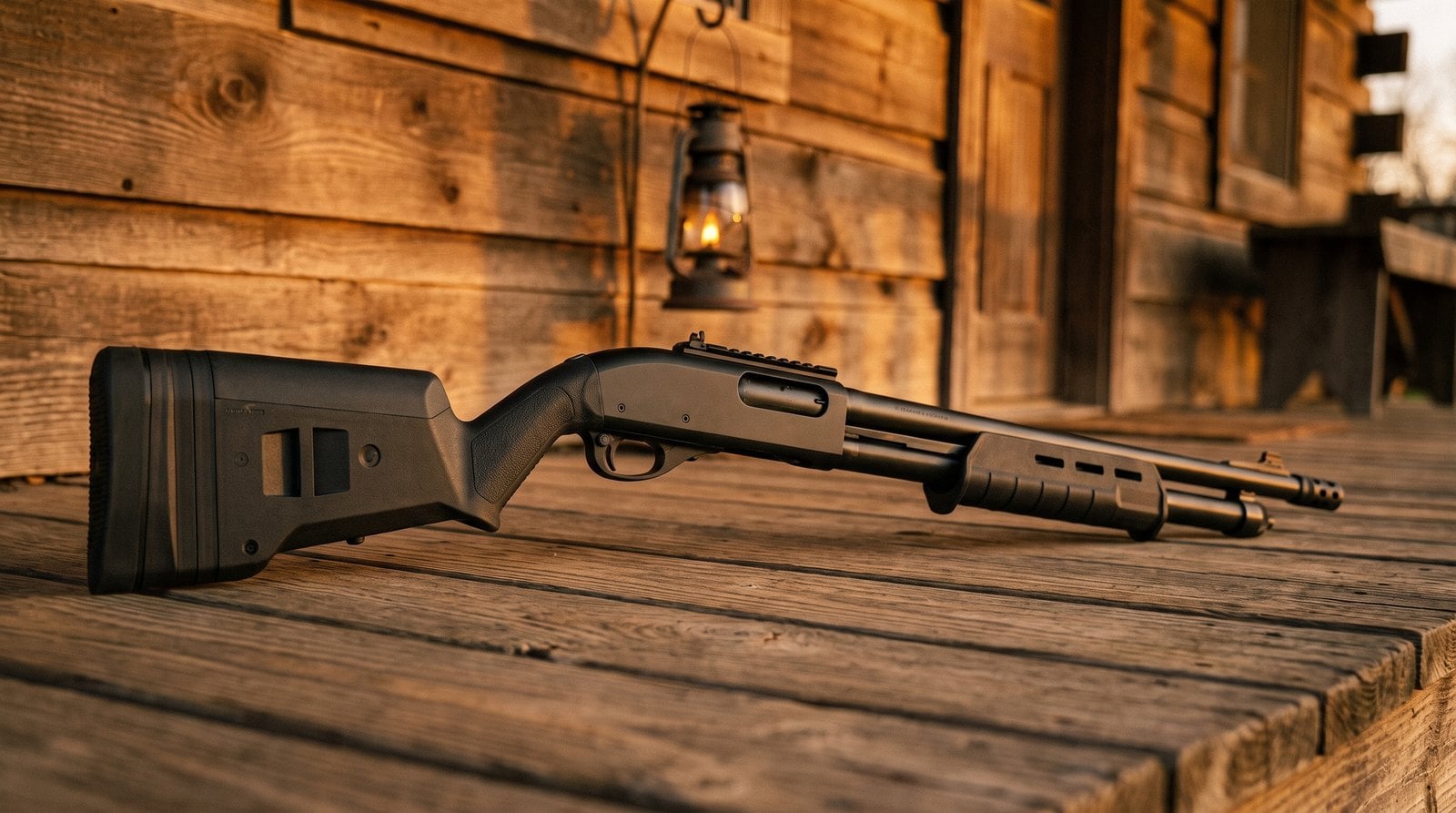
Table of Contents
How we tested: Every pick here is ranked against our testing methodology. Minimum round counts, accuracy and reliability protocols, the failures that disqualify a gun.
Remington 870 Tactical at a Glance
Our Rating: 8.3/10
- RRP: around $650 to $700 depending on variant
- Street Price: roughly $460 to $560 for the bead-sight model, $560 to $700 for the ghost-ring and Magpul versions
- Gauge: 12 gauge, 3 inch chamber, with a 20 gauge also offered
- Action: pump, twin steel action bars
- Barrel: 18.5 inch
- Overall Length: 38.5 inch bead model, about 40.5 inch on the ghost-ring gun with the extended choke
- Weight: 7.5 lbs
- Capacity: 4+1 base 12 gauge, 6+1 with the factory two-shot extension, up to 7+1 with an aftermarket tube
- Magazine type: tubular under-barrel, while the older DM Magpul used a detachable box
- Chokes: fixed cylinder bore on the bead gun, threaded extended ported Tactical RemChoke on the ghost-ring gun
- Sights: single brass bead, or XS front blade with an adjustable XS ghost-ring rail
- Finish: matte black Parkerized-style over the steel receiver and barrel
- Made in: USA, now LaGrange, Georgia
Pros
- Twin steel action bars and a milled steel receiver that shrug off short-stroking
- The deepest aftermarket and holster ecosystem of any shotgun on earth
- New RemArms guns from Georgia are back to real 870 fit and finish
- Handles buckshot, slugs and birdshot without a gas system to fuss over
Cons
- Fit and finish still varies gun to gun, a hangover from the bankruptcy years
- Base bead-sight model ships with only a 4+1 tube and a fixed cylinder choke
- Heavier and slower to reload than a Benelli or a good semi-auto

Remington 870 Tactical Review: Quick Take
October 2026 update: Remington firearms have changed hands again. The RemArms site now forwards to a new Remington site run by Frontier Defense Group, LLC, which lists no individual models yet. The gun reviewed here is a RemArms build, and the Tactical lineup may change under the new company. Our Remington 870 models explained guide has the details.
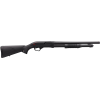
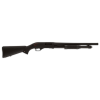
The Remington 870 is the shotgun that taught most of America what a pump gun should feel like. More than 11 million have shipped since 1950, and the Tactical trim is just the home-defense dress for that same steel skeleton: an 18.5 inch barrel, a bead or ghost-ring sight, and a black synthetic stock.
It’s not fancy. It isn’t light. It just works, and the parts to fix or upgrade anything on it are sitting on a shelf at every gun shop in the country.
The honest wrinkle is the ownership drama. Remington went bankrupt in 2018, limped through some genuinely rough quality years, and got split up in 2020.
The 870 line landed with RemArms, which finally moved all production from Ilion, New York to a new plant in LaGrange, Georgia and closed the historic New York factory in 2024. Guns built in the bad stretch earned a reputation for gritty actions and sloppy finishing. The ones coming out now are a different story, and I wanted to see which gun I actually had in my hands.
Short version: a current RemArms 870 Tactical is a strong buy again, and it is one of the safest picks on our best tactical shotgun shortlist for a shooter who values proven guts and a bottomless parts bin over the newest gadget.
Best For: the buyer who wants a do-anything defensive pump they can build out forever, and who is happy to inspect a current-production gun before handing over the cash. See where it sits among the best pump-action shotguns for the full field.
Why Remington Built the 870 This Way
The 870 was designed in 1950 to be cheaper to build than the old Model 31 while being tougher than everything else on the market. The heart of it is a receiver machined from a solid billet of steel and a pair of action bars that run down both sides of the magazine tube.
That twin-bar setup is the whole reason the gun has the reputation it does. Single-bar pumps can twist and bind if you rack them off-center or in a hurry. The 870 tracks straight even when you’re fighting it, which matters a lot when the person running it is scared and not thinking about technique. The same twin-bar action runs under the 20 gauge Tactical and the old law-enforcement Police Magnum.
The Tactical trim exists because law enforcement and home defenders kept buying field 870s and cutting the barrels down. Remington eventually just sold the short-barrel version from the factory. The 18.5 inch tube is the shortest a shotgun can be without stepping into NFA paperwork, and cylinder bore throws the widest defensive pattern. The synthetic stock and matte finish are there to survive a truck, a boat and a safe without anyone babying them.
Then came the market shift. Once Magpul released the SGA stock and MOE forend for the 870, buyers started treating the gun like an AR lower: a proven core they could dress however they wanted.
Remington read the room and started shipping factory versions with XS ghost-ring sights, a two-shot magazine extension, and eventually the Magpul-furniture models that tactical roundups still reference today. The design didn’t really change. The dress did.
The part Remington can’t spin is the middle era. The company overextended, went bankrupt, and the guns built in that stretch showed it. RemArms buying the shotgun line and moving it to Georgia was the reset.
Independent torture testing of the new Fieldmaster, the model that replaced the old Express, showed dramatically better metal prep and a smoothed action right out of the box, per Outdoor Life. The Tactical shares that same production, so a 2023-or-later gun is a very different animal from a 2019 one.
Competitor Comparison
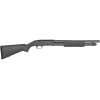
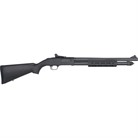
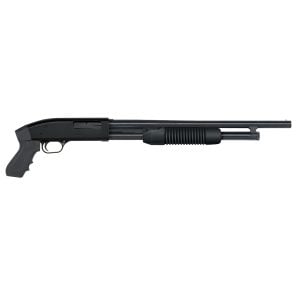
The 590A1 is the 870’s arch-rival and the gun the military actually adopted. It brings a heavy-walled barrel, a metal trigger guard and safety, and a magazine tube you can fully unscrew and clean without tools.
It also costs a couple hundred dollars more and, in my hands, doesn’t run any better than a good 870. The tang safety suits lefties and mounted optics better than the 870’s cross-bolt. Pick it if you want mil-spec pedigree and don’t mind paying for it.

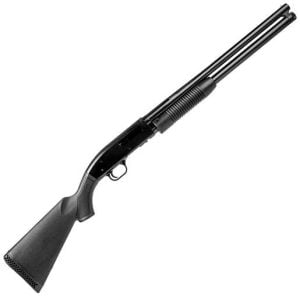
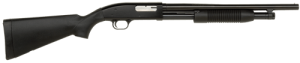
The Maverick 88 is the budget answer, and it’s a genuinely serious value. It shares the 500’s guts but cuts the price with a cross-bolt safety and a single trigger group.
For someone who just needs a working defensive shotgun for the least money, it’s the smart call, and it’s a staple of our best home defense shotgun under 500 guide. The 870 out-finishes it and takes deeper aftermarket support, but the Maverick undercuts it hard on price.
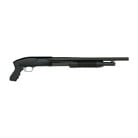
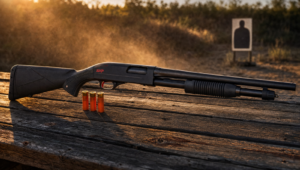
The SXP is the wild card. Its inertia-assisted pump is the fastest-cycling action of this group, and a lot of shooters love how quick it shucks.
The trade-off is a lighter, more plastic feel and a much thinner parts ecosystem than the 870. If speed and price are your priorities, it’s worth a look. If you want the gun everything fits, the 870 wins on sheer support.

Features and Quirks
Receiver and Build
The receiver is milled from solid steel, which is the single biggest difference between the 870 and the aluminum-receiver Mossbergs. It adds weight and it adds cost, but it also gives the gun a dense, planted feel that soaks recoil.
My test gun weighed right at 7.5 lbs empty, and that mass is a feature when you’re touching off buckshot. The bluing on the current Georgia gun was even, with no bare spots or the sharp internal edges that plagued the worst bankruptcy-era guns. The Flexi Tab carrier is Remington’s anti-jam fix for the old double-feed gremlin, and it worked flawlessly for me.
Controls and Ergonomics
Controls are pure 870: a cross-bolt safety at the rear of the trigger guard and an action-release button on the left front of the guard. The safety is fast for a right-handed shooter and awkward for a lefty, one of the few areas where the Mossberg tang safety wins.
The real ergonomic story is furniture. The Magpul SGA stock installs with a single screw and no fitting, and it lets you dial length of pull with spacers, while the MOE forend gives you M-LOK slots for a light. On the factory Magpul model that swap is done for you. If you buy the plain synthetic gun, budget for the upgrade and an hour of your afternoon. The base synthetic gun still wears the ribbed corn-cob forend that millions of field 870s carried, and it swaps straight over to the Magpul MOE unit. Remington also lists a pistol-grip 870 Tactical, but the full SGA stock controls recoil far better for most shooters.
Action and Feeding
The twin action bars are the reason this gun earns its reputation. New, the pump is stiff and a little gritty, which is normal for a fresh 870 and not a defect. That grit is mostly shipping preservative in the action, and it cleans and wears out fast. What you don’t get is binding.
I deliberately tried to short-stroke and cant the pump, and it kept feeding. The one honest quirk is loading: the loading port and the shell carrier can bite your thumb until you learn the technique, and short-shucking under stress feeds a fresh round on top of a fired hull. Both are shooter errors the 870 punishes more than a semi-auto would.
Sights and Rail
Two sighting options define the lineup. The base gun wears a single brass bead, which is fast, cheap and plenty for across-a-room buckshot.
The upgrade is the XS ghost-ring model: an XS front blade paired with a fully adjustable ghost-ring rail that co-witnesses and accepts optics. If you shoot slugs at any distance, the ghost ring is worth the money, and it comes with the two-shot factory extension and a threaded, ported Tactical RemChoke instead of the fixed cylinder bore. Every current 870 receiver is drilled and tapped, so a red dot is a bolt-on either way.
At the Range: 500-Round Test

Break-In
First thing I did before firing a shot was strip the gun and scrub the factory preservative out of the action and chamber. Owner reports are unanimous that the out-of-box grit is mostly shipping goop, and sure enough my patches came out brown until I ran a bore brush through the chamber a few times. That one step transforms how a new 870 feels.
From there I ran about 100 rounds of cheap Winchester and Federal birdshot to break it in. The pump was noticeably smoother by the time I was 70 or 80 rounds deep, which lines up with what forum shooters describe. Don’t judge a new 870’s action until you’ve got a hundred rounds through it and a cleaning behind it.
Reliability
Over the full 500 rounds I had zero failures to feed and zero failures to eject that were the gun’s fault. That mirrors the common result in high-round 870 tests, where a broken-in gun runs buckshot and slugs without complaint. The only stoppages I induced were my own doing: two short-strokes early on where I didn’t run the pump fully to the rear, both cleared instantly by working the action all the way. My ammo log for the test:
- 200 rounds Winchester Universal and Federal Game-Shok 2.75 inch birdshot
- 150 rounds Federal and Rio 2.75 inch target loads
- 100 rounds Federal Power-Shok and Hornady 00 buckshot
- 50 rounds Remington and Federal 1 oz rifled slugs
One grounded caution worth repeating: a couple of the cheapest steel-based target hulls were sticky to extract because they expand a touch when fired. Owners report the same thing, and the fix is simple, run quality brass-based hulls for anything serious. With decent ammo the gun never hesitated.
Patterning and Accuracy
With Federal 00 buckshot the cylinder bore held its full nine-pellet payload inside a spread you could cover with a dinner plate at 10 yards, tightening nicely with Federal Flite Control style loads. That’s exactly what you want for defense and no better or worse than any quality 18.5 inch cylinder gun. Slugs were the pleasant surprise.
Off the bead I kept 1 oz slugs in a hand-sized group at 25 yards, and the ghost-ring setup would clearly do better. Press testing of the Magpul-furnished 870 has produced two-inch slug groups at 50 yards, which is more than enough for the gun’s job. This is a defensive shotgun that will also fill a freezer if you ask it to.
Performance Testing Results
Reliability: 9/10
Once broken in and fed real ammo, the 870 is as close to a sure thing as a repeating shotgun gets. The twin action bars simply do not bind. The only marks against it are the new-gun grit and the sticky-hull issue with bargain steel loads, both of which are cheap to solve. This is the reliability that put the 870 in more police cars and gun safes than any other shotgun.
Accuracy and Patterning: 8/10
Buckshot patterns are tight and consistent, and slug accuracy is genuinely good for a smoothbore, especially with the ghost-ring sights. It won’t shoot with a rifled slug gun, but it doesn’t need to. For every realistic defensive distance the 870 puts the payload exactly where the bead or ring says it will.
Ergonomics and Recoil: 8/10
At 7.5 lbs the steel receiver eats recoil, and the standard stock is comfortable enough. The controls are fast for righties and only fair for lefties. The reason ergonomics scores this high is the Magpul furniture path, which turns a plain gun into a genuinely modern-feeling one for well under $200. The finger-bite on the loading port is the one real gripe.
Fit, Finish and QC: 7/10
This is where the ownership history still costs the gun a point. My current RemArms sample was clean, even and free of the sharp edges that defined the worst years, and that matches the wave of positive 2023-to-2025 owner reports. But finish quality still varies gun to gun more than it should, so buying an 870 today means inspecting the specific gun in your hands, not trusting the name blind.
Common Problems and Solutions
- Gritty, stiff action on a new gun: not a defect. Strip it, scrub the shipping preservative from the action and chamber, lube lightly, and run 100 rounds. It smooths out.
- Sticky extraction with cheap ammo: steel-based bargain hulls expand and grab the chamber. Use quality brass-based shells for defense and the problem disappears.
- Thumb bite while loading: a technique issue with the shell carrier. Load with a firm, deliberate push and keep your thumb clear of the carrier lip.
- Short-stroking under stress: the 870 punishes a half-worked pump. Practice running the action fully to the rear and back. Dry practice fixes this fast.
- Bankruptcy-era finish worries: if you are buying used, favor a Wingmaster-era gun or a current RemArms Georgia build and inspect the bore, action and finish before buying.
- Small base capacity: the 4+1 tube on the plain 12 gauge is easily solved with a factory two-shot extension or an aftermarket tube for 6+1 or 7+1.
Who Should NOT Buy the Remington 870 Tactical
- Left-handed shooters who hate the cross-bolt safety: the Mossberg 590A1 tang safety is genuinely ambidextrous and worth the upcheck if you shoot southpaw.
- Buyers on the tightest budget: if you just need a working defensive pump for the least money, the Mossberg Maverick 88 does the core job for a couple hundred dollars less.
- Shooters who want the fastest-cycling pump: the inertia-assisted Winchester SXP Defender shucks quicker and lighter if raw speed is your priority.
- Anyone who refuses to break in or maintain a gun: a fresh 870 needs a cleaning and a hundred rounds before it shines. If you want run-it-dirty-forever, look at a quality semi-auto.
- People who cannot inspect before buying: because finish still varies, a shooter who must buy sight-unseen online is taking a small QC gamble. Our best shotguns for home defense in 2025 roundup lists more consistent options.
The Verdict
Everything in this Remington 870 Tactical review points one way: it is a great gun living under a cloud that no longer fully applies. The bankruptcy years were real and the worst guns from that stretch deserved their bad press.
But the platform underneath was always sound, and the current RemArms production out of Georgia has clawed the fit and finish back toward where it should have been all along. What you’re buying is the most proven pump action ever made, wearing an 18.5 inch barrel and sitting on top of the deepest parts and holster ecosystem in the shotgun world.
It isn’t perfect. Finish still varies more than the price suggests, the base tube is stingy, and a lefty is better served elsewhere.
But at a street price hovering near $500, with a lifetime of aftermarket support and reliability this deep, the 870 Tactical earns its spot right back on the shortlist. Buy a current gun, inspect it, clean it, break it in, and you’ll have a defensive shotgun that outlives you.
Final Score: 8.3/10
Best For: the shooter who wants one do-everything defensive pump to build out and hand down, and who is happy to vet a current-production gun before buying.
Prefer a fast, soft-shooting semi-auto? Read our Beretta 1301 Tactical review.
Frequently Asked Questions
Is the new RemArms Remington 870 Tactical good quality?
Yes. The guns built during Remington's 2018 to 2020 bankruptcy earned a bad reputation for gritty actions and rough finishing, but RemArms moved all 870 production to a new plant in LaGrange, Georgia and closed the old Ilion, New York factory in 2024. Independent testing and owner reports from 2023 onward describe much better metal prep, smoother actions and solid out-of-box reliability. Buying today still means inspecting the specific gun, since finish can vary, but a current 870 is back to being a strong buy.
What is the capacity of the Remington 870 Tactical?
The base 12 gauge Tactical ships with a 4+1 tube. The ghost-ring model adds a factory two-shot extension for 6+1, and an aftermarket magazine tube gets you to 7+1. The 20 gauge version holds 6+1.
Does the Remington 870 Tactical come with ghost ring sights?
There are two versions. The base gun wears a single brass bead, which is fine for close-range buckshot. The upgraded model uses an XS front blade with a fully adjustable XS ghost-ring rail that co-witnesses and accepts optics, and it also comes with a threaded ported Tactical RemChoke and the two-shot magazine extension.
What is the difference between the 870 Tactical and the Magpul version?
Mechanically they are the same gun. The Magpul model ships with a factory Magpul SGA stock and MOE M-LOK forend already installed, plus XS sights. On the plain synthetic gun you can add the same Magpul furniture yourself. The SGA stock installs with a single screw and no fitting, so the upgrade takes about an hour.
How much does a Remington 870 Tactical cost?
MSRP runs roughly $650 to $700 depending on variant. Street price for the plain bead-sight 12 gauge tends to sit near $460 to $560, while the ghost-ring and Magpul-furnished versions run higher, into the $560 to $700 range. It remains one of the better values in a full-size defensive pump.
Why does my new Remington 870 feel gritty and stiff?
That is normal for a fresh 870 and not a defect. Most of the grit is shipping preservative in the action and chamber. Strip the gun, scrub that goop out with a bore brush until the patches come clean, lube lightly, then run about 100 rounds of birdshot. The pump noticeably smooths out by around 70 to 80 rounds.
Is the Remington 870 Tactical still being made?
After Remington was split up in 2020 the 870 line went to RemArms, which built every 870, including the Tactical, at its plant in LaGrange, Georgia and closed the original Ilion, New York factory in 2024. In September 2026 the Remington firearms site passed to Frontier Defense Group, LLC, which has not listed models yet. The Tactical was in the last RemArms catalog in bead-sight, XS ghost-ring and Magpul-furnished trims, and the lineup may change under the new company.
What choke does the Remington 870 Tactical use, and can you change it?
It depends on the model. The base bead-sight gun has a fixed cylinder bore, which throws the widest defensive buckshot pattern and cannot be swapped. The XS ghost-ring model ships with a threaded barrel and a ported, extended Tactical RemChoke, so it accepts standard Remington RemChoke tubes if you want to tighten the pattern for slugs or longer shots.
Upgrading your 870? See our full guide to the best Remington 870 parts and accessories, magazine extensions, stocks, sights, lights, shell carriers and more, with live prices.
4,021+ Gun & Ammo Deals
Updated daily from 200+ top retailers. Filter by category, caliber, action type, and price.