

Affiliate disclosure: This Walther PPK review contains affiliate links. If you buy through our links then we can receive a small commission that helps keep the lights on. You don’t pay anything more.
- Treat every gun as loaded
- Point the muzzle in a safe direction
- Keep your finger off the trigger until you’re ready to shoot
- Know your target and what’s beyond
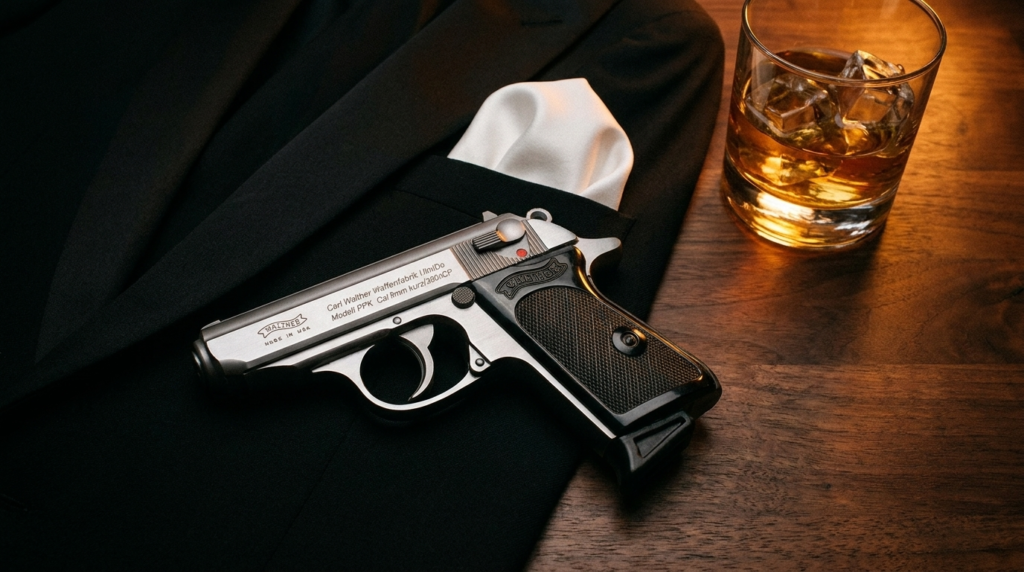
Table of Contents
How we tested: Every pick here is ranked against our testing methodology. Minimum round counts, accuracy and reliability protocols, the failures that disqualify a gun.
Review: Walther PPK – The Icon That Style Keeps Alive
Our Rating: 7.5/10
- RRP: $849 (MSRP, stainless)
- Street Price: $899.99 (Check our live pricing for the best current deal)
- Caliber: .380 ACP (9mm Kurz); .32 ACP on some
- Action: Blowback, DA/SA hammer, slide-mounted decocking safety
- Capacity: 6+1 (PPK) or 7+1 (PPK/S)
- Barrel Length: 3.3″
- Weight: ~21-22 oz (all-metal)
- Finish: Stainless or black; all-steel construction
- Heritage: Introduced 1931; James Bond‘s signature sidearm
- Made in: Fort Smith, Arkansas, USA (current production)
Pros
- Timeless, elegant looks and unmatched pop-culture heritage as James Bond’s gun
- All-steel build quality that feels far classier than any polymer pocket .380
- Beautifully made current Walther production, better than the old S&W-made guns
- A genuine collectible and heirloom you’ll enjoy owning
- Slim, flat profile that carries and conceals easily
Cons
- Heavy for a .380 and snappy, with real slide-bite risk to the shooting hand
- Low capacity and a heavy double-action first pull versus modern rivals
- Expensive: modern pocket 9mms outclass it defensively for less money
Quick Take
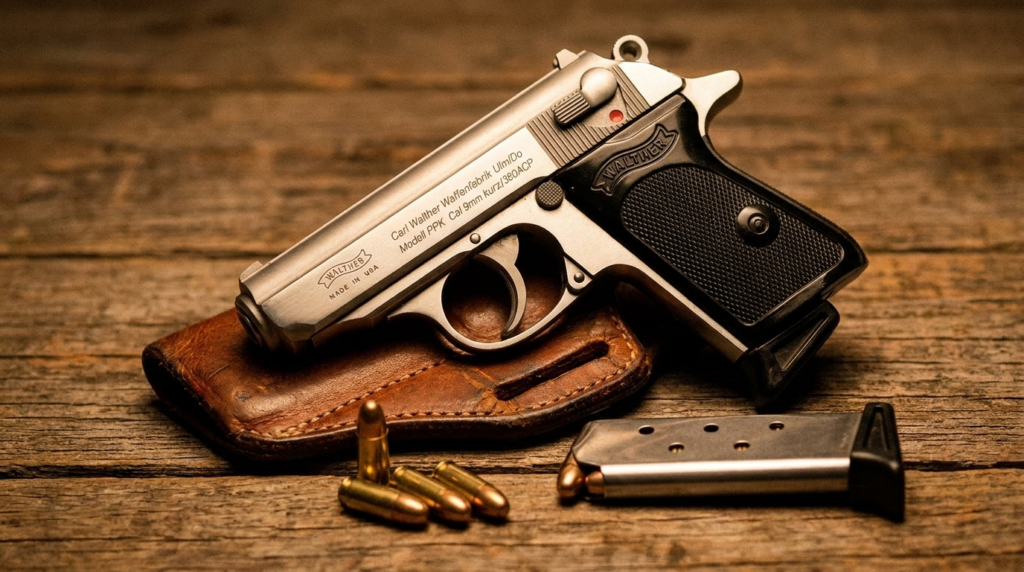
The Walther PPK is the most iconic pocket pistol ever made: an elegant, all-steel .380 with nearly a century of history and James Bond’s name attached. You buy it for the style and the heritage, because on pure specs, modern pocket guns beat it easily.
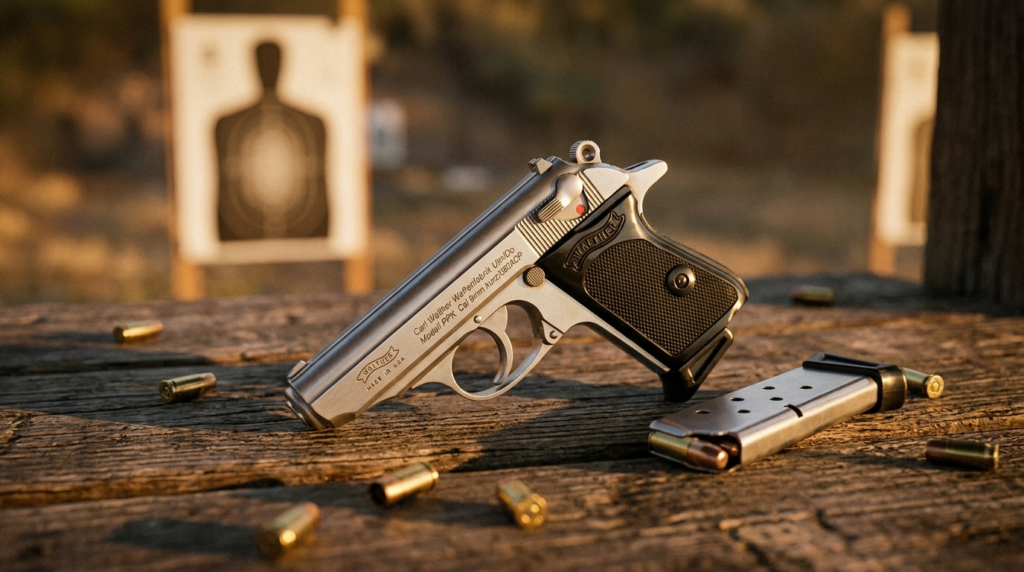
Since 1931 the PPK has been a symbol of refined firepower, carried by spies, detectives, and, most famously, 007. Its blowback action, slim all-metal profile, and slide-mounted safety defined the compact pistol for decades. The current guns are made by Walther in Arkansas and are the nicest PPKs in years, correcting the reliability reputation of the older Smith & Wesson-produced versions.
I shot a PPK to see how the legend holds up in a world of lightweight polymer .380s and pocket 9mms. The answer is exactly what you’d expect: it’s beautiful, it feels wonderful in the hand, and it’s a joy to own, but it’s heavy for a .380, the recoil is snappy, and the beavertail can bite the web of your hand if you grip it high. It holds only 6 or 7 rounds and costs more than guns that shoot better and hit harder. If you want an heirloom-grade icon, nothing else is a PPK. If you want the best modern pocket pistol, look elsewhere.
Best For: Collectors, Bond fans, and shooters who want an elegant, all-metal .380 with genuine heritage. For a modern pocket .380, see our Ruger LCP Max review.
Why the PPK Endures
The Walther PPK survives not because it’s the best pocket pistol, but because it’s the most iconic, and that’s a real and legitimate reason to own one. Its blend of elegant lines, all-steel quality, and unmatched pop-culture fame gives it an appeal no modern polymer gun can replicate.
The design was genuinely groundbreaking in 1931. The PPK pioneered the double-action-first, single-action-follow-up trigger in a compact pistol, along with a slide-mounted safety that decocks the hammer. That formula influenced countless pistols that came after it. Carrying a PPK connects you to that history, and to every spy film and detective story that made it a legend.
The reasons it’s outclassed today are equally clear. Being all-steel, it’s heavy for a .380, around 21 ounces, when a polymer LCP weighs half that. Its blowback action makes the recoil snappy for the caliber, the beavertail is short enough that the slide or hammer can bite your hand, and it holds only 6 or 7 rounds with a heavy double-action first pull. Modern pocket .380s are lighter and cheaper, and pocket 9mms hit harder with more rounds. The PPK answers all of that with one word: style. For the right buyer, that’s enough.
Walther PPK Variants
The PPK family is small and classic. Here’s how to choose.
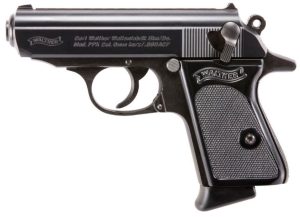
The original and the most compact: a 6-round magazine and the shortest grip, the truest James Bond configuration. It’s the most concealable PPK but the hardest to get a full grip on. Best For: purists who want the classic, most compact PPK.
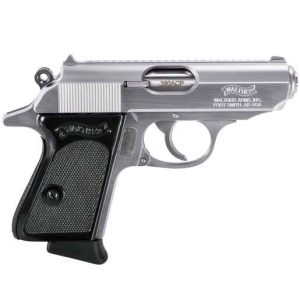
The slightly larger version, combining the longer PP frame with the PPK slide for a full extra round and a better grip. For most shooters, the PPK/S is the more practical and comfortable choice. Best For: most buyers who want a bit more grip and capacity.
A .22 LR version of the PPK/S, lighter-recoiling and cheaper to feed, popular as a fun plinker and a lower-cost way to own the iconic design. Best For: shooters who want the PPK look with cheap, soft .22 shooting.
The PPK comes in classic brushed stainless or a black finish. Stainless is the traditional, Bond-adjacent look and resists wear; black is more discreet for carry. Purely an aesthetic choice. Best For: matching the finish to your taste.
Competitor Comparison
The modern pocket-pistol world has moved past the PPK on paper. Here’s how it stacks up.
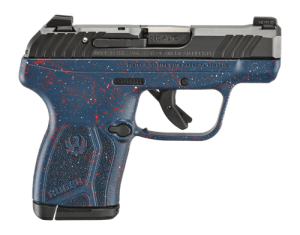
The LCP Max is the modern pocket .380: it weighs half as much, holds 10 or 12 rounds to the PPK’s 6 or 7, costs less than half, and disappears in a pocket. For pure pocket-carry practicality, it wins in a landslide. The PPK’s only answer is style, heritage and the all-metal feel, which the plastic Ruger can’t touch.
The Bodyguard 2.0 is a modern micro .380 with a great trigger and up to 12 rounds, light and affordable. It’s a far more practical carry gun than the PPK for a fraction of the price. The Walther is the choice only if you specifically want the icon, not the better tool.
If you want more than the PPK’s marginal .380, a pocket 9mm like the P365 fits 10 to 12 rounds of harder-hitting 9mm into a similar footprint, with modern reliability. For defensive capability the P365 is in a different league. The PPK counters only with looks and history.
Verdict: For a practical pocket gun, the Ruger LCP Max, S&W Bodyguard 2.0, or SIG P365 all beat the PPK on weight, capacity, and price. The PPK wins only on style, heritage, and the all-metal feel, and for many buyers, that’s exactly what they want.
| Dimension | Walther PPK | Ruger LCP Max | S&W Bodyguard 2.0 | SIG P365 (9mm) |
|---|---|---|---|---|
| Street Price (2026) | $699-$799 | $399-$449 | $399-$479 | $499-$650 |
| Caliber | .380 ACP | .380 ACP | .380 ACP | 9mm |
| Capacity | 6-7+1 | 10-12+1 | 10-12+1 | 10-12+1 |
| Weight | ~21 oz | ~10.6 oz | ~9.8 oz | ~17 oz |
| Build / Appeal | All-steel icon | Polymer | Polymer | Polymer |
| Our Score | 7.5/10 | 8.6/10 | 8.5/10 | 9.0/10 |
| Best For | Style & heritage | Pocket carry | Value carry | Best capability |
Features and Build Quality
The Action, Trigger, and Safety
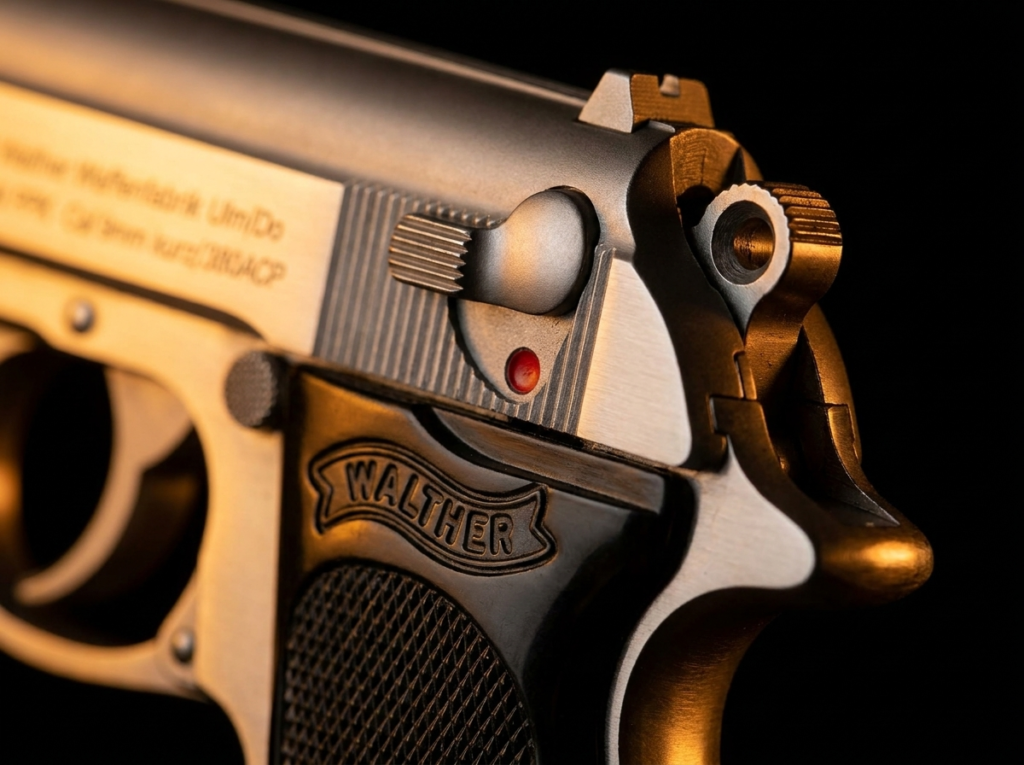
The PPK runs a classic blowback, DA/SA action with a slide-mounted decocking safety, and it’s pure old-world engineering. The first shot is a long, fairly heavy double-action pull; every shot after is a short single-action break. The slide-mounted lever both decocks the hammer and acts as a safety, a design the PPK helped popularize.
The trigger is the dated part. The double-action pull is heavy and long, which hurts that critical first shot, and the single-action is decent but not in the same league as a good striker or 1911 trigger. It’s a system that works and that generations trusted, but it takes practice, and it’s noticeably less shooter-friendly than a modern striker gun with one consistent pull.
Build, Feel, and Slide Bite
The all-steel build is the PPK’s glory and its burden. The brushed stainless or black steel feels dense, solid, and beautifully made, a world away from a plastic pocket gun, and the current Walther-made guns are excellently fitted. Holding a PPK feels like holding a piece of history, and that tactile quality is a real part of why people love it.
The flip side of all that steel is weight and recoil. At around 21 ounces it’s heavy for a .380, and the blowback action makes the recoil snappier than the mild caliber suggests. The most notorious PPK trait is slide bite: the short beavertail lets the slide or hammer nip the web of your hand if you grip high, which many shooters learn the hard way. A slightly lower grip solves it, but it’s a real quirk. The fixed sights are small and traditional, fine for close work and not much else.
At the Range: 300-Round Test
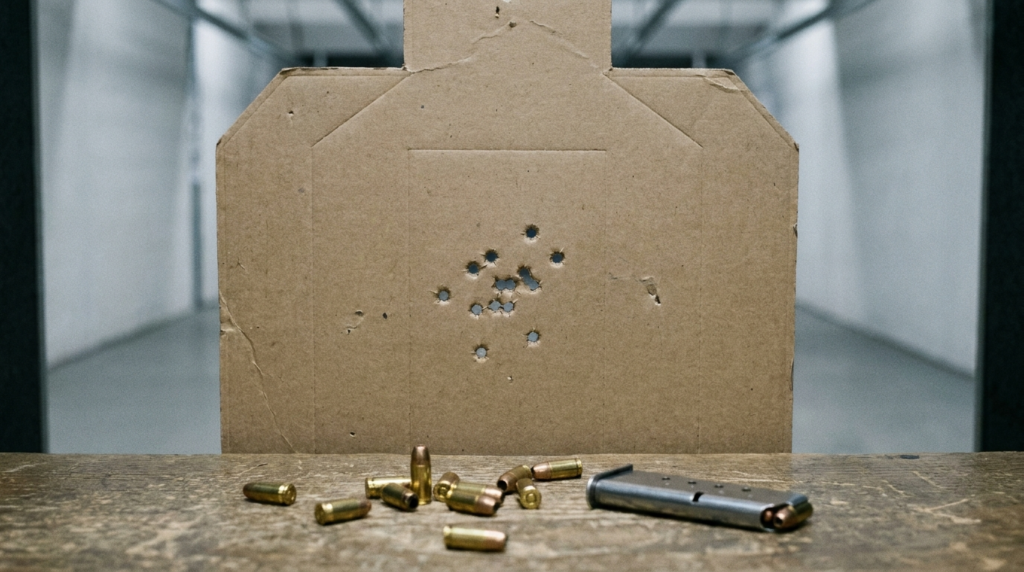
I ran 300 rounds of .380 through a current Walther-made PPK, testing reliability, the DA/SA trigger, recoil, and the infamous slide bite. Here’s how the icon shot.
Reliability
Good, and notably better than the old Smith & Wesson-made guns’ reputation. The current Walther production fed ball and most hollow points reliably, with only a couple of early hiccups that smoothed out. The blowback action is mechanically simple and, when built well as these are, dependable. Feed it quality ammo and it runs, which wasn’t always a given with older versions.
Accuracy and Trigger
Combat accurate at close range, which is all a pocket .380 is for. The small fixed sights and heavy double-action first pull make precise shooting harder than with a modern gun, but the single-action follow-ups are pleasant and the gun points naturally. At seven yards it does exactly what it needs to; beyond that the sights and trigger show their age.
Recoil and Slide Bite
The recoil is snappier than you’d think for a .380, thanks to the blowback action, though the weight keeps it controllable. And yes, the slide bite is real: gripping high, I caught the web of my hand more than once until I adjusted. A conscious lower grip fixes it. It’s the price of the classic design, and something every PPK shooter learns to manage.
Ammunition Log
- Federal American Eagle 95gr FMJ: 150 rounds, reliable
- Fiocchi 95gr FMJ: 80 rounds, best accuracy
- Hornady Critical Defense 90gr FTX: 40 rounds, the defensive load it liked
- Winchester white box 95gr: 30 rounds, ran clean
Performance Testing Results
Reliability (7/10)
Good with current Walther production and quality ammo, a real improvement over the older S&W guns. The simple blowback action is dependable when well made. It’s not the shoot-anything reliability of the best modern micros, but a current PPK fed good ammo runs well.
Accuracy (7/10)
Combat accurate up close, which is the job, but held back by small fixed sights and a heavy double-action first pull. Fine for defensive distances, unremarkable beyond them. The single-action shooting is genuinely pleasant.
Style & Heritage (10/10)
Unmatched, and the entire reason to buy one. The elegant lines, all-steel quality, and Bond-and-spy heritage make the PPK one of the most desirable and recognizable pistols ever made. Nothing else feels or looks quite like it, and that’s worth a great deal to the right owner.
Value (6/10)
The catch. It costs far more than lighter, higher-capacity, harder-hitting modern pocket guns. You’re paying for heritage and the all-metal build, not practicality. As a collectible and heirloom, that’s fair; as a pure defensive value, the modern guns win decisively.
Common Problems and Solutions
- Slide bite on the web of the hand: The most common PPK complaint. Grip the gun slightly lower so the web of your hand sits below the beavertail and hammer, and the bite disappears. It’s a technique fix, not a defect.
- Heavy double-action first pull: Practice staging the trigger and getting good first-shot hits in double action. Dry-fire drills help enormously. The single-action follow-ups are easy; it’s that first pull that needs the reps.
- Choosing a defensive load: .380 is a marginal defensive caliber, so ammo choice matters. Test a couple of quality expanding loads like Hornady Critical Defense, confirm reliable feeding, and carry the one your gun likes best.
- Buying used, old vs new: Prefer current Walther-made guns or German originals over the 2002-2013 S&W-made PPKs, which had a spottier reliability reputation. Inspect any used gun and run a few magazines before trusting it.
Who Should NOT Buy the Walther PPK
The PPK is a wonderful icon, but it’s the wrong gun for many buyers. Here’s who should look elsewhere.
- The practical pocket carrier: If you want the lightest, highest-capacity pocket .380, the Ruger LCP Max weighs half as much and holds nearly twice the rounds for less than half the price.
- The defense-first buyer: If stopping a threat is the priority, a pocket 9mm like the SIG P365 hits far harder with more rounds. The .380 PPK is marginal by comparison.
- The value shopper: If you want the most capable gun for your money, modern polymer micros give you more of everything for less. The PPK is a premium, style-driven purchase.
- The recoil-sensitive or new shooter: The snappy recoil, slide bite and heavy DA pull make the PPK a handful to learn on. A softer, simpler gun like a S&W EZ is far friendlier.
The Verdict
The Walther PPK is the most iconic pocket pistol ever made, an elegant, all-steel .380 with unmatched heritage that’s a genuine pleasure to own and carry. The current Walther-made guns are the best PPKs in years, and as a collectible and heirloom, nothing else compares. See where it sits among the other classic European pistols.
But be honest about what it is. It’s heavy for a .380, the recoil is snappy, the beavertail can bite, it holds only 6 or 7 rounds, and it costs far more than modern pocket guns that shoot better and hit harder. Every one of those is a real drawback for a defensive tool. The PPK’s entire case is style, feel, and history, and for the buyer who wants those things, it makes complete sense.
Buy the PPK/S for a bit more grip and a round more capacity, grip it slightly low to beat the slide bite, feed it a good defensive load, and enjoy carrying a piece of firearms and film history. It’s not the smart pocket-pistol buy on paper. It’s the one you want because it’s a PPK, and for the right owner, that’s the only spec that matters.
Final Score: 7.5/10 – A gorgeous, heritage-rich icon that trades modern practicality for timeless style.
Best For: Collectors, Bond fans, and shooters who want an elegant, all-metal .380 with genuine heritage. For a practical modern pocket .380, see our best .380 pistols guide.
FAQ: Walther PPK
Is the Walther PPK a good gun?
As an iconic, all-steel, elegant .380 with unmatched heritage, yes, and it is a genuine pleasure to own. As a practical modern defensive pistol, it is outclassed: it is heavy for a .380, holds only 6 or 7 rounds, has snappy recoil and possible slide bite, and costs more than better-performing modern pocket guns. You buy it for style and history, not specs.
Is the Walther PPK James Bond's gun?
Yes. The Walther PPK is famously James Bond's signature sidearm across most of the film series, which cemented its status as the most iconic pocket pistol in the world. That heritage is a big part of why people still buy and collect it today.
How much does a Walther PPK cost?
A current Walther-made PPK runs about $699 to $799 street, with an MSRP around $849. The .22 LR version is cheaper. That is expensive for a .380, and reflects the all-steel construction and the heritage rather than pure performance.
What is the difference between the PPK and PPK/S?
The PPK is the most compact version with a 6-round magazine and the shortest grip. The PPK/S combines the slightly longer PP frame with the PPK slide, giving a 7-round magazine and a fuller grip. For most shooters the PPK/S is more comfortable and practical; the PPK is the truest classic.
Does the Walther PPK have slide bite?
It can, and it is the gun's most notorious trait. The short beavertail lets the slide or hammer nip the web of your hand if you grip high. Gripping slightly lower solves it completely. It is a technique issue, not a defect, but it catches many new PPK shooters by surprise.
Is the Walther PPK good for concealed carry?
It carries well thanks to its slim, flat profile, but it is heavy for a .380 and holds only 6 or 7 rounds. Modern pocket guns like the Ruger LCP Max weigh half as much and hold nearly twice the rounds for less money. The PPK is a heritage carry choice, not the most practical one.
Are the current Walther PPKs reliable?
Yes, notably more so than the older Smith & Wesson-made versions from 2002 to 2013. The current guns are made by Walther in Fort Smith, Arkansas, and are well built. Feed a current PPK quality ammo and it runs reliably, which was not always true of the older S&W production.
Where is the Walther PPK made?
Current-production Walther PPKs are made in the United States, at Walther Arms in Fort Smith, Arkansas. Earlier guns were made in Germany or, from 2002 to 2013, by Smith & Wesson under license. Collectors often prefer German originals or current Walther production.
4,021+ Gun & Ammo Deals
Updated daily from 200+ top retailers. Filter by category, caliber, action type, and price.
Related Guides