
Last updated August 2026 · By Nick Hall, tracks federal and state firearms policy daily for USA Gun Shop readers
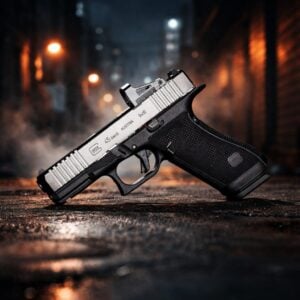
Quick take: Three of the biggest gun rights organisations in the country have filed a joint federal lawsuit against New York’s new ban on Glock and Glock-style pistols. The law targets a design characteristic rather than a model name. That is the part that makes it unusual and the part that makes it vulnerable.
- Ruling: No ruling yet. This is a newly filed federal complaint seeking to block the New York statute.
- Court: Federal district court in New York, with the Firearms Policy Coalition, Second Amendment Foundation and National Rifle Association aligned as plaintiffs.
- Why it matters: The law reaches a class of pistol defined by design features, which sweeps in far more than one manufacturer’s product line.
- What’s next: A preliminary injunction motion is the near-term fight, and California’s parallel Glock ban is being litigated on similar ground.
If a state can ban a pistol because it is easy to modify, then the target is not really the pistol. It is the aftermarket, the machine shop and the person with a 3D printer, and none of those are things a firearms ban can reach by restricting what a law-abiding buyer is allowed to purchase at retail.
Deals of the Day
Today's best discounts · Updated 3x daily
Gun Deals
See All →
Ammo Deals
See All →





Table of Contents
What the Statute Actually Prohibits
The New York law, signed by Governor Kathy Hochul, restricts pistols with design characteristics the state says make them readily convertible to fire automatically. In practice that is aimed at the ease with which certain striker-fired designs can be defeated by an illegally manufactured auto sear, the small device described in press coverage as a switch.
The drafting is the problem. A ban keyed to a design characteristic rather than a model list captures whatever meets the description, which reaches well past one manufacturer. Glock is the name in the headline and the name in the statute’s popular title, but the language is broader than the brand.
The Argument the State Has to Win
Under the Supreme Court’s framework, a state defending a firearms regulation must show the law is consistent with the nation’s historical tradition of firearms regulation. New York’s position will be that regulating weapons readily convertible to machine guns fits comfortably inside a tradition of restricting automatic weapons.
The plaintiffs’ answer is that the pistols in question are semi-automatic, are in common use for lawful purposes by many millions of Americans, and do not become machine guns unless somebody commits a serious federal felony to make one. Banning a lawful product because a criminal can misuse it with an illegal part is not a historical tradition, it is a new argument wearing one.
Why All Three Organisations Filed Together
The Firearms Policy Coalition, the Second Amendment Foundation and the NRA do not routinely align on the same complaint. They compete for the same donors and they have genuinely different litigation philosophies about which cases to bring and when.
A joint filing signals two things at once. They think the law is unusually weak on the merits, and they think this particular case is a good vehicle to carry the question upward. Coordinated filing also prevents the messier outcome where three separate suits produce three separate records and a court of appeals picks the worst one to decide the question on.
Why Design-Characteristic Drafting Keeps Failing
This is the third or fourth time a state has tried to legislate against a category of firearm by describing its features rather than naming it, and the drafting problem is always the same. Features are shared. A characteristic broad enough to capture the thing you are worried about is almost always broad enough to capture a great deal you are not.
Assault weapon statutes ran into this in the 1990s and are still running into it now, which is why they end up as lists of named models with a features test bolted alongside. New York has skipped the list and gone straight to the features test, which is the harder of the two to defend.
What Common Use Actually Means Here
But the plaintiffs have a second argument that is quieter and may matter more. Glock-pattern pistols are among the most widely owned handguns in the United States, carried by a very large share of American police departments and owned in the millions by civilians, and the Supreme Court has repeatedly treated common use for lawful purposes as close to dispositive.
New York has to explain why a design owned by that many people, in that many lawful hands, falls outside constitutional protection because a criminal could attach an illegal part to it. That is a steep hill, and it is the same hill California has to climb with its own statute.
The California Parallel
New York is not doing this alone. California enacted its own Glock-directed restriction and has already faced an injunction bid, in front of the same judge who handled the state’s handgun roster litigation. Two large states with similar statutes moving through different circuits is the classic setup for a split, and a split is how questions reach the Supreme Court.
For New Yorkers the near-term question is narrower and more practical. If the law takes effect while litigation runs, retailers stop stocking affected pistols and the secondary market prices accordingly. Preliminary relief matters more to an actual buyer than the eventual merits do.
There is a grandfathering question underneath that too, and it is the one that generates the most anxious email. Statutes of this kind distinguish between new sales and lawful existing possession, and the difference between those two treatments is the difference between an inconvenience and a confiscation. Read the effective date and the possession clause before you read anybody’s commentary about either.
New York wrote a law about one brand and drafted it to cover a whole category of pistol. That gap between the headline and the statute is where this case gets won or lost.
Frequently Asked Questions
What does the New York Glock ban actually prohibit?
It restricts pistols with design characteristics the state says make them readily convertible to fully automatic fire. Because the test is a design characteristic rather than a model list, the law reaches beyond a single manufacturer.
Who filed the lawsuit?
The Firearms Policy Coalition, the Second Amendment Foundation and the National Rifle Association filed a joint federal challenge, an unusual alignment for three organisations that normally litigate separately.
Can I still buy a Glock in New York?
That depends on the law's effective date and whether a court grants preliminary relief. Check the current status before making a purchase, and expect retailers to act conservatively while the question is open.
Is California doing the same thing?
California enacted a comparable restriction that is already being litigated, including an injunction bid before the judge who handled the state's handgun roster case. The two statutes are on similar ground in different circuits.
What is a switch or auto sear?
An illegally manufactured device that defeats a semi-automatic pistol's fire control to produce automatic fire. Making or possessing one is already a serious federal felony independent of any state law about the pistol itself.
Does this affect Glock-pattern pistols from other makers?
That is the central drafting question in the case. A statute keyed to design characteristics rather than brand names captures whatever meets the description, which is why the plaintiffs argue the law is far broader than its popular title suggests.
How long will the case take?
The preliminary injunction stage will be resolved in months. Final resolution, including appeal, runs to years, and a circuit split with California would extend it further.
Related Reading
- New York gun laws explained
- California gun laws explained
- Gun laws in all 50 states
- The best Glock parts and accessories
- Glock 19 vs SIG P320
4,335+ Gun & Ammo Deals
Updated daily from 200+ top retailers. Filter by category, caliber, action type, and price.