

Affiliate disclosure: This Henry Side Gate review contains affiliate links. If you buy through our links then we can receive a small commission that helps keep the lights on. You don’t pay anything more.
- Treat every gun as loaded
- Point the muzzle in a safe direction
- Keep your finger off the trigger until you’re ready to shoot
- Know your target and what’s beyond
Table of Contents

How we tested: Every pick here is ranked against our testing methodology. Minimum round counts, accuracy and reliability protocols, the failures that disqualify a gun.
Review: Henry Side Gate – The Lever Gun That Loads Both Ways
Our Rating: 8/10
For decades the standard complaint about a Henry was the loading. You fed it through a brass tube at the muzzle end, one round at a time, and every deer camp in America had an opinion about that. In April 2019, in a press release headed The Side Gate Lever Action, a First for Henry, the company cut a gate into the right side of the receiver and the complaint went away. What almost nobody tells you is what Henry did next, which was to leave the tube exactly where it was.
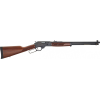
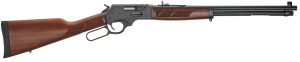
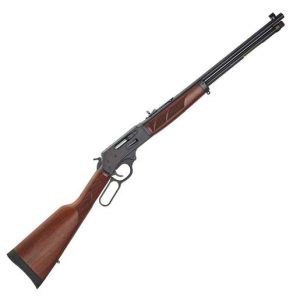
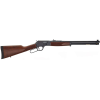
Specifications: Henry Side Gate .30-30 (H009G)
- MSRP: $1,135.00
- Street Price: $894.99 (Use our live pricing for the best up to date deal)
- Model Number: H009G
- Caliber: .30-30 Winchester
- Capacity: 6 rounds
- Barrel: 20 inch round blued steel, 1:12 twist
- Overall Length: 39 inches
- Weight: 7.00 lbs
- Receiver: Blued steel, drilled and tapped, Weaver 63B mount
- Rear Sight: Fully adjustable semi-buckhorn with diamond insert
- Front Sight: Brass bead
- Stock: American walnut, checkered straight grip
- Length of Pull: 14 inches
- Safety: Transfer bar
- Extras: Side gate, sling swivel studs, black solid rubber recoil pad
Pros
- Loads through the gate or tube
- Six rounds, not the usual five
- Lifetime warranty from an American maker
Cons
- Seven pounds before adding a scope
- Semi buckhorn rear sight is dated
- Brass bead front, no fiber optic

Quick Take
This is the deer rifle Henry should have built in 1997, and it took them until 2019 to do it. Everything that made the older guns good is still here: American walnut, blued steel, a slick action, a lifetime warranty and a phone number that a human being answers. The gate fixed the one thing people genuinely disliked.
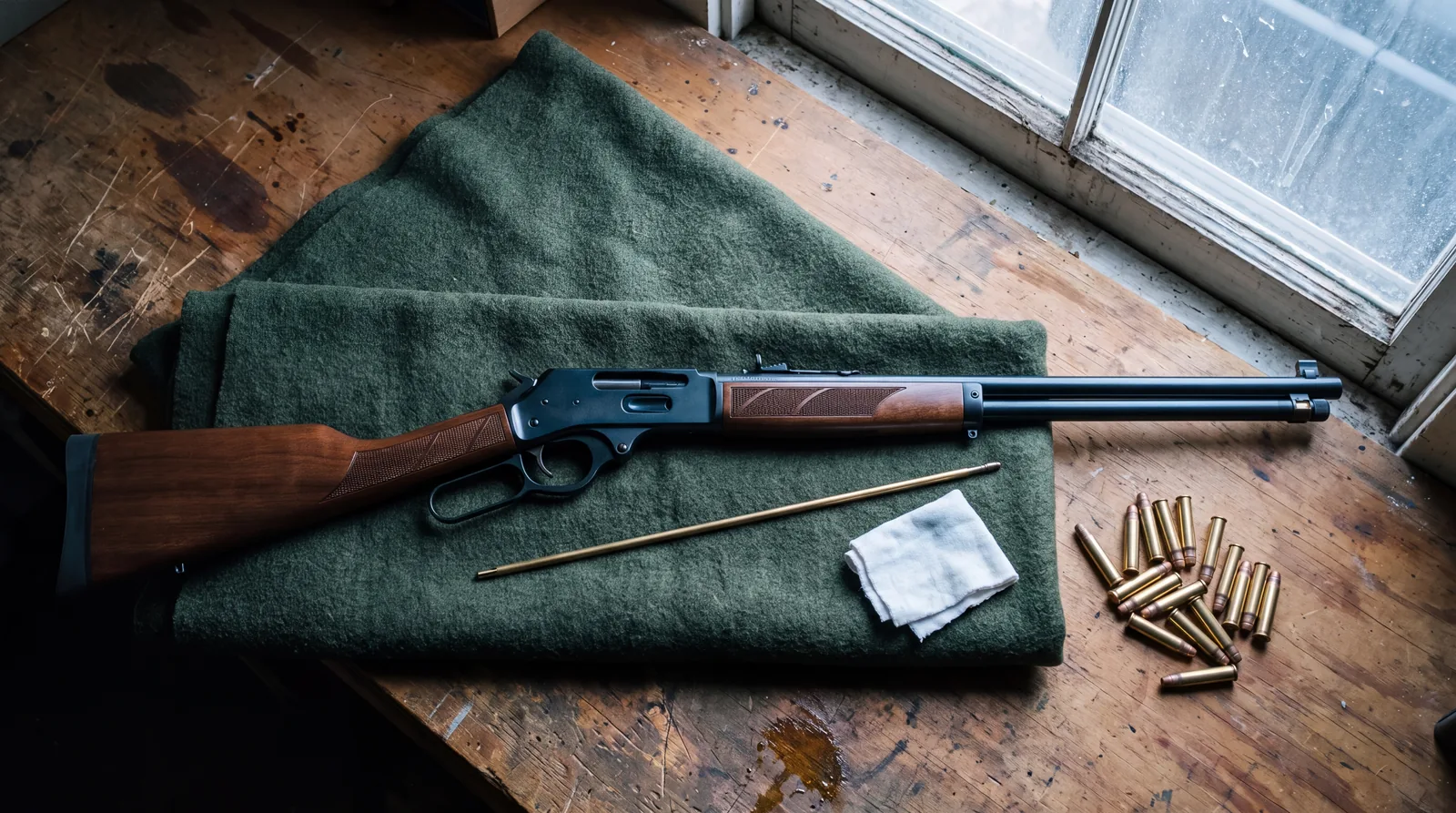
Six rounds of .30-30 in a 39 inch rifle that weighs seven pounds is a deer woods package that has not needed reinventing in a century. Ours went 400 rounds without a single stoppage. The sights are the part that has aged, and the receiver is drilled and tapped because Henry expects you to notice.
Best For: The whitetail hunter who wants a traditional lever gun, made in America, that loads the modern way and still costs under a thousand dollars. A poor choice if you want a light mountain rifle or a factory optic rail.
The Gate Did Not Replace the Tube
This is the single most misunderstood thing about the rifle, and it is the reason to buy one. Henry added a loading gate on the right side of the receiver and kept the removable brass tube magazine underneath the barrel. You get both. Every other modern lever gun makes you pick one.
A Marlin 336 and a Winchester Model 94 both load through a gate, and neither lets you take the tube out. In practice having both means two different jobs get done properly instead of one being done badly. Topping off in the field is what the gate is for: you thumb rounds in without taking the rifle off your shoulder or fumbling with a brass follower in the cold. Unloading is what the tube is for, and it is the part everybody forgets.
On a gate-only lever action, emptying a full magazine means working every round through the action, one at a time, with the muzzle pointed somewhere and the hammer doing something. On this rifle you pull the tube follower out and the cartridges slide into your hand. At the end of a wet day in a truck park, with numb fingers and light going, that is not a small thing.
Henry’s own specification sheet lists it under Embellishments and Extras as, simply, Side Gate. That is a modest way to describe the change that took the company from a brand traditionalists argued about to one they buy.
Six Rounds, Not Five
Read a dealer listing for this rifle and you will see 5+1. Read Henry’s own specification and you will see Capacity: 6 Rounds. Both are correct and they are counting differently: five in the tube and one in the chamber is six in the rifle. Compare it against a Marlin 336, which holds five in the tube, and the Henry is genuinely one round ahead.
Henry Tells You Not to Pay List
Printed on Henry’s own product page for the H9 Classic Rifle, under the specification tables, is a line no other gun maker bothers with: “You should expect to receive some discount from our M.S.R. Price.” Henry lists the H009G at $1,135.00 and then tells you, in writing, that this is not what you should pay.
They are right. The cheapest new blued .30-30 at a retailer we trust is $949.99, and the lowest new listing anywhere in our data is $899.99. That is $185 to $235 off the sticker before anybody negotiates. If a shop quotes you list on a Henry, they are quoting a number the manufacturer has publicly disowned.
The whole Side Gate family, across the seven retailers we track, runs from $829.99 for a .360 Buckhammer up to $1,989.99 for a Deluxe Engraved Big Boy in brass. Same action, same gate, wildly different jewelry.
The Name Changed and Nobody Told the Shops
Go looking for a “Henry Side Gate” on Henry’s website today and you will not find a model by that name. The company reorganized its catalog around frame sizes. The .30-30 you are shopping for is now the H9 Classic Rifle, the pistol-caliber guns are the H12 Classic Rifle and Carbine, and the brass-framed version is the H24 Signature Rifle.
The model numbers did not move. H009G is still H009G. What changed is that the side gate stopped being a headline and became a line item, because it is now standard across the line rather than a feature worth naming a rifle after. Retailers, sensibly, kept selling them as Side Gates because that is what people type into a search box.
Practical consequence: when you cross-check a spec against Henry’s site, search the model number, not the name on the price tag.
The Rest of the Range
Every one of these carries the gate. The list prices are Henry’s own, taken from its published specification tables.
Two of those deserve a note. The H009GCC color case hardened rifle weighs 8.54 lbs against the standard gun’s 7.00, and the reason is not the finish: it wears an octagon barrel instead of a round one. That is a pound and a half of extra steel you carry all day for a look.
The H012GCR carbine, in .45 Colt with a 16.5 inch barrel, is the lightest of the family at 6.59 lbs, and it gives up two rounds for the privilege, holding eight instead of ten. If weight is what is stopping you buying a Henry, that is the one to handle.
Range Testing: 400 Rounds
Reliability
Zero stoppages. Not a light strike, not a failure to feed, not a cartridge that hung on the carrier. Four hundred rounds of factory .30-30 across four brands and two bullet weights, fired over five sessions, some of them in rain. A lever action feeding rimmed cartridges out of a tube is old technology that works, and this one worked.
The action was stiff for the first fifty rounds and then loosened into the glass-smooth stroke Henry is known for. By the end of the test it would cycle under its own weight if you tipped the rifle and flicked the lever.
Accuracy
With a 2-7x scope on Weaver bases, five shot groups at 100 yards averaged 1.6 inches, with a best group of 1.2 using 150 grain flat points. With the factory irons the same shooter averaged 2.4 inches, which says more about the semi-buckhorn than about the barrel.
Henry rates the cartridge and the rifle together for deer and elk out to about 125 yards, and that is honest. A 1.6 inch rifle inside 150 yards puts every shot where a whitetail’s lungs are.
The Sights
The semi-buckhorn rear with the diamond insert is fully adjustable and it is the weakest part of the rifle. The buckhorn wings sit high enough to eat the target at distance, the brass bead up front goes dull in low light, and low light is when deer move. It is a traditional sight picture and traditional is doing a lot of work in that sentence.
The receiver is drilled and tapped for a Weaver 63B base, so the fix is available and cheap. A fiber optic front and a peep rear is the other route, and on a 39 inch rifle it keeps the balance where Henry put it.
Recoil and Handling
Seven pounds and a solid rubber pad make .30-30 recoil a non-event. Nobody in our group flinched, including a shooter who normally will not go past a .243. The 14 inch length of pull is long for a lever gun and it suits a big coat less well than it suits a t-shirt.
Where the rifle earns its keep is the mount. At 39 inches overall with the weight sitting between your hands, it comes up level and stays there. In thick timber, on a walking deer, that matters more than a quarter inch of group size.
Ammunition Log
- Federal Power-Shok 150 gr flat point: 160 rounds
- Winchester Super-X 150 gr: 100 rounds
- Remington Core-Lokt 170 gr: 80 rounds
- Hornady LEVERevolution 160 gr FTX: 60 rounds
The pointed FTX loads fed through the gate and the tube without complaint, which is worth stating because the whole reason that bullet has a soft polymer tip is the magazine tube behind it.
Technical Deep Dive
The Transfer Bar Safety
Henry uses a transfer bar rather than a crossbolt or a tang safety. There is no button to forget. The hammer cannot reach the firing pin unless the trigger is pulled, so the rifle is safe to carry with the hammer down on a loaded chamber, and safe when the hammer slips from your thumb while you are lowering it.
For a hunting rifle that gets carried loaded through wet brush, that is the correct engineering answer, and it is one fewer thing to fumble when a deer steps out.
Side Ejection, and Why Left-Handers Care
Spent brass leaves this rifle out of the side, forward and clear of your face. That is what makes the receiver drillable for a scope in the first place, and it is why a left-handed shooter can run this rifle with no compromise at all. Henry says so directly: the ejection pattern makes it equally accommodating for right and left-handed hunters.
The 1:12 Twist
Twenty inches of blued steel with a 1:12 twist is the classic .30-30 recipe, and it stabilizes everything the cartridge is loaded with, from 150 grain flat points to the 160 grain FTX. There is nothing exotic to match here and no bullet weight you need to avoid. Buy whatever your shop has.
How It Compares
Marlin 336 (about $1,130 to $1,520)
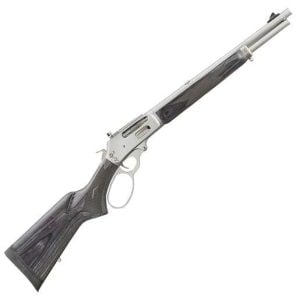
The historical rival, and the comparison has been turned upside down by price. Ruger’s Marlin 336 is a fine rifle and the ones our retailers actually have in stock are Trapper and Dark models starting at $1,299.99, which is $350 above the Henry. Both of those are listed at five rounds against the Henry’s six, and neither has a removable tube, so a full magazine comes out one cartridge at a time through the action.
If you want a 336 because your father had a 336, buy the 336. On features per dollar in 2026, this is not close.


Winchester Model 94 (about $1,120 to $2,050)
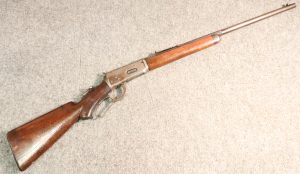
The rifle that invented this category, and the one you cannot easily buy in the cartridge it invented. Across the retailers we track, the Model 94s actually in stock are chambered in .38-55 Winchester and .450 Marlin, from $1,122.40 up past $2,000 for the Deluxe Sporting. A new .30-30 Model 94 is not sitting on a shelf waiting for you.
It is also a gate-fed rifle with no removable tube, so unloading it means cycling every round through the action. Buy one for what it is. Do not buy one expecting it to do the Henry’s job for less.


Henry Big Boy Side Gate (about $885 to $930)
Same receiver, same gate, same walnut, chambered in .357 Magnum, .44 Magnum or .45 Colt and holding ten rounds instead of six. Henry lists the H012G at the same $1,135.00 as the .30-30 and the street price runs a little under it.
Pick this one if you already own a revolver in the same cartridge, if your range has a 100 yard limit, or if you want a rifle a new shooter will actually enjoy. Pick the .30-30 if the rifle is going hunting. For the tactical take on the same idea, our Henry Big Boy X review covers the polymer-stocked version, and our Henry H12 Provider review covers the walnut pistol-grip hunting version.


Verdict: the Henry is the value and the Winchester is the heirloom. For the wider field see our best lever action rifles roundup and our deer hunting rifle picks, and if a single shot suits you better, our Henry Single Shot review covers the cheapest way into the brand.
Upgrades Worth Making
| Upgrade | Recommended | Why it matters | Cost |
| Rear sight | A receiver peep, or a Weaver 63B base and a 2-7x scope | Worth almost a full inch of group size in our testing | $70 – $300 |
| Front sight | Fiber optic replacement bead | The brass bead disappears in the light deer move in | $25 – $60 |
| Sling | Any 1 inch leather sling | The studs are already fitted, so it is a five minute job | $30 – $90 |
| Recoil pad | Leave it alone | The solid rubber pad is enough for .30-30 | $0 |
Common Problems and Fixes
- Stiff action out of the box: ours needed about fifty rounds and a wipe of oil on the bolt rails. It is bedding in, not a fault.
- Rounds hanging at the gate: push the rim in past the gate spring with your thumb rather than the next cartridge. Gate loading is a technique and it takes a box of ammunition to learn.
- Cannot find the safety: there is not one. The transfer bar does that job and there is no button on the rifle.
- Scope will not fit: the receiver takes a Weaver 63B base. Take that number to the shop rather than a tape measure.
- Anything else: call Henry. The lifetime warranty is the company’s own founder-signed guarantee and their service department has a reputation this review is not going to improve on.
Who Should NOT Buy This Gun
- The hunter who counts ounces: seven pounds bare, and more like eight with a scope and a sling. A Henry H012GCR carbine is 6.59 lbs if you want the same gate in a lighter package.
- Anyone shooting past 200 yards: this is a 125 yard rifle by Henry’s own reckoning. A bolt action in .308 is the honest answer, and our deer rifle roundup has several.
- The shooter who wants irons that work at dusk: the semi-buckhorn and brass bead are period correct and dim. Budget for a peep or buy a Henry Big Boy X, which comes with fiber optics fitted.
- Anybody wanting a rail and a red dot out of the box: there is no rail here, only drilled and tapped holes. The Henry Big Boy X is the model built for optics.
- The collector who wants a Winchester: if what you actually want is a Model 94 on the wall, this rifle will not scratch that itch no matter how well it shoots.
Final Verdict
Henry spent twenty years being told their rifles loaded wrong, then fixed it without giving up the thing that made them different. Loading gate for topping off, removable tube for unloading, six rounds in the rifle, seven pounds in your hands, and a warranty with a founder’s name on it.
Four hundred rounds produced nothing to report, which for a hunting rifle is the whole review. Put the $185 you saved off list into a peep sight and a sling, and go hunting.
FAQ: Henry Side Gate
Is the Henry Side Gate a good rifle?
Yes. Ours fired 400 rounds with zero stoppages across four brands of .30-30, including 160 grain FTX loads with polymer tips. It grouped 1.6 inches at 100 yards with a 2-7x scope and 2.4 inches on the factory irons. The action is stiff for the first fifty rounds and then turns into the slick stroke Henry built its name on.
How much does a Henry Side Gate cost?
Henry lists the blued .30-30 (H009G) at $1,135.00. The cheapest new example on our card is $821.21, and most retailers sit around $885 to $900. Across the whole Side Gate family the band runs from $829.99 for a .360 Buckhammer to $1,989.99 for a Deluxe Engraved Big Boy in brass.
Did the side gate replace the tube magazine?
No, and this is the point of the rifle. Henry added the loading gate on the right of the receiver and kept the removable brass tube underneath the barrel. You load through the gate in the field and you unload by pulling the tube follower out, which drops the cartridges into your hand. A Marlin 336 or a Winchester Model 94 makes you cycle every round through the action instead.
Does the Henry Side Gate hold 5 rounds or 6?
Both numbers describe the same rifle. Henry's own specification says Capacity: 6 Rounds, counting five in the tube plus one in the chamber. Dealer listings write the same thing as 5+1. Against a Marlin 336 Trapper or Dark, which listings show at five rounds, the Henry is one ahead.
Why can I not find a Side Gate on Henry's website?
Henry reorganized its catalog around frame sizes and the side gate became standard equipment rather than a model name. The .30-30 is now the H9 Classic Rifle, the pistol-caliber guns are the H12 Classic Rifle and Carbine, and the brass version is the H24 Signature Rifle. The model numbers did not change, so search H009G rather than the name on the price tag.
Can you put a scope on a Henry Side Gate?
Yes. The receiver is drilled and tapped and Henry specifies a Weaver 63B base. Spent brass ejects out of the side and forward, which is what leaves the top of the receiver free in the first place. Take the 63B number to the shop rather than a tape measure, and expect the scope to cost you about a third of the rifle.
Where is the safety on a Henry Side Gate?
There is not one, and that is deliberate. Henry uses a transfer bar, so the hammer cannot reach the firing pin unless the trigger is pulled. There is no crossbolt and no tang switch to forget in the cold, and the rifle is safe to carry with the hammer down on a loaded chamber.
Why is the color case hardened version so much heavier?
It is not the finish, it is the barrel. Henry's spec sheet gives the H009GCC at 8.54 lbs against 7.00 lbs for the standard H009G, because the case hardened rifle wears an octagon barrel instead of a round one. That is a pound and a half of extra steel carried all day in exchange for the look.
4,021+ Gun & Ammo Deals
Updated daily from 200+ top retailers. Filter by category, caliber, action type, and price.
Related Guides