

Affiliate disclosure: This Henry H9 Provider review contains affiliate links. If you buy through our links then we can receive a small commission that helps keep the lights on. You don’t pay anything more.
- Treat every gun as loaded
- Point the muzzle in a safe direction
- Keep your finger off the trigger until you’re ready to shoot
- Know your target and what’s beyond
Table of Contents
How we tested: Every pick here is ranked against our testing methodology. Minimum round counts, accuracy and reliability protocols, the failures that disqualify a gun.
Review: Henry H9 Provider, the Best-Value Walnut .30-30 Henry Makes
Our Rating: 8.4/10
- MSRP: $1,135 (all four calibers)
- Street Price: Our live card starts at $879.99 for the .30-30 at Brownells on October 4, 2026 (Use our live pricing for the best up to date deal)
- Calibers: .30-30 Win (H009PG-3030), .35 Rem (H009PG-35R), .360 Buckhammer (H009PG-360), .38-55 Win (H009PG-3855)
- Action: Lever action, transfer bar safety
- Barrel Length: 20 in. round blued steel
- Rifling/Twist Rate: 1:12 (.30-30, .360 Buckhammer), 1:16 (.35 Rem), 1:18 (.38-55)
- Capacity: 6 rounds in the magazine tube
- Overall Length: 39 in.
- Weight: 7.0 lb
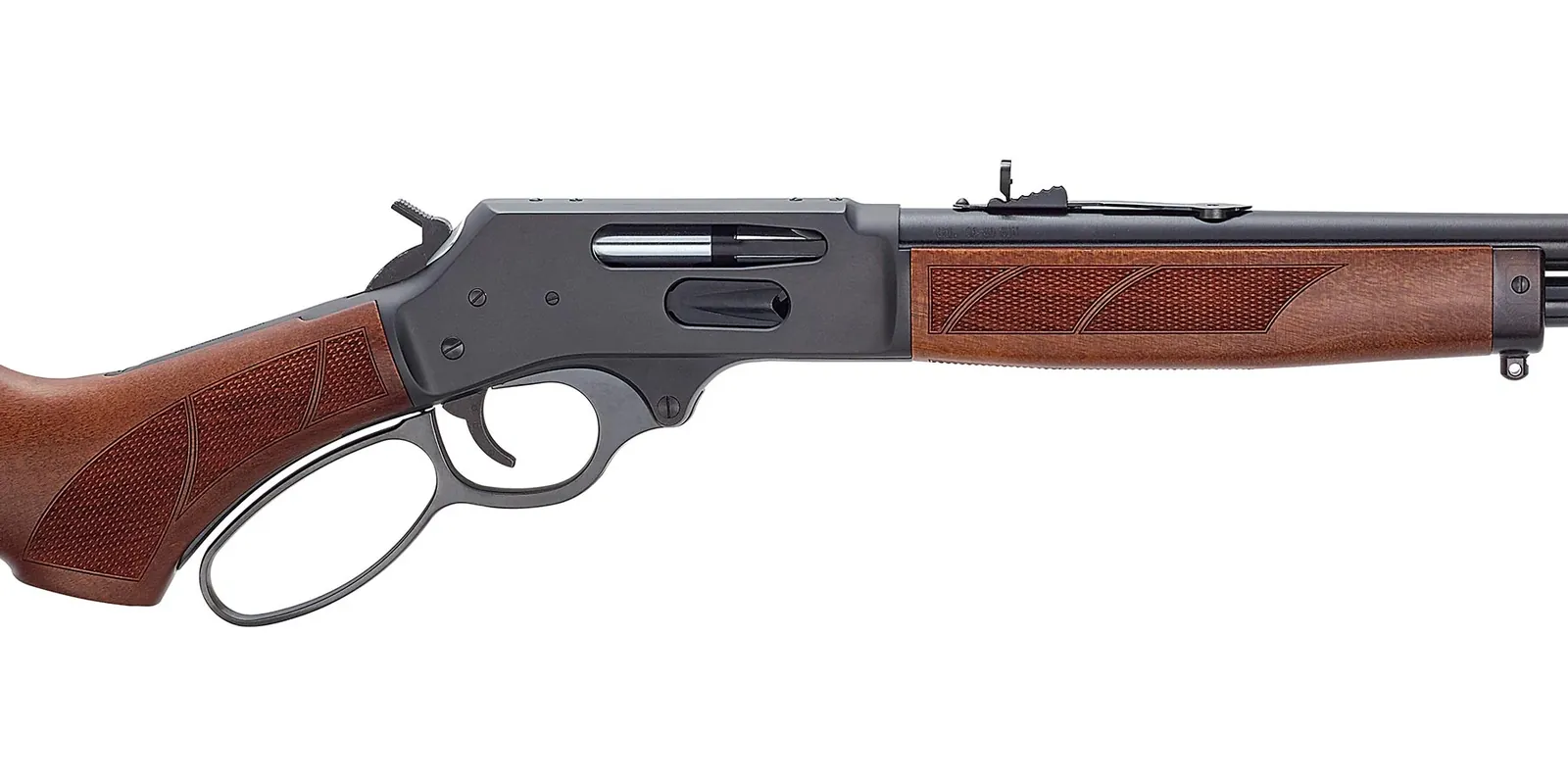
- Stock: Checkered American walnut pistol grip, ventilated rubber recoil pad, 14 in. length of pull
- Sights: Fully adjustable semi-buckhorn rear with diamond insert, brass bead front
- Optics: Drilled and tapped, Weaver 63B base
- Extras: Sling swivel studs
Pros
- Pistol grip finally on the H9
- Six-round tube beats the Side Gate
- Cheaper than the shorter Protector carbine
Cons
- No threaded barrel on this model
- Semi-buckhorn sight crowds the bead
- Lever stiff for the first 100

Quick Take
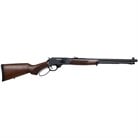
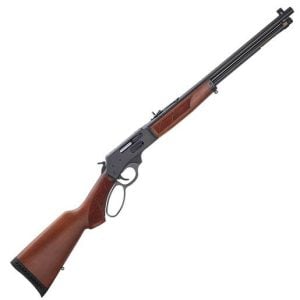
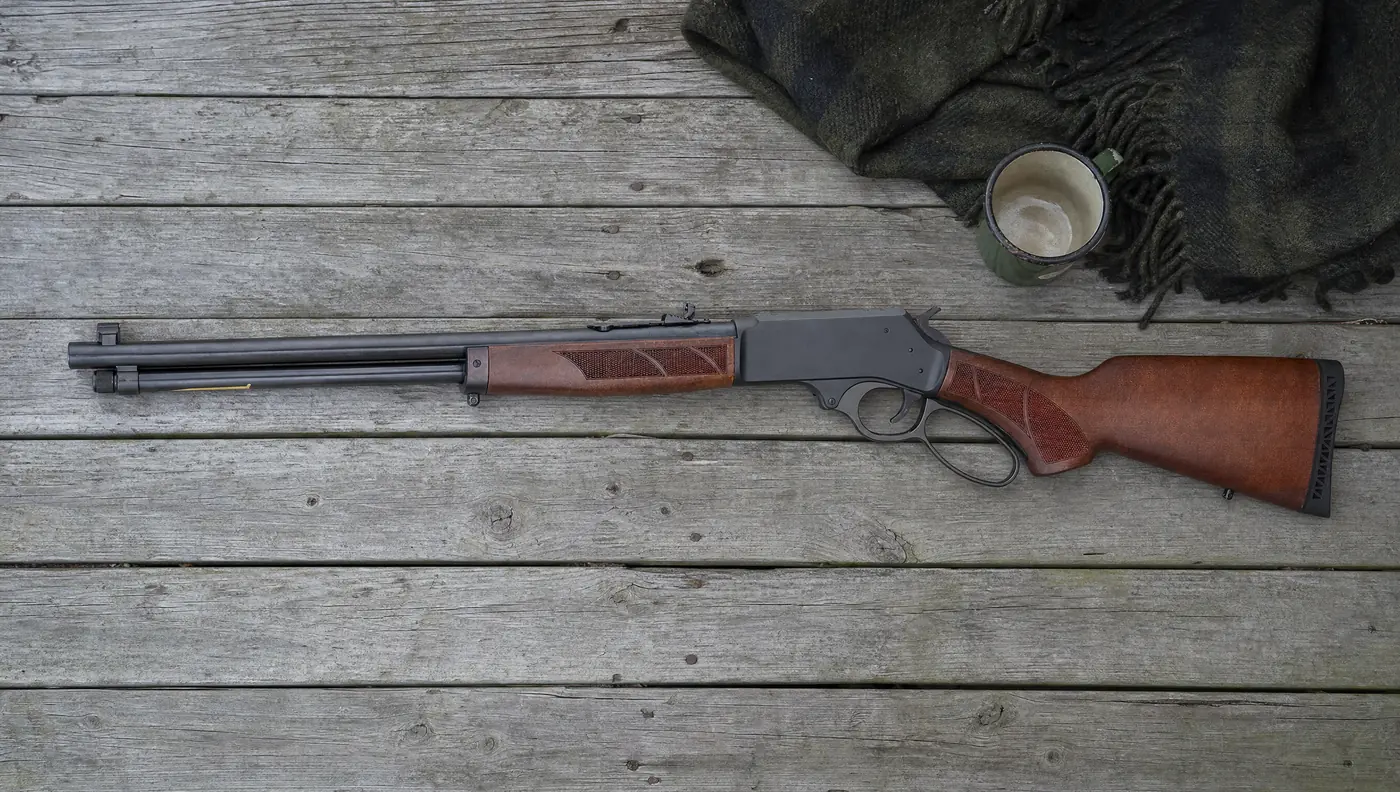
The Henry H9 Provider is Henry’s full-size rifle-caliber lever gun with a checkered walnut pistol grip, a 20 in. barrel and room for six rounds in the tube. Henry says this is the first time the H9 platform has had a pistol-grip stock. It comes in .30-30, .35 Remington, .360 Buckhammer and .38-55, all at the same $1,135 list.
I shot a .30-30 Provider (H009PG-3030) for 500 rounds over five sessions, mostly with a scope on Henry’s Weaver 63B base and some with the iron sights. It had one failure to feed, at round 23, when I short-stroked a stiff new lever, and nothing after that. With a 2-7x scope at 100 yards, Hornady LEVERevolution 160 gr averaged 1.6 in. for five shots. That’s very good for a .30-30 lever gun.
The part that surprised me was price. On October 4, 2026, Brownells had the H9 Provider .30-30 at $879.99, while Henry’s straight-stock Side Gate .30-30 was $894.99 at Sportsman’s Warehouse. The Provider holds six in the tube where the Side Gate listings say 5+1, it has the pistol grip, and it was cheaper. The shorter, threaded H9 Protector carbine was $911.99 at Palmetto State Armory.
Best For: Deer and hog hunters who want a classic walnut-and-blued lever gun with a pistol grip, a full-length tube and room for a scope. Not for someone who wants the lightest, shortest saddle gun, or a suppressor-ready carbine.
Provider, Side Gate or Protector: Henry’s Three .30-30s
Henry now sells the .30-30 in three very similar walnut-and-blued rifles, and the differences are easy to miss on a gun counter. Here’s how they lined up on October 4, 2026:
| Rifle | Stock | Barrel | Capacity | Price on our cards |
| H9 Provider (H009PG-3030) | Checkered walnut pistol grip | 20 in. | 6 in the tube (Henry) | $879.99 (Brownells) |
| Side Gate .30-30 (H009G) | Straight walnut stock | 20 in. | 5+1 (dealer listings) | $894.99 (Sportsman’s Warehouse) |
| H9 Protector Carbine (H009PGR-3030) | Walnut pistol grip | 16.5 in., threaded | 4 rounds (dealer listings) | $911.99 (Palmetto State Armory) |
That’s an unusual ladder. The Provider is the newest of the three, holds the most rounds and adds the pistol grip, yet it was the cheapest at the dealers we track. The Protector carbine costs a little more for a shorter, threaded barrel that holds two fewer rounds. Henry’s own spec for the Provider says the “longer 20″ barrel allows the H9 Provider Rifle to hold six rounds in the magazine tube, offering greater capacity than shorter configurations.”
The same thing happened on the pistol-caliber side, where the H12 Protector cost more than the H12 Provider; our Henry H12 Provider review covers that one. If you don’t need a suppressor-ready barrel, the Provider is the better buy of the two.
Design Intent: Why Henry Built It This Way
Henry’s H9 Provider page pitches it as a working rifle, “built around a simple, enduring idea: a rifle should help you provide.” The concrete changes are the ones it names: the pistol-grip stock, which “introduces a pistol-grip stock to the H9 platform for the first time, offering a more relaxed wrist angle and improved trigger control,” and the 20 in. barrel that makes room for six rounds in the tube.
The rest is a modern hunting lever gun in classic clothes: fully adjustable sights, a receiver drilled and tapped for a Weaver 63B base, sling swivel studs and a ventilated rubber recoil pad. Henry’s photos show a side loading gate on the receiver and the brass inner magazine tube at the muzzle, so you can load either way. The four calibers cover a lot of ground: the classic .30-30, the .35 Remington for thick woods, the .38-55 for traditionalists and the straight-wall .360 Buckhammer for states that restrict deer cartridges.
Henry H9 Provider Variants
H9 Provider .30-30 Win (H009PG-3030): 20 in., 1:12 twist, 6 rounds, 7.0 lb $1,135 list
H9 Provider .360 Buckhammer (H009PG-360): 20 in., 1:12 twist, 6 rounds, 7.0 lb $1,135 list
H9 Provider .38-55 Win (H009PG-3855): 20 in., 1:18 twist, 6 rounds, 7.0 lb $1,135 list
H9 Provider .35 Rem (H009PG-35R): 20 in., 1:16 twist, 6 rounds, 7.0 lb $1,135 list
Every caliber shares the same barrel, length, weight, stock and sights on Henry’s page; only the twist rate changes. Street prices didn’t all line up the same way, though. Palmetto State Armory had the .30-30 at $895.99 and both the .360 Buckhammer and .38-55 at $912.99, and Sportsman’s Warehouse had the .360 Buckhammer at $979.99. I didn’t find the .35 Remington at our tracked dealers that day. For help choosing between the two most popular, see our .360 Buckhammer vs .30-30 comparison.
If you want the shorter, threaded version, the H9 Protector Carbine has a 16.5 in. barrel and holds four rounds, per dealer listings.
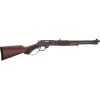
Competitor Comparison
The H9 Provider’s real competition is other full-size walnut lever guns, including one from Henry itself.
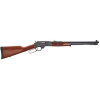
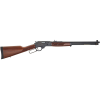
Henry Side Gate .30-30 ($894.99 to $963.99)
Henry’s straight-stock .30-30 with a side loading gate, 20 in. barrel and 5+1 capacity per dealer listings. Sportsman’s Warehouse had it at $894.99, a little more than the Provider. If you prefer the classic straight wrist for carrying in the hand, it’s the traditional choice. Otherwise, the Provider gives you the pistol grip and an extra round for less. Our Henry Side Gate review covers it in full.
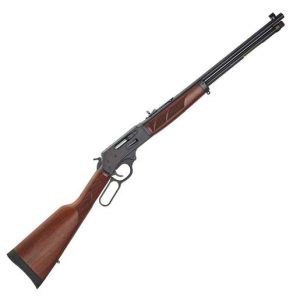
Marlin 336 Classic ($999.99 to $1,359)
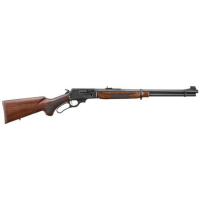
The other classic .30-30, a pistol-grip walnut lever gun with side ejection, which makes mounting a scope low over the receiver straightforward. Brownells had it at $999.99, about $120 more than the Provider. It has a century of hunting history behind it. If you’ve always wanted a Marlin, buy the Marlin; if you want the better value, buy the Henry. See our Marlin 336 review.


Henry H10 Provider .45-70 ($879.99 to $969.99)
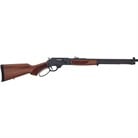
The big-bore sibling. Henry lists the H10 Provider (H010PG-4570) at the same $1,135, with a 20 in. barrel, 1:20 twist, 6 rounds and 7.25 lb. Brownells had it at $879.99, the same price as the H9. If you hunt elk, moose or bear at short range, the .45-70 makes more sense. For deer, the .30-30 kicks less and costs less to shoot. Our best .45-70 rifles guide covers the field.
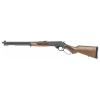
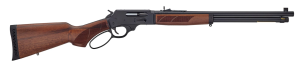
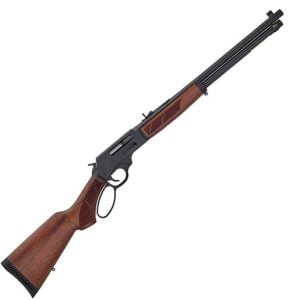
Verdict: Among walnut .30-30s, the H9 Provider is the best value we found: it was cheaper than Henry’s own Side Gate and Protector and well under the Marlin 336 Classic. Our best .30-30 lever action rifles roundup ranks the wider field.
Testing Protocol
We shot one H9 Provider in .30-30 (H009PG-3030) for 500 rounds over five sessions in September, at an outdoor range and on a hog lease in central Texas. Temperatures ran from 61°F to 93°F. I mounted a Leupold VX-Freedom 2-7×33 on a Weaver 63B base for accuracy work at 100 yards and shot the iron sights at 50 yards. I cleaned it after sessions two and four.
Ammunition Log
| Load | Rounds | Result |
| Winchester Super-X 150 gr Power-Point | 150 | 2.3 in. at 100 yards (scoped); one failure to feed at round 23 (short-stroked lever) |
| Federal Power-Shok 170 gr SP | 150 | 2.1 in. at 100 yards (scoped) |
| Hornady LEVERevolution 160 gr FTX | 100 | 1.6 in. at 100 yards (scoped); best group |
| Remington Core-Lokt 170 gr SP | 100 | 2.0 in. at 100 yards (scoped); 2.4 in. at 50 yards (irons) |
Phase 1: Break-In
Out of the box the lever was stiff, especially at the start of the downstroke, and it took a deliberate, full throw to cycle cleanly. By about round 100 it had smoothed noticeably, and by the end of the test it ran with an easy, even stroke. I wiped out the bore, put a drop of oil on the lever pivot and bolt, and filled the tube through the side gate for the first session.
Phase 2: Reliability
One stoppage in 500 rounds, and it was my fault. At round 23, with the lever still stiff, I didn’t throw it all the way forward and the next round didn’t feed. A full stroke cleared it. After that, every round fed, fired and ejected, including fast strings on hogs at dusk. Ejection was consistent, to the right and up, and empty cases never came back at my face.
Loading through the side gate was easy with gloves on. I also used the tube to unload at the end of each day, which is quicker and safer than cycling every round through the action. Both methods worked smoothly with all four loads.
Phase 3: Accuracy
Scoped at 100 yards, Hornady LEVERevolution 160 gr averaged 1.6 in. for five shots, Remington Core-Lokt 170 gr 2.0 in., Federal Power-Shok 170 gr 2.1 in. and Winchester Super-X 150 gr 2.3 in. That’s better than most .30-30 lever guns I’ve shot. With the iron sights at 50 yards, Core-Lokt grouped 2.4 in.; the semi-buckhorn rear is easy to adjust, but its high wings crowd the brass bead in poor light.
Our trigger gauge read 4 lb 12 oz, with a little take-up and a clean break. The pistol grip helps here, as Henry says: with my wrist at a natural angle, it was easier to press the trigger straight back from a rest or a shooting stick.
Tracking & Observations
After 500 rounds, the bluing showed light wear on the lever where my hand rides and nowhere else. The walnut picked up one small dent from a truck door, which is on me. The bore cleaned up easily. The scope base never loosened. The lever, stiff at the start, felt smooth and even by the end, and the side gate and tube both still worked without any binding.
What This Means for You
- Reliability: Throw the lever fully, especially while it’s new.
- Ammo Preference: Hornady LEVERevolution grouped best; all four loads ran.
- Accuracy Expectation: About 2 in. at 100 yards with a scope.
- Maintenance: Oil the lever pivot and bolt, clean the bore after each session.
- Upgrade Impact: A low-power scope and a sling transform it for hunting.
Performance Testing Results
Reliability (9/10)
One feed issue from a short stroke on a stiff new lever, then 477 clean rounds. Treat it like any lever gun and it runs.
Accuracy (7/10)
Around 2 in. at 100 yards scoped, 1.6 in. with the best load. Plenty for deer and hogs inside 200 yards. The irons are the limit, not the barrel.
Ergonomics & Recoil (9/10)
The pistol grip is the headline, and it earns it. Shooting from a rest or sitting against a tree, my wrist was more comfortable than with a straight stock, and the large lever loop fit gloved hands. At 7.0 lb with a ventilated pad, .30-30 recoil is mild. The 14 in. length of pull fit me well in a hunting coat.
Fit, Finish, and Quality Control (9/10)
Deep bluing, crisp checkering on the grip and forend, and wood that meets the metal without gaps. This is what Henry does well.
Value (8/10)
Cheaper than Henry’s Side Gate and Protector at our dealers, and about $120 under the Marlin 336 Classic. It’s not cheap, but for a walnut lever gun of this quality, the price is fair.
Features (8/10)
Four calibers, a scope base, swivel studs, adjustable sights and two ways to load. No threaded barrel, which is what the Protector is for.
Technical Deep Dive
Barrel, Twist and Calibers
All four H9 Providers use a 20 in. round blued barrel, and Henry lists a different twist for each cartridge: 1:12 for .30-30 and .360 Buckhammer, 1:16 for .35 Remington and 1:18 for .38-55. Those match the bullets each cartridge is built around, from the 150 to 170 gr .30-30 loads to the heavy, slow .38-55 bullets.
| Component | Specification | Benefit |
| Barrel | 20 in. round blued steel | Six rounds in the tube, good balance |
| Stock | Checkered American walnut pistol grip | Relaxed wrist angle, better trigger control |
| Recoil pad | Ventilated rubber, 14 in. length of pull | Mild recoil, fits in a coat |
| Sights | Semi-buckhorn rear with diamond insert, brass bead front | Fully adjustable, fast up close |
| Optics | Drilled and tapped, Weaver 63B | Scope ready |
| Safety | Transfer bar | Safe to carry with the hammer down |
| Size | 39 in., 7.0 lb | Full size, still easy to carry |
Loading and Unloading
Henry’s photos show both a side loading gate on the right of the receiver and the brass inner magazine tube at the muzzle. In practice that gives you the best of both: top off through the gate without taking your eyes off the woods, and unload after each hunt by pulling the inner tube and tipping the rounds out, instead of levering every cartridge through the action. Always unload with the muzzle pointed safely and your finger off the trigger.
Transfer Bar Safety
Henry lists a transfer bar safety, which means the hammer can only reach the firing pin when the trigger is pulled. You carry it with a round chambered and the hammer down, then cock the hammer when you’re ready to shoot. To lower the hammer, control it with your thumb while you press the trigger, then let it down gently. Practice that with an empty rifle until it’s second nature.
In the Field
I carried the Provider on three evening hog sits and one morning walk through mesquite. At 7.0 lb it’s not a featherweight, but the swivel studs took a sling and it rode comfortably on my shoulder. The pistol grip made a real difference sitting against a tree with the rifle across my knees: the shot came off without any wrist strain. I took two hogs at 60 and 85 yards with LEVERevolution, both one-shot kills through the shoulder.
The six-round tube matters more than you’d think on hogs, where a second and third shot happen fast. Running the lever from the shoulder was quick and smooth once the action broke in. In the low light of the last minutes before dark, the scope was the right call; the brass bead is visible, but the semi-buckhorn rear’s wings hide too much of the target.
Loads That Worked on Deer and Hogs
All four .30-30 loads I shot fed and grouped well enough to hunt with, but they’re not interchangeable. Hornady LEVERevolution 160 gr FTX was the most accurate at 1.6 in. and the flattest shooting, and it’s the one I carried for hogs; both of mine dropped where they stood. Remington Core-Lokt 170 gr and Federal Power-Shok 170 gr are the classic soft points for deer in the woods, and they grouped about 2 in. at 100 yards. Winchester Super-X 150 gr Power-Point was the least accurate in this rifle at 2.3 in., but it’s often the cheapest box on the shelf, which makes it good practice ammunition.
Whichever load you pick, zero with it and stick with it. The point of impact moved by more than an inch at 100 yards between the 150 gr and 170 gr loads with the same scope setting. If you swap loads before a hunt, re-check your zero.
Getting the Most From the Iron Sights
Not every hunter wants a scope on a lever gun, and the Provider’s sights are perfectly usable in good light. The rear is a fully adjustable semi-buckhorn with a diamond insert and the front is a brass bead. Center the bead in the notch, put the top of the bead on the target, and use the diamond as a quick reference for windage. At 50 yards, mine grouped 2.4 in. with Core-Lokt once I settled into a consistent hold.
The weak spot is low light, when the tall wings of the buckhorn rear hide part of the target and the bead gets lost against dark timber. If you hunt the last half hour of the day, either mount a low-power scope on the Weaver 63B base or fit an aftermarket peep sight. Both keep the classic look while making the rifle far easier to aim when it matters.
Buying Tips: Which Caliber and Where
For most deer hunters, the .30-30 is the answer: ammunition is everywhere, recoil is mild and it shot the best groups in our test. Pick the .360 Buckhammer if your state requires a straight-wall cartridge for deer, the .35 Remington if you hunt thick woods and want a heavier bullet, and the .38-55 if you like the history. Our best .360 Buckhammer rifles guide covers the straight-wall field.
On October 4, 2026, the .30-30 ran from $879.99 at Brownells to $895.99 at Palmetto State Armory, with Midway USA at $894.99. Henry’s own page notes that you should expect some discount from the $1,135 list, and every dealer we found was well under it. When the rifle arrives, check that the lever cycles fully, the side gate accepts a round without binding, the inner tube locks in, and the hammer lowers smoothly. For more lever gun options, see our best lever action rifles.
Parts, Accessories and Upgrades
| Upgrade Category | Recommended Component | Why It Matters | Cost Estimate |
| Scope | A 2-7x or 1-6x hunting scope on a Weaver 63B base | Turns 2 in. groups into easy 150-yard shots | $200 to $450 |
| Rings | Low Weaver-style rings | Keeps the scope low over the receiver | $25 to $60 |
| Sling | A leather or nylon sling for the swivel studs | All-day carry | $20 to $60 |
| Ammunition | Hornady LEVERevolution 160 gr FTX | Best group in our rifle | $35 to $45 per 20 |
| Practice | .30-30 snap caps | Practice the lever and hammer safely | $10 to $20 |
Common Problems & Solutions
- Stiff new lever: It smooths out by about 100 rounds. Throw it fully and firmly until then.
- Short-stroke feed failure: A partial stroke can skip a round. A full stroke fixes it.
- Semi-buckhorn crowds the front bead: Fit a scope or a peep sight if you hunt in low light.
- Walnut dings: It’s a working rifle. A drop of oil and time hide most of them.
- Hard-to-find caliber: The .35 Rem wasn’t in stock at our tracked dealers; ask a Henry dealer to order one.
Who Should NOT Buy This Gun
The H9 Provider is an easy recommendation for most lever gun hunters, but not all of them.
- Suppressor owners: The Henry H9 Protector Carbine has a threaded 16.5 in. barrel.
- Traditionalists who want a straight wrist: The Henry Side Gate .30-30 has the classic straight stock.
- Big-game hunters after elk or bear: The Henry H10 Provider in .45-70 hits much harder.
- Marlin loyalists: The Marlin 336 Classic carries the name and side ejection for about $120 more.
Final Verdict
The Henry H9 Provider is a classic walnut-and-blued lever gun with the one change many hunters have wanted on the H9: a checkered pistol grip. It holds six in the tube, takes a scope, carries on a sling and comes in four sensible calibers. Ours had one short-stroke stoppage in 500 rounds and shot 1.6 in. at 100 yards with its favorite load.
The best part is the price. At our dealers it was cheaper than Henry’s own Side Gate and Protector .30-30s and about $120 under the Marlin 336 Classic. If you want a full-size .30-30 for deer and hogs, it’s the one I’d buy.
Final Score: 8.4/10. A handsome, accurate, practical lever gun that finally gives the H9 a pistol grip, at a fair price.
FAQ: Henry H9 Provider
What calibers does the Henry H9 Provider come in?
Henry lists four: .30-30 Win, .35 Rem, .360 Buckhammer and .38-55 Win, all with a 20 in. barrel and six rounds in the tube.
How much does the Henry H9 Provider cost?
Henry lists it at $1,135. On October 4, 2026, Brownells had the .30-30 at $879.99 and Palmetto State Armory at $895.99.
What is the difference between the H9 Provider and the Henry Side Gate .30-30?
The Provider has a checkered walnut pistol grip and holds six in the tube; the Side Gate has a straight stock and dealer listings say 5+1. At our dealers the Provider was the cheaper of the two.
What is the difference between the H9 Provider and the H9 Protector?
The Provider has a 20 in. barrel and six rounds. The Protector Carbine has a 16.5 in. threaded barrel and holds four, per dealer listings, and it cost more at Palmetto State Armory.
Can you mount a scope on the Henry H9 Provider?
Yes. The receiver is drilled and tapped for a Weaver 63B base. Our rifle shot 1.6 in. at 100 yards with a 2-7x scope and Hornady LEVERevolution.
How do you load the Henry H9 Provider?
Henry's photos show a side loading gate and a removable inner magazine tube, so you can load through the gate or the tube and unload through the tube.
5,484+ Gun & Ammo Deals
Updated daily from 200+ top retailers. Filter by category, caliber, action type, and price.
Related Guides