

Affiliate disclosure: This Henry H12 Provider review contains affiliate links. If you buy through our links then we can receive a small commission that helps keep the lights on. You don’t pay anything more.
- Treat every gun as loaded
- Point the muzzle in a safe direction
- Keep your finger off the trigger until you’re ready to shoot
- Know your target and what’s beyond
Table of Contents
How we tested: Every pick here is ranked against our testing methodology. Minimum round counts, accuracy and reliability protocols, the failures that disqualify a gun.
Review: Henry H12 Provider, the Walnut Lever Gun Built to Fill the Freezer
Our Rating: 8.3/10
- MSRP: $1,135 (H012PG-357 and H012PG-44M)
- Street Price: Our live card starts at $864.99 for the .44 at Palmetto State Armory on October 3, 2026 (Use our live pricing for the best up to date deal)
- Caliber: .357 Magnum/.38 Special or .44 Magnum/.44 Special
- Action: Lever action
- Barrel: 20 in. round blued steel, not threaded
- Rifling/Twist Rate: 1:16 (.357), 1:20 (.44)
- Capacity: 10 rounds
- Overall Length: 37.5 in.
- Weight: 7.00 lb
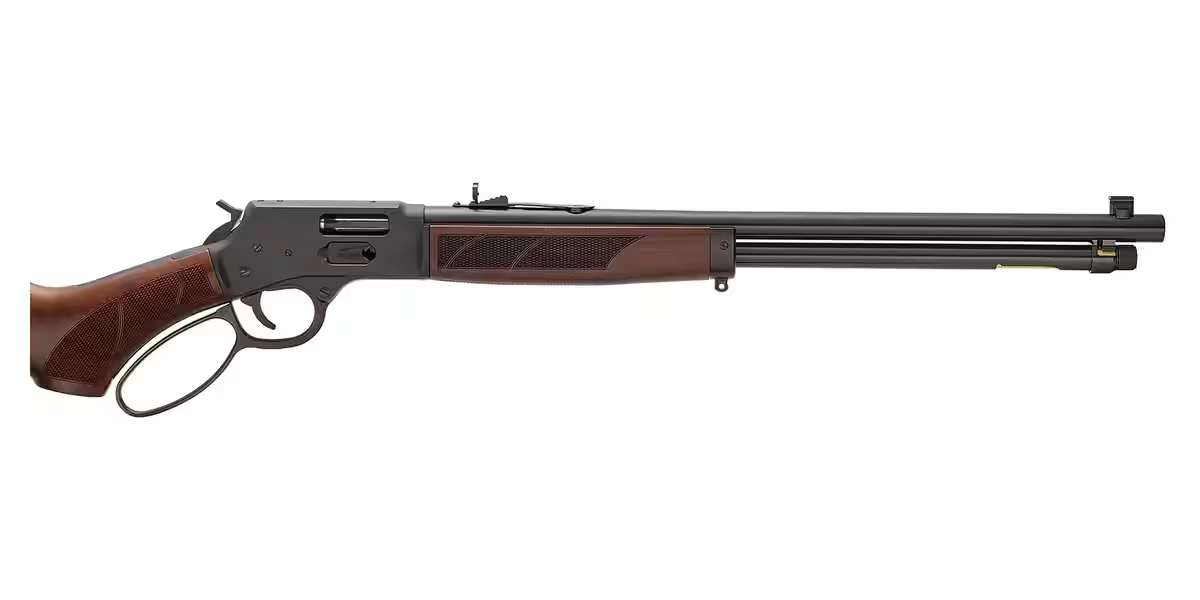
- Stock: American walnut, checkered pistol grip, ventilated rubber recoil pad, 14 in. length of pull
- Receiver: Blued steel, drilled and tapped (Henry BB-RSM mount)
- Sights: Fully adjustable semi-buckhorn rear with diamond insert, brass bead front
- Safety: Transfer bar
- Trigger Pull: 4 lb 10 oz (.357) and 4 lb 14 oz (.44) on our rifles
Pros
- Grip angle steadies seated and rested shots
- Ten rounds in a 7 lb rifle
- Side gate and tube loading
Cons
- Costs more than a Rossi R92
- No threaded barrel option
- Heavier than the carbines
Quick Take
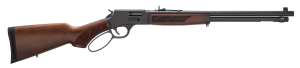
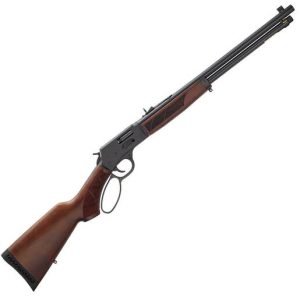
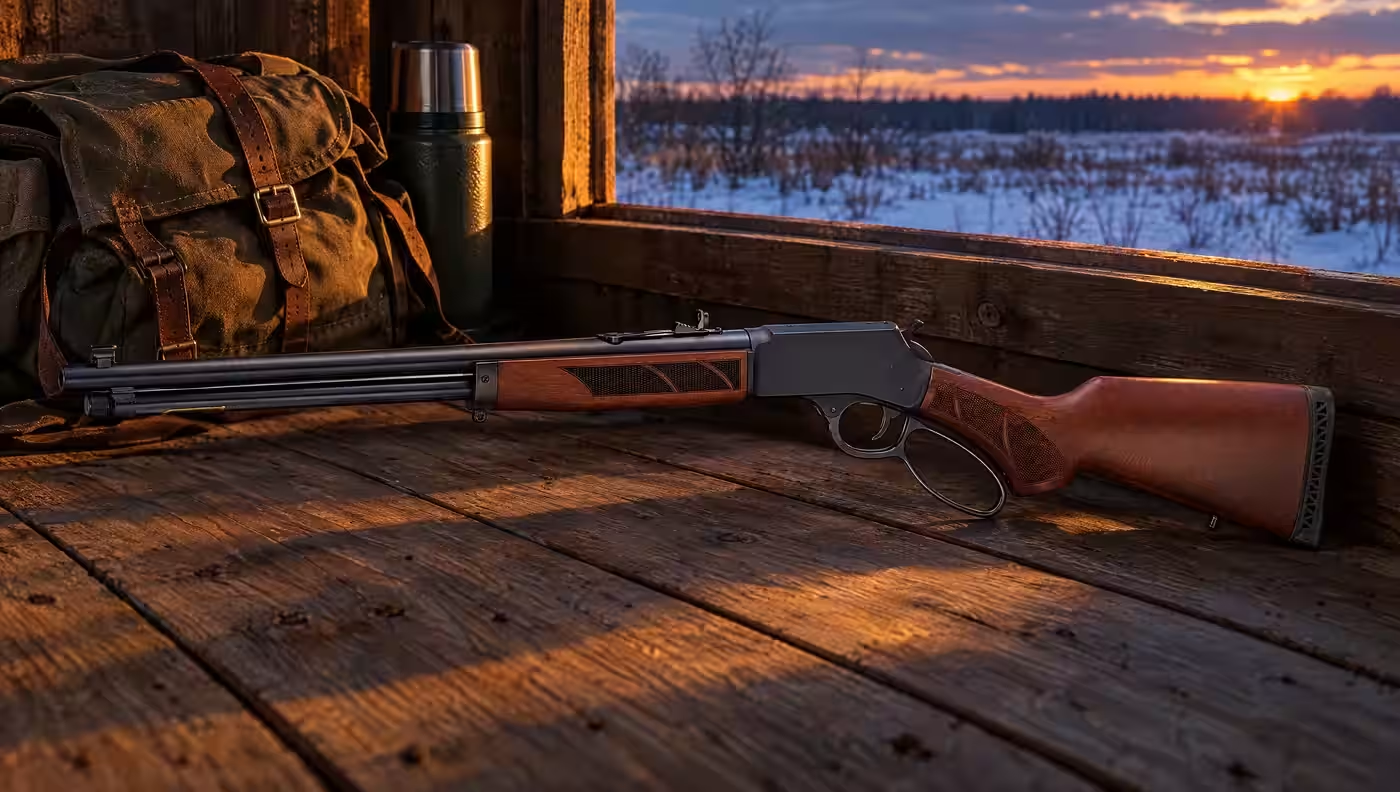
The Henry H12 Provider is a pistol-caliber lever action built for one job: hunting. Henry launched the Provider rifles in January 2026 and describes them as “dedicated hunting rifles focused on putting meat in the freezer, season after season.” The H12 is the .357 and .44 Magnum version, with a 20 in. barrel, a 10-round tube and a checkered American walnut stock with a pistol grip.
I shot 800 rounds through two of them, a .357 Magnum (H012PG-357) for 500 and a .44 Magnum (H012PG-44M) for 300. The .44 ran clean. The .357 had two feeding hiccups with .38 Special, both when I worked the lever too gently. From a rest at 50 yards with the iron sights, the best loads grouped under 2 in. in both calibers.
The pistol grip is the point of the gun, and it works. Shooting off sticks or a pack, it put my wrist in a more natural position than a straight-grip Big Boy and made the trigger easier to control. At $864.99 at Palmetto State Armory, it’s not cheap, but it’s $270 under Henry’s list.
Best For: Deer and hog hunters who want a handy, high-capacity lever gun in a handgun caliber, especially one that matches their revolver. Not for anyone who wants to run a suppressor, and not for the tightest budgets.
Provider or Protector: The Shorter Gun Costs More
Henry launched two families together. Its January 2026 announcement describes the Provider as built for “hunters who value the ergonomics of a pistol-grip stock and maximum capacity over the ability to mount a suppressor,” with a 20 in. non-threaded barrel and a longer tube holding 10 rounds in the pistol calibers. The Protector Carbines get 16.5 in. threaded barrels for a suppressor and are “lighter, more compact.”
Both share the matte blued steel receiver, checkered American walnut pistol-grip stock, ventilated recoil pad, sling swivel studs, adjustable sights and drilled and tapped receiver. So the choice is barrel length, threads and capacity. And on price, the shorter gun costs more: Palmetto State Armory had the H12 Protector Carbine in .44 at $911.99, $47 more than the .44 Provider, with seven rounds instead of ten.
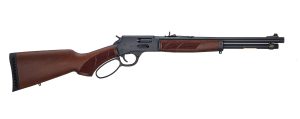
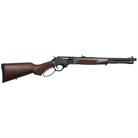
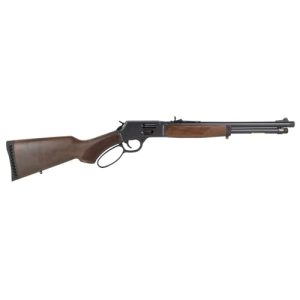
If you’ll ever run a suppressor, buy the Protector. If not, the Provider gives you three more rounds, a longer sight radius and more velocity from the same cartridge for less money. For hunting from a stand or still-hunting through the woods, that’s the better trade.
Design Intent: Why Henry Built It This Way
Henry’s H12 Provider page explains the pistol grip directly: it offers “a more relaxed wrist angle and better trigger control, particularly when shooting from seated or supported positions.” That’s how most deer are actually shot, from a stand, off a pack or over shooting sticks, and it’s where a straight-grip lever gun is least comfortable.
The 20 in. barrel is the other choice. Henry says it “improves ballistic efficiency and maximizes tube capacity,” which is why the Provider holds ten rounds where the Protector holds seven. Pistol cartridges gain real velocity from a rifle barrel, and a .44 Magnum from 20 in. is a capable deer load at the moderate ranges Henry recommends it for. Henry frames the .357 as the low-recoil, affordable-practice choice for small game and predators, and the .44 as the one for “deer-sized game at moderate distances.”
Henry H12 Provider Variants
| Model | Caliber | Twist | Capacity | Barrel | Weight | Henry MSRP |
| H012PG-357 | .357 Magnum/.38 Special | 1:16 | 10 | 20 in. | 7.00 lb | $1,135 |
| H012PG-44M | .44 Magnum/.44 Special | 1:20 | 10 | 20 in. | 7.00 lb | $1,135 |
H12 Provider .357 Magnum/.38 Special (H012PG-357): 20 in., 1:16 twist, 10 rounds, 7.00 lb $1,135 MSRP
H12 Provider .44 Magnum/.44 Special (H012PG-44M): 20 in., 1:20 twist, 10 rounds, 7.00 lb $1,135 MSRP
Street prices vary more than the identical list prices suggest. Palmetto State Armory had the .44 at $864.99, Brownells at $879.99 and Sportsman’s Warehouse at $979.99, a $115 spread on the same rifle. Guns.com had new Providers at $890.99 under a plain “Henry Provider” title with no caliber. Our card starts with that Palmetto State Armory .44 at $864.99. Henry also sells H9 and H10 Provider rifles in rifle calibers, which hold six rounds; this review covers only the H12.
Competitor Comparison
Pistol-caliber lever guns are a crowded field. These are the four I’d cross-shop, including two of Henry’s own.
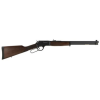
Henry Big Boy Steel ($864.99 to $939.99)
The straight-grip version of the same idea, with a blued steel receiver, 20 in. barrel and 10+1 capacity in dealer listings. Palmetto State Armory had a .41 Magnum Big Boy Steel at $864.99, the same as the Provider. Choose the Big Boy if you like the classic straight grip; choose the Provider for the pistol grip, recoil pad and sling studs. Our Henry Side Gate review covers the side gate Big Boy family.
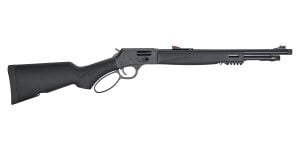
Henry Big Boy X Model .44 ($900.99 to $959.99)
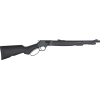
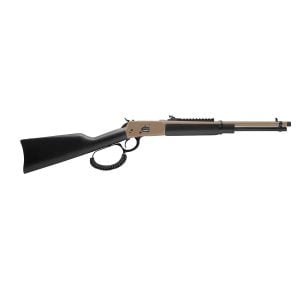
Henry’s tactical lever gun, with a 17.4 in. threaded barrel, black synthetic furniture and seven rounds in .44, per dealer listings. Palmetto State Armory had it at $900.99. It’s the one for a suppressor and a light. The Provider is the better hunting rifle: three more rounds, walnut, and a longer barrel. Our Henry Big Boy X review has the details.
Marlin 1894 Classic (from $1,129.99)
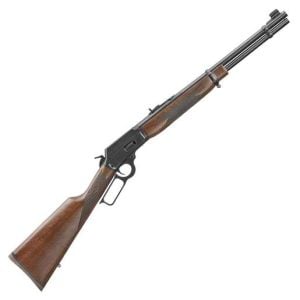
The traditional rival, with a walnut stock and a 20.25 in. barrel in .44 per dealer listings. Palmetto State Armory had the .44 at $1,035.99, and Sportsman’s Warehouse had the .357 at $1,129.99. It costs $170 or more over the Provider. Our Marlin 1894 review explains its side-eject, flat-top receiver, which makes scope mounting easy. Buy the Marlin for that; buy the Henry for the pistol grip, the capacity and the price.
Rossi R92 ($633.99 to $782.99)
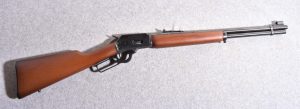
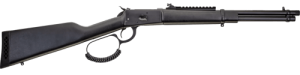
The budget choice. Classic Firearms had a .357 R92 with a 20 in. barrel and 10 rounds at $599.99, and Guns.com had new R92s from $600.99. That’s $265 less than the Provider for the same capacity. If money is tight it does the job. The Henry adds the checkered walnut pistol grip, the ventilated recoil pad and factory sling studs, and those are what you’re paying for.
Verdict: The Provider is the best choice here for a hunter who shoots from a seat or a rest and doesn’t need a suppressor. The Rossi is the bargain, the Marlin the traditional pick and the X Model the tactical one. For the bigger picture, see our best lever action rifles.
Testing Protocol
We shot two Providers: a .357 Magnum (H012PG-357) for 500 rounds and a .44 Magnum (H012PG-44M) for 300. That’s 800 rounds over five sessions in September at an outdoor range, from 57°F to 85°F. Groups were five shots from a rest at 50 and 100 yards with the factory iron sights. The rest was offhand and shooting-stick practice at 25 to 75 yards.
Ammunition Log
- .357 Provider, 500 rounds: Federal American Eagle .38 Special 130 gr FMJ (150), Magtech .38 Special 158 gr LRN (100), Winchester White Box .357 Magnum 110 gr JHP (100), Hornady LEVERevolution .357 Magnum 140 gr FTX (100), Federal Fusion .357 Magnum 158 gr (50)
- .44 Provider, 300 rounds: Hornady LEVERevolution .44 Magnum 225 gr FTX (100), Federal Power-Shok .44 Magnum 240 gr JSP (100), Magtech .44 Special 240 gr FMJ (100)
Phase 1: Break-In
Both rifles came with a slightly stiff lever that smoothed out within the first 100 rounds. I loaded through the side gate most of the time; Henry’s photos also show the brass inner magazine tube at the muzzle, and unloading through the tube was faster than cycling every round through the action. Before the first shot I zeroed the semi-buckhorn rear at 50 yards. It moves in clean, positive steps.
Phase 2: Reliability
The .44 Provider ran all 300 rounds, Special and Magnum mixed, without a single problem. The .357 had two stoppages, both with American Eagle .38 Special 130 gr: twice the round caught the edge of the chamber when I eased the lever forward slowly during a sitting drill. Run the lever with conviction and it didn’t happen again in the remaining 380 rounds. All 250 rounds of .357 Magnum fed perfectly.
Phase 3: Accuracy
From a rest at 50 yards with the irons, the .357 averaged 1.9 in. with Hornady LEVERevolution 140 gr, 2.2 in. with Federal Fusion 158 gr and 2.7 in. with Winchester 110 gr. The .44 averaged 1.8 in. with LEVERevolution 225 gr and 2.4 in. with Federal Power-Shok 240 gr. At 100 yards, the .44 with LEVERevolution opened to 4.1 in., which is about the limit of the buckhorn and my eyes, not the rifle.
Our trigger gauge read 4 lb 10 oz on the .357 and 4 lb 14 oz on the .44. Both had a little take-up and a clean break. From shooting sticks, the pistol grip made a real difference: I could hold the rifle’s weight with my support hand and squeeze straight back without the wrist strain a straight grip gives me.
Tracking & Observations
After 800 rounds the bluing showed only light holster-style wear where my hand met the receiver, and the walnut-to-steel fit stayed tight. The ventilated recoil pad made the .44 Magnum comfortable; it’s a push, not a slap. The large lever loop in Henry’s photos is the version our rifles had, and it was easy to work with gloves. At 7 lb, the Provider is heavier than a carbine, but it steadies the sights and soaks up recoil.
What This Means for You
- Reliability: Excellent with Magnum loads; work the lever firmly with short .38 Special rounds.
- Ammo Preference: Hornady LEVERevolution in both calibers.
- Accuracy Expectation: About 2 in. at 50 yards with irons; a scope would tighten 100-yard groups.
- Maintenance: Clean the bore and wipe the action after each outing; lead bullets foul the bore faster.
- Upgrade Impact: A low-power scope on the drilled and tapped receiver is the best upgrade for hunting.
Performance Testing Results
Reliability (9/10)
Two stoppages in 800 rounds, both with short .38 Special rounds and a lazy lever. With Magnum loads, neither rifle missed a beat.
Accuracy (8/10)
Under 2 in. at 50 yards with irons is very good for a lever gun. At 100 yards, a scope would show what the barrel can really do.
Ergonomics & Recoil (9/10)
The pistol grip and recoil pad make this the most comfortable Henry I’ve shot from a seated position. The .357 barely moves; the .44 is a firm push. The 14 in. length of pull fit me well with a light jacket.
Fit, Finish, and Quality Control (9/10)
Deep, even bluing, sharp checkering and walnut that fits the steel closely. Henry’s reputation for finish holds up here.
Value (7/10)
At $864.99 it’s fair for the quality and $270 under list, but a Rossi R92 does the same basic job for about $265 less.
Features (8/10)
Ten rounds, side gate loading, a drilled and tapped receiver, factory sling studs and an adjustable rear sight. No threaded barrel, by design.
Technical Deep Dive
Receiver, Loading and Safety
The receiver is blued steel and drilled and tapped for Henry’s BB-RSM scope mount. Henry’s photos show a loading gate on the right side of the receiver and the brass inner magazine tube at the muzzle, so you can load either way. The safety is a transfer bar, which means the hammer can’t reach the firing pin unless the trigger is pulled. There’s no crossbolt safety to remember.
Barrel, Sights and Stock
| Component | Specification | Benefit |
| Barrel | 20 in. round blued steel, not threaded | Velocity and 10-round capacity |
| Twist | 1:16 (.357), 1:20 (.44) | Suits heavy pistol bullets |
| Rear sight | Fully adjustable semi-buckhorn, diamond insert | Quick to pick up in the woods |
| Front sight | Brass bead | Shows up in low light |
| Stock | American walnut, checkered pistol grip, 14 in. LOP | Steadier seated and rested shots |
| Recoil pad | Ventilated rubber | Softens .44 Magnum |
| Extras | Sling swivel studs | Ready to carry out of the box |
.357 or .44: Which Provider to Buy
Buy the .357 if you’ll shoot it a lot, hunt hogs and coyotes more than deer, or already own a .357 revolver. You can practice all day with cheap .38 Special, and recoil is negligible. Buy the .44 if deer are the main target. From a 20 in. barrel it hits noticeably harder, and with 225 to 240 gr bullets it’s a confident deer rifle out to about 100 yards. Both twist rates suit the heavier bullets in each caliber: 1:16 for .357 and 1:20 for .44.
Whichever you choose, check your state’s rules for straight-walled cartridges if you hunt in a rifle-restricted area; .357 and .44 Magnum are legal deer cartridges in several states that limit rifles. For load picks, see our best .357 Magnum ammo.
Hunting With the Provider
After the range work, I carried the .44 on two morning still-hunts and a long evening sit in a ground blind. At 7 lb unloaded, it’s heavier than a carbine but light enough to carry slung for hours, and the factory sling studs meant I didn’t have to add anything. The 20 in. barrel and 37.5 in. overall length moved through brush without snagging the way a long-barreled bolt gun does.
The pistol grip earned its keep in the blind. Sitting with the rifle across my knees and then bringing it up onto a shooting rest, my trigger hand stayed in a natural position rather than bent around a straight wrist. Working the lever from a seated position was easy too, because the large loop gave my gloved fingers room. I didn’t fire at game on those hunts, but I took several practice shots at a 75-yard target from the seat, and all of them landed inside a paper plate.
One field note: the brass bead front sight is easy to see in morning light but blurs against dark timber at dusk. If you hunt the last minutes of legal light, that’s the strongest argument for a low-power scope on the drilled and tapped receiver.
Loading and Unloading Safely
Henry’s photos show two ways to fill the Provider’s tube: a loading gate on the right side of the receiver and the removable brass inner tube at the muzzle. In the field I loaded through the side gate, because you can top off the tube without pointing the muzzle at yourself or pulling the inner tube out in the dirt. At the bench, the tube was handy for loading quickly.
Unloading is where the tube really helps. Instead of cycling all ten rounds through the action, which puts a live round under the hammer each time, you pull the inner tube and let the rounds slide out the front with the muzzle pointed safely. Then cycle the lever once to clear the chamber and check it visually. The transfer bar safety means the hammer can’t fire the gun unless the trigger is pulled, but treat a loaded lever gun with the hammer down the same way you’d treat any loaded firearm.
Scoping the Provider
Henry lists the receiver as drilled and tapped for its BB-RSM scope mount. For a pistol-caliber hunting rifle, a 1-4x or 2-7x scope with generous eye relief is the right match. More magnification than that doesn’t help a cartridge that’s best inside 100 yards, and it adds weight to a rifle that’s meant to be carried.
If you scope it, check that the scope’s eye relief lets you get a full sight picture with your cheek on the comb, and zero at 50 yards with your hunting load. With a .44 Magnum 225 to 240 gr bullet, a 50-yard zero keeps you close to the line of sight out to about 100 yards.
Cleaning and Care
A lever gun can’t be cleaned from the breech without taking it apart, so clean the bore from the muzzle with a one-piece coated rod and a muzzle guard to protect the crown. I cleaned both rifles every 150 rounds or so, and after any session with lead .38 Special or .44 Special, which leave more fouling in the bore than jacketed Magnum loads.
Wipe the outside of the blued steel with a lightly oiled cloth after handling, especially after a wet or sweaty hunt, because bluing doesn’t resist rust the way stainless or a modern coating does. Put a drop of oil on the lever pivot and wipe out the loading gate area, where dirt and grit collect. Pull the inner magazine tube now and then and wipe it down, so the follower moves freely. The walnut needs nothing more than a wipe with a dry cloth.
Parts, Accessories and Upgrades
| Upgrade Category | Recommended Component | Why It Matters | Cost Estimate |
| Optic | Henry BB-RSM mount and a 1-4x or 2-7x scope | Stretches effective range for deer | $200 to $450 |
| Sling | A padded leather or nylon sling | Studs are already installed | $20 to $60 |
| Ammo | Hornady LEVERevolution | Best groups in both calibers for us | $30 to $45 per 20 |
| Cleaning | A one-piece rod and lead remover | .38 Special lead loads foul the bore | $20 to $40 |
Common Problems & Solutions
- .38 Special catching on the chamber: Work the lever fully and firmly. Ours did it twice with a gentle stroke.
- Stiff lever when new: Ours smoothed out within 100 rounds.
- Groups open at 100 yards: That’s the iron sights. Add a scope with Henry’s BB-RSM mount.
- Want a suppressor: The Provider isn’t threaded. Buy the H12 Protector Carbine instead.
- Vague listings: Guns.com’s plain “Henry Provider” titles don’t give caliber. Confirm before you buy.
Who Should NOT Buy This Gun
The Provider is a hunting rifle first, and it isn’t the right lever gun for everyone.
- Shooters who want a suppressor: The Henry H12 Protector Carbine has a threaded 16.5 in. barrel.
- Buyers on a tight budget: The Rossi R92 starts around $600.
- Traditionalists who want a straight grip: The Henry Big Boy Steel costs the same.
- Hunters who want a low-mounted scope: The Marlin 1894 Classic has a side-eject, flat-top receiver.
Final Verdict
The Henry H12 Provider takes a Big Boy-style steel lever gun and makes it a better hunting rifle: a pistol grip for steady shots from a seat or sticks, a recoil pad, sling studs, and ten rounds of .357 or .44 Magnum. Ours ran 800 rounds with only two operator-induced hiccups and grouped under 2 in. at 50 yards with irons.
It costs more than a Rossi and lacks the Protector’s threads, but for the hunter it was designed for, it’s the best pistol-caliber Henry yet. Henry backs it with a lifetime warranty. For more lever guns, see our best lever action rifles.
Final Score: 8.3/10. A comfortable, accurate, high-capacity hunting lever gun that earns its place in the safe.
FAQ: Henry H12 Provider
What calibers does the Henry H12 Provider come in?
Two: .357 Magnum/.38 Special (H012PG-357) and .44 Magnum/.44 Special (H012PG-44M). Both have a 20 in. barrel and hold 10 rounds.
How much does the Henry H12 Provider cost?
Henry lists both at $1,135. On October 3, 2026, Palmetto State Armory had the .44 at $864.99.
What is the difference between the Henry Provider and Protector?
The Provider has a 20 in. non-threaded barrel and holds 10 rounds in pistol calibers. The Protector Carbine has a 16.5 in. threaded barrel for a suppressor and holds 7.
Is the Henry H12 Provider good for deer?
In .44 Magnum, yes, at moderate ranges; Henry recommends the .44 for deer-sized game. Ours grouped 1.8 in. at 50 yards with Hornady LEVERevolution 225 gr.
Can you mount a scope on the Henry H12 Provider?
Yes. The receiver is drilled and tapped for Henry's BB-RSM scope mount.
Does the Henry H12 Provider have a side loading gate?
Henry's photos show a loading gate on the right side of the receiver and a brass inner magazine tube, so you can load either way.
5,492+ Gun & Ammo Deals
Updated daily from 200+ top retailers. Filter by category, caliber, action type, and price.
Related Guides