

Last updated October 25th 2026
Some of the links below are affiliate links, meaning at no additional cost to you, we may earn a commission if you click through and make a purchase.
By Nick Hall, who wrote our AR-15 barrel length guide.
The best AR-15 barrel for most builds is the Faxon Match Series 16″ Gunner in .223 Wylde. It’s 416R stainless, button rifled, nitrided inside and out, and light enough to keep a 16″ rifle handy. If you want a chrome-lined bore, get the Criterion CORE. For a hard-use duty barrel, get the Geissele CHF.
Below are eight barrels from budget to carbon fiber, with specs pulled from each maker’s own product page, live prices from our 200+ retailers checked on October 25, 2026, and four things most “best AR-15 barrel” lists skip: the pin and weld rule for 14.5″ barrels, which gas block fits which barrel, the chamber and twist trade-off, and why you check headspace before the first shot.
Table of Contents
How we tested: Every pick here is ranked against our testing methodology. Minimum round counts, accuracy and reliability protocols, the failures that disqualify a gun.
Best AR-15 Barrels at a Glance
| Barrel | Length | Chamber, twist | Steel and bore | Gas, journal | Weight (maker) | Price |
|---|---|---|---|---|---|---|
| Faxon Match Gunner | 16″ | .223 Wylde, 1:8 | 416R stainless, nitride | Mid, .625″ | Not listed | Live price |
| Criterion CORE | 16″ | .223 Wylde, 1:8 | 4150 CrMoV, chrome-lined | Mid, .625″ | 1.70 lb | Live price |
| Geissele CHF Heavy | 16″ | 5.56, 1:7 | CMV, cold hammer forged, chrome-lined | Geissele length, .750″ | 2.4 lb | Live price |
| Daniel Defense M4 | 14.5″ | 5.56, 1:7 | 4150 CMV, cold hammer forged, chrome-lined | Carbine, .750″ | 1.60 lb | Live price |
| White Oak SPR | 18″ | .223 Wylde, 1:7 or 1:8 | 416R stainless | Mid or rifle, .750″ | 41 oz | Live price |
| Ballistic Advantage Classic HBAR | 16″ | 5.56, 1:7 | CrMoV, chrome-lined | Mid, .750″ | 41.6 oz | Live price |
| Rosco Bloodline Heavy | 16″ | 5.56, 1:7 | 4150 CMV, nitride | Carbine, .750″ | 35.76 oz | Live price |
| BSF Carbon Fiber | 16″ | .223 Wylde, 1:8 | 416R stainless in carbon sleeve | Mid | 27.1 oz | Live price |
Weights are the stripped barrel as each maker lists it. White Oak gives a “total weight” for its SPR barrel, and Faxon doesn’t list a weight on this barrel’s page.
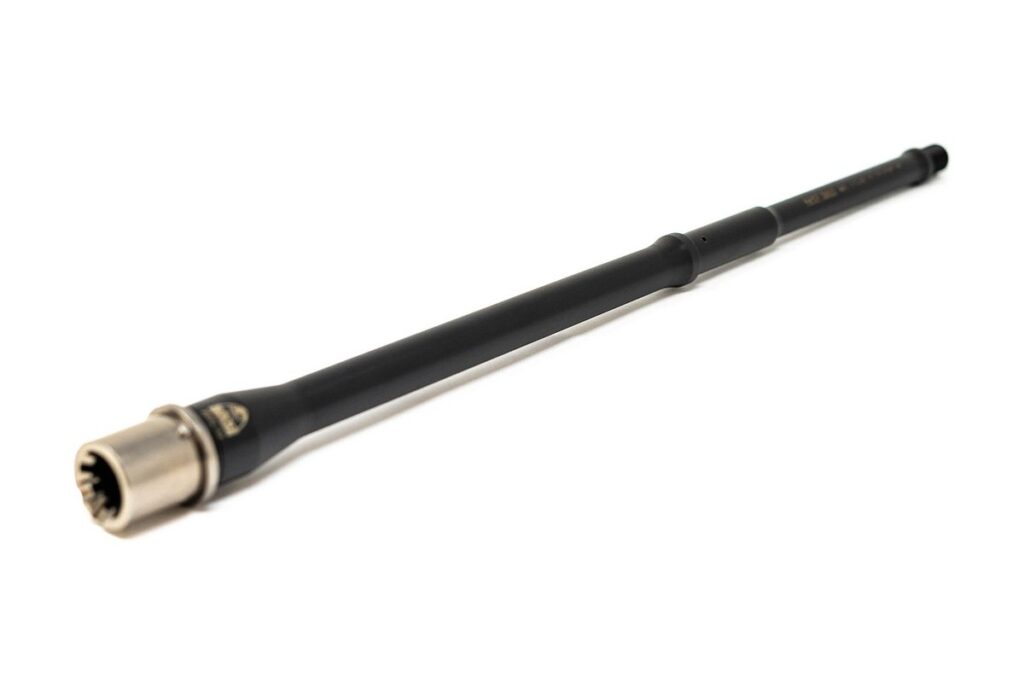
1. Faxon Match Series 16″ Gunner: Best AR-15 Barrel Overall
- Chamber: .223 Wylde, 1:8 twist, 5R button rifling
- Steel: 416R stainless, salt bath nitrided inside and out
- Gas: Mid-length, .625″ journal
- Extras: Nickel Teflon M4 extension, 11 degree recessed target crown
- List price: $240 at Faxon
Pros
- Match chamber that takes 5.56
- Light Gunner profile
- Nitride inside and out
Cons
- Needs a .625 gas block
- Weight not published
- Stainless costs more than CMV
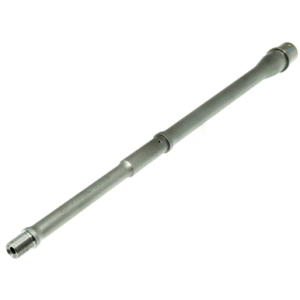
Faxon says its Gunner profile “blends Gov’t durability with Pencil weight savings, improving balance and reducing shooter fatigue.” The barrel is 416R stainless with 5R button rifling, and the bore is nitrided too, which Faxon credits with corrosion resistance and easy cleaning.
Every Faxon Match barrel is magnetic particle inspected and headspace verified in-house, and for $25 Faxon will headspace-match a bolt or BCG you buy with it. Faxon lists it at $240, and retailers sell it for less, as the card above shows.
Best For: A do-everything 16″ rifle that shoots both .223 and 5.56.
2. Criterion CORE Series 16″: Best Chrome-Lined Barrel
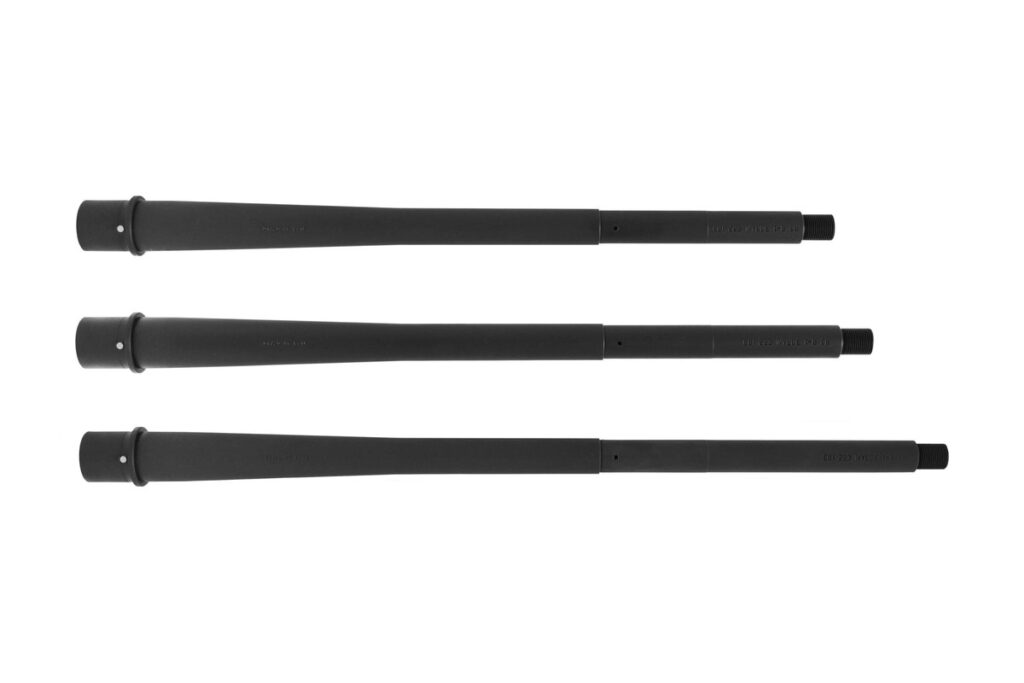
- Chamber: .223 Wylde, 1:8 twist
- Steel: 4150 CrMoV, chrome-lined, phosphate outside
- Gas: Mid-length, .625″ dimpled journal
- Weight: 1.70 lb for the 16″ (13.9″ is 1.60 lb, 14.5″ is 1.65 lb)
Pros
- Chrome bore that is hand-lapped
- .223 Wylde chamber
- Dimpled gas journal
Cons
- Costs more than nitride barrels
- Needs a .625 gas block
- Only offered in 1:8 twist

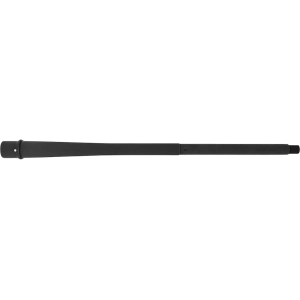
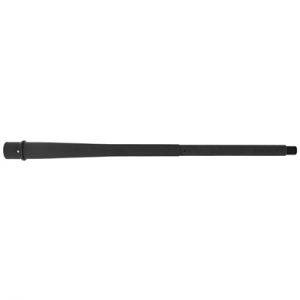
Chrome lining is the old answer to barrel life, and the knock on it has always been accuracy. Criterion’s pitch is that its CORE Series gets you both: the bore is chrome-lined “for improved barrel life and corrosion resistance without degrading accuracy,” then honed and hand-lapped for bore uniformity.
Criterion says the CORE profile’s continuous taper “eliminates steps and harsh variations in diameter” and puts the extra steel around the chamber. The 16″ weighs 1.70 pounds. Criterion also polishes the chamber for extraction and dimples the .625″ gas block journal “for easy and secure installation.” It comes in 13.9″, 14.5″ and 16″, all .223 Wylde with a 1:8 twist.
Best For: A rifle you want to shoot a lot and keep shooting accurately.
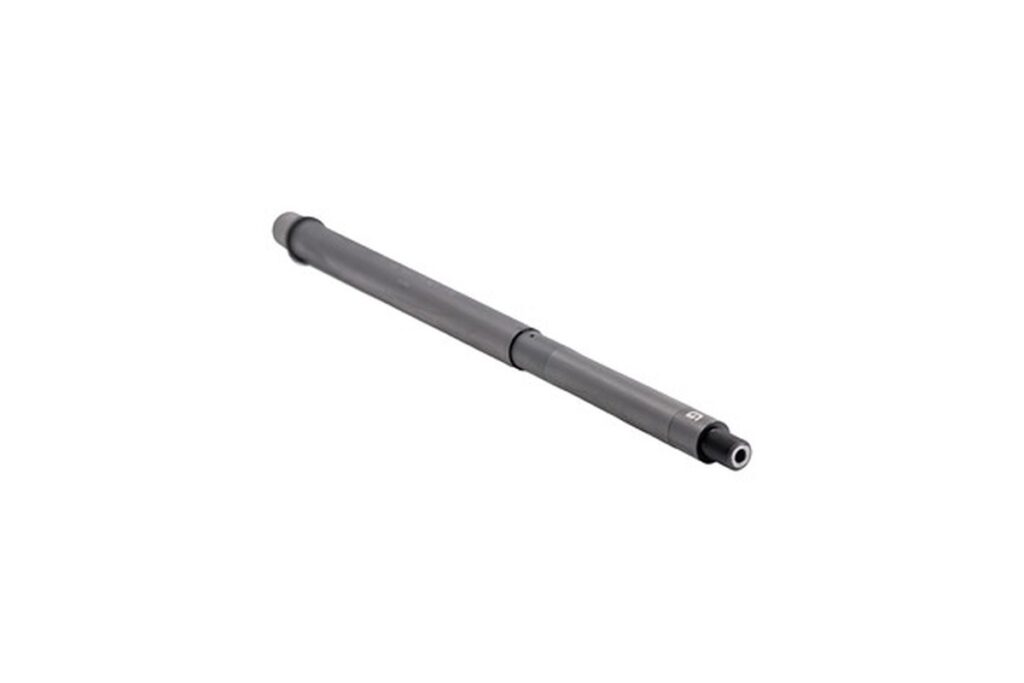
3. Geissele CHF Heavy Profile 16″: Best Duty Barrel
- Chamber: 5.56, 1:7 twist
- Steel: Chrome moly vanadium, cold hammer forged, chrome-lined, manganese phosphate
- Gas: Geissele length, .750″ journal, .075″ port, gas tube included
- Weight: 2.4 lb
- List price: $365 at Geissele
Pros
- Cold hammer forged and chrome-lined
- HPT and MPI tested
- Gas tube included
Cons
- Heaviest barrel here
- Uses Geissele’s own gas length
- Out of stock at Geissele
Geissele cold hammer forges it at its plant in North Wales, Pennsylvania, chrome-lines the bore, and high pressure tests and magnetic particle inspects every one. Its product page calls it “an ideal choice for a hard use duty weapon.”
Two things to know before you buy. It uses Geissele’s own gas length, so the matching gas tube comes in the box. And at 2.4 pounds it’s the heaviest barrel on this list, which is the trade for a heavy profile. Geissele lists it at $365 and showed it out of stock when we checked, so the card above is the place to find one.
Best For: Duty and hard-use rifles that see a lot of rounds.
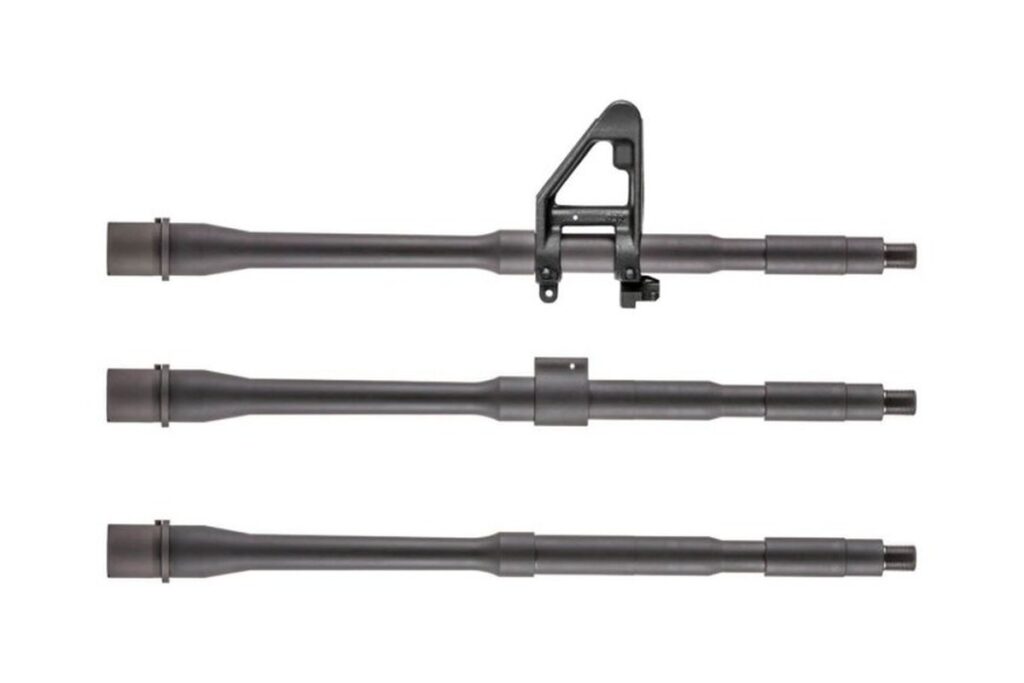
4. Daniel Defense 14.5″ M4 Profile: Best Barrel for a Pinned 16″ Build
- Chamber: 5.56, 1:7 twist
- Steel: 4150 chrome moly vanadium, cold hammer forged, chrome-lined, heavy phosphate
- Gas: Carbine length, .750″ at the gas port
- Extension: A4
- Weight: 1.60 lb stripped, 1.68 lb with a low-profile gas block
- List price: $394 at Daniel Defense
Pros
- Cold hammer forged, chrome-lined
- Light M4 profile
- Classic carbine handling
Cons
- Must be pinned to reach 16″
- Carbine gas runs harder
- A4 extension, not M4 ramps
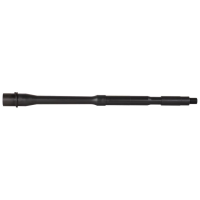
Daniel Defense says it cold hammer forges its 14.5″ barrels from 4150 chrome moly vanadium steel, then chrome-lines the bore and finishes the outside in mil-spec heavy phosphate. The M4 profile and carbine gas give you the handling of an issue carbine, and it weighs 1.60 pounds stripped.
A 14.5″ barrel is short of the 16″ federal minimum for a rifle, so on a non-NFA build you have to permanently attach a muzzle device long enough to make up the difference. That’s covered in the pin and weld section below. Daniel Defense lists the barrel from $394.
Best For: A light carbine with a pinned and welded muzzle device.
5. White Oak Armament 18″ SPR: Best Barrel for Long Range
- Chamber: .223 Wylde, 1:7 or 1:8 twist
- Steel: 416R stainless, M4 feed ramps
- Gas: Mid or rifle length, .750″ journal
- Weight: 41 oz total, per White Oak
Pros
- Built for hits at distance
- Choice of 1:7 or 1:8
- Free headspace check with bolt
Cons
- Heavier than a 16″ carbine
- Longer rifle to carry
- Plain stainless, no bore coating
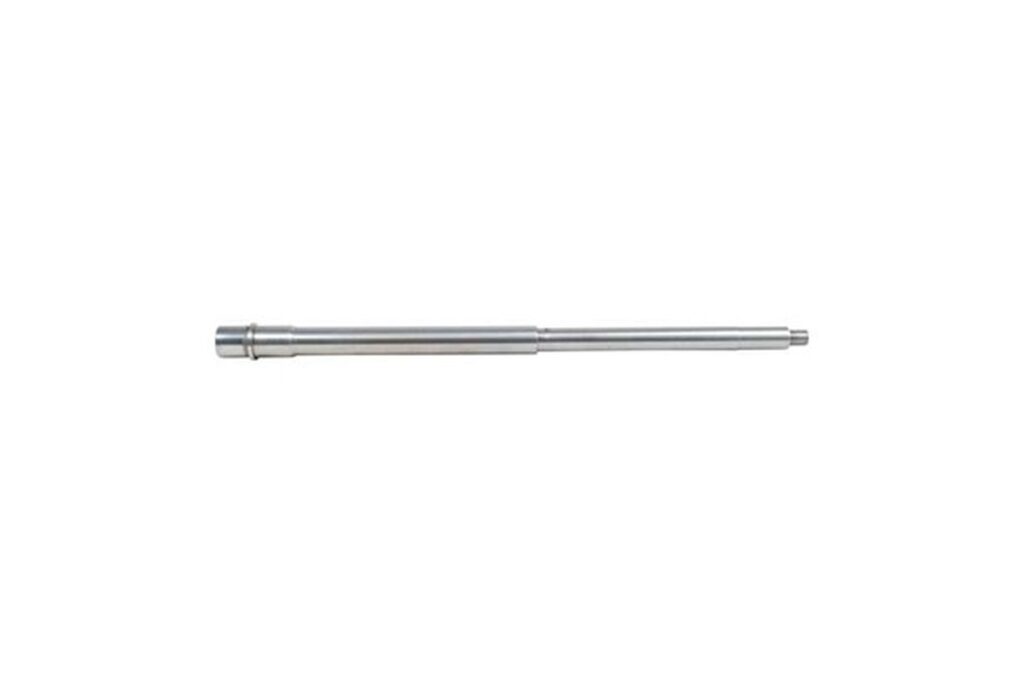
White Oak bases its SPR barrel on the Army’s Squad Designated Marksman program, which it describes as “tasked with improving the accuracy of the standard issue rifle against targets out to 600 meters.” The 18″ length squeezes more velocity out of heavy 5.56 and .223 loads than a 16″ barrel, and the .223 Wylde chamber runs both.
You pick mid or rifle length gas and a 1:7 or 1:8 twist. The profile has a step behind the muzzle to fit the Allen Engineering and Ops Inc suppressor, and if you put a barrel and a bolt in your cart, it checks headspace before it ships “at no extra cost to you.”
Best For: An SPR or Recce-style rifle for 300 yards and beyond.
6. Ballistic Advantage Classic Series 16″ HBAR: Best Budget Chrome-Lined Barrel
- Chamber: 5.56, 1:7 twist
- Steel: CrMoV, chrome-lined bore and chamber, manganese phosphate
- Gas: Mid-length, .750″ journal, 1/2×28 threads
- Weight: 41.6 oz
- List price: $185 at Ballistic Advantage
Pros
- Chrome-lined for the money
- Mid-length gas
- Common .750 gas block
Cons
- Heavy for a 16″ barrel
- Engraved HBAR on the barrel
- 5.56 chamber, not Wylde
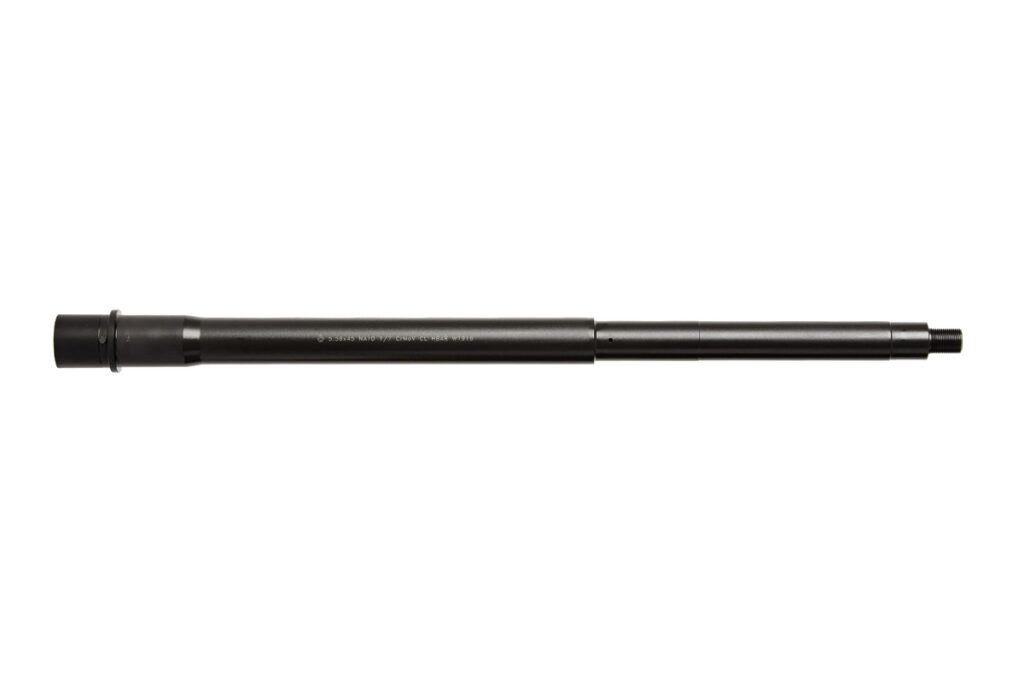
If you want a chrome-lined bore without paying Criterion or Geissele money, this is it. Ballistic Advantage machines its Classic Series HBAR from CrMoV steel, chrome-lines both the bore and the chamber, and finishes it in manganese phosphate with a phosphate coated M4 extension.
The heavy profile makes it a 41.6 ounce barrel, so it suits a range rifle more than a carry carbine. It takes a standard .750″ gas block, and Ballistic Advantage engraves “HBAR” on it. List price is $185, and Brownells sells it for less.
Best For: A first build or a range rifle on a budget.
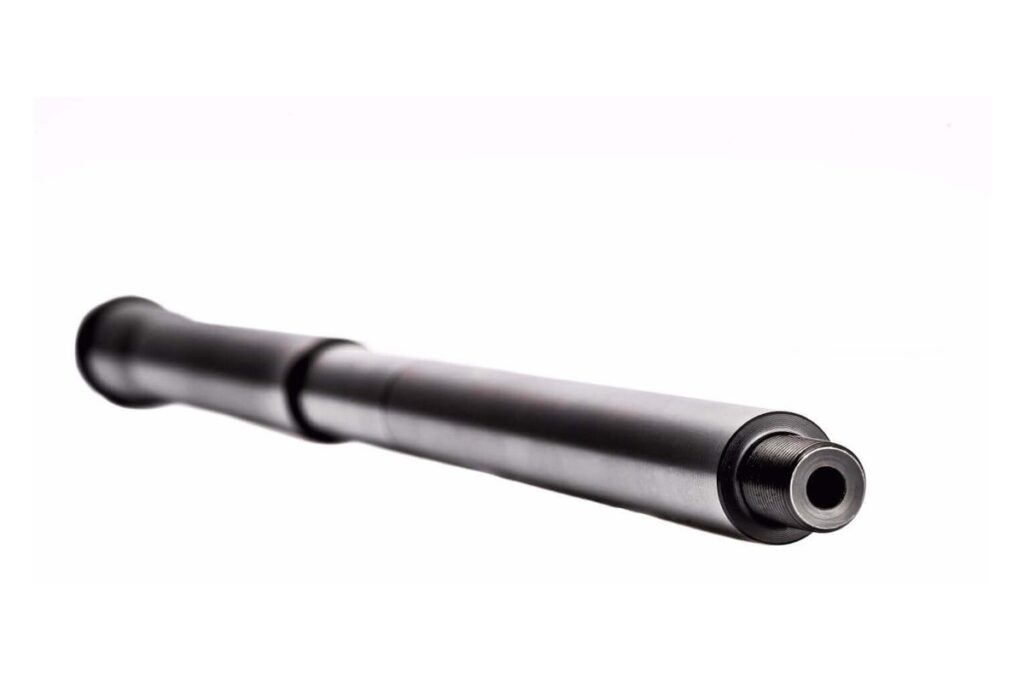
7. Rosco Bloodline 16″ Heavy: Best Budget Nitride Barrel
- Chamber: 5.56, 1:7 twist
- Steel: 4150 CMV, nitride barrel and extension
- Gas: Carbine length, .750″ gas block, 11 degree crown
- Weight: 35.76 oz
- List price: $188 at Rosco
Pros
- Under $160 at Brownells
- Nitride barrel and extension
- Heavy profile for hard use
Cons
- Carbine gas on a 16″
- Heavy for a light build
- 5.56 chamber, not Wylde
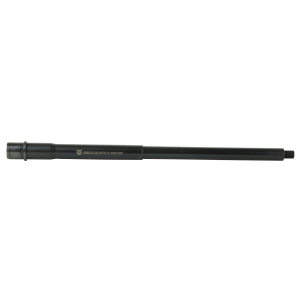
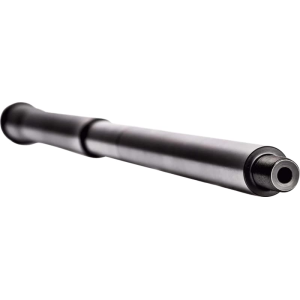
Rosco built the Bloodline Heavy for owners “who need to run their guns hard,” and says the heavy contour “is well suited for full auto use and abuse.” It’s 4150 CMV steel with a nitride finish on the barrel and the extension, an 11 degree crown and a .750″ gas block size.
Rosco lists it at $188, and Brownells sells it for under $160. The one spec I’d change is the carbine gas system on a 16″ barrel, which runs harder than mid-length. Rosco engraves it “HEAVY” for buyers in restrictive states.
Best For: A budget 16″ build that will see a lot of ammo.
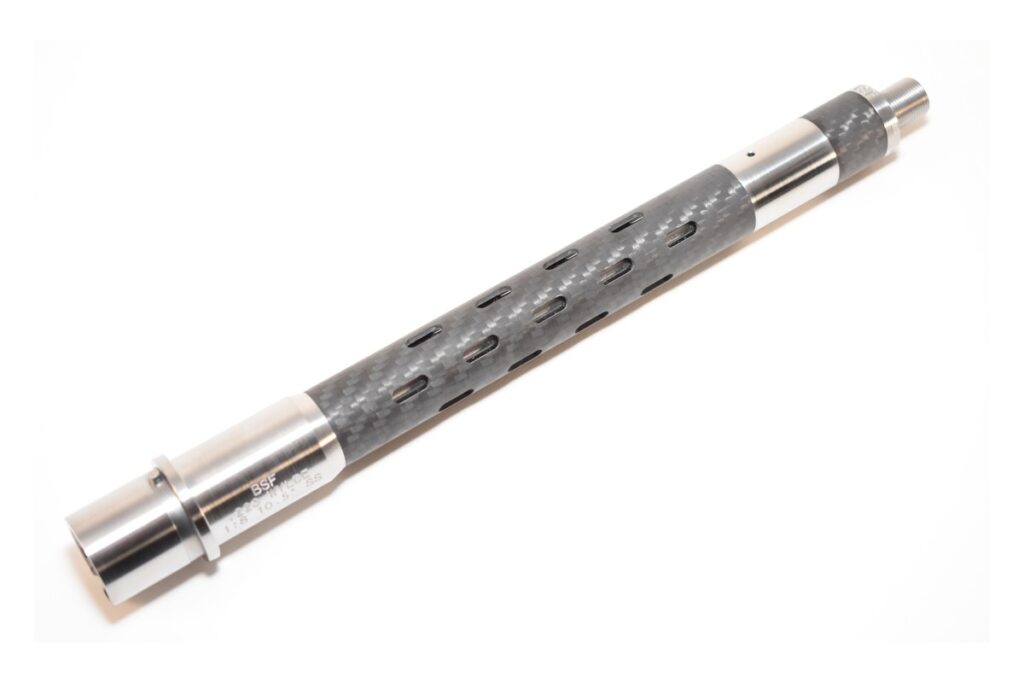
8. BSF Carbon Fiber .223 Wylde 16″: Best Lightweight Barrel
- Chamber: .223 Wylde, 1:8 twist, 6 groove button rifling
- Steel: 416R stainless match barrel inside a slotted carbon fiber sleeve
- Gas: Mid-length on the 16″
- Weight: 27.1 oz for the 16″
- List price: $819 at BSF
Pros
- Lightest 16″ barrel here
- 416R stainless match core
- Slotted sleeve vents heat
Cons
- Most expensive barrel here
- 10 to 12 week lead time
- .875 OD limits handguards
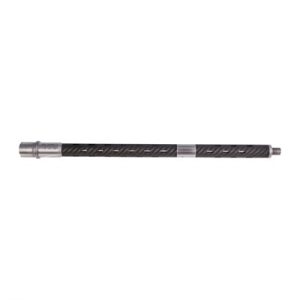
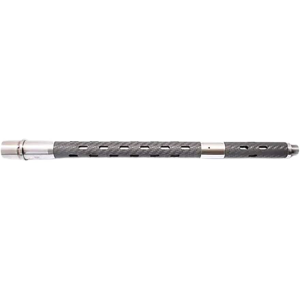

Carbon fiber barrels save weight, and BSF’s .223 Wylde saves a lot of it: 27.1 ounces at 16″, against 41.6 ounces for the Ballistic Advantage HBAR. BSF jackets a 416R stainless match barrel in a roll-wrapped carbon sleeve loaded under tension, then machines slots into the carbon so air moves around the barrel and heat vents faster.
The catch is cost. BSF lists it at $819 with a 10 to 12 week lead time for made to order barrels. Brownells had it in stock for much less when we checked. The sleeve is .875″ across, so make sure your handguard clears it.
Best For: Light hunting and precision rifles where every ounce counts.
14.5″ Barrels Need a Pin and Weld
Federal law treats a rifle with a barrel under 16 inches as an NFA firearm. 26 U.S.C. 5845(a) lists “a rifle having a barrel or barrels of less than 16 inches in length.” Put a bare 14.5″ barrel on a rifle without a registered short-barreled rifle and you have a problem.
The fix is a permanently attached muzzle device, because the ATF counts it. Its NFA Handbook measures “from the closed bolt (or breech-face) to the furthermost end of the barrel or permanently attached muzzle device,” and names the methods that count as permanent: “full-fusion gas or electric steel-seam welding, high-temperature (1100°F) silver soldering, or blind pinning with the pin head welded over.”
- Pick a long enough device. Once it is pinned on, the measured length has to reach at least 16 inches.
- Have it done before you assemble the rifle. Pin and weld the device on the barrel first.
- Measure it the ATF way. Close the bolt, drop a dowel down the bore to the bolt face, mark it at the end of the device and measure.
Our AR-15 barrel length guide covers what each length does to velocity and handling.
Chrome-Lined, Nitride or Stainless?
| Bore | Barrels here | What the maker says it buys you |
|---|---|---|
| Chrome-lined | Criterion, Geissele, Daniel Defense, Ballistic Advantage | Criterion: “improved barrel life and corrosion resistance” |
| Nitride | Faxon (over stainless), Rosco | Faxon: “fouling resistance and extended barrel life” |
| Plain stainless | White Oak, BSF | Both are 416R match barrels built for precision |
Pick chrome-lined for a rifle that will see a lot of fast strings of fire. Pick stainless for a precision rifle you shoot at a slower pace. Nitride gives you a hard, slick bore on either steel, which is why Faxon puts it over 416R stainless and Rosco puts it on 4150 CMV.
5.56 or .223 Wylde, 1:7 or 1:8?
A 5.56 chamber runs everything, with a little more room in the throat. A .223 Wylde chamber is the one most match barrels use, because it runs both cartridges and tightens things up for accuracy. Criterion says its Wylde chamber “safely and reliably fires both .223 Remington and 5.56 NATO with improved accuracy due to more consistent chamber pressures.” Our 5.56 vs .223 guide explains why you should never put 5.56 in a .223 Remington chamber.
Twist follows the same split. The duty barrels here (Geissele, Daniel Defense, Ballistic Advantage, Rosco) use 1:7, which stabilizes the heaviest 5.56 bullets. The match barrels (Faxon, Criterion, BSF) use 1:8, which Faxon picks “for broad bullet compatibility.” Either runs the 55 and 62 grain ammo most people shoot.
Match the Gas Block to the Journal
The gas block has to match the barrel’s journal diameter, and this list has two sizes. Faxon and Criterion use .625″. Geissele, Daniel Defense, White Oak, Ballistic Advantage and Rosco use .750″. A .750″ block on a .625″ journal leaks gas and the rifle short-strokes.
Gas length matters too. A mid-length system on a 16″ barrel (Faxon, Criterion, Ballistic Advantage, BSF) runs softer than a carbine system, and Faxon says it “softens recoil impulse for faster follow-up shots,” and your gas tube and handguard have to match whichever you choose. Our best AR-15 handguards guide covers fit.
Check Headspace Before the First Shot
Headspace is how the bolt fits the chamber, and any time you put a new bolt with a new barrel, check it. Criterion puts it plainly: headspace “must be checked for optimal performance and reliability.” Faxon verifies headspace on every Match barrel, Criterion and White Oak will headspace a bolt you buy with the barrel, and Geissele recommends a qualified gunsmith install its barrels.
If you’re doing it yourself, use a go and no-go gauge for your chamber. The bolt should close on the go gauge and not close on the no-go. A good bolt carrier group bought with the barrel makes this easier.
How I Picked These Barrels
I picked eight barrels that cover the main reasons people buy one: an all-around barrel, a chrome-lined barrel, a duty barrel, a pinned 14.5″ carbine, a long-range SPR, two budget barrels and a lightweight carbon barrel. Every spec comes from the maker’s own product page, the legal section quotes the federal statute and the ATF’s NFA Handbook directly, and prices come from our live price check across 200+ retailers on October 25, 2026. For the rest of the rifle, see our best AR-15 uppers and best AR-15 parts and accessories guides.
Frequently Asked Questions
What is the best AR-15 barrel?
For most builds, the Faxon Match Series 16 inch Gunner in .223 Wylde. It is 416R stainless with 5R button rifling, nitrided inside and out, and light for a 16 inch barrel. For a chrome-lined bore, get the Criterion CORE. For hard duty use, get the Geissele CHF.
Is a chrome-lined barrel better than nitride?
Chrome lining is the choice for long strings of fire and long barrel life, and nitride resists fouling. Criterion says its chrome lining improves barrel life and corrosion resistance without degrading accuracy, and Faxon credits nitride with fouling resistance and extended barrel life.
Can I put a 14.5 inch barrel on my AR-15?
Only if you permanently attach a muzzle device that brings it to 16 inches, or register the rifle as a short-barreled rifle. Federal law makes a rifle with a barrel under 16 inches an NFA firearm, and the ATF counts a muzzle device only if it is welded, high-temperature silver soldered or blind pinned with the pin head welded over.
Is .223 Wylde better than 5.56?
For accuracy, a .223 Wylde chamber has the edge, and it still runs 5.56 NATO safely. A 5.56 chamber also runs both cartridges. Never fire 5.56 in a barrel chambered only for .223 Remington.
What twist rate is best for an AR-15?
A 1:7 twist stabilizes the heaviest 5.56 bullets and is what the duty barrels here use. A 1:8 twist is the common choice on match barrels. Either one handles 55 and 62 grain ammo.
What size gas block do I need?
Match the barrel journal. Faxon and Criterion use .625 inch, while Geissele, Daniel Defense, White Oak, Ballistic Advantage and Rosco use .750 inch.
Do I need to check headspace on a new barrel?
Yes, whenever you pair a new barrel with a bolt. Use go and no-go gauges, or buy the bolt with the barrel. Faxon, Criterion and White Oak will headspace a bolt you buy with their barrels.
Are carbon fiber AR-15 barrels worth it?
If weight matters most, yes. The BSF 16 inch .223 Wylde weighs 27.1 ounces against 41.6 ounces for a 16 inch steel HBAR. It costs far more and BSF quotes a 10 to 12 week lead time.
3,976+ Gun & Ammo Deals
Updated daily from 200+ top retailers. Filter by category, caliber, action type, and price.
Related Guides